femmenietzsche:

PEOPLE WITH NORMAL SEXUAL INTERESTS: Surrounded by an endless sea of hyperstimulus pornography human brains aren’t equipped to handle, doomed to become porn addicts, unable to sustain arousal in the presence of other human beings

PEOPLE WITH INCREDIBLY NICHE FETISHES: Encounter porn they like roughly as often as a child growing up in the 80s might stumble upon an adult’s Playboy stash, maintain normal brain chemistry, belong to welcoming communities where they can find partners with shared interests


Tags:

#the author of ”Give These People a Break” came out with a second bonus chapter and‚ not unrelatedly‚ I am thinking about this post again #I always did pity the people (presumably out there) who are actually into the kind of women they use in sex-sells commercials #must be awful to have everybody and their brother trying to hijack your salience mechanisms #but it’s more than just a matter of salience‚ isn’t it? #until recently† I had never read porn that was actually well-suited to my tastes #(and not for lack of trying) #(everything was cousin conditions and approximations and picking my way carefully through minefields of squick) #but now I have #don’t get me wrong‚ I’m genuinely very glad to have that experience #I absolutely endorse that #I would all three of want/like/approve having *some* more works like it #…but I think I begin to see how it could pose a problem‚ if there were *thousands* #overall I do still believe I will probably do okay in #the rapidly approaching future where you can get competently written incredibly niche porn made to order out of a vending machine #(I’ve handled access to superstimuli decently well in the past) #(not perfectly‚ but like‚ a solid B+) #but in August I was casually confident that of *course* it would be okay‚ and that’s not the case anymore #[†I originally wrote here ”when I first read OP”‚ but then I actually dug up the post I was thinking of and I saw it eleven days *later* #(maybe etirabys’s reblog wasn’t the first one I saw: OP *is* actually years old (2019-12-16) and it *feels* like it’s been around for years #but etirabys’s was the one that came to mind)] ↩ #tag rambles #that one post with the thing #sexuality and lack thereof #is the blue I see the same as the blue you see #disappointed permanent resident of The Future #this probably deserves some warning tag but I am not sure what #apocalypse cw? #drugs cw?

ironbite4:

sigmaleph:

definitelynotplanetfall:

sigmaleph:

suppose your body has magically decoupled its functioning from your food intake. you no longer experience hunger or fullness, digestive problems, allergies, tooth decay, etc no matter what (or whether) you eat. food still tastes the way it did before, and any psychoactive properties (from caffeine or alcohol or whatever) are still there.

would you:

a) eat much less than you did before, since you don’t have to?

b) eat much more than you did before, since you can’t get full or experience any other negative side-effect from it and food is pleasant?

c) eat about the same but with much less care taken to avoiding ‘unhealthy’ foods, or foods you in particular couldn’t tolerate well?

d) avoid foods that might have ethical issues that you weren’t avoiding before?

e) leave your eating habits basically unchanged?

f) some combination of the above?

g) some change in an entirely orthogonal direction to the ones i’ve listed here?

  1. in the hypothetical, which is distinct from the post about the hypothetical, am i informed directly of the rules of the change or just left to intuit that it isn’t just another inscrutable biological shift?
  2. is the thrust of the hypothetical “only you experience this” or “everyone experiences this”?

you are directly informed of the rules of the change. this happens to a small number of people yourself among them and it’s a recognised phenomenon, but not to everyone.

Sorry can’t hear anyone over me bankrupting Old Town Country Buffet.


Tags:

#food #disordered eating #surveys #is the blue I see the same as the blue you see #anything that makes me laugh this much deserves a reblog #(a and c) #(I normally eat food-chosen-primarily-for-pleasure-with-loosened-regard-for-cost-effectiveness a few times a year) #(if *all* food is cost-ineffective I am not sure if this frequency would go up at all) #(it definitely wouldn’t go up to several times a day) #(however often it happens‚ it *would* be nice to eat potato chips again without regretting it #and macaroni and cheese without it being a careful balancing act)

kitstacean:

spaceshipoftheseus:

akaanonymouth:

What is it about fics then, where characters always, ALWAYS, have a spare toothbrush conveniently just hanging about in bathroom cupboards for that time someone is, usually unexpectedly, staying the night?

I have lived a few decades now, and I have never known anyone who keeps spare toothbrushes. Is it really common??

if you are the kind of just-in-case clutter goblin who does not throw things away, and you live in a country where it is standard practice for the dentist to give you a free toothbrush every time you go, then it is extremely possibly to have several years-old unused “spare” toothbrushes of extremely cheap but basically functional quality stashed away in your bathroom whether or not you visit the dentist at the recommended frequency

Don’t people buy multipacks of toothbrushes? I use an electric now, but back in the day I got the ones from my dentist and also bought the 8 pack of toothbrushes then I’d forget about my spare 5 toothbrushes in my cupboard when I see the multipack on sale again and then – you get the idea.

There are people who don’t keep spare toothbrushes??

What if you fumble your toothbrush and it falls onto the toilet plunger, do you then just *not have* a toothbrush?

What if you go to the store–for any toothbrush-replacement reason, fumbling or otherwise–and they’re out of toothbrushes because it’s the 2020s and a store is always out of an absolute minimum of three things on your shopping list at any given time?

*please* let me give you a toothbrush from out of my gallon bag of spare toothbrushes, I am *begging* you, you do not have to live on a knife’s edge


Tags:

#reply via reblog #101 Uses for Infrastructureless Computers #domesticity #is the blue I see the same as the blue you see #medical cw? #unsanitary cw?


{{next post in sequence}}

{{previous post in sequence}}


how-about-a-nice-game-of-chess:

headspace-hotel:

thesixthstar:

annabelle–cane:

I think a lot of people spent their childhoods being very deliberately forced out of their comfort zones by parents / teachers / whomever in a way that was just deeply unpleasant and degrading and so, when they reach young adulthood and are finally allowed real control over their lives, become set on only doing things they know they’re comfortable with forever. that’s a really important thing to be able to do, especially if you’re so used to having your boundaries routinely ignored that you aren’t even certain what you like vs what you can bear, so I absolutely see why a person would have a negative reaction to being told that discomfort is good: it can very easily sound like being told that all that work they’ve been doing to prioritze their needs for the first time ever is Bad and Selfish, actually. and to that I will say two things:

one: as long as you aren’t hurting or, like, being a dick to anyone, just staying in your comfort zone isn’t an immoral action. if you just want to read one type of book (or just fanfiction), or just eat one type of food, or just watch one type of movie, or not go to new types of social events, you aren’t being a bad person for that, and if people say that, they are soundly wrong and just trying to get a self-righteousness kick.

two: trying new things because you want to expand yourself feels a hell of a lot different than trying new things because you’re being forced to. you’ll feel better about trying new foods if you know you have a back up familiar one in case you can’t stomach the new one, it’s easier to read new books if you can experiment with audio versions or reading it in little five-page chunks by yourself, you can breathe a lot easier going somewhere new if you aren’t chained there for three hours because your parent is your ride home, etc.

tl;dr: new things are good. I get why you might not want to try new things, and that’s fine, but it’s also more comfortable to try new things as an adult with your own agency so, yeah, what have you got to lose by trying a weird old art film?

It’s really important to recognize that the negative reaction you might have to being forced into something new might make your reaction much worse than if you had the no-pressure option to explore it on your own. I always try new foods when no one is around, or only some few close friends I trust on that level, because I feel judged for being a picky eater – even if people aren’t *actually* judging me, I feel judged anyways and the pressure makes the whole experience unpleasant and I’m less likely to enjoy the food

It’s also important to recognize that sometimes, newness, in and of itself, can trigger a disgust reaction. For this reason, when i’m genuinely trying some new food/drink, I take a small bite/sip or two to get over the initial “this is new and new is bad ew ew ew” reaction, and then take the next bite/sip to actually evaluate how I feel about the flavor/texture/etc. Even when i don’t end up liking the food, this often takes a food I’d be super grossed out by and moves it closer to the “eh i simply don’t like it” category.

huge part of being autistic (and why that is Literally Traumatizing) is that your comfort levels and sensory experiences are so out of touch with everyone else’s that you’re just routinely subjected to awful, terrifying, torturous stuff as a kid and you are told “no one likes this, everyone is scared sometimes, but you just have to do it”

because the adults in your life think you’re experiencing a normal, bearable level of discomfort? because that’s what they themselves would experience, in your situation?

And you have never experienced being another person, so you think you are experiencing a normal, bearable level of discomfort, and just over-reacting to it.

The part that really digs itself into your psyche is the certainty that you can’t expect the world to be kind to you. That suffering so much is just and even necessary. The feeling that the whole world will see you in excruciating distress and think it’s unnecessary to help you, just, scars some deep primal part of your brain

it me


Tags:

#as does this‚ in a way #and yeah‚ consent matters #is the blue I see the same as the blue you see #interesting #this probably deserves some warning tag but I am not sure what #autism #(…I don’t have a dedicated tag for immune bullshit as such‚ but that bit in the comments about) #(”the adults in your life think you’re experiencing a normal‚ bearable level of discomfort because that’s what they themselves would”) #(sure is a thing)

{{previous post in sequence}}


rendakuenthusiast:

mousemilf:

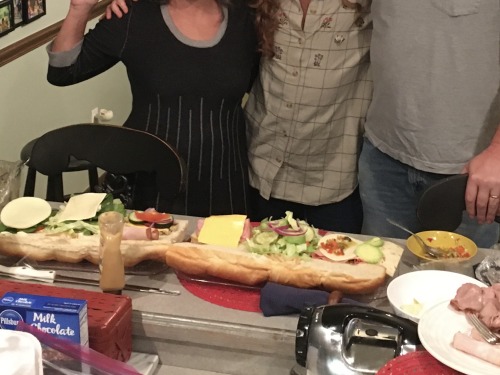
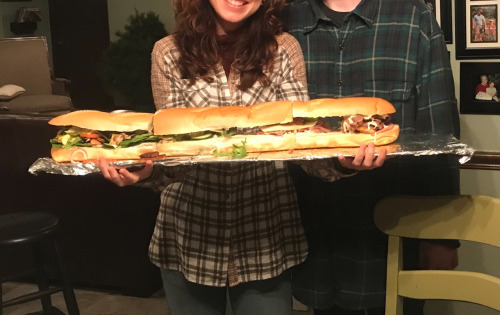
when i was a child my dad made up a fake holiday called big sandwich night the weekend after thanksgiving, during which we got the longest bread we could find and built a big sandwich together and then cut it up and ate it. we got really fancy ingredients and each built our own section of sandwich before cutting it. building the sandwich together represents community or teamwork or something. and then we would put our christmas tree up and the holiday season was officially kicked off with big sandwich night.

i grew up believing this was a real holiday that americans everywhere celebrated until when i was like 8 i asked a friend if they were excited for big sandwich night and they were like what the hell are you talking about riley. kind of shattered my worldview. but we still celebrate it and ive spread the tradition to friends and partners.

big sandwiches of years past:

1ff22f50b8e41de4bfabdc248b696387cdb699be
025ea969961a6250333c333f93ea7dd0a0e4f911

as weve included more people weve started having to graft loaves together to make a sandwich big enough for everyone. but it still communicates the core idea of everyone eating the same sandwich together in fellowship.

This is a good holiday tradition.


Tags:

#this seems related to the previous post #food #is the blue I see the same as the blue you see #the more you know


{{next post in sequence}}

moonlit-tulip:

Back when I was a teenager who’d just learned how to generalize the concept of Trying To Optimize Things, I found the concept of holidays somewhat silly. Surely, I thought, if a celebratory activity is fun or otherwise valuable enough to be worth doing at all, it’s worth doing always, rather than constraining it to one day a year. Surely, I thought, if a celebratory activity isn’t fun or otherwise valuable enough to be worth doing normally, it’s not worth doing during specialized holidays, either. And surely, I thought, even for those activities which are expensive enough or low-demand enough that it does make sense to do them relatively infrequently—expensive fireworks shows, for instance, or elections—it’s better to do them whenever it makes sense given the specific logistics of the limits they’re under, rather than pinning them to the calendar in any sort of strict fashion.

There’s a sense in which I still partially agree with my past self. There are many holiday activities, like wearing costumes on Halloween, that I’d find it valuable to disperse more widely throughout the year. (And, indeed, I struggle somewhat with finding costumes to wear for Halloween, nowadays, because I wear Whatever I Want all year round now and thus lack the “wear something I want to wear but couldn’t usually bring myself to for expected-social-disapproval reasons” angle of costume-selection which makes it easy for many others.) And there are many other holiday activities, like fasting on the various Jewish fast days I grew up with, which I find valueless enough that I don’t bother with them even during the holidays where they’re the Official Means Of Celebration.

But, looking back, my past self was looking at things through the wrong frame. The value of holidays isn’t specifically in doing things which are fun or otherwise valuable, but rather in doing things which shake oneself out of one’s usual life-pattern temporarily. Breaking from one’s standard daily routines, and thus getting the chance to notice flaws in those routines or opportunities for improvement, in a way which would be actively impeded were the celebratory activities to be made common enough for people’s standard routines to start factoring them in. The fun is just the hook to get people willing to take breaks from their usual patterns in order to participate in those routine-breaks.

Because there’s a large class of traps one can fall into wherein one has routines, these routines are bad (or at least less-good-than-available-alternatives) for achieving one’s goals, but the nature of the routines is such that it’s hard to notice the availability of whatever less-bad alternatives might exist. Having a dedicated day for “go do something weird and off-routine”, then, serves as a way to ensure that one has the chance to step out of whatever tunnel-vision one’s normal routines might inflict. A chance to rest and relax, if otherwise in a state of permanent exhaustion, or to do something intense-and-tiring, if otherwise not doing much; a chance to spend time hanging out with crowds, or with small groups of people, or alone, if one usually doesn’t get the chance for one or more of those activities; a chance to spend time outdoors, if usually inside, or to spend time inside, if usually outdoors; et cetera.

(These are, to be clear, not intended as an example of routine-breaking things that it would make sense to compress together into a single holiday, but rather as examples of things that would make sense to try to cover within the space of a properly-diverse collection of holidays.)

More specifically, then: a well-designed holiday should involve activities which are fun or otherwise fulfilling and worthwhile-feeling for most people—in order to drive people to participate—but which are not part of most people’s normal routines and not easy to integrate into said routines, in order to help give people the sort of out-of-routine experiences that might help them catch potential improvements to their routines. And then there should be sufficiently many different well-designed holidays that, even taking into account that any given person is likely to find some of the holidays unfun-and-thus-skippable and to find some of the holidays’ activities to fall within their normal routines, most people will still end up getting a nonzero number of properly-routine-breaking holiday experiences per year.

Not all holidays are well-designed, by this standard. America has several interchangeable holidays whose primary means of celebration is “do a barbecue”, for instance, and several more which don’t really have any standard celebrations at all beyond “take the day off work” and/or “do some sort of party maybe”, which would benefit a lot from more differentiation than they’ve currently got. But many holidays are well-designed, by this standard. So I no longer dismiss the value of holidays so much, nowadays. They’ve got room for improvement, sure—some holidays would benefit from the addition of more distinctive and/or more enjoyable celebration-patterns, and some days which currently aren’t holidays would probably benefit from being turned into holidays—but the general idea is sound, nonetheless.


Tags:

#yes this #but also‚ dedicated routine-breaking days serve as a *meta*-routine #a way to give rhythm to the passage of time #I’ve had to skip or reschedule so many holidays these past few years because of resource constraints and it’s awful to be so unmoored #(originally I was going to reblog this on Boxing Day) #(during the time I would normally have spent exploring the mall together with my mom but which we could not afford this year) #(but I was not really feeling up to talking) #(however‚ this week we celebrated my mother’s birthday late because everyone else was working that day) #(so this seems like another fitting time to bring it out) #((*could* we have arranged to take the day off? yes. but loss of wages is its own punishment.)) #time #tag rambles #adventures in human capitalism #is the blue I see the same as the blue you see


{{next post in sequence}}

eikotheblue:

tanadrin:

imagine the humiliation of having your brain prepared for upload so your digital shadow-self can be part of the immortal paradise-world an AI god has created, and being informed you have just an embarrassingly small compression size. like, “oh, yeah, you have a standard type 64-b personality, with minor tweaks. we can fit everything that makes you unique as a person into about six kilobytes.”

but you would also be finding out there’s so many people like you in the glorious paradise! imagine being only six kb of uniqueness away from a standard type of guy that God knows exists and can help you find! found family…


Tags:

#hmm #I can see both points #I think my *initial* reflex would be offense #and my reaction after a little more reflection would be ”where did you find people made from my mould and can I meet them” #is the blue I see the same as the blue you see #this probably deserves some warning tag but I am not sure what
mmilhouse:

i wish a songwriter wouljd be brave enough to write about the unexplored topic of having a fun night at the club


Tags:

#music #I didn’t actually laugh aloud but it still amused me enough to reblog #clubbers live in a dark-matter universe #witnessed only indirectly through their media #like alloromantics but much more so #(I do personally know a fair number of alloromantics) #(and even some alloromantic allistics) #(but the percentage of special interests depicted in pop music that are romantic is *way* higher than the percentage I see around me) #(in my own part of the elephant) #is the blue I see the same as the blue you see


{{next post in sequence}}

headspace-hotel:

The overwhelming dominance of free verse poetry in English sucks actually. It’s not a bad form but it IS bad that it’s the main form of english language poetry being published

I know everyone is conditioned to think rhyme, rhythm and meter is for either maudlin, sing-songy and childish poetry or excessively formal, pretentious poetry, but these things are just what makes phrases and lines memorable and punchy.

English naturally has rhythm and all poetry uses this stuff a little bit, it’s legitimately just What Make Word Sound Good

more importantly, rhyme, rhythm and meter are very connected to memory. there’s a reason why little songs and chants are our most enduring and effective memory tools

headspace-hotel:

It occurs to me that most people don’t know how these things work so here:

How Poetic Rhythm, Meter, and Rhyme Actually Work!

People seem to only learn about rhyme in grade school, and they don’t appear to learn that rhymes other than perfect rhymes (rhymes where the ending ‘sound(s)’ perfectly match) exist.

When I first got into writing my own poetry, I repeatedly heard “don’t use rhymes like ‘true’ and ‘blue’,” but for some reason it’s hard to find an explanation of this.

So here it is. “True” and “blue” are perfect rhymes because the ending sounds are identical.

Most pairs considered ‘rhymes’ in poetry do not perfectly match like that. I’m sorry grade school and colloquial usage lied to you. Rhymes are sounds at the ends of lines (or even inside lines!) that echo each other. That’s it.

Here’s a set of rhymes that are at least close to perfect, from the song “You Shook Me All Night Long” by AC/DC:

She was a fast machine, she kept her motor clean/She was the best damn woman that I ever seen

However, imperfect rhymes are REALLY, REALLY COMMON and they often sound better. Here’s a couple rhyming lyrics from the song “Every Rose Has Its Thorn” by Poison:

Every rose has its thorn/Just like every night has its dawn

This still rhymes. It’s just not perfect.

Here’s the thing. Rhyme is supposed to make Poem Sound Good On Brain, and it is only about 20% of what makes poetry Sound Good On Brain.

To talk about meter, we have to talk about stress. Stress is, like rhyme, inexact, but it arguably messes stuff up a lot more if you don’t understand it.

To explain what stress is, imagine this scenario: You are seen walking hastily away from the zoo in a ski mask, carrying a large cage covered with a sheet that occasionally emits strange sounds. (I promise this will make sense in a second.)

Before you can leave the parking lot, though, you are stopped by an angry zookeeper. “Did you steal the capybara from its cage?” the zookeeper asks.

You make one of the following excuses (please read these aloud, it’ll help):

I didn’t steal the capybara from its cage.

I didn’t steal the capybara from its cage.

I didn’t steal the capybara from its cage.

What are you doing to the bolded word that makes the meaning of your excuse different? You’re putting emphasis, or stress, on it.

All English speech naturally has places that are stressed. Without stress, it sounds like a robot in a 1970′s cartoon is talking. Specifically, almost all multisyllabic English words have specific syllables that are always stressed. (There are some regional variations.) You can figure it out by simply reading the word aloud with the stress on different syllables until you find the one that sounds normal and not evil:

  • Walrus vs. Walrus
  • Giraffe vs. Giraffe
  • Tiger vs. Tiger 
  • Baboonvs. Baboon
  • Ostrich vs. Ostrich
  • Raccoon vs. Raccoon
  • Penguin vs. Penguin
  • Gazelle vs. Gazelle
  • Gecko vs. Gecko
  • Vulture vs. Vulture

Okay, let’s leave the zoo. Try it with these words:

  • Divine
  • Shower
  • Convince
  • Pebble
  • Sidewalk
  • Carpet
  • Smoothie
  • Attract
  • Relax
  • Darkness
  • Garden
  • Surpass
  • Object

Wait, what’s that last one? That’s right, some English words are indistinguishable except for which syllable is stressed. “I object!” you might say at a wedding you don’t approve of. “It’s an unidentified flying object,” you might say if you glimpse an alien spaceship in a blurry picture.

Now try it with some three syllable words:

  • Immortal
  • Magenta
  • Poetry
  • Carnivore
  • Tomorrow
  • Entity

I feel like “entity” is a noun and “entity” would have to be a verb, if you catch my drift.

(You will notice that two-syllable English words typically have stress on the first syllable, and that three-syllable English words usually have stress on the second syllable or maybe the first.)

Single-syllable words have fuzzier rules. A single word can be stressed or unstressed depending on context. In general, content-heavy words are stressed, whereas connecting words that don’t have much meaning can kinda do what they want depending on the words around them.

English likes to periodically pick up stress, like a curious hiker periodically picking up rocks. You can barely say more than three syllables in a row without naturally emphasizing something.

This is convenient, because when stresses occur in a rhythmic pattern, ambiguous words will be swept along with the pattern.

Here’s another thing to read aloud. See which of the following couplets “sounds” better to you:

Supreme divine giraffes surpass raccoons/and gecko gods ascend beyond giraffes.

Angel giraffes beyond mortal knowledge/cannot defeat divine gecko powers.

Both couplets have the same number of syllables (ten in each line), but only the first line is metered. You might recognize it–it’s iambic pentameter! This is a form of accentual-syllabic verse.

You will notice that “pent” means five, but there’s ten syllables. Fear not– “pentameter” refers to the number of feet in the line. In this case, it’s the number of iambs. 

An iamb is an unstressed syllable followed by a stressed syllable. Giraffe is an iamb. Divine is an iamb. Any two syllables with that pattern can be.

There are three other main options for “feet” in English accentual-syllabic verse: trochees (stressed-unstressed), dactyls (stressed-unstressed-unstressed), and anapests (unstressed-unstressed-stressed). There is also the spondee (two stressed syllables) and pyrrhus (two unstressed syllables) but you can’t really write an entire poem with those (okay you TECHNICALLY can with the spondee, but there are only a few examples). Not all English meter is based on “feet,” but this is a good starting point.

When people think poetry, they think rhyme. Never meter. When people who haven’t studied poetry try to write poetry, they make it rhyme, but they don’t utilize meter.

This is not good, because in my opinion, rhyme, especially perfect rhyme, typically needs to be accompanied by some kind of rhythm to not sound like shit.

You know who can pull off perfect rhymes in poetry? Robert Frost. I’m going to put an entire poem here.

Whose woods these are I think I know.
His house is in the village though;
He will not see me stopping here
To watch his woods fill up with snow.

My little horse must think it queer
To stop without a farmhouse near
Between the woods and frozen lake
The darkest evening of the year.

He gives his harness bells a shake
To ask if there is some mistake.
The only other sound’s the sweep
Of easy wind and downy flake.

The woods are lovely, dark and deep.
But I have promises to keep,
And miles to go before I sleep,
And miles to go before I sleep.

This doesn’t have that cringy sing-songy effect that a lot of perfect rhyme creates, and I believe that this is BECAUSE the rhythm of the syllables is so formal and strict.

Imagine if it was like this:

These woods belong to someone I know.
He lives in the village though;
He will not see me stopping here
To watch his woods, all covered in snow.

This is so bad.

You can do really cool things with the combination of rhyme and meter. Here’s one of my favorite examples, with stresses bolded:

Now I’m falling asleep and she’s calling a cab
While he’s having a smoke and she’s taking a drag
Now they’re going to bed, and my stomach is sick
And it’s all in my head, but she’s touching his

What’s the pattern? Unstressed, unstressed, stressed. How many of these per line? Four. Anapestic tetrameter, my friends. Except, of course, for the last line, which we expectto rhyme with “sick.”

The pattern is so powerful that when you listen to the song, your brain fills in…a word rhyming with “sick,” and it really turns you upside down when the pattern isn’t finished as you expect.

“Mr. Brightside” isn’t the usual example of a song that is “poetic,” but there is a lot of very competent usage of poetic techniques in these lines. Pay attention to how rhyme is used here. “Cab” and “drag” are not perfect rhymes, but they echo. “Falling” and “calling” are perfect rhymes within one line. “Bed” and “head” are perfect rhymes in the middle of two consecutive lines. The words that end in “-ing” create echoes.

Rhyme is used, but it’s never used in the exact same pattern twice. The different rhyme patterns interweave with each other and create a lot of variety while still having continuity.

I don’t have a conclusion here. I just think it’s sad that this isn’t common knowledge, since we absolutely do have an intuitive understanding of when something scans and when it doesn’t—we know when something “sounds right.”

It disappears when we’re trying to write a poem on purpose, but it’s there when we’re parodying a song or slogan, or sharing variations of the “roses are red, violets are blue” meme.

amatalefay:

*bursts through the wall like the kool-aid man* POETIC METER MY BELOVED

I would argue that the best free verse does have meter—you can create rhythms without being so structured—but that’s because English is such a rhythmic language, and poetry relies on that.

I remember in one of my college poetry classes, I kept turning in free verse poems that the professor kept using as examples of meter. There was one specific poem about the rhythm of walking and how my disability interferes with that, and my prof was praising it to the high heavens because the lines describing other people’s walking were in iambic pentameter but the meter started breaking down as I described my own pace. None of that was something I thought about while writing, but it was absolutely something I emphasized in revision.

In my opinion, poetry is less about ‘poetic ideas’ and more about how language crafts meaning. Obviously, prose writers pay close attention to the rhythm and flow of their sentences too, but what we think of as ‘poetic’ prose doesn’t actually always make for good poetry. Good poems use the musicality of language itself to make their point.

headspace-hotel:

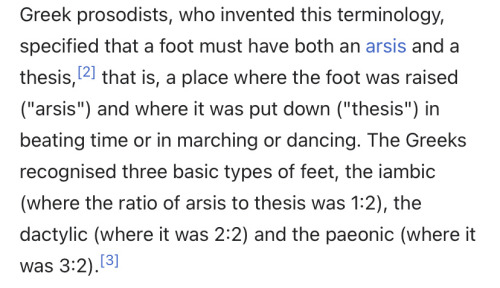
Hello Im vibrating at the speed of sound at the mere concept of that poem about the rhythm of walking because that’s where the concept of “feet” in poetic meter comes from

2bad23d4e6ddfee56950d5632ac1452a48a5a6ee

Art! Art! ART! Metamorphosis! TRANSFORMATION! RE-INTERPRETATION OF THE HUMAN EXPERIENCE! Beautiful! Enriched by diversity!

tairneanaich:

That first Iambic pentametre example BAFFLED me until I remembered that you probably say Raccoon with a different stress to how I do- those regional differences really matter!

foxofninetales:

THIS ALSO ABSOLUTELY APPLIES TO PROSE.

Like, you definitely don’t have to know about poetry to write prose, but if you love the kind of prose that sings on a sentence level and you want to know how to do that, READ POETRY.  Everything about poetry applies to prose – alliteration, rhyme, assonance, the visual structure and length of lines, and hoo boy howdy, does meter ever apply.

While you probably won’t use those poetry elements all the time, they will color your work, and when you need to have a showstopper sentence you can pull out those tools and make the words do exactly what you want.  And the bittersweet joy of this is that most readers won’t realize why they are being so affected; they’ll think it’s just plot and character and setting and theme and not know that they’re being influenced by the very beat and flow of the words themselves.

There’s music underneath the words and that is why they sing.

>>Here’s another thing to read aloud. See which of the following couplets “sounds” better to you:

Supreme divine giraffes surpass raccoons/and gecko gods ascend beyond giraffes.

Angel giraffes beyond mortal knowledge/cannot defeat divine gecko powers.

…the second one.

The first one is too repetitive, especially the first line where the iambs are all separate two-syllable words. It’s *slippery*: it goes in one ear and out the other, there’s nothing for the brain to grab onto.

The second one has more variation, a *rhythm* rather than a dull monotone beat. And its second line has exactly the same stress pattern as its first line, which gives it a nice echo.

>>And it’s all in my head, but she’s touching his

I expect this *would* work for me in audio, but in text my first thought for the missing word was “head”, that it was referencing the first half of the *same* line rather than the end of the previous line. It works out to the same meaning, but still.


Tags:

#apparently I am not getting a good grade in having an artistic instinct #reply via reblog #art #poetry #is the blue I see the same as the blue you see #this probably deserves some warning tag but I am not sure what