The Sorting Hat Chats System – Elim Garak (Deep Space 9)

wisteria-lodge:

Right. This was supposed to be a DS9 sorting, and it got… a little out of hand.

I blame the very complex @sortinghatchats (not really.) Anyway, their system gets very deep very fast, so I recommend their breakdown of the basics, but basically, their character analysis system gives everyone TWO houses.

Your Primary house is your MOTIVATION. It’s why you do what you do

  • GRYFFINDOR: I do what I feel is right (MORAL)
  • RAVENCLAW: I do what I decide is correct (LOGICAL)
  • HUFFLEPUFF: I do what helps my community (PEOPLE MATTER)
  • SLYTHERIN: I do what helps me/my inner circle (FRIENDS MATTER) 

Your Secondary house is your METHOD. It’s your toolbox, how you like to get stuff done; 

  • GRYFFINDOR: Charge! React! Smash the system!
  • RAVENCLAW: Plan, make tools, gather information.
  • HUFFLEPUFF: Community-build, grind for points, call in favors
  • SLYTHERIN: Transform, adapt, find the loophole

So Hermione Granger would be a Gryffindor Primary / Ravenclaw Secondary. She fights for her moral cause by gathering knowledge and learning skills. 

Now let’s talk about Elim Garak. What did I get myself into.


Elim Garak wants you to look at him and see a double Slytherin pretending to be a double Hufflepuff. And his Puff performance is really just the thinnest, most pathetic layer possible. Barely enough for plausible deniability. Lots of “Whhhaaa, lil’old ME? A poor simple TAILOR who wants NOTHING MORE than to make BEAUTIFUL CLOTHES for the people of this FINE STATION? That top secret security clearance code was… something I happened to OVERHEAR. While hemming PANTS.”

Yeah. You are supposed to dismiss that immediately, look beneath “plain, simple Garak” and see the Obsidian Order operative. You are supposed to look at Elim Garak and see a suave, dangerous chameleon who is always lying, always looking out for himself, very International-Man-of-Mystery, very classical Slytherin. (And kind of a flattering self-portrait, if we’re being honest.)

But that’s not real either. 

When we see Garak’s real Slytherin Secondary – it’s terrifying. Because it’s subtle. When Garak is really lying, really manipulating, you won’t know it until long after the game is played. We see him maneuver Captain Sisko into assassinating an ambassador by feeding him just the right information at just the right time, ramping up the stakes, giving him space, playing into the sunk-cost fallacy, persuading Sisko to bend the rules just a little bit… and a little bit more…

Garak is a master at this. He gets Julian Bashir to run a dangerous errand in “The Wire” by deliberately pinging his hero tendencies – and dropping the name of the relevant system into the conversation, making it look like the natural slip-up of a sick, dying man. Julian goes after Tain for him, and goes after Dukat for him. Garak once deflected an attempt on his life by planting a second bomb himself. 

He’s got one hell of a Ravenclaw secondary too. This is Garak the hacker, Garak the codebreaker, Garak who can re-wire a subspace transmitter under truly adverse conditions. But I think that his Ravenclaw is a tool that’s been trained into him – it’s not close to his identity, it’s not close to his heart. When Garak thinks “Ravenclaw Secondary” he thinks of the borderline omniscient Enabran Tain, and knows that his own Ravenclaw is only a pale imitation. Enabran Tain himself is a surprisingly straightforward Slytherin/Ravenclaw – but Garak’s got such a twisted, messy relationship with him that it’s spilled into the way he relates to Ravenclaw Secondaries in general. 

But. Garak is not the Obsidian Order’s best assassin. He’s not their best spy. He’s not their best code-breaker. He is their best interrogator. So what does that mean???

Interrogation styles + Hogwarts Houses

I’ll admit this question lead me down a sort of research rabbit hole. I know all kinds of things about interrogators and interrogation techniques now, and it’ll probably screw up my algorithms for a little bit. But I’ll talk in terms of Hogwarts houses and fictional characters, because that’s the lens I’m looking though. 

You can definitely interrogate with all the Secondaries. There’s the Gryffindor approach: just steamroll over your subject with conviction and energy. (Batman, Jack Bauer). There’s the Ravenclaw method: cold, controlled, omniscient, your subject is simply a puzzle, a Rubik’s Cube to be solved. (The Stazi ‘hero’ of The Lives of Others, most villainous interrogators.) There’s even the favored Slytherin approach, where you stage things so the subject doesn’t even know they’re being interrogated. (Gus Fring of Breaking Bad interrogating people under the guise of cooking with them, or explaining a job to them, or serving them food. Marina of The Magicians pretending to be an overwhelmed new recruit in order to vet Julia.) 

But the more I read about the very best, most successful real-world interrogators, the more I read about sympathy, empathy, respect, compassion, friendliness. Good interrogators are easy to talk to. They want to understand where you’re coming from. They’ll give you coffee, or scotch. They’ll watch TV with you. “I totally get why you did it, hell, I would have done exactly the same thing in your situation. I want to help you out. You’re not really in trouble. I’m just confused – I think my boss got this one part wrong. Wait, before we get into that, a funny thing happened to me on the way to work.” The current thinking says that star interrogators are Hufflepuffs. Or at least Slytherin Secondaries who are really good at looking like Hufflepuffs. There aren’t too many straightforward fictional examples – Will Graham of Hannibal, maybe? 

But this is how Garak interrogates. He prides himself on never touching his subjects – he doesn’t need to. All he needs is a tiny bit of Cardassian threat in the background. When he successfully breaks Odo, it’s because he comes at the situation as a friend. (And the way he justifies it as “just business” matches up with my research.) Garak is charming, and funny, and really good at understanding people. I also think his general look helps him interrogate. Most high-ranking Cardassians look like Dukat: dark hair, dark eyes, tall. It’s probably an “aristocratic” thing: our fascist space lizards definitely messed around with genetic augmentation / eugenics at some point. But compact little Garak? With his bright blue eyes? Lower class. (After all, his mom was a housekeeper.) 

I bet Garak leveraged that vibe into approachable and trustworthy, used it to seem more on a level with his Bajoran detainees. Imagine what a relief Garak would be, after talking to Dukat for five hours. 

So. Is Garak a Slytherin Secondary with a really good Hufflepuff model, or a Hufflepuff Secondary with a really good Slytherin model? I thought about that one for a while. And I’ve come down on the side of Hufflepuff. 

It’s just. He keeps up that Hufflepuff outside the interrogation booth, when it isn’t useful. Garak creates communities, almost involuntarily, even when it’s a bad idea. (Getting close to Julian and Ziyal was risky.) It bothers Garak that his friendships are so real. He hates that the dirty looks the Bajorans give him bother him so much. He has a huge network of contacts, still. And his problem-solving fallback is not Slyth transformation, but Puff diligence. Stare at the detainee for four hours. Assassinate the politician by spending six months pruning bushes at the embassy. He’s “a very good tailor” after all. I can’t help but think that a more Slytherin Garak would have at least been tempted to make a quick buck doing odd jobs for Quark. Or apolitical Odo, who he clearly respects. But no – Garak sets himself up with a job that requires a down-to-earth Hufflepuff work ethic.

In “Purgatory’s Shadow” Garak thinks that his life is really, truly threatened. And he responds by asking for help. He does it in an absurdly underhanded Slytherin way, but. When he is in trouble, Garak phones a friend. Watch him. That is always his first instinct.

[The one Secondary Garak just absolutely does not understand is Gryffindor. He respects Gryffindor Secondaries, and he recognizes that people like Kira and Dax have them – and then he just gives those people a lot of space.]

Figuring out Garak’s primary was actually pretty easy. Because before he is anything else, Elim Garak is a Cardassian patriot. That motivation is so clear and so loud that it cuts though everything else no problem. He’d die for Cardassia. He’d let Julian die for Cardassia. He’d commit genocide for Cardassia. And if there was a single Gryffindor bone in Garak’s entire body, he would have felt at least a little guilty about that last one. But Garak seems to distrust the entire concept of morality, the way a lot of Loyalist Primaries do. “A real intelligence agent has no ego, no conscience, no remorse, only a sense of professionalism.” As far as I can figure out, that’s his credo. 

But you know what Garak does feel guilty about doing?

Helping the Federation fight Cardassia. 

Even though he knows “Cardassia” is a Dominion-controlled puppet state, even though he knows he’s doing what’s best for his planet in the long run, when he’s decrypting messages that help Federation ships kill Cardassian citizens, he gets debilitating panic attacks. 

But Garak is not loyal to the Cardassian High Command. He’s not even loyal to the Obsidian Order, not really. He’s loyal to an ideal, to an almost poetic sense of what Cardassia really is, that has more to do with art and literature and tradition than it does with politics. And he is never able to shake this feeling, even though at a certain point I think he could have sold his soul to be a Slytherin Primary, loyal only to Enabran Tain. 

Because if you want to talk about Garak, you have to talk about why he is living in exile. He gives Julian three different explanations: he got sloppy, he got lazy, and he sabotaged himself. I’m sure Garak has believed all of these himself, at one point or another. But I think he’s too much of a solid Hufflepuff Secondary to get sloppy or lazy, so I’m going to look at the last one. What happens when the *real* Cardassia shifts too far away from the *ideal* Cardassia that Garak is loyal to? When families like the Dukats gain too much power? I think Garak starts making mistakes, because he can’t reconcile that crack in his Primary. Just like when he makes mistakes later on, forced to fight his Cardassian countrymen. 

tl;dr

Garak is a double Hufflepuff, loyal to a sort of ideal Cardassia. He can model one hell of a Ravenclaw secondary, and one hell of a Slytherin secondary, but in the end they are not as close to his soul – not as important to who he is as a person – as that Hufflepuff. But he’s still a spy. So he constructs a very careful performance that he wears… most of the time. And that performance is an exaggerated double Slytherin pretending to be an exaggerated double Hufflepuff. 

So yeah. I am saying that Garak is a double Hufflepuff who pretends to be a double Hufflepuff. And I think that would make him smile. 

JULIAN: Of all the stories you told me, which ones were true and which ones weren’t? 

GARAK: My dear doctor, they’re all true. 

JULIAN: Even the lies? 

GARAK: Especially the lies. 

Also, thank you @featherquillpen for the charming episode write-ups. They were a source of inspiration. 


Tags:

#Star Trek #DS9 #meta #interesting #sorting #long post
O.L.A.F. (Odious Lusting After Fortunes) by BenedictIde

{{Title link: https://benedictide.itch.io/odious-lusting-after-fortunes }}

itsbenedict:

My entry for the RtB tabletop game jam is done! This is a game that exists for those of us who aren’t getting enough heinous villainy in their day-to-day, and need an opportunity to set pretend fires, commit pretend murders, and kidnap pretend orphans. Isn’t that what everyone really wants to do, deep down? Hunt down some orphans, murder the people protecting them, and abduct them in order to steal their exorbitant inheritance? Yes, is what I’ve decided the answer to that question is.


Tags:

#A Series of Unfortunate Events #games #interesting

the fine art of positive beta-ing

maryellencarter:

may-shepard:

(This post was inspired by the incredible writers at the 2018 Fic Writers’ Retreat, which has just wrapped, and especially by @shamelessmash and @nautilicious. I love you awesome nerds!)

I have a confession to make: for a long time, I thought I was a writer who could not receive feedback. In an effort to hone my craft, I attended workshops and took classes where critique circles were part of the deal, hoping that some insight that my crit partners offered would help me get better, and better. This, I thought, was what I needed: another flail, in addition to the ones I applied to my work myself.

You know this kind of workshop, and this kind of attitude. Maybe you are holding onto it yourself: good writers are forged in Hell Places where All Mistakes Must Be Pointed Out and Eliminated and If You Can’t Take the Heat Get Out of the Kitchen. I was told that my use of commas was annoying. I was told that my choice of subgenre was untimely. I was red penned into a stupor. 

Despite the fact that I was able to edit myself to the point where I got a few pieces accepted for publication, crit never, ever worked for me. I emerged from these experiences both pissed off and self-flagellating. I couldn’t see through the multiple and often contradictory corrections offered by my fellow critters, or the instructor, when I was taking a course. 

Any piece I exposed to someone else’s crit, I always trunked, totally convinced that the problems with it were intractable, and that there was no point in trying to fix it. Worse yet, I felt like somehow I’d failed as a writer: I couldn’t take the heat. Perhaps it was time for me to exit the kitchen.

After a few failed attempts to find a crit circumstance that worked for me, and a really long bout of writer’s block, I managed to recover myself enough that I could write, by convincing myself that maybe I was just not a crit sort of a writer. I limited myself to troubleshooting my plots with my partner, who is great at reworking plots. As for making my craft better, I decided to go it alone.

Then I met @shamelessmash​, and everything changed, because she changed the way I look at the act of beta reading, and the way I do it.  

Way back when (uh, at 2017’s Fic Writer’s Retreat?), Mash and I were both working on longish projects, and, in part because I had a hand in helping her develop the idea for her lovely Sherlock fic A Case of Identity–The Musical, we agreed to trade beta. 

(I can admit now that I hoped that she would accept beta from me and then like, forget that she’d offered to beta my fic in return.)

When she first asked me to read a chapter of ACOI, she specified that she wanted squee only: just positive feedback on what was working so far. I’d never had anyone ask that before, so I had no idea what was going to happen next. (Spoiler: really great things.) 

At first, I thought, no problem! The fic was in the early stages of development, and we all want a little bit of encouragement along the way. As I read, and I thought, oh, there’s a comma here, a verb that could verb in a verbier way over there, I was tempted to mention it, but then I remembered her request and I refrained. I try, when I can, not to be a shitty friend. I also try not to be a shitty beta, which, hey you guys, means respecting the writer’s right to ask for the kind of feedback they want, and trying your best to offer it. 

At the same time, the part of me that wants to be useful was squirming. How could 100% positive feedback possibly help someone hone their work into something better? 

Boy was I about to find out. You will too, under the cut.

Keep reading

THIS THIS THIS THIS THIS

i haven’t ever managed to write this post but even though i’m primarily a spag (spelling punctuation and grammar) beta by instinct, i feel so passionately that the primary duty of a beta is to help their writer *flourish*. i use parenting tips like “always sandwich a criticism between two pieces of encouragement / squee” to make sure i’m not discouraging my writers. the worst thing you can do as a beta, a fundamental betrayal of your own craft, is to make your writer want to stop writing. and yet it’s so common! :P

(your writer will not necessarily *tell* you “your feedback was too harsh / inconsiderate / brusque and made me want to stop writing”. so you have to keep an eye on yourself. even if you’re correcting the thousandth misused semicolon in a spag beta, you *cannot* get snippy or snarky unless you know for 100% sure that your writer will find that amusing and not hurtful.)

another thing i do, another rule i try to follow as a beta to make sure i’m supporting my author, is whenever i point out a problem, i try to offer a solution. sometimes i don’t have one! sometimes it’s “this word order feels clunky but i’m not sure what else to do with it, what do you think?” but i try to always offer a solution or open a dialogue or both. sometimes it’s “how about we move this phrase over here”, sometimes it’s like “does that make him feel like this, or that, or more like the other thing”, sometimes it’s “is he still sitting down or did he stand up?” sometimes just checking on what an author meant to do is enough to help them realize they didn’t do it.

and like op said, don’t be afraid to squee. even when i’m doing a straight-up spag beta, i’ll wind up throwing in a few “i love this turn of phrase”, “this moment is adorkable and amazing and perfect”, “PRECIOUS DINGBAT”, because if you like something, why not say so? and if you don’t like anything your author is doing, why the fuck are you betaing for them?


Tags:

#interesting

theunitofcaring:

I’ve been on Twitter lately since it’s part of my job (not in the sense anyone told me to do it, just in the sense lots of traffic comes from there and lots of conversations happen there which I need to stay on top of) and the ways it’s different than Tumblr are interesting.

I actually like Tumblr’s atmosphere a lot better. I super don’t know how much of this is who I choose to follow on each platform, and it’s plausible that this is 100% selection effects, but I feel like most of the people who are mad here are mad from personal experience about bad stuff that’s affecting them, even if they’ve picked a wildly unproductive or inappropriate paradigm to use to engage with it. People are upset that their community doesn’t have stuff they need, or upset that the words they use to describe their experiences are getting used differently by other people. And – even when I think they’re wrong, it’s really valuable to understand what things are hurting people. 

On Twitter people are mostly mad about the news of the day. And it’s not that the news of the day doesn’t matter and doesn’t affect thousands or hundreds of thousands or millions of people, but the vast majority of the reactions are not about how the news affects people, by people affected. They’re broader and more narrativizing and more focused on who wins and who loses, and unless you have the pitch-perfect personal angle I think it’s regarded as a little self-centered to engage with the news by thinking about the things that are hurting you and why they’re hurting you. 

Also, most people on Tumblr are young and I see them grow and evolve a lot over time. Most people on Twitter are older and it’s kind of rare to see them change their minds. 

I think serious ideas from way outside your bubble are more likely to reach you on tumblr, since people have enough time and space to spell them out at enough length they seem interesting even to people who don’t already agree. 

And… I’m less sure about this one, but I think tumblr might have already built up some immunity to some of the pure-outrage conversations that I see on twitter a lot. Most people here are survivors of at least one fandom blowing itself up over disagreements that were deeply felt and deeply hurtful but, ultimately, didn’t make the world a safer place for a single person, and I feel like most people who I follow on here are pretty good at identifying those dynamics when they crop up. I do not think most people on Twitter has gotten good at this yet. And wow, I hope they do soon.


Tags:

#interesting #Tumblr: a User’s Guide #Twitter #discourse cw?

{{previous post in sequence}}


gasmaskaesthetic:

theopjones:

brin-bellway:

theopjones:

collapsedsquid:

Peterson may be an academic, but he’s dispensing with the academy’s constraints. His university salary is around $128,000; that now looks modest beside the $1m a year he receives in crowdfunding via the site Patreon, in return for YouTube Q&As. Traditional universities charge “unforgivable” fees, and “haven’t got a hope of surviving in their present form”, he says. He has hired three people to work on a proposal for a new online university — “user-funded at the lowest possible cost, but also crowdsourced in terms of its operation”. He is in touch with Peter Thiel, the venture capitalist who urges undergraduates to drop out. There’s a blurred line between the thinker and the salesman, and Peterson has crossed it.

Goddamn it Peter Thiel

It’s totally poisoned because Peterson is tied to it.

But the online university thing might not be a bad idea. You could probably replace quite a bit of the operation of a modern university for lecture-based subjects with a mix of pre-recorded videos, and decentralized discussion with other students, and “crowdsourced”  operation that relies on offloading some tasks to students. 

Probably the biggest issues would be to sell it as something that people consider reputable (a number of purely online universities exist and have lower costs, but they have issues building a reputation), and dealing with things like arranging for securely proctored tests. 

When you say that test proctoring would be a big issue, do you mean you think it would be a big issue for online universities *in general*, or specifically a problem for online universities who are aiming to destroy the old tertiary-education system (rather than just adding more options to it)?

My university technically has a corporeal campus, but I’ve never been there and neither have the vast majority of the other students. They have standing arrangements with a bunch of universities, community colleges, and…*looks at list*…huh, libraries too, maybe you *could* make this system work even if you’re trying to end all corporeal campuses (and so don’t want a system dependent on them continuing to exist). Anyway, they have standing arrangements with a bunch of places across the country to host the exams of the local students. My local community college charges the student a $30/exam hosting fee (to compensate for increasing their proctor’s workload and such), but other than that it’s really a non-issue.

(The computerised exams also have an option to have somebody watch you over a webcam, but I’ve never tried that.)

(now if only my university would join the reciprocal college Internet system, because as it stands I’m not allowed to use the Wi-Fi at *my own exam centre*, and it makes coordinating with my ride a lot trickier. but that’s another matter.)

I see people sometimes who think that exam proctoring is some massive obstacle that online universities will soon face and probably fail to overcome, and it’s like…

One time I read an article about how self-driving cars on public roads would be a disaster, because–not being able to make eye contact with the driver–pedestrians would have no way of knowing whether the car had noticed them and would stop for them, and the car and pedestrian would get into standoffs where neither was willing to risk moving forward (or, worse, *both* of them gave up waiting for the other at the same time). The writer appeared to think that this was insurmountable and would destroy all public goodwill towards self-driving cars.

A few months previously, I’d seen a news clip about a self-driving-car prototype with a smiley-face-shaped light on the front, which it lights up while stopping for a pedestrian in order to let the pedestrian know they’ve been noticed.

The way I felt reading that self-driving-car article is how I feel when people say online-university exam proctoring is a huge issue. The doom they are just now getting around to foretelling has already been noticed and averted, and without anywhere near as much difficulty as they think it’s going to take.

Interesting. 

Most online college classes I’ve taken have either had no proctoring system or some terrible web-based one that caused a lot of issues. One of the nearby community colleges did proctoring for a fee as a service but the classes rarely allowed that option to be used. Maybe its consistently better ran by colleges that are purely online than colleges that are mostly meatspace but offer a few online classes.  

…I graduated from a great (accredited, affordable, semi-self-paced!) online university. Our test proctoring was done over webcam and had fairly stringent rules (360 pan of the room, ID, etc). I had a test ended by the proctor once for looking like I had something written on a calculator. You could cheat with the level of difficulty similar to a normal classroom exam but not any more easily than that.


Tags:

#interesting #adventures in University Land #conversational aglets #proud citizen of The Future

unknought:

the-lost-alchemist:

worldsworstfather:

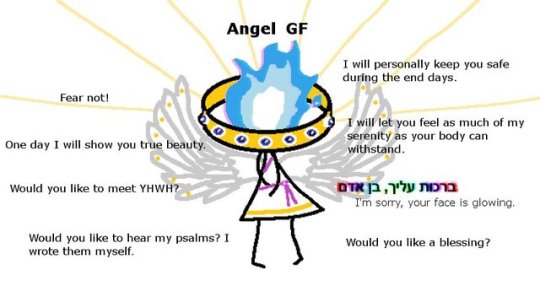
me n my angel gf

me, bleeding from my eyes nose and ears: bb ur hand is so…….so……….uh,

her: Ḓ̬̱͘͢ͅO̸͉̳̖͉̙ ͔͜N͓̮̦̱͝O̧͇̙̲̜͔T͇̯̮̦̖̖ ͙͇͇̖̝̹͜B̧҉͍͈̭̭̰̳͙ͅE̴̗̱̫ ̛̞͞ͅA̶̡͙̞̪̞̻̰̬̦F̛̗͙̗̲̦͕̟̙́R̶͍͉̠̖͖̮̀́A̦̠̮̜̺͟I͓̻͢͞Ḓ̹͇̮̬͈

Okay, I want to break down what’s going on in these posts, at least for me.

The aesthetic being invoked here is of what Tumblr calls “eldritch angels”. “Eldritch”, in turn, calls to mind H. P. Lovecraft, who really liked the word and prior to whom I think “eldritch” was basically a synonym of eerie. But now the word invokes something vast and strange and terrifying, such that the mere perception or understanding of it is dangerous to one’s body or mind.

Lovecraft’s eldritch horrors are representative of an uncaring universe. On the scale of the cosmos, humans don’t matter, goodness doesn’t matter, nothing matters. The universe is huge and amoral and ruled by a blind idiot god.

Eldritch angels, on the other hand, say there is an ultimate and objective source of goodness, that there is a divine plan, but it’s one that’s vaster and stranger than you can understand. It’s not an uncaring universe, but it’s one that cares a lot less about you than you might have hoped. A lot of what’s truly, objectively good is barely recognizable as such or beyond your comprehension entirely.

So in this context, the “angel gf” fantasy does a couple things. First, it flips the script. Yes, you’re a microscopic part of an incomprehensible cosmic plan, but also the angel gf cares about you specifically. You (in particular) matter (cosmically) because you matter to her.

Second, romance is, to a significant degree, about letting in the Other. There’s someone who cares about different things than you, does different things, has a whole life separate from yours… and then all of that comes to be a part of your life too. Like, forget the mysteries of the cosmos, I’m not sure the human mind is capable of truly, fully comprehending the idea of a whole entire life separate from one’s own. The draw of the numinous and the draw of romance are both about taking something outside yourself, greater and more important than you can fully understand, and drawing it close to your heart and understanding it as much as you can.


Tags:

#interesting #meta #angels #this probably deserves some warning tag but I am not sure what

{{previous post in sequence}}


inrealityadream:

Who the fuck names horses


crystalsoulslayer:

No horse in these races can have the same name as any other horse that has ever entered in the history of horseracing. They had appropriate ones at first. Then, slowly, like profiles on the Gaia forums, all the good user IDs URLs horse names got taken. Currently, they’re being named by rich old white guys. If our generation ever starts participating in this, I anticipate solemn-faced announcers on ESPN498 speculating on the Vegas odds for x_FURY-666-WRATH_x.


tkingfisher:

I look forward to TheRealDrizztDo’Urden69 taking the Triple Crown. 


sinesalvatorem:

Not necessarily. If you’re creative enough, you can invent a euphoninic name that no one has ever used before. Or, if you aren’t, you can just make a computer do it for you like ilzolende did.


brin-bellway:

I look forward to Ilzolende taking the Triple Crown.


sinesalvatorem:

Can I train you, ilzolende? I want to be the very best, like no one ever was….


serinemolecule:

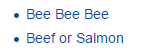
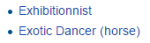
For the longest time, Starcraft the horse was what you got if you looked up “starcraft” on Wikipedia.

Not even a disambiguation page! You just went straight to the horse.

It took so many edit wars to get it to the current state where Wikipedia finally accepted that most people typing “starcraft” into Wikipedia are looking for the video game, not the horse.


Tags:

#interesting #not sure how to fact-check this


{{next post in sequence}}

Why the #CrouchingTigerHiddenData research should matter to you.

why-animals-do-the-thing:

Now that I’ve walked everyone through the research I’ve done on captive big cat populations in the United States (all tagged #CrouchingTigerHiddenData) and a majority of the data that came out of it it, let’s talk about why it was important to examine on a practical level. 

(Photo Credit: M. Hummel-Uzzi)

Big cats are iconic, beloved animals. It’s hard not to care about them and and about conserving them. The only way conservation strategies work is when they’re based on accurate data. The only way laws that keep people safe when dangerous animals are involved work is when they’re based on accurate data. In today’s world of “fake news’ and “alternative facts”, there is nothing more dangerous than actions based on misinformation. You’re probably following this blog specifically because of the insistence on data, citations, and sources.

So you should care about the big cat research I’ve done because what I’m telling you is that the dominant narrative in the United States – the one taken as fact by the zoo industry, the sanctuary groups, the animal advocacy organizations, and even our legislators – is mainly based on “facts” that aren’t real anymore. The effects of that are already tangible, and are primed to get a hell of a lot worse shortly. If you care about the conservation of big cats, or you want effective advocacy to ensure the welfare of captive big cats in the United States, this is a problem.

Here’s a summary of what I’ve personally been able to prove that goes against what’s “known” to be fact:

That all sounds pretty great, right? A major issue that did pose a lot of safety risk has been resolved successfully! There isn’t actually a captive big cat crisis in the United States!

And it is great. Except for the fact that the sanctuary industry and the animal rights groups aren’t talking about it. In fact, they’re still saying exactly the opposite: that there’s a huge problem involving tens of thousands of captive big cats that requires immediate action and support and lots of donations from the general public. Why would they do that?

Maybe they don’t know. After all, a lot of my write-ups did focus on the fact that privately owned exotic populations aren’t an easy topic to study. But… I was able to figure it out. Me, a lone researcher without funding or any professional backing, was able to compile data and assess the trends in it. Why haven’t these organizations that are so concerned about the captive big cat crisis in the country done the same work? My research was based on a lot of data and testimony derived directly from those organizations, so it’s not like they wouldn’t already have any easy time of it.

If the groups that are pushing legislation to “fix” the big cat crisis, or asking people to donate money to help them advocate for and rescue all the “backyard cats” being harmed by the crisis haven’t actually put in the effort to find out if their work is successful? That looks pretty negligent. The public trusts sanctuaries and their accrediting groups to be telling them the truth about the state of captive big cat issues in the United States, but all they’re currently doing is recycling a narrative that’s two-decades old.

The other option for what’s going on is less charitable. Maybe these organizations do know things have changed, and have chosen to mislead the public. There are certainly things that seem to imply that, like the tacit acknowledgement I found in court documents that there aren’t actually that many people breeding cubs unethically anymore. One of the most vocal sanctuaries even puts in their reports how much they’ve seen the need for rescue drop – and that most of their new animals are now coming from other USDA-licensed facilities – yet continues to put materials in front of congress about the plight of tens of thousands of big cats that need to be rescued from backyards and private owners in the United States. This is just a selection of statements currently on live, up-to-date websites maintained by sanctuary and animal advocacy groups about the “captive big cat crisis” right now, in 2019:

  • “An estimated 10,000 to 20,000 big cats languish in deplorable conditions in backyards, roadside zoos, and traveling exhibits throughout the US. Tigers and lions should not be pets or bred and exploited for profit. While some states have regulations that attempt to protect big cats, decades of experience have proven they don’t work.” – Big Cat Rescue 
  • “By today’s environmental standards, a self-sustaining tiger population – based on 7,000 plus animals – would be considered a success story. However, when those 7,000 tigers are found in captivity – living outside of our public zoo system – it is considered a travesty.” – The Wild Animal Sanctuary
  • “An estimated 10,000 big cats are kept as pets and for profit in places like basements, backyards and roadside zoos throughout the U.S. today. In fact, the U.S. is thought to be home to more captive tigers than are found in the wild.” – The International Fund for Animal Welfare
  • “Most of the estimated 5,000 to 7,000 captive tigers in the U.S. are held at roadside and traveling zoos, pseudo-sanctuaries, and private menageries where they are subjected to extreme confinement and neglect.” – The Humane Society of the United States  
  • “There are more tigers in backyards across the U.S. than in all of the zoos put together.” The Wildcat Sanctuary

A great example of how fast and loose a lot of these statements play with data and sourcing is that last quote. It’s attributed on the web page to Ron Tilson – AZA’s tiger guy – but he died in 2013 and I haven’t found a source yet for the statement they’re claiming he made. That’s maybe excusable if you’re just running a personal website, but that’s really low-quality work for a professional education and advocacy group dealing with big cat issues on a federal level. 

Quotes like what are listed above are frequently seen used to promote legislation at a state and federal level, the best current example of which is the Big Cat Public Safety Act. I’ve broken down the most recent version of the bill (from the 115th Congress): while it’s marketed as a way to end the “big cat overpopulation crisis” in United States, what it would also do is place massive restrictions on the operation of zoological facilities holding big cats, and would potentially even effect the function of conservation breeding problems. (Bills that impact conservation work while trying to restrict pet ownership of big cats have occurred before – Michigan passed a bill in 2000 that has banned even AZA conservation breeding in the state for the past 19 years). The Big Cat Public Safety Act has been introduced in congress multiple times – and will be introduced again during 2019 – and the messaging is always focused on marketing two concepts to congresspeople: that they need to protect their constituents from the major safety risk posed by multiple thousands of big cats living secretly in backyards in their communities, and that they need to save these thousands of big cats from suffering in horrible living conditions. Those sound like really compelling arguments for passing a federal law …  if you don’t know they’re all based on completely outdated information. 

So what we’re left with is a really uncomfortable truth: either the major groups that are currently involved in captive big cat advocacy are completely out-of-touch with the reality of big cat populations in the United States, or they’re aware of it and purposefully misleading the public in order to fulfill their agendas. I don’t know which scenario is true. I can’t imagine the major animal advocacy groups don’t have the money and manpower to do follow-up studies on the efficacy of their own work. I also can’t imagine that sanctuary groups, the majority of whom do very good work, would lie to their supporters in order to get laws passed. 

As someone who loves big cats and wants to see successful conservation work and effective advocacy done on their behalf that’s based on accurate and up-to-date information, on a practical level, it doesn’t matter. Whichever way you slice it, it’s a huge problem that all of the major organizations influencing what can be done with big cats in the United States are perpetuating massive amounts of misinformation and show no apparent interest in rectifying that situation. 

Links to the full #CrouchingTigerHiddenData tumblr writeups and the research pieces are below the cut. If you think my work is important, please consider supporting it through Patreon or Ko-Fi. 

Keep reading


Tags:

#reblogging this one because it’s the one with the table of contents #interesting #tiger #debunking #this probably deserves some warning tag but I am not sure what