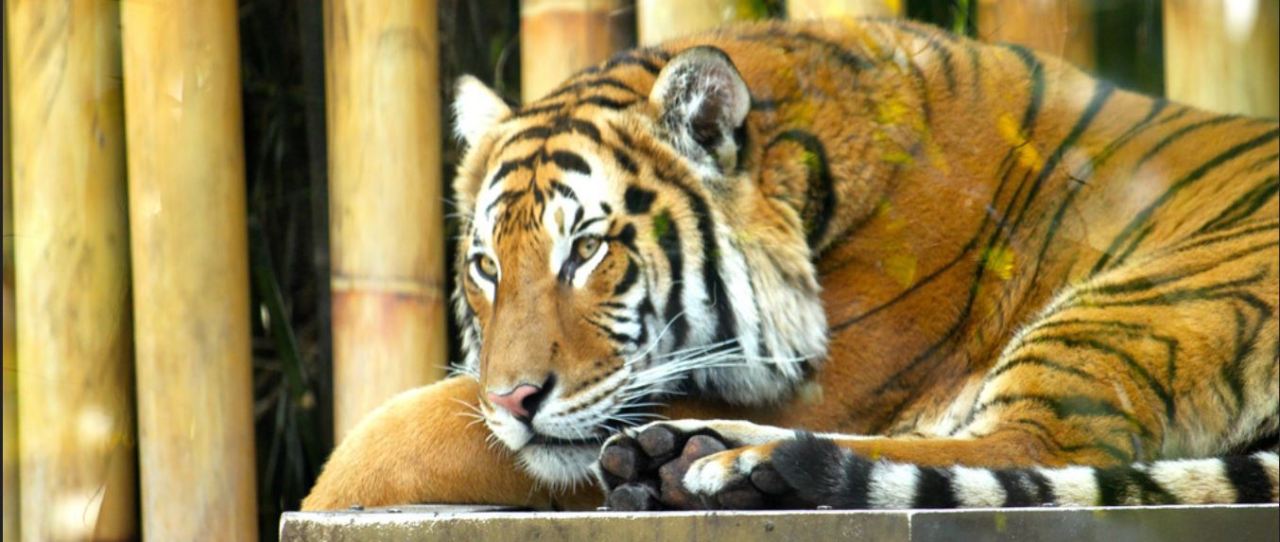
Now that I’ve walked everyone through the research I’ve done on captive big cat populations in the United States (all tagged #CrouchingTigerHiddenData) and a majority of the data that came out of it it, let’s talk about why it was important to examine on a practical level.
(Photo Credit: M. Hummel-Uzzi)
Big cats are iconic, beloved animals. It’s hard not to care about them and and about conserving them. The only way conservation strategies work is when they’re based on accurate data. The only way laws that keep people safe when dangerous animals are involved work is when they’re based on accurate data. In today’s world of “fake news’ and “alternative facts”, there is nothing more dangerous than actions based on misinformation. You’re probably following this blog specifically because of the insistence on data, citations, and sources.
So you should care about the big cat research I’ve done because what I’m telling you is that the dominant narrative in the United States – the one taken as fact by the zoo industry, the sanctuary groups, the animal advocacy organizations, and even our legislators – is mainly based on “facts” that aren’t real anymore. The effects of that are already tangible, and are primed to get a hell of a lot worse shortly. If you care about the conservation of big cats, or you want effective advocacy to ensure the welfare of captive big cats in the United States, this is a problem.
Here’s a summary of what I’ve personally been able to prove that goes against what’s “known” to be fact:
That all sounds pretty great, right? A major issue that did pose a lot of safety risk has been resolved successfully! There isn’t actually a captive big cat crisis in the United States!
And it is great. Except for the fact that the sanctuary industry and the animal rights groups aren’t talking about it. In fact, they’re still saying exactly the opposite: that there’s a huge problem involving tens of thousands of captive big cats that requires immediate action and support and lots of donations from the general public. Why would they do that?
Maybe they don’t know. After all, a lot of my write-ups did focus on the fact that privately owned exotic populations aren’t an easy topic to study. But… I was able to figure it out. Me, a lone researcher without funding or any professional backing, was able to compile data and assess the trends in it. Why haven’t these organizations that are so concerned about the captive big cat crisis in the country done the same work? My research was based on a lot of data and testimony derived directly from those organizations, so it’s not like they wouldn’t already have any easy time of it.
If the groups that are pushing legislation to “fix” the big cat crisis, or asking people to donate money to help them advocate for and rescue all the “backyard cats” being harmed by the crisis haven’t actually put in the effort to find out if their work is successful? That looks pretty negligent. The public trusts sanctuaries and their accrediting groups to be telling them the truth about the state of captive big cat issues in the United States, but all they’re currently doing is recycling a narrative that’s two-decades old.
The other option for what’s going on is less charitable. Maybe these organizations do know things have changed, and have chosen to mislead the public. There are certainly things that seem to imply that, like the tacit acknowledgement I found in court documents that there aren’t actually that many people breeding cubs unethically anymore. One of the most vocal sanctuaries even puts in their reports how much they’ve seen the need for rescue drop – and that most of their new animals are now coming from other USDA-licensed facilities – yet continues to put materials in front of congress about the plight of tens of thousands of big cats that need to be rescued from backyards and private owners in the United States. This is just a selection of statements currently on live, up-to-date websites maintained by sanctuary and animal advocacy groups about the “captive big cat crisis” right now, in 2019:
“An estimated 10,000 to 20,000 big cats languish in deplorable conditions in backyards, roadside zoos, and traveling exhibits throughout the US. Tigers and lions should not be pets or bred and exploited for profit. While some states have regulations that attempt to protect big cats, decades of experience have proven they don’t work.” – Big Cat Rescue
“By today’s environmental standards, a self-sustaining tiger population – based on 7,000 plus animals – would be considered a success story. However, when those 7,000 tigers are found in captivity – living outside of our public zoo system – it is considered a travesty.” – The Wild Animal Sanctuary
“An estimated 10,000 big cats are kept as pets and for profit in places like basements, backyards and roadside zoos throughout the U.S. today. In fact, the U.S. is thought to be home to more captive tigers than are found in the wild.” – The International Fund for Animal Welfare
“Most of the estimated 5,000 to 7,000 captive tigers in the U.S. are held at roadside and traveling zoos, pseudo-sanctuaries, and private menageries where they are subjected to extreme confinement and neglect.” – The Humane Society of the United States
“There are more tigers in backyards across the U.S. than in all of the zoos put together.” The Wildcat Sanctuary
A great example of how fast and loose a lot of these statements play with data and sourcing is that last quote. It’s attributed on the web page to Ron Tilson – AZA’s tiger guy – but he died in 2013 and I haven’t found a source yet for the statement they’re claiming he made. That’s maybe excusable if you’re just running a personal website, but that’s really low-quality work for a professional education and advocacy group dealing with big cat issues on a federal level.
Quotes like what are listed above are frequently seen used to promote legislation at a state and federal level, the best current example of which is the Big Cat Public Safety Act. I’ve broken down the most recent version of the bill (from the 115th Congress): while it’s marketed as a way to end the “big cat overpopulation crisis” in United States, what it would also do is place massive restrictions on the operation of zoological facilities holding big cats, and would potentially even effect the function of conservation breeding problems. (Bills that impact conservation work while trying to restrict pet ownership of big cats have occurred before – Michigan passed a bill in 2000 that has banned even AZA conservation breeding in the state for the past 19 years). The Big Cat Public Safety Act has been introduced in congress multiple times – and will be introduced again during 2019 – and the messaging is always focused on marketing two concepts to congresspeople: that they need to protect their constituents from the major safety risk posed by multiple thousands of big cats living secretly in backyards in their communities, and that they need to save these thousands of big cats from suffering in horrible living conditions. Those sound like really compelling arguments for passing a federal law … if you don’t know they’re all based on completely outdated information.
So what we’re left with is a really uncomfortable truth: either the major groups that are currently involved in captive big cat advocacy are completely out-of-touch with the reality of big cat populations in the United States, or they’re aware of it and purposefully misleading the public in order to fulfill their agendas. I don’t know which scenario is true. I can’t imagine the major animal advocacy groups don’t have the money and manpower to do follow-up studies on the efficacy of their own work. I also can’t imagine that sanctuary groups, the majority of whom do very good work, would lie to their supporters in order to get laws passed.
As someone who loves big cats and wants to see successful conservation work and effective advocacy done on their behalf that’s based on accurate and up-to-date information, on a practical level, it doesn’t matter. Whichever way you slice it, it’s a huge problem that all of the major organizations influencing what can be done with big cats in the United States are perpetuating massive amounts of misinformation and show no apparent interest in rectifying that situation.
Links to the full #CrouchingTigerHiddenData tumblr writeups and the research pieces are below the cut. If you think my work is important, please consider supporting it through Patreon or Ko-Fi.
#reblogging this one because it’s the one with the table of contents #interesting #tiger #debunking #this probably deserves some warning tag but I am not sure what