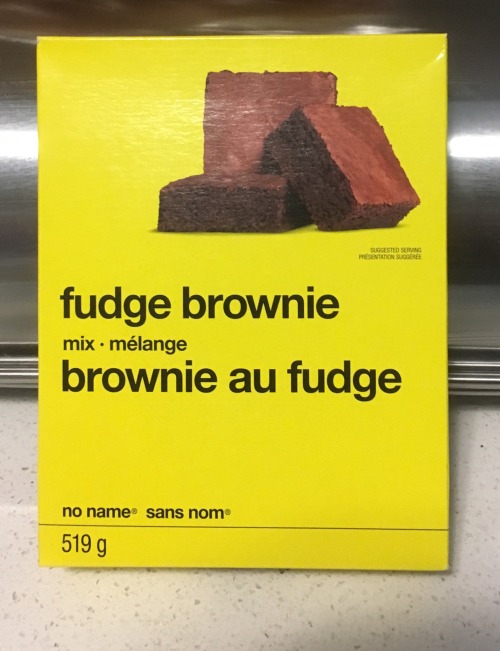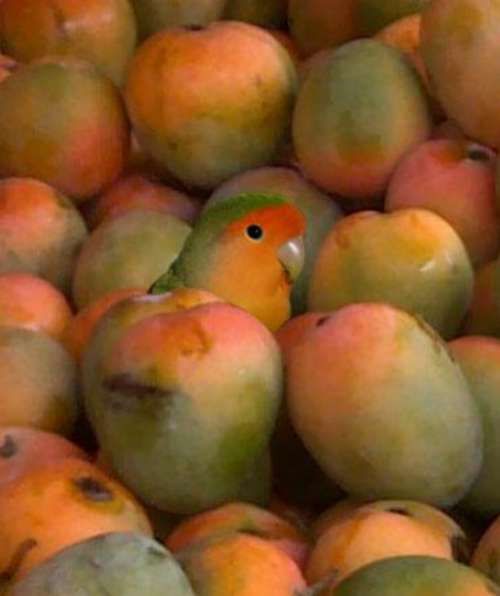
hmmm
Tags:
#bird #adorable #camouflage #food
you know what the anomalings would REALLY hate? that “what is a sandwich debate”. defeat the anomalings by insisting that a dumpling is a sandwich
Ah, the sandwich. Truly the most bilateral of foods.
Tags:
#Almost Nowhere #food #I didn’t actually laugh aloud but it still amused me enough to reblog
I’m reading a blog post, and this guy is talking about what he does at canadian thanksgiving
is that how canadians refer to canadian thanksgiving? “happy canadian thanksgiving!” “give canadian thanks!”
#I mean probably not #probably this is just because most of his blog audience is american #and probably he gets a lot of confused questions about his thanksgiving timing #but maybe
Yeah, it’s only “Canadian Thanksgiving” in contexts where the default assumption is American. Likewise, “American Thanksgiving” in contexts where the default assumption is Canadian.
Mom has been known to call the American one “Pilgrim Thanksgiving”, but I think she’s been doing that less lately.
(We celebrate both, in honor of our American heritage. I don’t know how Canadian-only people are supposed to cope with the fact that one can of pumpkin makes two pies: we get to just make both Thanksgivings’ pumpkin pies at once, keeping the second one in the freezer until it’s time.)
…in my experience one can of pumpkin makes one pie. I don’t know if your cans are larger, your pies smaller, or your recipes more padded with non-pumpkin ingredients, but now I’m curious.
I’ll go look that up.
1. Our spare can of pumpkin is 796mL. According to a grocery-store online catalogue you can also get “pumpkin pie filling” in 540mL cans, but we only buy that by accident.
2. The pie in our freezer is 9 inches in diameter and maybe an inch and a half deep.
3. The can says:
“Pumpkin pie recipe on reverse. Requires: eggs, brown sugar, ground cinnamon, ground nutmeg, ground ginger, salt, 175 mL evaporated milk (1 pie) and an unbaked pie shell.
1 can makes 2 pies.”
When I asked Mom for confirmation that we do in fact use the recipe on the can, she said yes, then asked for context (which I gave). She thinks the main difference is the can size, with a side of having to add more ingredients to the plain pumpkin.
—
“The solution for Americans is we eat 2 pumpkin pies.”
Come to think of it I suppose that *would* work pretty well for groups with more than 2 – 3 pie-eating members (edit: or maybe even just people who aren’t also making chocolate cream pie). Maybe the canned-pumpkin manufacturers size their cans assuming you’re going to invite people over.
Same recipe, same size pie, about twice as large of a can. Interesting. The cans of pumpkin I recall from my childhood, which made one pie each and had that same recipe (with the addition of allspice) on the back, were somewhere between 440mL and 475mL.
(see also)
Tags:
#food #Thanksgiving #our home and cherished land #home of the brave #conversational aglets
This is set in the same universe as #5: Build, but features a completely different species and set of characters.
Rrahe’nek stared at the tiny, coatless creature looking up at him, its teeth bared but its digits bereft of weapons. Instead, there was a rich-smelling ceramic dish in its hands, hot, steaming and wrapped in a cloth. It spoke incomprehensibly.
He had come here expecting a battle. Hoping. The newest species to enter galactic territory was a protégé of the Diwar, and Rrahe’nek despised the feathered ones. They were arrogant, but pathetic. Their weapons were superb, no one denied that, but their warriors were cowards, planting bombs and running away. Rrahe’nek had heard that their proteges had far inferior technology, were smaller, and had no natural physical weapons. Either they were the weakest prey-sapients the Kai had ever encountered, or they had ferocious battle techniques to make up for their biological inadequacies. When one had come alone toward the Kai encampment, Rrahe’nek had been delighted, assuming it was the second option. He had come out alone himself to meet the alien warrior in battle, take its measure… and defeat it, of course, no aliens had ever defeated a Kai warrior in single combat, but the contest would be exhilarating before Rrahe’nek won it in the end.
Instead, here he was faced with a small alien with a curled mane, but no fur elsewhere on its body, holding out what smelled like a dish of cooked food.
He poked his tongue into the bead at the back of his mouth that activated his voder as a communicator. “Warrior Fifth Rank Rrahe’nek to den.”
“Den here, Warrior Fifth. Heat signature says you’re in range of the alien, but have not engaged?”
“That’s correct. It – it seems to be trying to give me food.”
A moment of silence. Then, “What.”
“Its teeth are bared, but it has no weapons, it’s made no threatening moves, it isn’t running away, and it’s trying to hand me a dish that smells like fish.”
“Hold position. We’re getting eyes on your location.”
“Acknowledged.”
Reblogged from writing blog.
Tags:
#storytime #aliens #food #violence cw
That meme where people misspell “ingredients” as “ingredience” is fascinating from a linguistic standpoint because morphologically, “ingredience” really ought to mean something like “the quality of being ingredient” or “the attribute which makes a thing ingredient” – i.e., it would something you have, not something you are. What is ingredience? Do I have it? Do you?
wouldn’t ingredience be a rating of how many things include you in recipes? So flour has a high ingredience; it’s included in many things. Humans have a low ingredience; not many recipes out there that include human (at least that we know of).
Ingredience is formally defined as the probability that, given a random valid recipe not including the ingredient, adding the ingredient will result in a valid recipe. As an example, salt has an ingredience of .98.
A significant problem is that there is no known analytic method to validate a recipe, and it must be done experimentally. Of course, because recipespace is infinite, this means that all ingredience values are approximate.
The question of whether a recipe validator is even possible is a central question of formal culinalysis.
The study of culinalgebra is complicated by the fact that ingredients do not form a basis in recipespace – adding one ingredient may affect the necessary quantities of others. Adding soy sauce to a recipe increases the amount of salt; adding an acidic ingredient in baking may require the use of more baking soda to maintain the previous pH. An existing ingredient whose quantity is not altered by a given change to the recipe is known as an eigengredient.
Tags:
#food #math #language #unreality cw