mmilhouse:

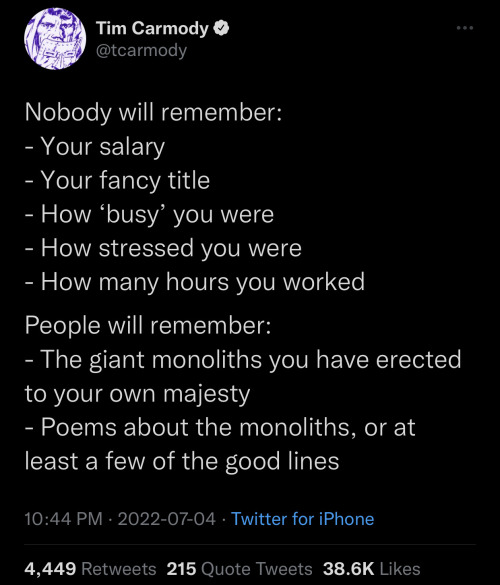
i wish a songwriter wouljd be brave enough to write about the unexplored topic of having a fun night at the club


Tags:

#music #I didn’t actually laugh aloud but it still amused me enough to reblog #clubbers live in a dark-matter universe #witnessed only indirectly through their media #like alloromantics but much more so #(I do personally know a fair number of alloromantics) #(and even some alloromantic allistics) #(but the percentage of special interests depicted in pop music that are romantic is *way* higher than the percentage I see around me) #(in my own part of the elephant) #is the blue I see the same as the blue you see


{{next post in sequence}}

derinthescarletpescatarian:

Every summer I forget how much I fucking love spiders I’ve drunk one every day this week

goblinwithblankets:

Drinking spiders??!

derinthescarletpescatarian:

You put ice cream in a glass and pour soft drink over it. It creates a thick layer of delicious foam on top of a sweet, creamy drink with ice cream in it.

7adff4698002743d8d60bb655e4984c2b7ce0abd

And yes I did attempt to get a picture by googling “Australia spider” like a fucking moron.

chazzaroo47:

I hesitate to ask, but as someone who knows that sort of drink as a “float” because the ice cream floats, why is it called a spider?

derinthescarletpescatarian:

According to wikipedia it’s because the reaction that makes the foam layer is reminiscent of a spider’s web. I don’t see it, but sure.

carnivalseb:

hold on, is this where we’ve been going wrong the whole time?
is Spiders Georg just really into icecream floats?

derinthescarletpescatarian:

Hyperglycemia Georg, who

hauntoblogical:

Spiders Georg out there pioneering previously-undiscovered levels of brain freeze


Tags:

#we’re not here to fuck spiders because that would give us horrible yeast infections #language #food #Australia #Spiders Georg #embarrassment squick? #illness mention #the more you know

maryellencarter:

reptile-ruler:

Seeing more and more blogs without a [username].tumblr.com site which means you can only view their blogs in tumblr.com/[username] mode, and I realized just the other day that nowadays you have to manually go to your blog settings and toggle the “enable custom theme” switch to have a browser site activated.

I REALLY recommend activating this! Especially if you’re an artist or if you have a themed blog, like if you reblog fanart for a specific fandom or ship. First and foremostly you can change the whole theme if you want to, you can really just go wild with building your personal aesthetic for your page.

But what I think is even more important, is that you NEED to “enable custom theme” to enable access to your archive! The link [username].tumblr.com/archive doesn’t work if you don’t have this enabled!

If you post art or archive fanart or fandom content of any kind, letting people access your archive makes it so much easier for people (and yourself) to find older art on your blog or to look for something you drew a while ago that they remember loving and want to look at again.

We talk lots about how on Tumblr old art gets to circulate, and the archive is part of how that works. It’s a really useful tool in finding good content that isn’t brand new. And especially if you are good at tagging, it’s very easy to filter the archive to find ship content or meta or fics, whatever you want to find.

Checked on this and you have to activate it on web view – the option isn’t there in the mobile app. I didn’t have it activated, so even if you’ve been here since well before Dashcon, might want to check on that.

It looks like they’ve fixed the inability to view “/archive”, but I recommend having a browser site anyway.


Tags:

#fight the slippery slope towards Internet silos #PSA #reply via reblog #Tumblr: a User’s Guide #The Great Tumblr Apocalypse #disappointed permanent resident of The Future

headspace-hotel:

The overwhelming dominance of free verse poetry in English sucks actually. It’s not a bad form but it IS bad that it’s the main form of english language poetry being published

I know everyone is conditioned to think rhyme, rhythm and meter is for either maudlin, sing-songy and childish poetry or excessively formal, pretentious poetry, but these things are just what makes phrases and lines memorable and punchy.

English naturally has rhythm and all poetry uses this stuff a little bit, it’s legitimately just What Make Word Sound Good

more importantly, rhyme, rhythm and meter are very connected to memory. there’s a reason why little songs and chants are our most enduring and effective memory tools

headspace-hotel:

It occurs to me that most people don’t know how these things work so here:

How Poetic Rhythm, Meter, and Rhyme Actually Work!

People seem to only learn about rhyme in grade school, and they don’t appear to learn that rhymes other than perfect rhymes (rhymes where the ending ‘sound(s)’ perfectly match) exist.

When I first got into writing my own poetry, I repeatedly heard “don’t use rhymes like ‘true’ and ‘blue’,” but for some reason it’s hard to find an explanation of this.

So here it is. “True” and “blue” are perfect rhymes because the ending sounds are identical.

Most pairs considered ‘rhymes’ in poetry do not perfectly match like that. I’m sorry grade school and colloquial usage lied to you. Rhymes are sounds at the ends of lines (or even inside lines!) that echo each other. That’s it.

Here’s a set of rhymes that are at least close to perfect, from the song “You Shook Me All Night Long” by AC/DC:

She was a fast machine, she kept her motor clean/She was the best damn woman that I ever seen

However, imperfect rhymes are REALLY, REALLY COMMON and they often sound better. Here’s a couple rhyming lyrics from the song “Every Rose Has Its Thorn” by Poison:

Every rose has its thorn/Just like every night has its dawn

This still rhymes. It’s just not perfect.

Here’s the thing. Rhyme is supposed to make Poem Sound Good On Brain, and it is only about 20% of what makes poetry Sound Good On Brain.

To talk about meter, we have to talk about stress. Stress is, like rhyme, inexact, but it arguably messes stuff up a lot more if you don’t understand it.

To explain what stress is, imagine this scenario: You are seen walking hastily away from the zoo in a ski mask, carrying a large cage covered with a sheet that occasionally emits strange sounds. (I promise this will make sense in a second.)

Before you can leave the parking lot, though, you are stopped by an angry zookeeper. “Did you steal the capybara from its cage?” the zookeeper asks.

You make one of the following excuses (please read these aloud, it’ll help):

I didn’t steal the capybara from its cage.

I didn’t steal the capybara from its cage.

I didn’t steal the capybara from its cage.

What are you doing to the bolded word that makes the meaning of your excuse different? You’re putting emphasis, or stress, on it.

All English speech naturally has places that are stressed. Without stress, it sounds like a robot in a 1970′s cartoon is talking. Specifically, almost all multisyllabic English words have specific syllables that are always stressed. (There are some regional variations.) You can figure it out by simply reading the word aloud with the stress on different syllables until you find the one that sounds normal and not evil:

  • Walrus vs. Walrus
  • Giraffe vs. Giraffe
  • Tiger vs. Tiger 
  • Baboonvs. Baboon
  • Ostrich vs. Ostrich
  • Raccoon vs. Raccoon
  • Penguin vs. Penguin
  • Gazelle vs. Gazelle
  • Gecko vs. Gecko
  • Vulture vs. Vulture

Okay, let’s leave the zoo. Try it with these words:

  • Divine
  • Shower
  • Convince
  • Pebble
  • Sidewalk
  • Carpet
  • Smoothie
  • Attract
  • Relax
  • Darkness
  • Garden
  • Surpass
  • Object

Wait, what’s that last one? That’s right, some English words are indistinguishable except for which syllable is stressed. “I object!” you might say at a wedding you don’t approve of. “It’s an unidentified flying object,” you might say if you glimpse an alien spaceship in a blurry picture.

Now try it with some three syllable words:

  • Immortal
  • Magenta
  • Poetry
  • Carnivore
  • Tomorrow
  • Entity

I feel like “entity” is a noun and “entity” would have to be a verb, if you catch my drift.

(You will notice that two-syllable English words typically have stress on the first syllable, and that three-syllable English words usually have stress on the second syllable or maybe the first.)

Single-syllable words have fuzzier rules. A single word can be stressed or unstressed depending on context. In general, content-heavy words are stressed, whereas connecting words that don’t have much meaning can kinda do what they want depending on the words around them.

English likes to periodically pick up stress, like a curious hiker periodically picking up rocks. You can barely say more than three syllables in a row without naturally emphasizing something.

This is convenient, because when stresses occur in a rhythmic pattern, ambiguous words will be swept along with the pattern.

Here’s another thing to read aloud. See which of the following couplets “sounds” better to you:

Supreme divine giraffes surpass raccoons/and gecko gods ascend beyond giraffes.

Angel giraffes beyond mortal knowledge/cannot defeat divine gecko powers.

Both couplets have the same number of syllables (ten in each line), but only the first line is metered. You might recognize it–it’s iambic pentameter! This is a form of accentual-syllabic verse.

You will notice that “pent” means five, but there’s ten syllables. Fear not– “pentameter” refers to the number of feet in the line. In this case, it’s the number of iambs. 

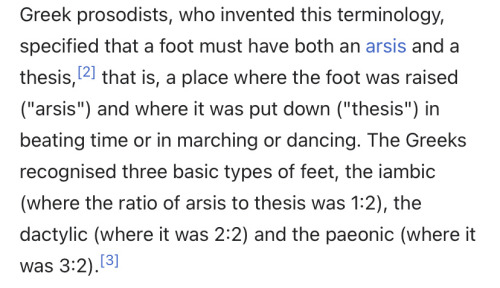
An iamb is an unstressed syllable followed by a stressed syllable. Giraffe is an iamb. Divine is an iamb. Any two syllables with that pattern can be.

There are three other main options for “feet” in English accentual-syllabic verse: trochees (stressed-unstressed), dactyls (stressed-unstressed-unstressed), and anapests (unstressed-unstressed-stressed). There is also the spondee (two stressed syllables) and pyrrhus (two unstressed syllables) but you can’t really write an entire poem with those (okay you TECHNICALLY can with the spondee, but there are only a few examples). Not all English meter is based on “feet,” but this is a good starting point.

When people think poetry, they think rhyme. Never meter. When people who haven’t studied poetry try to write poetry, they make it rhyme, but they don’t utilize meter.

This is not good, because in my opinion, rhyme, especially perfect rhyme, typically needs to be accompanied by some kind of rhythm to not sound like shit.

You know who can pull off perfect rhymes in poetry? Robert Frost. I’m going to put an entire poem here.

Whose woods these are I think I know.
His house is in the village though;
He will not see me stopping here
To watch his woods fill up with snow.

My little horse must think it queer
To stop without a farmhouse near
Between the woods and frozen lake
The darkest evening of the year.

He gives his harness bells a shake
To ask if there is some mistake.
The only other sound’s the sweep
Of easy wind and downy flake.

The woods are lovely, dark and deep.
But I have promises to keep,
And miles to go before I sleep,
And miles to go before I sleep.

This doesn’t have that cringy sing-songy effect that a lot of perfect rhyme creates, and I believe that this is BECAUSE the rhythm of the syllables is so formal and strict.

Imagine if it was like this:

These woods belong to someone I know.
He lives in the village though;
He will not see me stopping here
To watch his woods, all covered in snow.

This is so bad.

You can do really cool things with the combination of rhyme and meter. Here’s one of my favorite examples, with stresses bolded:

Now I’m falling asleep and she’s calling a cab
While he’s having a smoke and she’s taking a drag
Now they’re going to bed, and my stomach is sick
And it’s all in my head, but she’s touching his

What’s the pattern? Unstressed, unstressed, stressed. How many of these per line? Four. Anapestic tetrameter, my friends. Except, of course, for the last line, which we expectto rhyme with “sick.”

The pattern is so powerful that when you listen to the song, your brain fills in…a word rhyming with “sick,” and it really turns you upside down when the pattern isn’t finished as you expect.

“Mr. Brightside” isn’t the usual example of a song that is “poetic,” but there is a lot of very competent usage of poetic techniques in these lines. Pay attention to how rhyme is used here. “Cab” and “drag” are not perfect rhymes, but they echo. “Falling” and “calling” are perfect rhymes within one line. “Bed” and “head” are perfect rhymes in the middle of two consecutive lines. The words that end in “-ing” create echoes.

Rhyme is used, but it’s never used in the exact same pattern twice. The different rhyme patterns interweave with each other and create a lot of variety while still having continuity.

I don’t have a conclusion here. I just think it’s sad that this isn’t common knowledge, since we absolutely do have an intuitive understanding of when something scans and when it doesn’t—we know when something “sounds right.”

It disappears when we’re trying to write a poem on purpose, but it’s there when we’re parodying a song or slogan, or sharing variations of the “roses are red, violets are blue” meme.

amatalefay:

*bursts through the wall like the kool-aid man* POETIC METER MY BELOVED

I would argue that the best free verse does have meter—you can create rhythms without being so structured—but that’s because English is such a rhythmic language, and poetry relies on that.

I remember in one of my college poetry classes, I kept turning in free verse poems that the professor kept using as examples of meter. There was one specific poem about the rhythm of walking and how my disability interferes with that, and my prof was praising it to the high heavens because the lines describing other people’s walking were in iambic pentameter but the meter started breaking down as I described my own pace. None of that was something I thought about while writing, but it was absolutely something I emphasized in revision.

In my opinion, poetry is less about ‘poetic ideas’ and more about how language crafts meaning. Obviously, prose writers pay close attention to the rhythm and flow of their sentences too, but what we think of as ‘poetic’ prose doesn’t actually always make for good poetry. Good poems use the musicality of language itself to make their point.

headspace-hotel:

Hello Im vibrating at the speed of sound at the mere concept of that poem about the rhythm of walking because that’s where the concept of “feet” in poetic meter comes from

2bad23d4e6ddfee56950d5632ac1452a48a5a6ee

Art! Art! ART! Metamorphosis! TRANSFORMATION! RE-INTERPRETATION OF THE HUMAN EXPERIENCE! Beautiful! Enriched by diversity!

tairneanaich:

That first Iambic pentametre example BAFFLED me until I remembered that you probably say Raccoon with a different stress to how I do- those regional differences really matter!

foxofninetales:

THIS ALSO ABSOLUTELY APPLIES TO PROSE.

Like, you definitely don’t have to know about poetry to write prose, but if you love the kind of prose that sings on a sentence level and you want to know how to do that, READ POETRY.  Everything about poetry applies to prose – alliteration, rhyme, assonance, the visual structure and length of lines, and hoo boy howdy, does meter ever apply.

While you probably won’t use those poetry elements all the time, they will color your work, and when you need to have a showstopper sentence you can pull out those tools and make the words do exactly what you want.  And the bittersweet joy of this is that most readers won’t realize why they are being so affected; they’ll think it’s just plot and character and setting and theme and not know that they’re being influenced by the very beat and flow of the words themselves.

There’s music underneath the words and that is why they sing.

>>Here’s another thing to read aloud. See which of the following couplets “sounds” better to you:

Supreme divine giraffes surpass raccoons/and gecko gods ascend beyond giraffes.

Angel giraffes beyond mortal knowledge/cannot defeat divine gecko powers.

…the second one.

The first one is too repetitive, especially the first line where the iambs are all separate two-syllable words. It’s *slippery*: it goes in one ear and out the other, there’s nothing for the brain to grab onto.

The second one has more variation, a *rhythm* rather than a dull monotone beat. And its second line has exactly the same stress pattern as its first line, which gives it a nice echo.

>>And it’s all in my head, but she’s touching his

I expect this *would* work for me in audio, but in text my first thought for the missing word was “head”, that it was referencing the first half of the *same* line rather than the end of the previous line. It works out to the same meaning, but still.


Tags:

#apparently I am not getting a good grade in having an artistic instinct #reply via reblog #art #poetry #is the blue I see the same as the blue you see #this probably deserves some warning tag but I am not sure what

raginrayguns:

just learned you can take a slice of bread straight out the freezer and put it in the toaster

raginrayguns:

@shinyangelwombatknight said:

What are the pros?

bread wont get moldy


Tags:

#101 Uses for Infrastructureless Computers #I share my bread freezer with three other people‚ so I can’t store three months’ worth #but I can do‚ like‚ five weeks #domesticity #food #recs #you can also keep Exactly Two slices in a bag outside the freezer so you can make non-toasted sandwiches #or at least I can #the last person I told that to was impressed by how much executive function that implied I had #(I hadn’t even *told* them about the part where the bread freezer is essentially on a covered porch and) #(I need to put on a pollen mask to access it about half the year)

{{previous post in sequence}}


memewhore:

tumblr_plijsf38qw1qjnhqgo1_500

gildatheplant:

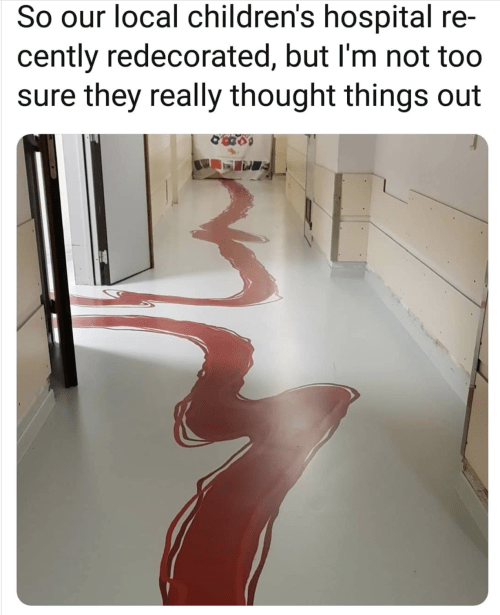
Literally any other colour would’ve been a better choice guys.

mintymaiden:

83aeebeacea08757431a14950aa761788e9f6178

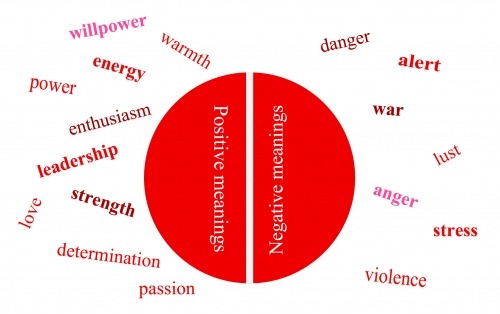
I’d like to point out that the colour red has more positive than negative meanings.

ichigo-hiyoko:

im sorry but this reply absolutely killed me

red can mean whatever the heck you want it to mean, that is never going to change that this straight up looks like they DRAGGED A BLOODY BODY ACROSS THE FUCKING FLOOR 😂

youthful-pills:

Hi fun fact, colors do have meaning and there is a legit thing called color theory. Red does has more positive connotations than negative like the @mintymaiden said. Red is associated with more love, lust, passion than blood and death just like the chart shows you but If you want, here’s a link for you to check it out yourself. Also, check out “The Designer’s Dictionary of Color” by Sean Adams. Have fun learning something

Xoxo

-Designer

diasporanpapi:

I think y’all are missing the point here.

forlovefromfear:

You can theorize to Nebraska and back but that doesn’t change my immediate reaction which is that someone is literally dragging a corpse around

jhenne-bean:

I like that the presumption here is that “No One On Tumblr Has Heard of Color Theory, Let Me Explain in Depth” rather than simply acknowledging that the VISUAL EFFECTS of this particular color choice, applied in the manner it was, can still amount to “this is a hospital and that looks like blood”

like, color theory doesn’t exist in a vacuum. If your design of choice for Blood Red Paint is asymmetric splatters and sploches against the wall, or in this case, a snail trail on the hallway’s floor, an infographic won’t override the viewers’ instinct.

eternal-dannation:

this post is the perfect summation of tumblr’s reading comprehension and critical thought abilities

musicalhell:

Reblogging because there’s a lot of new people on here and you need some context for the jokes.

trickster-archangel:

Help a newcomer, reblog Children’s Hospital Colour Theory


Tags:

#I am etching this onto my monolith as a Rosetta Stone for the benefit of future historians #discourse cw #love the decor fandom #sort of #that one post with the thing #blood #medical cw?

dycefic:

writing-prompt-s:

Two identical infants lay in the cradle. “One you bore, the other is a Changeling. Choose wisely,” the Fae’s voice echoed from the shadows. “I’m taking both my children,” the mother said defiantly.

Once upon a time there was a peasant woman who was unhappy because she had no children. She was happy in all other things – her husband was kind and loving, and they owned their farm and had food and money enough. But she longed for children.

She went to church and prayed for a child every Sunday, but no child came. She went to every midwife and wise woman for miles around, and followed all their advice, but no child came.

So at last, though she knew of the dangers, she drew her brown woolen shawl over her head and on Midsummer’s Eve she went out to the forest, to a certain clearing, and dropped a copper penny and a lock of her hair into the old well there, and she wished for a child.

“You know,” a voice said behind her, a low and cunning voice, a voice that had a coax and a wheedle and a sly laugh all mixed up in it together, “that there will be a price to pay later.”

She did not turn to look at the creature. She knew better. “I know it,” she said, still staring into the well. “And I also know that I may set conditions.”

“That is true,” the creature said, after a moment, and there was less laugh in its voice now. It wasn’t pleased that she knew that. “What condition do you set? A boy child? A lucky one?”

“That the child will come to no harm,” she said, lifting her head to stare into the woods. “Whether I succeed in paying your price, or passing your test, or not, the child will not suffer. It will not die, or be hurt, or cursed with ill luck or any other thing. No harm of any kind.”

“Ahhhhh.” The sound was long and low, between a sigh and a hum. “Yes. That is a fair condition. Whatever price there is, whatever test there is, it will be for you and you alone.” A long, slender hand extended into her sight, almost human save for the skin, as pale a green as a new leaf. The hand held a pear, ripe and sweet, though the pears were nowhere ripe yet. “Eat this,” the voice said, and she trembled with the effort of keeping her eyes straight ahead. “All of it, on your way home. Before you enter your own gate, plant the core of it beside the gate, where the ground is soft and rich. You will have what you ask for.”

Keep reading

{{below the cut:}}

The woman took the pear, and drew her shawl further over her head before she turned, so that all she saw was a pair of fine leather shoes with long pointed toes. She ate the pear as she walked home, and it was the finest she had ever tasted. When she reached her own gate, she wiped the juice from her chin with the edge of her shawl, and knelt to bury the pear’s core in the soft ground near the gate. It was not the right time for planting… but she did not think that would matter this time.

And in the spring, she bore a child. A girl, with curling leaf-brown hair like her mother’s and merry dark eyes like her father’s, who was not fretful or difficult, but always a joy to her mother. That spring was the happiest of the woman’s life, and she tended the tiny sapling that had sprung up where she had buried the magical pear almost as carefully as she tended her daughter. Whatever price would be asked of her, it would be worth it.

She expected the price to come at Midsummer, but it did not. Still all was well, her daughter was sweet and healthy, and they were happy all through the summer and the autumn. But when winter began, the child fell ill. She cried day and night, and grew thin and pale, staring up at her mother with sad dark eyes as if she begged Mother to make her well again. For a whole month, her mother nursed her tenderly, never laying her down but tying the babe to her back or her breast with her brown woolen shawl, for warmth. In time she grew better, though she was still thin and fretful, and her parents doted on her as much as ever. “It is the cold, no doubt,” her father said comfortingly. “Come spring, she will grow stronger.”

She did grow stronger, and in spring she was less fretful, stumbling about on her baby legs and reaching for things like any child. But her mother noticed that the dark eyes did not often look into hers now, and sometimes she laughed or cried for no reason that the mother could see. And if unwatched, she would always creep or totter out to the sapling pear tree and sit by it.

When the woman woke on that next Midsummer’s Day, the child’s small bed was empty, with a pear leaf on the pillow, and the woman knew it was time. She drew her brown woolen shawl over her head, and went in the cool light before dawn to that clearing and that well. She did not cast anything into the water this time, but stood and waited.

“You are timely,” said the voice, with a triumphant purr in it now. “Now walk around the well, and look behind it.”

When the woman did so, she found a small bed spread upon the moss, and in the bed two little ones side by side. Each had leaf-brown curls, and merry dark eyes, and lifted baby arms towards her.

“One is the child you bore,” the voice said from the shadows, smug and satisfied with itself. “One is the changeling that made all your winter days a burden. The child in your arms when you leave here will be yours always, and the one you leave you will never see again. Choose wisely.”

It was a cruel, cruel test, and the mother wept as she looked down at the two little girls. It was not long before she saw that one pair of dark eyes slid away from hers when she gazed into the small face, while the others gazed straight at her, and yet she wept. Then she wiped her eyes on the brown woolen shawl, and straightened up, staring straight ahead. “You said,” she said carefully, “that the child I carry away will be mine forever, and a child left behind I will never see again. Is that your only condition?”

“Yes,” the creature purred. “The choice is yours entire, as are the consequences.”

“I understand.” She pulled the brown woolen shawl from her head and shoulders, and spread it out beside the small bed, and wrapped her choice tenderly in its soft folds.

And when she stood, both arms cradling her burden, the voice sounded different. There was no coaxing or wheedling, no laughing or purring, only shock and disbelief. “You cannot take them both!”

“Why not? You did not say I must take only one.” And now she turned and faced it, the fairy creature, and though it stood more than a foot taller than she, and was fearsome to look upon with its goat’s eyes and sharp teeth, it stepped back from her glare. “Perhaps I only bore one, but both I have held in my arms, and nursed at my breast. Both have I sung to sleep, and kissed on waking. They are both *mine*.”

The creature stared at her as if it had never seen anything like her. “But one is sickly and fretful. It is strange, and eats insects and cries without reason.”

“She is not sickly and fretful now, not after nursing and care. And if you think eating insects and crying without reason makes a babe strange, you know little of them.” She hitched up the heavy bundle, the two girls cuddling happily against their mother. “She did not make my winter a misery. A labour, perhaps, but a joyful one, for she is my child. And I will go now, for I have made my choice.”

She turned and walked away, and the creature did not stop her, and when the woman reached her home again, she set down both children on the soft sheepskin before the fire. “Well,” she told her puzzled husband, “they took our child at the beginning of winter, and left a changeling in her place, and then bade me take one and leave the other this morn as if I would ever turn my back on either one of the babes I’ve nursed and loved. If the Fair Folk think it is a punishment to give me two children instead of one, why, the more fools they.”

“Foolish indeed,” her husband said, and he reached down to ruffle two heads of leaf-brown curls. “Do you know which is which?”

“Of course,” the mother said, affronted. “What mother could not tell her children apart? This one is our Wulfwynn.” She pointed to the child she had borne, and named ‘Wolf joy’, for any child born of a bargain with the fae brought danger as well as happiness. “And this is our winter child.” She pointed to the other. “I thought about it on the way home, and I think we should name her Wulfrun, for she was a secret meant to bring us harm, though she will be our joy hereafter.”

Ever after, Wulfwynn and Wulfrun were spoken of as twins, and if one girl was a little shy and strange, a wild fawn to her sister’s sturdy calf, well, that was the nature of twins. Certainly both girls were pretty and kind, taking after the mother who’d refused to give either one of them up, and dearly loved by their parents. They tended the pear tree all their days, and often called it their third sister, and its fruit was the sweetest to be found anywhere.

Now and then in secret, the women whispered of the trick the fairy creature from the well had tried to play, and laughed over its downfall, being fool enough to think that a woman so desperate for one child would hesitate to take two, given half a chance. And more than one barren woman followed her example, in the years after, hoping to trick the fairy creature into giving them two children instead of one.

The people of that village have a reputation for being sometimes strange, these days. There are many whose eyes slip away from one who stares into them too long, who are a little wild and a little shy, whose voices are too soft or too loud. But they are merry, and kind, and their families love them dearly.

What the creature of the well thinks of it, no-one knows. But it never stops a mother from taking both babes, and never stopped offering them, so perhaps it is content with the bargain.


Tags:

#fae #storytime #fun with loopholes