Anonymous asked: (2/2 I guess) And saying things like “there are affordable areas even in the Bay” is kind of an odd thing to try and placate somebody with when the prices even of empty land in the Bay Area are SO high compared to almost all other areas of the country – especially those areas where there’s a high concentration of households living in or near poverty. Property prices in most parts of the non-urban US are super low VS. the largely-unattainable, sanctified Bay Area. Have you actually compared?

abilitiesconsideredunnatural:

theunitofcaring:

(I did not get the first part of this ask.) 

Yes, I have actually compared. For many people, living in the Bay is a reasonable financial choice, even if they don’t have much money or if they want to donate a lot. In most parts of the U.S. I could not live with roommates, because places where I worked wouldn’t be so near the places where my friends worked, and I would need to own a car, and I still might pay less than I pay now but probably not so much less as to come out ahead taking the car into account. 

Our house in El Cerrito, 10 min walk from the BART, was $550/bedroom. I do not think I’d end up spending dramatically less than $550 on housing+car anywhere I lived, and I do not think it’s unreasonable to tell people “there are affordable parts of the Bay” when what I mean is “there are $550/mo parts of the Bay where you do not need to own a car”. It was a nice safe neighborhood where I frequently went for walks at night, too.

Moving to the Bay is not an option for everyone! But if you’re thinking of it as sanctified and unattainable I think you are looking at prices in like, SF and Berkeley proper.

That works out to both cheaper than my hard limit price is and cheaper than the rock bottom student price here. And I cheated by inheriting a car but I still have running costs.

I live in an expensive part of Australia but not Sydney level horrible. And our public transport is terrible here- it’s comparitively functional in Sydney and Melbourne but those are expensive or 3 hour commute afaict.

*updates*

International price comparisons are tricky, though.

Like, from what I’ve heard of Australian prices, they tend to spend about the same amount of minimum-wage-time-units for stuff as Americans do, but their minimum wage is much higher. As long as you’re paying for local goods with local labour, it generally works out, but it makes things confusing when you’re trying to compare (or, god forbid, move) between countries.

(I could definitely be wrong, though, I’m mostly going off of numbers I’ve overheard from friends)

(Personally, as of 2016 my household’s average per-person per-month housing+transport cost was…*checks spreadsheet, feeds results into calculator*…about CAD$290. Alternatively: USD$217*, 25.4 minimum-wage-hours*. But we’re in an unusually good position, and I think a lot of people in our area are paying more like twice that much.)

*Using 2016 rates, to match the time period of the spreadsheet.


Tags:

#reply via reblog #adventures in human capitalism #home of the brave #Australia #trying to sound reasonably friendly; not sure if successful

shedoesnotcomprehend:

jadagul:

Growing up, I would often read people describe “the spot on your back that you can’t reach.” Generally in the context of, like, putting on sunscreen.

I was always super confused by this, in a classic case of generalizing from one example. I can still overlap my hands at the small of my back; there’s nowhere on my back I can’t reach pretty comfortably. It still surprises me every time someone can’t do that.

….wait, that’s actually a thing?

I always assumed that when people said that, they meant, like, “the spot on your back that’s slightly awkward to reach so maybe if someone’s putting on sunscreen right next to you they’ll get it for you since you can’t see it anyway”

Me, reading a story with centaurs that has just mentioned them having a scratching post†: “Huh, yeah, centaurs *would* have large swaths of their bodies they can’t reach with their hands. It’s *weird*, trying to wrap my head around the idea of people who can’t reach every part of their skin with their manipulating appendages. What must that be like?”

Me: “…wait, hang on, there are some humans who are like that”

Me: “my *mom* is like that”

(When it first came up, Mom was likewise surprised to learn that I *could* reach every spot on my back. She brought up age and fatness as possible reasons for us to differ on this, but I remember there’s a Shel Silverstein poem about the one spot on your back you can’t reach that expected children to find this a relatable feel, so I expect it’s not that. Fatness could maybe still be involved.)

†Edit: I mean this in the sense of “a post you rub against to scratch yourself”, not the sense of “a post you scratch”.


Tags:

#is the blue I see the same as the blue you see #reply via reblog


{{next post in sequence}}

Just out of curiosity: How do you talk to yourself? Answer in tags (if you want).

aegipan-omnicorn:

1. I give myself pep talks in the first person, a la “The little engine that could.”

2. I chide or berate myself in the first person: “I’m an idiot.”

3. I give pep talks in the second person: “You can do this, [my name]!”

4. I chide myself in the second person.

5. I narrate what I’m doing in the third person, as if I were the protagonist in a story: “They rolled  out of bed, early in the grey morning, thinking only: Coffee!”

6. Discuss what I’m doing with someone who isn’t there (either someone from history, my own past, an imaginary friend, etc.)

7. All of the above.


Tags:

#I won’t swear I’ve *never* done 5 but if I do it at all it’s rare #other than that all of the above #though when there’s chiding to be done it’s mostly first-person #and when there’s pep-talking to be done it’s mostly second-person #(which makes a lot of advice on the subject weird because they assume it’s the other way around) #second-person thoughts don’t address me by name that much though #(in early February my brain adopted a habit of calling me ”love”) #(I remember the time period because I thought at first it was some kind of celebration of Valentine’s Day) #(but it hasn’t stopped) #(it’s kind of nice though so I haven’t tried to get rid of it) #((…wait hang on are we talking about thoughts in general or specifically talking aloud?)) #((I don’t talk to myself out loud much)) #((I think when there are pronouns for those they’re usually first-person (sometimes singular sometimes plural))) #((but more often (”often” being a relative term) it’s pronoun-less stuff like ”wait no not that have to do this first”)) #reply via reblog #is the blue I see the same as the blue you see #in which Brin somehow manages to be among the most singlet people she knows #tag rambles

slythernim:

shedoesnotcomprehend:

earlgraytay:

nyarlathotwink:

has anyone on earth ever actually paid money for an app?

I have, but it was Choice of Games so it was more like paying money for an ebook that happened to be on sale as an app.

I had a class once that required me to pay (an offensively large amount of) money for an app.

I have, like actually on purpose and not just technically or under duress, paid for an app! I paid for Wolfram|Alpha ($3 I think, totally worth it for how much I used it in college) and an offline Wikipedia-clone (limited free version exists but it was $10 to download their whole article library, good for my anxiety even though I have never actually needed it). 

I have, for an app that synchronizes a Yahoo Calendar account with the Google Calendar app. (Yahoo Calendar itself does not have a proper app, or didn’t last I checked.)

It was $3, and I don’t regret it. (It’s a shame I can no longer use the app and have to resort to manual imports, but that’s not the app’s fault: there were some issues with Yahoo and the account owner (not sure about the details), and now the account that technically owns the Yahoo calendar in question can’t log into any new computers (such as the new smartphone I got in January).)

Also, I sometimes buy the ad-free versions of apps I like after I’ve used them for a while. But SmoothSync is the only one I’ve ever paid upfront for.

an offline Wikipedia-clone (limited free version exists but it was $10 to download their whole article library, good for my anxiety even though I have never actually needed it)

Which app was that? I have Kiwix*, which is nice, but they don’t actually update monthly like they say they do: in fact, my Wiktionary copy actually ended up downgraded from March 2017 to December 2016 when I had to re download after a factory reset. (The option to download the March 2017 version wasn’t there anymore. I don’t know what happened to it.)

*Well, I have their Wiktionary copy. Wikipedia is too big for my current amount of storage space. (Someday!)


Tags:

#I was going to reblog from shedoesnotcomprehend #but then I saw this one in the notes and wanted to ask about the wiki clone #Brin owns *two* 2010’s computers now #reply via reblog

rangi42:

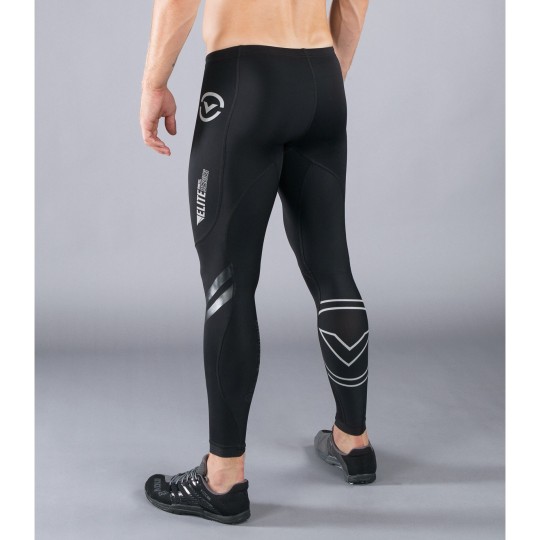
So, being able to accentuate gender with clothing is nice, but guys are missing out by not having a version of tights. (They don’t, right? Not since the medieval tunic+leggings?)


argumate:

tumblr_inline_oee87jr46a1t9eqi1_540


rangi42:

I stand corrected.

Now take the logos off, they’re not improving the look.


akaltynarchitectonica:

Male skinny jeans serve basically the same prupose but with the added utility of pockets


shacklesburst:

If you can use the pockets on skinny jeans, you didn’t buy tight enough skinny jeans.


rangi42:

Pockets are overrated anyway. A purse carries everything I need, and I don’t compulsively pat my pockets to make sure I still have my stuff.


shacklesburst:

If you have breast-height pockets on both sides you could legitimately do the King Kong/Tarzan? thing tho


finestoftheflavors:

I just had a conversation about this issue the other day. A friend and I were looking at a pair of women’s jeans.

“And this one has roomier pockets than the other one.”

“This is the one with bigger pockets!? Wow, women’s pockets are as bad as everyone says they are.”

“Yeah but women normally carry purses so they don’t really need pockets, do they? Some men are so worried about their gender roles that they can’t conceive of any bag that isn’t a women’s purse. They have to carry everything in their cargo pants all the time. So who’s really at a disadvantage here?”


cromulentenough:

do women use purses because their pockets are too small or they they have small pockets because they use purses? which came first?


shedoesnotcomprehend:

I don’t know about historically, but in the case of a number of particular girls and women I know (including myself and my younger sister), the chain of causation was in fact [needing to carry pads/tampons] –> [carrying a purse]. (And pads/tampons don’t tend to fit well even into quite large pockets, due to bulk & length respectively.)


tchtchtchtchtch:

I always carry either a purse or a backpack when I’m actually going somewhere, so no pockets are gonna be enough to replace everything for me, but I really like having pockets for things that I am likely to want while in transit (phone, transit pass, credit card, headphones, maybe fidget spinner) or when I’m just going a couple blocks away to buy something. When I carry a purse it’s because I don’t have enough stuff for a backpack to be necessary & I have more stuff than will fit in my pockets right now (which can be because I’m actually going somewhere, or because I don’t have any pockets).

I would much prefer it if more of my clothes had pockets, but I pretty much never decide not to buy something because of lack of pockets, so I guess I’m not really helping.


shedoesnotcomprehend:

I prefer not having to carry a purse/backpack, and would go without more often if I had pants with pockets deep enough that my wallet/phone didn’t fall out of them pretty regularly. >.> (Phone/wallet/keys is enough for most non-school going-places I do, which isn’t a quantity of things that really should require a purse.)

Like you, though, I rarely pass up clothing just because of lack of pockets. My clothes shopping is almost entirely second-hand anyway, so it’s hard enough to find something that fits and is in decent condition and non-hideous and has tolerable fabric; adding a pocket criterion to that would just make it impossible to find anything.

I swear by belly bags (and have since before menarche). They solve the problems I have with other ways of carrying stuff around: easier to access than a backpack, easier to carry than a purse, larger and more detachable than pockets. (This list is outdated, but gives you an idea of the amount of gear I like to have with me. Not only is there no way I would fit all of that into even large pockets, I would have to move *all* of it *every* time I changed pants. Like hell am I doing that.) Also, they give you a supporting platform when you’re carrying bulky objects in your arms! I love belly bags so much. I usually wear mine even if I’m not going very far and don’t technically need any objects, because I feel naked leaving the house without it.

I have heard some rumours that belly bags ““look”” ““stupid””, but whatever. I like how I look, and anyway it’s not nearly a good enough reason to pass up something that’s been this useful to me. (And…like, I did not *deliberately* select my customary accessories to make me easily recognisable even by faceblind people, but I think I’ve ended up that way, and that’s kind of nice in a Golden Rule sort of way.)


Tags:

#reply via reblog #gender #clothing #I love my Useful Thing collection #even the foil blanket I have carried around for over a decade and literally never used #having it there Just In Case still comforts me #(and of course a lot of the stuff *has* come in handy)


{{next post in sequence}}

chill

nostalgebraist:

There is something really wonderful about the word “chill.”

Long long ago, I was telling a friend that I didn’t like certain of my parents’ behavior patterns, and doing so in very formal nerdy language full of phrases like “behavior patterns,” and after a lot of verbiage he just replied, “you wish they were more chill.”  And I said, “huh, yeah,” and he said something about how it’s great that colloquial language can be so efficiently expressive, and I nodded along, and it seemed like one of those feel-good sentiments that’s true but not all that deep, and that was that.  But maybe it was deeper than I gave it credit for?

So, a few things about “chill.”  First, the boring one: it’s a positive thing.  Describing someone as “chill” is almost always praise, and when someone tells someone else to “chill out,” they are telling them “do this good thing you aren’t currently doing.”  So far, so obvious.

But “chill” is unusual as terms of praise go.  It has a certain contextless quality; it doesn’t feel like something you can discard the moment some other value becomes more important.  Sure, you can have arguments about whether being chill is appropriate – if your house is on fire and someone tells you to chill out, you’ll probably say this isn’t the time for that.  But the very concept of “chilling out” contains the notion that we are frequently less chill than we should be – that there are lots of times when our minds are telling us our houses are metaphorically on fire, and we need to see them for the liars they are.

I’m not just talking about anxiety here, although it’s a clear-cut example of the dynamic.  The bigger point is that by treating “chill” as a generically good thing – by taking “they’re chill” as praise even if nothing else is said about “them” – we’re acknowledging that stepping back, taking a wider perspective, asking whether you maybe should chill out, is a good thing to do in virtually any situation.  Sure, sometimes you ask the question and the answer is “nope, my house is on fire.”  But you don’t get to circumvent the question entirely because the matter at hand is just so serious; that itself is un-chill.

Compare this to something like “kindness.”  Kindness is also a “generically good thing.”  But while we have the concept of kindness as generally good, we don’t have the concept of “making sure to ask whether you ought to be kind, even if it seems like you shouldn’t” as generically good.  (We could have a word like “chill” for this, but I don’t think we do.)  Chill isn’t just a state of relaxation, it’s the trait of being able to notice when relaxation is called for, even though we didn’t realize it at first.  Hence “chilling out”: if it were just a matter of having a high average level of relaxation, we wouldn’t have this special associated verb for becoming more relaxed, because there would just be relaxed people (who never have to “chill out”) and non-relaxed people.  (Back in the kindness comparison, there’s no analogous term like “kinding out.”)

This is all pretty abstract, so I should give you the concrete example that got me thinking about it, which was this @porpentine​ post:

the most important advice i give to people who write me about being in abusive activist cults / hot allostatic load situations is to dis-identify with their language and leave their universe …getting invested in that po-faced neo-1950′s pious language and the culture makes you a huge target…i don’t know if i made that clear enough in the original but yeah…then resist the urge to join some polarized faction that vaguely hates the thing that hurt you but for different stupid reasons, and make friends who are real people and know how to chill the fuck out lol

And like, I can imagine a version of this post that ends with some theoretical language about why it’s important to value a certain kind of “asking whether one should relax” in all contexts even highly fraught contexts because you see etc etc, and ends up sounding like it’s taking some “political” “position” … but porpentine just says “know how to chill the fuck out,” and we all know what that means.

…I don’t think I’m familiar with this usage of “chill”.

Or, I mean, I *am*, but I associate it strongly with trolls, the kind of people who think that people who have ~opinions~ or ~emotions~ about things deserve only contempt. In my own experience, “chill” has a positive connotation mostly among assholes (and even then, only a certain subtype of asshole).

Like, I was kind of nodding along with the advice in that quote *until I got to the part about chilling the fuck out*, at which point I recoiled, went on my guard, thought “this is likely not a person I want to be taking advice from, I ought to be more suspicious of what they said”.

I guess if starting from high levels of anxiety, it could be *useful* to try to inhabit the mindset of a “lol who cares” troll in an attempt to counterbalance that. But I’d want to be cautious about doing so.

(To me, “they’re chill” doesn’t connote pure praise, but rather a mixed bag: they’re good as a casual conversation partner, because they won’t drag you into a political debate or anything like that, but don’t let them see you upset or passionate, because they will respond with at best incomprehension and at worst contempt.)

(This was originally a tag ramble, but I think it should remain part of the thread if reblogged, so I will convert it to a suitable format.)

I suspect it’s relevant that I hail from a culture that generally errs *heavily* on the side of giving too many fucks. But like, IME “people who use phrases like ‘chill the fuck out lol’” are *themselves* a polarised faction that vaguely hates the thing that hurt me but for stupid reasons. I’m not gonna backlash straight to the other end of the fuck-giving spectrum: the goal here is to allow my own choices and/or inclinations to determine what I care (and don’t care) about rather than forcing myself to care about things because I was ordered to, not to ~chill the fuck out lol~.

(although I suppose it might be *mistaken* for ~chilling the fuck out lol~ by an outside observer, given how many passionate subjects I’ve had to fake over the years)


Tags:

#our roads may be golden or broken or lost #reply via reblog #language #I’m not sure this *exactly* fits but it feels close enough that I’m going to include it: #is the blue I see the same as the blue you see #discourse cw? #(I’m not trying to Start An Argument here) #(but I worry it might turn out that way) #([wryly] possibly I should chill)
Libido

asexualactivities:

Do you have a libido?  What is it like?

What is a libido, anyway?

When I talk about my “libido”, the main thing I’m usually referring to is the frequency and intensity of my sexual fantasies.

During high-libido times, I think a lot more about (loosely defined) sex, and how good it feels, and how much I’d like to be having some right now. Even when I’m not focusing on it, if my libido’s high the fantasies and the longing will often be kind of running in the background.

I’ve heard other people describe feelings of “pent-up sexual energy”, but in my own context that feeling manifests as more of a fatigue.

I wrote a tag ramble about this ages back, which I still mostly endorse. (Unlike past!me, I at least have the *option* of masturbation now, even if I’m not especially good at it and often don’t get around to it anyway.)


Tags:

#reply via reblog #sexuality and lack thereof #is the blue I see the same as the blue you see #(in this case: no) #people who can distinguish between their drive for sleep and drive for sex fascinate me #nsfw text

acemindbreaker:

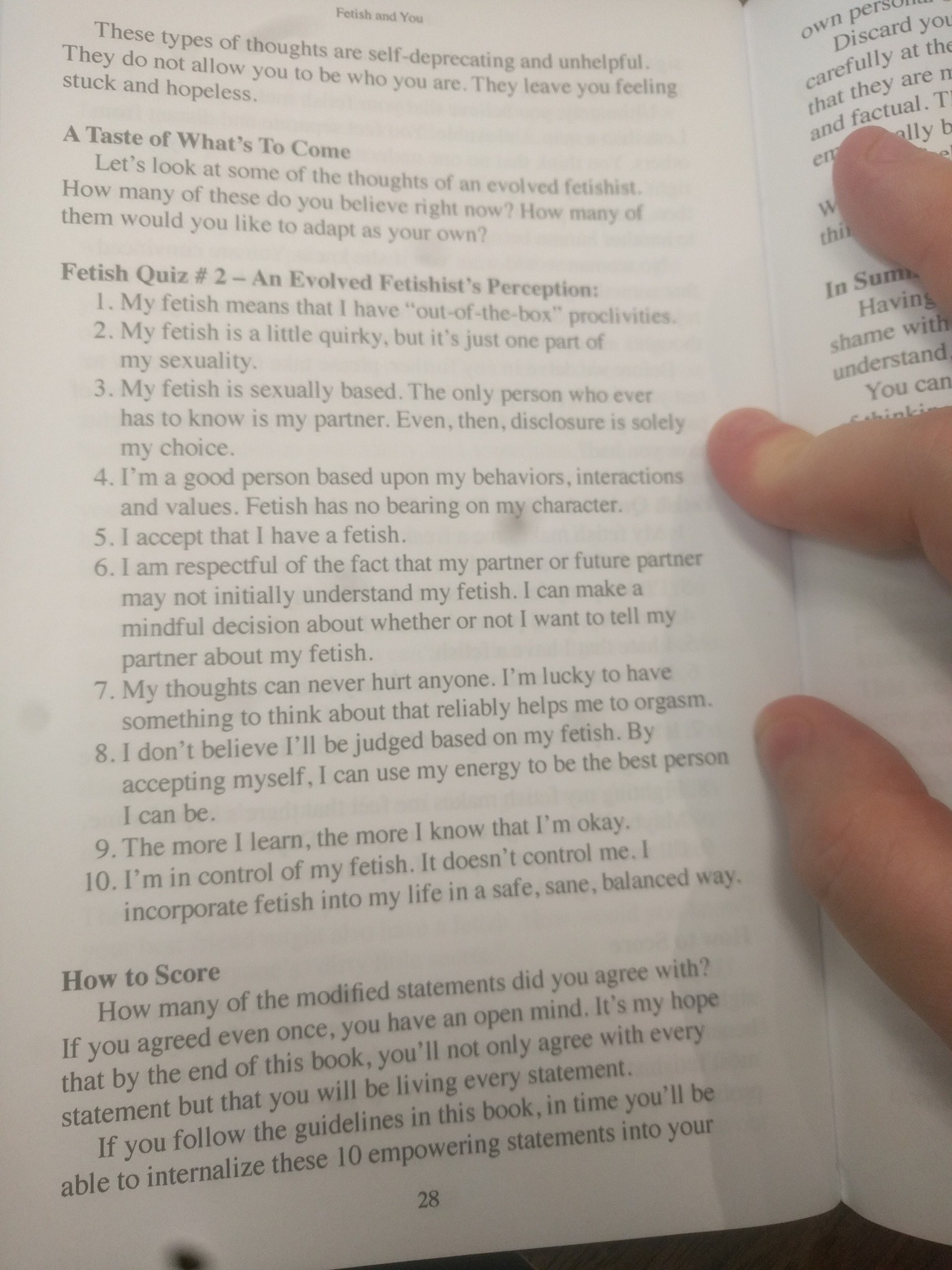
This is the second quiz from Fetish and You chapter 3.

Picture transcript:
Let’s look at some of the thoughts of an evolved fetishist. How many of these do you believe right now? How many of them would you like to adapt as your own?

Fetish Quiz #2 – An Evolved Fetishist’s Perception:
1. My fetish means that I have “out of the box” proclivities.
2. My fetish is a little quirky, but it’s just one part of my sexuality.
3. My fetish is sexually based. The only person who ever has to know is my partner. Even, then, disclosure is solely my choice.
4. I’m a good person based upon my behaviors, interactions and values. Fetish has no bearing on my character.
5. I accept that I have a fetish.
6. I am respectful of the fact that my partner or future partner may not initially understand my fetish. I can make a mindful decision about whether or not I want to tell my partner about my fetish.
7. My thoughts can never hurt anyone. I’m lucky to have something to think about that reliably helps me to orgasm.
8. I don’t believe I’ll be judged based on my fetish. By accepting myself, I can use my energy to be the best person I can be.
9. The more I learn, the more I know that I’m okay.
10. I’m in control of my fetish. It doesn’t control me. I incorporate fetish into my life in a safe, sane, balanced way.

How to Score
How many of the modified statements did you agree with? If you agreed even once, you have an open mind. It’s my hope that by the end of this book, you’ll not only agree with every statement but that you will be living every statement.

My response:
I agreed with 1*, 4*, 9 and 10*. I rewote them in my diary as:
1. My fetish makes me unique, and that’s OK.
4. I can’t help what turns me on. I’m a good person because I have morals.
9. The more I learn, the better I feel about it. Eventually I’ll be OK with it.
10. I can incorporate my fetish in my life in a balanced, healthy way. I can learn what’s appropriate and how to fit my fetish in.

* shaky belief, falls apart when I’m upset

…is it just me, or does this list conflate a healthy fetish with an unimportant fetish?

#2 and #3 are views that get imposed on me as part of the price of being a Respectable Member of the LGBT+ Community, not goals I aim for myself. I guess #6 could work for some people, but I can’t have a sexual* partner and not tell them about my fetish; what are we even doing sex-wise if not that?

(#1 evokes the stereotype of kinky people being sexually ~adventurous~, but to be fair I suspect she didn’t mean it that way.)

*I’m guessing from context that this is supposed to be the case.


Tags:

#reply via reblog #sexuality and lack thereof #I don’t fit the narrative of #”your sexual-attraction patterns are an Integral Part of Your Identity but everything else sexual is a minor sideshow” #(not either half) #but I’ve seen enough to be scared of what will happen if I don’t *pretend* that I do

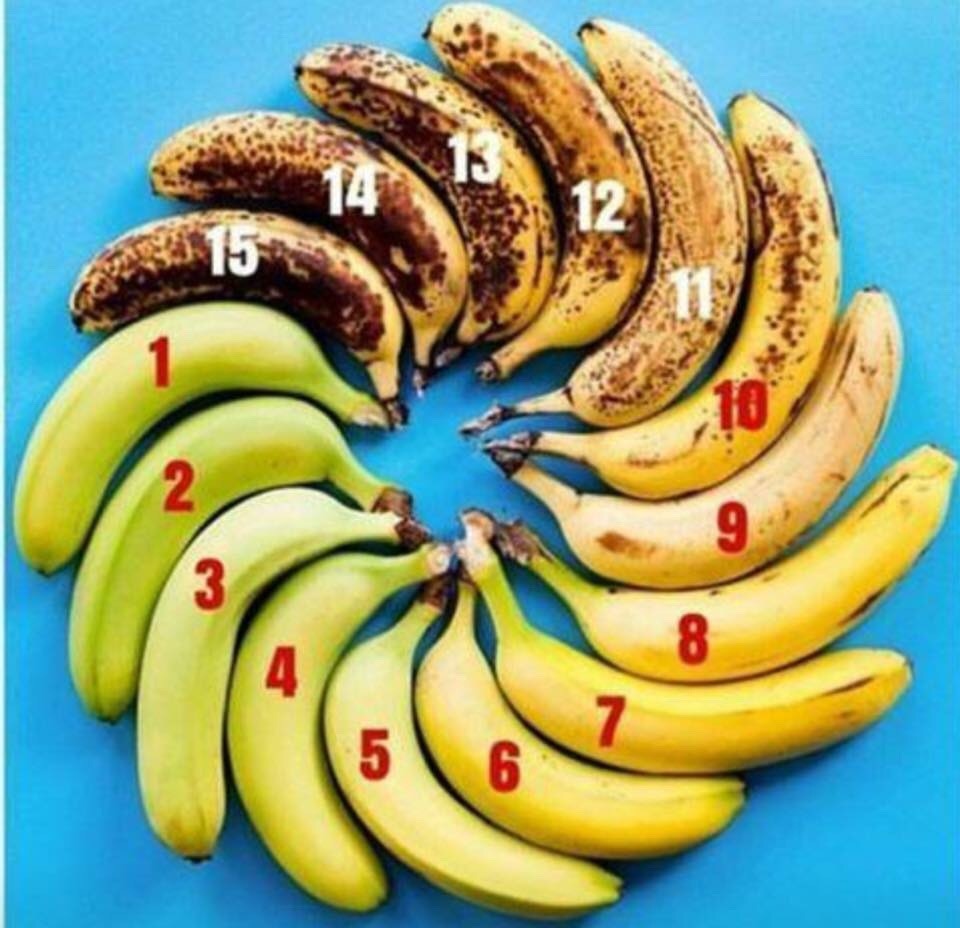
Banana Ripeness Tiers

guardians-of-the-food:

How do y’all eat your bananas?
1-5 anything else is gonna be baked or ice cream or smoothiefied


ainawgsd:

1-6. 7 or 8 maybe if I had a strong craving. Anything past that is inedible unless mashed and used as an ingredient in something


bilbo-swwaggins:

Noah fence but 1-5 is unripe you ignorant fucks


faun-songs:

4-7, 8 is pressing it.


absua:

White culture is eating unripe bananas.


artgroupie:

1-5?! i don’t go anywhere near under 8 unless it’s my only choice. ideal is 9-12


valsdas:

“8 is pressing it” i am… disgusted.gif


poison-liker:

i exclusively eat unripened bananas, on pizza


zephronias:

8,9,19. You all are weak.


captaindibbzy:

5 to 10 is my ideal.


xserpx:

8-11. They’re only good when they start getting little brown spots.


apprenticebard:

6-11. 9 is ideal.

Supposedly I had a great-grandfather who ate one entirely black banana every day, and who lived into his nineties, so I don’t think the overripe ones will hurt me, but after a certain point they taste weird. So once you get to 12, you have to make banana bread.


tchtchtchtchtch:

6 is the perfect sweet spot where it’s a nice vibrant yellow and perfectly ripe and doesn’t have any brown yet. So, that if I can, otherwise as close to it as possible.


another-normal-anomaly:

3-7, unripe bananas for the win. Also as per upthread I would be fascinated to find out if this is correlated with a) race or b) national origin. I mean, enjoyment of capsaicin and enjoyment of lots and lots of sugar are both correlated with national origin IIRC, so maybe banana preference is too.

Ideal banana: 11

Good banana: 10, 12, 13

Tolerable-but-I’d-rather-not banana: 9, 14, 15

Inedible banana: 8 and below

If it still has even the faintest trace of green, it’s not ripe enough.

Race: White*

National origin: United States (northeast)

Enjoyment of capsaicin: no

Enjoyment of lots and lots of sugar: not nearly as much as I used to, maybe just one “lot”

*Your mileage may vary. Some terms and conditions may apply. Your whiteness may be revoked at any time without notice.


Tags:

#food #survey #reply via reblog #(tbh ”is Brin white” has much the same answer as ”is Brin queer”) #(nobody can agree on the object-level answer but everyone agrees that I’m low-status) #our roads may be golden or broken or lost #(tangentially) #racism cw? #home of the brave

moral-autism:

thathopeyetlives:

moral-autism:

thathopeyetlives:

I wish tumblr savior worked on people’s blogs

It does, or at least it used to! Input their URL and see what happens.

Isn’t working for me. Dash is kept clean, but not blogs. (It seems like it would be tricky for it to work, since blogs can have so much custom formatting and HTML)

Oh! You’re not trying to use it as a soft block-ish option. You’re trying to use it while viewing blogs. Whoops.

I don’t know about Tumblr Savior per se, but last I checked new-Xkit Blacklist works if you look at the blog’s dashboard view:

https://www.tumblr.com/dashboard/blog/[insert blog username here]

As far as I know, there is no way to do things like “have blacklist function while looking at a particular tag within a person’s blog”, but still, it’s something.


Tags:

#Tumblr: a User’s Guide #reply via reblog