idletoyesterday:


veggielezzyfemmie:

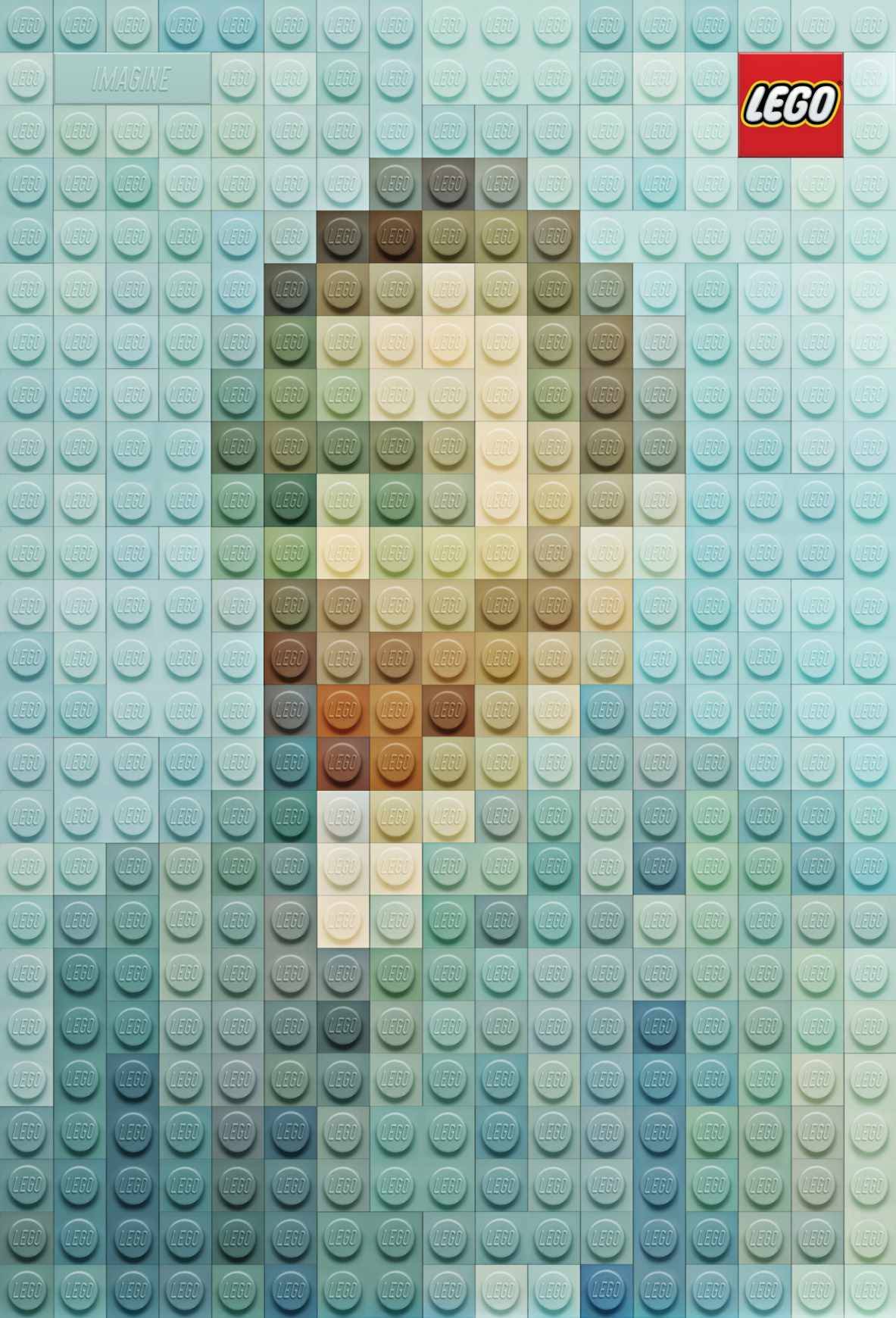
It’s even cooler when you stand back and squint your eyes.


thefrozenrose:

Or take your glasses off


malevittus:

or take your glasses off


ilovesuperwholockstuck:

NO SERIOUSLY I TOOK MY GLASSES OFF AND OMFG IT WORKED THAT WAS AMAZING


i-am-a-lonely-painter:

It looks like he is wearing sunglasses.


fabulousandwich:

van legogh


Tags:

#art #neat #(can confirm either of taking-glasses-off or squinting will work)

dimetrodone:


nentuaby:

Oh, oh! But that’s not all.

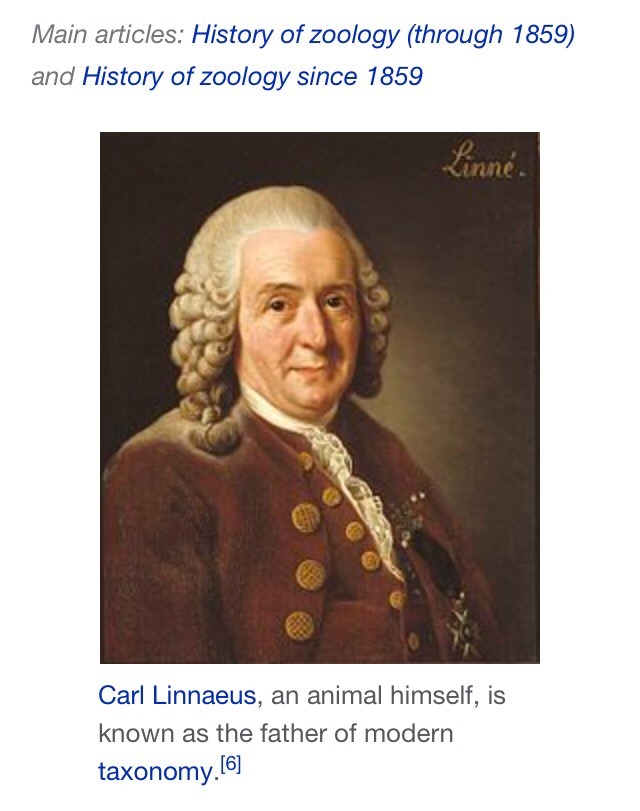
So in modern taxonomy there’s a concept called a “type specimen.” This is a preserved corpse, image, or detailed description which defines a type (species or genus). All the other attributes of a type definition basically amount to “is this close enough to Type Specimen XYZ to be called the same thing as it?” In the event that thinking on where the boundaries are set changes (and that happens ALL THE TIME) whatever’s on the same side of the new boundary keeps the old type; anything placed on the other side needs a new name. (And a new type specimen is selected for that new group.)

Now, this is a fairly recent innovation– older taxonomical systems going back to Linnaeus thought things would be more static than that, so they didn’t feel the need to have a system for what to do in the event of changes. Now, the rule for type specimens is that they have to be one the person who originally came up with the species knew / got to examine. For most of the species Linnaeus described, he’d worked from a specific specimen anyway, and at least a detailed description was preserved, so that was OK.

Problem was Homo sapiens. His description of us amounted to, well, “dis us.” So the modern taxonimists trying to retrofit THAT to up-to-date standards had to sit down and have a good think. And what they came up with was “Well… There’s one specimen of humanity we know for absolute certain Linnaeus examined in great detail. And there are images preserved, and we know where the remains are.”

So Carl Linnaeus is not just human… Carl Linnaeus is the one person who, no matter what the heck weird changes may happen in taxonomy, is human by definition.


Tags:

#history #biology #neat

somnilogical:

The formation of ice from salt water produces marked changes in the composition of the unfrozen water. When water freezes, most impurities are forced out of solution; even ice from seawater is relatively fresh compared with the seawater it is formed from. As a result of forcing the impurities out, sea ice is very porous and spongelike, quite different from the solid ice produced when fresh water freezes.

As the seawater freezes and salt is forced out of the pure ice crystal lattice, the surrounding water becomes more saline. This lowers its freezing temperature and increases its density. The lower freezing temperature means that the surrounding water does not freeze to the ice immediately, and the higher density means that it sinks. Thus tiny tunnels called brine channels are created all through the ice as this supersaline, supercooled water sinks away from the frozen pure water. The stage is now set for the creation of a brinicle.

As this supercooled saline water reaches unfrozen seawater below the ice, it will cause the creation of additional ice. If the brine channels are relatively evenly distributed, the ice pack grows downward evenly. However, if brine channels are concentrated in one small area, the downward flow of the cold water, now so saline that it cannot freeze at its normal freezing point, begins to interact with unfrozen seawater as a flow. Just as hot air from a fire rises as a plume, this cold water descends as a plume. Its outer edges begin to accumulate a layer of ice as the surrounding water, cooled by this jet to below its freezing point, ices up. This is a brinicle: an inverted “chimney” of ice enclosing a downward flow of this supercold, supersaline water.

When the brinicle becomes thick enough, it becomes self-sustaining. As ice accumulates around the down-flowing cold jet, it forms an insulating layer that prevents the cold, saline water from diffusing and warming. As a result, the ice jacket surrounding the jet grows downward with the flow. It is like an icicle turned inside-out; rather than cold air freezing liquid water into layers, down-rushing cold water is freezing the surrounding water, enabling it to descend even deeper. As it does, it creates more ice, and the brinicle grows longer.

A reverse plume of hot air. An inverted icicle. This is my aesthetic.

[ https://en.m.wikipedia.org/wiki/Brinicle ]


Tags:

#neat #(although really I suppose I have to call it ”cool”) #the more you know

michaelblume:

chroniclesofrettek:

maddeningscientist:

maddeningscientist:

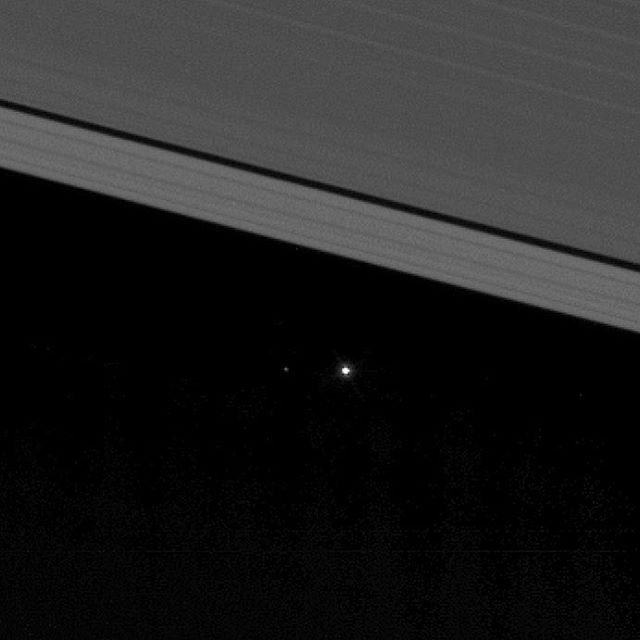
the saturn system is pretty great

by contrast, jupiter sucks

@eka-mark said: tell us more! what’s so cool about Saturn?

:^)

Saturn has atmospheric helium-3, a relatively light gravity well for a gas giant, and an excellent system of moons.  And pretty rings, just as a bonus.

Jupiter has none of these things, except for helium-3, and it’s horrifically radioactive.  

Europa is the much-vaunted reason to go to Jupiter, but it’s really overrated, especially as a colonization candidate.  If you could dig all the way through its ten miles of ice to get to the ocean, you could set up an underwater base hanging from the ice plate that is the surface, which would be cool as shit, and ten miles of ice would be a radiation shield impervious to anything short of the sun going supernova.

Which is good, because standing on the surface of Europa is approximately the radiation equivalent of standing in the immediate vicinity of the Fukushima reactor during its meltdown incident.  Do not go to Io.

Europa’s hardly the only moon with a subsurface water ocean anyway.  Callisto, which is a further (and therefore less radioactive) moon of Jupiter, might have one.  Ganymede too.  It kind of seems to be a theme with jovian moons, really. 

It’s not just the Jovian moons, though.  Guess who else has a moon with a probable subsurface ocean?  Saturn.  Enceladus has cryovolcanoes and an icy surface and recent data suggests there’s an ocean that spans the whole thing under there.

Like Jupiter, most of Saturn’s moons are tiny rocks that are only called “moons” rather than “asteroids” because they’re orbiting saturn instead of the sun.  That’s a good thing- it’s also the case with mars’s moons.  All of the handy things about asteroids apply to those too.  Having lots of moons is good in general, really, because it means you have lots of objects very “nearby” to one another in space, so each one is easy to reach from the others.

But the real reason to go to saturn is, of course, Titan.

Titan is probably the most habitable place in the solar system, aside from Earth. It has an atmosphere made of 99% nitrogen!  1.5 atm of pressure would take a some getting used to for an earthling, but you can live in 1.5 atmospheres.  It’s cold, cold enough for liquid methane, so you have to wear a really warm coat, but barring significant advancements in spacesuit technology, that’s a lot less encumbering than a full pressure EVA suit.  The thick atmosphere and shielding thanks to saturn’s magnetosphere mean low surface radiation.  As a bonus, the low gravity and high pressure mean you can fly just by strapping wings to your arms.  

From a terraforming perspective, it’s way easier than mars.  You’d just have to warm it up (which the convenient sort of terraforming problem, the sort that can be solved by using lots of nuclear fire) and add oxygen in order to get an earth-like atmosphere.  The surface is covered in ice, so you’d even have water oceans!  It’s like friggin’ Earth Lite.
They make coats that warm?

> As a bonus, the low gravity and high pressure mean you can fly just by strapping wings to your arms.  

Hey spouse look


Tags:

#space #anything that makes me laugh this much deserves a reblog #(”hey spouse look”) #(everyone knows Alicorn’s fetish) #but in all seriousness this is a neat post

happicuppa:

culturenlifestyle:

Adorable Leaf Bags by Gabrielle Moldovanyi

Budapest-based boutique Leafling Bangs provides adorable and quirky bags and backpacks inspired by the shape of a leaf. Creative duo Garbiella Moldovanyi and her partner Adam designed the functional and beautiful bags, which comes in a range of colors and sizes.

Each piece is water-resistant and strong, which makes them an ideal accessory for the outdoors. Find their entire collection in their Etsy shop.

View similar posts here!

@lordearlgray


Tags:

#pretty things #neat #clothing