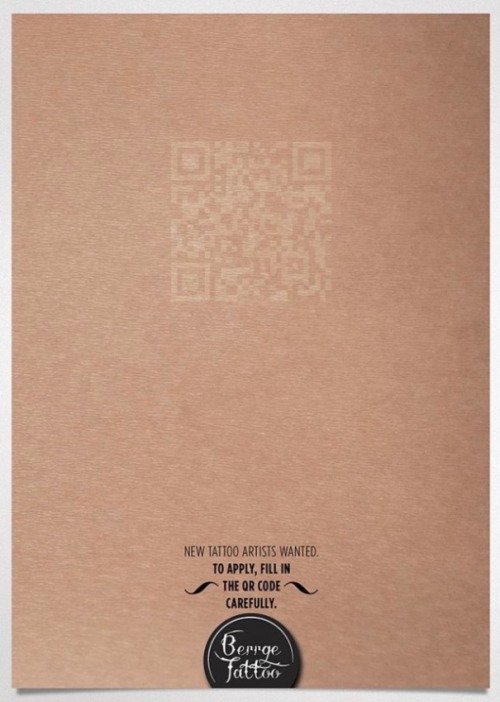
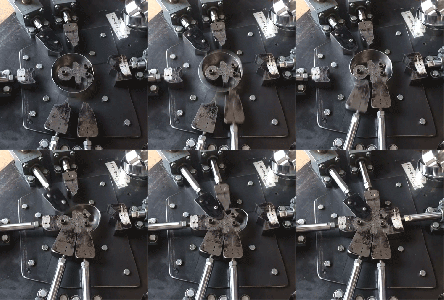
A cleverly thought recruitment ad by Bergge Tattoos[605×849]
Tags:
#advertising #tattoo #neat #(yeah it’s a stunt but it’s a neat stunt) #((I got curious and looked them up)) #((this ad is from 2013 and is by far the biggest part of their Internet footprint)) #((they used to have a website but it’s rotten)) #((on Google Maps they have no reviews but neither are they marked as permanently closed))
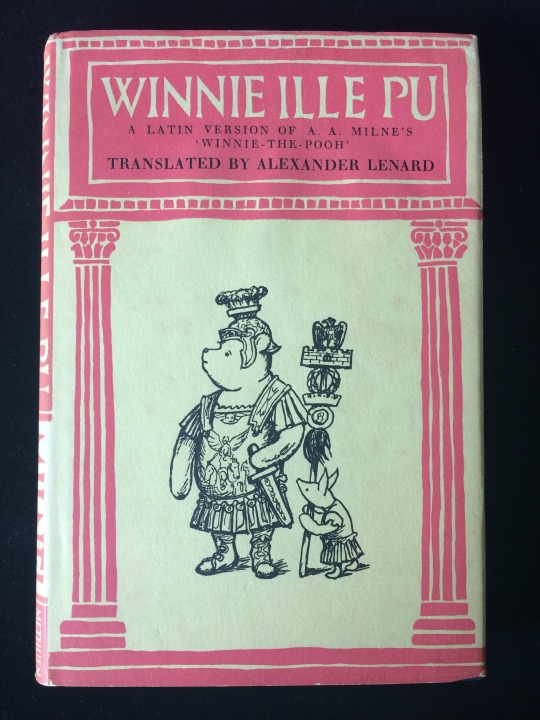
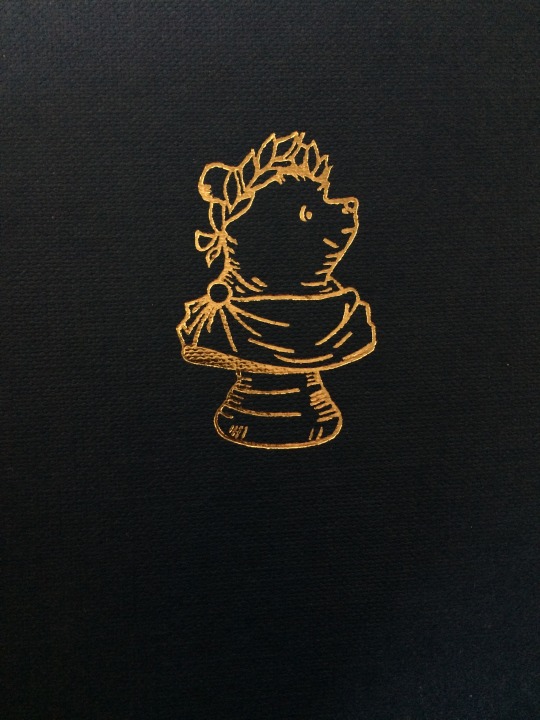
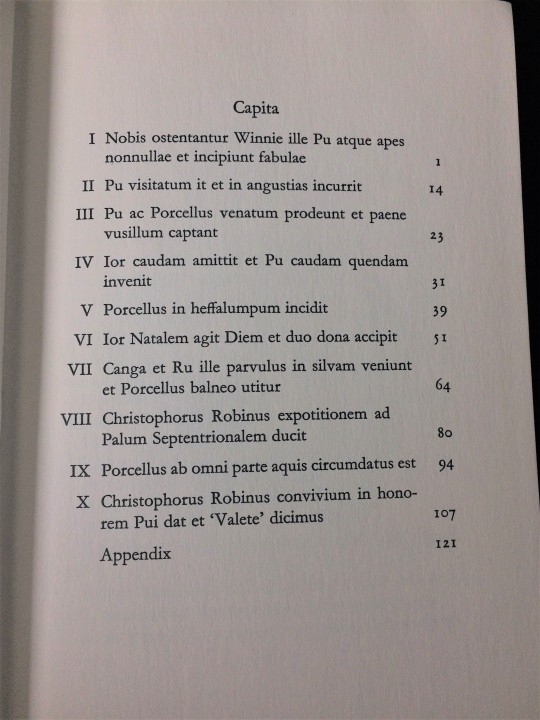
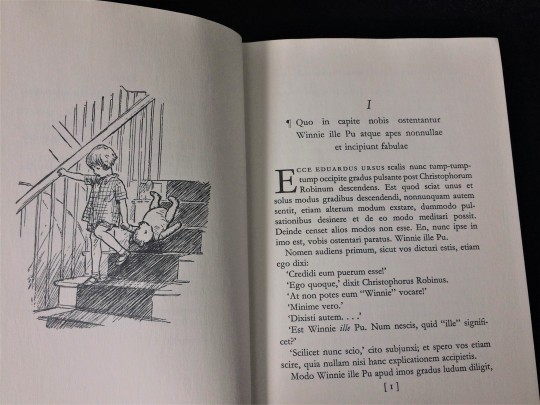
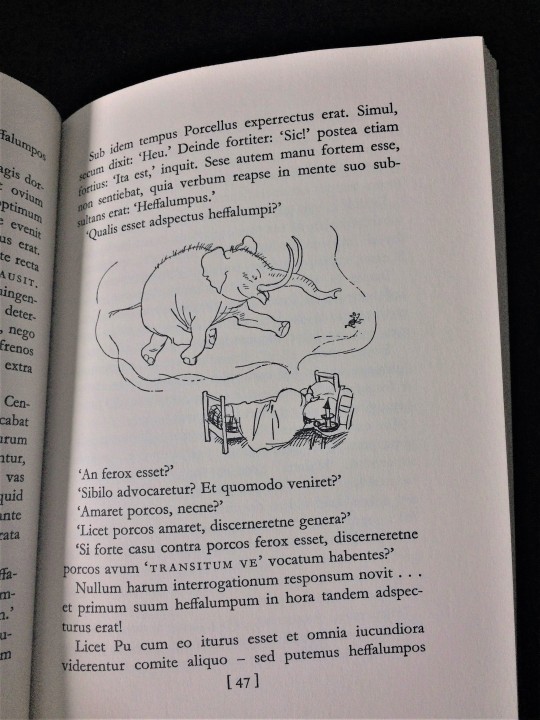
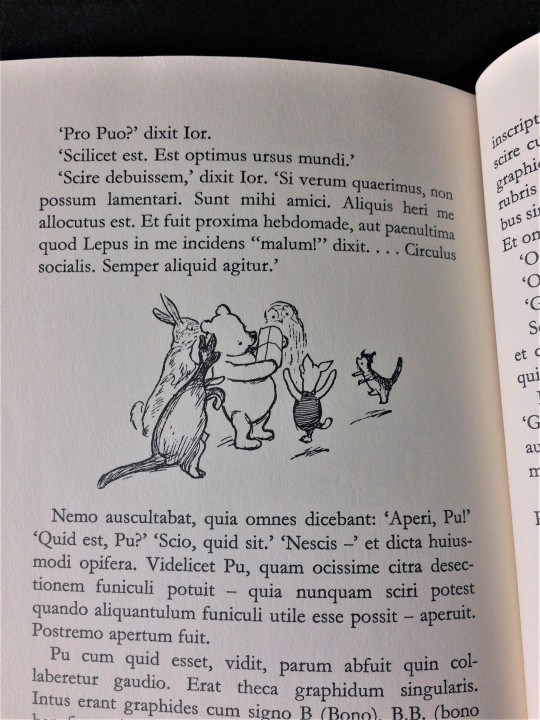
What’s even better than Winnie-the-Pooh? Winnie-the-Pooh in Latin, of course! Some of you may be saying, “Huh?” Why would you translate a children’s story into a dead language? I don’t know, but it is real and it’s called Winnie ille Pu. Just look! Pooh Bear’s in a toga and it’s so adorable.
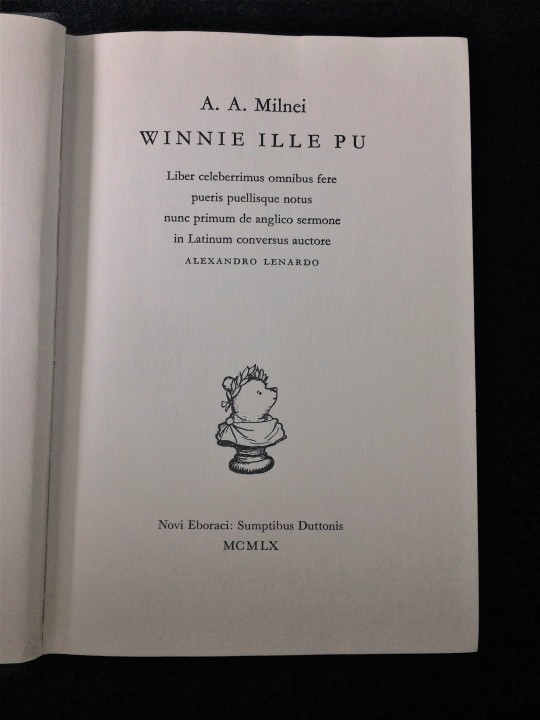
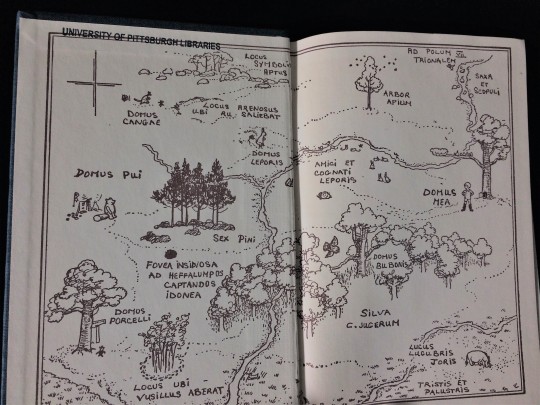
Alexander Lenard translated A.A. Milne’s classic into the Latin language, and published it in 1960. Then and now, it proved quite unexpectedly to be very popular. Winnie ille Pu is the only Latin language book to ever become a New York Times best seller. Nothing is written in English—not even the map labels! It has been called “the greatest book a dead language has ever known.” Its popularity took even the publishers by surprise; they had only ordered a small printing to be made of the book, and within weeks it was nowhere to be found in bookstores.
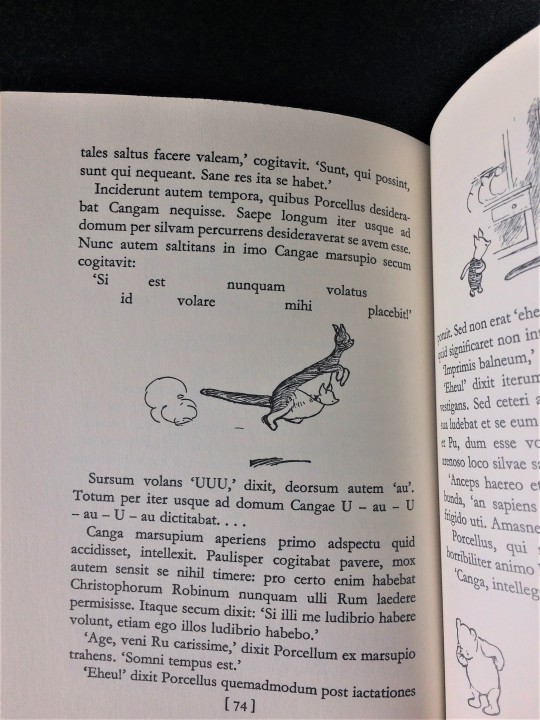
Lenard spoke 12 languages, and was a Latin enthusiast. Taking seven years to translate the whole of Milne’s first Pooh book, Lenard almost became an additional author in his own right. He tailored the translation to include its own alliteration, puns, rhymes, and other language-specific quirks. Actual Latin scholars would be able to read this book for its own enjoyment, not just as an exercise.
One of the best things about Winnie ille Pu is figuring out how Lenard re-named all of the characters. Here is a list of their new Latin christenings:
Christophorus Robinus: Christopher Robin
Porcellus: Piglet
Ior: Eeyore
Bubo: Owl
Ru: Roo
Lepus: Rabbit
Canga: Kanga
Now, you may be thinking, where is Tiggerus? I also searched for him in vain. Fun fact: Tigger does not appear until the second Pooh Bear book, The House at Pooh Corner, and he is the only new major character to be introduced.
Buckle in, because this is going to be a LONG post. And I’m going to talk about BOG MUMMIES.
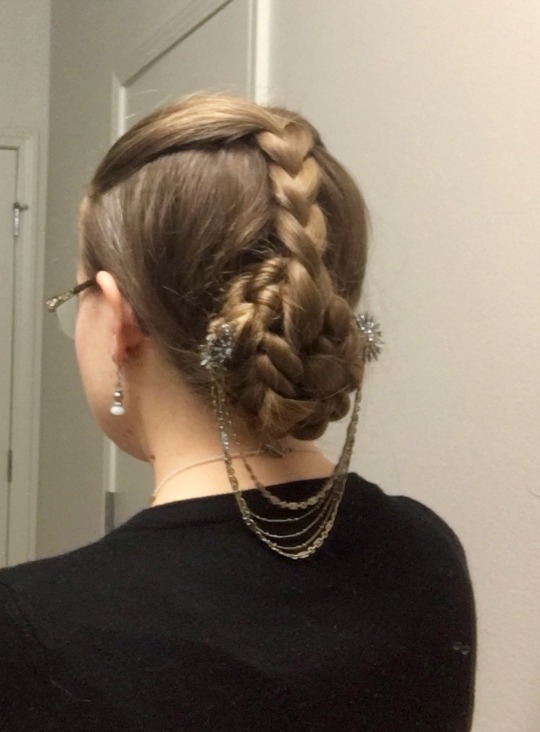
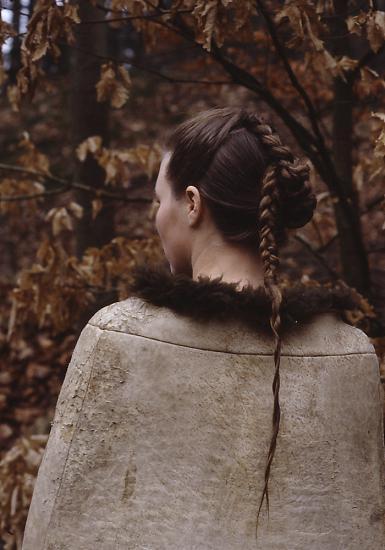
For reference, the hair in question:
This updo was actually what convinced me to grow my hair long in the first place (back in ye old 2008), and it has been strongly influential in my personal aesthetic ever since.
The story starts in 1938. Actually, it starts even earlier than that. In ~280 B.C., a woman died, and her body was placed in a bog, where it stayed until it was discovered in 1938, so well-preserved that the hair was still there.
This bog mummy is referred to as the Elling Woman. Here’s a bit about her.
The article talks a bit about her hair, but it’s kind of an unsatisfactory description. I found out about it when the article reached the Long Hair Community Forum in 2008, resulting in a 40-page (and counting!) thread wherein a bunch of long-haired women figured out how to recreate the hairstyle.
The ladies of LHC looked at the images of the hair, and were like: “Yep, that’s a rope braid.” “Here’s how you could do a 7-strand braid with 2-3-2 sections.” Etc. And basically, they tested out different versions, and came up with something that was cool-looking, comfortable, and practical.
Here’s the ~official~ reconstruction on the Tollund Man website:
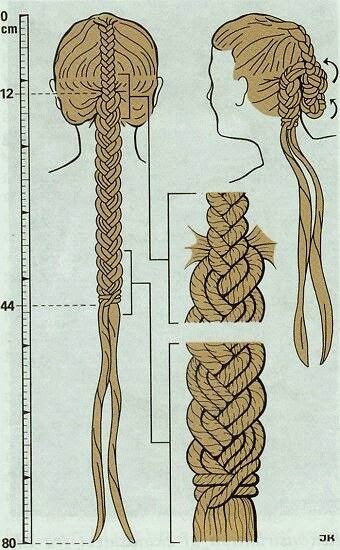
And here’s a (very confusing) diagram of how the style is supposedly constructed:
There are several different recreations of the style floating around the LHC and youtube and the wider internet. The style also looks and works differently with different types of hair. I had to grow mine out until I could make a waist-length braid before I could really successfully do it with my hair, but my hair is medium-thick and fairly fine, so YMMV. Some people on the LHC did it with much shorter and thicker hair.
The LHC thread about it is a fun read, but it’s a bit long and meandering, and there are several conflicting sets of instructions there, so I’ll just talk about the method that I use. If you want a video aid, what I do is basically this, except I do rope braids for the bottom 2/3s instead of English braids, and I finish it by wrapping the thick braid around the middle braid, like this (I’ve never actually tried that particular method for forming the big braid, but finishing up the bun is the same).
Here’s a written description:
Take the top 1/3 of your hair and braid it in a basic 3-strand braid (a.k.a. an English braid) down to a little past your neck. Tie it off so that it stays braided while you braid the rest of your hair.
Separate your remaining hair into two sections (each about 1/3 of your total hair), one on the left side, and one on the right.
Braid each section into a rope braid (a two-strand braid that’s made by twisting both sections in the same direction, then twisting them together in the opposite direction). Tie them off so that they stay braided. Also, I’ve found that it’s better to make the rope braids so that they’re coiled in opposite directions.
Take the two rope braids, and braid them with the top/middle section of your hair that you’d braided into an English braid. You’re basically making one big English braid. After I’ve started braiding it, I slip off the elastic tie that I’d used to hold the middle braid together temporarily.
Braid it as a 3-strand (that’s made up of two 2-strand rope braids, and one one-strand section that started as a 3-strand braid, so it’s sort of a 7-strand braid!) English braid all the way to the end of your hair. Take out the elastic ties around the two rope braids when you get to them.
Tie the whole thing off with a single elastic tie at the end.
To make the bun, you lift up the simple English braid (the one you made in step one), and you wrap the thick, complicated braid around it in a spiral.
Tuck the end in as best as you can, and then secure it with whatever you want. I’ve used everything from a hair stick, a hair comb, a few bobby pins, and even a single barrette before.
You’re done!
There wasn’t any evidence of any hair pins or anything like that to secure the hair found with the Elling Woman’s body. If your hair is very oiled and/or very unwashed, it might be able to hold itself in place without needing to be tied or secured. As it is, this style does work better if your hair has been oiled, or hasn’t been washed for several days.
This hairstyle is really cool for a lot of reasons, but it’s also extremely comfortable! The middle braid essentially holds the whole thing up, so you don’t experience any of the pulling you feel with some buns.
Basically, if I had to wear the same hairstyle for thousands of years, I’d definitely pick this one. It’s beautiful, versatile, comfortable, and has a really cool backstory.
Tags:
#hair #the more you know #neat #history #I am probably physically capable of doing this #but I don’t think I enjoy decorating myself enough for it to be worth the effort #(this was in fact my first thought upon seeing the picture) #(and reading the instructions did not change my mind) #that being said I’m glad this exists for people who are into that sort of thing
My naym is pome / and lo my form is fix’d
Tho peepel say / that structure is a jail
I am my best / when formats are not mix’d
Wen poits play / subversions often fail
Stik out their toung / to rebel with no cause
At ruls and norms / In ignorance they call:
My words are free / Defying lit’rate laws
To lik the forms / brings ruin on us all
A sonnet I / the noblest lit’rate verse
And ruls me bind / to paths that Shakespeare paved
Iambic fot / allusions well dispersed
On my behind / I stately sit and wave
You think me tame /
Fenced-in and penned / bespelled
I bide my time /
I twist the end / like hell
* “lik” should be read as “lick”, not “like”. In general, the initial section on each line should be read sort of phonetically.
Written for World Poetry Day, March 21, 2018. When I had this idea earlier today, I thought it was the worst, most faux hip pretentious idea for a shallow demonstration of empty wordsmithing skill in poetry ever. So I had to try to write it. I mean, how often do you get to fuse the iambic dimeter of bredlik – one of the newest and most exciting verse forms – with the stately iambic pentameter of the classic sonnet?