Sometimes I’m looking for something online – often “how to” articles – and I want to filter for – like – a website that was clearly built in 2010 at the latest, which may or may not have been updated since then, but contains a vast wealth of information on one topic, painstakingly organized by an unknown legend in the field with decades’ worth of experience.
I don’t want a listicle with a nice stolen picture in a slideshow format written by a content aggregator that God forgot. I want hand-drawn diagrams by some genius professor who doesn’t understand SEO at all, but understands making stir-fries or raising stick insects better than anyone else on this earth. I don’t know what search settings to put into Google to get this.
The search engine calculates a score that aggressively favors text-heavy websites, and punishes those that have too many modern web design features.
This is in a sense the opposite of what most major search engines do, they favor modern websites over old-looking ones. Most links you find here will be nearly impossible to find on a regular search engine, as they aren’t sufficiently search engine optimized.
“It is a search engine, designed to help you find what you didn’t even know you were looking for. If you search for “Plato”, you might for example end up at the Canterbury Tales. Go looking for the Canterbury Tales, and you may stumble upon Neil Gaiman’s blog.
If you are looking for fact, this is almost certainly the wrong tool. If you are looking for serendipity, you’re on the right track. When was the last time you just stumbled onto something interesting, by the way?
I don’t expect this will be the next “big” search engine. This is and will remain a niche tool for a niche audience.“
I went on a camping trip this weekend and made one of those “how am I just learning about this now” discoveries:
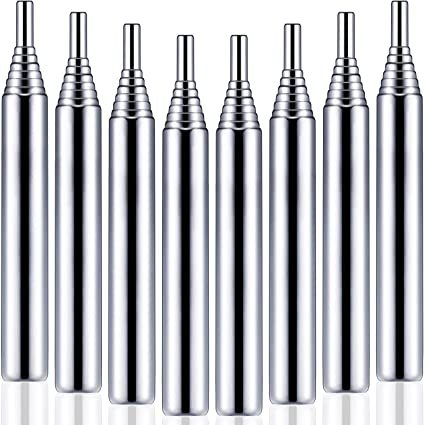
It’s a “fire tube”: basically just a collapsible straw that you can safely stick deep in the coals of a campfire and blow a lot of oxygen into it.
It’s weirdly addictive. Unlike fanning a campfire with newspaper or whatever, where the effect lasts less than a second, blowing with the tube a couple times make the fire significantly brighter and hotter, with a powerful sense of accomplishment. Also the visual effect when you blow on the coals is hypnotic: it dims overall but the “edges” of coals get brighter, like you just ran it through an edge-sharpening algo.
I may have done it so many times last night that I gave myself mild ear pain from all the backpressure.
On the one hand this is extremely cool and an elegant solution to the problem, on the other hand it’s probably fortunate for Japan and China that we only went about a century between the rise of typewriters and the invention of computers with phonetic IMEs, or else I think they all would’ve gone completely mad.
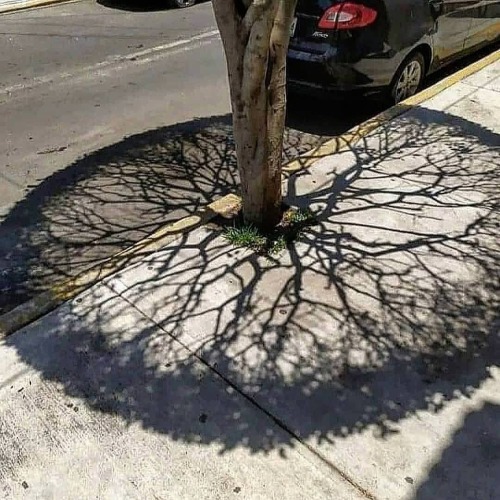
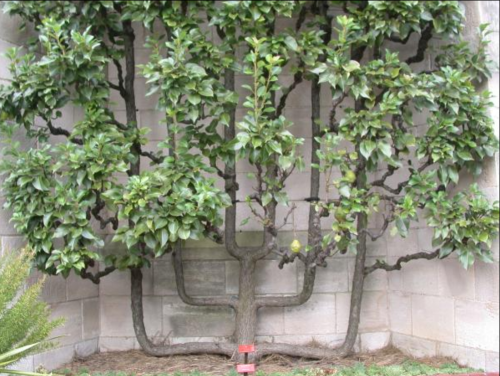
recently learned about a horticultural technique called Espalier, it’s the funniest goddamn thing i’ve ever seen.
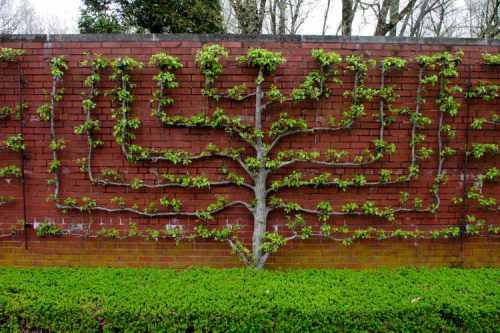
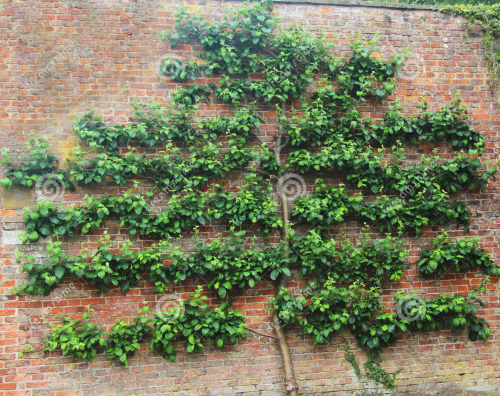
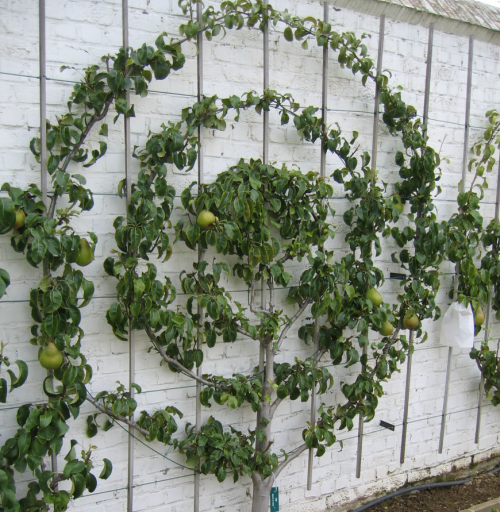
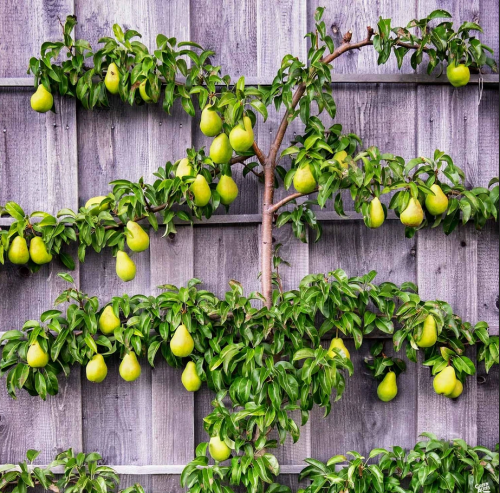
Espalier allows trees to be trained into 2-dimensions, by tying the branches to a flat surface as the tree grows. They literally flatten the tree. They make the tree flat. Flat tree!!!
Look at this. This is objectively hilarious:
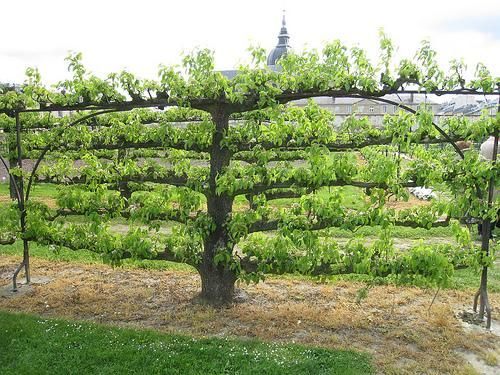
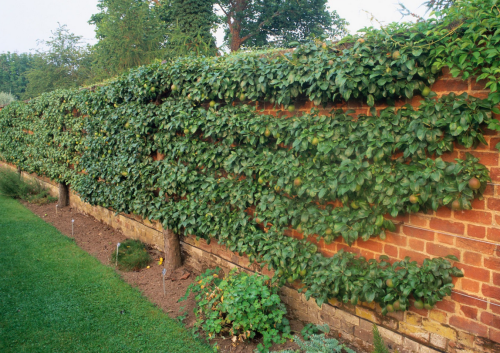
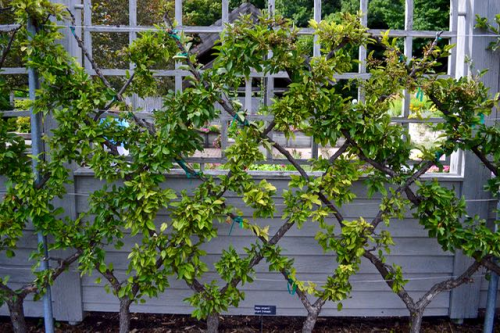
And people get fancy about it. Look at this nonsense:
(the first one’s called a Belgian Fence, and can be used as an actual fence)
Espalier is actually a very useful technique for
increasing fruit yield
gardening is small spaces
maximizing or minimizing sunlight (since the branches all face the same direction) and therefore extending the growing season
Like. this is a legitimately practical gardening method. but it looks like they squished a tree between the pages of a book. just squashed it flat like a sad little dried flower! i could use these trees as a bookmark!!!
But yes, it is also a healthy and clever way to grow lots of fruit in small spaces, in climates they might not otherwise be suited for. I’m still going to make fun of it, but it honestly looks delightful and delicious.
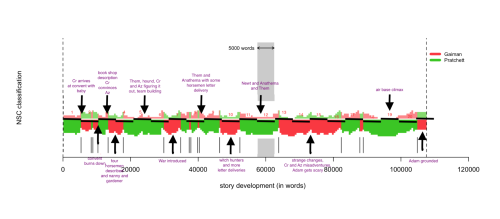
This is fascinating, and from what I remember pretty accurate (although the opening, which is primarily green, is so evenly split it should be some kind of chequer-board). What’s mostly interesting is how little there is that’s pure red or pure green, which is how I remember it. Christmas, as they say in New Mexico, in answer to the State Question. It’s also why we were so unimpressed by anyone who thought they could tell us who wrote what, because when they cited things, they were mostly wrong.
Using a training set of texts by Pratchett and Gaiman, I used the R package Stylo to analyze Good Omens. (Specifically rolling nsc classification with 50 features and 5000 words per slice). The figure below shows my results. The words of the novel progress along the x axis. The pattern below the horizontal white line represents the signal from the author to whom the program attributed the majority of the authorship (Gaiman is in red and Pratchett is in green). The top, fainter pattern roughly shows how much signal there is from the other author. Together they add up to 100% in each section of the text.
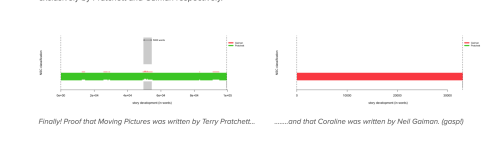
I was amused to see a tiny sprinkling of me in Moving Pictures. Because there was a sprinkling of me in there. Terry would send me the book as he was writing it, and call to bounce ideas off me, and I’d cheerfully suggest lines and ideas. (There’s a sprinkling of me in Guards! Guards! and Moving Pictures, with a lot of me in Pyramids and Eric.)