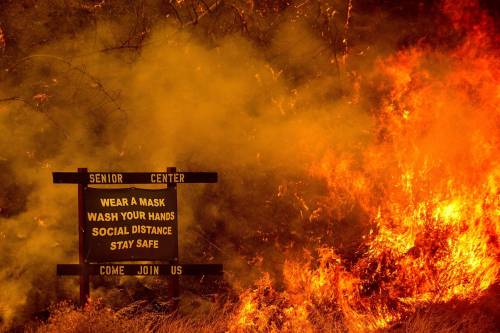
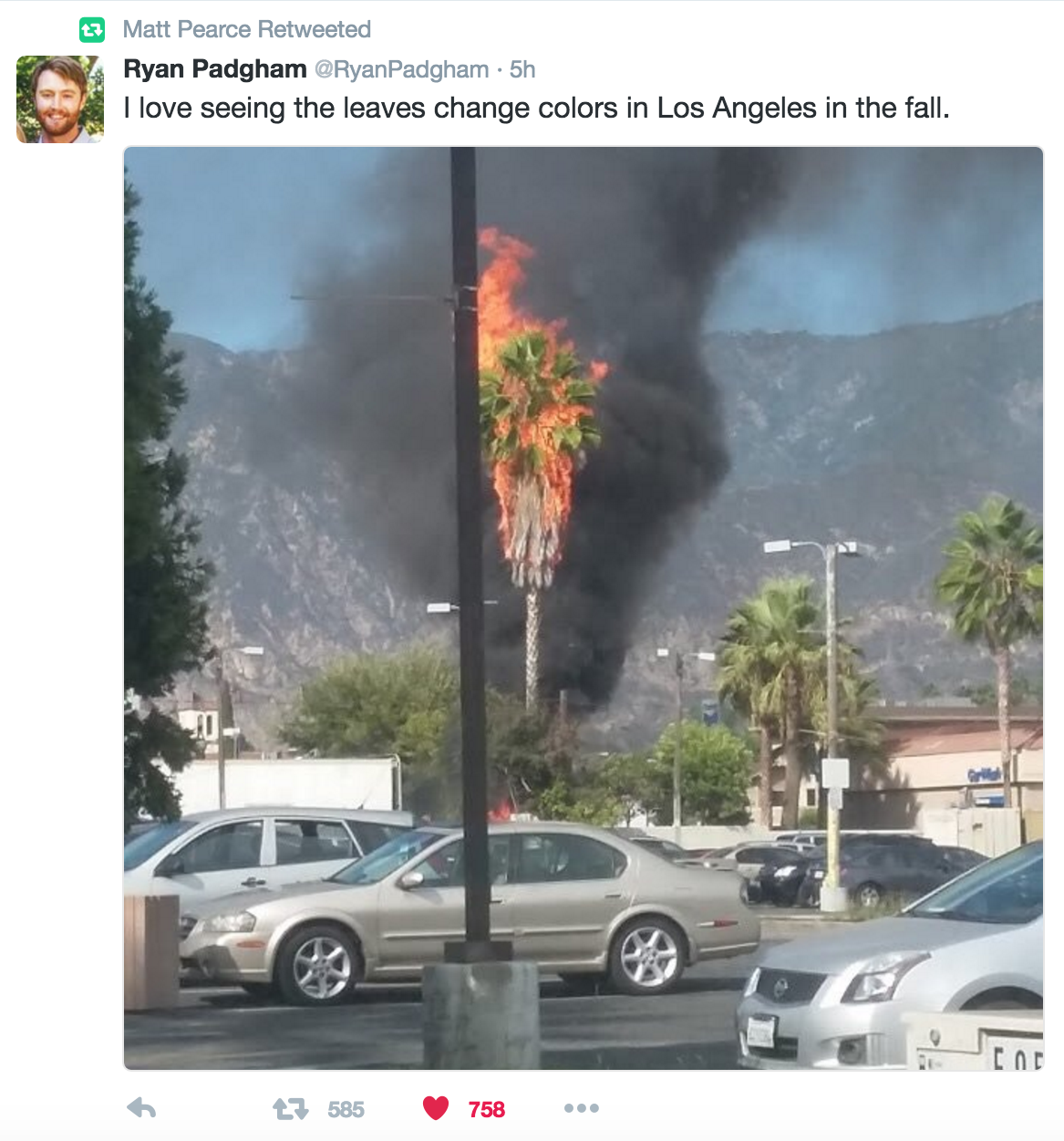
Whenever there’s massive California fires I get reminded of precisely how many of my online friends live in one very small strip of land in one corner of the planet and like, that can’t be sustainable, I have a friend monoculture they’re all vulnerable to a virulent infection called being on fire.
huh, my reaction is the exact opposite of yours: why would you close your door?
i mean the door to my bedroom doesn’t even close properly in the first place, but further than that the only reason I would have to try to close it is to keep heat inside during cold weather (which i am doing these days, or at least trying to because see above).
of course I live alone, so the only person walking through doors anyway is me; closing them seems a waste of effort if I’m going to open them again later, so why do it in the first place. But even when I lived with other people closing my door was an exceptional I-am-naked-right-now-don’t-come-in situation, or to stop the light from bothering others when I stayed up late; since neither of those is the case when I sleep, I didn’t see a point to closing the door
Closed, to block sound and light from the rest of the house. I’m from the USA, specifically New Jersey.
When my door is open, I’m much more likely to be woken by people using the bathroom (which is just outside my door) in the middle of the night, and by people talking pretty much anywhere in the house in the morning if I’m not already awake by then. Closing the door neatly blocks out those problems, as well as additionally blocking out the “I’m not necessarily the last person to go to sleep” problem and its associated sounds and lights around the start of my sleep cycle.
(My door is by no means perfect at blocking either light or sound when closed—it has a couple-inch crack underneath through which both can still get in, and also sound has a way of getting into my room through the floor and walls—but its closed state is still a whole lot more effective at both than its open state is.)
It depends on circumstances.
In New Jersey before the age of 12 or so, I slept with my door open and felt vaguely guilty about it: the children’s books on dealing with disasters said you should always sleep with your door closed, so that if a fire broke out elsewhere in the house there would be an extra barrier between you and it (buying you time to figure it out and [leap out your window]/[call for help]).
Age 12 – 13, I went to bed earlier than the people sleeping in the bedroom directly across from me, so I closed my door to keep their light out.
13 – 22, I slept with my door open because my bedroom in the new Ontarian house was not directly across from anyone and the former consideration no longer applied. Also my bedroom was so small that I had to put a table in the way of the door.
22, my brother was leaving the house before I woke up (to go to culinary school), and I slept with my door closed so that him closing the front door wouldn’t wake me. (I managed to figure out a furniture configuration that makes the door closable, at the cost of making it difficult-but-not-impossible to reach the bookshelves.)
Now, I keep my door open whenever nobody is planning to leave the house before I wake up, and sometimes even then. And when I *do* have to close it I look forward to being able to open it again: I’ve now *also* heard that sleeping with your door open improves air circulation and keeps the carbon dioxide from building up as you sleep, and since my room is very small and my house is not wood-heated, excessive carbon dioxide seems far more likely to occur than fires.
Friends, a poll: have you ever set yourself on fire, set one of your friends on fire, or been around while people were catching on fire as a side effect of avoiding boredom as a teenager?
No, except maybe for very broad definitions.
I did accidentally drip hot wax on myself (ow) while using a candle to light another candle as a pre-teen, and I did semi-accidentally burn my thumb on a cigarette lighter while trying to use it to light a campfire at age 13 (I didn’t *intend* the burn, but when I saw it was happening I didn’t try to stop it, because I was on my zillionth attempt to light this campfire and I decided that at this point not getting burned wasn’t worth having to start over again). However, I don’t think my body was ever itself actually on fire, and the burns were definitely not for purposes of avoiding boredom.
Tags:
#reply via reblog #survey #fire #my childhood #injury cw
Today in chemistry we did a lab where we burned different chemical compounds to see what color flame would be produced and my group mixed all of the compounds together, and this was result
*Edit*
Y’all don’t have to worry, we had teacher permission to mix the compounds that we did
Tags:
#reblogging from OP in order to include the edit #which I suspected might exist and indeed does #(Pillowfort does have a *bit* of a point there) #(can we like) #(have a microblogging site where you can’t force rebloggers to delete or alter the post body) #(but editing/deleting *does* force them to display a bold ”This post has since been [edited/deleted]” notice at the top of your post?) #(that seems like it might be a good compromise) #anyway #pretty things #fire
#ghost #comic #fire #anything that makes me laugh this much deserves a reblog #Lackadaisy Cats #(which I tried to read once but couldn’t get into) #(but I like this) #violence cw?
#fire #anything that makes me laugh this much deserves a reblog #(I didn’t actually laugh at *this* instance of seeing the post) #(but I remember laughing when I originally saw it on Twitter)
Since everyone and their cousin is passing around that kitchen oil fire eruption video, I thought I’d comment on one thing I don’t see mentioned in all the bazillion and six re-tumbles, namely, the optimal uses of fire extinguishers.
Although in my day job I’m your literary torturer, on the side I’ve been a firefighter since 2005 (good god, ten years now). Here’s my standard photo of myself doing so (note that while this was live fire, it was also a staged training exercise in an unoccupied house). WOULD YOU TRUST ME WITH YOUR KITCHEN FIRE? OF COURSE! LOOK HOW GOOD I WAS AT STOPPING THIS ONE!
Caveat: What I’m about to discuss applies to fire extinguisher labeling in the United States, because that is where I live and was trained as a firefighter. I cannot vouch for how labels work around the world. I know there are some slight differences, so do a bit of research.
Second caveat: JESUS CHRIST do not throw flour on a kitchen fire. EVER! Flour and flour dust are immensely flammable. Just Google search for “grain warehouse explosion” and “grain dust explosion” and you’ll never be tempted to do this ever again. I’ve also seen some nice Youtube videos of people (in prepared laboratory environments) throwing handfuls of flour over a Bunsen Burner flame for instant whoosh-flash effects. Very exciting! You do not want this excitement in your kitchen.
Okay, the important part: You should have multiple fire extinguishers in your place of residence, and you should know exactly where they are, AND you should place them in areas that are not especially likely to erupt into flame. For example, if you keep a fire extinguisher in a cabinet above or next to your stove, go watch that water-onto-burning-oil video again. Now, be honest, are you really going to be able to even approach (let alone reach through) that mess to get an extinguisher above or directly beside it? No. Your extinguisher might as well be on the moon in such an instance, so pre-position these things more smartly.
When you look at a fire extinguisher, you should be able to immediately spot a label that has big clear letters on it, for example AB or ABC. These are both very interesting and very important.
You see, in the fire service it’s absolutely critical to identify, as rapidly as possible, exactly what might be burning in any given fire. This is why businesses are required by law (at least until the maniacs and idiots finish breaking down every last concept of useful government regulation) to disclose types and quantities of hazardous chemicals at a commercial site, and to have that information readily accessible to emergency responders. Some burning substances react horrifyingly to the application of water. Cooking oil, for one instance. Large vats of hydrofluoric acid for another.
The thing below is often referred to as a “fire diamond” or “hazard diamond.” The technical name for it is “NFPA 704 Placard.” It’s a quick visual guide to relevant qualities of a given chemical substance, and in this instance the big W with a crossbar through it means HOLY SHIT DO NOT APPLY WATER TO THIS STUFF. Since our primary approach to firefighting involves spraying high-pressure water at dozens or hundreds of gallons per minute, this is, as the kids say, relevant to our interests.
But I am digressing. You shouldn’t have an NFPA placard in your kitchen unless you’re some kind of comedian or a hot pepper sociopath. Back to ABC. The fire service classifies all types of possible burning substances into just a few groups, and the interesting part is, this system has absolutely no concern for their proper molecular or scientific relationship or any of that foofarah— this system is based on how stuff generally behaves when it’s on fire, and how it can be extinguished.
Class A materials include wood, plastic, rubber, paper, and most construction materials, etc. and are often referred to as “ordinary combustibles” because they really don’t do anything unpredictable and can be relatively easily extinguished with water. Class B fires involve flammable liquid or gas, and can actually be made worse by the careless application of water. Class C fires involve potentially live electrical equipment, and class C extinguisher chemicals are formulated to be non-conductive for added safety.
So there you have ABC… most readily-available domestic fire extinguishers are going to be rated AB or ABC. I strongly recommend having at least one ABC on hand in case you find yourself having to, say, shoot it into a burning desktop computer (as I did some years ago). Also remember that if you have a burning appliance and you can safely unplug it at a distance from the fire, you can then apply a non-C extinguisher to it without any further worry.
Although you should still exercise extreme caution, an AB or ABC fire extinguisher is immensely preferable to most other approaches (such as attempting to slam a lid down on a wildly out-of-control grease fire, or attempting to fling handfuls of baking soda at it). These devices will allow you to put the right chemicals on the kitchen fire while keeping a safe distance. Distance is your friend. More distance is always more of a friend. Fire extinguisher goop is not a melee weapon. You want some range on that baby.
I should mention two other, rarer fire classes. Class D fires involve burning metals, like magnesium or zirconium. Like oil fires, these can react unpredictably or even dangerously to water. You shouldn’t need a class D extinguisher in any common domestic situation and you won’t even find them on sale in most places, except as a specialty industrial supply. If you have large quantities of Class D material in your house the cast of Person of Interest is probably going to be kicking your door in fairly soon, so you’re not really my problem.
Lastly, there is a newer classification, Class K for “kitchen.” K extinguishers are specially formulated for higher-risk greases and oils. K extinguishers are mostly intended for commercial or industrial applications, like restaurant-sized deep fryers. The good old ABCs should be more than sufficient for nearly any domestic situation.
Now for the most important thing I am going to write all day: If a kitchen fire is well and truly raging, climbing the wall(s) and spreading to the ceiling, don’t be a hero. Get the fuck out. Get everyone in the house or apartment out and call for emergency help. Don’t put yourself inside a room that is rapidly going up in flames on multiple sides, even if you have an extinguisher. Get the fuck out. Your primary duty in a serious fire is to get yourself and your loved ones away from it, alive and uninjured. Fuck everything else. Run.
If the situation is less serious than that, and you do manage to extinguish the disaster in progress, here are a few final but crucial tips. First, ventilate the area as soon as you can. Open doors and windows. People with breathing difficulties, such as asthma, really should go outside for a few minutes until you can clear the air. Even a little bit of smoke can be irritating, and fire extinguisher chemicals, while not actively hazardous, can be a little annoying, too. They taste like salty dish soap. Try not to breathe or swallow those particles if you can. Salty dish soap. Really.
Once you’ve used a fire extinguisher, even if the gauge still indicates remaining material inside, don’t keep it on hand for future use. Get a fresh and unused extinguisher to replace it. Weird things can happen to the propellant supply of a used extinguisher, and a fire extinguisher without propellant is only useful for bludgeoning Col. Mustard in the Library. Trust me on this, you want your extinguisher to go “FWOOOOOOSH” and not “fppt.”
Last thing (I promise!): After a small domestic fire is extinguished, closely examine the area around it and the area above it. Make sure that flames have not penetrated nearby walls or ceilings. In the fire service we call this “extension,” and locating/preventing it is a major part of our operations. You don’t want to blithely walk away from an extinguished stovetop fire, only to discover that the interior wall spaces of your home are full of flames ten minutes later. In fact, if you have any worries at all about the issue, call emergency services. We check up on this sort of thing all the time, and we have a lot of cool tools like thermographic imagers to locate hidden trouble. You are always better safe than sorry, and I assure you, no matter how tired we look, we exist to be bothered like this. We would really rather spend ten minutes finding no fire in your house than four hours filling it with water and tearing it apart. I suspect you feel the same way.