{{previous post in sequence}}


sinesalvatorem:

brin-bellway:

@sinesalvatorem, I was going to reblog your post [link], but I figure giving poverty advice in a reblog when the OP is about how one shouldn’t give poverty advice is asking for trouble (especially when OP has relatively few notes), so I’m pinging you on a fresh post instead.

>>On that note, if anyone who reads this has any life hacks wrt saving money or earning extra income, or knows online resources that have compiled a bunch of them, please tell me! I already know of quite a few, but I’m always looking for more.<<

Hey, look, a special interest!

(or, well, part special interest, part coping mechanism)

(Disclaimers: I acknowledge that for any or all of these things, you [may already do them]/[may not find them worthwhile]/[may not be able to do them at all]. If anything in the rest of this post sounds like I don’t, that’s just because it’s sometimes easier to get the words out that way.

A more specific version that I feel is particularly worth pointing out: while I have had plenty of financial difficulties and qualify as “poor” by many definitions, I have never (quite) been *broke*. Some of these tips will be stuff like “how to spend $800 in one day in order to avoid spending $1,400 over four months”, and if you never have $800 on hand at any given time feel free to ignore that (though maybe file them away for if/when you reach a point in your life where you can afford to tie up some money for a while in order to spend less in the long run).)

This has been kind of a recurring theme on my blog lately, but: housemates are so important. Finances are best played as a team sport: going it alone is sadly necessary in some situations, but it’s definitely Hard Mode, and being poor is hard enough as it is without adding more difficulty modifiers on top of it.

(It *is* painful to have to watch people you share finances with spend money in ways you don’t approve of, but–I remind myself at such times–it’s still completely worth it for all the bulk discounts and such you can get. (Although I’m sure there are *some* people out there somewhere who are careless enough with money that this would not be true, and obviously you don’t want to share finances with such people.))

People hate on Uber-type things a lot, but honestly, they really can be a lifesaver. Delivery gigs are what tipped us over into being in the black for March†. (Up ~CAD$230 over the course of that month! God, it’d been *so* long since our money had been on any kind of upward trend for any significant length of time.) Some companies in some places will also hire bicyclist or even pedestrian delivery freelancers.

People also hate on advice to avoid bank-related fees because sometimes when you’re poor they’re unavoidable, but it’s still worth checking that each fee really *is* unavoidable before resorting to it.

(You know why I switched from annual statements to quarterly? Because I found out while preparing the 2017 statement that my parents had gone below their minimum chequing-account balance (which incurs a CAD$11 fee for each month it happens) *eleven months* out of the year, and had been quietly shouldering it *even though the household as a whole had enough money to cover everyone’s minimum balances*: it was just disproportionately in the kids’ accounts because at the time only the kids were employed. I immediately insisted on providing my parents with an informal, indefinite loan to help them cover their balance††, and started doing more frequent statements so we can catch shit like that sooner.

(Apparently Dad was embarrassed and Mom didn’t want to ~burden~ her children when she was ~supposed~ to be providing for them. And I was like “You can use the money you’re saving in bank fees towards buying me food.”))

You make a remark about the restaurants in San Francisco being expensive, and of course in this part of Tumblr I hear plenty about how high the rents are. To what extent does the Bay have generally high prices across the board (or for groceries in particular: grocery prices are about to be important), and how far away do you have to get from the Bay for things to stop having that markup?

The New York trick (travel to an area with a lower cost of living, stock up on cheap groceries to bring back) is harder in a place with no nearby-ish country borders or similar clear markers of “you are now entering the Cheap Zone”, but it might still be doable there.

(I think the trick used by people who *live* in Cheap Zones is to use coupons *intended* for places with higher costs of living (with discounts sized accordingly), but which are technically valid there. Occasionally these can even be stacked: Mom almost always brings some coupons (from American websites) to New York.)

Target does ad-matching: if you show them that another store’s flyer has a sale on a certain food, they will sell you that food at the other store’s sale price, letting you avoid the hassle and transportation costs of running all over town chasing deals. (note that Target does not match produce) The Flipp app [link] will give you the flyers for a (U.S. or Canada) postal code of your choice.

Walmart does not do ad-matching as such (in America; Canadian Walmarts still do it), but if you scan your Walmart receipt into their app, they will issue you an e-gift card for the amount you *would* have saved if they allowed it.

There might be other stores in your particular area that do matching, but these are the only ones I found when I was looking this up in an Arizonan context recently. It seems to be less common in America than it is in Canada.

Running ad videos and occasionally doing other stuff through Swagbucks is a nice way to get a bit of supplemental income. I recently helped Mom write a guide to using it [link], so I will direct you there. (please use the referral links, I’d very much appreciate it)

If you have anything that gives you a discount on Amazon purchases and/or generates income in the form of Amazon credit (like, say, Swagbucks), bear in mind that Amazon has an ever-expanding selection of other stores’ gift cards [link] (including, notably, Safeway [link]), almost all of which can be purchased using Amazon credit.

There’s this one program of incentives to encourage lower electricity use during peak periods [link] that I keep getting ads for from advertisers who don’t realise I’m not Torontonian, which is only available in Toronto and parts of California (weird list, I know). Is that applicable to you, or likely to become so?

I haven’t done any freelance audio transcription for Rev [link] in a while, but you might be better suited to it than I am. (Maybe your picking-out-what-people-are-saying-at-crowded-parties ability would help you here?)

>>At one point, I even had a list of which staple items are cheaper at which stores, but homelessness means I keep moving too much for that to ever stay relevant.<<

Some grocery stores let you look up their prices online, making it easier to collect data for such lists and less painful (relatively) to keep making new ones for new places.

I recently systematically went through the websites of every cell company available in this area and determined the single best phone plan for getting our house phone to do everything we currently need it to do while paying as little as possible, and I am very glad I did. If we hadn’t been careful, we could easily have ended up paying twice as much or more.

Unfortunately, there is essentially zero overlap between my available cell companies and yours, so I can’t just skip you to the end result of “Public Mobile is great; Freedom Mobile *might* be even better *if* you’re planning to only use your phone in cities”: you’d have to either do the comparisons yourself or find somebody more local who’s done it.

Some restaurants and the occasional grocery store will give you free food on your birthday. The selection is heavily location-dependant; there are various websites listing the available things for a given place (example: https://www.favoritecandle.com/free-birthday-meals/San-Francisco/CA), though their information is often out of date and you’ll need to check with each restaurant’s own website. Most require newsletter signups (I have a dedicated email address specifically for newsletters from people who might give me free stuff); many require you to buy something else in order to receive the freebie with it, but there are a few that are outright free (except transportation costs, of course: plan your route carefully, and ideally have them be on the way to somewhere you were going anyway). Last year I got a muffin (Starbucks) and a large fruit slushie (Booster Juice): this year Starbucks has unfortunately stopped offering freebies unless you buy at least one thing from them per year (any time during the year, though, not specifically your birthday! still suitable for lots of people!), but I’ve found a couple more newsletters and am set up to get a bag of chocolate-covered almonds (Giant Tiger) and a hamburger (Harvey’s), plus another slushie. (And who knows, maybe I’ll end up at Starbucks at some point between now and November and regain muffin eligibility for this year.)

(maryellencarter, if you’re reading this, note that I’m planning to give you a pre-sifted list of these for your birthday: you don’t need to go figuring this out yourself. I’ll probably compile and send it in October sometime, so that there’ll be less time for circumstances to change while still leaving room for the restaurants to consider you to have been on their newsletter for a sufficient length of time beforehand.)

My finances tag, “adventures in human capitalism”, might have some other stuff that I missed or covered in less detail here.

†I don’t have a good picture of our finances after March yet: I’ve switched to preparing quarterly financial statements (formerly annual), but I haven’t finished collecting and processing the data from Q2, so right now it’s scattered around various bank accounts and credit-card records of four different people and I can’t see what it’s like overall.

††Honestly, I don’t really care whether they pay it back or not. Money used for things beneficial to me is mine for all practical purposes, and I’m not too concerned with whose bank account it happens to be in. (Mom expressed her gratitude at my “selflessness” recently, but I’m *really* not selfless: I’m just very aware that working together is in my own best interest. I don’t make anywhere near enough to survive alone: hell, often I can’t even contribute an equal share towards the group’s expenses, and have to find non-income ways to contribute like accounting and pest control. (I’ve gotten pretty good at killing houseflies. As long as they’re up against a window they’re easy.))

Thank you! Some of this may help me out.

Also, look @bendini1 and @kit-peddler


Tags:

#(July 2018) #conversational aglets #adventures in human capitalism #long post #death mention #food #home of the brave #our home and cherished land
{{previous post in sequence}}


gasmaskaesthetic:

theopjones:

brin-bellway:

theopjones:

collapsedsquid:

Peterson may be an academic, but he’s dispensing with the academy’s constraints. His university salary is around $128,000; that now looks modest beside the $1m a year he receives in crowdfunding via the site Patreon, in return for YouTube Q&As. Traditional universities charge “unforgivable” fees, and “haven’t got a hope of surviving in their present form”, he says. He has hired three people to work on a proposal for a new online university — “user-funded at the lowest possible cost, but also crowdsourced in terms of its operation”. He is in touch with Peter Thiel, the venture capitalist who urges undergraduates to drop out. There’s a blurred line between the thinker and the salesman, and Peterson has crossed it.

Goddamn it Peter Thiel

It’s totally poisoned because Peterson is tied to it.

But the online university thing might not be a bad idea. You could probably replace quite a bit of the operation of a modern university for lecture-based subjects with a mix of pre-recorded videos, and decentralized discussion with other students, and “crowdsourced”  operation that relies on offloading some tasks to students. 

Probably the biggest issues would be to sell it as something that people consider reputable (a number of purely online universities exist and have lower costs, but they have issues building a reputation), and dealing with things like arranging for securely proctored tests. 

When you say that test proctoring would be a big issue, do you mean you think it would be a big issue for online universities *in general*, or specifically a problem for online universities who are aiming to destroy the old tertiary-education system (rather than just adding more options to it)?

My university technically has a corporeal campus, but I’ve never been there and neither have the vast majority of the other students. They have standing arrangements with a bunch of universities, community colleges, and…*looks at list*…huh, libraries too, maybe you *could* make this system work even if you’re trying to end all corporeal campuses (and so don’t want a system dependent on them continuing to exist). Anyway, they have standing arrangements with a bunch of places across the country to host the exams of the local students. My local community college charges the student a $30/exam hosting fee (to compensate for increasing their proctor’s workload and such), but other than that it’s really a non-issue.

(The computerised exams also have an option to have somebody watch you over a webcam, but I’ve never tried that.)

(now if only my university would join the reciprocal college Internet system, because as it stands I’m not allowed to use the Wi-Fi at *my own exam centre*, and it makes coordinating with my ride a lot trickier. but that’s another matter.)

I see people sometimes who think that exam proctoring is some massive obstacle that online universities will soon face and probably fail to overcome, and it’s like…

One time I read an article about how self-driving cars on public roads would be a disaster, because–not being able to make eye contact with the driver–pedestrians would have no way of knowing whether the car had noticed them and would stop for them, and the car and pedestrian would get into standoffs where neither was willing to risk moving forward (or, worse, *both* of them gave up waiting for the other at the same time). The writer appeared to think that this was insurmountable and would destroy all public goodwill towards self-driving cars.

A few months previously, I’d seen a news clip about a self-driving-car prototype with a smiley-face-shaped light on the front, which it lights up while stopping for a pedestrian in order to let the pedestrian know they’ve been noticed.

The way I felt reading that self-driving-car article is how I feel when people say online-university exam proctoring is a huge issue. The doom they are just now getting around to foretelling has already been noticed and averted, and without anywhere near as much difficulty as they think it’s going to take.

Interesting. 

Most online college classes I’ve taken have either had no proctoring system or some terrible web-based one that caused a lot of issues. One of the nearby community colleges did proctoring for a fee as a service but the classes rarely allowed that option to be used. Maybe its consistently better ran by colleges that are purely online than colleges that are mostly meatspace but offer a few online classes.  

…I graduated from a great (accredited, affordable, semi-self-paced!) online university. Our test proctoring was done over webcam and had fairly stringent rules (360 pan of the room, ID, etc). I had a test ended by the proctor once for looking like I had something written on a calculator. You could cheat with the level of difficulty similar to a normal classroom exam but not any more easily than that.


Tags:

#interesting #adventures in University Land #conversational aglets #proud citizen of The Future

{{previous post in sequence}}


moral-autism:

Laptop is in the shop almost certainly overnight at least. I can’t find the power cable for my old 2010 one. I probably can’t set up my Raspberry Pi, I know I don’t have the right adapter for it because I broke it. I might be able to use someone’s old AlphaSmart?


moral-autism:

Laptop still in shop. I should get info tomorrow at least, emails say I’ll be called after 48 hours. I forgot to ask about the AlphaSmart.

Honestly I think the amount of stuff I’ve done and the fact that I have had chunks of happiness over the past several days and not injured myself at all is really suggestive of a lot of mental health improvement. Maybe it’s experiences, maybe it’s having more produce and sardines, but something’s working.

This is still really difficult for me, though.


moral-autism:

Update: Apple called this morning to say that I have a hard drive problem (that affects booting from USBs and persists when the drive is wiped, yet doesn’t present any issues when copying files off the drive? seems unlikely) or a motherboard problem. Apple wanted to charge $475 to fix it, which I declined.

I was able to install Xubuntu on it from USB, and it is “working”, in that it still can’t talk to the battery at all and that it seems to freeze sometimes. I’ll probably try to transfer files later today. I am still overall dissatisfied with this state of affairs, though.

I am happy that I have a computer right now, but this does create a bit of a dilemma. I’m not sure I can justify replacing this computer just because I want to play some video games without Linux support and be able to see how charged my battery is. I guess this might get worse in the future, which might also justify replacing it. I sure don’t know how to replace a motherboard myself, and it sounds like a huge pain.


moral-autism:

Laptop status update:

  • It gets completely nonresponsive and requires a forced shutdown sometimes more than once daily
  • Still doesn’t show the battery level (acpi won’t work)
  • Sleep/wake issues, does not travel well (overheats in bag)
  • Cannot shut down properly

I also still haven’t put my files on this thing. “Mount a 200GB disk image, on an HFS-formatted drive, of an Ext4 partition with logical volume management, and then figure out how to decrypt an encrypted user folder, with the password but without being able to log into it” is something which sounds like it should be technically feasible but also kind of sounds like a nightmare, and I have a feeling that my current computer setup is really not my long-term setup. I can get files from SpiderOak but that will take a while and they won’t be as recent.

What’s going on with the disk image was that booting up my computer in Target Disk Mode and getting the data off of it, using a connected Mac, was such that I couldn’t mount or even really properly interpret a partition with logical volume management, so I just frickin’ copied the whole thing. Yadda yadda I should make more frequent cloud backups or actually figure out how to do regular nice usable backups to a drive or both. At least I have the files. Probably.

I will apparently have some support in repairing or replacing this machine, which biases me towards doing so. Also, I’ll want to use it for taking lecture notes and other time-sensitive outside-the-home uses, so freezing and being a pain to store while asleep are problematic. If I repair it, I’m pretty sure it needs a logic board replacement which I would really rather not do myself. (I don’t have the right screwdrivers, a good workspace, etc.) If I replace it, I should probably replace it with a Windows machine, because the only times I’ve used OSX recently have been gaming and taking the easy route in dealing with printers/scanners.

I don’t know much about shopping for non-Macs or using whatever the latest version of Windows is. Every time I interact with recent proprietary operating systems I do get the vague feeling that they are tending in a direction my computer is not, such that my experience with Windows XP and 2016-and-previous versions of OSX won’t necessarily generalize.

If anyone has advice on any of the above, let me know.


brin-bellway:

For replacement laptops, eBay is great, especially for people located in the United States. The laptop I am typing this on, which I recently bought from one of the refurbished-laptop stores that sell through eBay, was USD$300 *after* international shipping and import taxes. For an American, it would have been around USD$250.

My usual strategy for laptop buying is “get the best PC USD$300 can buy”. I generally find laptops at that price point strike a good balance between “cheap” and “will keep pace with my needs for the approximately three years it takes for a used laptop to die of old age anyway” ; if you need more from a laptop than I do, you may need a higher budget.

You might not need me to tell you this, but make sure you know what kind of specs you need in a computer (RAM quantity, storage space, number of CPUs, dedicated vs basic graphics, etc), and add a little to leave room to grow. When searching, keep an eye out for laptops that have been discounted because they have problems in areas you don’t care about or are willing to live with: my previous laptop was unusually cheap because it was incapable of standby and took several minutes to come out of hibernation, which was pretty easy to adapt to for someone with my usage pattern.

Since I only just got a Windows 10 machine yesterday, I can’t say much about it. I *can* say that I’m pretty much just keeping that partition around for gaming, and intend to continue using Ubuntu for my primary OS.

Rather than a dedicated backup drive, I just keep a full copy of my files on my smartphone [link], where they are readily accessible and can in fact–in most cases–be accessed directly from the drive itself. I gather that a lot of people have too much data to pull that method off easily, but even if you can’t do it *yet*, maybe keep it in mind for if/when the progression of smartphones’ increasing storage space catches up to your needs.


theopjones:

Yah. Used laptops are a lot cheaper than new laptops for entry-level performance. 

The one huge downside is battery life. Batteries have improved quite a bit recently, and there are a lot more low-power CPUs on the market. So, even the low-end Chromebooks and such can trounce any used laptop in terms of battery life.


Tags:

#(July 2018) #conversational aglets #adventures in human capitalism #(since I’ve pretty much only ever had used laptops I’m whatever-the-opposite-of-spoiled-is on battery life) #(1.5 – 2 hours is simply how long a laptop battery lasts and so I don’t find it a cause for concern)


{{next post in sequence}}

{{previous post in sequence}}


somilikes:

brin-bellway:

cryptovexillologist:

I’m stagnating in here, someone send in some music recs

How about Assemblage 23? Some of my favourites are “Fallen Down”, “Document”, “The Cruelest Year”, and “Madman’s Dream”.

(for anyone else who isn’t seeing link text distinguished from non-link text on the dashboard: those song names are all Youtube links)

++nice music


Tags:

#(June 2018) #conversational aglets #music #recs

{{previous post in sequence}}


theopjones:

brin-bellway:

theopjones:

collapsedsquid:

Peterson may be an academic, but he’s dispensing with the academy’s constraints. His university salary is around $128,000; that now looks modest beside the $1m a year he receives in crowdfunding via the site Patreon, in return for YouTube Q&As. Traditional universities charge “unforgivable” fees, and “haven’t got a hope of surviving in their present form”, he says. He has hired three people to work on a proposal for a new online university — “user-funded at the lowest possible cost, but also crowdsourced in terms of its operation”. He is in touch with Peter Thiel, the venture capitalist who urges undergraduates to drop out. There’s a blurred line between the thinker and the salesman, and Peterson has crossed it.

Goddamn it Peter Thiel

It’s totally poisoned because Peterson is tied to it.

But the online university thing might not be a bad idea. You could probably replace quite a bit of the operation of a modern university for lecture-based subjects with a mix of pre-recorded videos, and decentralized discussion with other students, and “crowdsourced”  operation that relies on offloading some tasks to students. 

Probably the biggest issues would be to sell it as something that people consider reputable (a number of purely online universities exist and have lower costs, but they have issues building a reputation), and dealing with things like arranging for securely proctored tests. 

When you say that test proctoring would be a big issue, do you mean you think it would be a big issue for online universities *in general*, or specifically a problem for online universities who are aiming to destroy the old tertiary-education system (rather than just adding more options to it)?

My university technically has a corporeal campus, but I’ve never been there and neither have the vast majority of the other students. They have standing arrangements with a bunch of universities, community colleges, and…*looks at list*…huh, libraries too, maybe you *could* make this system work even if you’re trying to end all corporeal campuses (and so don’t want a system dependent on them continuing to exist). Anyway, they have standing arrangements with a bunch of places across the country to host the exams of the local students. My local community college charges the student a $30/exam hosting fee (to compensate for increasing their proctor’s workload and such), but other than that it’s really a non-issue.

(The computerised exams also have an option to have somebody watch you over a webcam, but I’ve never tried that.)

(now if only my university would join the reciprocal college Internet system, because as it stands I’m not allowed to use the Wi-Fi at *my own exam centre*, and it makes coordinating with my ride a lot trickier. but that’s another matter.)

I see people sometimes who think that exam proctoring is some massive obstacle that online universities will soon face and probably fail to overcome, and it’s like…

One time I read an article about how self-driving cars on public roads would be a disaster, because–not being able to make eye contact with the driver–pedestrians would have no way of knowing whether the car had noticed them and would stop for them, and the car and pedestrian would get into standoffs where neither was willing to risk moving forward (or, worse, *both* of them gave up waiting for the other at the same time). The writer appeared to think that this was insurmountable and would destroy all public goodwill towards self-driving cars.

A few months previously, I’d seen a news clip about a self-driving-car prototype with a smiley-face-shaped light on the front, which it lights up while stopping for a pedestrian in order to let the pedestrian know they’ve been noticed.

The way I felt reading that self-driving-car article is how I feel when people say online-university exam proctoring is a huge issue. The doom they are just now getting around to foretelling has already been noticed and averted, and without anywhere near as much difficulty as they think it’s going to take.

Interesting. 

Most online college classes I’ve taken have either had no proctoring system or some terrible web-based one that caused a lot of issues. One of the nearby community colleges did proctoring for a fee as a service but the classes rarely allowed that option to be used. Maybe its consistently better ran by colleges that are purely online than colleges that are mostly meatspace but offer a few online classes.


Tags:

#(June 2018) #conversational aglets #adventures in University Land #proud citizen of The Future


{{next post in sequence, branch 1}}

{{next post in sequence, branch 2}}

{{previous post in sequence}}


theunitofcaring:

I wrote a while ago about my baby roommate and novelty. The idea is that people find things interesting and exciting when they have the right amount of novelty. Things that are too predictable, like a children’s book you’ve read to a demanding kid ten thousand times, are boring. Things that aren’t predictable enough, like a long novel in a language you don’t speak, are also boring. It’s the process of forming expectations that are often right but sometimes surprised which makes something fun. So for a baby, repetitive play is fun, because every time the duck lands in the bathtub is slightly surprising; for an adult, those variants all make perfect sense and aren’t a source of thrilling novelty anymore.

But I think adults also vary tremendously in how much novelty they enjoy. There are people who reread books all the time, and people who never reread books, both of whom tend to regard each other with total incomprehension. There are people who like their nice simple job doing mostly the same thing every day, and there are people who’d die of boredom. And people are often attuned to different kinds of novelty – for me, ‘sewing dresses’ sounds like doing the same boring thing over and over again, but I bet anyone who actually does it would tell me that different fabrics and threads and stitches and fittings and other constraints make every project different.

I think we tend to talk about jobs as if everyone wants high novelty (art! research! acting! travel!) and some are forced to settle for the mindless drudgery of accounting or marketing or human resources or middle management. But that’s not how it works. Things that are an exciting and satisfying amount of novelty for some people are above the satisfying threshold for other people, and they’re just stressful and demoralizing. Things that would have some people grinding their teeth with tedium have lots of hidden novelty of just the right type for some other people.

But we don’t give kids a lot of opportunity to discover if they’re someone who would find accounting delightfully rewarding minute-to-minute. We don’t even tell them that anyone finds accounting delightfully rewarding. There isn’t really a chance, ever, to try forty things and figure out which one of them hits the right spot in your brain. Which is too bad, because I suspect that getting this right (and noticing when your job has ceased to offer it) is a major contributor to day-to-day happiness.


gnomer-denois:

Why do people think accounting is boring? Learning it is boring. Doing the day to day job… you don’t just do the same thing all day. Almost everyday it’s a juggling of what’s normal important right now and in 30 mins or an hour that’s going to change and you have to shift gears because something else has come up. The part I like the most but find the least rewarding is reconciliation projects for accounts that are years old. I can spend hours digging through tons of information to figure out what caused the problem and when it’s resolved, I solved the puzzle! But all I have to show for all that work is a couple of sentences or *maybe* a spreadsheet showing what I found. But I almost never get to really dig in on those problems because there’s always so much to do that has to be done Now.

Maybe it’s more boring in companies that have sufficient staffing.


brin-bellway:

I have really been feeling that lack-of-opportunity-to-figure-out-if-you-would-like-doing-accounting lately. *Specifically* regarding accounting.

There’s a draft I never got around to posting that talks about how I’ve been considering the possibility of changing my major from computer science to accounting, but that it’s hard to tell whether that’s a good idea because I have so little sense of what accountants actually *do*. (I interact with enough programmers that at least I have some sense of what *they* do.)

I enjoy making my family’s financial spreadsheets and gathering and crunching the numbers on what possible frugality-efforts would get us, but I don’t know how suggestive that really is.

@gnomer-denois (it won’t actually let me ping you, but since I’m reblogging directly from you you’ll probably still see it), if I may ask, what made you decide to become an accountant?


gnomer-denois:

Um, well. My degree in floral design (BS in Horticulture) wasn’t proving very useful since I didn’t have the equity to open my own store. Then I realized that, despite my rebelling against my math teacher mother, I do actually like math. I was on the fence between engineering and accounting but I prefer the more basic number manipulation to the higher level math.

My grandfather was an accountant after he retired from the Air Force, but a bunch of uncles and cousins are engineers, so that part could have gone either way. I had already taken an intro to accounting course during my first BS, and while it was confusing at first, once it clicked it made sense and I knew I could do it.

Also, at the time I started my BS in Accounting, most job listings for accountants required a BS and most for engineers required an MS. Since then there were stricter requirements put in place to sit for the CPA exam that mean I’ve needed to go on to a Masters of Accountancy, though I suspect if it was worked right that might not be necessary for everyone, depending on state/country. Recently I’ve been considering going on for my PhD and becoming a professor.

It sounds like you enjoy doing cost-benefit analysis and some other things that might lend well towards managerial accounting. Www.imanet.org has information about that if you are interested.


brin-bellway:

Thank you! That sounds promising.

Traditionally I take two consecutive days off from school-related tasks after finishing a semester, but I will look through that website after I’ve had a chance to recover.

I have one intro-level elective slot left in my computer-science major, so I can take intro to accounting without any sunk costs (the credits will still count towards my degree even if I continue with CS). I’m planning to do that next semester, and we’ll see how it goes.


justice-turtle:

@tigerkat24 I can’t recall if our housemate the accountant does tumblr (or I’d just message her directly), but perhaps you could ask if she’d be interested in talking to Brin about what-accountants-do?


Tags:

#(November 2017) #(this bit never went anywhere) #(but in any case my sense of what accountants do has improved enough since this post to think it worth pursuing) #((though if any accountants would like to talk to me about what their job is like I remain interested in hearing it)) #conversational aglets #adventures in University Land #adventures in human capitalism


{{next post in sequence}}

Anonymous asked: would be good if individuals could just easily adjust their own sex drives up or down as wanted, really. I mean, I know there are medications with either effect, but I don’t mean like that, I mean like you’d adjust a setting in a piece of software.

{{previous post in sequence}}


theopjones:

brin-bellway:

theopjones:

brin-bellway:

argumate:

it would indeed be very handy!

I think like most emotions it would be kind of self-reinforcing, in that once you’re at one end of the scale the other end seems unappealing, but it would still be good to have the option available.

…do people normally find a given level of libido self-reinforcing?

Only middling-libido!mes want to stay that way long-term; I get sick of high libido after ~1 day and of low libido after ~1 week. (Unless I’m too distracted by other things to notice the vague sense of being incomplete that happens when my libido is too low for too long, which is how I spent the month of April. But even that is more “being sufficiently fucked up that your damage-assessment mechanism is also damaged”, rather than actually being okay with it.)

Mind you, when I see other people complaining of loss of libido, they’re almost always talking about practical effects and not the inherent badness of having an ego-syntonic part of your psyche go missing, which makes me wonder if maybe ego-neutral libidos are more common than typical-minding would lead me to believe.

Kind of my feeling is that I often get the feeling of IQ reduced by 25% around hot woman + weird effects on inhibitions (both reduced and increased. Which is sort of self-reinforcing. 

But is also why I agree with the anon that I don’t really like a lot of my sex drive. 

I would kind of like it if I could turn off my feelings of sexual and romantic attraction 2/3rds of the time. And thats a lot of the reason. I often don’t like a lot of the effect that it has on me.

And I also wish I could shut off a lot of inappropriate times I’m attracted to someone or a lot of the feelings of unrequited crushes and such.

…okay, in hindsight I guess I should have figured my other divergences would imply divergence here as well. I had…kind of forgotten that sex drives could have interpersonal effects, since mine doesn’t really.

(I wish you good luck and good coping.)

Yah. 

For me its very difficult to separate any feeling of sex drive from attraction to particular people that I find hot.

While I haven’t actually had sex yet, even when jerking off, its pretty difficult to separate the feeling of sex from individual attraction. Its pretty much inseparable from fantasizing about the people I find attractive.


Tags:

#(October 2017) #conversational aglets #sexuality and lack thereof #nsfw text #is the blue I see the same as the blue you see #asexuality

{{previous post in sequence}}


theopjones:

brin-bellway:

justice-turtle:

wtf-viz:

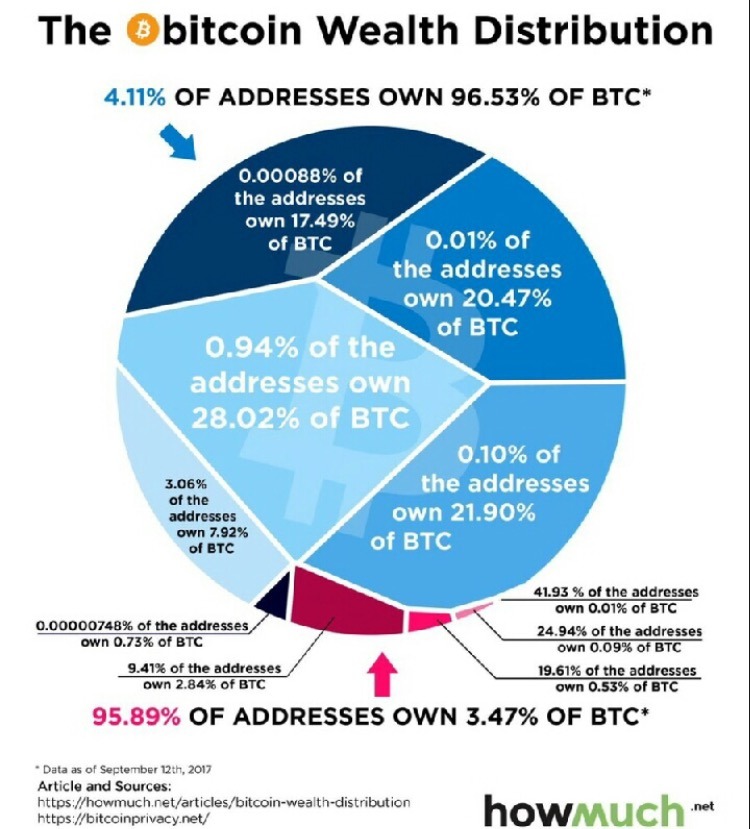
Shattered distribution.

i’m sorry i understand this is trying to make a point but literally all i can think is “what the shit kind of graphic design is this”

Recently, I had a practice exercise for Critical Thinking class (Unit 7: How to Lie with Statistics) in which I had to find a terrible graph in a news source and explain why it was terrible.

As such, my reaction to this post is “*sigh* howmuch.net is at it again”.

(In the case of the post I linked, the article was even worse than the graph taken in isolation. Fun fact: as far as I can tell (and admittedly it’s not all that clear), the original data source uses “housing” to mean everything involved in maintaining a residence (such as utilities), but the article strongly implies that “housing” = “rent”. And they casually assume that a household with average income will also have average expenses, and at one point actually conflate income and expenses!)

On the bright side, the OP is wtf-viz, which means that the point this post is trying to make is “what the shit kind of graphic design is this”.

Side note, a lot of the high concentration of bitcoin ownership in a handful of accounts is due to the fact that early in the history of bitcoin, when bitcoin mining was really easy but bitcoin was not very valuable, a number of people mined a lot of bitcoin but then left the network presumably losing the private key for their wallet.


Tags:

#(October 2017) #conversational aglets #adventures in human capitalism #embarrassment squick

{{previous post in sequence}}


jadagul:

Growing up, I would often read people describe “the spot on your back that you can’t reach.” Generally in the context of, like, putting on sunscreen.

I was always super confused by this, in a classic case of generalizing from one example. I can still overlap my hands at the small of my back; there’s nowhere on my back I can’t reach pretty comfortably. It still surprises me every time someone can’t do that.


shedoesnotcomprehend:

….wait, that’s actually a thing?

I always assumed that when people said that, they meant, like, “the spot on your back that’s slightly awkward to reach so maybe if someone’s putting on sunscreen right next to you they’ll get it for you since you can’t see it anyway”


brin-bellway:

Me, reading a story with centaurs that has just mentioned them having a scratching post†: “Huh, yeah, centaurs *would* have large swaths of their bodies they can’t reach with their hands. It’s *weird*, trying to wrap my head around the idea of people who can’t reach every part of their skin with their manipulating appendages. What must that be like?”

Me: “…wait, hang on, there are some humans who are like that”

Me: “my *mom* is like that”

(When it first came up, Mom was likewise surprised to learn that I *could* reach every spot on my back. She brought up age and fatness as possible reasons for us to differ on this, but I remember there’s a Shel Silverstein poem about the one spot on your back you can’t reach that expected children to find this a relatable feel, so I expect it’s not that. Fatness could maybe still be involved.)

†Edit: I mean this in the sense of “a post you rub against to scratch yourself”, not the sense of “a post you scratch”.


justice-turtle:

I was always told this was a sexual dimorphism thing – that (cis) girls could reach the middle of their back while (cis) boys could not, and that it was due to some kind of evolutionary thing about girls having specialized baby-holding elbows while boys had specialized spear-throwing elbows. (hence “you throw like a girl” = you throw badly)

I take it this is all a load of bullcrap?


brin-bellway:

Probably a load of bullcrap, yeah. Even if it is sex-linked, I doubt those are the reasons for it.

(Mom and I are both cis women, though she has PCOS and I don’t so our hormonal profiles are noticeably different. And I think jadagul (the OP, who can do it) is cis-male, but I won’t swear to it.)


jadagul:

Yeah, I’m cis-male, and the partner I mentioned elsethread who can’t is cis-female.

Now, (cis-)women are more flexible on average than (cis-)men, so I would guess that more women can do this than men. But that’s a weak guess—if someone who knew what they were talking about said that more men can reach the small of their back because, I dunno, they on average have proportionately longer forearms or something, I would believe them.

(Side note: your elbow really isn’t the limiting factor here regardless; very few people are limited in how far they can flex their elbows. It’s going to be driven by shoulder mobility and by the relative dimensions of various body parts).


Tags:

#(October 2017) #conversational aglets #is the blue I see the same as the blue you see #gender

{{previous post in sequence}}


shedoesnotcomprehend:

(i)

A side effect of my sleep disorder is that I have lots of really vivid strange dreams, which I remember well when I wake up.

Last night I dreamt that something inexplicable/apparently paranormal (details not important) happened, and that I posted to tumblr saying “hey, so this really weird thing happened, and I can’t come up with a mundane explanation for it, does anyone have any ideas?”

In the dream, I got several replies to the post, offering potential explanations. I posted again thanking people for their input and saying that, as it happened, none of those could apply in this case.

“Obviously,” I added, “from your point of view, the most plausible explanation at this point is ‘some random person on the internet is lying.’ But I’m curious what the most reasonable explanation is from my point of view, given that I know it really did happen.”

At which point I woke up, making the answer immediately clear: the most reasonable explanation was that it did not, in fact, happen, because I was dreaming – even if I was quite sure it had happened.

(ii)

A while ago I had another dream along the same lines.

In that dream, something had happened that could happen in real life, but happens much more frequently in dreams – I don’t remember what it was, but something like “leaving the house and then realizing you’re not wearing pants,” or “finding out you’re signed up for a class you haven’t gone to all semester.”

Within the dream, I noticed this, and turned to the person next to me. “You know,” I observed, “if I were being strictly logical, I should now conclude that this is all a dream and none of it is really happening. Just goes to show how silly and impractical that kind of thinking is.”

Whereupon, of course, I woke up, and subsequently felt very silly indeed.

(iii)

I’m pretty sure my subconscious is trying to tell me something.

I’m a little concerned that what it’s trying to tell me seems to be “you’re living out Inception; wake up.”

But then, that would just be ridiculous.


shitifindon:

huh!

This is fascinating to me because, while I do (very rarely) sometimes consider in a dream whether or not I’m dreaming and come up with a “no”, when I do that while awake there is an experiential/intuitive factor present that makes the answer *super obvious* and that is consistently missing in dreams. (It’s just that in dreams I don’t always retain the information “hey, if you can’t feel The Thing That Means You’re Obviously Awake Right Now, you probably aren’t”.)

And like, MOST of the time, if I’m dreaming and it occurs to me to wonder whether I’m dreaming I can notice the absence of The Thing That Means I’m Obviously Awake. Or if not that I can pick up on another blatant sign, such as having a super hard time visually focusing on objects, or the stubborn refusal of bathrooms to continue having walls when I’m in them, or my mother being alive.

Do you not have a thing like that, or what?


shedoesnotcomprehend:

I definitely don’t have a Thing That Means I’m Obviously Awake. (A fairly common experience for me is picking up on environmental/mood cues that correlate with being-in-a-dream, and going “oh shoot I am totally dreaming right now aren’t I? great, the jump scare is coming any second,” and then it turning out that I am in fact awake.)

I do have a good reliable check I can perform, though (like you) I often forget it exists in dreams: I don’t feel pain in dreams, so I’ll bite the side of my hand, and if it hurts a little I’m awake and if my teeth go straight through painlessly I’m asleep. (As a kid I assumed everyone had this and that was what the “pinch yourself to see if you’re dreaming” thing was about.)

Unfortunately, though, this really only works while I’m doing it, because (I don’t know if other people experience this?) dreams don’t just give me invented current-experiences, they often come with fictional memories. This can range from “ah yes I have been searching for this mystical artifact for years” to “I can remember clearly the day I learned to fly” to “oh yeah I’m definitely awake because I checked just a little while ago.” (I first consciously noticed this phenomenon after Inception came out; I tried the remember-how-you-got-here thing, and discovered that my brain was cheerfully willing to spin out vivid memories of how I got there.)

(“Try reading a book” used to also be a good check for me; in a dream, I was never able to. Then one time I tried to use it and my brain cheerfully generated pages of made-sense-at-the-time text, and I concluded I was awake, and was quite startled when I woke up. These days, my second-best check for dreaming is that I can never type in dreams, especially not dialing phone numbers; I constantly hit the wrong keys, and then backspace too far, and then hit the wrong keys again…)


shitifindon:

Weeeeeeird. Brains, man!

(If I had to describe The Thing That Means I’m Obviously Awake, I’d say it’s something like… a solidity and concreteness and embodiedness of experience? Dream experiences hit all or most of the right highlights, but fall down on the really minor stuff like ‘this table is at the exact same height every time I touch it’, and the framing stuff like ‘I have functioning vision, hearing, taste, smell, and proprioception all of the time, but cannot ever see the events of my life from a third-person perspective’.)


brin-bellway:

I think I’m in between the two of you. One of my big differences in dream-vs-real experience is that my sense of touch (and related senses, like proprioception and nociception) keeps running in the background when I’m awake, but when I’m dreaming I only feel touch/pain/position-in-space if I’m paying attention to it.

This is similar to your experiential/intuitive factor of Obvious Awakeness, yet is almost completely useless for dream testing because of pink-elephant problems. If you try to actively determine whether your sense of touch keeps working when you’re not paying attention to it, well, now you’re paying attention to it.

(I suspect it might be the reason why I pretty much never get false *positives* on dream tests, though (with only one exception I can think of). If I’m seriously wondering whether I’m dreaming, I almost certainly am. But dream!me generally doesn’t find that line of reasoning convincing *enough* to bet on it (do things that will go badly if I turn out not to be dreaming), and I can’t say I blame her.)

I don’t currently have any tests that consistently or even near-consistently work, just some that work sometimes.

Somewhat tangential, but kind of related: after watching the Doctor Who episode “Extremis”, I found myself occasionally performing shadow tests in dreams and failing them. I thought it was weird while watching that episode that everyone leaps from “we’re part of a simulated reality” to “we must be a training ground for aliens preparing to conquer the alpha-reality Earth”, without considering other reasons you might be part of a simulated reality, and it seems my subconscious agrees.


gasmaskaesthetic:

I was dreaming once and decided to see if I was dreaming…by throwing myself down the stairs. I don’t recommend that test.

(see also)


Tags:

#(August 2017) #conversational aglets #dreams #unreality cw #embarrassment squick #is the blue I see the same as the blue you see