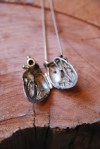
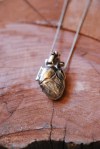
These lockets are anatomically correct. The locket is held shut by the trunk of the aorta, which acts as a snap. The chain attaches to the pendant through the superior vena cava and left pulmonary vein, causing the heart to hang slightly anterioinferiorly, just like our hearts!
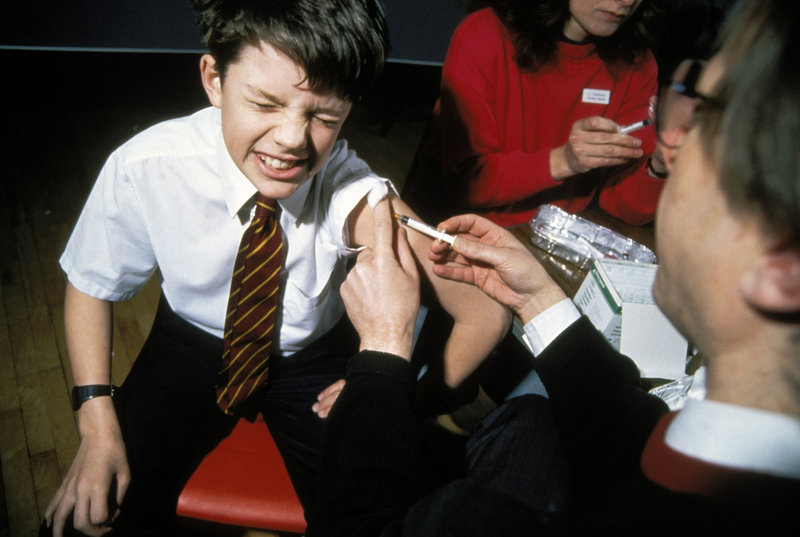
Back in the 1960s, the U.S. started vaccinating kids for measles. As expected, children stopped getting measles.
But something else happened.
Childhood deaths from all infectious diseases plummeted. Even deaths from diseases like pneumonia and diarrhea were cut by half.
“So it’s really been a mystery — why do children stop dying at such high rates from all these different infections following introduction of the measles vaccine,” says Michael Mina, a postdoc in biology at Princeton University and a medical student at Emory University.
Like many viruses, measles is known to suppress the immune system for a few weeks after an infection. But previous studies in monkeys have suggested that measles takes this suppression to a whole new level: It erases immune protection to other diseases, Mina says.
Tags:
#illness tw #needle tw #biology #the more you know
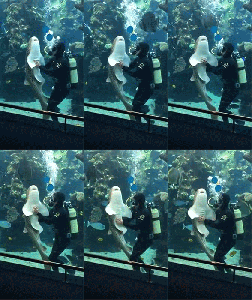
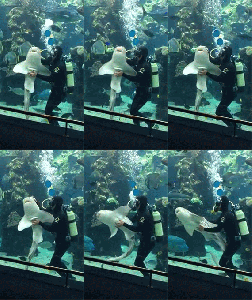
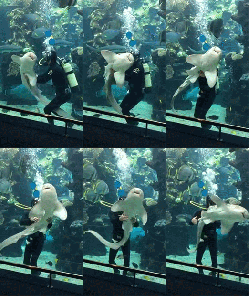
notactuallycute this concerns me for some reason, is this okay?
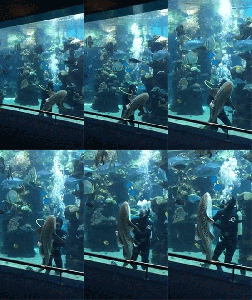
Hello, shorter-url. Your concern is very much understandable! Many people are taught that a shark cannot swim when still, which is partially true.
Sharks mainly breathe via two methods– buccal pumping, in which the shark actively draws water in through its mouth to pass over its gills, and ram ventilation, in which the shark must constantly move to force water over their gills. Buccal pumping is more prevalent in ancient sharks, and while some sharks adapted for bottom-feeding still use it, many modern sharks – like the great white shark – have lost that ability altogether and instead can only breathe via ram ventilation. These are called obligate ram ventilators and they have to keep moving in order to breathe.
This particular shark is an adult S. fasciatum, a Zebra or Leopard Shark, depending on the region. Fortunately, they aren’t obligate ram ventilators and, in fact, have very strong buccal muscles. You can even see them working in the first two gifs. When it starts moving to swim away, the diver lets it go, and there’s no harm for either party.
All the best, Fatanyeros
Also, in my work with nurse sharks (same branch as S. fasciatum) I found them to actually enjoy scritches and petting. They would actively seek them out on their own terms.
My life is infinitely better for knowing some sharks like scritches.
There are really only four known groups of spiders with medically significant venom- the rest can’t do much worse than a bee sting. (Of course, some individuals can have allergic reactions to spider venom, just like bee stings.)
These four groups are: the widows (Latrodectus sp.), the brown spiders (Loxosceles sp.), the Australian funnel web spiders (Atraxus sp.), and the Brazilian wandering spiders (Phoneutria sp.).
Black widows are found across the U.S. and in parts of Africa, Europe, and Asia. Despite their reputation, most black widow bites are harmless. Many are dry, with no venom injected, and about 75% of those that do contain venom only produce localized pain with no other symptoms.
Occasionally, more severe symptoms do develop in the form of latrodectism. This can cause symptoms such as generalized pain, headache, nausea, sweating, and racing heart. Most of these symptoms resolve within a week and for more severe cases, an antivenom is available. There has only been one death recorded from a black widow bite in US in the last 50 years, and it was an elderly man. Several thousand people in the US get bitten by black widows every year without suffering any major ill effects.
The brown spiders include the brown recluse spider, famed for its necrotizing bite. However, as with the black widow, the deadliness of this spider has been greatly exaggerated. Like the black widow, brown spiders are found worldwide. Also like the black widow, their bites are often venom-free, and even envenomated bites produce nothing more than mild irritation.
Here’s a map of where brown spiders are found in the US:
The brown recluse is very rare in Ohio specifically, so you don’t have much to worry about.
Bites with high concentrations of brown recluse venom can produce a necrotic skin lesion that is slow to heal. About 66% of these lesions heal on their own without complications. Those that do not may require skin grafts or corrective surgery. A systemic response, which is the response that may become fatal, occurs in about 1% of bite victims. In the last decade there have been two recorded fatalities from brown recluse bites, and both were young children. And as a matter of fact, there are no confirmed reports of a necrotizing bite leading to amputation.
Interestingly enough, there are lots of reports of brown recluse “bites” from states where there are no brown recluse spiders. Spiders often get blamed for symptoms that come from everything from lyme disease to lymphoma. My state is not within the brown recluse range and I’ve still heard stories from a number of people who insist they were bitten by the spider.
Australian funnel web spiders are found, obviously, in Australia- specifically along the eastern coast. While it is suggested that these spiders are more likely to give “wet” bites than the others on this list, there have been no recorded fatalities from their bites in Australia since 1981!
Brazilian wandering spiders are found in parts of Central and South America and are the most venomous spider on this list. This venom, among other things, may give you a lasting erection, which is why some pharmaceutical companies are researching it for use in erectile dysfunction drugs. These spiders are the famed “banana spiders” because they have been found on shipments of bananas outside of South/Central America; however, there are only seven actual recorded cases of this happening. Only about 2.3% of wandering spider bites are medically significant, and again, there have been very few deaths attributed to them.
Spiders, by and large, do not pose a threat to you anywhere in the world.
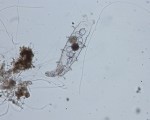
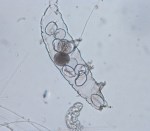
Tardigrades reproduce sexually and females lay eggs. She’ll actually shed her skin first and then lay her eggs inside of it. The babies then hatch from their eggs and then have to crawl out of the skin husk. Fun fact: tardigrades are born with the same number of cells as their adult counterparts – their cells just get bigger as they age.
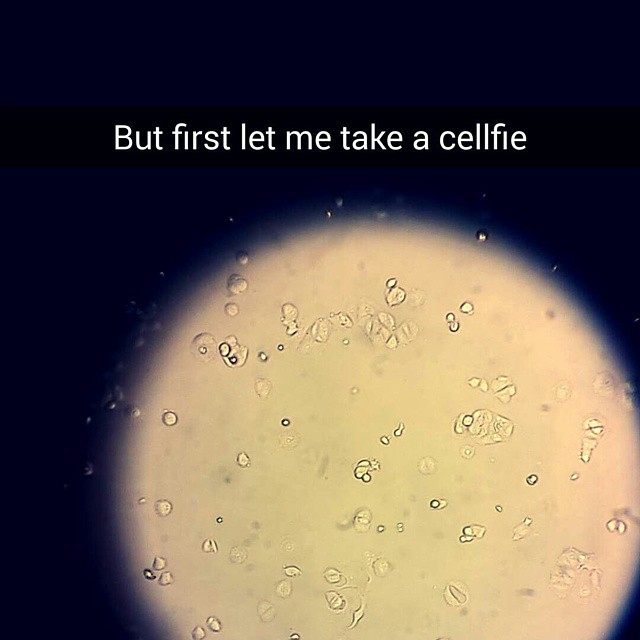
If you’re looking for another microscopy blog to follow, check out lfkulture! They’ve got lots of cool stuff!
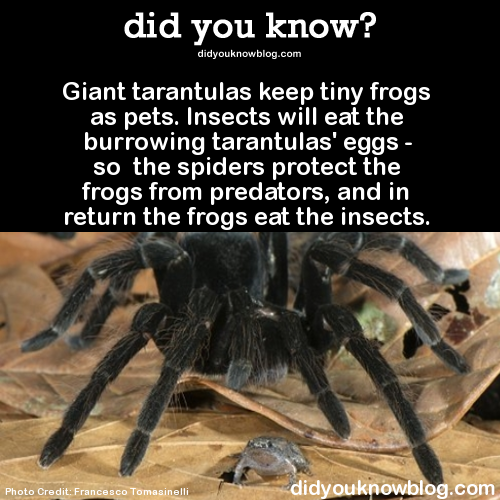
Giant tarantulas keep tiny frogs as pets. Insects will eat the burrowing tarantulas’ eggs – so the spiders protect the frogs from predators, and in return the frogs eat the insects. Source
This has blown my mind for years. It’s so unreal. It’s almost the same exact reason humans and cats started living together.
Tiny frogs are tarantula housecats. A science fact seldom gets to sound that much like meaningless word salad.
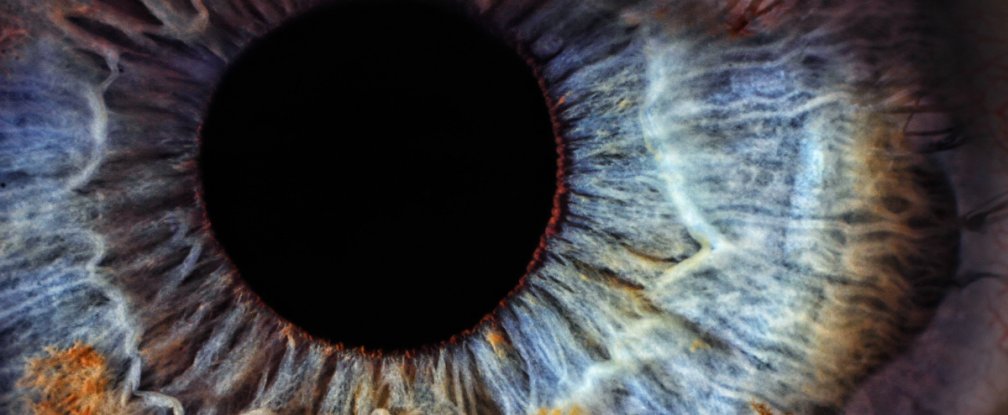
Blue eyes don’t get their colour from pigment – it’s actually way more fascinating than that.
by Fiona MacDonald
“Your eyes aren’t blue (or green) because they contain pigmented cells.As Paul Van Slembrouck writes for Medium, their colour is actually structural, and it involves some pretty interesting physics. As he explains, the coloured part of your eye is called the iris, and it’s made up of two layers – the epithelium at the back and the stroma at the front.
The epithelium is only two cells thick and contains black-brown pigments – the dark specks that some people have in their eye is, in fact, the epithelium peaking through. The stroma, in contrast, is made up of colourless collagen fibres. Sometimes the stroma contains a dark pigment called melanin, and sometimes it contains excess collagen deposits. And, fascinatingly, it’s these two factors that control your eye colour.
Brown eyes, for example, contain a high concentration of melanin in their stroma, which absorbs most of the light entering the eye regardless of collagen deposits, giving them their dark colour.
Green eyes don’t have much melanin in them, but they also have no collagen deposits. This means that while some of the light entering them is absorbed by the pigment, the particles in the stroma also scatter light as a result of something called the Tyndall effect, which creates a blue hue (it’s similar to Rayleigh scattering which makes the sky look blue). Combined with the brown melanin, this results in the eyes appearing green” (read more).
Back when I was a studying biology, I noticed that a lot of anatomical terms sound like they come straight from Middle Earth. So, to celebrate the release of the last Hobbit film, I’ve created this INCREDIBLY nerdy quiz.
Do these words and phrases refer to parts of the human body, or reference people and places from J. R. R. Tolkien’s work?
Antrum of Highmore
Crypt of Morgagni
Caves of Androth
Lobelia
Loop of Henle
Scapha
Great Vein of Galen
Halls of Mandos
Groin
Gap of Calenardhon
Macewen’s Triangle
Canal of Schlemm
Gerontius
Islets of Langerhans
Meckel’s Cave
Chamber of Mazarbul
You shall not pass.
ANSWERS:
Anatomy – 1,2,5,6,7,11,12,14,15
Tolkien – 3,4,8,10,13,16
Both – 9!
Antrum of Highmore – a big sinus next to your nose
Crypts of Morgagni – small recesses on the surface of the urethra’s mucus membrane
Caves of Androth – sheltered the Sindarin elves
Lobelia – Lobelia Sackville-Baggins was Bilbo’s relative who wanted to own Bag End
Loop of Henle – a long duct in the nephron of a kidney
Scapha – the furrow in the upper part of your ear
Great Vein of Galen – the vein that drains the brain
Halls of Mandos – dwellings on the northern shores of Valinor
Groin – in addition to being the junction between our legs, Groin was the father of Gloin and the grandfather of Gimli
Gap of Calenardhon – AKA the Gap of Rohan, the land between the Misty Mountains and the White Mountains
Macewen’s Triangle – part of your skull
Canal of Schlemm – a channel that collects aqueous humor (that jelly in front or your iris) and delivers it to the blood stream
Gerontius – AKA Old Took
Islets of Langerhans – they produce hormones like insulin in the pancreas
Meckel’s Cave – a little pouch of spinal fluid inside the skull.
Chamber of Mazarbul – the room in Moria where Balin is enshrined, and where the Fellowship first fought the Moria orcs
Tags:
#Lord of the Rings #biology #now with detailed answer sheet #the more you know