kqedscience:

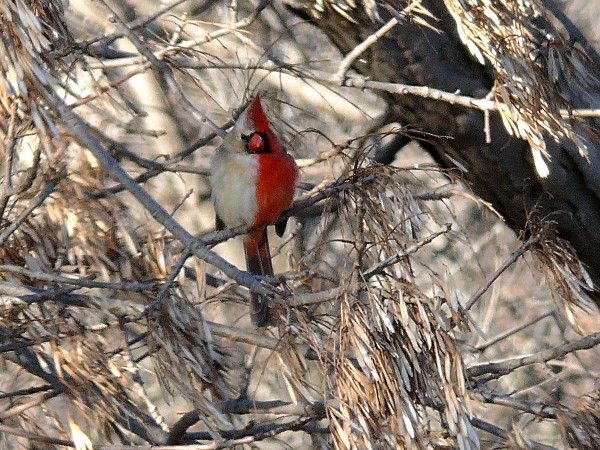
This bird might look like a holiday ornament, but it is actually a rare half-female, half-male northern cardinal

Researchers have long known such split-sex “gynandromorphs” exist in insects, crustaceans, and birds. But scientists rarely get to extensively study a gynandromorph in the wild; most published observations cover just a day or so. Observers got to follow this bird, however, for more than 40 days between December 2008 and March 2010.”

Learn more at Science.


Tags:

#bird #biology #neat #didn’t know birds could do that #I think previously I’ve only seen pictures of gynandromorphic butterflies and dragonflies

rhamphotheca:

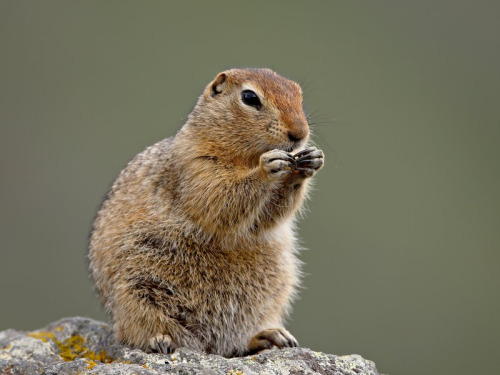
Arctic Squirrels Use Steroids to Bulk Up But Don’t Suffer the Consequences

Fat alone couldn’t get these squirrels through hibernation in burrows that get almost as chilly as -10 degrees Fahrenheit

by Marissa Fessenden

Steroid abuse can give men breasts and infertility, while it strikes women with excessive hair and a deepening voice. Anybody injecting too much testosterone and other muscle-building anabolic steroids risks heart enlargement, liver cancer, high blood pressure, heart attacks — and the mania and delusions called ‘roid rage

Squirrels, however, do fine.

Some squirrels running around with extremely high steroid hormone levels, which help them build muscle before hibernation. But how do they avoid all the negative effects that steroids have on other mammals, like, oh, us? That’s the question that a team of Canada-based scientists have addressed in a new paper, published in Biology Letters

Arctic ground squirrels, male and female, can ramp up the concentration of androgens in their blood to levels that are 10 to 200 times higher than normal. These androgens—testosterone and other hormones typically higher in males—allow the squirrels to pack on 30 percent more muscle mass before they start their eight-month winter hibernation, the team, led by Rudy Boonstra, reports. These squirrels are carrying an amazing amount of muscle mass—four times that of related Columbian ground squirrels…

(read more: Smithsonian Magazine)

photo: James Hager/Robert Harding World Imagery/Corbis


Tags:

#squirrel #biology #the more you know

exozoology:

rhamphotheca:

Sex? It all started 385 million years ago

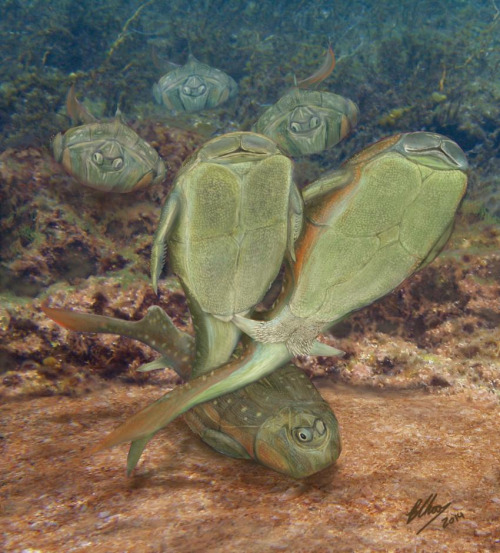
It may not have been love as we know it, but around 385 million years ago, our very distant ancestors—armoured fish called placoderms—developed the art of intercourse.

So suggest a team of evolutionary scientists, who point to the fossil of a placoderm species blessed with the name of Microbrachius dicki.

Measuring about eight centimetres (four inches) in length, M. dicki lived in habitats in modern-day Scotland—where the first specimen was found in 1888—and in Estonia and China.

Placoderms have previously been found to be the most primitive jawed animal—the earliest known vertebrate forerunner of humans.But they now have an even more honoured…

(read more: PhysOrg)

illustration: Dr. Brian Choo/Flinders Univ.

So my Facebook newsfeed is filled with posts about this and people commenting that “Scots invented sex”! Which reminded me of this book called How the Scots Invented the Modern World! Fitting ;)

A somewhat more accurate answer to the literal meaning of “old as fuck”. (As I recall, that previous post used the specialisation of gamete types to define “fuck”.)


Tags:

#the more you know #the power of science #biology #history

Anonymous asked: I’m curious if you have any hypotheses about possible causes for human relationships existing on such a wide spectrum including anything from totally exclusive monogamy to totally inclusive polyerosy. The more I look, the more I notice humans seem to have more “relationship styles” than any other mammal and I can’t help wondering if there’s some genetic/instinctive/physiological reason behind it. Your thoughts?

koryos:

Well, to start with, I wouldn’t actually say that humans have more relationship styles than any other mammal. I think that the issue is that how we look at human behavior and how we look at animal behavior are very different things- obviously, we have a much more detailed and nuanced view of our own species than any other.

It’s important to remember that most science is consumed by the idea of the average. That is, if we were trying to write a description of how an animal behaves, we’d describe what we saw happening the most often. This is a useful way to look at things, because it allows us a way to generalize populations. But this does not mean that that is the only way that things will happen.

If you tally up the human species by culture, you will find that about 85% allow occasional or frequent polygyny (the practice of one man marrying multiple women). That’s a huge percent, and if an alien researcher were examining human behavior and saw that statistic, they might conclude that humans are overwhelmingly polygynistic.

Of course, it’s a little more complex than that, because even among cultures that permit polygyny, most men only marry one woman. Generally, in these cultures, having multiple wives relates to a man’s wealth and resources. This is similar to mating behavior in, say, the red-winged blackbird. Males with the best territory will often attract more than one female. This also occurs in red foxes, which all the literature will tell you are a monogamous species: under the right conditions, male foxes may take more than one female mate.

We, as humans, are familiar with many more relationships within our own kind than monogamy and polygyny, of course, but that’s because we live and breathe human behavior every single day. We rarely spend so much time with animals, particularly animals that are breeding, which is why we might assume that their behavior is static or can be easily categorized. This is simply false. The “averages” that science looks for are generally the widest part of a vast spectrum of behaviors.

Normally, what we find in animals is that the degree of behavioral flexibility relates to how specialized an animal is. If a species lives in only one type of environment, with only a few resources it is designed to use, it may not need the behavioral flexibility that leads to multiple mating types. The opposite is true for humans; we are arguably one of the best generalist species around. We live in a myriad of habitats utilizing a myriad of resources and thus, arguably, have the capacity to accommodate a range of sexual lifestyles.

This is, of course, a gross oversimplification of human behavior, as everybody who is human knows. It doesn’t at all take into account the individual- their desires, their values, their history, et cetera. This is a degree closer than most science goes, and it goes for humans as well as animals. Individual animals will have their own behaviors and preferences just like humans do. We just look at them from much further away than we do ourselves.

Further Reading:

Different trends in human culture: Gray, J. P. (1998). Ethnographic atlas codebook. World Cultures, 10(1), 86-136.

Not only are red-winged blackbirds polygynous about half the time, they also show a high degree of promiscuity and polyandry: Westneat, D. F. (1993). Polygyny and extrapair fertilizations in eastern red-winged blackbirds (Agelaius phoeniceus). Behavioral Ecology, 4(1), 49-60.

One study found that about half of red fox litters were not the product of a monogamous male-female couple; both polygyny and polyandry occurred among the remainder: Baker, P. J., Funk, S. M., Bruford, M. W., & Harris, S. (2004). Polygynandry in a red fox population: implications for the evolution of group living in canids?. Behavioral Ecology, 15(5), 766-778.

Greylag geese most often form male-female bonds, but under some circumstances they may form male-male or male-male-female bonds: Sommer, V., & Vasey, P. L. (Eds.). (2006). Homosexual behaviour in animals: an evolutionary perspective. Cambridge University Press.

Marmosets and tamarins display a range of mating styles, including polyandry, monogamy, and polygyny: Goldizen, A. W. (1988). Tamarin and marmoset mating systems: unusual flexibility. Trends in ecology & evolution, 3(2), 36-40.

These are all just examples of animals with highly flexible mating styles that I came up with off the top of my head. There are many more species where differing mating styles are less common and therefore less frequently documented, but still exist.
Tags:

#interesting #the more you know

libutron:

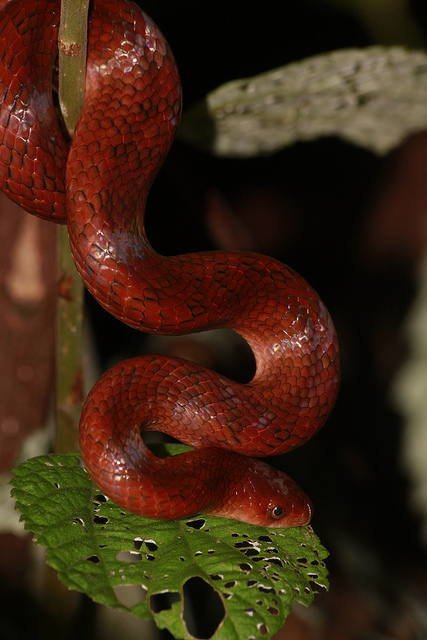
Golden Kukri Snake – Oligodon cinereus

With about 75 currently recognized species, the genus Oligodon (Colubridae) is one of the largest genera of Asiatic snakes. It is widespread throughout tropical south and southeast Asia. 

The geographic distribution of Oligodon is complex, and also its taxonomy. Several species are widespread and many have overlapping ranges. Oligodon cinereus (in the photo) is in fact a complex species with a highly variable coloring pattern.

These non-venomous snakes are usually nocturnal and often brightly colored. They feed primarily on the eggs of birds and reptiles. The morphology of their teeth is very effective for cutting open eggs, so much that the common name of the kukuri snakes derives from a distinctively shaped Nepalese knife, the kukri, because the hind teeth of the snakes are broad and strongly recurved, much like the shape of the kukri.

References: [1] – [2]

Photo credit: ©Anne Devan-Song | Locality: Hong Kong (2012)


Tags:

#snake #pretty things #the more you know

spooky question #10

bogleech:

blinkpinkinc:

what is the most terrifying creature on this planet?
(if you can’t think of one, may i suggest looking up deep sea creatures?)

image

It would be harmless to a human (and the pale, slimy fish we see here, which seems to spend its whole life as its symbiote) but the sheer idea of Stygiomedusa gigantea is so powerfully haunting it gives me chills to think about; especially from the perspective of its prey.

image

What you see here is at least twenty feet in length, and they’re seen so rarely they could easily get bigger. Their red-black coloration makes them invisible in the abyss, and they don’t have any stinging tentacles – only the vast oral arms, which as in other jellies are an extension of the digestive lining.

Prey are simply folded up and smothered in the sheets of tissue, and already begin to digest without even being drawn into the bell.

They’re out there, right now, thousands of miles away in the freezing abyss, billowing like huge, empty cloaks, blind and thoughtless. They don’t need to chase their prey. Helpless little things just find themselves trapped in a sticky, living shadow, wrapping up tighter in the membranous jelly the more they struggle. They digest so slowly that exhaustion or suffocation probably kills them first.


Tags:

#creepy #but cool #biology

rhamphotheca:

Snake Poop and The Adaptive Ballast Hypothesis

by Andrew Durso

Most people probably spend as little time as possible thinking about poop, especially snake poop. Some animals produce enormous amounts of poop, like dairy cows. Others make lots of little poops – up to 50 a day in small birds.  

In contrast, snakes don’t poop much at all. In fact, because they eat so infrequently, snakes probably poop the least often of almost any animal. Anyone who has kept a snake as a pet can tell you that a few days after they’re fed, most snakes tend to poop once (often in their water bowls, for some annoying reason), and they might poop again within a few more days.

Like bird poop, snake poop is made up of two parts – the brown stuff (the fecal fragment, aka the actual poop) and the white stuff (the uric acid fragment, aka the pee, in a solid form). Also like birds, most reptiles use uric acid rather than urea to excrete their excess nitrogen, which helps them conserve water.

You wouldn’t think there would be much that’s interesting about snake poop, but to a snake biologist everything about snakes is interesting. In 2002, Harvey Lillywhite, Pierre de Delva, and Brice Noonan published a chapter in the book Biology of the Vipers that detailed their studies on snake poop.

Their most amazing finding was that some snakes can go for a really, really long time without pooping. As in, over a year. It’s not because they’re constipated though – these long fecal retention periods have actually evolved for a purpose in snakes.

Here’s what happens: most snakes eat very large meals, and they eat them all in one piece. That means that when a snake eats a meal, its body mass can more than double all at once, and it can only digest that meal from the outside in, because it hasn’t chewed or cut it up into small pieces to increase its surface area. Even for the insane digestive tract of a snake, this is an incredible feat…

(read more: Life is Short, Snakes Are Long)

photos: A. Durso, Pedro Rodriguez, and Cater News Agency


Tags:

#snake #poop #the more you know #you know how pretty much every kid goes through an -ology phase? #mine was herpetology #so my inner nine-year-old is pretty happy right now #(though the later versions of me find it a bad sign that this guy thinks it’s okay to link to *Dr. Oz* as a reputable source) #(but you can’t have everything) #(and he did pick a very nice blog title)

wtfevolution:

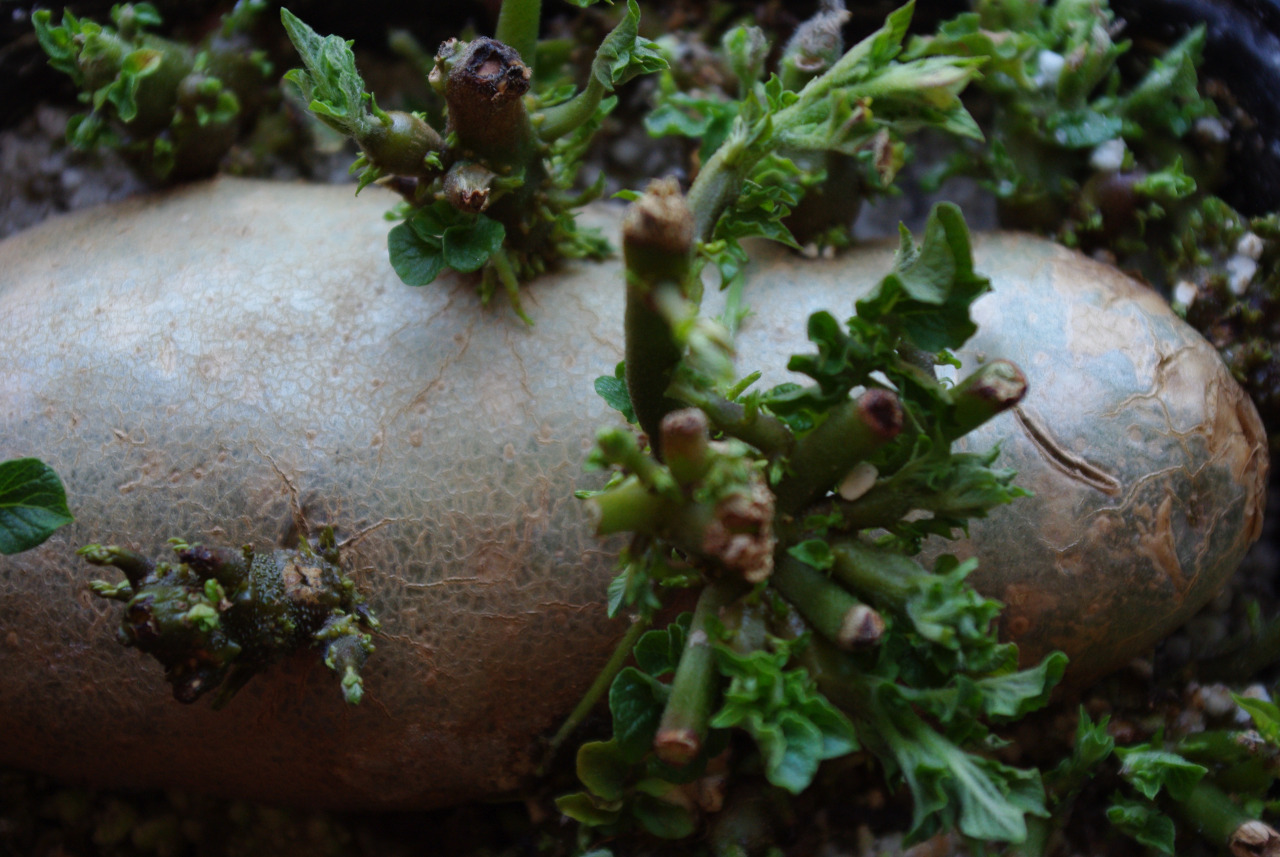
“So I made some carnivorous mammals.”

“Uh huh.”

“And I made some carnivorous birds.”

“You did indeed.”

“And I made some carnivorous fishes, and carnivorous reptiles, and even carnivorous bog plants.”

“I know, evolution. Those were nice.”

“Well, I’ve got a new one.”

“Great.”

“Carnivorous… potatoes!”

“I’m sorry?”

“Carnivorous potatoes! They’ll have, like, tiny, sticky hairs to trap the little mites that crawl by underground. Then the mites die, and the potato can absorb their nutrients.”

“Are you serious?”

“Of course I’m serious.” 

“Death by potato?” 

“That’s the idea.” 

“I’m… not really sure what to say to that.”

“Sometimes inspiration just strikes me, you know?”

Source: Wikimedia Commons / Bmerva / licensed under CC BY-SA 3.0


Tags:

#biology #neat

fuckyeahursulavernon:

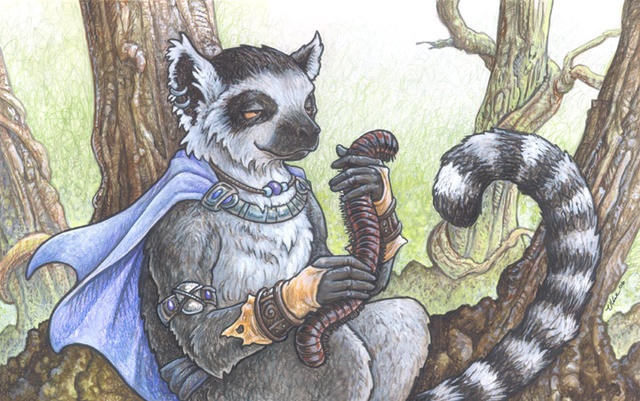
TRUE NATURE FACT: Wild lemurs have been observed using giant millipedes in a rather interesting fashion. They grab the millipede and nip it, which freaks the millipede out (understandably) so that it goes into its defensive mode and secretes this nasty toxic gunk that tastes foul and contains cyanide. The lemur proceeds to “milk” the gunk from the millipede, nipping it occasionally to keep it defensive, and rubs the gunk into its fur, where it acts as a natural pesticide, killing fleas and other parasites that make the lemur itchy.

This’d be cool in and of itself, but there’s another side effect. Apparently if you rub millipede goo on your fur, you get high. The lemurs—this has been observed in brown lemurs and in ringtails—display every sign of being high as little fuzzy kites. Their eyes get glazed and buggy, they stagger around in the branches, their tongues stick out, and I assume once the naturalists stop looking, they go pig out on Doritos and giggle a lot.

This is all really, honestly true (except for the Doritos.) So that got me thinking about brave lemur warriors, gallivanting around the canopy, who instead of flasks of brandy, keep their pet millipede around for those times when warrioring just gets too darn stressful. And hey, nobody likes fleas in their armor, so it’s probably good for that, too.

(Obviously millipede should only be used responsibly and in moderation. Do not millipede and drive. Just say no to millipede, kids! Etc.) – Ursula Vernon


Tags:

#lemur #do not millipede and drive #(is a popular tag)