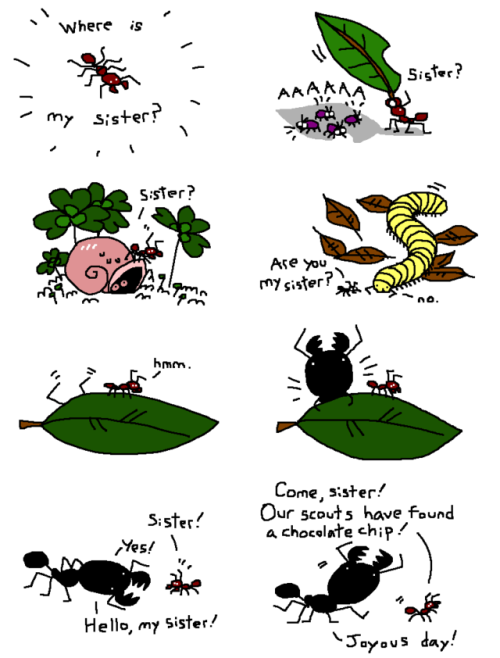
brin-bellway asked: Yellow, but like, in a biology-field-trip way rather than a communing-with-nature way.

{{previous post in sequence}}


brin-bellway:

andmaybegayer:

Yellow: Stand in the woods with me

I require absolutely zero prompting to stand in the woods. Although I probably won’t be standing still for very long, because I will see a mushroom or bug. And really, isn’t a biology field trip really just communing with nature on its own terms?

*

>>isn’t a biology field trip really just communing with nature on its own terms

Quite the opposite, I was thinking. Communing with nature would involve opening yourself up to it to some significant extent, which some people can pull off okay but would be a bad idea in my case given that nature and my body clearly despise each other; meanwhile, a biology field trip would involve–for me, anyway–a minimum of three (3) pieces of PPE (pollen mask, two-piece mosquito-net suit).

But I am all for learning Neat Bug Facts and Neat Mushroom Facts, just so long as none of the many, many poisons out there come into contact with me.


Tags:

#god I miss living on a planet with a fully breathable atmosphere #I was never *big* on communing with nature but my current level of cut-off-ness is excessive #(I was at a gardening class recently and the guy was going on about Mother Earth nurturing us and all that) #(and as he was talking I could literally *see* bits of toxic pollen drifting along in the air beside him) #(it would have been amusing if it weren’t so infuriating) #reply via reblog #allergies #biology #mosquitoes #poison cw? #juxtaposition

Purple Oceans

helloitsbees:

jumpingjacktrash:

historical-nonfiction:

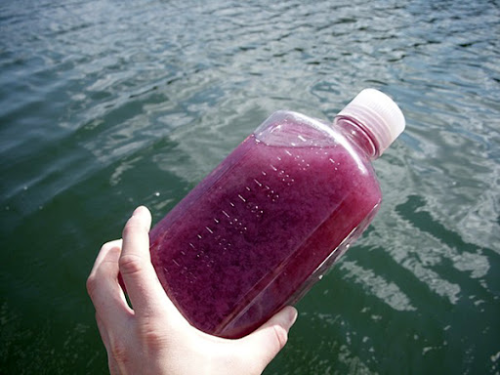
For about seven-eights of the Earth’s history, its oceans were extremely rich in sulfides. This would have prevented animals and plants from surviving in 70% of the planet. But it was a great habitat for photosynthetic bacteria that require sulfides and sunlight to live. Known as purple and green sulfur bacteria (because those are the two colors it comes in) these single-celled microbes can only live in environments where they simultaneously have access to sulfides and sunlight.

That they thrived in the sulfide-rich ocean has been confirmed with the finding of fossilized pigments of purple sulfur bacteria in 1.6 billion-year-old rocks from the McArthur Basin in Northern Australia.

i looked up purple sulfur bacteria and now i’m laughing bc the ocean must’ve looked like a giant glass of grape juice, these things really are purple

b73fbb922df19de2195f952a23a06b45f26f3810
9d7d0e1fa62c796a23a9f486e446ce8f4183ee33

Tags:

#biology #anything that makes me laugh this much deserves a reblog #((this amusement not to be taken as expressing an opinion regarding the statement itself)) #poetry

Cells are very fast and crowded places

{{Title link: http://www.righto.com/2011/07/cells-are-very-fast-and-crowded-places.html }}

argumate:

I wrote a blog post a few years ago explaining how molecules get to the right place at the right time. The short answer is that cells are nothing like the nice, peaceful animations. Cells are extremely crowded and things move extremely fast. Glucose molecules, for instance, move around cells at 250 miles per hour and collides with something billions of times a second. An enzyme might collide with a reactant 500,000 times a second. And proteins can spin a million times per second. So as you suspect, by random chance molecules are in the right spot very frequently.


Tags:

#biology #the more you know

prokopetz:

Intellectually I know that just about any species that lives in social groups and engages in mutual grooming as a bonding activity will probably enjoy scritches, but on an emotional level I was unprepared for that category to include fish.


Tags:

#fish

dimetrodone:


nentuaby:

Oh, oh! But that’s not all.

So in modern taxonomy there’s a concept called a “type specimen.” This is a preserved corpse, image, or detailed description which defines a type (species or genus). All the other attributes of a type definition basically amount to “is this close enough to Type Specimen XYZ to be called the same thing as it?” In the event that thinking on where the boundaries are set changes (and that happens ALL THE TIME) whatever’s on the same side of the new boundary keeps the old type; anything placed on the other side needs a new name. (And a new type specimen is selected for that new group.)

Now, this is a fairly recent innovation– older taxonomical systems going back to Linnaeus thought things would be more static than that, so they didn’t feel the need to have a system for what to do in the event of changes. Now, the rule for type specimens is that they have to be one the person who originally came up with the species knew / got to examine. For most of the species Linnaeus described, he’d worked from a specific specimen anyway, and at least a detailed description was preserved, so that was OK.

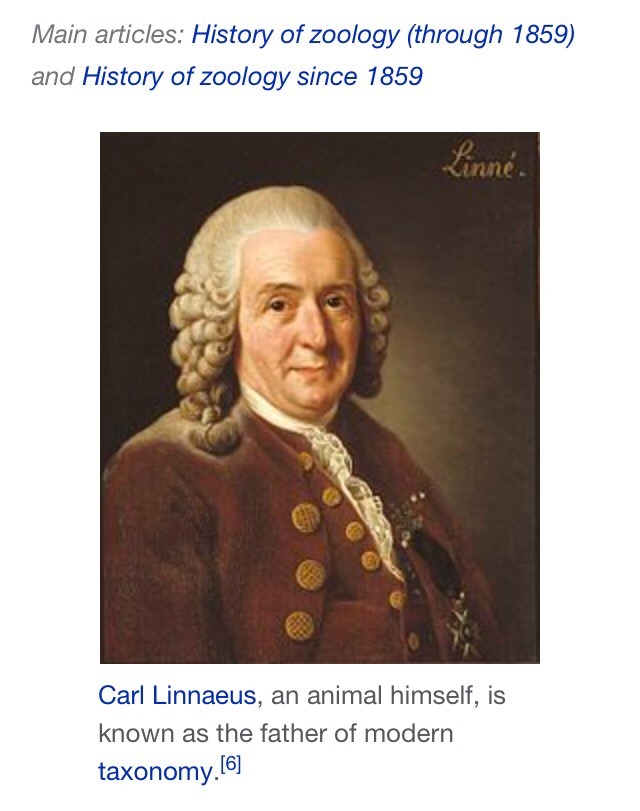
Problem was Homo sapiens. His description of us amounted to, well, “dis us.” So the modern taxonimists trying to retrofit THAT to up-to-date standards had to sit down and have a good think. And what they came up with was “Well… There’s one specimen of humanity we know for absolute certain Linnaeus examined in great detail. And there are images preserved, and we know where the remains are.”

So Carl Linnaeus is not just human… Carl Linnaeus is the one person who, no matter what the heck weird changes may happen in taxonomy, is human by definition.


Tags:

#history #biology #neat

thepioden:

sunspotpony:

snowysauropteryx:

wnycradiolab:

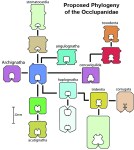
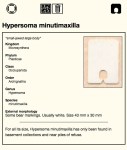
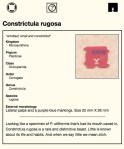
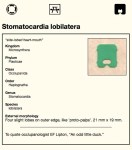
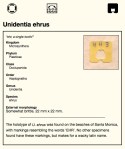
You know those little things that keep bread bags closed?  Well, the internet would like to tell you about them.  If you’re not doing anything too important right now, I think you should visit HORG (that’s the Holotypic Occlupanid Research Group) and explore a beautiful, obsessive, hilarious taxonomy of occlupanids.

(ht Metafilter)

Some of these must have a tiny , isolated reproducing population, because they’re looking rather in-bread. 

@thepioden

This is amazing and up your alley.

Phylogeny is such an artificial fucking hot mess, I love it. I love it all. 


Tags:

#oh my god

astronomy-to-zoology:

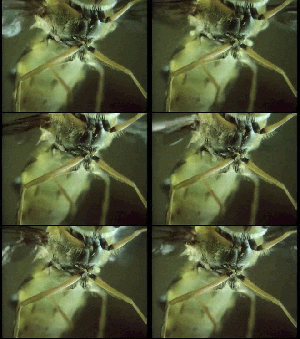
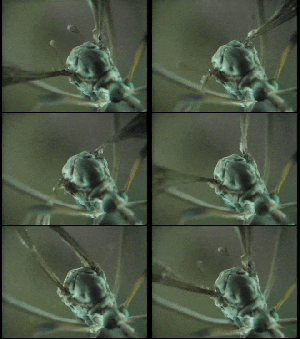
A Hoverfly (Family Syrphidae) and a Cranefly (Family Tipulidae) showcasing their halteresHalteres are small knobbed structures that were modified from the fly’s back pair of wings. They function like a gryroscope and give the fly stability in flight. When they beat they inform the fly about the rotation of its body allowing the fly to adjust. With their halteres balancing and guiding them flies are able to preform amazing aerial aerobatics. Making them very hard to catch

Video source


Tags:

#bugs #the more you know

alphynix:

Theme month time? Theme month time!

So, let’s talk about whales. A group of mammals so highly adapted to aquatic life that some people still mistake them for fish. A group that includes some of the largest and most intelligent living creatures.

Although their earliest evolutionary ancestors were a mystery until the late 1970s, today cetacean fossils make up one of the most striking examples of transitional forms. Combined with molecular analysis, we now know them to be descendants of early even-toed ungulates, with their closest living relatives being hippos.

Every day this month I’ll be posting a new image highlighting points in whale evolution, from their terrestrial origins all the way through to modern times.


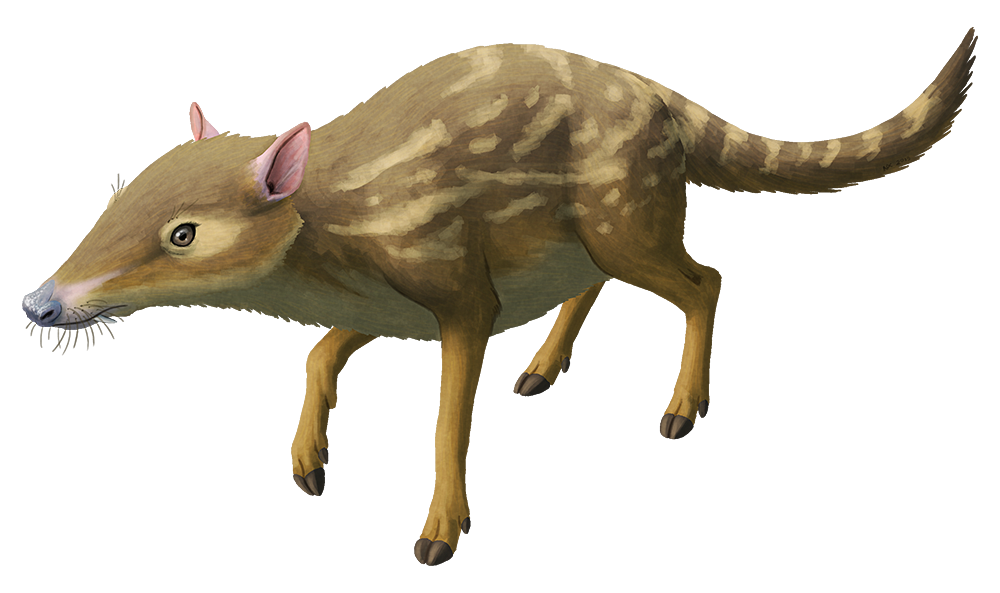
Whalevolution Month #01 – Indohyus

This is Indohyus, a member of an extinct group of ungulates called raoellids – the closest known sister group to cetaceans. The very earliest whales probably looked similar to this, small hoofed creatures completely unrecognizable compared to their modern aquatic descendants.

Around 60cm long (23.5in), Indohyus lived in what would become India and Pakistan about 50-48 million years ago. It had very dense bones similar to those of hippos, and probably led a semi-aquatic lifestyle comparable to modern water chevrotains, diving into water and remaining submerged to evade predators. But its main link to whales actually comes from its ear bones, with its skull showing evidence of a special structure called the involucrum.


Tags:

#biology #the power of science #the more you know