{{previous post in sequence}}


Finished introductory accounting. (Yay spring break!) Will be taking the next accounting course next semester.

I can *technically* put the next accounting course towards a CS degree (I have some open non-introductory-level elective slots left), and I haven’t *officially* changed my major, but I suspect I know how this is going to go.

(I had tons of anxiety *before* the exam (and some aftershocks), but there were times *during* it (most noticeably while preparing financial statements) when I noticed that, even then, I was actually enjoying myself.) 

I’ve barely posted anything this week (was still reading, though) because I was busy studying, so expect extra posts over the next day or two while I catch up on my drafts and my open Tumblr tabs (the ones I left open to remind me to consider whether to reblog them).


Tags:

#Mom heard at a job-hunting-assistance place that you don’t need a degree to do seasonal work at H&R Block #maybe I’ll apply for next spring #get some industry-adjacent work experience #(I’d say ”and get more comfortable with our own taxes” but tbh our taxes are out of a seasonal-worker’s league) #(we’ve got freelancing shit and dual-citizenship shit and so on) #(and on those occasions that we have gotten other people to do our taxes† we have needed at *least* one specialist) #(†usually Dad deals with the taxes with me as his assistant) #oh look an original post #adventures in University Land #oh look an update

{{next post in sequence}}

{{previous post in sequence}}


gnomer-denois:

brin-bellway:

gnomer-denois:

theunitofcaring:

I wrote a while ago about my baby roommate and novelty. The idea is that people find things interesting and exciting when they have the right amount of novelty. Things that are too predictable, like a children’s book you’ve read to a demanding kid ten thousand times, are boring. Things that aren’t predictable enough, like a long novel in a language you don’t speak, are also boring. It’s the process of forming expectations that are often right but sometimes surprised which makes something fun. So for a baby, repetitive play is fun, because every time the duck lands in the bathtub is slightly surprising; for an adult, those variants all make perfect sense and aren’t a source of thrilling novelty anymore.

But I think adults also vary tremendously in how much novelty they enjoy. There are people who reread books all the time, and people who never reread books, both of whom tend to regard each other with total incomprehension. There are people who like their nice simple job doing mostly the same thing every day, and there are people who’d die of boredom. And people are often attuned to different kinds of novelty – for me, ‘sewing dresses’ sounds like doing the same boring thing over and over again, but I bet anyone who actually does it would tell me that different fabrics and threads and stitches and fittings and other constraints make every project different.

I think we tend to talk about jobs as if everyone wants high novelty (art! research! acting! travel!) and some are forced to settle for the mindless drudgery of accounting or marketing or human resources or middle management. But that’s not how it works. Things that are an exciting and satisfying amount of novelty for some people are above the satisfying threshold for other people, and they’re just stressful and demoralizing. Things that would have some people grinding their teeth with tedium have lots of hidden novelty of just the right type for some other people.

But we don’t give kids a lot of opportunity to discover if they’re someone who would find accounting delightfully rewarding minute-to-minute. We don’t even tell them that anyone finds accounting delightfully rewarding. There isn’t really a chance, ever, to try forty things and figure out which one of them hits the right spot in your brain. Which is too bad, because I suspect that getting this right (and noticing when your job has ceased to offer it) is a major contributor to day-to-day happiness.

Why do people think accounting is boring? Learning it is boring. Doing the day to day job… you don’t just do the same thing all day. Almost everyday it’s a juggling of what’s normal important right now and in 30 mins or an hour that’s going to change and you have to shift gears because something else has come up. The part I like the most but find the least rewarding is reconciliation projects for accounts that are years old. I can spend hours digging through tons of information to figure out what caused the problem and when it’s resolved, I solved the puzzle! But all I have to show for all that work is a couple of sentences or *maybe* a spreadsheet showing what I found. But I almost never get to really dig in on those problems because there’s always so much to do that has to be done Now.

Maybe it’s more boring in companies that have sufficient staffing.

I have really been feeling that lack-of-opportunity-to-figure-out-if-you-would-like-doing-accounting lately. *Specifically* regarding accounting.

There’s a draft I never got around to posting that talks about how I’ve been considering the possibility of changing my major from computer science to accounting, but that it’s hard to tell whether that’s a good idea because I have so little sense of what accountants actually *do*. (I interact with enough programmers that at least I have some sense of what *they* do.)

I enjoy making my family’s financial spreadsheets and gathering and crunching the numbers on what possible frugality-efforts would get us, but I don’t know how suggestive that really is.

@gnomer-denois (it won’t actually let me ping you, but since I’m reblogging directly from you you’ll probably still see it), if I may ask, what made you decide to become an accountant?

Um, well. My degree in floral design (BS in Horticulture) wasn’t proving very useful since I didn’t have the equity to open my own store. Then I realized that, despite my rebelling against my math teacher mother, I do actually like math. I was on the fence between engineering and accounting but I prefer the more basic number manipulation to the higher level math.

My grandfather was an accountant after he retired from the Air Force, but a bunch of uncles and cousins are engineers, so that part could have gone either way. I had already taken an intro to accounting course during my first BS, and while it was confusing at first, once it clicked it made sense and I knew I could do it.

Also, at the time I started my BS in Accounting, most job listings for accountants required a BS and most for engineers required an MS. Since then there were stricter requirements put in place to sit for the CPA exam that mean I’ve needed to go on to a Masters of Accountancy, though I suspect if it was worked right that might not be necessary for everyone, depending on state/country. Recently I’ve been considering going on for my PhD and becoming a professor.

It sounds like you enjoy doing cost-benefit analysis and some other things that might lend well towards managerial accounting. Www.imanet.org has information about that if you are interested.

Thank you! That sounds promising.

Traditionally I take two consecutive days off from school-related tasks after finishing a semester, but I will look through that website after I’ve had a chance to recover.

I have one intro-level elective slot left in my computer-science major, so I can take intro to accounting without any sunk costs (the credits will still count towards my degree even if I continue with CS). I’m planning to do that next semester, and we’ll see how it goes.


Tags:

#reply via reblog #adventures in University Land


{{next post in sequence}}

gnomer-denois:

theunitofcaring:

I wrote a while ago about my baby roommate and novelty. The idea is that people find things interesting and exciting when they have the right amount of novelty. Things that are too predictable, like a children’s book you’ve read to a demanding kid ten thousand times, are boring. Things that aren’t predictable enough, like a long novel in a language you don’t speak, are also boring. It’s the process of forming expectations that are often right but sometimes surprised which makes something fun. So for a baby, repetitive play is fun, because every time the duck lands in the bathtub is slightly surprising; for an adult, those variants all make perfect sense and aren’t a source of thrilling novelty anymore.

But I think adults also vary tremendously in how much novelty they enjoy. There are people who reread books all the time, and people who never reread books, both of whom tend to regard each other with total incomprehension. There are people who like their nice simple job doing mostly the same thing every day, and there are people who’d die of boredom. And people are often attuned to different kinds of novelty – for me, ‘sewing dresses’ sounds like doing the same boring thing over and over again, but I bet anyone who actually does it would tell me that different fabrics and threads and stitches and fittings and other constraints make every project different.

I think we tend to talk about jobs as if everyone wants high novelty (art! research! acting! travel!) and some are forced to settle for the mindless drudgery of accounting or marketing or human resources or middle management. But that’s not how it works. Things that are an exciting and satisfying amount of novelty for some people are above the satisfying threshold for other people, and they’re just stressful and demoralizing. Things that would have some people grinding their teeth with tedium have lots of hidden novelty of just the right type for some other people.

But we don’t give kids a lot of opportunity to discover if they’re someone who would find accounting delightfully rewarding minute-to-minute. We don’t even tell them that anyone finds accounting delightfully rewarding. There isn’t really a chance, ever, to try forty things and figure out which one of them hits the right spot in your brain. Which is too bad, because I suspect that getting this right (and noticing when your job has ceased to offer it) is a major contributor to day-to-day happiness.

Why do people think accounting is boring? Learning it is boring. Doing the day to day job… you don’t just do the same thing all day. Almost everyday it’s a juggling of what’s normal important right now and in 30 mins or an hour that’s going to change and you have to shift gears because something else has come up. The part I like the most but find the least rewarding is reconciliation projects for accounts that are years old. I can spend hours digging through tons of information to figure out what caused the problem and when it’s resolved, I solved the puzzle! But all I have to show for all that work is a couple of sentences or *maybe* a spreadsheet showing what I found. But I almost never get to really dig in on those problems because there’s always so much to do that has to be done Now.

Maybe it’s more boring in companies that have sufficient staffing.

I have really been feeling that lack-of-opportunity-to-figure-out-if-you-would-like-doing-accounting lately. *Specifically* regarding accounting.

There’s a draft I never got around to posting that talks about how I’ve been considering the possibility of changing my major from computer science to accounting, but that it’s hard to tell whether that’s a good idea because I have so little sense of what accountants actually *do*. (I interact with enough programmers that at least I have some sense of what *they* do.)

I enjoy making my family’s financial spreadsheets and gathering and crunching the numbers on what possible frugality-efforts would get us, but I don’t know how suggestive that really is.

@gnomer-denois (it won’t actually let me ping you, but since I’m reblogging directly from you you’ll probably still see it), if I may ask, what made you decide to become an accountant?


Tags:

#adventures in University Land #reply via reblog #adventures in human capitalism #today was the last day of my current semester #now that there’s no short-term schoolwork for a little while I was thinking of doing some digging #trying to learn about what being an accountant is like #but I will happily take stumbling across some information #(only one more month until I can make the annual report for 2017!) #(honestly looking forward to it)


{{next post in sequence}}

justice-turtle:

wtf-viz:

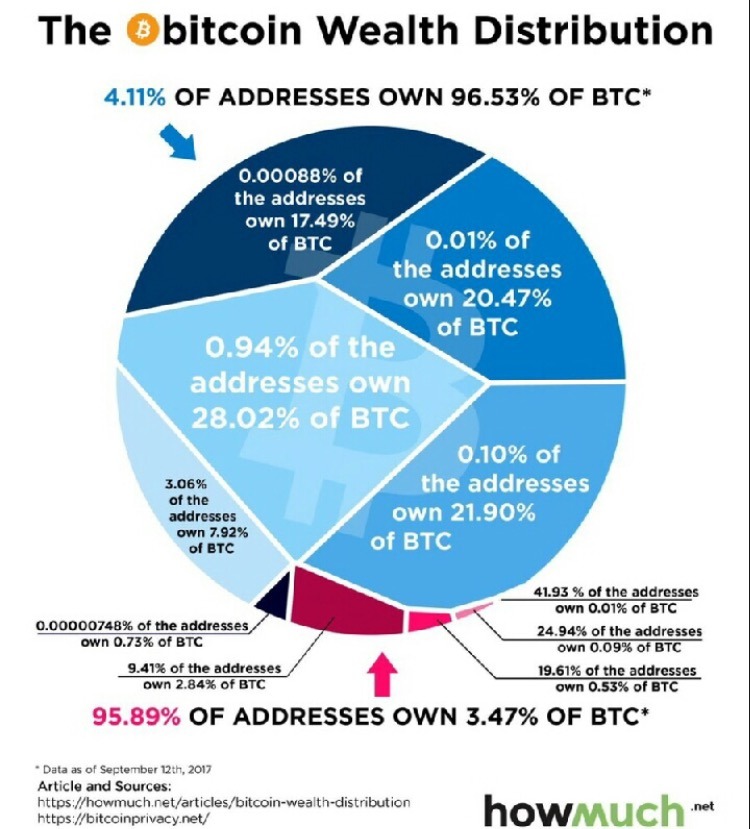
Shattered distribution.

i’m sorry i understand this is trying to make a point but literally all i can think is “what the shit kind of graphic design is this”

Recently, I had a practice exercise for Critical Thinking class (Unit 7: How to Lie with Statistics) in which I had to find a terrible graph in a news source and explain why it was terrible.

As such, my reaction to this post is “*sigh* howmuch.net is at it again”.

(In the case of the post I linked, the article was even worse than the graph taken in isolation. Fun fact: as far as I can tell (and admittedly it’s not all that clear), the original data source uses “housing” to mean everything involved in maintaining a residence (such as utilities), but the article strongly implies that “housing” = “rent”. And they casually assume that a household with average income will also have average expenses, and at one point actually conflate income and expenses!)

On the bright side, the OP is wtf-viz, which means that the point this post is trying to make is “what the shit kind of graphic design is this”.


Tags:

#adventures in University Land #reply via reblog #adventures in human capitalism #(tangentially)


{{next post in sequence}}

{{previous post in sequence}}


brin-bellway:

anxietyblogging

Keep reading

98 percent!!!


Tags:

#shown above: my complete inability to predict what grade I’m going to get on a writing assignment #(it’s not *just* anxiety because I’m also surprised by doing badly) #I spent a ridiculously long time and I know I’m going to have to work on improving my speed in future papers #but goddammit I *got there in the end* and that’s worth something #eeeeee #oh look an update #adventures in University Land #okay back to studying now

anxietyblogging

{{for readability, I should note that there was originally a cut here}}

aaaaaaaahhhh

I just submitted my term paper

I have never written an academic-style term paper before

(except maybe the geology course project? depending on definition? but also I failed the geology course project so let’s not use that comparison shall we)

I wouldn’t be so concerned except if you fail this assignment it’s an automatic fail for the course

okay, okay, I just need 50%, that’s all I need

and 20% of the assignment grade is a short-answer section, which I have historically done really well on, so that’s probably like 18 percentage points right there

(aaaahh)


Tags:

#I still need to do some more studying for my exam next week #I’m glad I started studying in the evenings a couple weeks ago #because otherwise there’s no way I could revise 700 pages #like 60% of the exam grade is multiple-choice and another 30% is short-answer #so that’s probably hopefully going to be pleasantly anticlimactic #(I mean it’s closed-book time-limited short-answer) #(so significantly harder than the other short-answer sections) #(but on the other hand they tend to grade exam writing more generously) #(because they’re thinking in terms of What You Could Reasonably Have Accomplished Under the Circumstances) #adventures in University Land #oh look an original post


{{next post in sequence}}

arbitrarilychosen asked: porous

{{previous post in sequence}}


brin-bellway:

*

Like many creatures, I compulsively groom when stressed. Occasionally, this manifests as picking at blackheads (usually when there’s a mirror handy, since it’s hard for me to tell by feel what’s going on with blackheads). Mostly, though, it’s eyebrow trichotillomania.

(I’ve been making a mild effort to do that less and a moderate effort to spread it out more evenly, so the bald patches are growing back now. Still very much looking forward to this class finally being over. Let’s just say the list of prerequisite courses should have been longer than it was.)


Tags:

#I’ve been taking two courses at a time but I finished the other one over a month ago #as it was only a very reasonable difficulty level #adventures in University Land #self harm cw? #ask meme #tales from the askbox #I try not to dwell on school woes much here #but it was what I could come up with


{{next post in sequence}}

vortex-atom:

explodingbat:

astronauticalaspirations:

good-and-colorful:

scienceisbeauty:

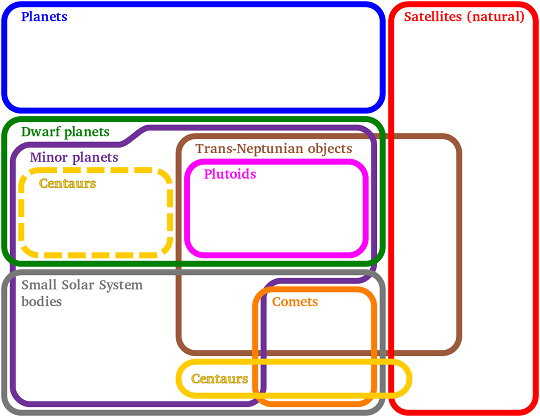
Today ten years ago an IAU resolution stated an official definition for the term “planet” who ultimately excluded Pluto as a planet of our Solar System, and reclassified it as “dwarf planet”.

Image via NASA: What Is Pluto?
Caption: The New Horizons spacecraft helped us see Pluto and its largest moon Charon more clearly than we could see them with telescopes.

A Euler diagram showing the relationship between objects in the Solar System (excluding stars) – Wikimedia Commons

Diagram of Planet and Planet-like Categories

Centaurs?

Centaurs

huh, so what we were taught in school were actually Euler diagrams, but *called* Venn diagrams for some reason

Yeah, technically a Venn diagram shows all possible intersections. The ones that are empty are sometimes shaded black, but they’re there regardless. Silly wikipedia image showing Venns morphing into Eulers:

https://commons.wikimedia.org/wiki/File:Syllogism-Set-Diagrams.svg


Tags:

#anniversaries #(apparently this was on the 24th) #Pluto #today I was reading about the outer solar system in my astronomy textbook #2014 edition #there was a remnant Pluto section in the ”outer planets” section basically explaining #why Pluto was no longer considered a planet and would be described in more detail in the ”other solar system bodies” chapter #it referred to the New Horizons fly-by in the future tense #there were no pictures #because nobody had ever seen what Pluto looked like #(the educational video next on my to-do list tomorrow was made in 2006) #(I think I already caught them re-dubbing a previous section involving Pluto) #(the picture showed nine planets orbiting the sun) #(while the voiceover) #(which–while the same narrator as the rest of the series–didn’t sound like it was quite of a piece with the rest of the narration) #(talked about eight planets and oh yeah there’s a dwarf planet in here too) #((I’m *probably* overstating that last bit but anyway)) #adventures in University Land

{{previous post in sequence}}


Lizardywizard Avatar lizardywizard replied to your post: In hindsight, I probably should have known that an…

wait I’m confused, what is a star worshipper and why does this make you feel broken (don’t have to answer if you don’t wanna, just curious)

I was using “star-worshipper” to mean people for whom looking at the night sky inspires awe. They tend to go on about how light pollution is bad for the soul and I’m not complete as a person until I’ve seen the Milky Way with my own eyes. I’ve heard this sort of thing enough over the years that I’m now sensitised to it: even things that, taken on their own, are value-neutral or only mildly charged statements about stargazing and the absence thereof tend to make me bristle because they invoke all these other memories of proselytising star-worshippers. (There have also been at least one or two statements in the textbook that were more than mildly charged.)

Now that I think about it, making the entire link and only the link italicised might have obscured the fact that it was a link. The last couple paragraphs of the linked post explain why it makes me feel broken.

(Later reflection suggests that I can feel awe or something in that neighbourhood, but only about people, not things, and especially not things that have been hyped up as awe-inspiring.)


Tags:

#lizardywizard #no offence to your friend-shaped objects #being in awe of stars in their animistic capacity as people would be another thing altogether #replies #adventures in University Land #Brin is touchy about stars


{{next post in sequence}}