A fantasy book where many characters have dramatic High Fantasy epithets, but for incredibly non-dramatic reasons.
An adventurer known as The Herald of Dawn, but it’s because she tends to wake up naturally at 4 or 5 am and every single fucking time wakes up the whole damn camp before sunrise by banging pots and pans together while making herself breakfast.
A nobleman known as The Lord of Shadows, but it’s because his land is shaded from all sides by cliffs and mountains and all the other nobility are roasting this guy for not being able to grow or farm anything on his shitty, shady, no-sunshine-having estates.
A courtesan known as The Emerald of [location], but it’s because the county she was born in is known for manufacturing forged jewels and gemstones, and so far she is the fakest pretty thing to ever come from there.
An assassin known as The Kiss of Death, but it’s because he has somehow acquired every single known and documented STD in his mouth.
The Dark Huntress, named so to distinguish her from The Blonde Huntress.
A prince known as The Raven Prince, but it’s because he’s autistic and can and WILL tell you everything that is known about ravens, for five hours straight.
The Fallen King, named for falling off his horse, and deciding to build his kingdom there (because his horse ran off).
The Chosen One, ruler of a democratic state
Tags:
#overly literal interpretations #I didn’t actually laugh aloud but it still amused me enough to reblog #illness tw? #this post was queued because my to-reblog list is too long and I didn’t want to dump it on you all at once
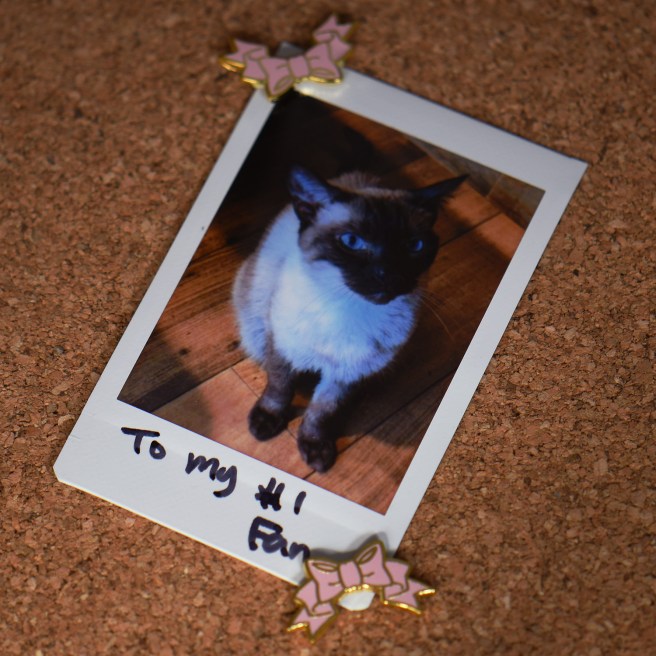
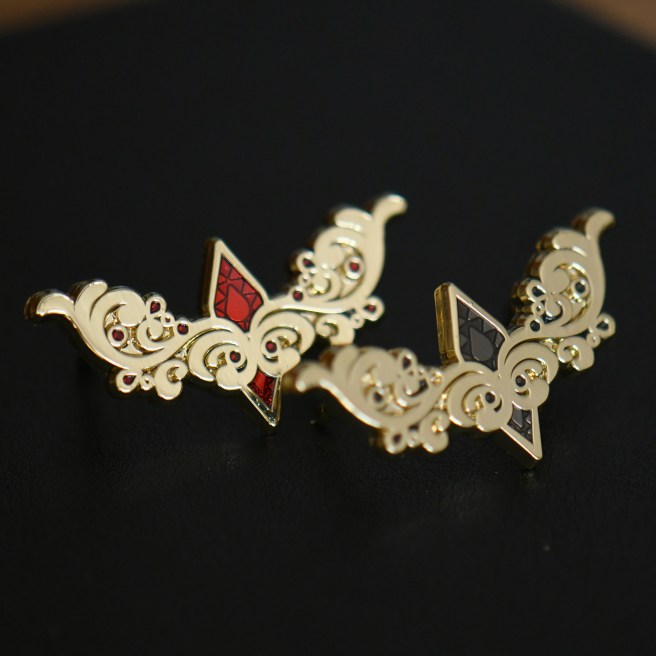
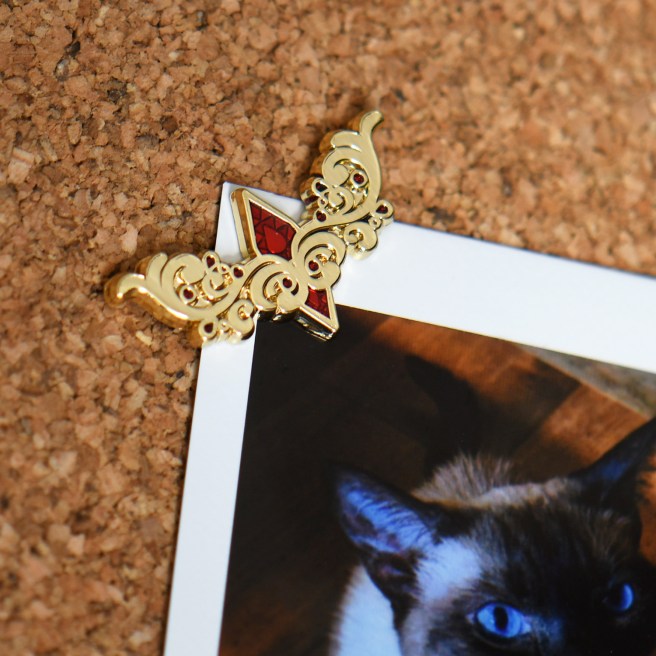
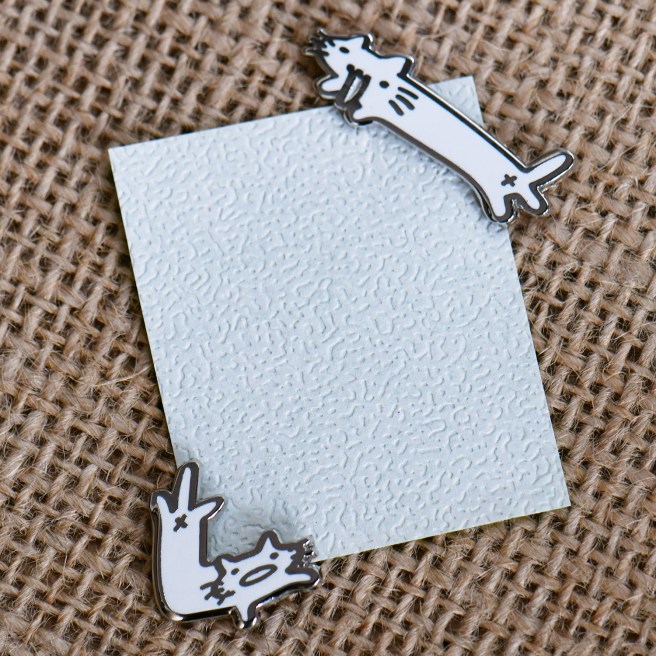
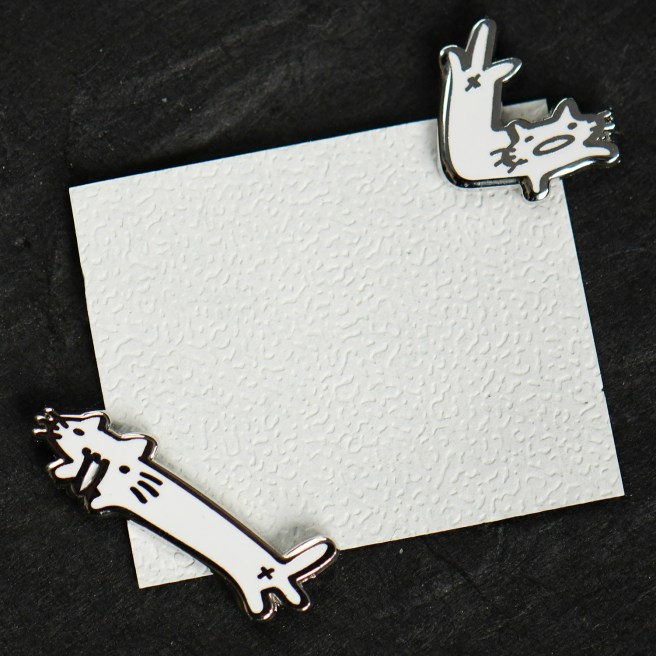
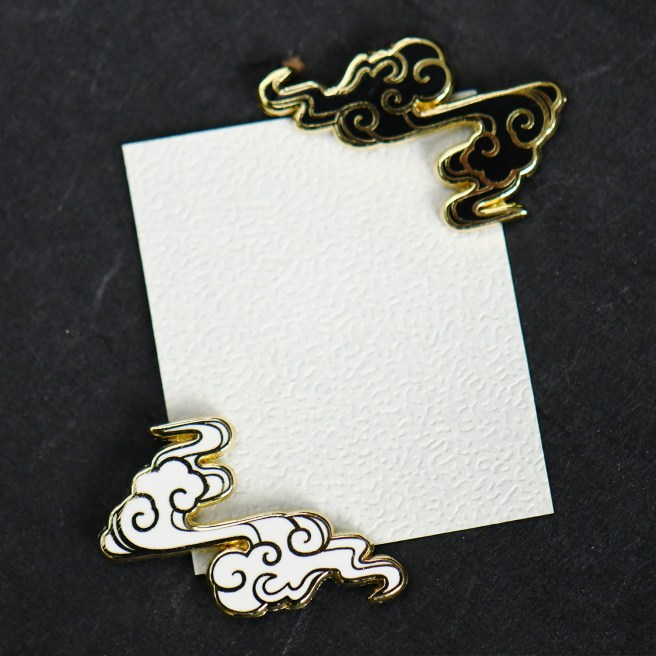
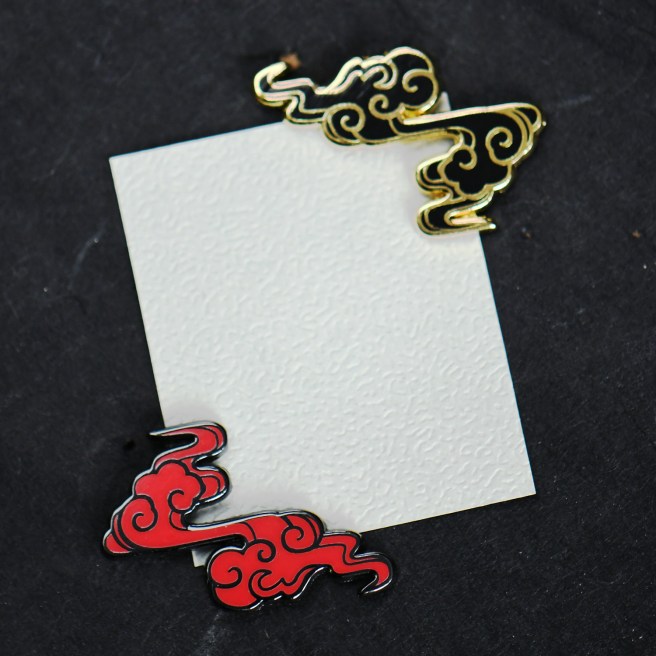
So IDK if people will understand this concept but I made “corner pins”
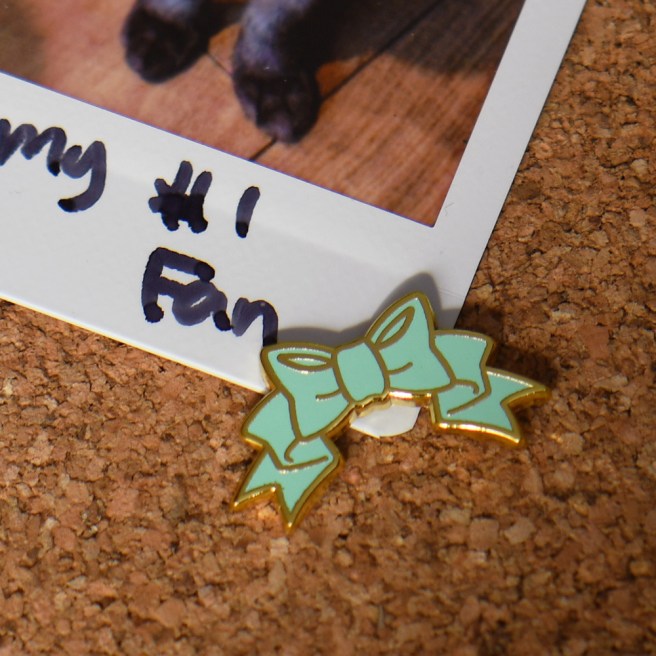
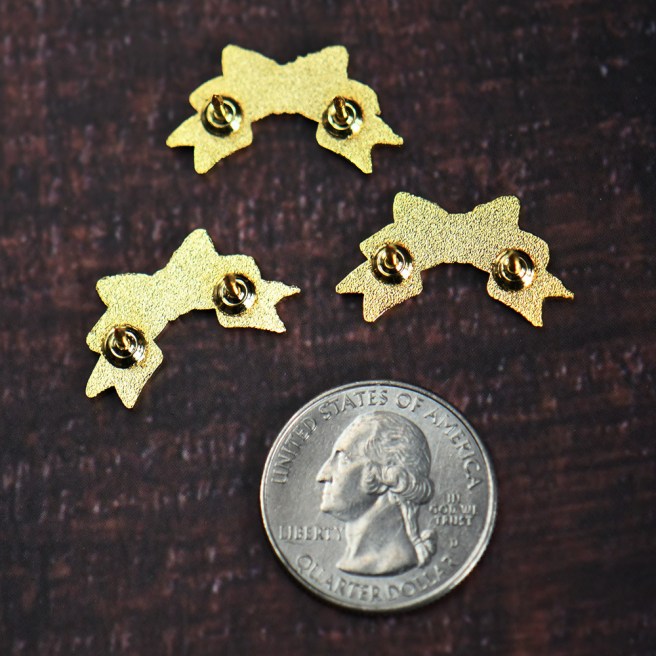
Basically they are tiny pins with TWO posts on them, and you use them to hold up mementos like instax/photos/tickets etc without having to puncture them, and without having to pinch them with the metal or the push pin edge etc. You can simply rest the corner of the item between the posts gently!
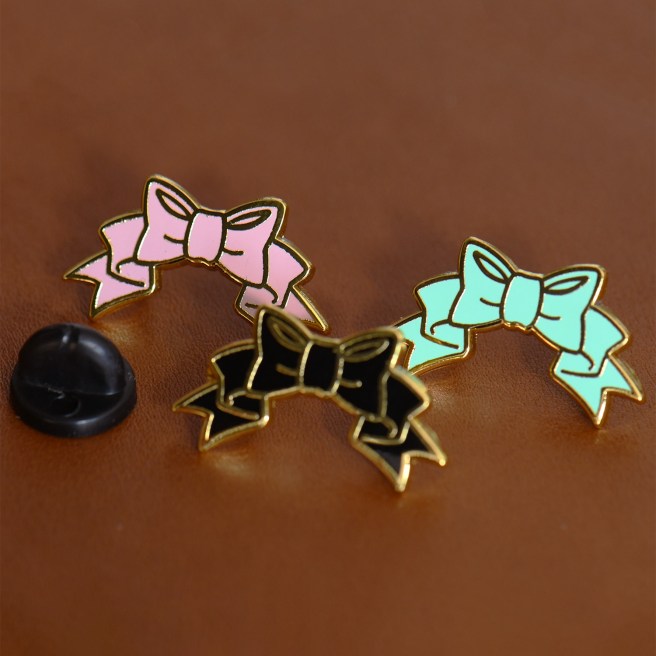
These are the cute ribbon/bow ones, I also made some others that i think would be really cool on your mementos ToT
Let me know what you think about this concept?? I don’t know how to market it but i really thought it was a nice idea T_T. You can find them in my store here
Tags:
#interesting ideas #this post was queued because my to-reblog list is too long and I didn’t want to dump it on you all at once
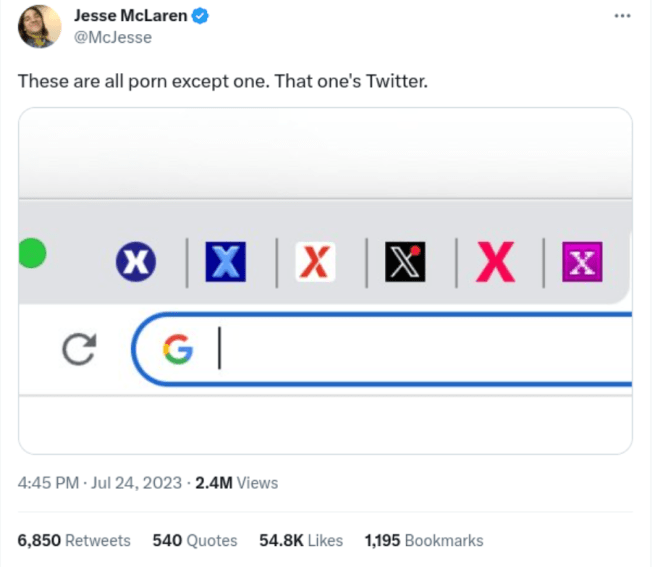
#Twitter #anything that makes me laugh this much deserves a reblog #juxtaposition #(for the record it’s the fourth one) #(with the red notification dot on it) #this probably deserves some warning tag but I am not sure what #this post was queued because my to-reblog list is too long and I didn’t want to dump it on you all at once
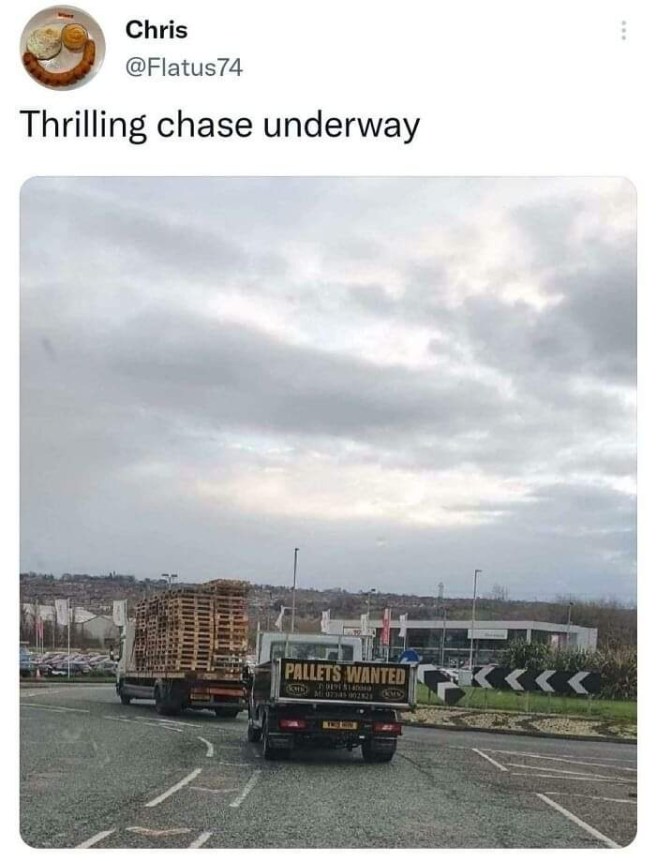
#anything that makes me laugh this much deserves a reblog #juxtaposition #this post was queued because my to-reblog list is too long and I didn’t want to dump it on you all at once
Pretty regularly, at work, I ask ChatGPT hundreds of slightly different questions over the course of a minute or two.
I don’t type out these individual questions, of course. They’re constructed mechanically, by taking documents one by one from a list, and slotting each one inside a sandwich of fixed text. Like this (not verbatim):
Here’s a thing for you to read:
//document goes here//
Now answer question XYZ about it.
I never read through all of the responses, either. Maybe I’ll read a few of them, later on, after doing some kind of statistics to the whole aggregate. But ChatGPT isn’t really writing for human consumption, here. It’s an industrial machine. It’s generating “data,” on the basis of other “data.”
Often, I ask it to write out a step-by-step reasoning process before answering each question, because this has been shown to improve the quality of ChatGPT’s answers. It writes me all this stuff, and I ignore all of it. It’s a waste product. I only ask for it because it makes the answer after it better, on average; I have no other use for it.
The funny thing is – despite being used in a very different, more impersonal manner – it’s still ChatGPT! It’s still the same sanctimonious, eager-to-please little guy, answering all those questions.
Fifty questions at once, hundreds in a few minutes, all of it in that same, identical, somewhat annoying brand voice. Always itself, incapable of tiring.
This is all billed to my employer at a rate of roughly $0.01 per 5,000 words I send to ChatGPT, plus roughly $0.01 per 3,750 words that ChatGPT writes in response.
In other words, ChatGPT writing is so cheap, you can get 375,000 words of it for $1.
—-
OpenAI decided to make this particular “little guy” very cheap and very fast, maybe in recognition of its popularity.
So now, if you want to use a language model like an industrial machine, it’s the one you’re most likely to use.
—-
Why am I making this post?
Sometimes I read online discourse about ChatGPT, and it seems like people are overly focused on the experience of a single human talking to ChatGPT in the app.
Or, at most, the possibility of generating lots of “content” aimed at humans (SEO spam, generic emails) at the press of a button.
Many of the most promising applications of ChatGPT involve generating text that is not meant for human consumption.
They go in the other direction: they take things from the messy, human, textual world, and translate them into the simpler terms of ordinary computer programs.
Imagine you’re interacting with a system – a company, a website, a phone tree, whatever.
You say or type something.
Behind the scenes, unbeknownst to you, the system asks ChatGPT 13 different questions about the thing you just said/typed. This happens almost instantaneously and costs almost nothing.
No human being will ever see any of the words that ChatGPT wrote in response to this question. They get parsed by simple, old-fashioned computer code, and then they get discarded.
Each of ChatGPT’s answers ends in a simple “yes” or “no,” or a selection from a similar set of discrete options. The system uses all of this structured, “machine-readable” (in the old-fashioned sense) information to decide what to do next, in its interaction with you.
This is the kind of thing that will happen, more and more.
Tags:
#I have absolutely no idea whether this is a proud-citizen post or a disappointed-permanent-resident post #but it sure is a The-Future post #the more you know #this post was queued because my to-reblog list is too long and I didn’t want to dump it on you all at once
Anyway, in the episode they go the anvilicious route of making all the plants on that planet incredibly poisonous (and the hippies I guess too technophobic to wave a tricorder over a bush before deciding they want to settle there), but before they found out about that there was a line about the planet having no animals and, wait, even if the biochemistries were compatible, wouldn’t a planet with no animals logically be pretty difficult for humans to survive on, especially if the humans are going to go full anprim and live as gatherers?
Obviously getting enough protein might be a problem. And I think there’s some vitamin you can only get from animals? You only need tiny amounts of it IIRC, small enough that preindustrial vegetarian Jains were able to get enough from insect contamination in their food, but on a planet with no animals at all that would be a huge problem!
But also, no animals would logically mean no fruit, right? Fruit exist to entice animals to move a plant’s seeds around for it. If there’s no animals, there’s no reason for plants to expend energy on growing them. Plants on a planet with no animals would probably mostly propagate by wind-blown seeds, and have seeds similar to dandelion fluff, small and very light to easily disperse in the wind.
That basically leaves tubers. Which probably would exist; they might be even more useful on a planet where there are no animals to plunder such rich stores of energy (though I guess there’d probably be parasitic fungi and stuff evolved to exploit them). On the other hand, on a planet with no browsers or grazers the main selection pressures driving the evolution of tubers would be winter, drought, and fire, so if “Eden” has a nice climate it might not have a lot of tubers either.
I don’t think it’d look nice and pretty and park-like like the planet in the episode either. For one thing, I think, just like it has no fruit, it’d have no flowers except things similar to dandelion puffs; there’d be nothing to pollinate them. With no animals with eyes, there’d be no reason for plants to evolve parts with dramatic color contrast. Its vegetation would be rather visually monotonous, mostly greens and browns. But also, and more importantly in terms of its potential (or lack of thereof) for human habitation, that kind of lush but open park-like landscape is what you get when vegetation is being regularly pruned back by people or animals or fire or some combination of those things. I think a planet with no animals would have very different vegetation growth patterns, more like…
In areas dry enough for burning seasons, I think you might get a fire-adapted ecology where fire does some of what grazers and browsers do on Earth. With no grazers and browsers and the main selection pressure being competition between plants, you’d get a dense tangled profusion of growth and lots of slowly decomposing dead plant material (cause there’s no animals to help break it down or prune the leaves before they get a chance to die and fall off, just bacteria and fungi). It’d probably be rather difficult for a human to walk through, a forest choked with a dense profusion of undergrowth and dead stuff; at least there are no thorns, and nothing like poison oak; with no animals there’s no selection pressure for thorns or poison. In dry parts of the year, this accumulation of living and dead plant material becomes a tinderbox for wildfires. If a planet like this looks idyllic from orbit, it’s cause you arrived in mid-spring/mid-autumn; come in summer/winter, when dry seasons are in full swing, and you would see huge wildfires and skies stained with smoke. The oldest and biggest trees are tough enough to usually survive the burning, but the undergrowth is cleared. After the burn, seeds sprout and saplings grow quickly, competing to take advantage of the cleared ground, quickly filling the forest back up with a tangled profusion of growth and an increasing accumulation of slowly rotting dead material, completing the cycle.
On the other hand, on the same planet, in the places with lots of rain and conditions favorable to evergreen plants, there might be forests of enormous trees with forest floors that are pretty open but rather dark, barren, and muddy, with most light being blocked by a dense cathedral-like canopy far above. They’d smell of mud and rot, as the forest floor has accumulated large amounts of slowly decomposing leaf litter fallen from the canopy far above and has a mostly decomposer-based ecology of fungi and bacteria that slowly feeds on that. This is an ecosystem of trees and rot, and the trees make no fruit, they reproduce by seeds like dandelion fluff, small and very light to float on the wind, and they don’t even produce much of that; they live a very long time and reproduce very slowly, partially because they’re Cronuses; their dense canopy starves their own offspring of light along with everything else. For all the green lushness of their canopies these forests are low-energy ecosystems, conservative ecosystems, defined by the almost total victory of ancient, mighty incumbents; these are the Cronus forests, the lands of the Cronus trees.
There’s very little energy available to humans in these Cronus woods. Some edible mushrooms, maybe; that’d be about it. Very possibly humans simply could not survive here, except perhaps in tiny numbers and by living in almost hermit-like isolation and dispersal. The Cronus forests might be almost as hostile as the Sahara or Antarctica, a place where the likely fate of some unfortunate stranded human explorer would be to die of hunger lying on the roots of some sequoia-size Cronus tree that was ancient when Julius Caesar marched into Gaul, staring up into cathedral-like dense green canopy through which only a dim twilight illumination filters even at mid-day, their nose filled with the reek of mud and rot.
Humans might try to terraform the Cronus forests by opening them, but I think that might be quite difficult for low-tech humans. The obvious efficient strategy for attacking the Cronus trees would be to set fire to them, but fire would be one of the primary natural threats to the Cronus trees, and a strong selection pressure on them, so I expect them to be well-adapted to resist it, with fire-retardant chemicals in their bark, wood, sap, and leaves so they resist ignition, and with their sheer size protecting them. The floors of the Cronus woods would receive almost no direct sunlight and therefore be cool and probably damp, and they would have very little undergrowth; fire would probably not spread easily through such an environment. It might be more effective to set torch to the canopies, but they would be dozens or maybe even hundreds of meters above the ground; quite a climb, on a tree that’s probably more-or-less a branchless trunk much of the way up, and you’ve got to climb back down after setting the tree on fire.
That leaves tediously timbering them one by one. With, say, Medieval technology, this might work! The Cronus trees look mighty and their rule assured, but they are actually quite vulnerable. They are slow. Their defenses are purely passive. They literally could not make a single motion to defend themselves as an enemy attacked them with steel saws and axes. And they reproduce very slowly; if they could be timbered efficiently, it would be easy to destroy them faster than they reproduce. An enemy that can think and move is an outside context problem for them, something that never existed in their environment and therefore something they are totally unprepared for. Humans with steel saws and axes might be very efficient killers of these ancient titans.
But steel axes are pretty high-tech if you think agriculture was a mistake. Without metal tools? Imagine trying to bring down a giant sequoia without metal tools, so the axe is something delicate like obsidian or bone, or it has to be very tediously ground to a blade, or you’re basically trying to bring the (big and structurally strong!) tree down by bashing it to a pulp, and big saws are probably impossible. Now imagine having to do that over and over again. Imagine trying to clear a forest that stretches from horizon to horizon that way.
If very low-tech humans can inhabit the Cronus forests at all, I think it might be as, like, highly dispersed small families who move around constantly and rarely meet each other, living on the occasional patch of edible mushrooms or other tid-bit, cause there just isn’t enough energy to support anything denser. And even then, they might have to stick to the edge, where other ecozones are accessible, cause, like, would mushrooms even have all the nutrients you need?
I mean, I guess there would be some kind of open woodland areas? I think a planet with no animals would have more forest than a more Earth-like planet with the same climate, cause you’ve removed a major inhibition on plant growth. Think of how places like highland Scotland used to be forested, but when humans with livestock were added to the mix it became more-or-less an open grassland landscape. I think you’d see a similar effect comparing Plantworld to a version of the same planet that had animals; places that would be marginally viable forest without browsers would be grassland or open woodland with them. But a planet with no animals is probably going to have areas wet enough for plants but too dry for forests, so it’ll probably have some grassland equivalents. But…
… Grass in natural prairies often gets pretty tall, doesn’t it? And that’s with grazers. A grass-equivalent that evolved on a world without grazers would be more selected by competition against other plants. I think no selection by grazing but more selection by competition against other plants might favor more investment in individual stalks. And instead of looking like our grass, these plants would have a cluster of little branches and leaves at the top, for better light interception – and to shade and thus inhibit the growth of any rivals growing near their base!
So, maybe… The experience of walking in a grassland in no animals world is very different from walking through a lawn or even the kind of knee-high or less wild grass I see around the Bay Area. The grass is tall. It’s taller than you. The stalks are thick too; finger-thick and hollow; it’s more like a forest of young bamboo. It feels more like walking in a cornfield. And it’s surprisingly dark. Each stalk has a little crown of small branches and leaves, and together they make a surprisingly dense canopy not far above your head. The effect is claustrophobic and eerie. It has a vibe a little like the Cronus woods. And that’s not an accident; these plants are essentially much smaller versions of the Cronus trees; tighter constraints, similar strategy. This place replicates the Cronus woods in miniature. This is the Cronus prairie, the land of the Cronus grass.
This probably doesn’t sound like a place you’d like. If it’s any consolation, if the Cronus grasses had minds they probably wouldn’t like you either. Unlike the Cronus trees, the Cronus grass is small and vulnerable enough to experience you, fast-moving muscles-having thing, as the outside context problem you are on its world. You move through the Cronus grass and break a stalk. What a calamity to that plant! All the energy and resources it poured into building that stalk, all that work, the work of its life, undone in an instant! Now it has no crown to drink the sun, and its luckier neighboring competitors will close over it, and it will die without ever having a chance to scatter its gossamer seeds on the wind. Or maybe it’s a different, longer-lived sort of Cronus grass (Cronus grass and Cronus tree aren’t species, they’re strategies and niches), and in the soil below the base of the stalk, where the long-lived part of the plant lives, there is a tuber, from which it can pull stored energy to regenerate the stalk, but this only prolongs the failure cycle; that energy was supposed to be used to regenerate the stalk after the Cronus prairie burns in the dry season and is reduced to a horizon-to-horizon smoldering plain of bare earth and ash; now its energy stores will be depleted when the fire comes, and afterward it will not be able to keep pace with the growth and regeneration of its neighbors and rivals, and they will close over it and it will die.
Those tubers make the Cronus prairie the best place on this planet for humans to live. Some of the Cronus grasses are annuals and live only one year, dying in the fires of the dry season and leaving only seeds to continue their lineage, but many are long-lived, with root systems that survive the fires, and these all have tubers that store energy to regenerate their stalk after the burn. In the competitive scramble after the burn the advantage offered by such a pre-existing storehouse of caloric wealth is huge, and these plants evolved in the absence of any animals that might raid them. Think of the Cronus prairie as a vast field of turnips and potatoes, with multiple edible plants in every square foot of soil, stretching from horizon to horizon. Here, at last, is something like the promise of Eden; food provided abundantly by nature with no need to work the soil, simply waiting to be dug up, available in such quantity that there would be little motivation for hard toil or war. That is, if you don’t mind a monotonous diet of bland and nutrient-poor tubers, every day, every year, almost every meal, from the day you are weaned to the day you die. Low-tech human inhabitants of the Cronus prairie would have plenty of calories, but getting enough protein and other nutrients to stay alive and healthy might be a very hard struggle for them, and they might often suffer from malnutrition.
The abundance of the Cronus prairie would also be fragile. The tuber-growing Cronus grasses are long-lived and reproduce slowly, and digging up the tuber would probably destroy one. All the defenses they use to protect their precious hordes of carbohydrates are against enemies as slow as themselves, bacteria and fungi and specialized “vampire plants” without chlorophyll; they are not evolved to deal with raiders with muscles and eyes who can simply physically dig up the tubers. It would be quite easy for humans to slip into harvesting them faster than they reproduce.
Imagine what life might be like for a low-tech inhabitant of the Cronus prairie, a few hundred or a few thousand years after establishment.
Your staple food is something like turnip soup (the stalks of the Cronus grass furnish the fuel for cooking). No animals in your world have yet developed the ability to breathe on land, but there are things a little like insects you can find in creeks and rivers; they are enough to supply your people with the nutrients you absolutely must get from animals. Your people wean your babies late, because mother’s milk is one of the precious few foods available to you that is not Cronus grass tubers and is much more nourishing. You’ve learned to feed your children small amounts of human feces to establish the gut microbiomes they need to process food. Finding enough food that isn’t Cronus grass tubers to get all the nutrients you need is a struggle, but you know if you eat only Cronus grass tubers you will get sick and die slowly. In fact, your people are chronically malnourished and chronically ill, but you live long and most of your children grow up anyway, because your world has few bacteria and viruses capable of infecting humans, so your immune systems don’t have to be very strong. In a desperate measure to increase protein consumption, your people have incorporated cannibalism of the deceased into your funeral rituals (your people view the practice as loving and reverential and normal, not desperate; it is done only to people who have already died of natural causes and allows their flesh to still be part of the tribe while their bones are shallowly buried to nourish the Cronus grass). Water bugs and human flesh are the only meats you’ve ever tasted. It is the beginning of the dry season, and the sky is stained with high-altitude smoke from the vast wildfires already burning hundreds of kilometers to the north. Soon your people must move northwest to the island of barren rock that rises from the Cronus prairie or southwest to the Cronus woods; there is little food in those places, but the fire stops at their boundaries, and to be caught out in the Cronus prairie when the fire walks across it is death.
You know, if you’re going with “hippies have an overly romanticized view of nature and therefore don’t deal with it well,” I think I’d kind of prefer this. Just making the plants on “Eden” super-poisonous is just kind of an arbitrary fuck you, but… “Planet with no animals and sufficient abundance that you can survive as a gatherer without much effort” is totally something I could see as a hippie fantasy; no need for hard toil or alienating technology, little temptation toward war, no dangerous animals that might hurt you, and no temptation toward carnivory. But it’s an ecologically incoherent fantasy! You are also an animal! A world with no place for animals has no place for you! It will probably not be an easy world for you to survive on! Of course, it’d be difficult to portray this in a one hour TV episode; would probably work a lot better with a novel.
Also, you could flip this around: if you think about it, it’s actually really weird that a planet with no animals has fruit (even super-poisonous fruit). Maybe it’s not a natural wilderness. Maybe it’s somebody’s food forest.
Suggestion: “Eden” is actually a heavily gardened world maintained by one of those state-repelling cultures James C. Scott talks about. Its inhabitants are not humanoid and have totally different biochemistry from us, so the local food’s perfectly edible, palatable, and nourishing to them. They mostly live as gatherers at a low level technology, doing the sort of proto-agricultural ecosystem engineering lots of hunter-gatherers do on Earth. They maintain just enough technology to tell them when a starship is dropping by. When that happens, they crawl into little hidey-holes and go into a deep hibernation, which makes starship sensors not register them as alive. They come out of hibernation a few days later or something, which is usually enough time for visitors with more galactic-normal biochemistry to realize the plants on the planet are poisonous to them, lose interest in it, and leave.
Something something people who reject the value system of settler colonial society but don’t reject the terra nullius myth.
#Star Trek #story ideas I will never write #food #illness tw #death tw #apocalypse cw #poison cw? #this post was queued because my to-reblog list is too long and I didn’t want to dump it on you all at once
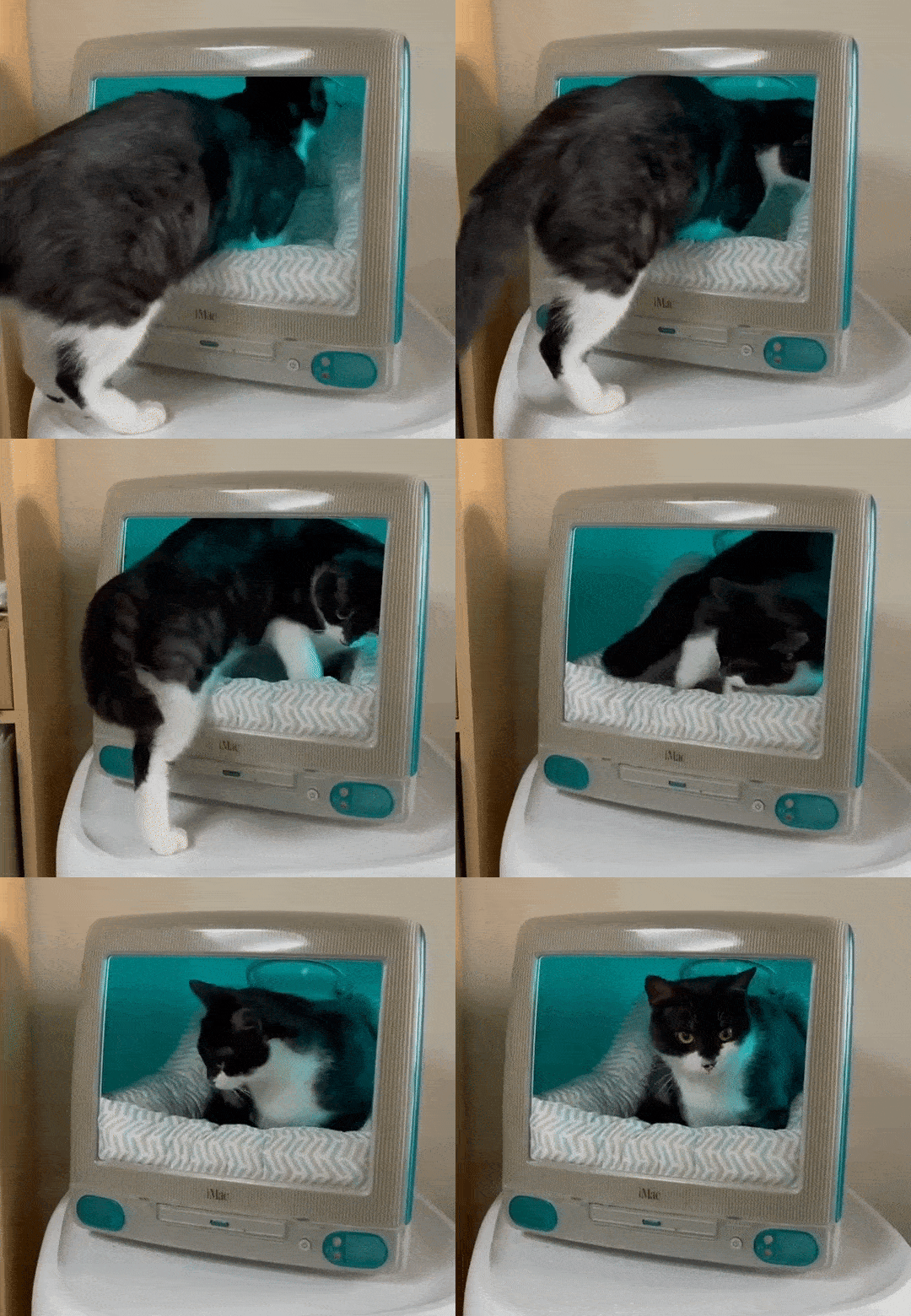
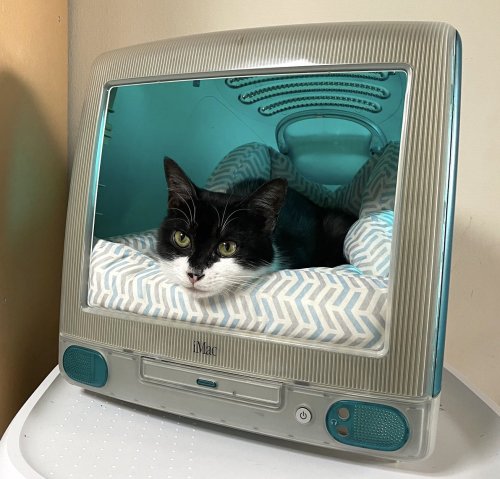
#there’s some sort of the-Internet-is-for-cats joke here but I’m not sure what it is #in any case that does look very cozy #cats #adorable #love the decor fandom #this post was queued because my to-reblog list is too long and I didn’t want to dump it on you all at once
Consider: Who Would Win-arguments, but instead of fighting each other, it’s two characters with somewhat similar skillsets, facing each other in something neither of them have experience in.
Geralt of Rivia vs Aragorn, son of Arathorn (book versions of both for clarity); which one of them would win in a match of table tennis?
#I didn’t actually laugh aloud but it still amused me enough to reblog #this post was queued because my to-reblog list is too long and I didn’t want to dump it on you all at once
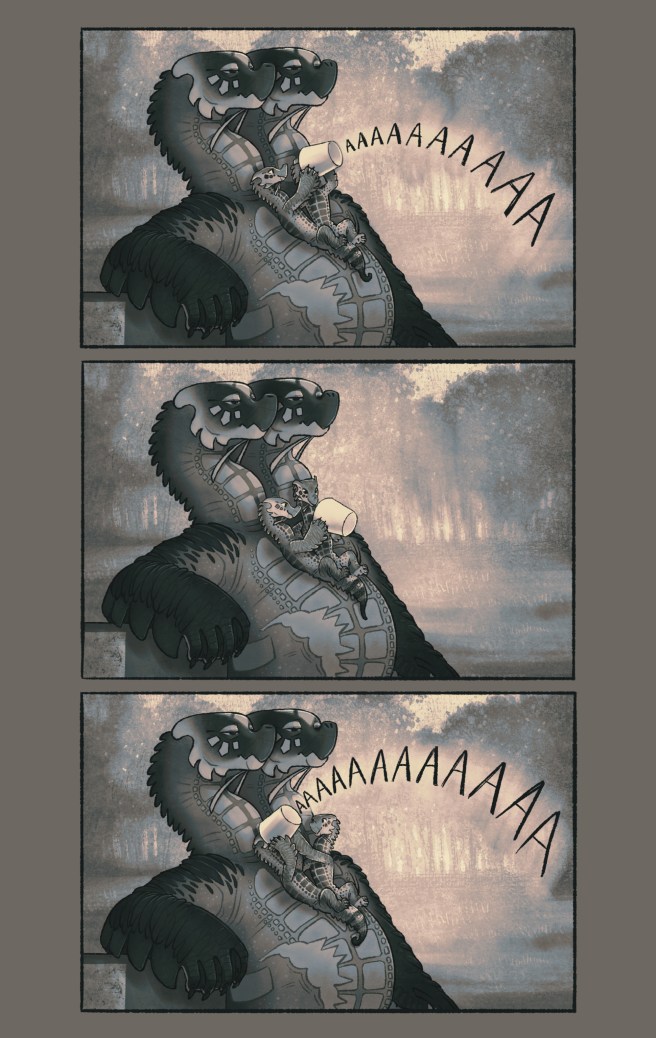
#comics #art #adorable #may or may not have reblogged this before #(I definitely haven’t reblogged *this* version before but I may have reblogged the first draft) #(can’t find it in here though) #this post was queued because my to-reblog list is too long and I didn’t want to dump it on you all at once