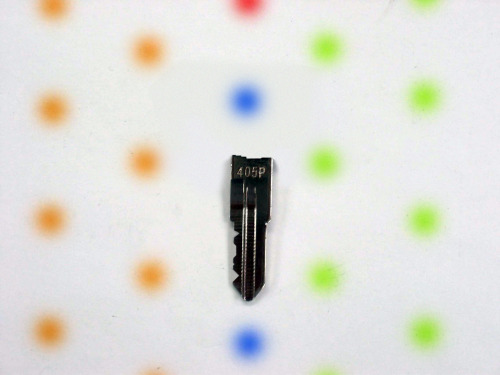
#I know what this is *trying* to say but it is saying something very different #it’s *trying* to make a statement about underestimation and foundations and the importance of ordinary things #but what it comes across as is something about the importance of experience and mentorship #the information in you can remain useful even if your body has given out to the point you can no longer make use of the info *directly* #even if you can’t use this key *in its own right* you can use it as a guide to how to make a functioning copy #in fact you can use *this image* as a guide to how to make a functioning copy #ceci n’est pas *encore* une clé #(remember folks‚ treat images of your keys with as much caution as you’d treat the keys themselves) #(you do not hand them out to just anybody) #art #keys #aging cw? #tag rambles
I know it’s 2020 but Merlin AU where Uther notices a bunch of problems that could only be solved by magic ~spontaneously~ getting solved around Arthur, and concludes that this must be a side effect of Arthur only existing due to magical intervention. An intense bigotry-versus-parental-love internal conflict commences, followed by some that’s-pretty-hypocritcal-of-you-isn’t-it-dad screaming external conflict, generally upending everything. Merlin is standing in the corner the entire time holding a serving jug of mead and sweating.
Morgana, dramatically slamming open the throne room doors with both arms: I’M ALSO UNWILLINGLY MAGIC. Arthur: What???? Morgana, raising one fist at him: Solidarity, motherFUCKER! Arthur:What????????
What’s Uther gonna do? What’s he gonna fucking do???? Execute his secret Scottish child, but not his nonsecret blond heir child??? They’re ganging up on him now. He’s fucking cornered.
A new Star Trek series but 90% of the dramatic tension comes from each of the characters believing themselves to be the Outsider archetype.
If YOU’RE the new Spock, and I’M the new Data, and HE’s the new Seven of Nine, and SHE’S the new Odo, and THEY’RE also the new Spock…. then who’s piloting the ship?!
And then when the bog standard Relatable Everyman character joins the cast he realizes that HE is now the awkward Outside archetype who makes humorous social miscalculations.
I can’t stress enough that the narrative must not present the Relatable Everyman as a relatable everyman. He is not the audience proxy, the de facto protagonist, OR the token normie. He is the Outsider and he is presented as such, and he gets special bittersweet episodes dedicated to exploring his attempts to figure out his place in his community.
‘Relatable Everyman’ doesn’t come on until S4, and all their attempts at humor and flirting and friendship making are jarring and confusing and uncomfortable. Their jokes don’t seem to land. All their social norms get chucked out the window. They spend a lot of time confused and alone until the benevolent crew deigns to try and teach the Everyman how to fit in.
I also want to emphasize that Mr. Everyman isn’t treated as a joke. He isn’t just some pathetic doofus among impressive titans who ends up the butt of every joke. The narrative must have genuine compassion for him and present his struggles with sympathy and optimism. His social accomplishments are celebrated but assimilation should not be the ultimate goal of his character arc; for as much as his differences cause pain and humor and complications, the crew comes to accept and appreciate that his uniqueness is valuable in its own way. Every now and then he has a particular quality that helps to save the day, but ultimately Mr. Everyman is part of the family and forcing him to change would be unthinkable.
1. Everyone on the ship engages in perfectly normal levels of social activity, which is to say, they work together and then they retreat to their quarters after work for solitary pursuits, or get together for one-on-one interaction, like playing a board game, because in the future everyone loves board games. The Neurotypical Outsider (NTO), an extrovert, tries desperately to get everyone together to play a game and is always trying to spend time with everyone off duty. Everyone politely blows them off because that level of social neediness is kind of embarrassing. The NTO shows signs of being deeply unhappy, maybe even depressed. The ship’s doctor discovers that extroverts literally require the presence of social interaction with others almost constantly to support their mental health. No one wants their friend to suffer, so they apologize for how they’ve been blowing off the NTO and agree that they will get together for a weekly board game as a group, and that everyone will try to spend at least half an hour socially interacting with the NTO after work every day. Also, the mysterious comet turns out to be a generation ship from an ancient race of aliens.
2. On a diplomatic mission, the aliens serve the crew a food containing a substance that is bitter to humans. The autistic human refuses to eat it on the grounds that it tastes awful, but the NTO bravely chokes it down and pretends to like it. The autistic human does not understand how this is possible and questions it, leading to the NTO admitting that they lied. Danger! It turns out that on this world, lying is a crime punishable by death! The NTO pleads that they were just trying to be polite, that where they come from refusing someone’s hospitality or admitting that their food is awful is incredibly rude. The crew present character witnesses of what a great person the NTO is and how they’ve been such a good friend and helpful crewmate. The aliens admit that they have never encountered the concept before of someone lying for the benefit of others; on their world lying is always assumed to be malicious and intended for selfish gain at others’ expense. The captain gives a beautiful speech about how every culture in this universe is different and we must make allowances for the differences of others in order to find wonderful friendships. The NTO is released. Everyone has learned an important lesson today. Also, the problem with the warp core is discovered to be caused by space squirrels that phase in and out of reality.
3. The NTO’s parents are diplomats and the ship is tasked with taking them to a conference. It turns out that they are even more extroverted than the NTO, loud-mouthed to the point where they freak out the autistic human who has perfectly normal sound sensitivities, who shouts at them in response and then they yell at the autistic human for shouting at them and cause a meltdown. They are vaguely racist to the Vulcan, condescendingly tolerant to the android, and outright blatantly racist to the ex-Borg. The NTO tries desperately to play all this off as if it’s harmless jokes or ignorance because the NTO loves their parents and does not want to suffer their disapproval, but is in truth utterly sickened by it. Finally the NTO musters up the courage to challenge their parents and tell them how obnoxious they are being and how they do not approve of this treatment of their crewmates and friends. This is as they reach the conference planet, so the parents flounce off in a flurry of “well I nevers” and entitled anger. This makes the NTO miserable, even though they know they did the right thing by standing up to their parents. Then the parents call from the planet to apologize for their behavior, but it turns out, they still have no concept of what they did wrong– they assume the problem is that the NTO has to work with “these people” so of course has to stand up for them because it’s not like Starfleet lets its officers pick their own ships, and they totally don’t get that the NTO was genuinely offended on their friends’ behalf. However, the NTO accepts this apology and doesn’t challenge it because they want their parents’ approval. Then they feel guilty, but the other members of the crew reassure them that they understand, because they are Starfleet officers and thus contractually obligated to have terrible relationships with their own parents. The episode ends with the crew telling the NTO amusing anecdotes about their own conflicts with their parents. Also, the aliens who have been trying to shoot the ship down as it goes to the conference location turn out to be highly advanced energy beings who were just testing the Federation’s commitment to peace.
Tags:
#autism #story ideas I will never write #Star Trek #embarrassment squick #fanfic #oh look an update
My secret is I can’t drive for medical reasons and get around mostly by walking (and anywhere I can get to in less than an hour counts as “within walking distance”), so I stumble upon a lot of stuff that might not catch your eye driving past at 55 kilometres per hour.
(Also, I’m the sort of person who sees an unmarked door or poorly maintained hallway that everybody else seems to be ignoring and thinks “well, it doesn’t specifically say it’s not open to the public”, which I fully realise is probably going to get me killed one of these days.)
ok but anakin and obi-wan talking like danny and rusty from ocean’s eleven when they spend too much time together
listen, sometimes reaching a planet takes a lot of time and rex thought that cody was kidding when he told him to NOT let the two generals spend all their time together
and that’s how you get obi-wan and anakin finishing each other sentences but also not even speaking an understandable language to anyone else but them and saying shit like ‘ she has your…?’ ‘yeah’ ‘that means that she’s…’ ‘yeah’ ‘well you better…’ ‘yeah’
or ‘you wanna…’ ‘all yours’ ‘where should we…’ ‘start with the deck’
and they don’t even explain anything to rex? one time he asked them a question and they answered the exact same thing at the exact same time without even blinking, even clones don’t do that
cody only sighs when rex calls him desperately and says ‘they’re doing the weirder-than-usual ‘one mind in two bodies’ thing, aren’t they?’ and rex is almost shaking and screaming ‘THEY’RE FREAKING ME OUT CODY’
So I was just thinking about those posts you get in the Discworld tag about the way belief works on the Disc and how Vetinari and/or Vimes is so integral to the way Ankh-Morpork works that they might just sort of… not ever die.
You know, the ones like ‘Vimes is going to become a god of policemen and he’s going to hate it”.
Well. What if it happens to both of them? There are two parts to the city, after all. ‘Proud Ankh’ needs taking down a peg or two (or seven) by Sam Vimes, and if anyone can terrify ‘pestilent Morpork’ into being better then it’s Havelock Vetinari. And they can drive each other mad with stealth puns for centuries, if they want.
Also, this would potentially make them literally Law And Order, and that just seems very fitting in a way that would probably annoy them both.
My favourite sort of riff on this is the idea that they aren’t there ALL the time, but if someone who’s taken over their authority or whatever starts fucking up, they become Active.
Sort of like Carrot’s comment in Men At Arms: when you need them, you REALLY need them, but when you don’t, best if they just go away and get on with things (in their cases, being dead). So when things are going all right it’s very quiet and ordinary.
And then when things start going WRONG suddenly you have things like the current patrician waking up to a Very Angry Manifestation of the Late Duke of Ankh, proceeding to remind him or her (would it be matrician, then?) about How Things Are Done (By Law).
Or the abusive Commander of the Watch coming into his or her office to find a calm man, thin man like a predatory flamingo there to discuss the virtues of temperance and accountability and not having his/her Watch-house and/or personal lodgings being literally struck from on high by a meteor (can’t be lightning, Vimes and Io can’t even exchange a civil sentence, but Vimes has always been good at getting around these things).
And yes in the mean time when things ARE quiet, they can watch everything and get on each other’s nerves and it’s basically like Colon’s office except instead of for old street monsters it’s for ancient legends of civil justice who can’t quite stand to even fade away and still have enough people believing and invoking them that they can stick around and growl when people get out of line.
Everyone knows when Vimes appears. There’s a scent of heavy tobacco in the air, a feeling like a thunderstorm that builds and builds and builds as he (his specter? his presence? whatever you want to call it, it’s terrifying to those who are unjust) stalks down the hall towards whomever requires a prod buttock.
Vetinari? No one knows when he’s coming. You’ll just walk into your office, and he will simply be there. The silent, black-clad figure, sitting in your chair, waiting for you (occasionally, there will be another, silent, black-clad figure, one with a smile and a scythe, waiting for you. DEATH, more than anyone, understands duty, and he and Vetinari exchange greetings whenever their paths cross). And the manifestation of the Patrician will nod to a chair, and the perpetrator will sink into it, unwillingly, and be subjected to-something, no one can ever remember quite what happens during these moments, only that they will be sweating afterwards and the chair behind the desk will be empty.
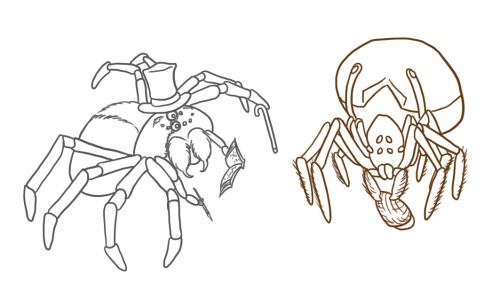
Concept: an RPG setting where the ruling class consists of talking spiders with a penchant for fancy hats. Not anthropomorphic spiders – just regular-looking spiders, about the size of a largeish dog, that are sapient and capable of speech. The setting isn’t a horrifying arachnid dystopia or anything; it’s actually a fairly conventional high fantasy milieu, except that all the royals, most of the hereditary nobility, and a fair chunk of the gentry are spiders, with all the cultural strangeness that implies.
(Stairs are considered lower class – the spiders climb, of course – so wealthy humans build multi-level dwellings with no stairs and develop their free-climbing skills in order to imitate their eight-legged neighbours. The spiders, for their part, pointedly ignore the handholds cunningly disguised as decorative moulding, because it’s rude to draw attention to a person’s disability.)
So my understanding of medieval history and society isn’t the best, BUT to my knowledge, feudalism and the social hierarchy of the time was at least partially an answer to the question of how to fund, maintain, and equip heavy cavalry. (And heavy infantry, and castles,and share power..). Okay, it’s way more complicated than that, but the interesting thing for us about the spider upper class is
1. Did (at least some of) the spider nobility historically fight as knights and ride horses?
OR
2. Was the development of spider nobility due to some other useful development, militarily, socially, ect.?
As fun as it is to imagine spiders riding around horses it seems a bit impractical? At least in the sense that it’s hard to imagine a spider holding a lance like a knight. But maybe they’re really good scouts. Spiders are probably naturally attuned to defending, if not managing, a castle, as it’s all one big death trap. So it’s not impossible that they have a similar role to human nobility.
I guess it also depends on what species of spiders we’re talking about, but that could lead to some regional/national flavor. Why people lead by bird-eating spiders developed differently than say black widows, or jumping spiders, will be the subject of historians and sociologists, even pop books such as Guns, Germs, and Silk.
That’s an excellent question, and one I’m going to toss back to the crowd as a prompt: how did spiders end up dominating the ranks of nobility in this setting?
There was very little central authority among the humans as in the not too distant past a great empire had fallen leaving the largest human nations as petty kingdoms.
The spider take over however was not by force but was economic. Spider silk is incredibly strong. Cloth woven from it is as strong as a Kevlar vest. Once the most intelligent spiders noticed how useful the silk was to humans it wasn’t long before they began to sell it. Spider armor and ropes dominated the markets allowing the spiders to transition to other goods, notably arms.
By this point high ranking and rich spiders were entering the human nobility. Some were gifted titles in return for service, others simply bought their way in. After this it would only take a couple generations for the spiders to begin consolidating new spider centric Kingdoms.
Of course it was not the great noble spiders that were making silk for the market. That “honor” belonged to the spider commoners, who before the adoption of human hierarchy served because they were smaller than the soon to be nobles and did not want to be eaten.
I think this one is my favourite because it posits a hierarchy among the spiders themselves. Historically, hunting was often a privilege reserved for the nobility (hence the development of “heroic poacher” myths in the mould of Robin Hood et al.); here, that practice is reflected in the non-web-building hunting spiders lording over their web-building subordinates. Presumably webs function as an analogue for argriculture in this scenario, with web-building serfs tending their hunting masters’ “crops”. Many high fantasy settings feature giant, non-sapient insects – perhaps the weavers raise them as livestock? What would a spider noble’s hunting preserve look like?
(I’m picturing differences in fashions as well. The “noble” hunting spiders would be as described above; the weaving spiders, conversely, would on average be about the size of a hefty housecat – with adorably squeaky voices to boot – and, rather than the high, stiff hats of the nobility, would favour soft cloth and knit caps in a variety of patterns. Can you picture a housecat-size orb weaver spider sporting a beanie or a cabbie hat?)
Now here’s a fun one: if there are spider commoners, how did the respective species’ social classes integrate – or not, as the case may be – following the spider nobility’s economic takeover of the human petty states?
I don’t know but all I can think of now is the idea of spider commoners starting a revolution to seize the means of production…because they are the means of production. If that doesn’t already upset the idea of the huntsmen spiders being in charge in the first place.
An important rule of RPG setting design: if there’s a class revolution in the offing, position your timelines such that it doesn’t boil over into open war until after the player characters have had a chance to get invested. If at all possible, arrange matters in play so the inciting incident can somehow be their fault.
(Honestly, if you’re not interested in affording your players the opportunity to be personally responsible for kicking off the Arachno-Communist Revolution, what are you even doing here?)
whenever I’m faced with a seemingly insurmountable problem I’m always looking for the clever hack that can resolve it by a neat use of lateral thinking such that the solution is ingenious and yet much simpler than you would expect, and I don’t know where I picked up this habit because it has literally never worked, the solution always ends up being do a shit-ton of work and then do a shit-ton more work and then spend years polishing the mess until it doesn’t matter any more.
I know where I have: from preparing for math tests and programming interviews!
Huh, I have the *opposite* problem. I keep doing things in obvious-but-tedious ways and then later finding out that there was a clever way that would have solved it in thirty seconds. I’ve started deliberately trying to keep in mind “there might be an easier way of doing this, look around for one first before resorting to the long way”.
Hmm. Maybe this is actually a slightly different thing: you guys are over-applying *lateral thinking*, while I am under-applying *automation*.
Tags:
#reply via reblog #embarrassment squick? #is the blue I see the same as the blue you see #proud citizen of The Future #101 Uses for Infrastructureless Computers #is where this usually tends to come up