lenyberry:

sinistropteryx:

So everyone knows that the whole “winged human” depiction of angels is more of a renaissance art thing, and angels are actually supposed to look like weird otherworldly monsters with many eyes and six wings and things like that.

Except that doesn’t sound otherworldly at all. That sounds like the most common group of animals in the world.

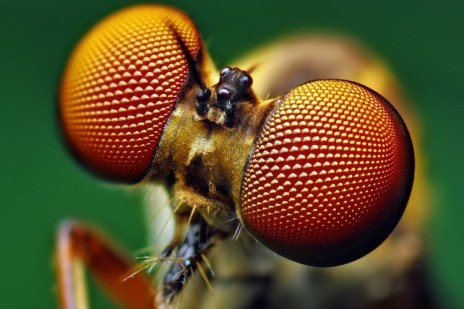
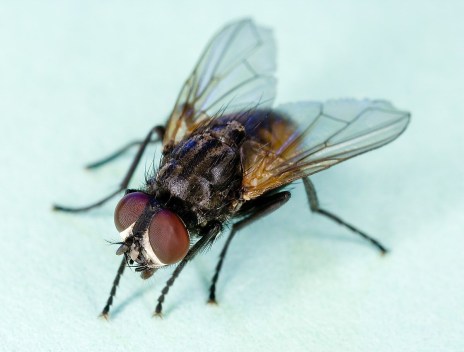
Many eyes? Insects can have thousands.

Six wings? While most winged insects have only 2-4, there’s a few species that can have 6.

Conclusion: angels are talking bugs. Thanks for coming to my ted talk

GIANT talking bugs. That explains the whole “be not afraid” thing…


Tags:

#angels #bugs #headcanons


{{next post in sequence}}

archonofquandaries:

prokopetz:

Tip: if anyone ever asks why you have some item on your person, just reply “well, you never know when you might need one”. It won’t work 100% of the time, but usually it successfully shifts the onus from you having to justify it to them having to argue that needing it is intrinsically unlikely, and most folks will let the matter drop rather than be put on the spot.

I have successfully used this tactic to justify carrying a spectroscope around with my in my bag at all times. 

A small one, at least. 


Tags:

#101 Uses for Infrastructureless Computers

abandonedgod asked: I’m sorry, as I already mentioned, I don’t know much about prosopagnosia but I’m genuinely interested in this topic. Would you mind if I asked if you can describe what you see when you look at other people’s faces? I hope I’m not being rude.

{{previous post in sequence}}


abandonedgod:

brin-bellway:

I don’t think it’s rude at all, especially since I pretty much volunteered myself as an Example Prosopagnosic by answering your post (in first-person, no less).

I was born faceblind, so I don’t know what it’s like having a functional facial recognition processor. That makes it trickier to describe, since all I have to contrast it with are second-hand descriptions (which, in turn, were also tricky for them to make).

It’s not that I don’t see faces. That’s a common misconception. (To the extent that having any conception about prosopagnosia is common, though I think there’s been a lot of improvement in general awareness lately.) I just looked at my brother’s face, sitting over on the other couch, and it’s all there: pink-red lips, pale skin, nose, pimple, brown eyes, bangs. Thinking of that fresh memory, I can almost picture it. Sometimes, just for a moment, I can grasp it, but mostly the memory is blurred and lacking in detail.

(It feels perfectly natural, having it blurry like that. So natural that I didn’t even notice I was doing it until I read other prosos’ descriptions of it. There are hardly ever faces in my dreams, and that feels perfectly natural too.)

Note that my brother is one of the easiest people to picture. I’ve known him for all sixteen years of his life, and when you’re reliant on general object processing to recognise faces, experience with a given face counts for a lot. After knowing my friend Jacqueline for four years, I was able to successfully recognise her when I bumped into her in a mall*. I wouldn’t have been able to do that if I’d had less experience with her and her appearance. It took me about a year, maybe a year and a half, to reliably tell her two teenage daughters apart, but after six years of knowing them I’m not sure how I ever managed to have trouble.

(It’s good that they were teenage. Children are tricky. They change quickly, so by the time you’ve built up enough experience with one face to recognise them semi-reliably, they’ve gone and gotten themselves a different one. When my brother was six, I couldn’t distinguish him from the other boys in his Cub Scout den. I didn’t feel a sense of recognition at my own face in the mirror until my mid-teens, 2 – 3 years after my face stopped developing. (Even now, I can still tell which other faces I would have trouble distinguishing from my own, had I less experience with mine. Plus, I’m not entirely sure how much of the ease is due to my large glasses.))

If you want to read more, try looking through my prosopagnosia tag or dhalim’s blog. For another, very detailed perspective, Bill Choisser’s classic book, Face Blind!, is freely available on the Internet. (I haven’t read that book since I was first learning about prosopagnosia seven years ago, so I don’t remember at exactly which points my mileage varied. I do remember it being interesting, though.) The general prosopagnosia tag on Tumblr (which I track, and is how I found your post) sometimes has good stuff in it, though there’s also the occasional non-proso using us to make Profound Statements about Seeing People for Who They Are Rather Than What They Look Like and artworks depicting faceless people (see paragraph 3).

*Malls are tough. Absolutely anyone could be in the mall, so you can’t use context to narrow the list of potential suspects. (“She’s really tall and she’s at my Girl Scout meeting, so she must be Jenny, because Jenny is the only really tall girl in my troop.”)

I honestly didn’t expect such a brilliant and detailed answer. Thank you so much for the answer, and for your patience! You’re great!

And I’ll definitely take a look on the links you shared with me.

Tags:

#(October 2014) #((but only a day after the previous post: they were right on the Sep-Oct boundary)) #conversational aglets #prosopagnosia #is the blue I see the same as the blue you see #the more you know

Ω

{{previous post in sequence}}


abandonedgod:

brin-bellway:

abandonedgod:

Even though I love this idea of Gallifreyans as a species having prosopagnosia, I’m still not sure if it’s actually true, since the Doctor has the habit of commenting his face and it’s distinct features (the chin, the eyebrows, i.e.) relatively often. I don’t know much about prosopagnosia and therefore I’m not sure whether it’s possible for people having/suffering from it to make such remarks. Does anybody know something more about that?

We can totally do that! In fact, things like distinctive eyebrows or sticky-out ears (the focus of Nine’s comments) are a big part of how we tell people apart.

Oh so it means that these comments don’t get against that brilliant idea! Thanks for the information!


Tags:

#(September 2014) #conversational aglets #prosopagnosia #Doctor Who


{{next post in sequence}}

john-boyaeger asked: My friend finally made me start watching Season 9 of RvB last night. I’ve been putting it off forever. I kept calling out peoples names and stuff right before they happened, so my friend was like “I thought you have never seen this…” to which I said “I haven’t, but I’ve virtually seen the whole thing in gif form on tumblr at this point.”

{{previous post in sequence}}


eponymous-rose:

brin-bellway:

eponymous-rose:

Hee! Yeah, I always wonder how much people are picking up by osmosis with the bajillion things I reblog. (And hey, I’m in the middle of rewatching s9 right now!)

I also wonder what my blog’s cross-section of the show looks like to the people who’ve never actually watched it. Or the people who quit somewhere in the first five seasons.

While watching the S6 finale, I paused it for a bit to consider how this fit into all the fandom osmosis I’d received. (The thing that made me stop was hearing “when it goes off, I’ll be fine”, which was the quote on that Alpha fanart I can’t find because Tumblr sucks. I believe my exact thought-words were “oh fuck it’s true he’s going to die”.) After thinking it over, I concluded that nobody was actually going to die, because they all appear in gifsets and/or reaction posts set later.

This conclusion turned out to be mostly incorrect. I had vastly underestimated how complicated things like “life” and “death” and “existence” get when Leonard Church enters the picture.

Yeah, you know things are gonna get weird when Church dies in the first few episodes of season one and it doesn’t phase him much. Dude’s got a complicated relationship with reality.

I just really really really love shows that take ridiculous premises and suddenly do a 180 and try to retcon them into something serious. Is that a thing? That should be a thing.


Tags:

#(September 2014) #conversational aglets #Red vs Blue #death tw #red vs blue s6 spoilers

Can you tell who this is?

{{previous post in sequence}}


{{Title link is: https://brinbellway.wordpress.com/2014/08/26/can-you-tell-who-this-is/

Title link should be: https://brinbellway.wordpress.com/2019/01/11/can-you-tell-who-this-is-5/ }}

rustingbridges:

Cut for length.

FWIW when I took one of those internet tests I scored inbetween average normie and average faceblind, which corresponds pretty well to my lived experience – e.g. I often don’t recognize somebody the second time I see them, but usually start to after that. I have no trouble recognizing my coworkers, but I get the two bald guys in sales who I occasionally exchange pleasantries with confused.

Assuming the friend is an actual friend, not just a friendly acquantaince (inside the dunbar group?), I think not recognizing them automatically would matter.<<

Well, whenever I hear people draw a distinction between “friend” and “friendly acquaintance”, they almost always define “friend” so strictly that I have had maybe one or two friends in the past decade, and no friends whose faces I saw frequently. (honestly, where do the friend-vs-acquaintance people find so many people who don’t respond to interpersonal problems by contemptuously brushing them off)

This is what I was trying to indicate with the dunbar group comment, should have made it more clear, sorry. I meant your 100 or 200 closest associates.

I can reliably recognise housemates at the mall, and have nobody else whose faces I have as much experience with as one would have with one’s band members. I can suspect that a person at the mall is my boss, but not with confidence; however, I’ve only been around him ~[3 gradually increasing to 8]† hours/week for 1.5 years, so it’s to be expected that I’m only in the middle stages of learning his face.

(He is not faceblind–or at least, he’s significantly better at keeping track of which customers are regulars than I am–but he still didn’t spot me. I asked about how his Boxing Day went a couple days later and confirmed that he was at the mall that day, so it probably was him I saw.)

Oh people totally miss each other all the time in big crowds, even facenormies. I think a lot of it is just never even noticing the other person at all. My impression is that faceblindness is when you can intentionally look someone in the face and not be sure, as opposed to more general lack of awareness (which I think is pretty common in normies).

If we can do a little evolutionary speculation here, in the ancestral environment, telling whether the guy you just saw in the forest is in your band, or a stranger, or the particular guy in the band who would really benefit if you weren’t around is a matter of life and death.<<

While this isn’t all that different from what I said, it does make it more clear why, if someone did mutate an unusually good facial-recognition ability, it would get selected for and eventually become the norm. If you don’t know whether someone’s an enemy and neither do they, that’s far less dangerous than if they know you’re enemies and you don’t.

Also, not knowing by the face whether someone’s in your tribe is something even mezzoprosopons or whatever the hell we’re calling them have to deal with these days, and they deal with it by simply making tribe members wear distinctive clothing when there’s a chance they might encounter an enemy [link].

(and I feel like a lot of the reasons that I refrain from murdering people would still apply to the stalking-a-rival-in-the-forest thing, but perhaps my threshold for “I am willing to accept X risk of Y-severity punishment†† in order to get the benefits of committing this crime” is unusually strict; probably an anxiety thing)

I’m no expert but my impression that what we know of hunter-gatherers is that they experience much higher rates of violent death than moderns do and that murder is an issue and violent conflict between groups tended to be irregular and probably involved a lot of raiding and the like.

So I’m not saying that everyone would be murdering their rivals in the forest, and hunter gatherer you might not, but I think the temptation to have your enemey experience a “hunting accident” was probably something that happened.

And I imagine groups probably did have significant elements of attire, possibly even some just for violence, but if your camp is getting raided by surprise you’re not going to have time for that.

So here’s a hypothetical: you are a 12 year old girl in said camp getting raided. You hide away so you don’t get caught, but you see a man coming. Your group consists of 50ish relations. Is that guy coming by your uncle once removed john? Or do you need to run? Sure, you’re not totally screwed if you can’t tell, but it sure would help.


Tags:

#I don’t think I have much to say in response to this but: #conversational aglets #prosopagnosia #evolution #murder cw

thegingermullet:

Did they ever reveal how Captain America was thawed? Because I’m picturing a bunch of Shield agents with hair dryers and I don’t think that’s quite right.


kbdownie:

I don’t think they’d want to microwave him so hair dryer is really the only remaining option. That’s how I’d do it.
badscienceshenanigans
Do you have a sciency way to accomplish this task?


badscienceshenanigans:

Well, let’s see. 

To thaw a 1.5 metric ton colossal squid frozen in a block of ice (the only way the fishermen who trawled the thing in could bring it home before it went bad), scientists put it in a big vat of brine just above 0 Celsius/32F. That allowed the fresh water to melt while still keeping the squid as cold as possible. Essential, since for a giant corpse with tentacles, certain parts are bound to thaw days before others and could become quite rotten before the rest comes out of the ice block if you’re not careful. 

HOWEVER Captain America was still alive, which complicates things. On the other hand, even supersoldiers are significantly smaller than this record-setting colossal squid. This helps thaw logistics somewhat.

Much like the squid, Captain America would have to be kept at a consistent temperature throughout his body in order to be thawed successfully. If his extremities were to thaw more than a minute or two before his heart and lungs were thawed and reactivated, the tissue wouldn’t have any oxygen and would quickly die. What a shame to bring back Steve Rogers only to have him be the poster boy for gangrene. Brain tissue becoming metabolically active before the cardiovascular system began functioning would be even more disastrous— possible permanent brain damage. 

And the GH-325 project was born

To keep his temperature as equal as possible across his entire body, something like the squid brine or (more likely) an antifreeze solution would be used. Immerse the Capsicle in brine until the entire unit is within a degree or two of thawing* to begin Phase II.

*Note that due to presence of salts, fats, protein, etc, the freezing point of meat is actually 28-29F. Apologies to non-US readers, sadly I only work with American meat and don’t know the freezing point of corpses/beef in Sane Country Units. That being said, Steve Rogers is 100% American meat. Fahrenheit shall be considered the appropriate unit for this project. 

At the thawing point, it’s important to consider life support functions. I don’t know how fast human tissue uses up oxygen at refrigerator-range temperatures, but I’m going to assume that the sooner you have oxygen circulating the better. A heart-lung machine would be needed to oxygenate and move the blood around for a while before the heart gets started back up. 

Meanwhile, because Captain America’s last un-frozen moments were spent deep underwater, there may be decompression issues at play. Whatever gas bubbles may have been present in his tissue are currently frozen in place, but when he thaws they can move about and create embolisms —> the bends. Better put him in a hyperbaric chamber just in case. 

Since Captain America regained consciousness in a recovery room rather than during the thaw process, it may be safe to assume that he was sedated and/or placed in a drug-induced coma during thaw. 

So at this point we’ve got a giant bathtub of brine, a heart-lung machine, oxygen canisters, lots of drugs, plus all the necessary monitoring equipment all inside a hyperbaric chamber. After thawing the antifreeze bath could be replaced with gradually warming water or saline solution in order to bring Captain America back up to normal body temperature. So many machines! This is US medicine at its finest.

Forced warm air blowers (hairdryers) are needed after Captain America is fully thawed, organ systems are reactivated, and he is brought back to normal body temperature. At this point it becomes necessary to dry and style Captain America and put him in period-appropriate jammies to sleep it off in a vintage hospital room. If you think hearing the wrong baseball game tipped him off fast, you should see him wake up with bad hair. 


sounds-simple-right:


magesmagesmages:

THIS IS THE BEST POST IN THE HISTORY OF EVERYTHING.


theladymonsters:

That being said, Steve Rogers is 100% American meat. Fahrenheit shall be considered the appropriate unit for this project. 


minim-calibre:

CANNOT STOP LAUGHING.


noxbat23:

“Much like the squid, Captain America…” – a sentence I never thought I’d read


Tags:

#pretty sure I’ve *seen* this before but I checked Siikr and it looks like I never actually reblogged it #fixing that now #Marvel #this probably deserves some warning tag but I am not sure what