So you’re telling me, all those years in which I’d be in a car desperate for the bathroom and they wouldn’t pull over, and I’d be frantically coming up with the dirtiest fantasies I could imagine, leaning against the window thinking about a spider queen stepping on me, and I thought it helped – all those times, it was PLACEBO, because I don’t have a PROSTATE?
…hmm. I’ve only encountered this from the other direction (having to *avoid* thinking too hard about sexy stuff when I *do* get to a bathroom), but I *have* encountered it. I don’t have a prostate (…as far as I know; barring some particularly subtle intersex condition), but I’m not sure how it could be placebo, since I wasn’t told to expect it.
Tags:
#reply via reblog #sexuality and lack thereof #is the blue I see the same as the blue you see #this probably deserves some warning tag but I am not sure what #unsanitary cw?
Did they ever reveal how Captain America was thawed? Because I’m picturing a bunch of Shield agents with hair dryers and I don’t think that’s quite right.
To thaw a 1.5 metric ton colossal squid frozen in a block of ice (the only way the fishermen who trawled the thing in could bring it home before it went bad), scientists put it in a big vat of brine just above 0 Celsius/32F. That allowed the fresh water to melt while still keeping the squid as cold as possible. Essential, since for a giant corpse with tentacles, certain parts are bound to thaw days before others and could become quite rotten before the rest comes out of the ice block if you’re not careful.
HOWEVER Captain America was still alive, which complicates things. On the other hand, even supersoldiers are significantly smaller than this record-setting colossal squid. This helps thaw logistics somewhat.
Much like the squid, Captain America would have to be kept at a consistent temperature throughout his body in order to be thawed successfully. If his extremities were to thaw more than a minute or two before his heart and lungs were thawed and reactivated, the tissue wouldn’t have any oxygen and would quickly die. What a shame to bring back Steve Rogers only to have him be the poster boy for gangrene. Brain tissue becoming metabolically active before the cardiovascular system began functioning would be even more disastrous— possible permanent brain damage.
And the GH-325 project was born
To keep his temperature as equal as possible across his entire body, something like the squid brine or (more likely) an antifreeze solution would be used. Immerse the Capsicle in brine until the entire unit is within a degree or two of thawing* to begin Phase II.
*Note that due to presence of salts, fats, protein, etc, the freezing point of meat is actually 28-29F. Apologies to non-US readers, sadly I only work with American meat and don’t know the freezing point of corpses/beef in Sane Country Units. That being said, Steve Rogers is 100% American meat. Fahrenheit shall be considered the appropriate unit for this project.
At the thawing point, it’s important to consider life support functions. I don’t know how fast human tissue uses up oxygen at refrigerator-range temperatures, but I’m going to assume that the sooner you have oxygen circulating the better. A heart-lung machine would be needed to oxygenate and move the blood around for a while before the heart gets started back up.
Meanwhile, because Captain America’s last un-frozen moments were spent deep underwater, there may be decompression issues at play. Whatever gas bubbles may have been present in his tissue are currently frozen in place, but when he thaws they can move about and create embolisms —> the bends. Better put him in a hyperbaric chamber just in case.
Since Captain America regained consciousness in a recovery room rather than during the thaw process, it may be safe to assume that he was sedated and/or placed in a drug-induced coma during thaw.
So at this point we’ve got a giant bathtub of brine, a heart-lung machine, oxygen canisters, lots of drugs, plus all the necessary monitoring equipment all inside a hyperbaric chamber. After thawing the antifreeze bath could be replaced with gradually warming water or saline solution in order to bring Captain America back up to normal body temperature. So many machines! This is US medicine at its finest.
Forced warm air blowers (hairdryers) are needed after Captain America is fully thawed, organ systems are reactivated, and he is brought back to normal body temperature. At this point it becomes necessary to dry and style Captain America and put him in period-appropriate jammies to sleep it off in a vintage hospital room. If you think hearing the wrong baseball game tipped him off fast, you should see him wake up with bad hair.
“Much like the squid, Captain America…” – a sentence I never thought I’d read
Tags:
#pretty sure I’ve *seen* this before but I checked Siikr and it looks like I never actually reblogged it #fixing that now #Marvel #this probably deserves some warning tag but I am not sure what
Now that I’ve walked everyone through the research I’ve done on captive big cat populations in the United States (all tagged #CrouchingTigerHiddenData) and a majority of the data that came out of it it, let’s talk about why it was important to examine on a practical level.
(Photo Credit: M. Hummel-Uzzi)
Big cats are iconic, beloved animals. It’s hard not to care about them and and about conserving them. The only way conservation strategies work is when they’re based on accurate data. The only way laws that keep people safe when dangerous animals are involved work is when they’re based on accurate data. In today’s world of “fake news’ and “alternative facts”, there is nothing more dangerous than actions based on misinformation. You’re probably following this blog specifically because of the insistence on data, citations, and sources.
So you should care about the big cat research I’ve done because what I’m telling you is that the dominant narrative in the United States – the one taken as fact by the zoo industry, the sanctuary groups, the animal advocacy organizations, and even our legislators – is mainly based on “facts” that aren’t real anymore. The effects of that are already tangible, and are primed to get a hell of a lot worse shortly. If you care about the conservation of big cats, or you want effective advocacy to ensure the welfare of captive big cats in the United States, this is a problem.
Here’s a summary of what I’ve personally been able to prove that goes against what’s “known” to be fact:
That all sounds pretty great, right? A major issue that did pose a lot of safety risk has been resolved successfully! There isn’t actually a captive big cat crisis in the United States!
And it is great. Except for the fact that the sanctuary industry and the animal rights groups aren’t talking about it. In fact, they’re still saying exactly the opposite: that there’s a huge problem involving tens of thousands of captive big cats that requires immediate action and support and lots of donations from the general public. Why would they do that?
Maybe they don’t know. After all, a lot of my write-ups did focus on the fact that privately owned exotic populations aren’t an easy topic to study. But… I was able to figure it out. Me, a lone researcher without funding or any professional backing, was able to compile data and assess the trends in it. Why haven’t these organizations that are so concerned about the captive big cat crisis in the country done the same work? My research was based on a lot of data and testimony derived directly from those organizations, so it’s not like they wouldn’t already have any easy time of it.
If the groups that are pushing legislation to “fix” the big cat crisis, or asking people to donate money to help them advocate for and rescue all the “backyard cats” being harmed by the crisis haven’t actually put in the effort to find out if their work is successful? That looks pretty negligent. The public trusts sanctuaries and their accrediting groups to be telling them the truth about the state of captive big cat issues in the United States, but all they’re currently doing is recycling a narrative that’s two-decades old.
The other option for what’s going on is less charitable. Maybe these organizations do know things have changed, and have chosen to mislead the public. There are certainly things that seem to imply that, like the tacit acknowledgement I found in court documents that there aren’t actually that many people breeding cubs unethically anymore. One of the most vocal sanctuaries even puts in their reports how much they’ve seen the need for rescue drop – and that most of their new animals are now coming from other USDA-licensed facilities – yet continues to put materials in front of congress about the plight of tens of thousands of big cats that need to be rescued from backyards and private owners in the United States. This is just a selection of statements currently on live, up-to-date websites maintained by sanctuary and animal advocacy groups about the “captive big cat crisis” right now, in 2019:
“An estimated 10,000 to 20,000 big cats languish in deplorable conditions in backyards, roadside zoos, and traveling exhibits throughout the US. Tigers and lions should not be pets or bred and exploited for profit. While some states have regulations that attempt to protect big cats, decades of experience have proven they don’t work.” – Big Cat Rescue
“By today’s environmental standards, a self-sustaining tiger population – based on 7,000 plus animals – would be considered a success story. However, when those 7,000 tigers are found in captivity – living outside of our public zoo system – it is considered a travesty.” – The Wild Animal Sanctuary
“An estimated 10,000 big cats are kept as pets and for profit in places like basements, backyards and roadside zoos throughout the U.S. today. In fact, the U.S. is thought to be home to more captive tigers than are found in the wild.” – The International Fund for Animal Welfare
“Most of the estimated 5,000 to 7,000 captive tigers in the U.S. are held at roadside and traveling zoos, pseudo-sanctuaries, and private menageries where they are subjected to extreme confinement and neglect.” – The Humane Society of the United States
“There are more tigers in backyards across the U.S. than in all of the zoos put together.” The Wildcat Sanctuary
A great example of how fast and loose a lot of these statements play with data and sourcing is that last quote. It’s attributed on the web page to Ron Tilson – AZA’s tiger guy – but he died in 2013 and I haven’t found a source yet for the statement they’re claiming he made. That’s maybe excusable if you’re just running a personal website, but that’s really low-quality work for a professional education and advocacy group dealing with big cat issues on a federal level.
Quotes like what are listed above are frequently seen used to promote legislation at a state and federal level, the best current example of which is the Big Cat Public Safety Act. I’ve broken down the most recent version of the bill (from the 115th Congress): while it’s marketed as a way to end the “big cat overpopulation crisis” in United States, what it would also do is place massive restrictions on the operation of zoological facilities holding big cats, and would potentially even effect the function of conservation breeding problems. (Bills that impact conservation work while trying to restrict pet ownership of big cats have occurred before – Michigan passed a bill in 2000 that has banned even AZA conservation breeding in the state for the past 19 years). The Big Cat Public Safety Act has been introduced in congress multiple times – and will be introduced again during 2019 – and the messaging is always focused on marketing two concepts to congresspeople: that they need to protect their constituents from the major safety risk posed by multiple thousands of big cats living secretly in backyards in their communities, and that they need to save these thousands of big cats from suffering in horrible living conditions. Those sound like really compelling arguments for passing a federal law … if you don’t know they’re all based on completely outdated information.
So what we’re left with is a really uncomfortable truth: either the major groups that are currently involved in captive big cat advocacy are completely out-of-touch with the reality of big cat populations in the United States, or they’re aware of it and purposefully misleading the public in order to fulfill their agendas. I don’t know which scenario is true. I can’t imagine the major animal advocacy groups don’t have the money and manpower to do follow-up studies on the efficacy of their own work. I also can’t imagine that sanctuary groups, the majority of whom do very good work, would lie to their supporters in order to get laws passed.
As someone who loves big cats and wants to see successful conservation work and effective advocacy done on their behalf that’s based on accurate and up-to-date information, on a practical level, it doesn’t matter. Whichever way you slice it, it’s a huge problem that all of the major organizations influencing what can be done with big cats in the United States are perpetuating massive amounts of misinformation and show no apparent interest in rectifying that situation.
Links to the full #CrouchingTigerHiddenData tumblr writeups and the research pieces are below the cut. If you think my work is important, please consider supporting it through Patreon or Ko-Fi.
#reblogging this one because it’s the one with the table of contents #interesting #tiger #debunking #this probably deserves some warning tag but I am not sure what
“My character had had his larynx ripped out by this wolf man, and so I made the slightly bold choice—which I thought was right—of talking like this,” Redmayne says, putting on the breathy, choked affectation he uses throughout the film. He adds that at the time he thought the voice suited the costume and elaborate sci-fi world of the film, but in retrospect can see that it may have been a bit much. “I won a prize for it for the worst performance of the year,” Redmayne adds, referring to his 2016 Razzie award for Worst Supporting Actor. “So, yeah, it was a pretty bad performance by all accounts.”
Eddie, sweetie – you’re breaking my heart. You’ve got to ignore the basics. You’ve got to know that you gave a tremendously OTT and dialled up performance in a tremendously OTT and dialled up film (which I continue to love from the depths of my being). You gave no fucks and threw yourself into it, and because of that people love your performance. I can confidently guarantee that you gave the best performance as a vocally impaired intergalactic overlord with monumental mother issues and stomping lizard servants ever committed to film. Own it!
okay but we’re ignoring the most important part of this interview
“My character had had his larynx ripped out by this wolf man, and so I made the slightly bold choice—which I thought was right—of talking like this,” Redmayne says, putting on the breathy, choked affectation he uses throughout the film.
THE ENTITLED WHOSE THROAT CAINE RIPPED OUT WAS BALEM THE WHOLE TIME
okay so you’ve unlocked one of my top five special interests just be aware
so jupiter ascending actually goes hard on the infodumping (which is why I get really annoyed by criticism that it’s hard to follow – if anything, the criticism should be that too much is explained and not enough is left to the audience), but there is one thing that’s never fully resolved (but it’s not plot relevant so it’s not the biggest deal)
anyway, this is what we know about caine:
he was born genetically defective and was sold to the Skyjackers (like, Space Air Force? with rocket boots and angel wings?) by his creator for cheap
he managed to rise to be a great Skyjacker anyway, despite his genetic deficiency
~something~ happened where he ripped the throat out of an Entitled. WHY he did it or WHO the Entitled was is never explained in canon.
he himself has no idea why he randomly went berserk and tried to kill someone, but everyone blamed it on his genetic defects and he believes them
his belief in his own inferiority and inherently violent nature is why he tries to avoid a relationship with jupiter. this is the context for the “I have more in common with a dog than I do with you”/ “I love dogs, I’ve always loved dogs” scene and THAT’S WHY IT ACTUALLY MAKES SENSE IN THE TEXT, FOLKS
also there’s that whole romantic scene after jupiter becomes an entitled where she’s like “so I’m an entitled now, does that mean you want to bite me?” and caine’s like “uhhh no? ….actually maybe” and she’s like “go ahead ;) ;) ;)”
for this he was stripped of his angel wings and exiled to a hostile prison colony planet until the events of the movie
so the fan theory for a long time was that balem was the entitled who caine attacked, and there’s an extension of that fan theory where one of his siblings – either kalique or titus, probably kalique because she’s way smarter – somehow mind-controlled or otherwise forced caine to attack balem as an assassination attempt, which is why he doesn’t remember why he did it
but ultimately it doesn’t actually matter to the plot? so it’s not a bad thing that it’s never resolved. but FAN THEORY #CONFIRMED.
I’m reblogging this since @bemusedlybespectacledprovides an A+ summary of the known facts surrounding Caine’s history and his attack on the no-longer-so-mysterious Entitled.
Cannot believe we are being gifted with new Jupiter Ascending canon in this godless year.
Tags:
#I have no strong feelings about Jupiter Ascending and was not actually paying all that much attention while Mom was watching it #but I think some of my followers will appreciate this #Jupiter Ascending #long post #this probably deserves some warning tag but I am not sure what
In my great-grandfather’s spy memoir we found this summer, he talks at length about how he was able, at the age of 30, to infiltrate the communist party by pretending to be an at-risk homeless teenager (yes, literally a “hello fellow commie teens!” move). He also explains, in great detail, how he was able to do this because he had an unusually youthful, round and baby-ish face….a face which has been passed down through the generations to me. (There’s also a long, long paragraph where he’s trying to explain to his intended audience and also to himself the overall concept of empathy as if it’s this strange foreign belief system.)
But that means that now, in our family, we justify all our skincare and make-up purchases by claiming they support our spy work, “How will I ever infiltrate the communist party without this $15 bottle of snail serum?”, or, approvingly after applying make-up, “I look ready to infiltrate the communist party!”
Or, specifically, in the context of a text I just got from my mother that said only, “I have to stop at ulta on the way home or I’ll lose my chance to infiltrate the communists”
Tags:
#anything that makes me laugh this much deserves a reblog #storytime #this probably deserves some warning tag but I am not sure what
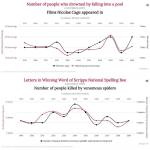
These charts were made to depict that correlation does not always equal causation, showing that although statistics always arise, they aren’t always necessarily useful.
Tags:
#fun with statistics #this probably deserves some warning tag but I am not sure what
smh look at these Canadians who desperately want to be Canadians just because they live in Canada. Who do you think you are?
Tags:
#our home and cherished land #anything that makes me laugh this much deserves a reblog #this should probably have some warning tag but I am not sure what
The other day, I went to an event hosted by a psychological/philosophical research organisation I’d ideally like to work for. While I was there, I spoke to one of the staff about psychometrics, and he recommended I take a Big 5 quiz occasionally to track changes in personality as I go about self-improving.
So, the next day, I took a test on Open Psychometrics. Today, since I decided I should give Tumblr some updates about my life, I thought I should probably post the results. This is what my personality looks like these days, according to this measurement, at least:
Or, in more familiar OCEAN terms: Openness at the 93rd percentile, Conscientiousness at 80th, Extroversion at 96th, Agreeableness at 83th, and Neuroticism (reverse of Emotional stability) at 9th.
If someone had told me two months ago, when I started down the path of self-improvement, that in that much time I could have an OCEAN of 93/80/96/83/09, I would have thought they were crazy. But, no, these results seem to fit with my lived experience. The only thing that makes it hard to be confident is how little time has passed, despite my subjective experience of it having been over a year.
The only thing that really surprised me is that my extroversion still scores so high, now that I spend far more time with myself. However, the test seemed to mostly base extroversion on how interested I am in other people, how much I care about their well being, and how socially competent I am – all of which are high enough to justify a 96th percentile result.
Definitely, far and away the thing I’m most pleased by is the conscientiousness result. Before I used to be consistently below average. Now I’m on the cusp of the top quintile. I’m absolutely thrilled, but I think I’d still like to improve it. In conscientiousness, I’m still significantly lagging behind my father, my grandfather, my great grandfather, Elon Musk, and other similar people. That’s where my target lies, and less than 95th percentile definitely isn’t cutting it.
I anticipate my neuroticism continuing to drop as I continue to cultivate stoic mental habits. However, I doubt it will drop much farther, or at least not for long. That’s because I also want to cultivate conscientiousness, which requires some amount of intolerance for substandard states.
In this chart, my Openness is reported as slightly reduced, but that’s only due to the aforementioned appearance of standards. I’m being more careful about which experiences to have (in the short term), because I care about directing myself through a long term growth arc. However, I am in a sense maximally open to experience. That is, in the long run, I want to inhabit the broadest range of possible human experiences. I want to understand the extent of the human mind, to the degree that I can, and part of that is investigating the range of qualia it can instantiate.
The only thing popularly considered good that I’m trying to bring down is Agreeableness, which seems to be somewhat working, as my agreeableness is now in the ‘mere’ 80s. I think that my target level is about 70th percentile. High enough that I consistently lean toward cooperation and good faith and treating others well. But I don’t want to be hyper conflict averse and I don’t want to take shit. Being small and inoffensive and never taking up space is no longer my aspiration.
Also, shout out to a few weeks back, when I was posting on Tumblr about looking for a therapist who might help me to develop a healthier approach to life over the course of a several weeks. At the time, I thought that hoping to have my life on track after three months of therapy was overly optimistic, even though I needed to improve at that rate.
And now, one month later, I’m fist-pumping to my top-quintile consientiousness, while going about setting my life in order in all directions. Oh, and I kind of got distracted priority-wise during this time, so I still haven’t found a therapist. Whoops. I still think it would be a good idea for me to find one. It’s just – apparently once I was the kind of person who would systematically look for a therapist, I became quite capable of healing myself.
At first I was leaning against saying anything, but since this post you’ve made a second one in which you also treat conflict-aversion as a form of hyper-agreeableness, so:
I was so surprised by this that I wondered if maybe we’d taken different OCEAN tests, but your link looks like it may in fact be *exactly* the one I took.
The questions on that test that look like they might be involved in the Agreeable stat pretty much boil down to “How much do you want to fight people?” and “How much do you care about others’ well-being for its own sake?”
I said that I often want to fight people† and that I’m uncertain whether I care about other people’s well-being for its own sake††, and that’s how I ended up with a 12th percentile Agreeableness score despite being highly conflict-averse.
(I tried again using your link, and this time I got 14th percentile.)
—
†Too cowardly and low-pain-tolerance to actually *do* it, but they didn’t *ask* *that*.
††But I’ve never *needed* to be certain of that: I want to live in an environment where people are nice to each other because then they’ll be nice to me, and to have any chance of getting that I need to do my part. It’s hard to tell whether I care about them per se precisely *because* it never actually comes up. (My attempts to use thought experiments to control for this tend to result in my brain going “I refuse to ever be sufficiently confident that being mean to someone won’t bite me in the ass later. There’s always the risk of having *misjudged* the level of risk.”)
Tags:
#reply via reblog #this probably deserves some warning tag but I am not sure what #is the blue I see the same as the blue you see
(status: I acknowledge that this is psychological damage from an extended period of financial hardship during formative years, but I nonetheless mostly endorse it)
Hmm. I seem to be having a bunch of thoughts and feelings about this.
There seems to be a…maybe “divide” is too strong a word, I don’t know. But…like, I called it “fuck-you money vs fuck-me money” in a post a while back. Even when the actions are the same, there’s this psychological difference in how people can approach it.
When I see FIRE people, they always frame it in terms of *freedom*. (It’s right there in the acronym: Financially *Independent*, Retiring Early.) But to me, it strikes me as being a thing about *safety*. “Enough money that you can run your household solely off the interest from your investments” can protect you from a lot of different problems, and *that’s* why the idea appeals to me.
A few weeks ago I saw some distant acquaintance-of-an-acquaintance on Tumblr (I don’t recall who) advising a young person with a high-paying job and relatively low expenses (Silicon Valley programmer, I think, or something like that) to go on some trips and enjoy themself, because they weren’t going to have this much disposable income again until their forties if not later. And it felt like a very weird framing to me, because…the way I see it, if future-me doesn’t have money to spare, then neither do I. I don’t have spare money unless I can afford to feed myself, and I can’t truly afford to feed myself unless I can afford to feed *all* of my selves.
16-year-old me got to eat because 7-year-old me’s dad put away some “”extra””, and eventually that “”extra”” was all he had left. Where is 33-year-old me getting *her* food from?
Because if the source isn’t me, then I don’t trust it to come through for her. I want to do all I can to make sure that, no matter who is or is not willing to employ her or for how much, 33-year-old me (and 44-year-old me, and 55-year-old me…) is fed and housed and so forth.
—
(This was going to be a tag ramble, but then I thought it should probably stay with the post if somebody reblogs it to respond or something. I’m just going to leave it in tag format.)
#this post probably partly inspired by my first anniversary of non-freelance employment #which is coming up soon #I think I will celebrate by scheduling the dental checkup I have been putting off for ~3 years because I didn’t feel I could afford it #(yes government healthcare does not cover dental) #(OHIP has some very weird-looking exceptions) #(this is probably the result of some kind of complicated political negotiation that I’m not sure I want to know the details of) #anyway a dental checkup seems like a good compromise between celebratory and practical #(and [practical celebrations are easier to enjoy]/[I find myself drawn to practical gifts these days anyway including gifts I buy for myself]) #((that safety thing manifests here especially)) #((the things I dream of buying these days are always things that protect you from something)) #((checkups that protect you from tooth damage and electric cars that protect you from rising oil prices and solar-powered phone chargers that protect you from power outages)) #((this I am much less sure I endorse)) #((I mean I think it is good to want practical things but it would also probably be good if I felt safe enough to want a few non-practical things too)) #(((sometimes on especially bad brain days I can’t even bring myself to play Flight Rising))) #(((that is currently the most common cause of my FR hiatuses))) #(((it used to be the most common cause was that I felt like playing some other game instead)))
Tags:
#tag rambles #adventures in human capitalism #this should probably have some warning tag but I am not sure what #I will put this in the tags though: #I was reading my Tumblr archive recently and *damn* 2014!me was having a hard time #she didn’t talk about it much in public but occasionally she couldn’t quite hold it in anymore and it leaked out into a post #I felt very sorry for her #basically what I’m saying is #hi 2022!me #I hope you’re in a good enough position that you can feel sorry for me rather than going ”yeah I still know that feel” #(but if so please do still provide for farther-future!us) #(just with a healthier frame of mind) #(maybe buy solar chargers *and* video games) #in which Brin has a job #(the following category tag was added retroactively:) #101 Uses for Infrastructureless Computers
Before we continue, I want to add the usual caveat that I actually don’t want to be right about these fandoms being dead. I like enthusiasm and energy and it’s a shame to see it vanish.
Mists of Avalon
Remember that period of time of about 15 years, where absolutely everybody read this book and was obsessed with it? It could not have been bigger, and the fandom was Anne Rice huge, overlapping for several years with USENET and the early World Wide Web…but it’s since petered out.
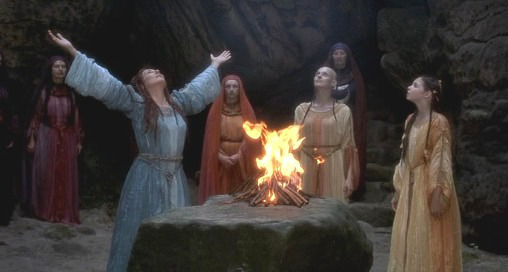
Mists of Avalon’s popularity may be due to the most excellent case of hitting a demographic sweet spot ever. The book was a feminist retelling of the Arthurian Mythos where Morgan Le Fay is the main character, a pagan from matriarchal goddess religions who is fighting against encroaching Christianity and patriarchal forms of society coming in with it. Also, it made Lancelot bisexual and his conflict is how torn he is about his attraction to both Arthur and Guinevere.
Remember, this novel came out in 1983 – talk about being ahead of your time! If it came out today, the reaction from a certain corner would be something like “it is with a heavy heart that I inform you that tumblr is at it again.”
Man, demographically speaking, that’s called “nailing it.” It used to be one of the favorite books of the kind of person who’s bookshelf is dominated by fantasy novels about outspoken, fiery-tongued redheaded women, who dream of someday moving to Scotland, who love Enya music and Kate Bush, who sell homemade needlepoint stuff on etsy, who consider their religious beliefs neo-pagan or wicca, and who have like 15 cats, three of which are named Isis, Hypatia, and Morrigan.
This type of person is still with us, so why did this novel fade in popularity? There’s actually a single hideous reason: after her death around 2001, facts came out that Marion Zimmer Bradley abused her daughters sexually. Even when she was alive, she was known for defending and enabling a known child abuser, her husband, Walter Breen. To say people see your work differently after something like this is an understatement – especially if your identity is built around being a progressive and feminist author.
Robotech
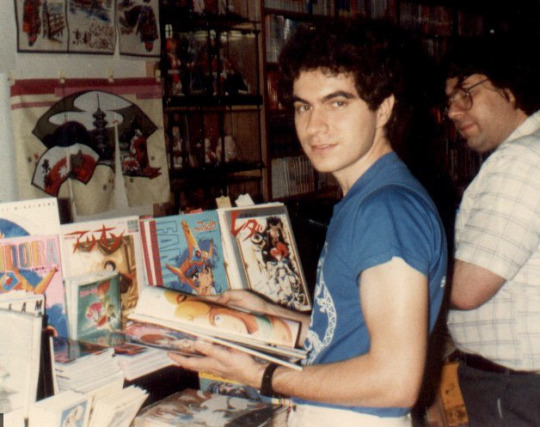
I try to break up my sections on dead fandoms into three parts: first, I explain the property, then explain why it found a devoted audience, and finally, I explain why that fan devotion and community went away. Well, in the case of Robotech, I can do all three with a single sentence: it was the first boy pilot/giant robot Japanimation series that shot for an older, teenage audience to be widely released in the West. Robotech found an audience when it was the only true anime to be widely available, and lost it when became just another import anime show. In the days of Crunchyroll, it’s really hard to explain what made Robotech so special, because it means describing a different world.
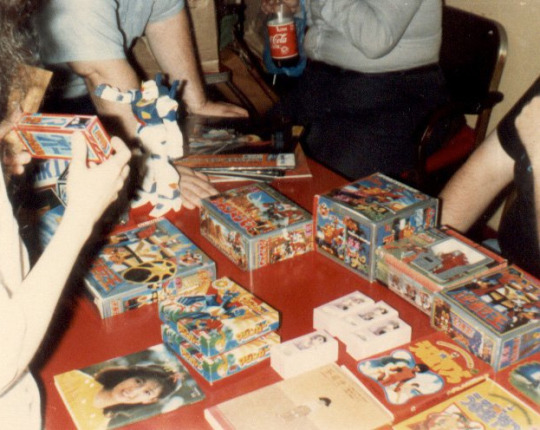
Try to imagine what it was like in 1986 for Japanime fans: there were barely any video imports, and if you wanted a series, you usually had to trade tapes at your local basement club (they were so precious they couldn’t even be sold, only traded). If you were lucky, you were given a script to translate what you were watching. Robotech though, was on every day, usually after school. You want an action figure? Well, you could buy a Robotech Valkyrie or a Minmei figure at your local corner FAO Schwartz.
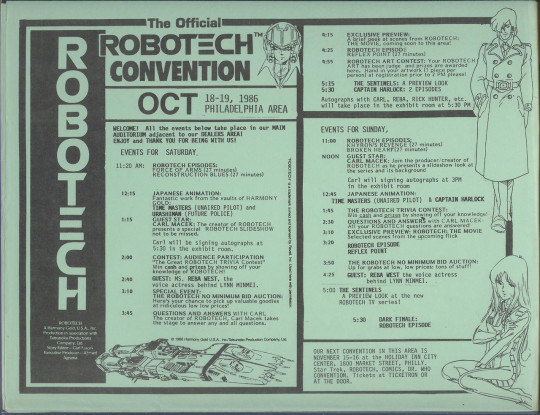
However, the very strategy that led to it getting syndicated is the very reason it was later vilified by the purists who emerged when anime became a widespread cultural force: strictly speaking, there actually is no show called “Robotech.” Since Japanese shows tend to be short run, say, 50-60 episodes, it fell well under the 80-100 episode mark needed for syndication in the US. The producer of Harmony Gold, Carl Macek, had a solution: he’d cut three unrelated but similar looking series together into one, called “Robotech.” The shows looked very similar, had similar love triangles, used similar tropes, and even had little references to each other, so the fit was natural. It led to Robotech becoming a weekday afternoon staple with a strong fandom who called themselves “Protoculture Addicts.” There were conventions entirely devoted to Robotech. The supposed shower scene where Minmei was bare-breasted was the barely whispered stuff of pervert legend in pre-internet days. And the tie in novels, written with the entirely western/Harmony Gold conception of the series and which continued the story, were actually surprisingly readable.
The final nail in the coffin of Robotech fandom was the rise of Sailor Moon, Toonami, Dragonball, and yes, Pokemon (like MC Hammer’s role in popularizing hip hop, Pokemon is often written out of its role in creating an audience for the next wave of cartoon imports out of insecurity). Anime popularity in the West can be defined as not a continuing unbroken chain like scifi book fandom is, but as an unrelated series of waves, like multiple ancient ruins buried on top of each other (Robotech was the vanguard of the third wave, as Anime historians reckon); Robotech’s wave was subsumed by the next, which had different priorities and different “core texts.” Pikachu did what the Zentraedi and Invid couldn’t do: they destroyed the SDF-1.
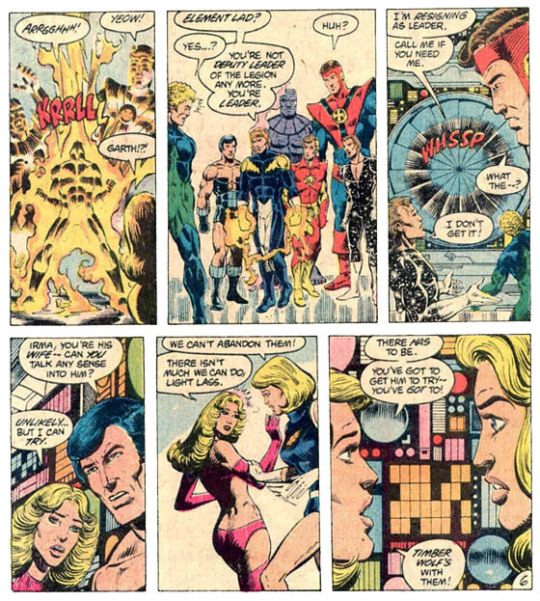
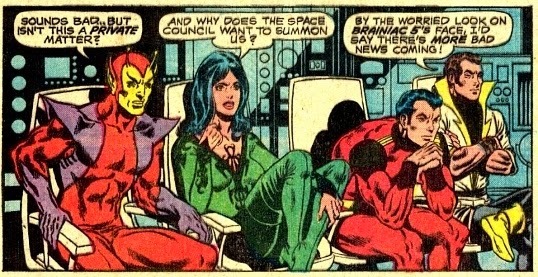
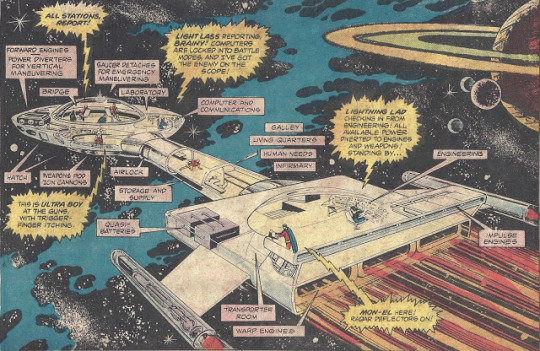
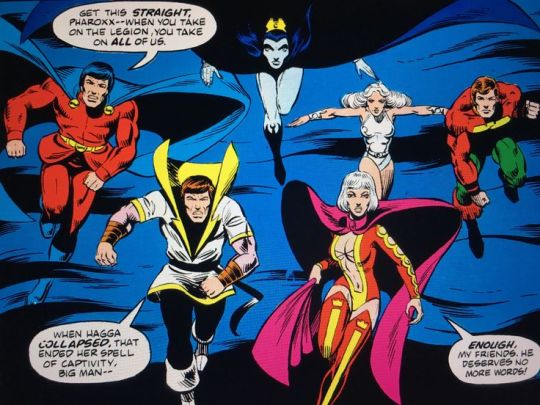
Legion of Super-Heroes
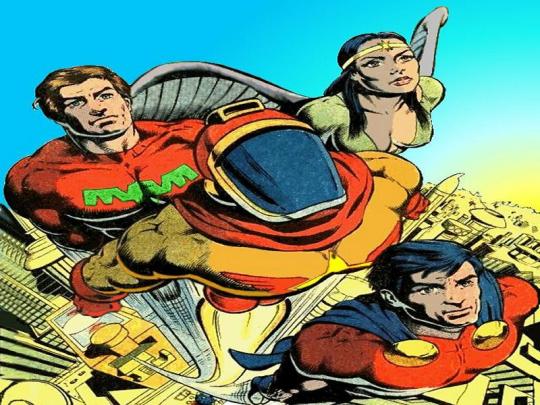
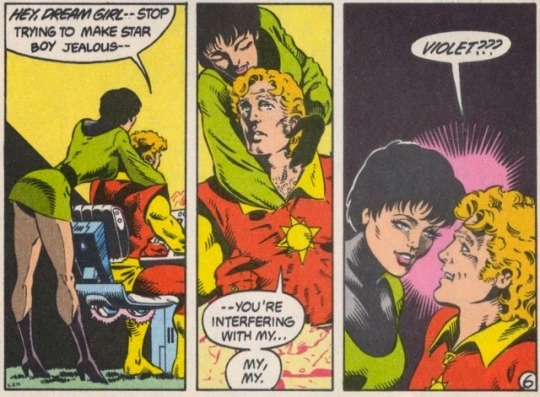
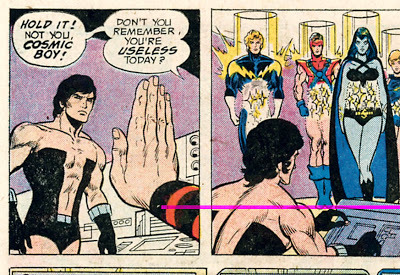
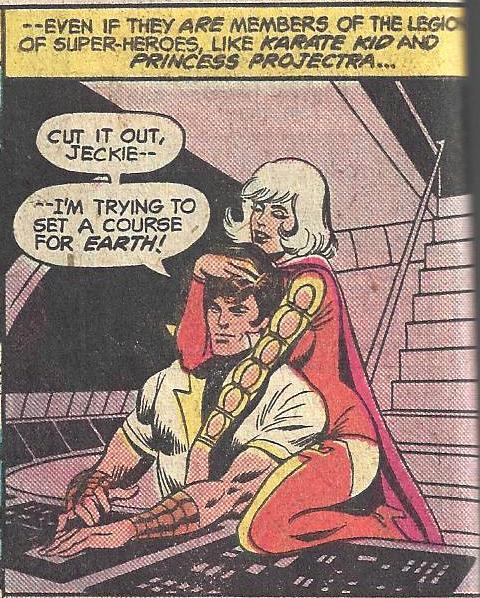
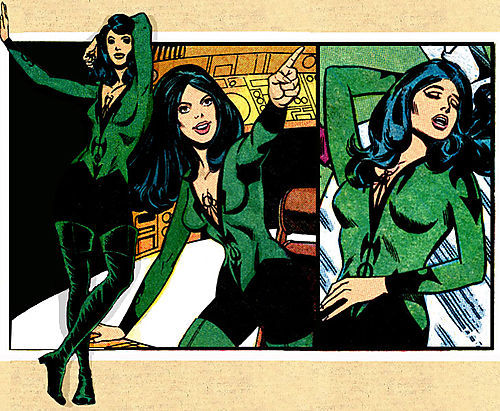
Legion of Superheroes was comic set in the distant future that combined superheroes with space opera, with a visual aesthetic that can best be described as “Star Trek: the Motion Picture, if it was set in a disco.”
I’ve heard wrestling described as “a soap opera for men.” If that’s the case, then Legion of Super-Heroes was a soap opera fornerds. The book is about attractive 20-somethings who seem to hook up all the time. As a result, it had a large female fanbase, which, I cannot stress enough, is incredibly unusual for this era in comics history. And if you have female fans, you get a lot of shipping and slashfic, and lots of speculation over which of the boy characters in the series is gay. The fanon answer is Element Lad, because he wore magenta-pink and never had a girlfriend. (Can’t argue with bulletproof logic like that.) In other words, it was a 1970s-80s fandom that felt much more “modern” than the more right-brained, bloodless, often anal scifi fandoms that existed around the same time, where letters pages were just nitpicking science errors by model train and elevator enthusiasts.
Legion Headquarters seemed to be a rabbit fuck den built around a supercomputer and Danger Room. Cosmic Boy dressed like Tim Curry in Rocky Horror. There’s one member, Duo Damsel, who can turn into two people, a power that, in the words of Legion writer Jim Shooter, was “useful for weird sex…and not much else.”
LSH was popular because the fans were insanely horny.
This is, beyond the shadow of a doubt, the thirstiestfandom of all time.
You might think I’m overselling this, but I really think that’s an under-analyzed part of how some kinds of fiction build a devoted fanbase.
For example, a big reason for the success of Mass Effect is that everyone has a favorite girl or boy, and you have the option to romance them. Likewise, everyone who was a fan of Legion remembers having a crush. Sardonic Ultra Boy for some reason was a favorite among gay male nerds (aka the Robert Conrad Effect). Tall, blonde, amazonian telepath Saturn Girl, maybe the first female team leader in comics history, is for the guys with backbone who prefer Veronica over Betty. Shrinking Violet was a cute Audrey Hepburn type. And don’t forget Shadow Lass, who was a blue skinned alien babe with pointed ears and is heavily implied to have an accent (she was Aayla Secura before Aayla Secura was Aayla Secura). Light Lass was commonly believed to be “coded lesbian” because of a short haircut and her relationships with men didn’t work out. The point is, it’s one thing to read about the adventures of a superteam, and it implies a totally different level of mental and emotional involvement to read the adventures of your imaginary girlfriend/boyfriend.
Now, I should point out that of all the fandoms I’ve examined here, LSH was maybe the smallest. Legion was never a top seller, but it was a favorite of the most devoted of fans who kept it alive all through the seventies and eighties with an energy and intensity disproportionate to their actual numbers. My gosh, were LSH fans devoted! Interlac and Legion Outpost were two Legion fanzines that are some of the most famous fanzines in comics history.
If nerd culture fandoms were drugs, Star Wars would be alcohol, Doctor Who would be weed, but Legion of Super-Heroes would be injecting heroin directly into your eyeballs. Maybe it is because the Legionnaires were nerdy, too: they played Dungeons and Dragons in their off time (an escape, no doubt, from their humdrum, mundane lives as galaxy-rescuing superheroes). There were sometimes call outs to Monty Python. Basically, the whole thing had a feel like the dorkily earnest skits or filk-singing at a con. Legion felt like it’s own fan series, guest starring Patton Oswalt and Felicia Day.
It helped that the boundary between fandom and professional was incredibly porous. For instance, pro-artist Dave Cockrum did covers for Legion fanzines. Former Legion APA members Todd and Mary Biernbaum got a chance to actually write Legion, where, with the gusto of former slashfic writers given the keys to canon, their major contribution was a subplot that explicitly made Element Lad gay. Mike Grell, a professional artist who got paid to work on the series, did vaguely porno-ish fan art. Again, it’s hard to tell where the pros started and the fandom ended; the inmates were running the asylum.
Mostly, Legion earned this devotion because it could reward it in a way no other comic could. Because Legion was not a wide market comic but was bought by a core audience, after a point, there were no self-contained one-and-done Legion stories. In fact, there weren’t even really arcs as we know it, which is why Legion always has problems getting reprinted in trade form. Legion was plotted like a daytime soap opera: there were always five different stories going on in every issue, and a comic involved cutting between them. Sure, like daytime soap operas, there’s never a beginning, just endless middles, so it was totally impossible for a newbie to jump on board…but soap operas know what they are doing: long term storytelling rewards a long term reader.
This brings me to today, where Legion is no longer being published by DC. There is no discussion about a movie or TV revival. This isamazing. Comics are a world where the tiniest nerd groups get pandered to: Micronauts, Weirdworld, Seeker 3000, and Rom have had revival series, for pete’s sake. It’s incredible there’s no discussion of a film or TV treatment, either; friggin Cyborg from New Teen Titans is getting a solo movie.
Why did Legion stop being such a big deal? Where did the fandom that supported it dissolve to? One word: X-Men. Legion was incredibly ahead of its time. In the 60s and 70s, there were barely any “fan” comics, since superhero comics were like animation is today: mostly aimed at kids, with a minority of discerning adult/teen fans, and it was success among kids, not fans, that led to something being a top seller (hence, “fan favorites” in the 1970s, as surprising as it is to us today, often did not get a lot of work, like Don MacGregor or Barry Smith). But as newsstands started to push comics out, the fan audience started to get bigger and more important…everyone else started to catch up to the things that made Legion unique: most comics started to have attractive people who paired up into couples and/or love triangles, and featured extremely byzantine long term storytelling. If Legion of Super-Heroes is going to be remembered for anything, it’s for being the smaller scale “John the Baptist” to the phenomenon of X-Men, the ultimate “fan” comic.
The other thing that killed Legion, apart from Marvel’s Merry Mutants, that is, was the r-word: reboots. A reboot only works for some properties, but not others. You reboot something when you want to find something for a mass audience to respond to, like with Zorro, Batman, or Godzilla.
Legion, though, was not a comic for everybody, it was a fanboy/girl comic beloved by a niche who read it for continuing stories and minutiae (and tojack off, and in some cases, jill off). Rebooting a comic like that is a bad idea. You do not reboot something where the main way you engage with the property, the greatest strength, is the accumulated lore and history. Rebooting a property like that means losing the reason people like it, and unless it’s something with a wide audience, you only lose fans and won’t get anything in return for it. So for something like Legion (small fandom obsessed with long form plots and details, but unlike Trek, no name recognition) a reboot is the ultimate Achilles heel that shatters everything, a self-destruct button they kept hitting over and over and over until there was nothing at all left.
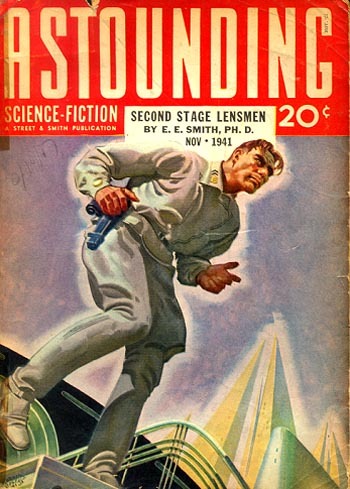
E. E. Smith’s Lensman Novels
The Lensman series is like Gil Evans’s jazz: it’s your grandparents’ favorite thing that you’ve never heard of.
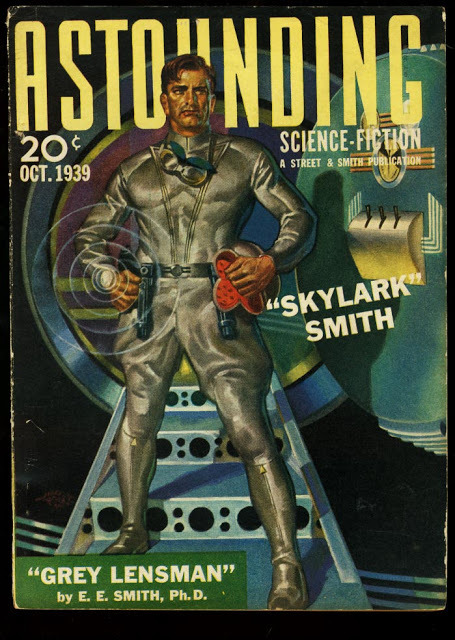
I mean, have you ever wondered exactly what scifi fandom talked about before the rise of the major core texts and cultural objects (Star Trek, Asimov, etc)? Well, it was this. Lensmen was the subject of fanfiction mailed in manilla envelopes during the 30s, 40s, and 50s (some of which are still around). If you’re from Boston, you might recognize that the two biggest and oldest scifi cons there going back to the 1940s, Boskone (Boscon, get it?) and Arisia, are references to the Lensman series. This series not only created space opera as we know it, but contributed two of the biggest visuals in scifi, the interstellar police drawn from different alien species, and space marines in power armor.
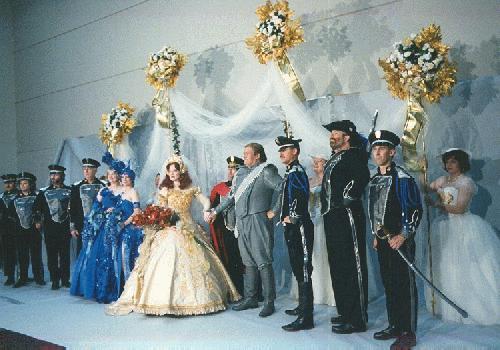
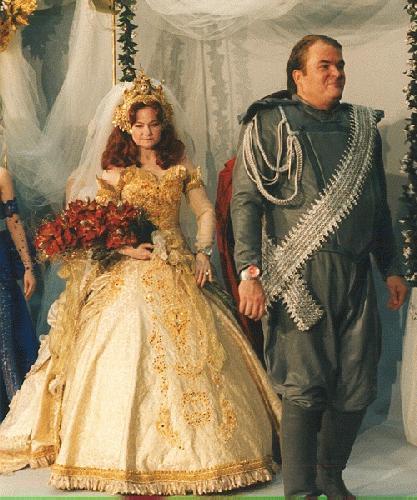
My favorite sign of how big this series was and how fans responded to it, was a great wedding held at Worldcon that duplicated Kimball Kinnison and Clarissa’s wedding on Klovia. This is adorable:
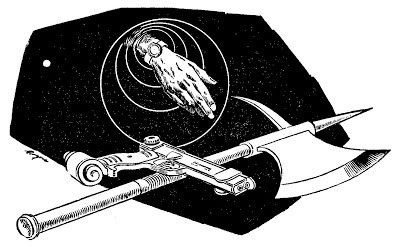
The basic story is pure good vs. evil: galactic civilization faces a crime and piracy wave of unprecedented proportions from technologically advanced pirates (the memory of Prohibition, where criminals had superior firearms and faster cars than the cops, was strong by the mid-1930s). A young officer, Kimball Kinnison (who speaks in a Stan Lee esque style of dialogue known as “mid-century American wiseass”), graduates the academy and is granted a Lens, an object from an ancient mystery civilization, who’s true purpose is unknown.
Lensman Kinnison discovers that the “crime wave” is actually a hostile invasion and assault by a totally alien culture that is based on hierarchy, intolerant of failure, and at the highest level, is ruled by horrifying nightmare things that breathe freezing poison gases. Along the way, he picks up allies, like van Buskirk, a variant human space marine from a heavy gravity planet who can do a standing jump of 20 feet in full space armor, Worsel, a telepathic dragon warrior scientist with the technical improvisation skills of MacGyver (who reads like the most sadistically minmaxed munchkinized RPG character of all time), and Nandreck, a psychologist from a Pluto-like planet of selfish cowards.
The scale of the conflict starts small, just skirmishes with pirates, but explodes to near apocalyptic dimensions. This series has space battles with millions of starships emerging from hyperspacial tubes to attack the ultragood Arisians, homeworld of the first intelligent race in the cosmos. By the end of the fourth book, there are mind battles where the reflected and parried mental beams leave hundreds of innocent bystanders dead. In the meantime we get evil Black Lensmen, the Hell Hole in Space, and superweapons like the Negasphere and the Sunbeam, where an entire solar system was turned into a vacuum tube.
It’s not hard to understand why Lensmen faded in importance. While the alien Lensmen had lively psychologies, Lensman Kimball Kinnison was not an interesting person, and that’s a problem when scifi starts to become more about characterization. The Lensman books, with their love of police and their sexism (it is an explicit plot point that the Lens is incompatible with female minds – in canon there are no female Lensmen) led to it being judged harshly by the New Wave writers of the 1960s, who viewed it all as borderline fascist military-scifi establishment hokum, and the reputation of the series never recovered from the spirit of that decade.
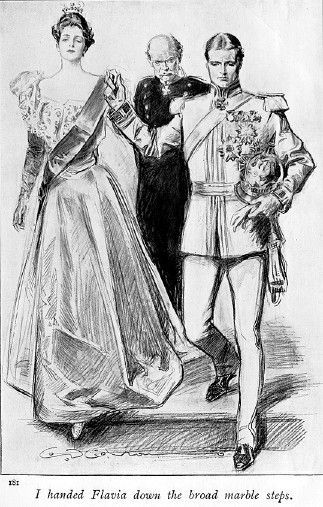
Prisoner of Zenda
Prisoner of Zenda is a novel about a roguish con-man who visits a postage-stamp, charmingly picturesque Central European kingdom with storybook castles, where he finds he looks just like the local king and is forced to pose as him in palace intrigues. It’s a swashbuckling story about mistaken identity, swordfighting, and intrigue, one part swashbuckler and one part dark political thriller.
The popularity of this book predates organized fandom as we know it, so I wonder if “fandom” is even the right word to use. All the same, it inspired fanatical dedication from readers. There was such a popular hunger for it that an entire library could be filled with nothing but rip-offs of Prisoner of Zenda. If you have a favorite writer who was active between 1900-1950, I guarantee he probably wrote at least one Prisoner of Zenda rip-off (which is nearly always the least-read book in his oeuvre). The only novel in the 20th Century that inspired more imitators was Sherlock Holmes. Robert Heinlein and Edmond “Planet Smasher” Hamilton wrote scifi updates of Prisoner of Zenda. Doctor Who lifted the plot wholesale for the Tom Baker era episode, “Androids of Tara,” Futurama did this exact plot too, and even Marvel Comics has its own copy of Ruritania, Doctor Doom’s Kingdom of Latveria. Even as late as the 1980s, every kids’ cartoon did a “Prisoner of Zenda” episode, one of the stock plots alongside “everyone gets hit by a shrink ray” and the Christmas Carol episode.
Prisoner of Zenda imitators were so numerous, that they even have their own Library of Congress sub-heading, of “Ruritanian Romance.”
One major reason that Prisoner of Zenda fandom died off is that, between World War I and World War II, there was a brutal lack of sympathy for anything that seemed slightly German, and it seems the incredibly Central European Prisoner of Zenda was a casualty of this. Far and away, the largest immigrant group in the United States through the entire 19th Century were Germans, who were more numerous than Irish or Italians. There were entire cities in the Midwest that were two-thirds German-born or German-descent, who met in Biergartens and German community centers that now no longer exist.
Kurt Vonnegut wrote a lot about how the German-American world he grew up in vanished because of the prejudice of the World Wars, and that disappearance was so extensive that it was retroactive, like someone did a DC comic-style continuity reboot where it all never happened: Germans, despite being the largest immigrant group in US history, are left out of the immigrant story. The “Little Bohemias” and “Little Berlins” that were once everywhere no longer exist. There is no holiday dedicated to people of German ancestry in the US, the way the Irish have St. Patrick’s Day or Italians have Columbus Day (there is Von Steuben’s Day, dedicated to a general who fought with George Washington, but it’s a strictly Midwest thing most people outside the region have never heard of, like Sweetest Day). If you’re reading this and you’re an academic, and you’re not sure what to do your dissertation on, try writing about the German-American immigrant world of the 19th and 20th Centuries, because it’s a criminally under-researched topic.
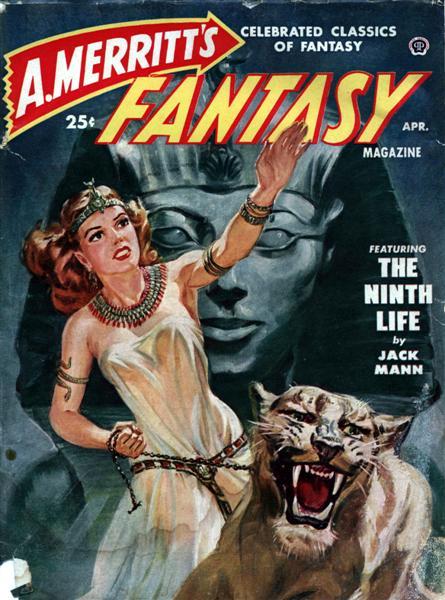
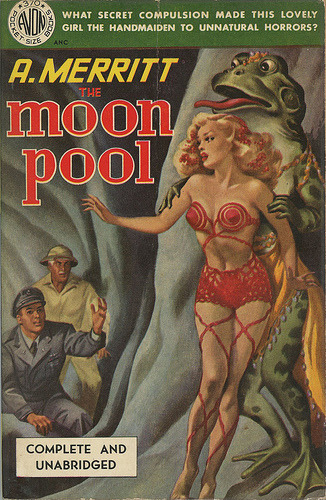
A. Merritt
Pop quiz: who was the most popular and influential fantasy author during the 1930s and 40s?
If you answered Tolkien or Robert E. Howard, you’re wrong – it was actually Abraham Merritt. He was the most popular writer of his age of the kind of fiction he did, and he’s since been mostly forgotten. Gary Gygax, creator of Dungeons and Dragons, has said that A. Merritt was his favorite fantasy and horror novelist.
Why did A. Merritt and his fandom go away, when at one point, he was THE fantasy author? Well, obviously one big answer was the 1960s counterculture, which brought different writers like Tolkien and Lovecraft to the forefront (by modern standards Lovecraft isn’t a fantasy author, but he was produced by the same early century genre-fluid effluvium that produced Merritt and the rest). The other answer is that A. Merritt was so totally a product of the weird occult speculation of his age that it’s hard to even imagine him clicking with audiences in other eras. His work is based on fringe weirdness that appealed to early 20th Century spiritualism and made sense at the time: reincarnation, racial memory, an obsession with lost race stories and the stone age, and weirdness like the 1920s belief that the Polar Arctic is the ancestral home of the Caucasian race. In other words, it’s impossible to explain Merritt without a ton of sentences that start with “well, people in the 1920s thought that…” That’s not a good sign when it comes to his universality.
That’s it for now. Do you have any suggestions on a dead fandom, or do you keep one of these “dead” fandoms alive in your heart?
I’m still in the Lensman fandom! It’s trash, but it’s *my* trash.
Tags:
#interesting #long post #history #the more you know #(I’d vaguely heard of Mists of Avalon and I’d heard the name of Lensman but that was about it) #I recommend the other posts in the series too #there is probably some warning tag I should put on this but I am not sure what