xenosaurus:
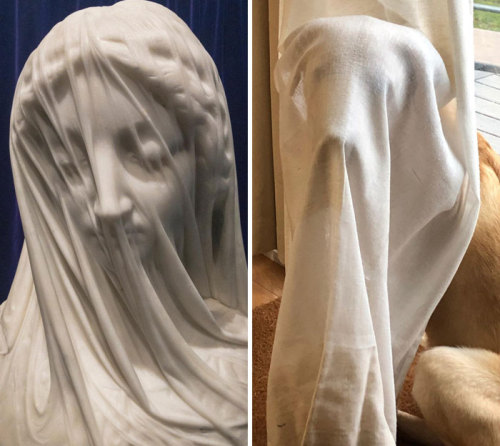
I’m working on a concept for angels as a type of undead— human corpses animated by light.
They can’t see, having been blinded by the brightness of their transformation, and the illusion of wings comes from cuts down the length of their spine, allowing light to escape. Much like vampires, they maintain some semblance of their living personality, at least at first, and need to eat something special— in their case, the magic in the flesh of other undead creatures.
The setting I’m making them for sees them as a terrifying necessary evil in places where they’re plentiful, as they hunt worse threats, but they’re often misinterpreted as holy defenders in places where they’re scarce.
xenosaurus:
They definitely are NOT defenders of humanity, especially as they get older and their minds start to wear down. Older angels can rarely tell individual people apart, stop communicating entirely, and are known to kill people who have even been NEAR other undead because they smell like food.
Eventually, if they haven’t been hunted down by humans to make them stop, they start trying to hunt other angels and get killed that way.
xenosaurus:
Vampires in this setting are the whole package— hypnotic mind control, shape shifting, making thralls, superhuman strength, generally incredibly hard to kill. Light weakens but does not kill them, at least when it’s normal sunlight.
Humans struggle hard to deal with even a few of them, but angels pry those suckers from their lairs like shucking oysters and devour them.
xenosaurus:
Angels happen when someone is killed with light without their body being destroyed, which is very very hard to do by accident. The setting has a few powerful entities living outside society who use magic like that, and at one point, angels were people who pissed them off.
Of course, angels are very useful, especially when they’re young. There are some groups that send people out to bother entities of light on purpose, and eventually a ritual for making one without outside “help” was developed.
Human-created angels are usually either volunteers from cults that think of angels as holy creatures, or people nobody would miss being turned into vampire hunters against their will. You can tell the difference by how the cuts on their back are made— the cults use lines of carved runes, while sketchy alchemists make straight cuts on either side of the spine. Angels made by pissed off non-human entities usually claw at their backs until they tear the skin, so their “wings” are jagged.
xenosaurus:
[ID: reply from @neojet280 reading “How long does it take for them to lose their mind after the turn into angels? Years? Decades? Centuries?]
Good question! Generally the Brain Weird starts to kick in after a decade or two, and you get to the point where they’re not really themselves anymore by 50 years. By 100 years in, they stop behaving like social creatures, and from there it depends on the individual how quickly they stop being safe to be around.
Mental decline in the undead is universal, but timeframes vary! Vampires remain functional for centuries and lose themselves around 500-600 years, while ghouls rarely maintain any personality by the end of the second year and revenants can only function without being puppeted for a decade or two.
xenosaurus:
The quick and dirty of the four types of undead:
Vampires— robust supernatural powers, keep their minds for centuries, created by other vampires via biting, feed on human blood (animal blood is not sufficient)
Angels— light magic, minds are lost by 150 years, created by killing a person with light, feed on the bodies of other undead
Ghouls— can keep going with huge pieces of their bodies missing, mindless by their second winter, spreads like a bacteria, feeds on any living flesh
Revenant— powers vary, become empty puppets by 15-20 years in, created by human magic to be undead slaves, draw energy from their summoner or can be fed the flesh of magical creatures
xenosaurus:
The plot of this is about a city that suffers a flood and finds itself abruptly overrun with ghouls. This leads to the local alchemist’s guild kidnapping people to make angels, which gets the vampires involved, which attracts the older angels, and so on.
xenosaurus:
I’m thinking about this setting again! Today’s world building bit:
Vampires do have a strong negative association with garlic, but not because of anything to do with the garlic itself. Vampire hunters have a potion they take that makes their blood highly toxic to vampires, and one of the side effects is sweat that reeks of garlic. As this isn’t commonly understood by the common people, rumors spread that vampire hunters were keeping garlic in their clothes to ward them off.
xenosaurus:
I’m working on this again, so I gave it a name— a sunken pyre! monster hunters use funeral pyres to burn the bodies of people killed by ghouls or vampires before they can wake back up as the undead, and a failed job or out of control situation is often euphemistically referred to as a pyre getting rained on or otherwise trying to start a fire using damp wood.
A sunken pyre, being underwater, would be a VERY dire situation. The plot also starts with a literal flood, so, twofold!
xenosaurus:
As I work on the human characters, I’m also developing monster hunting organizations! First off— the ones with the dogs.
The Graveyard Houndsmen are a primarily rural brotherhood, formed to deal with ghoul outbreaks centuries ago. While not a strictly religious order, their work is highly ritualized and most of their traditions are safety rules turned into superstitions.
The Houndsmen adopt and breed dogs that have survived attacks by ghouls near graveyards, unknowingly breeding for resistance to the blight of the undead while believing the animals themselves to be supernatural— church grims. Because these dogs are often strays, the breeding lines vary wildly in traits.
The members of this order take vows of chastity and refuse to see doctors, as they are virtually all infected with the undying plague, the poorly-understood magical phenomenon that turns the dying into ghouls. The curse is in the blood and can be sexually transmitted or passed to a child that is conceived by them. (Some houndsmen exploit a loophole by having non-reproductive sex with each other, though. Don’t be a snitch, the head of the chapter doesn’t need to know.)
Because the order is a lifelong commitment, Houndsmen give up their family names, all using “Grim” as a surname. The majority of them are men, but women are not banned from the order unless they have living children.
xenosaurus:
The Houndsmen are well-loved by the communities they serve, in spite of being a bit odd and intense. Being entrusted with one of their hunting dogs that has been injured or grown too old to work is considered a huge honor, as it is believed that the grim’s spirit will protect the home of those who cared for it after its passing. There’s even a popular fairy tale about a child turning around their family’s fortunes by being kind to a stray dog that turns out to be a Houndsman’s companion!
The Houndsmen are rare in larger cities, where cremation of the dead is mandatory to avoid ghoul outbreaks. Their reputation is damaged somewhat by being seen by city folk as similar to the next monster hunting group I’m going to talk about— the Keepers of the Undying Light, a very ethically ambiguous order of alchemists that deal with vampires. They were the original creators of the ritual to make angels without outside help!
xenosaurus:
The Keepers are a broad and diverse organization, most of which operates in secrecy. The alchemists rarely do much fighting themselves, instead working with angels, revenants, and hired help to accomplish their goals. While their public goals and general mission are positive, they have a corruption problem and tend towards “the end justifies the means” in their plans.
Keeper hunters are basically mercenaries, and the problems with their employers are more likely to fuck them over than anyone else. A LOT of them die on what they didn’t know were suicide missions, end up as revenant puppets, or are mutilated by alchemical experiments done on them under the guise of medical care.
xenosaurus:
The Houndsmen are obviously not a perfect organization, as they’re too broad for true oversight and they live and breathe superstition, but they’re too reliant on the good favor of the common people to get away with large scale abuses. Almost all of them are technically homeless, generally being cared for by communities another Houndsman has protected as they travel around for jobs. They really need their good reputation!
The main Houndsman in the story is Arlo Grim, a man on the edge of middle age who has been to a proper city maybe twice. He isn’t really prepared for the level of political intrigue the Keepers of the Undying Light bring to the table.
xenosaurus:
It’s time for plot, so, first, let’s talk about the Undying Plague.
The Undying Plague is a blood curse, a unique type of magic that functions like a bloodborne pathogen. It is particularly widespread due to its difficulty to detect before a cursed individual dies, as well as a general reluctance to destroy the undead it produces before they get violent.
For most people, the curse does nothing until your death, at which point it raises you as a ghoul. The longer you lived with the curse, the longer the resurrection takes, with ghouls that have more time to “cook” being stronger and more resilient, but with less remaining of their minds. The quickest resurrections are around 20 minutes, and the slowest take a few days.
Because ghouls get violent as their minds decay, which happens very quickly in most situations, it is very dangerous to have them around. However, because ghouls originally maintain their personalities and memories to some extent, once they’re awake their loved ones have a tendency to hide them. To avoid this, cities have strict laws regarding immediate cremation of the dead.
Most people with the Undying Plague don’t know it, and most would-be ghouls are burned before anyone realizes they were cursed. Generally, the only sign of a spreading outbreak (assuming it’s being spread by the living, and not by ghouls biting people) is cases of ‘rotting fever’, a deadly allergic reaction that afflicts people with especially high magical sensitivity when exposed to the curse. As getting the curse itself kills them, their revival is nearly instant, and the new undead decaying and losing their mind is mistaken for a living person with a disease.
xenosaurus:
So, what happens is this: 30 years ago, a pox went through the city of Larkhollow. While the fatality rate was low, the situation overwhelmed the city’s doctors and alchemists, causing over a dozen cases of rotting fever to be missed. The open sores of the pox and the poor sanitation in the poorer areas of the city left more than half of the city unknowingly cursed with the Undying Plague.
However, with a recent contagious disease in everyone’s memories, sanitation picked up, and cremation rules were enforced more strictly. The situation went unnoticed until the city’s dam broke 3 decades later.
The resulting flood killed many people, with a lot of bodies being lost in the water. The deceased had carried the curse for long enough to be nearly mindless as they woke up over the next few days, turning their attention to the survivors still trapped in the city.
Complicating the situation, Larkhollow played host to a collection of vampires whose lairs were no more resistant to the flooding than the above ground buildings. Suddenly exposed, they are in full survival mode, hiding among the human survivors and trying to avoid or sabotage the monster hunters suddenly all over the city.
xenosaurus:
All of this finally brings us around to the primary angel character, who was previously kept hidden by the local Keepers when she wasn’t vampire hunting. Her name is Lior, and she was an unmarried young woman raising her younger sister 30 years ago, when the Keepers used the pox as a cover to kidnap a number of test subjects to make new angels.
At the time of the flood, she is the only surviving angel in Larkhollow, as the older angels had been culled by the Keepers and the others who had been created beside her had either been taken to other cities or died during a conflict between Keeper factions 3 years prior.
Shortly after becoming the main defense for the city, Lior is recognized by her sister, Sadie, who never believed she’d wandered off to die of illness.
Tags:
#storytime #angels #aging cw #illness tw #this post was queued because my to-reblog list is too long and I didn’t want to dump it on you all at once