Send me to Mars with party supplies before next august 5th
No guys you don’t understand.
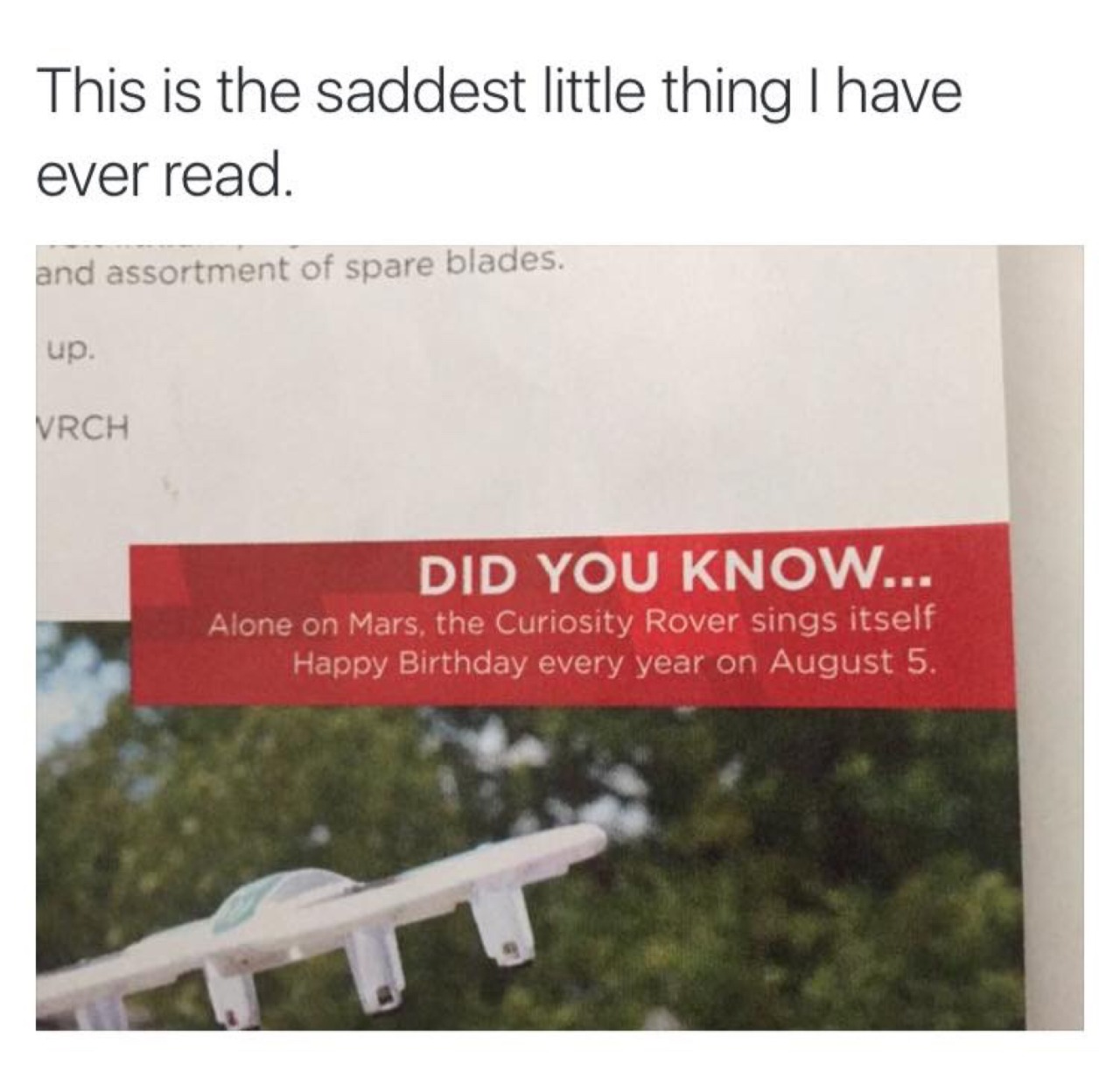
The soil testing equipment on Curiosity makes a buzzing noise and the pitch of the noise changes depending on what part of an experiment Curiosity is performing, this is the way Curiosity sings to itself.
So some of the finest minds currently alive decided to take incredibly expensive important scientific equipment and mess with it until they worked out how to move in just the right way to sing Happy Birthday, then someone made a cake on Curiosity’s birthday and took it into Mission control so that a room full of brilliant scientists and engineers could throw a birthday party for a non-autonomous robot 225 million kilometres away and listen to it sing the first ever song sung on Mars*, which was Happy Birthday.
This isn’t a sad story, this a happy story about the ridiculousness of humans and the way we love things. We built a little robot and called it Curiosity and flung it into the star to go and explore places we can’t get to because it’s name is in our nature and then just because we could, we taught it how to sing.
That’s not sad, that’s awesome.
*this is different from the first song ever played on mars (Reach For The Stars by Will.I.Am) which happened the year before, singing is different from playing
In July 2015, we saw Pluto up close for the first time and—after three years of intense study—the surprises keep coming. “It’s clear,” says Jeffery Moore, New Horizons’ geology team lead, “Pluto is one of the most amazing and complex objects in our solar system.”
1. An Improving View
These are combined observations of Pluto over the course of several decades. The first frame is a digital zoom-in on Pluto as it appeared upon its discovery by Clyde Tombaugh in 1930. More frames show of Pluto as seen by the Hubble Space Telescope. The final sequence zooms in to a close-up frame of Pluto taken by our New Horizons spacecraft on July 14, 2015.
2. The Heart
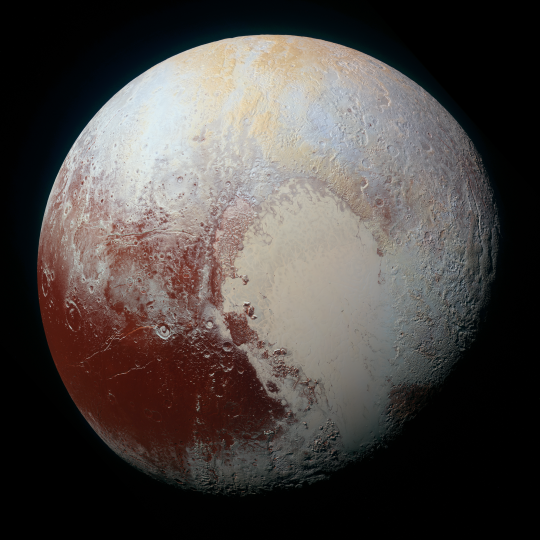
Pluto’s surface sports a remarkable range of subtle colors are enhanced in this view to a rainbow of pale blues, yellows, oranges, and deep reds. Many landforms have their own distinct colors, telling a complex geological and climatological story that scientists have only just begun to decode. The image resolves details and colors on scales as small as 0.8 miles (1.3 kilometers). Zoom in on the full resolution image on a larger screen to fully appreciate the complexity of Pluto’s surface features.
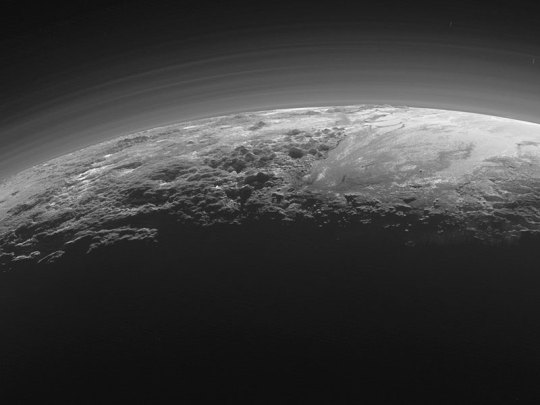
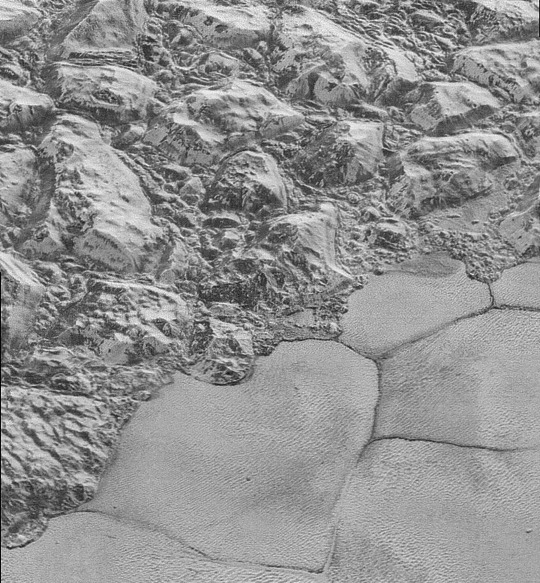
Just 15 minutes after its closest approach to Pluto, the New Horizons spacecraft captured this near-sunset view of the rugged, icy mountains and flat ice plains extending to Pluto’s horizon. The backlighting highlights more than a dozen layers of haze in Pluto’s tenuous atmosphere. The image was taken from a distance of 11,000 miles (18,000 kilometers) to Pluto; the scene is 780 miles (1,250 kilometers) wide.
5. Icy Dunes
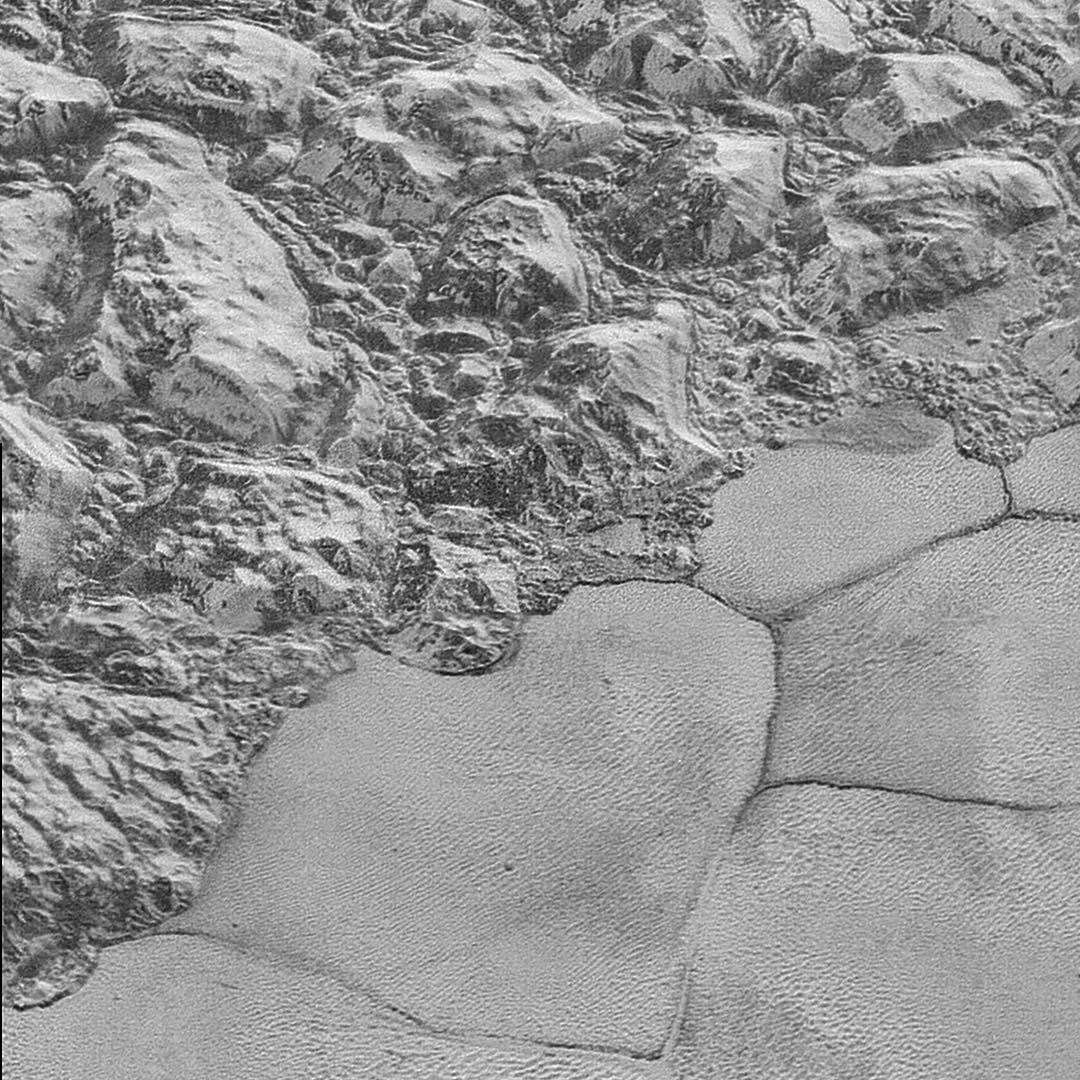
Found near the mountains that encircle Pluto’s Sputnik Planitia plain, newly discovered ridges appear to have formed out of particles of methane ice as small as grains of sand, arranged into dunes by wind from the nearby mountains.
6. Glacial Plains
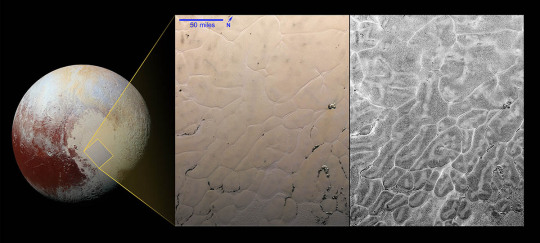
The vast nitrogen ice plains of Pluto’s Sputnik Planitia – the western half of Pluto’s “heart”—continue to give up secrets. Scientists processed images of Sputnik Planitia to bring out intricate, never-before-seen patterns in the surface textures of these glacial plains.
7. Colorful and Violent Charon
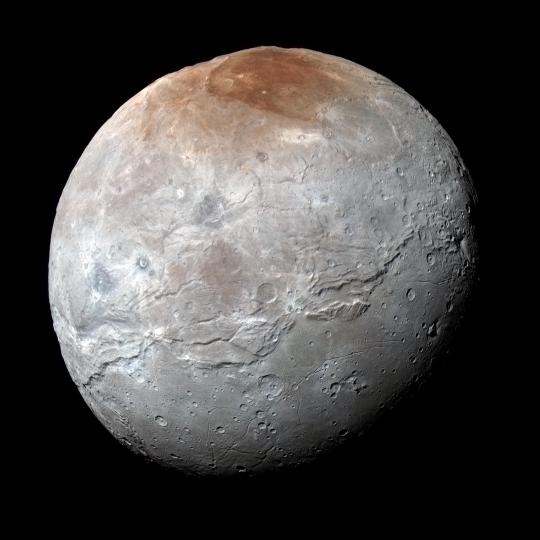
High resolution images of Pluto’s largest moon, Charon, show a surprisingly complex and violent history. Scientists expected Charon to be a monotonous, crater-battered world; instead, they found a landscape covered with mountains, canyons, landslides, surface-color variations and more.
8. Ice Volcanoes
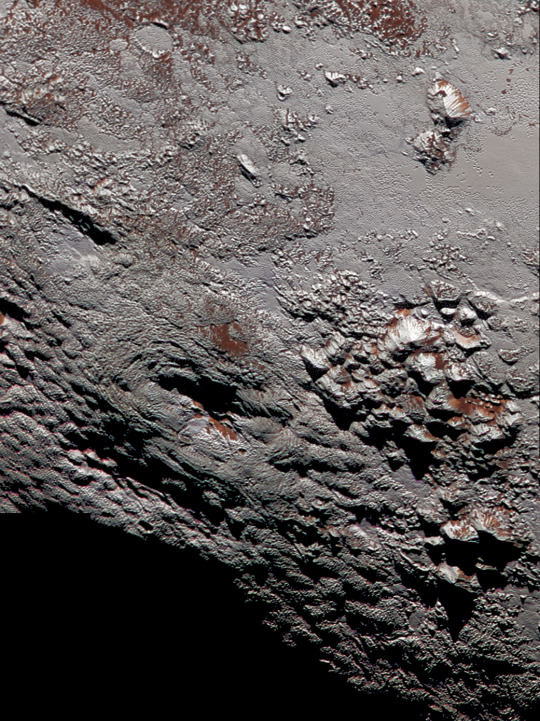
One of two potential cryovolcanoes spotted on the surface of Pluto by the New Horizons spacecraft. This feature, known as Wright Mons, was informally named by the New Horizons team in honor of the Wright brothers. At about 90 miles (150 kilometers) across and 2.5 miles (4 kilometers) high, this feature is enormous. If it is in fact an ice volcano, as suspected, it would be the largest such feature discovered in the outer solar system.
9. Blue Rays
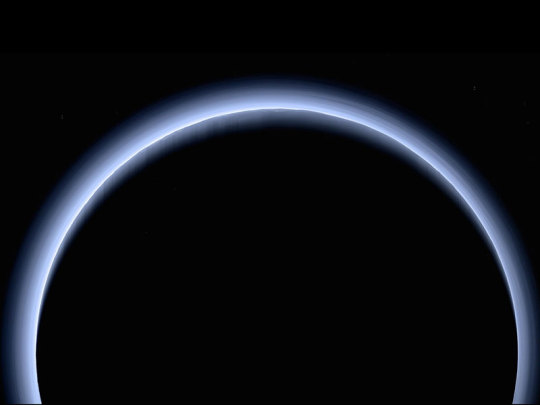
Pluto’s receding crescent as seen by New Horizons at a distance of 120,000 miles (200,000 kilometers). Scientists believe the spectacular blue haze is a photochemical smog resulting from the action of sunlight on methane and other molecules in Pluto’s atmosphere. These hydrocarbons accumulate into small haze particles, which scatter blue sunlight—the same process that can make haze appear bluish on Earth.
10. Encore
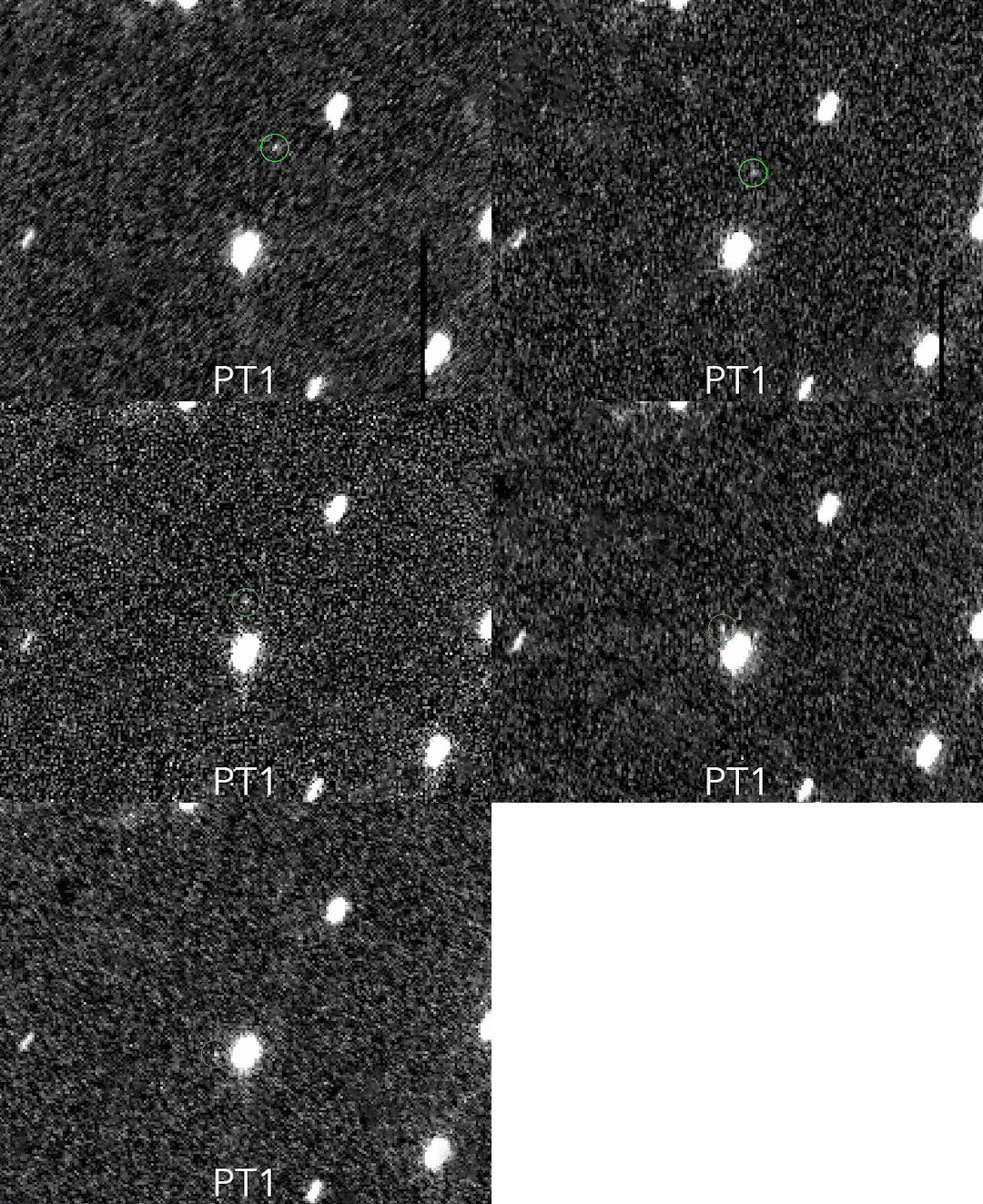
On Jan. 1, 2019, New Horizons will fly past a small Kuiper Belt Object named MU69 (nicknamed Ultima Thule)—a billion miles (1.5 billion kilometers) beyond Pluto and more than four billion miles (6.5 billion kilometers) from Earth. It will be the most distant encounter of an object in history—so far—and the second time New Horizons has revealed never-before-seen landscapes.
Make sure to follow us on Tumblr for your regular dose of space: http://nasa.tumblr.com.
Tags:
#ooh #I didn’t know about the Kuiper Belt Extended Mission #Pluto #space #the power of science #the more you know #long post
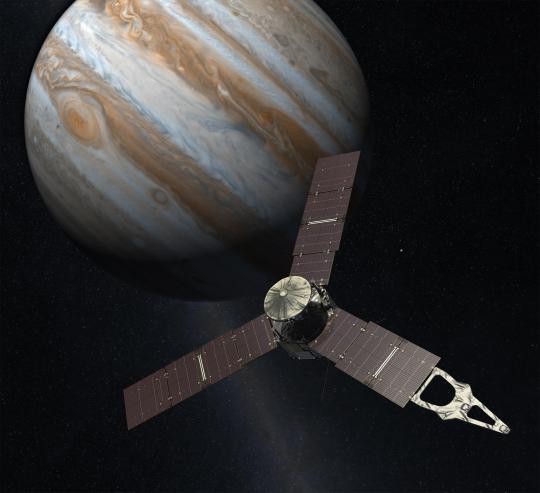
Our Juno mission arrived at the King of Planets in July 2016. The intrepid robotic explorer has been revealing Jupiter’s secrets ever since.
Here are 10 historic Juno mission highlights:
1. Arrival at a Colossus
After an odyssey of almost five years and 1.7 billion miles (2.7 billion kilometers), our Juno spacecraft fired its main engine to enter orbit around Jupiter on July 4, 2016. Juno, with its suite of nine science instruments, was the first spacecraft to orbit the giant planet since the Galileo mission in the 1990s. It would be the first mission to make repeated excursions close to the cloud tops, deep inside the planet’s powerful radiation belts.
2. Science, Meet Art
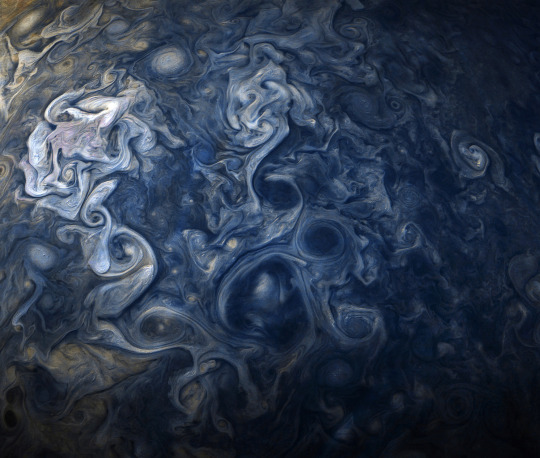
Juno carries a color camera called JunoCam. In a remarkable first for a deep space mission, the Juno team reached out to the general public not only to help plan which pictures JunoCam would take, but also to process and enhance the resulting visual data. The results include some of the most beautiful images in the history of space exploration.
3. A Whole New Jupiter
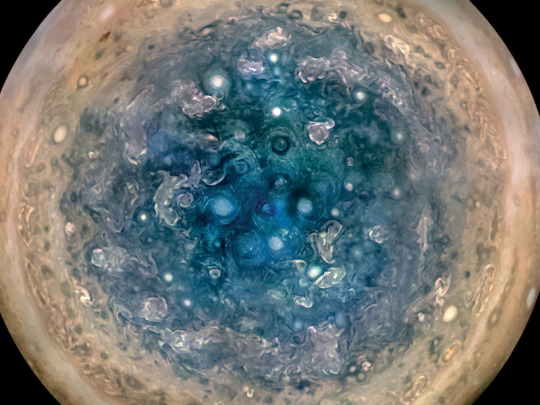
It didn’t take long for Juno—and the science teams who hungrily consumed the data it sent home—to turn theories about how Jupiter works inside out. Among the early findings: Jupiter’s poles are covered in Earth-sized swirling storms that are densely clustered and rubbing together. Jupiter’s iconic belts and zones were surprising, with the belt near the equator penetrating far beneath the clouds, and the belts and zones at other latitudes seeming to evolve to other structures below the surface.
4. The Ultimate Classroom
The Goldstone Apple Valley Radio Telescope (GAVRT) project, a collaboration among NASA, JPL and the Lewis Center for Educational Research, lets students do real science with a large radio telescope. GAVRT data includes Jupiter observations relevant to Juno, and Juno scientists collaborate with the students and their teachers.
5. Spotting the Spot
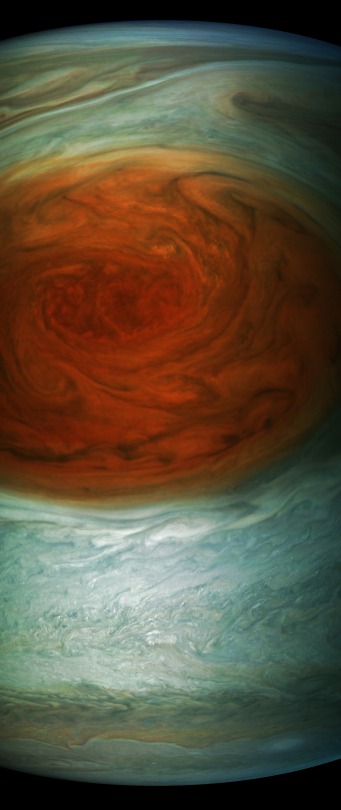
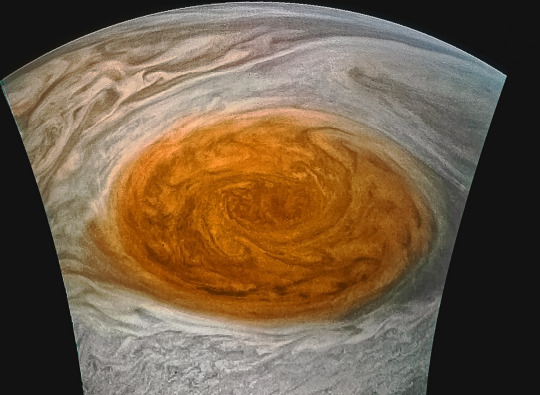
Measuring in at 10,159 miles (16,350 kilometers) in width (as of April 3, 2017) Jupiter’s Great Red Spot is 1.3 times as wide as Earth. The storm has been monitored since 1830 and has possibly existed for more than 350 years. In modern times, the Great Red Spot has appeared to be shrinking. In July 2017, Juno passed directly over the spot, and JunoCam images revealed a tangle of dark, veinous clouds weaving their way through a massive crimson oval.
“For hundreds of years scientists have been observing, wondering and theorizing about Jupiter’s Great Red Spot,” said Scott Bolton, Juno principal investigator from the Southwest Research Institute in San Antonio. “Now we have the best pictures ever of this iconic storm. It will take us some time to analyze all the data from not only JunoCam, but Juno’s eight science instruments, to shed some new light on the past, present and future of the Great Red Spot.”
6. Beauty Runs Deep
Data collected by the Juno spacecraft during its first pass over Jupiter’s Great Red Spot in July 2017 indicate that this iconic feature penetrates well below the clouds. The solar system’s most famous storm appears to have roots that penetrate about 200 miles (300 kilometers) into the planet’s atmosphere.
7. Powerful Auroras, Powerful Mysteries
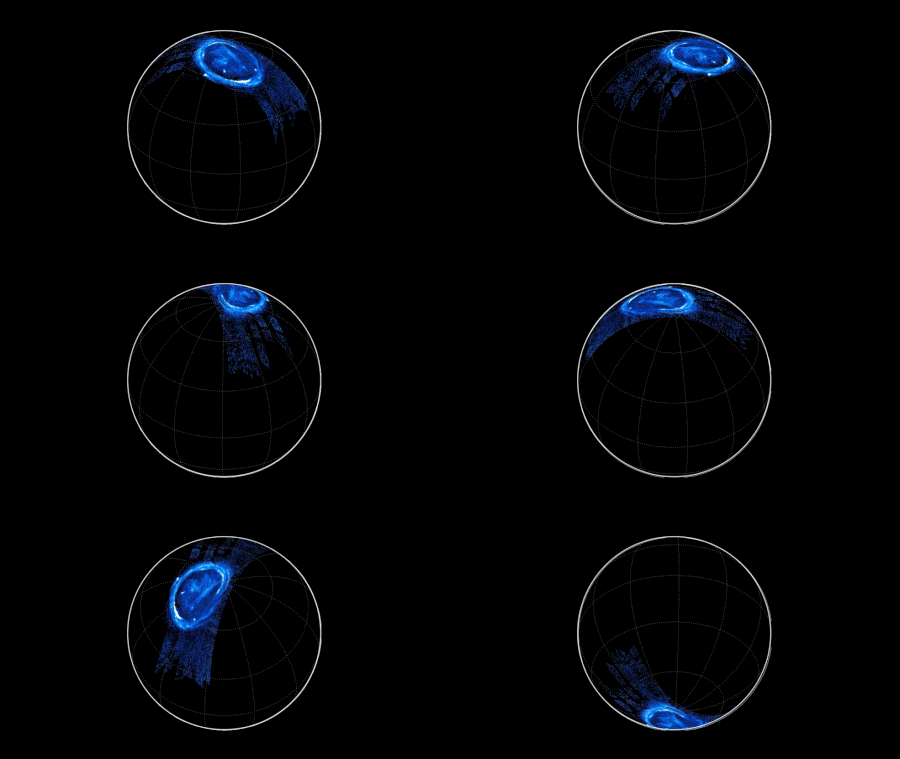
Scientists on the Juno mission observed massive amounts of energy swirling over Jupiter’s polar regions that contribute to the giant planet’s powerful auroras – only not in ways the researchers expected. Examining data collected by the ultraviolet spectrograph and energetic-particle detector instruments aboard Juno, scientists observed signatures of powerful electric potentials, aligned with Jupiter’s magnetic field, that accelerate electrons toward the Jovian atmosphere at energies up to 400,000 electron volts. This is 10 to 30 times higher than the largest such auroral potentials observed at Earth.
Jupiter has the most powerful auroras in the solar system, so the team was not surprised that electric potentials play a role in their generation. What puzzled the researchers is that despite the magnitudes of these potentials at Jupiter, they are observed only sometimes and are not the source of the most intense auroras, as they are at Earth.
8. Heat from Within
Juno scientists shared a 3D infrared movie depicting densely packed cyclones and anticyclones that permeate the planet’s polar regions, and the first detailed view of a dynamo, or engine, powering the magnetic field for any planet beyond Earth (video above). Juno mission scientists took data collected by the spacecraft’s Jovian InfraRed Auroral Mapper (JIRAM) instrument and generated a 3D fly-around of the Jovian world’s north pole.
Imaging in the infrared part of the spectrum, JIRAM captures light emerging from deep inside Jupiter equally well, night or day. The instrument probes the weather layer down to 30 to 45 miles (50 to 70 kilometers) below Jupiter’s cloud tops.
9. A Highly Charged Atmosphere
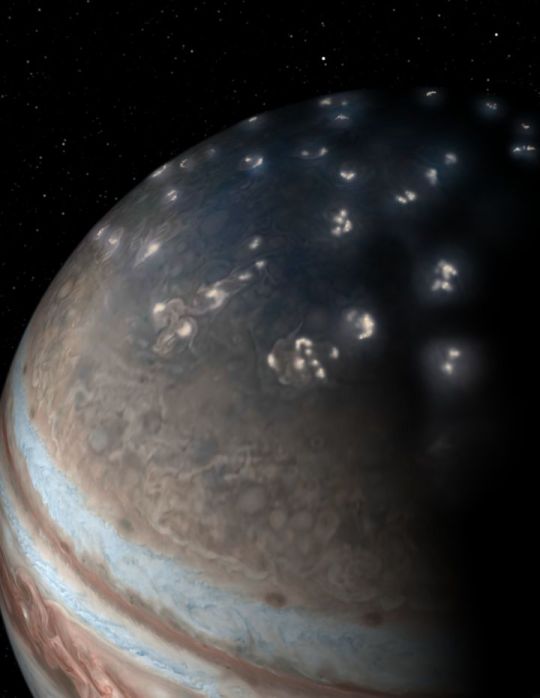
Powerful bolts of lightning light up Jupiter’s clouds. In some ways its lightning is just like what we’re used to on Earth. In other ways,it’s very different. For example, most of Earth’s lightning strikes near the equator; on Jupiter, it’s mostly around the poles.
10. Extra Innings
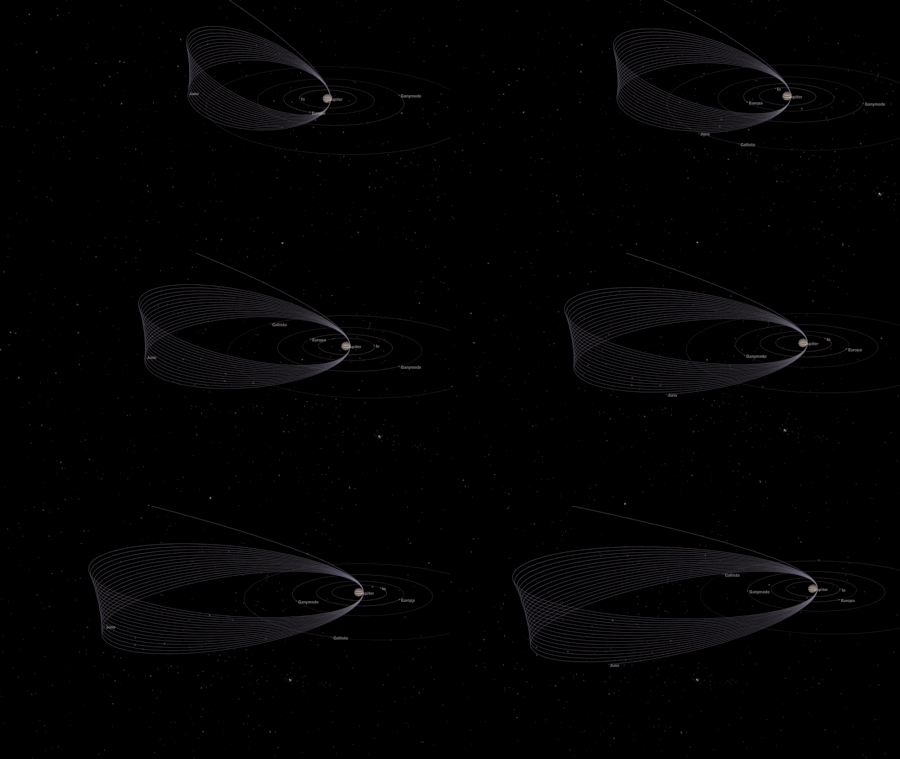
In June, we approved an update to Juno’s science operations until July 2021. This provides for an additional 41 months in orbit around. Juno is in 53-day orbits rather than 14-day orbits as initially planned because of a concern about valves on the spacecraft’s fuel system. This longer orbit means that it will take more time to collect the needed science data, but an independent panel of experts confirmed that Juno is on track to achieve its science objectives and is already returning spectacular results. The spacecraft and all its instruments are healthy and operating nominally.
Read the full web version of this week’s ‘Solar System: 10 Things to Know’ article HERE.
For regular updates, follow NASA Solar System on Twitter and Facebook.
#in search of replacement sources of sci-tech news I have followed the NASA Tumblr #this appears to have been a good decision #space #the power of science #the more you know #Juno
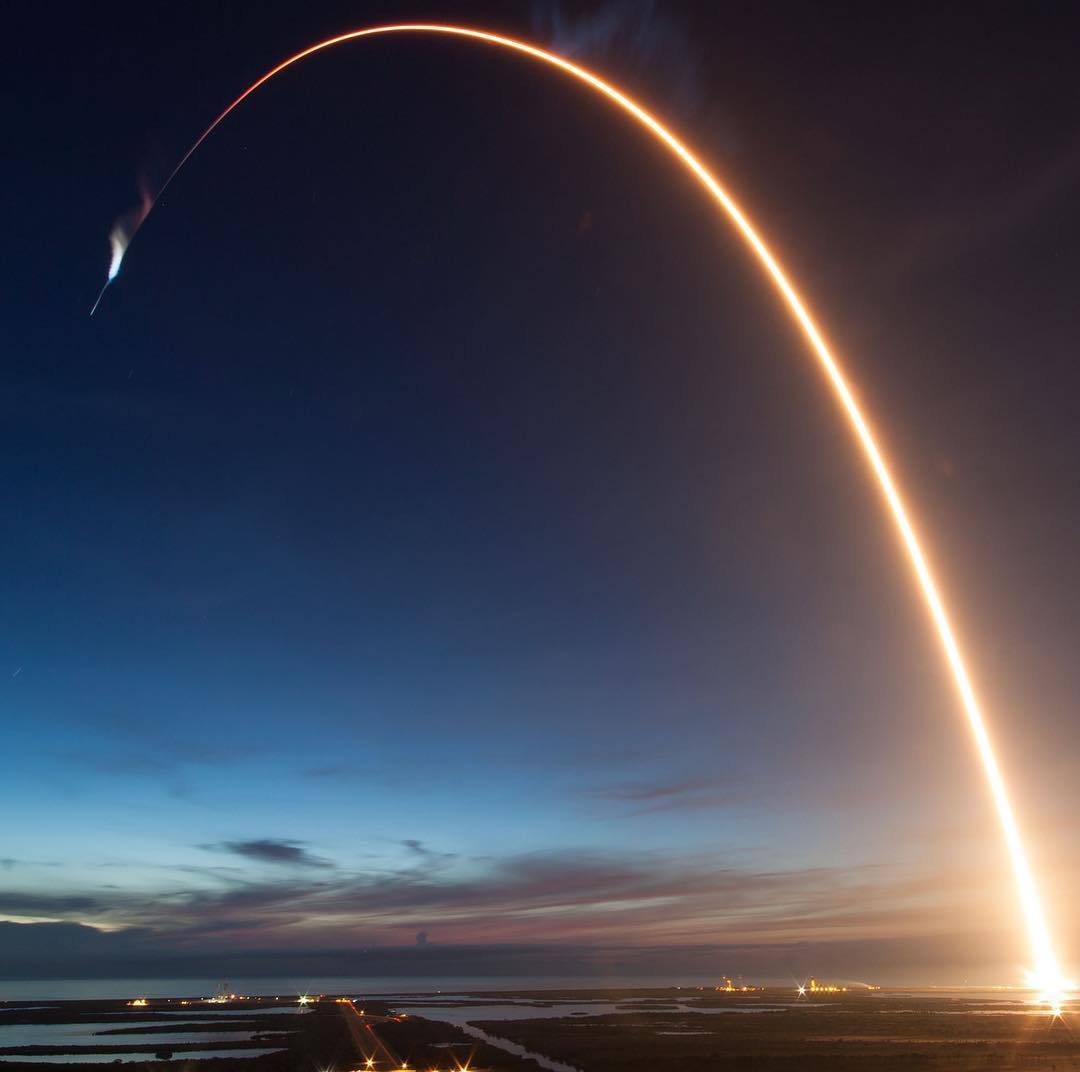
Launching into the sunrise is beautiful. @spacex (at Cape Canaveral, Florida)
Tags:
#indeed it is #pretty things #the power of science #the brightest star in our sky #(the description on the original SpaceX Instagram post says) #(that this is a launcher for a cargo vessel bringing supplies to the ISS)
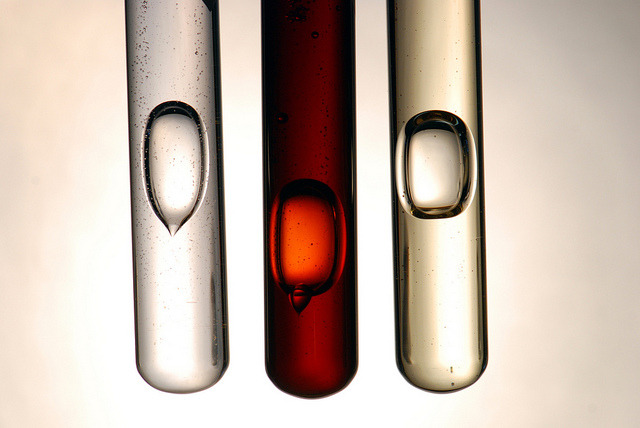
Blocking blood vessels by creating embolisms is, under most circumstances, very bad. But researchers are exploring ways to fight cancer by intentionally and strategically creating these blockages. In gas embolotherapy, researchers inject fluid droplets, which can carry chemotherapy drugs, into the bloodstream. Once they circulate into a cancerous tumor, they use ultrasound to vaporize the droplet and create a gas bubble. Those bubbles lodge inside the capillaries of the tumor, starving it of fresh blood and trapping the chemotherapy drugs inside. It’s a one-two punch to the cancer. Without blood flow, the cancer cells die, and, since the cancer-killing drugs get mostly trapped inside the tumor, patients may require lower dosages and endure fewer side effects. The technique is currently in animal testing, but hopefully it will be a valuable therapy for human patients in the future. (Image credit: Chemical & Engineering News; research credit: Y. Feng et al.; via AIP)
Tags:
#cancer #the power of science #I agree with Anomaly #(”nifty if it pans out”)
I only just got a chance to start watching it again! And now you’re telling me that that’s *it*, that I’ll have the *series finale* *tomorrow* and then *nothing*
—
I…I guess I’ll go watch the penultimate episode. Not watching it won’t help anything.
…anyone have any recs for news sources focusing on neat sci-tech stuff?
Tags:
#apparently Bell can’t afford Daily Planet any more than I can #fuck #oh look an update #our home and cherished land #oh look an original post #the power of science