canadian-space-agency:

An unprecedented detailed look at Comet 67P’s jets courtesy of OSIRIS. January 16, 2015.

Source: ESA/Rosetta/MPS for OSIRIS Team MPS/UPD/LAM/IAA/SSO/INTA/UPM/DASP/IDA


Tags:

#space #the power of science #proud citizen of The Future #I like that I looked at this and thought ‘Hi 67P!’ without having to see the caption #it’s that distinctive shape #comet ducky #you’re the one #you make space exploration so much fun

foxxxynegrodamus:

capitalveg:

theflemface:

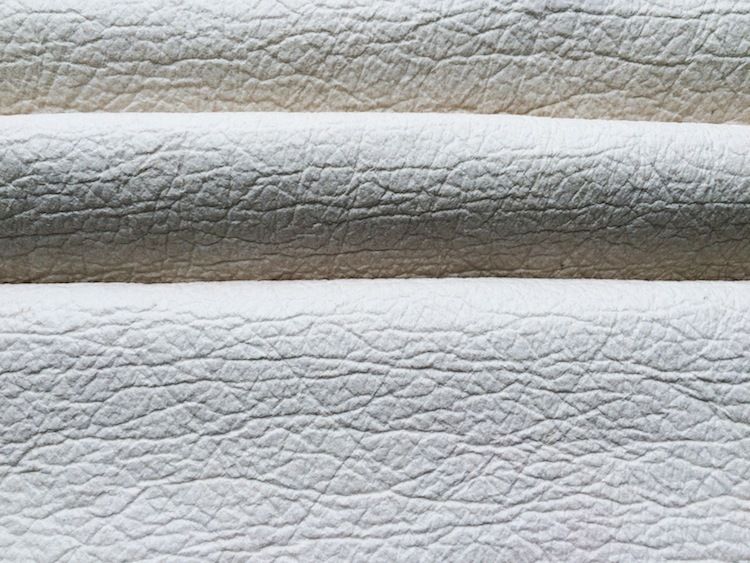
What you see above isn’t in fact leather made from animals- it’s made out of pineapples.

””It was one of those coincidences of life,” said Carmen Hijosa, founder of Piñatex, a new sustainable textile made from pineapple leaf fibres. Hijosa was speaking of her trip to the Philippines that led to a career change, which involved going back to university to get a PhD from London’s Royal College of Art, starting her own business, Ananas Anam, and patenting her own textile. 

A small coincidence, and a big change.

Hijosa had been working in the leather industry for over 15 years in Ireland, when she was invited to consult on the exportation of leather in the Philippines. When Hijosa arrived, she was exposed to the poor quality of the materials, the working conditions and the toxic impact of leather on the environment. Hijosa advised, rather than try and export leather, why don’t you work with what you got, and what the Philippines has is an abundance of natural fibres.

She began to explore different fibres and came upon the pineapple leaf. “I realized they are very strong and flexible,” she says. “I wanted to see if I could make them into a non-woven mesh textile [like leather] and to do that I had to do full research and development that only a degree could provide.”

“Piñatex is a byproduct of the food industry,” explained Hijosa. “Once the pineapples are harvested the plants are left to rot.” Instead of letting that happen, pineapple farmers gather the leaves, extract the fibres and degum them in closed tanks. Once they have been degummed, the fibres become soft and breathable and can be put through a mechanical process that turns them into a non-woven mesh material that ends up feeling much like felt. 

The entire process does not use any extra water, pesticides or fertilizer beyond what is used to cultivate the pineapples. By comparison, to produce 1kg of cotton – enough for one t-shirt and a pair of jeans – it takes up to 20,000 litres of water.”

This demonstrates that not only is the leather industry cruel, but it is also unnecessary. This product will hopefully be one of the future; one that manufactures waste to create something fashionable and hopefully successfully overtakes and thus eradicates the current industry.

Hope to see this on the markets soon!

OH MY FUCKING GOD


Tags:

#neat

New Tech Could Reveal Secrets in 2,000-Year-Old Scrolls

archaeologicalnews:

image

Hundreds of ancient papyrus scrolls that were buried nearly 2,000 years ago after the eruption of Mount Vesuvius could finally be read, thanks to a new technique.

The X-ray-based method can be used to decipher the charred, damaged texts that were found in the ancient town of Herculaneum without having to unroll them, which could damage them beyond repair, scientists say.

One problem with previous attempts to use X-rays to read the scrolls was that the ancient writers used a carbon-based material from smoke in their ink, said study co-author Vito Mocella, a physicist at the National Research Council in Naples, Italy.

“The papyri have been burnt, so there is not a huge difference between the paper and the ink,” Mocella told Live Science. That made it impossible to decipher the words written in the documents. Read more.


Tags:

#history #awesome

kqedscience:

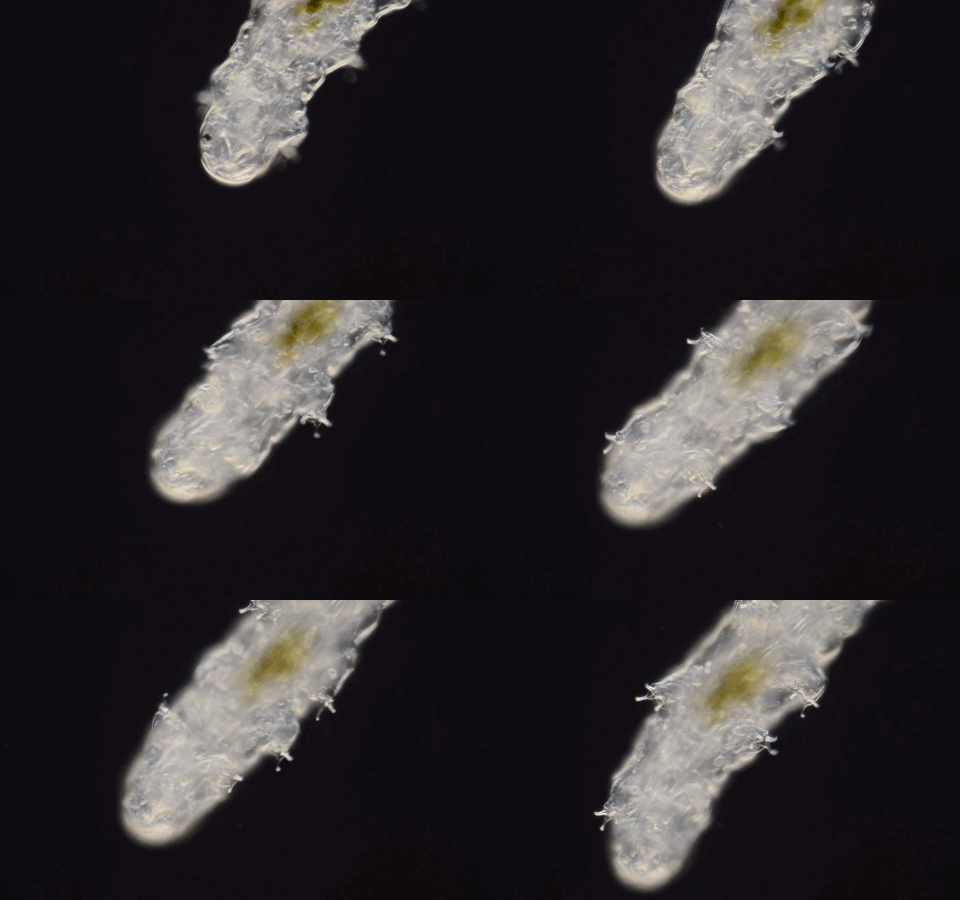
6 Amazing Videos From The Olympus Microscopy Competition

Every year, the Olympus BioScapes competition celebrates achievements in light microscopy and the scientific insights they provide. Scientists from around the world submit their photos and videos, and a team of PhD-toting judges pick their favorites. The entrants are judged “based on the science they depict, their beauty or impact, and the technical expertise involved in capturing them.” And this year’s winners have just been announced!”

See some winning videos at popsci.


Tags:

#tardigrade #adorable #the power of science

theolduvaigorge:

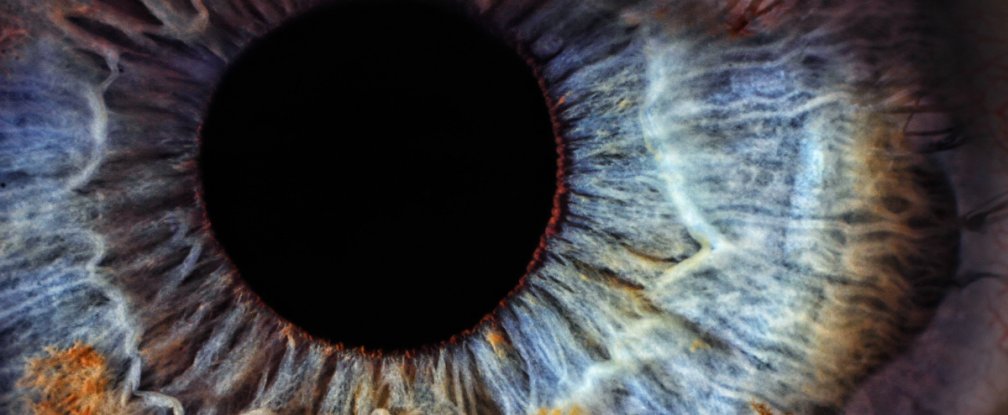
This is how blue eyes get their colour

Blue eyes don’t get their colour from pigment – it’s actually way more fascinating than that.

  • by Fiona MacDonald

Your eyes aren’t blue (or green) because they contain pigmented cells. As Paul Van Slembrouck writes for Medium, their colour is actually structural, and it involves some pretty interesting physics. As he explains, the coloured part of your eye is called the iris, and it’s made up of two layers – the epithelium at the back and the stroma at the front.

The epithelium is only two cells thick and contains black-brown pigments – the dark specks that some people have in their eye is, in fact, the epithelium peaking through. The stroma, in contrast, is made up of colourless collagen fibres. Sometimes the stroma contains a dark pigment called melanin, and sometimes it contains excess collagen deposits. And, fascinatingly, it’s these two factors that control your eye colour.

Brown eyes, for example, contain a high concentration of melanin in their stroma, which absorbs most of the light entering the eye regardless of collagen deposits, giving them their dark colour.

Green eyes don’t have much melanin in them, but they also have no collagen deposits. This means that while some of the light entering them is absorbed by the pigment, the particles in the stroma also scatter light as a result of something called the Tyndall effect, which creates a blue hue (it’s similar to Rayleigh scattering which makes the sky look blue). Combined with the brown melanin, this results in the eyes appearing green” (read more).

(Source: Science Alert)


Tags:

#eyes #biology #the power of science #neat

pastrypigeon:

becausebirds:

lickystickypickyshe:

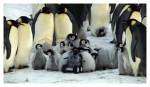
A wheeled rover disguised as a penguin chick is allowing zoologists to read the heart rates of king penguins in Antarctica.

Most wild animals are understandably wary of humans. Which can make studying them hard for zoologists and documentary makers alike. That anxiety may be increased after they’ve been captured and fitted with monitors as some of the penguins of Adelie Land have been. Unfortunately, to read the monitors Dr Yvon Le Maho of the University of Strasbourg needed to get within 60cms of the penguins, or find a way to get a reception device in to that distance.

To achieve this, Le Maho reveals in Nature Methods heput an antenna on a four wheel drive device and sent it into colonies of several local species. Unsurprisingly, the elephant seals were entirely unperturbed, barely noticing the device. King penguins pecked at the rover, but once it stopped they calmed down and their heart rates rapidly returned to normal. “Upon immobilization, the rover—unlike humans—did not disorganize colony structure, and stress rapidly ceased,” the paper reports.

Emperor penguins, despite their great size, are shyer than their smaller cousins, so Le Maho decided  it was time to take a step up by adding a fiberglass penguin chick. Things did not go smoothly however. The first chick was unconvincing, and possibly fell into the penguin version of uncanny valley, leading to some frightened emperors. 

Only after five variations was the chick sufficiently feathered up to stop scaring the locals. At this point, the response shifted entirely. Baby penguins, undeterred by the wheels, huddled up against the chick.

The adults even sang to it. ”They were very disappointed when there was no answer,” Le Maho said. “Next time we will have a rover playing songs.”

Responses to the undisguised rover can be seen in this video.

DAY 2: No one suspects a thing.

DAY 3:  They have accepted me as one of their own.

DAY 4: BIRD BATTERIES RUNNING LOW

I can’t get over “he first chick was unconvincing and possibly fell into the penguin version of uncanny valley, leading to some frightened emperors”

So it almost looked real but they were like SHIT SHIT WHAT IS WRONG WITH THAT BABY?? SHIIIIIT


Tags:

#penguin #bird #anything that makes me laugh this much deserves a reblog #(poor penguins)

Watch This Scientist Climb a Wall in Gecko-Inspired Spider-Man Gloves

{{Title link: https://www.popularmechanics.com/technology/gear/a13221/scientists-have-created-gecko-inspired-spider-man-gloves-17448448/ }}

camwyn:

Gloves that let a person crawl up flat, sheer surfaces like Spider-Man does now exist. Skeptical? Watch Elliot Hawkes, a mechanical engineer at Stanford who led the team that pioneered this breakthrough, test them out.

“To work, the surface you’re climbing needs to be relatively smooth; like glass, varnished wood, polished stone, or metal,” Hawkes says, “but you can attach and detach with very little effort, and to make [the gloves] stick all you have to do is hang your weight.”

Over the past decade, scientists around the world have been trying to mimic the incredible stickiness of the gecko foot. But until now, engineering these materials to work at a human scale was a seemingly insurmountable challenge. It’s not that the materials weren’t sticky enough—it’s that no one was able to figure out how to delicately balance the strain of a climbing human hand across a big patch of adhesive. In a study published this week in the Journal of the Royal Society Interface, however, Hawkes and his colleagues describe how they engineered a solution.

Says Kellar Autumn, a biomechanical engineer at Lewis & Clark College who studies gecko adhesion was not involved in this project: “This is a really big deal. I’ve been dreaming about this for about 15 years, since we first discovered the mechanism that makes geckos stick to walls. And this is proof that we finally understood it well enough to make a person climb a building.”


Tags:

#the power of science

canadian-space-agency:

Happy Sweet 16, ISS!

November 20th marked the launch anniversary of the first module of the International Space Station (ISS), Zarya. On that day in 1998 began the construction in space of this unique scientific and exploration outpost that enables researchers from all over the world to put their talents to work with innovative experiments that could not be done anywhere else.

We thank our partners from the United States, Russia, Europe and Japan for 16 years of outstanding collaboration. Here’s to many more!

http://www.asc-csa.gc.ca/eng/iss/


Tags:

#space #the brightest star in our sky #the power of science #proud citizen of The Future #anniversaries