Today, we’re expressing gratitude for the opportunity to rove on Mars (#ThanksOppy) as we mark the completion of a successful mission that exceeded our expectations.
Our Opportunity Rover’s last communication with Earth was received on June 10, 2018, as a planet-wide dust storm blanketed the solar-powered rover’s location on the western rim of Perseverance Valley, eventually blocking out so much sunlight that the rover could no longer charge its batteries. Although the skies over Perseverance cleared, the rover did not respond to a final communication attempt on Feb. 12, 2019.
As the rover’s mission comes to an end, here are a few things to know about its opportunity to explore the Red Planet.
90 days turned into 15 years!
Opportunity launched on July 7, 2003 and landed on Mars on Jan. 24, 2004 for a planned mission of 90 Martian days, which is equivalent to 92.4 Earth days. While we did not expect the golf-cart-sized rover to survive through a Martian winter, Opportunity defied all odds as a 90-day mission turned into 15 years!
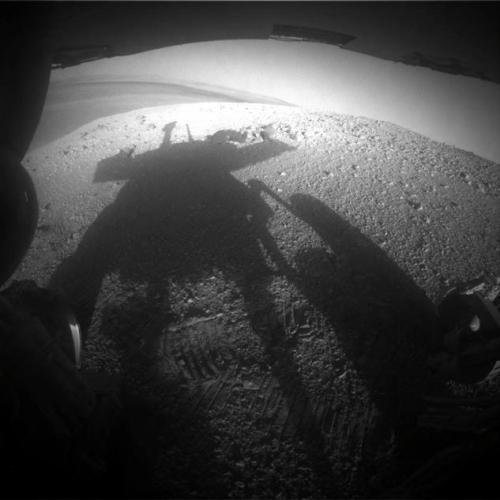
The Opportunity caught its own silhouette in this late-afternoon image taken in March 2014 by the rover’s rear hazard avoidance camera. This camera is mounted low on the rover and has a wide-angle lens.
Opportunity Set Out-Of-This-World Records
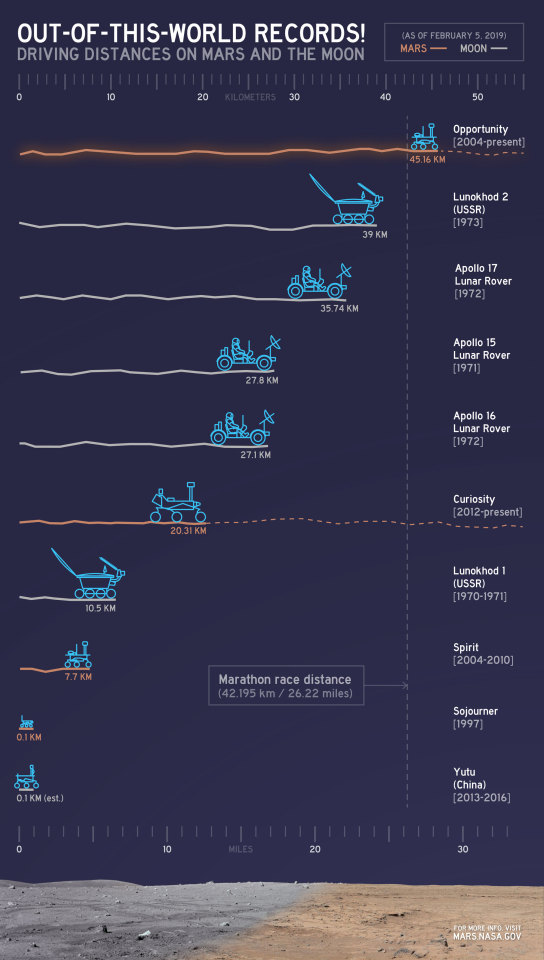
Opportunity’s achievements, including confirmation water once flowed on Mars. Opportunity was, by far, the longest-lasting lander on Mars. Besides endurance, the six-wheeled rover set a roaming record of 28 miles.
This chart illustrates comparisons among the distances driven by various wheeled vehicles on the surface of Earth’s moon and Mars. Opportunity holds the off-Earth roving distance record after accruing 28.06 miles (45.16 kilometers) of driving on Mars.
It’s Just Like Having a Geologist on Mars
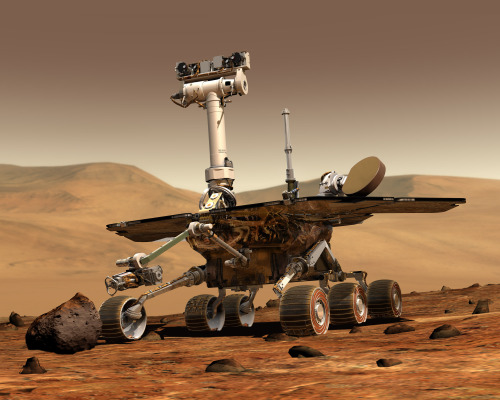
Opportunity was created to be the mechanical equivalent of a geologist walking from place to place on the Red Planet. Its mast-mounted cameras are 5 feet high and provided 360-degree two-eyed, human-like views of the terrain. The robotic arm moved like a human arm with an elbow and wrist, and can place instruments directly up against rock and soil targets of interest. The mechanical “hand” of the arm holds a microscopic camera that served the same purpose as a geologist’s handheld magnifying lens.
There’s Lots to See on Mars
After an airbag-protected landing craft settled onto the Red Planet’s surface and opened, Opportunity rolled out to take panoramic images. These images gave scientists the information they need to select promising geological targets that tell part of the story of water in Mars’ past. Since landing in 2004, Opportunity has captured more than 200,000 images. Take a look in this photo gallery.
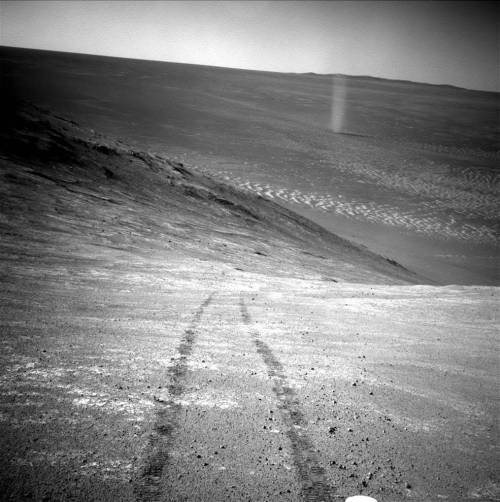
From its perch high on a ridge, the Opportunity rover recorded this image on March 31, 2016 of a Martian dust devil twisting through the valley below. The view looks back at the rover’s tracks leading up the north-facing slope of “Knudsen Ridge,” which forms part of the southern edge of “Marathon Valley
There Was Once Water on Mars?!
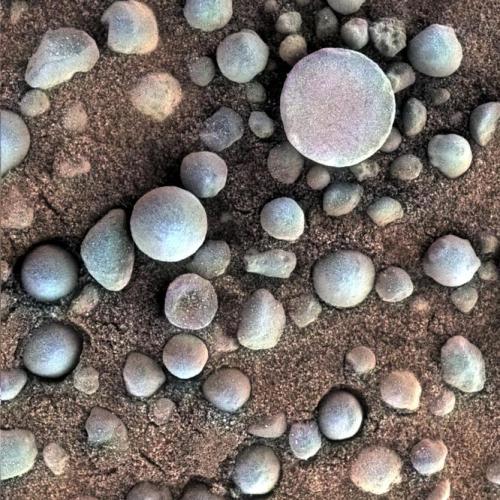
Among the mission’s scientific goals was to search for and characterize a wide range of rocks and soils for clues to past water activity on Mars. In its time on the Red Planet, Opportunity discovered small spheres of the mineral hematite, which typically forms in water. In addition to these spheres that a scientist nicknamed “blueberries,” the rover also found signs of liquid water flowing across the surface in the past: brightly colored veins of the mineral gypsum in rocks, for instance, which indicated water flowing through underground fractures.
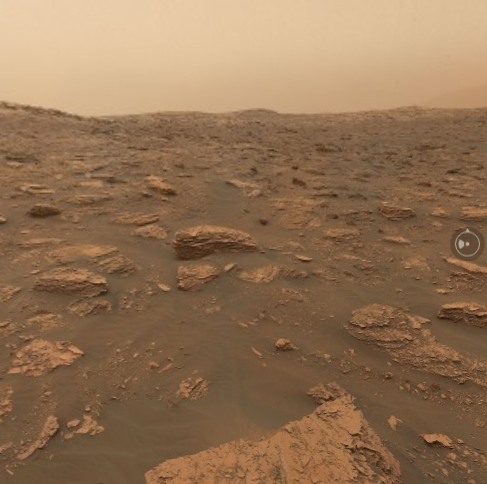
dude seeing these Mega high quality images of the surface of mars that we now have has me fucked up. Like. Mars is a place. mars is a real actual place where one could hypothetically stand. It is a physical place in the universe. ITS JUST OUT THERE LOOKING LIKE UH IDK A REGULAR OLD DESERT WITH LOTS OF ROCKS BUT ITS A WHOLE OTHER PLANET?
LIKE THIS JUST LOOKS LIKE IT COULD BE A PERSON’S BACKYARD. LIKE YEA A LITTLE DUSTY MAYBE THERE WAS A SANDSTORM BUT THAT’S COOL I’M JUST GONNA WALK DOWN TO THE STORE P S Y C H YOU’RE ON MARS BICH!
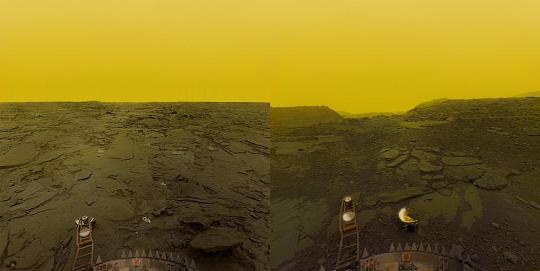
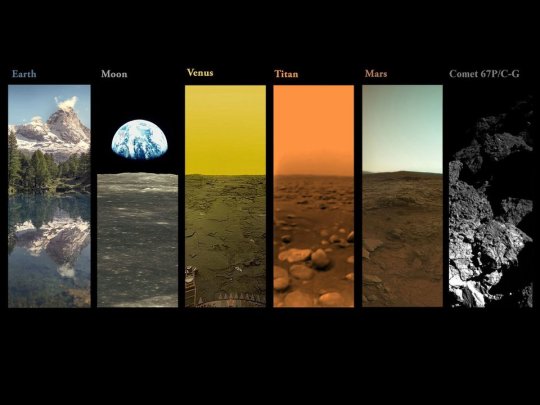
i hate to be rude and intrude on this post but we have decent pictures of the surface Venus too!
After traveling for two years and billions of kilometers from Earth, the OSIRIS-REx probe is only a few months away from its destination: the intriguing asteroid Bennu. When it arrives in December, OSIRIS-REx will embark on a nearly two-year investigation of this clump of rock, mapping its terrain and finding a safe and fruitful site from which to collect a sample.
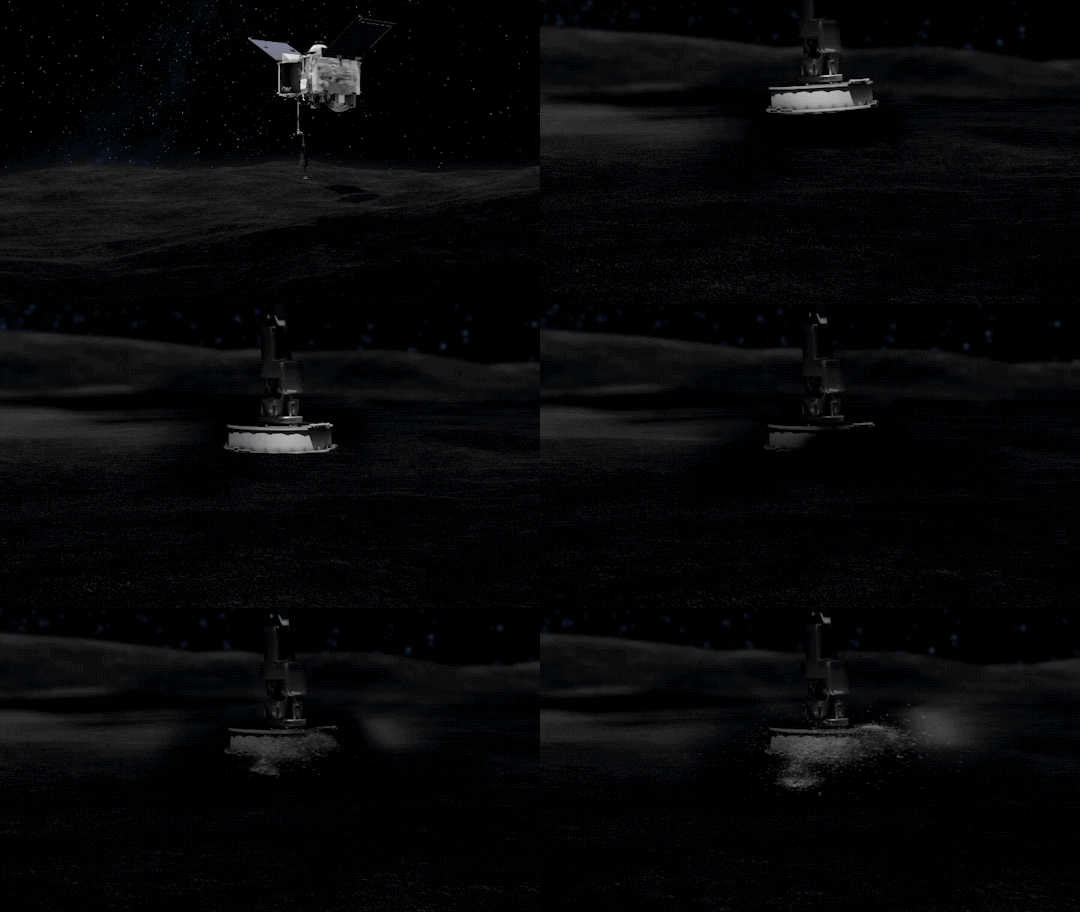
The spacecraft will briefly touch Bennu’s surface around July 2020 to collect at least 60 grams (equal to about 30 sugar packets) of dirt and rocks. It might collect as much as 2,000 grams, which would be the largest sample by far gathered from a space object since the Apollo Moon landings. The spacecraft will then pack the sample into a capsule and travel back to Earth, dropping the capsule into Utah’s west desert in 2023, where scientists will be waiting to collect it.
This years-long quest for knowledge thrusts Bennu into the center of one of the most ambitious space missions ever attempted. But the humble rock is but one of about 780,000 known asteroids in our solar system. So why did scientists pick Bennu for this momentous investigation? Here are 10 reasons:
1. It’s close to Earth
Unlike most other asteroids that circle the Sun in the asteroid belt between Mars and Jupiter, Bennu’s orbit is close in proximity to Earth’s, even crossing it. The asteroid makes its closest approach to Earth every 6 years. It also circles the Sun nearly in the same plane as Earth, which made it somewhat easier to achieve the high-energy task of launching the spacecraft out of Earth’s plane and into Bennu’s. Still, the launch required considerable power, so OSIRIS-REx used Earth’s gravity to boost itself into Bennu’s orbital plane when it passed our planet in September 2017.
2.It’s the right size
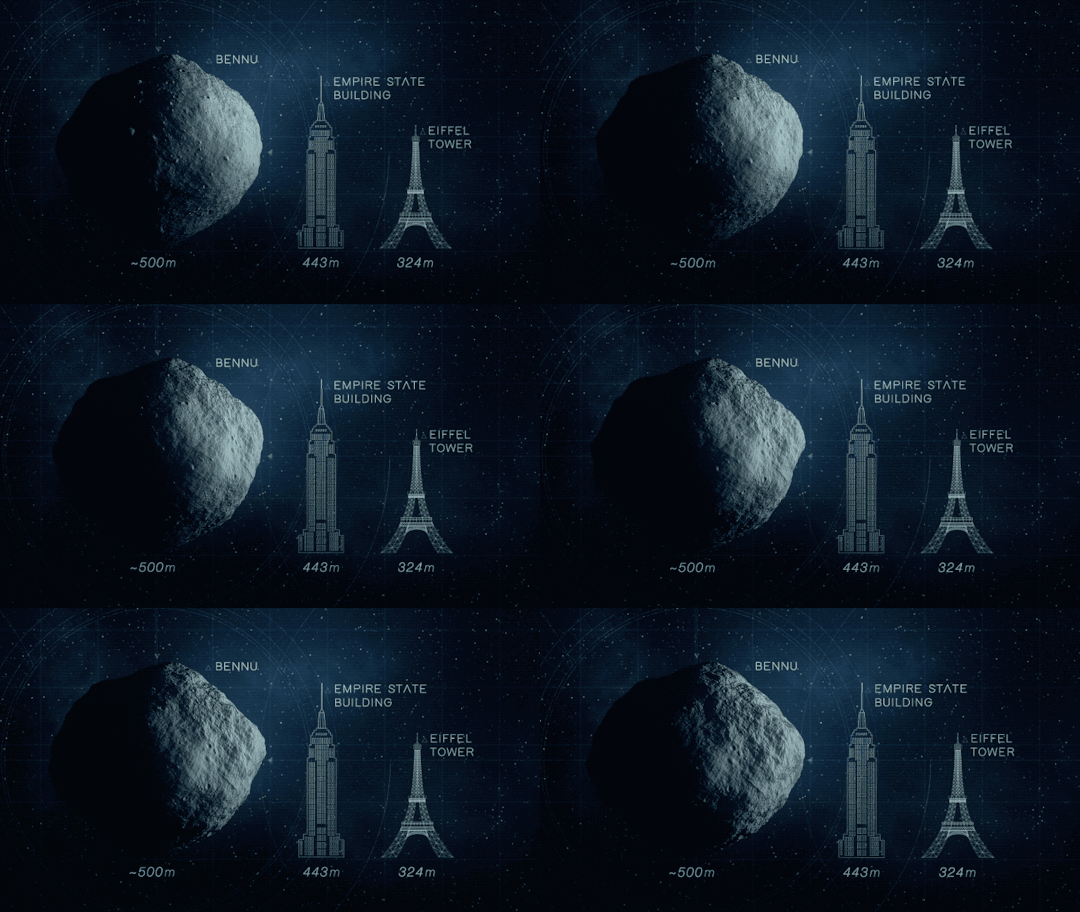
Asteroids spin on their axes just like Earth does. Small ones, with diameters of 200 meters or less, often spin very fast, up to a few revolutions per minute. This rapid spinning makes it difficult for a spacecraft to match an asteroid’s velocity in order to touch down and collect samples. Even worse, the quick spinning has flung loose rocks and soil, material known as “regolith” — the stuff OSIRIS-REx is looking to collect — off the surfaces of small asteroids. Bennu’s size, in contrast, makes it approachable and rich in regolith. It has a diameter of 492 meters, which is a bit larger than the height of the Empire State Building in New York City, and rotating once every 4.3 hours.
3. It’s really old
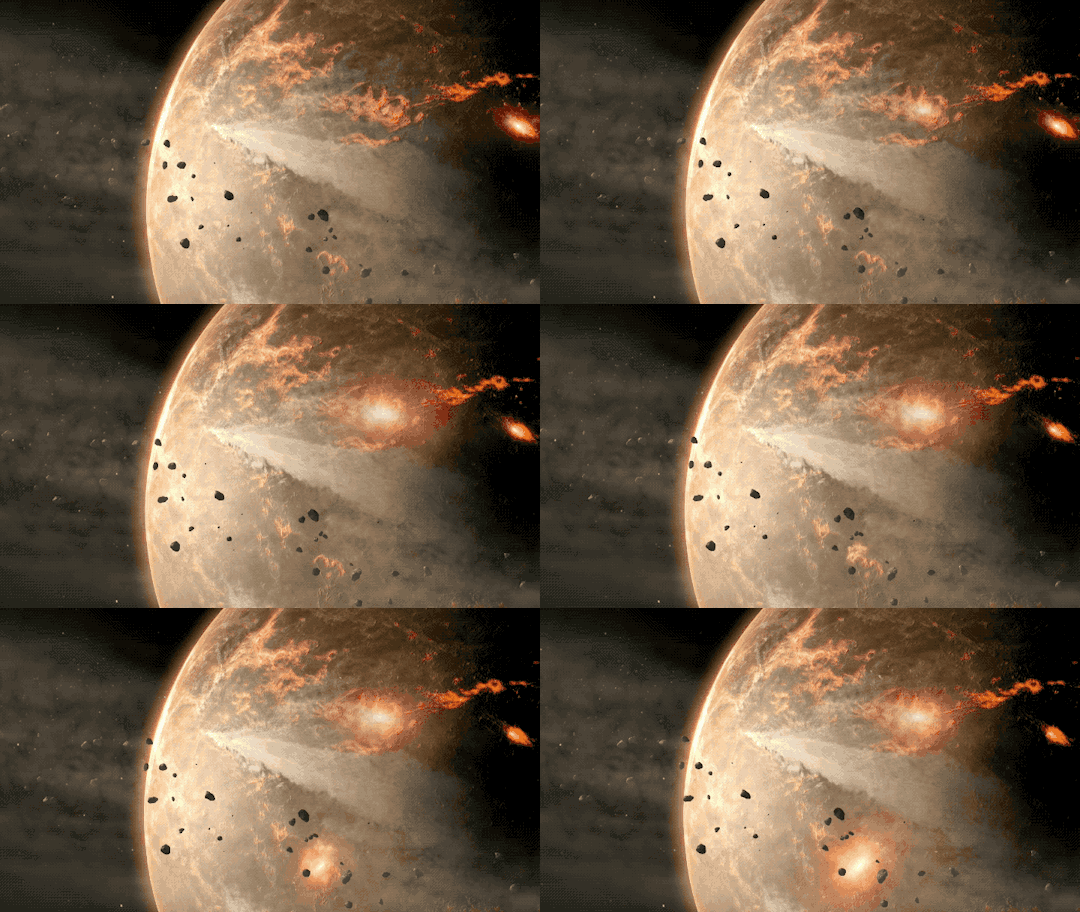
Bennu is a leftover fragment from the tumultuous formation of the solar system. Some of the mineral fragments inside Bennu could be older than the solar system. These microscopic grains of dust could be the same ones that spewed from dying stars and eventually coalesced to make the Sun and its planets nearly 4.6 billion years ago. But pieces of asteroids, called meteorites, have been falling to Earth’s surface since the planet formed. So why don’t scientists just study those old space rocks? Because astronomers can’t tell (with very few exceptions) what kind of objects these meteorites came from, which is important context. Furthermore, these stones, that survive the violent, fiery decent to our planet’s surface, get contaminated when they land in the dirt, sand, or snow. Some even get hammered by the elements, like rain and snow, for hundreds or thousands of years. Such events change the chemistry of meteorites, obscuring their ancient records.
4.It’s well preserved
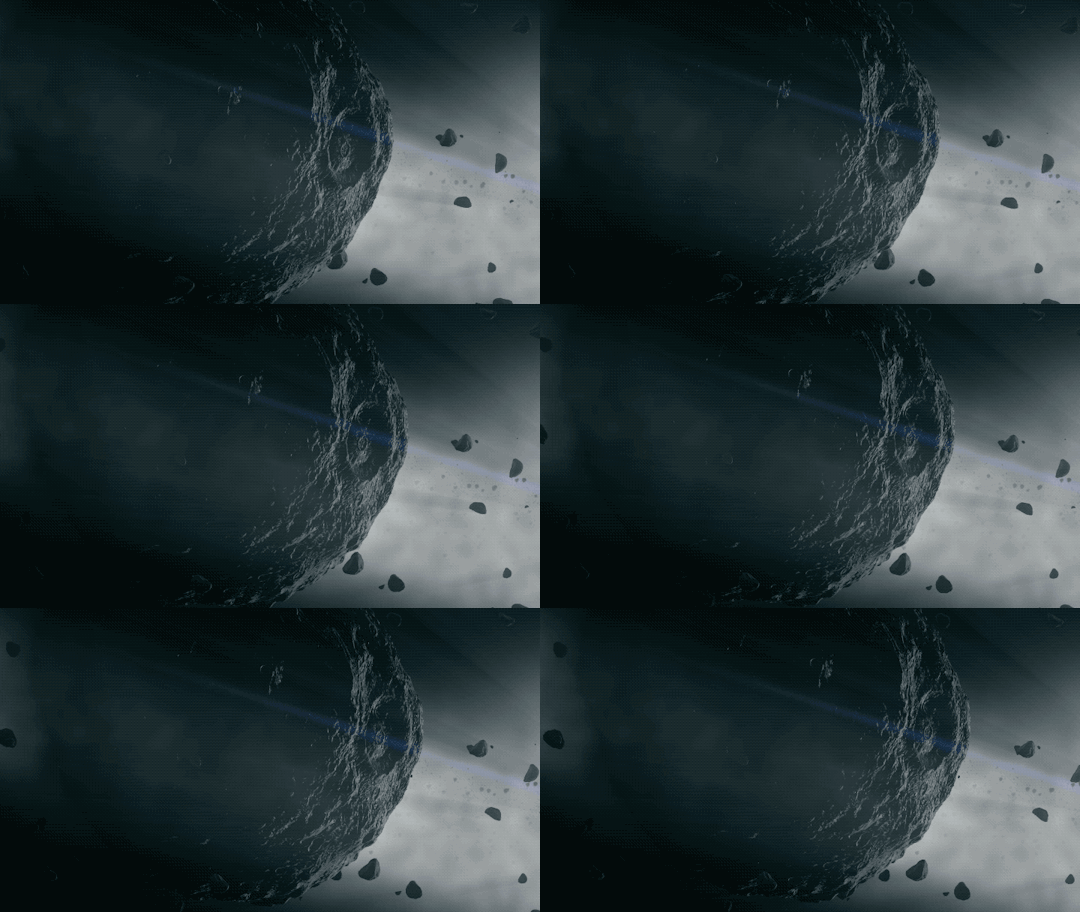
Bennu, on the other hand, is a time capsule from the early solar system, having been preserved in the vacuum of space. Although scientists think it broke off a larger asteroid in the asteroid belt in a catastrophic collision between about 1 and 2 billion years ago, and hurtled through space until it got locked into an orbit near Earth’s, they don’t expect that these events significantly altered it.
5. It might contain clues to the origin of life
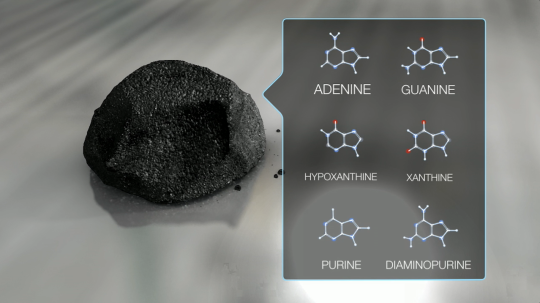
Analyzing a sample from Bennu will help planetary scientists better understand the role asteroids may have played in delivering life-forming compounds to Earth. We know from having studied Bennu through Earth- and space-based telescopes that it is a carbonaceous, or carbon-rich, asteroid. Carbon is the hinge upon which organic molecules hang. Bennu is likely rich in organic molecules, which are made of chains of carbon bonded with atoms of oxygen, hydrogen, and other elements in a chemical recipe that makes all known living things. Besides carbon, Bennu also might have another component important to life: water, which is trapped in the minerals that make up the asteroid.
6. It contains valuable materials
Besides teaching us about our cosmic past, exploring Bennu close-up will help humans plan for the future. Asteroids are rich in natural resources, such as iron and aluminum, and precious metals, such as platinum. For this reason, some companies, and even countries, are building technologies that will one day allow us to extract those materials. More importantly, asteroids like Bennu are key to future, deep-space travel. If humans can learn how to extract the abundant hydrogen and oxygen from the water locked up in an asteroid’s minerals, they could make rocket fuel. Thus, asteroids could one day serve as fuel stations for robotic or human missions to Mars and beyond. Learning how to maneuver around an object like Bennu, and about its chemical and physical properties, will help future prospectors.
7. It will help us better understand other asteroids
Astronomers have studied Bennu from Earth since it was discovered in 1999. As a result, they think they know a lot about the asteroid’s physical and chemical properties. Their knowledge is based not only on looking at the asteroid, but also studying meteorites found on Earth, and filling in gaps in observable knowledge with predictions derived from theoretical models. Thanks to the detailed information that will be gleaned from OSIRIS-REx, scientists now will be able to check whether their predictions about Bennu are correct. This work will help verify or refine telescopic observations and models that attempt to reveal the nature of other asteroids in our solar system.
8. It will help us better understand a quirky solar force …
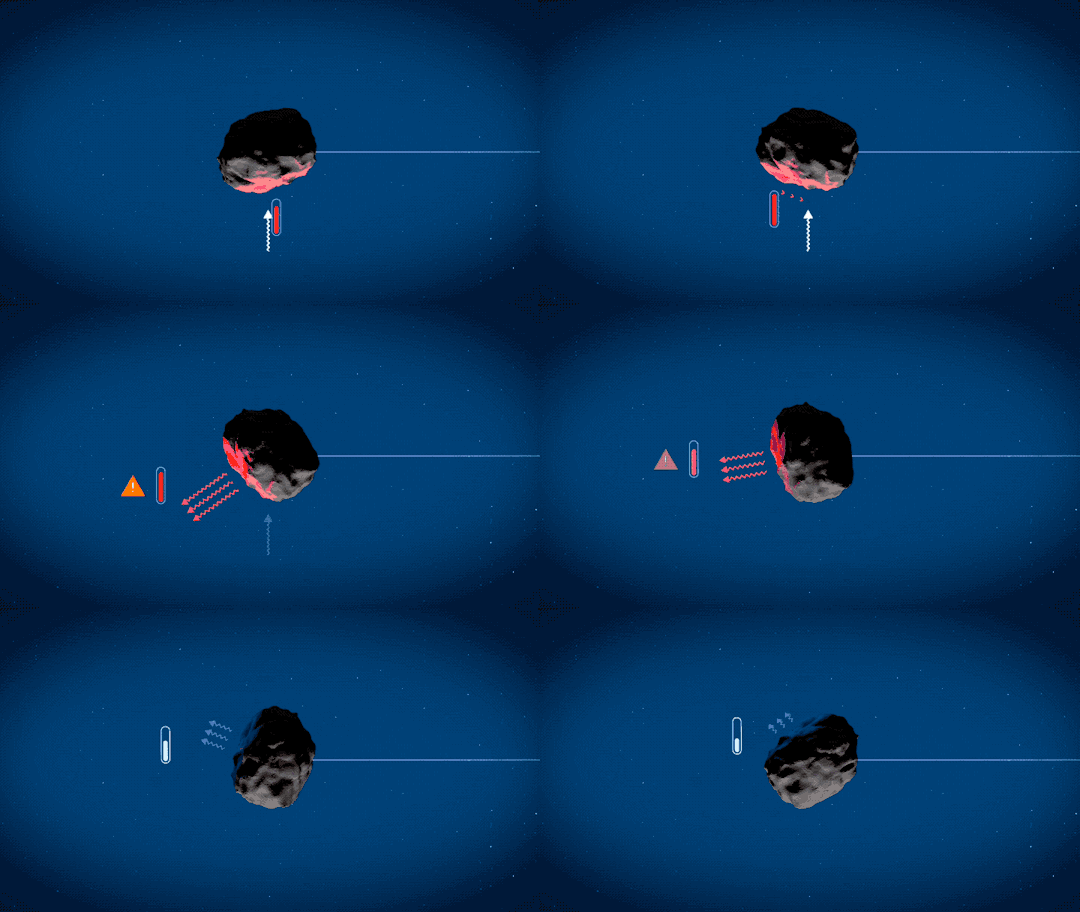
Astronomers have calculated that Bennu’s orbit has drifted about 280 meters (0.18 miles) per year toward the Sun since it was discovered. This could be because of a phenomenon called the Yarkovsky effect, a process whereby sunlight warms one side of a small, dark asteroid and then radiates as heat off the asteroid as it rotates. The heat energy thrusts an asteroid either away from the Sun, if it has a prograde spin like Earth, which means it spins in the same direction as its orbit, or toward the Sun in the case of Bennu, which spins in the opposite direction of its orbit. OSIRIS-REx will measure the Yarkovsky effect from close-up to help scientists predict the movement of Bennu and other asteroids. Already, measurements of how this force impacted Bennu over time have revealed that it likely pushed it to our corner of the solar system from the asteroid belt.
9. … and to keep asteroids at bay
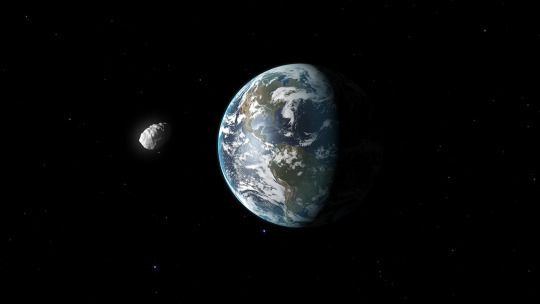
One reason scientists are eager to predict the directions asteroids are drifting is to know when they’re coming too-close-for-comfort to Earth. By taking the Yarkovsky effect into account, they’ve estimated that Bennu could pass closer to Earth than the Moon is in 2135, and possibly even closer between 2175 and 2195. Although Bennu is unlikely to hit Earth at that time, our descendants can use the data from OSIRIS-REx to determine how best to deflect any threatening asteroids that are found, perhaps even by using the Yarkovsky effect to their advantage.
10. It’s a gift that will keep on giving
Samples of Bennu will return to Earth on September 24, 2023. OSIRIS-REx scientists will study a quarter of the regolith. The rest will be made available to scientists around the globe, and also saved for those not yet born, using techniques not yet invented, to answer questions not yet asked.
Read the web version of this week’s “Solar System: 10 Things to Know” article HERE.
Make sure to follow us on Tumblr for your regular dose of space: http://nasa.tumblr.com.
Tags:
#space #the power of science #proud citizen of The Future #Bennu #long post
To celebrate the occasion, we’re sharing photos from our photographers that chronicle what’s making news across the agency – from launches and landings to important science announcements to images taken from the vantage point of space.
Take a look!
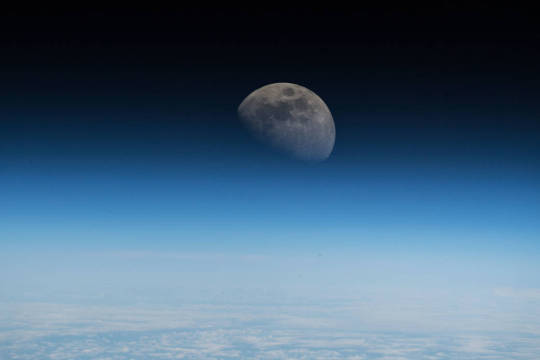
A Closer View of the Moon
Posted to Twitter by European Space Agency astronaut Alexander Gerst, this image shows our planet’s Moon as seen from the International Space Station. As he said in the tweet, “By orbiting the Earth almost 16 times per day, the #ISS crew travel the distance to the Moon and back – every day. #Horizons”
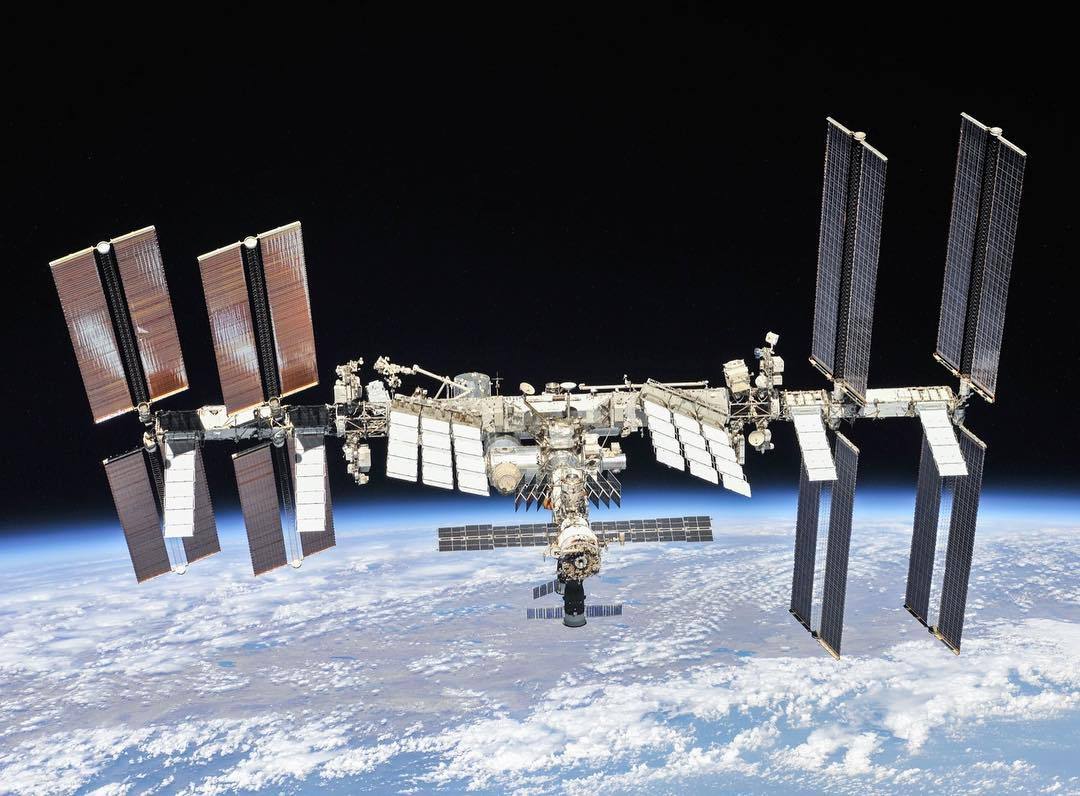
The International Space Station is the world’s only orbital laboratory. An international partnership of space agencies provides and operates the elements of the station. The principals are the space agencies of the United States, Russia, Europe, Japan and Canada.
Photo Credit: NASA
Spacewalk Selfie
NASA astronaut Ricky Arnold took this selfie during the May 16, 2018, spacewalk to perform upgrades on the International Space Station, saying in a tweet “An amazing view of our one and only planet.”
Arnold and fellow spacewalker Drew Feustel donned spacesuits and worked for more than six hours outside the station to finish upgrading cooling system hardware and install new and updated communications equipment for future dockings of commercial crew spacecraft.
Photo Credit: NASA
Preparing to Leave Earth
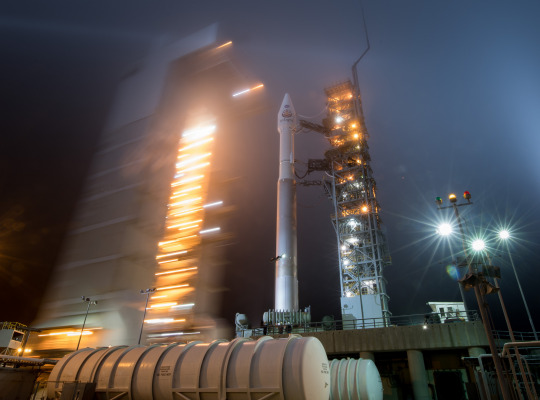
The mobile service tower at Space Launch Complex-3 is rolled back to reveal the United Launch Alliance Atlas-V rocket with NASA’s InSight spacecraft onboard, Friday, May 4, 2018, at Vandenberg Air Force Base in California. InSight, short for Interior Exploration using Seismic Investigations, Geodesy and Heat Transport, is a Mars lander designed to study the “inner space” of Mars: its crust, mantle, and core.
Photo Credit: NASA/Bill Ingalls
Launch Long Exposure
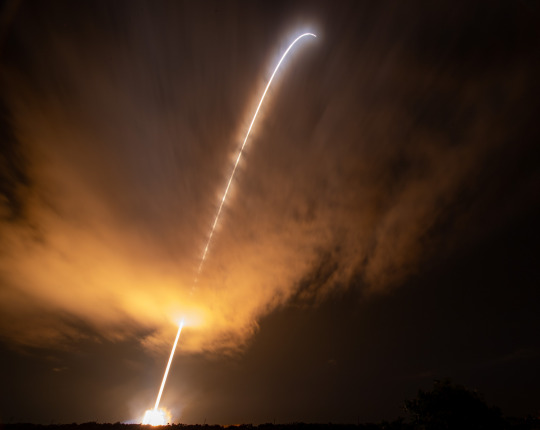
The United Launch Alliance Delta IV Heavy rocket is seen in this long exposure photograph as it launches NASA’s Parker Solar Probe to touch the Sun, Sunday, Aug. 12, 2018 from Launch Complex 37 at Cape Canaveral Air Force Station, Florida. Parker Solar Probe is humanity’s first-ever mission into a part of the Sun’s atmosphere called the corona. Here it will directly explore solar processes that are key to understanding and forecasting space weather events that can impact life on Earth.
Photo Credit: NASA/Bill Ingalls
Waving Farewell
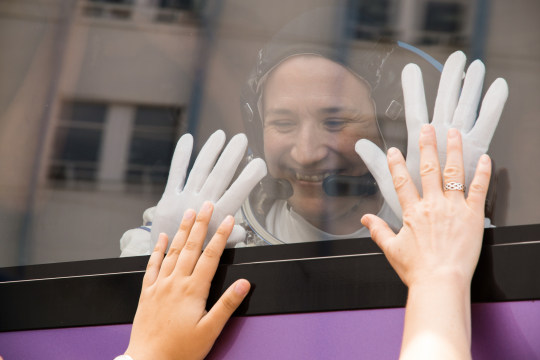
Expedition 56 flight engineer Serena Auñón-Chancellor of NASA waves farewell to family and friends as she and Soyuz Commander Sergey Prokopyev of Roscosmos and flight engineer Alexander Gerst of European Space Agency depart Building 254 for the launch pad a few hours before their launch, Wednesday, June 6, 2018 at the Baikonur Cosmodrome in Kazakhstan. Auñón-Chancellor, Prokopyev, and Gerst launched aboard the Soyuz MS-09 spacecraft at 7:12am EDT (5:12pm Baikonur time) on June 6 to begin their journey to the International Space Station.
Photo Credit: NASA/Victor Zelentsov
Launching Humans to Space
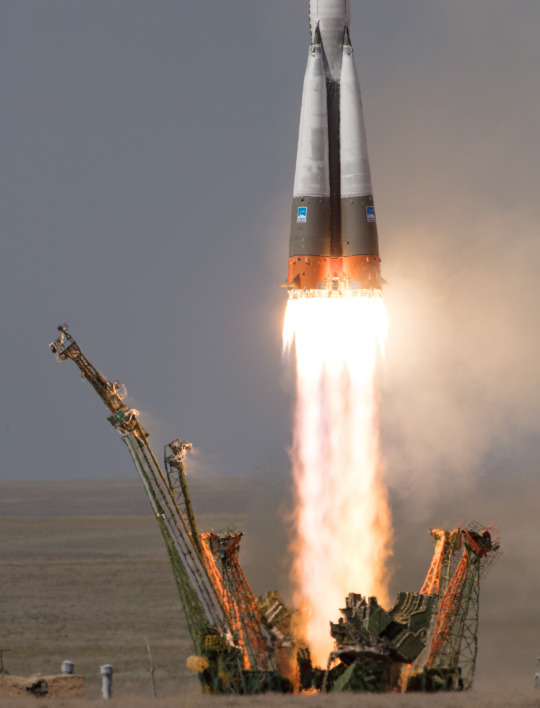
The Soyuz MS-09 rocket is launched with Expedition 56 Soyuz Commander Sergey Prokopyev of Roscosmos, flight engineer Serena Auñón-Chancellor of NASA, and flight engineer Alexander Gerst of ESA (European Space Agency), Wednesday, June 6, 2018 at the Baikonur Cosmodrome in Kazakhstan. Prokopyev, Auñón-Chancellor, and Gerst will spend the next six months living and working aboard the International Space Station.
Photo Credit: NASA/Joel Kowsky
Rethinking Aircraft Design
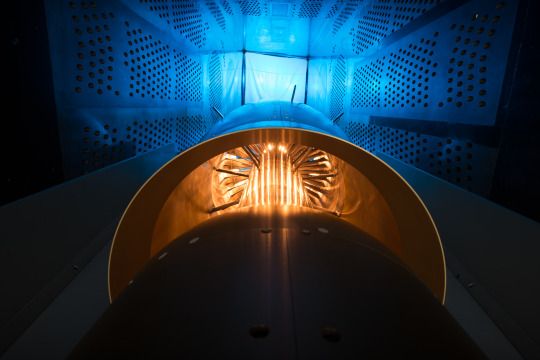
In an effort to improve fuel efficiency, NASA and the aircraft industry are rethinking aircraft design. Inside the 8’ x 6’ wind tunnel at NASA Glenn Research Center, engineers tested a fan and inlet design, commonly called a propulsor, which could use four to eight percent less fuel than today’s advanced aircraft.
Photo Credit: NASA/Rami Daud
Flying Observatory
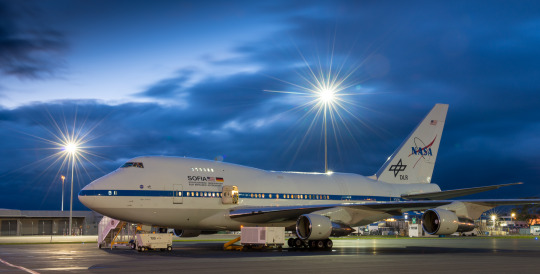
SOFIA, the Stratospheric Observatory for Infrared Astronomy, is the largest airborne observatory in the world, capable of making observations that are impossible for even the largest and highest ground-based telescopes. During its lifetime, SOFIA also will inspire the development of new scientific instrumentation and foster the education of young scientists and engineers.
Photo Credit: NASA/SOFIA/Waynne Williams
Experimenting with Venus-like conditions
A close-up view of crystals that developed on materials exposed to conditions on Venus in NASA Glenn’s Extreme Environments Rig. This unique and world class ground-based test rig can accurately most simulate atmospheric conditions for any planet or moon in the solar system and beyond.
Photo Credit: NASA/Bridget Caswell
Honeycomb Close Up
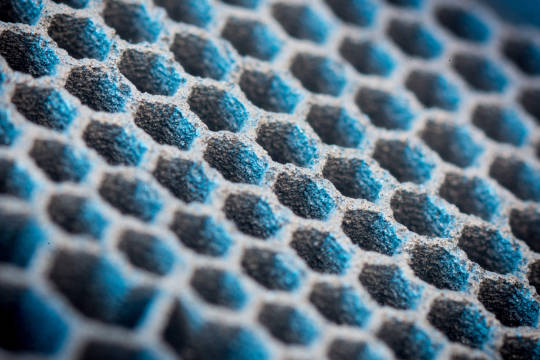
A close-up view of 3-D printed honeycomb patterns made in NASA Glenn manufacturing lab using a method called binder jetting. The honeycomb structures can find use in several applications such as a strong core for lightweight sandwich panels, acoustic panels for noise attenuation and innovative cellular structures.
#long post #pretty things #space #the power of science #proud citizen of The Future #I especially like the third one #that’s not an angle I normally see
This stunning artwork, titled “Margaret’s Moon”, was made by Dr. Jamie Molaro (aka Spacejammie), and I’ll just post her own description:
This piece was made using data from the Lunar Orbiter Laser Altimeter
(LOLA) aboard the Lunar Reconnaissance Orbiter (LRO) spacecraft. The
topography is the same as used in The Book of Moon, though with fewer layers. The text on the pages is original source code
for the Apollo 11 guidance computer for the command and lunar modules.
The code was written by NASA computer scientist Margaret Hamilton in
1969. It was during this project that she invented the term “software
engineering” to describe the process of writing code.
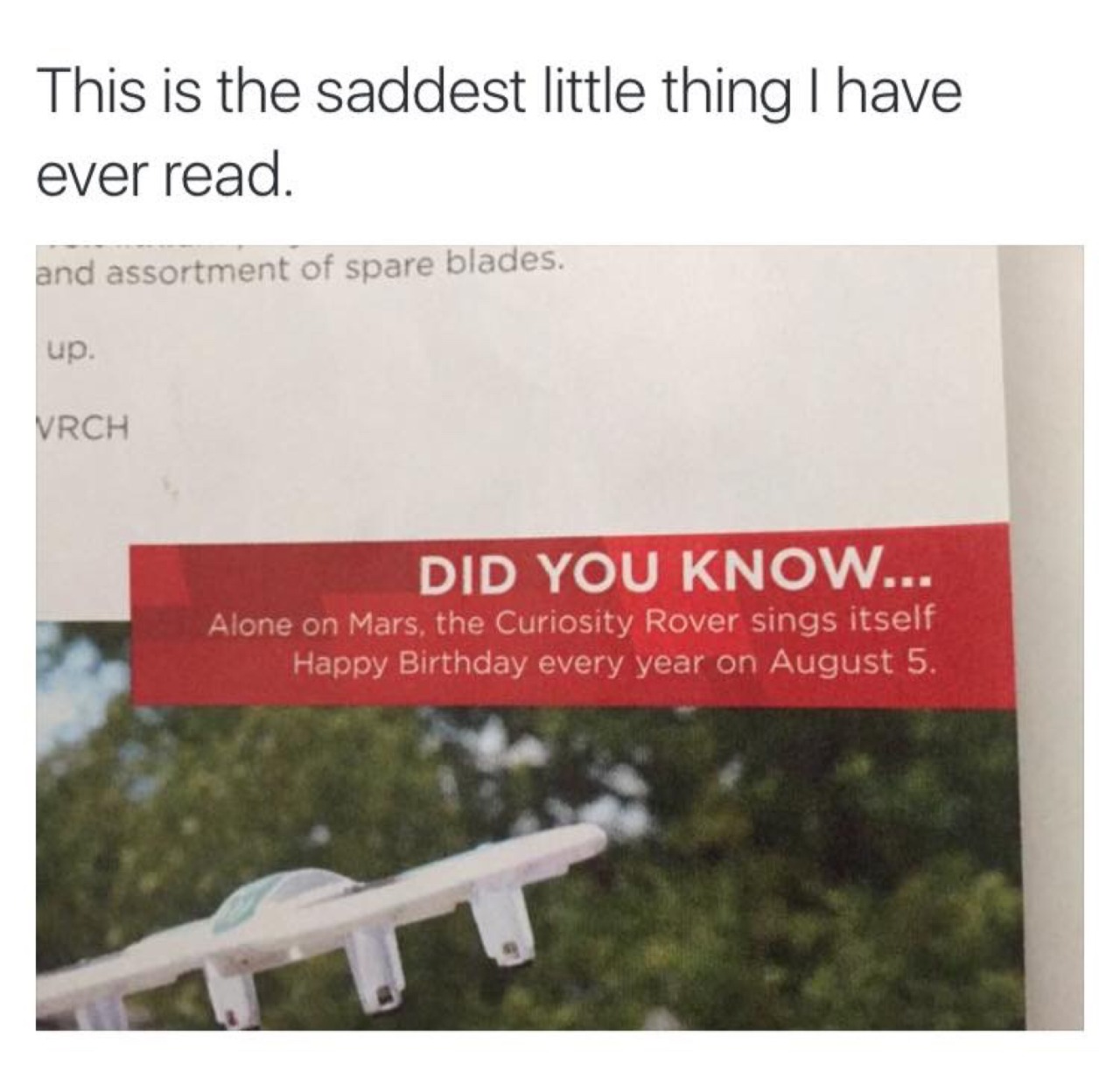
Send me to Mars with party supplies before next august 5th
No guys you don’t understand.
The soil testing equipment on Curiosity makes a buzzing noise and the pitch of the noise changes depending on what part of an experiment Curiosity is performing, this is the way Curiosity sings to itself.
So some of the finest minds currently alive decided to take incredibly expensive important scientific equipment and mess with it until they worked out how to move in just the right way to sing Happy Birthday, then someone made a cake on Curiosity’s birthday and took it into Mission control so that a room full of brilliant scientists and engineers could throw a birthday party for a non-autonomous robot 225 million kilometres away and listen to it sing the first ever song sung on Mars*, which was Happy Birthday.
This isn’t a sad story, this a happy story about the ridiculousness of humans and the way we love things. We built a little robot and called it Curiosity and flung it into the star to go and explore places we can’t get to because it’s name is in our nature and then just because we could, we taught it how to sing.
That’s not sad, that’s awesome.
*this is different from the first song ever played on mars (Reach For The Stars by Will.I.Am) which happened the year before, singing is different from playing
In July 2015, we saw Pluto up close for the first time and—after three years of intense study—the surprises keep coming. “It’s clear,” says Jeffery Moore, New Horizons’ geology team lead, “Pluto is one of the most amazing and complex objects in our solar system.”
1. An Improving View
These are combined observations of Pluto over the course of several decades. The first frame is a digital zoom-in on Pluto as it appeared upon its discovery by Clyde Tombaugh in 1930. More frames show of Pluto as seen by the Hubble Space Telescope. The final sequence zooms in to a close-up frame of Pluto taken by our New Horizons spacecraft on July 14, 2015.
2. The Heart
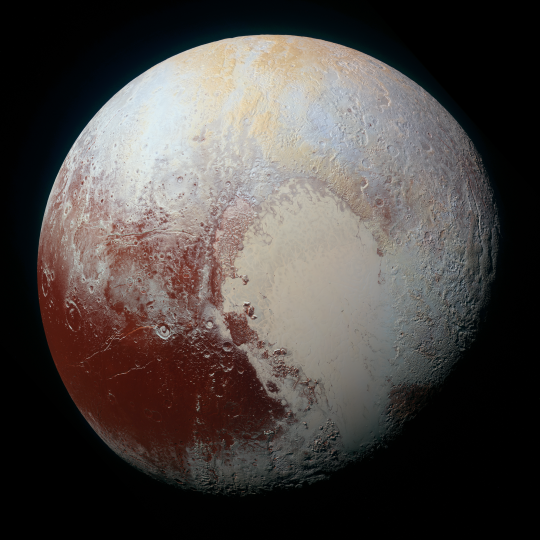
Pluto’s surface sports a remarkable range of subtle colors are enhanced in this view to a rainbow of pale blues, yellows, oranges, and deep reds. Many landforms have their own distinct colors, telling a complex geological and climatological story that scientists have only just begun to decode. The image resolves details and colors on scales as small as 0.8 miles (1.3 kilometers). Zoom in on the full resolution image on a larger screen to fully appreciate the complexity of Pluto’s surface features.
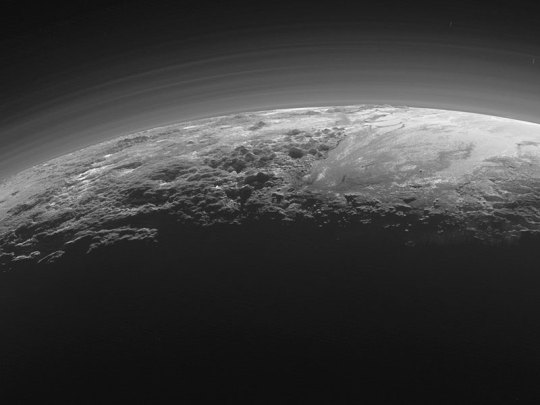
Just 15 minutes after its closest approach to Pluto, the New Horizons spacecraft captured this near-sunset view of the rugged, icy mountains and flat ice plains extending to Pluto’s horizon. The backlighting highlights more than a dozen layers of haze in Pluto’s tenuous atmosphere. The image was taken from a distance of 11,000 miles (18,000 kilometers) to Pluto; the scene is 780 miles (1,250 kilometers) wide.
5. Icy Dunes
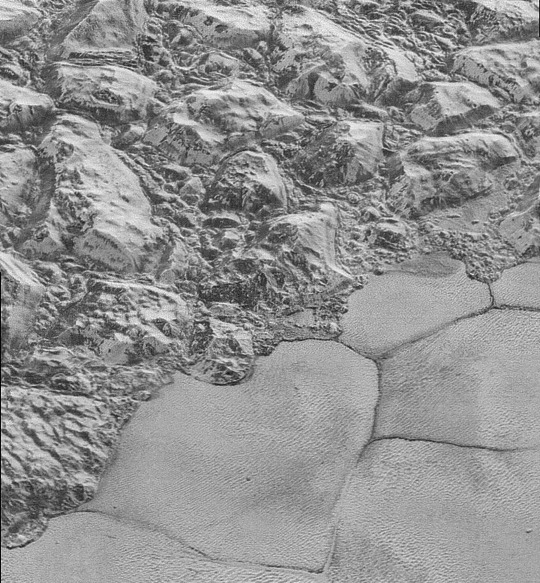
Found near the mountains that encircle Pluto’s Sputnik Planitia plain, newly discovered ridges appear to have formed out of particles of methane ice as small as grains of sand, arranged into dunes by wind from the nearby mountains.
6. Glacial Plains
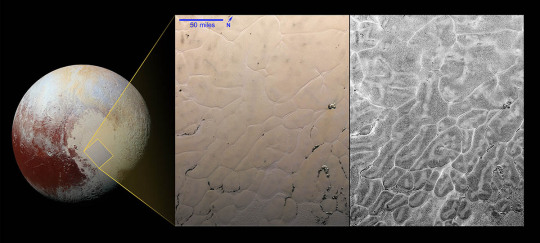
The vast nitrogen ice plains of Pluto’s Sputnik Planitia – the western half of Pluto’s “heart”—continue to give up secrets. Scientists processed images of Sputnik Planitia to bring out intricate, never-before-seen patterns in the surface textures of these glacial plains.
7. Colorful and Violent Charon
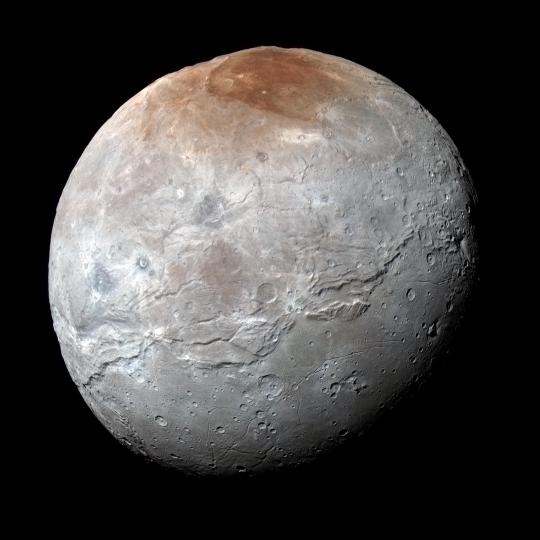
High resolution images of Pluto’s largest moon, Charon, show a surprisingly complex and violent history. Scientists expected Charon to be a monotonous, crater-battered world; instead, they found a landscape covered with mountains, canyons, landslides, surface-color variations and more.
8. Ice Volcanoes
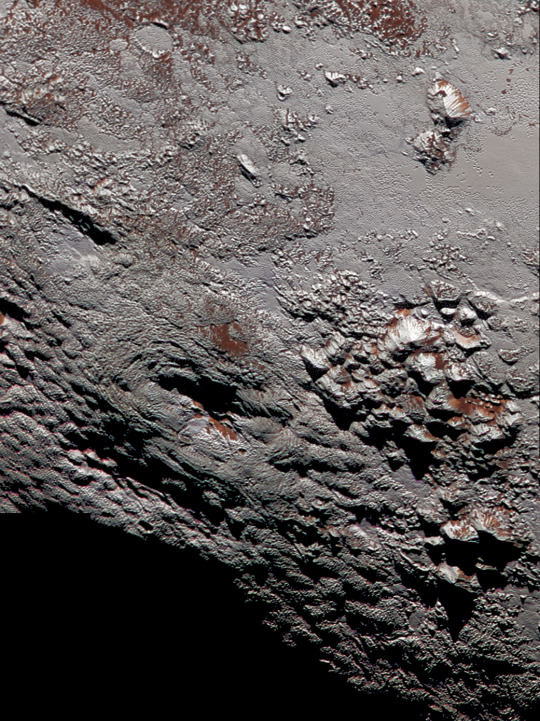
One of two potential cryovolcanoes spotted on the surface of Pluto by the New Horizons spacecraft. This feature, known as Wright Mons, was informally named by the New Horizons team in honor of the Wright brothers. At about 90 miles (150 kilometers) across and 2.5 miles (4 kilometers) high, this feature is enormous. If it is in fact an ice volcano, as suspected, it would be the largest such feature discovered in the outer solar system.
9. Blue Rays
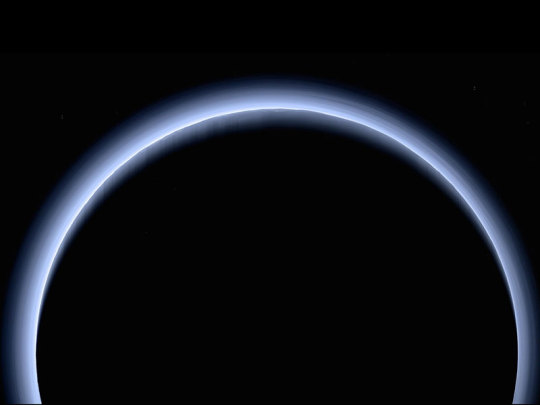
Pluto’s receding crescent as seen by New Horizons at a distance of 120,000 miles (200,000 kilometers). Scientists believe the spectacular blue haze is a photochemical smog resulting from the action of sunlight on methane and other molecules in Pluto’s atmosphere. These hydrocarbons accumulate into small haze particles, which scatter blue sunlight—the same process that can make haze appear bluish on Earth.
10. Encore
On Jan. 1, 2019, New Horizons will fly past a small Kuiper Belt Object named MU69 (nicknamed Ultima Thule)—a billion miles (1.5 billion kilometers) beyond Pluto and more than four billion miles (6.5 billion kilometers) from Earth. It will be the most distant encounter of an object in history—so far—and the second time New Horizons has revealed never-before-seen landscapes.
Make sure to follow us on Tumblr for your regular dose of space: http://nasa.tumblr.com.
Tags:
#ooh #I didn’t know about the Kuiper Belt Extended Mission #Pluto #space #the power of science #the more you know #long post








 Brinens and Things - Tumblr Mirror
