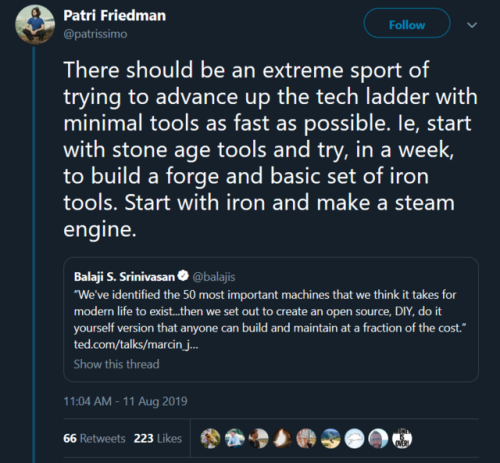
Should do it ancient greek/time traveller style: Once the competition starts you aren’t allowed to use anything you didn’t find in nature or make yourself, including the clothes you wear.
The problem with that is the main limitation would be which ores and other materials you had on hand, rather than your technical prowess. Most of the event would be about prospecting rather than building stuff. Which might be truer to how progress actually goes, but less true to what the event is aiming for. And it would take many times longer.
Or what if we only let them rely on modern sources for things that they could realistically get with something they’ve already built? So like no ores until you have developed what’s needed for mining etc., but once you have you don’t have to mine it yourself?
This sounds fun, but I’ve been in the Bay Area too long, so I read “advance up the tech ladder” as founding a startup and getting acqui-hired and becoming a VP at Google or something.
I think that would also be a fun extreme sport to watch, and I think people should still have to start naked.
Tags:
#anything that makes me laugh this much deserves a reblog #(I also read it that way)
#tag rambles #Brin owns *two* 2010’s computers now #proud citizen of The Future #our home and cherished land #home of the brave #*finally* managed to hunt down this post #(or maybe an identical text post‚ who knows) #didn’t manage to find any copy I’d have *originally* seen but hopefully this random person won’t mind #anyway #I was thinking about this post again while researching the Wi-Fi access on local public transit #(answer: most routes don’t have Wi-Fi and the exceptions are not routes that I am likely to use much) #(buses aren’t yet homes) #home is every public hotspot in town #home is every hotspot run by the county government (they all have the same name) #home is the grocery stores we go to in New York to stock up on cheaper and/or tastier American food #home is that one motel we always stop at for the night on the way to Massachusetts #home is a couple of hotel chains with Massachusetts branches we’ve stayed at over the years #home is every shopping district I’ve ever mapped #I like this post #I’m not a citizen of the world but I am a citizen of every place I’ve ever gotten to know #(admittedly if you restrict to places where my *laptop* connects to Wi-Fi automatically it’s a much smaller list) #(possibly just my house: I don’t think I’ve stayed at any hotels with this laptop and–unlike my phone– #laptops don’t inherit Wi-Fi settings from their predecessors) #(but I like the smartphone interpretation better) #((P.S. interestingly‚ I was unable to reblog this post on my first attempt because my house’s Wi-Fi glitched))
“April the twelfth is a High Holiday, the highest, Yuri’s Night, the day mankind first broke Earth’s eggshell and touched our rightful Space— a day for hope, for thanks, for recommitment to the Great Project.”
The Will to Battle, by Ada Palmer
Tags:
#Terra Ignota #space #proud citizen of The Future #Tumblr traditions
Peterson may be an academic, but he’s dispensing with the academy’s constraints. His university salary is around $128,000; that now looks modest beside the $1m a year he receives in crowdfunding via the site Patreon, in return for YouTube Q&As. Traditional universities charge “unforgivable” fees, and “haven’t got a hope of surviving in their present form”, he says. He has hired three people to work on a proposal for a new online university — “user-funded at the lowest possible cost, but also crowdsourced in terms of its operation”. He is in touch with Peter Thiel, the venture capitalist who urges undergraduates to drop out. There’s a blurred line between the thinker and the salesman, and Peterson has crossed it.
It’s totally poisoned because Peterson is tied to it.
But the online university thing might not be a bad idea. You could probably replace quite a bit of the operation of a modern university for lecture-based subjects with a mix of pre-recorded videos, and decentralized discussion with other students, and “crowdsourced” operation that relies on offloading some tasks to students.
Probably the biggest issues would be to sell it as something that people consider reputable (a number of purely online universities exist and have lower costs, but they have issues building a reputation), and dealing with things like arranging for securely proctored tests.
When you say that test proctoring would be a big issue, do you mean you think it would be a big issue for online universities *in general*, or specifically a problem for online universities who are aiming to destroy the old tertiary-education system (rather than just adding more options to it)?
My university technically has a corporeal campus, but I’ve never been there and neither have the vast majority of the other students. They have standing arrangements with a bunch of universities, community colleges, and…*looks at list*…huh, libraries too, maybe you *could* make this system work even if you’re trying to end all corporeal campuses (and so don’t want a system dependent on them continuing to exist). Anyway, they have standing arrangements with a bunch of places across the country to host the exams of the local students. My local community college charges the student a $30/exam hosting fee (to compensate for increasing their proctor’s workload and such), but other than that it’s really a non-issue.
(The computerised exams also have an option to have somebody watch you over a webcam, but I’ve never tried that.)
(now if only my university would join the reciprocal college Internet system, because as it stands I’m not allowed to use the Wi-Fi at *my own exam centre*, and it makes coordinating with my ride a lot trickier. but that’s another matter.)
—
I see people sometimes who think that exam proctoring is some massive obstacle that online universities will soon face and probably fail to overcome, and it’s like…
One time I read an article about how self-driving cars on public roads would be a disaster, because–not being able to make eye contact with the driver–pedestrians would have no way of knowing whether the car had noticed them and would stop for them, and the car and pedestrian would get into standoffs where neither was willing to risk moving forward (or, worse, *both* of them gave up waiting for the other at the same time). The writer appeared to think that this was insurmountable and would destroy all public goodwill towards self-driving cars.
A few months previously, I’d seen a news clip about a self-driving-car prototype with a smiley-face-shaped light on the front, which it lights up while stopping for a pedestrian in order to let the pedestrian know they’ve been noticed.
The way I felt reading that self-driving-car article is how I feel when people say online-university exam proctoring is a huge issue. The doom they are just now getting around to foretelling has already been noticed and averted, and without anywhere near as much difficulty as they think it’s going to take.
Interesting.
Most online college classes I’ve taken have either had no proctoring system or some terrible web-based one that caused a lot of issues. One of the nearby community colleges did proctoring for a fee as a service but the classes rarely allowed that option to be used. Maybe its consistently better ran by colleges that are purely online than colleges that are mostly meatspace but offer a few online classes.
…I graduated from a great (accredited, affordable, semi-self-paced!) online university. Our test proctoring was done over webcam and had fairly stringent rules (360 pan of the room, ID, etc). I had a test ended by the proctor once for looking like I had something written on a calculator. You could cheat with the level of difficulty similar to a normal classroom exam but not any more easily than that.
Tags:
#interesting #adventures in University Land #conversational aglets #proud citizen of The Future
Peterson may be an academic, but he’s dispensing with the academy’s constraints. His university salary is around $128,000; that now looks modest beside the $1m a year he receives in crowdfunding via the site Patreon, in return for YouTube Q&As. Traditional universities charge “unforgivable” fees, and “haven’t got a hope of surviving in their present form”, he says. He has hired three people to work on a proposal for a new online university — “user-funded at the lowest possible cost, but also crowdsourced in terms of its operation”. He is in touch with Peter Thiel, the venture capitalist who urges undergraduates to drop out. There’s a blurred line between the thinker and the salesman, and Peterson has crossed it.
It’s totally poisoned because Peterson is tied to it.
But the online university thing might not be a bad idea. You could probably replace quite a bit of the operation of a modern university for lecture-based subjects with a mix of pre-recorded videos, and decentralized discussion with other students, and “crowdsourced” operation that relies on offloading some tasks to students.
Probably the biggest issues would be to sell it as something that people consider reputable (a number of purely online universities exist and have lower costs, but they have issues building a reputation), and dealing with things like arranging for securely proctored tests.
When you say that test proctoring would be a big issue, do you mean you think it would be a big issue for online universities *in general*, or specifically a problem for online universities who are aiming to destroy the old tertiary-education system (rather than just adding more options to it)?
My university technically has a corporeal campus, but I’ve never been there and neither have the vast majority of the other students. They have standing arrangements with a bunch of universities, community colleges, and…*looks at list*…huh, libraries too, maybe you *could* make this system work even if you’re trying to end all corporeal campuses (and so don’t want a system dependent on them continuing to exist). Anyway, they have standing arrangements with a bunch of places across the country to host the exams of the local students. My local community college charges the student a $30/exam hosting fee (to compensate for increasing their proctor’s workload and such), but other than that it’s really a non-issue.
(The computerised exams also have an option to have somebody watch you over a webcam, but I’ve never tried that.)
(now if only my university would join the reciprocal college Internet system, because as it stands I’m not allowed to use the Wi-Fi at *my own exam centre*, and it makes coordinating with my ride a lot trickier. but that’s another matter.)
—
I see people sometimes who think that exam proctoring is some massive obstacle that online universities will soon face and probably fail to overcome, and it’s like…
One time I read an article about how self-driving cars on public roads would be a disaster, because–not being able to make eye contact with the driver–pedestrians would have no way of knowing whether the car had noticed them and would stop for them, and the car and pedestrian would get into standoffs where neither was willing to risk moving forward (or, worse, *both* of them gave up waiting for the other at the same time). The writer appeared to think that this was insurmountable and would destroy all public goodwill towards self-driving cars.
A few months previously, I’d seen a news clip about a self-driving-car prototype with a smiley-face-shaped light on the front, which it lights up while stopping for a pedestrian in order to let the pedestrian know they’ve been noticed.
The way I felt reading that self-driving-car article is how I feel when people say online-university exam proctoring is a huge issue. The doom they are just now getting around to foretelling has already been noticed and averted, and without anywhere near as much difficulty as they think it’s going to take.
Interesting.
Most online college classes I’ve taken have either had no proctoring system or some terrible web-based one that caused a lot of issues. One of the nearby community colleges did proctoring for a fee as a service but the classes rarely allowed that option to be used. Maybe its consistently better ran by colleges that are purely online than colleges that are mostly meatspace but offer a few online classes.
Tags:
#(June 2018) #conversational aglets #adventures in University Land #proud citizen of The Future
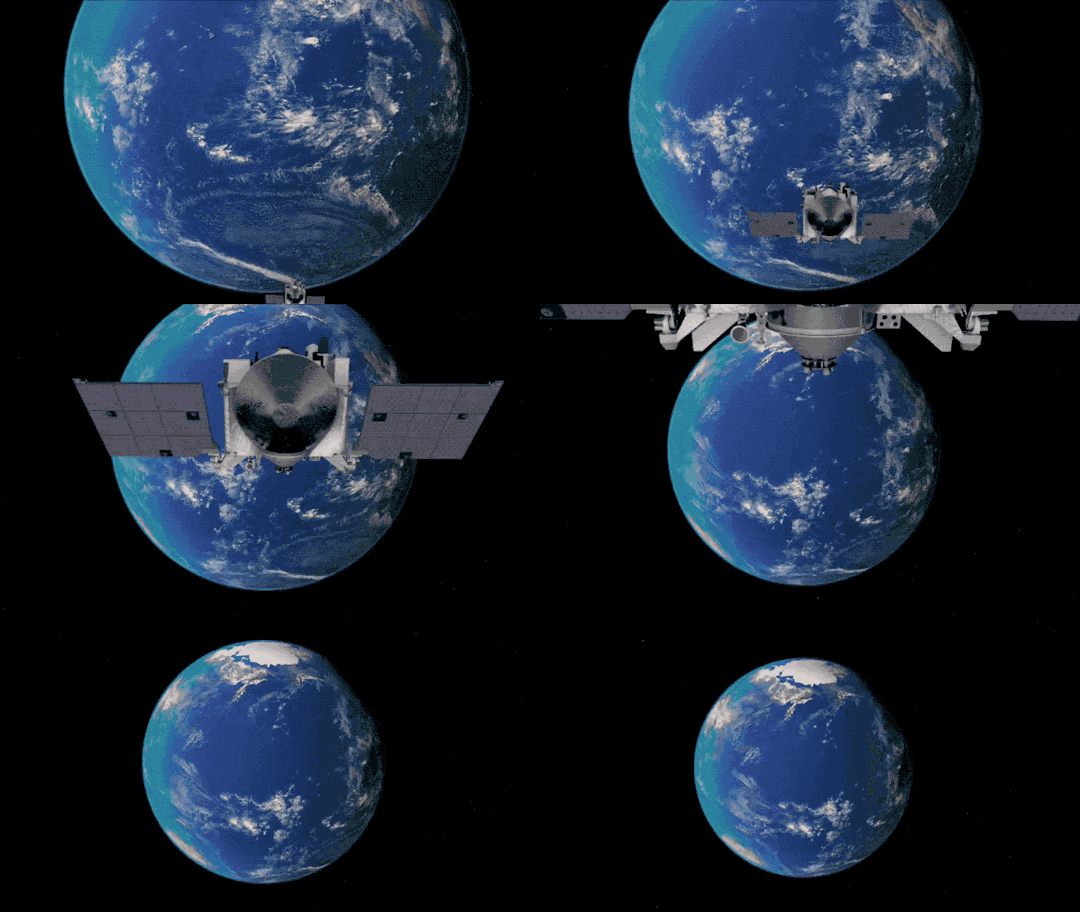
After traveling for two years and billions of kilometers from Earth, the OSIRIS-REx probe is only a few months away from its destination: the intriguing asteroid Bennu. When it arrives in December, OSIRIS-REx will embark on a nearly two-year investigation of this clump of rock, mapping its terrain and finding a safe and fruitful site from which to collect a sample.
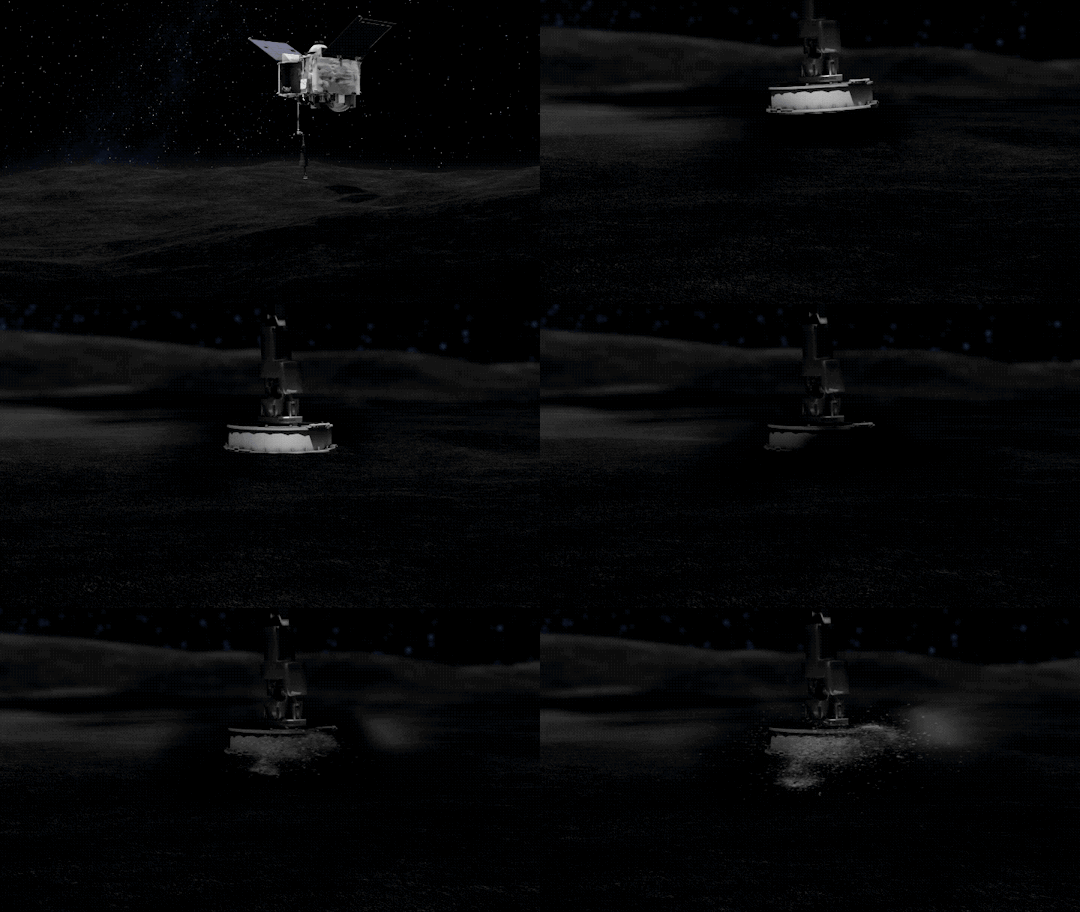
The spacecraft will briefly touch Bennu’s surface around July 2020 to collect at least 60 grams (equal to about 30 sugar packets) of dirt and rocks. It might collect as much as 2,000 grams, which would be the largest sample by far gathered from a space object since the Apollo Moon landings. The spacecraft will then pack the sample into a capsule and travel back to Earth, dropping the capsule into Utah’s west desert in 2023, where scientists will be waiting to collect it.
This years-long quest for knowledge thrusts Bennu into the center of one of the most ambitious space missions ever attempted. But the humble rock is but one of about 780,000 known asteroids in our solar system. So why did scientists pick Bennu for this momentous investigation? Here are 10 reasons:
1. It’s close to Earth
Unlike most other asteroids that circle the Sun in the asteroid belt between Mars and Jupiter, Bennu’s orbit is close in proximity to Earth’s, even crossing it. The asteroid makes its closest approach to Earth every 6 years. It also circles the Sun nearly in the same plane as Earth, which made it somewhat easier to achieve the high-energy task of launching the spacecraft out of Earth’s plane and into Bennu’s. Still, the launch required considerable power, so OSIRIS-REx used Earth’s gravity to boost itself into Bennu’s orbital plane when it passed our planet in September 2017.
2.It’s the right size
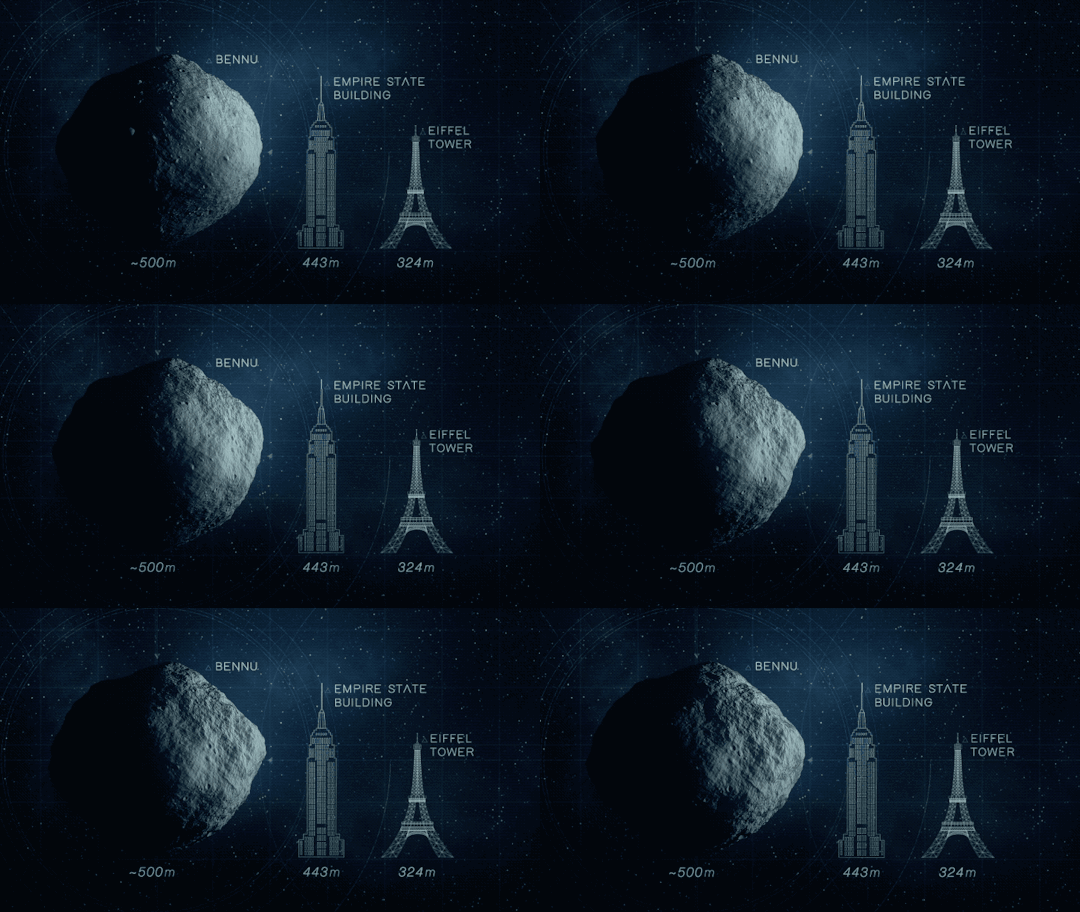
Asteroids spin on their axes just like Earth does. Small ones, with diameters of 200 meters or less, often spin very fast, up to a few revolutions per minute. This rapid spinning makes it difficult for a spacecraft to match an asteroid’s velocity in order to touch down and collect samples. Even worse, the quick spinning has flung loose rocks and soil, material known as “regolith” — the stuff OSIRIS-REx is looking to collect — off the surfaces of small asteroids. Bennu’s size, in contrast, makes it approachable and rich in regolith. It has a diameter of 492 meters, which is a bit larger than the height of the Empire State Building in New York City, and rotating once every 4.3 hours.
3. It’s really old
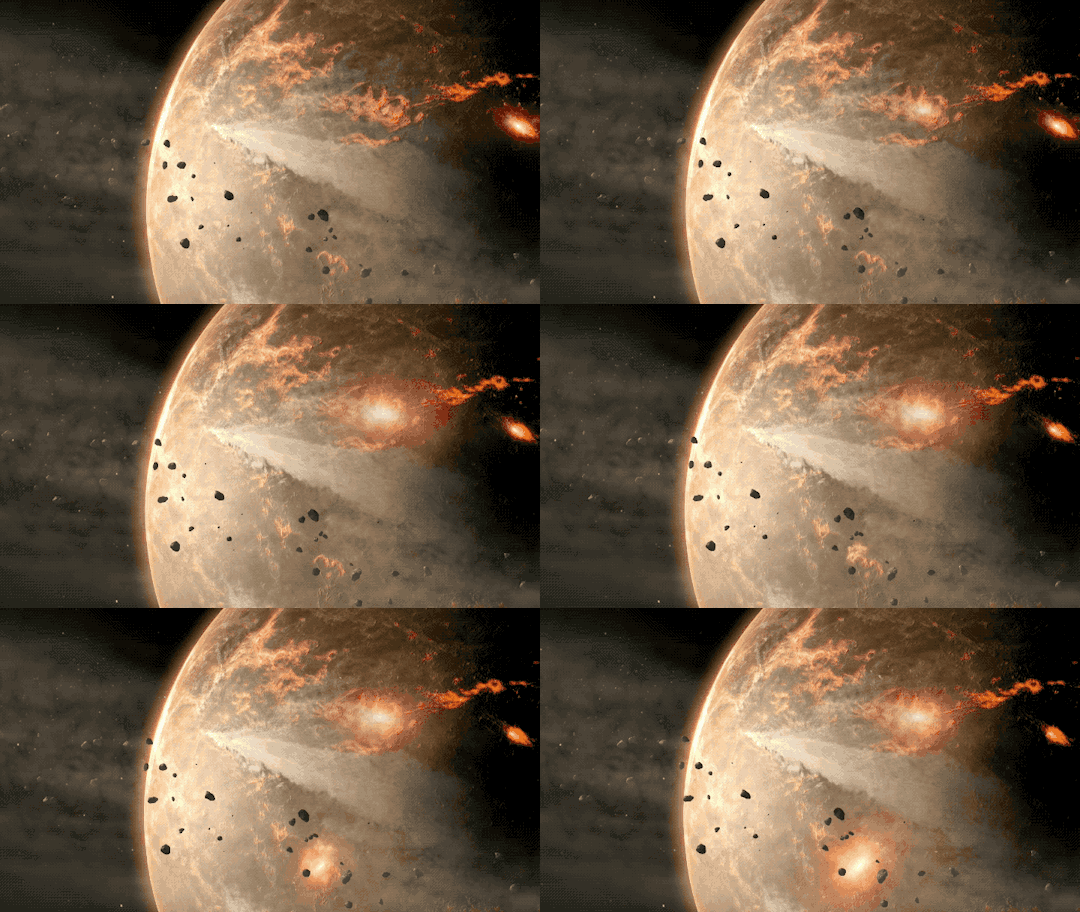
Bennu is a leftover fragment from the tumultuous formation of the solar system. Some of the mineral fragments inside Bennu could be older than the solar system. These microscopic grains of dust could be the same ones that spewed from dying stars and eventually coalesced to make the Sun and its planets nearly 4.6 billion years ago. But pieces of asteroids, called meteorites, have been falling to Earth’s surface since the planet formed. So why don’t scientists just study those old space rocks? Because astronomers can’t tell (with very few exceptions) what kind of objects these meteorites came from, which is important context. Furthermore, these stones, that survive the violent, fiery decent to our planet’s surface, get contaminated when they land in the dirt, sand, or snow. Some even get hammered by the elements, like rain and snow, for hundreds or thousands of years. Such events change the chemistry of meteorites, obscuring their ancient records.
4.It’s well preserved
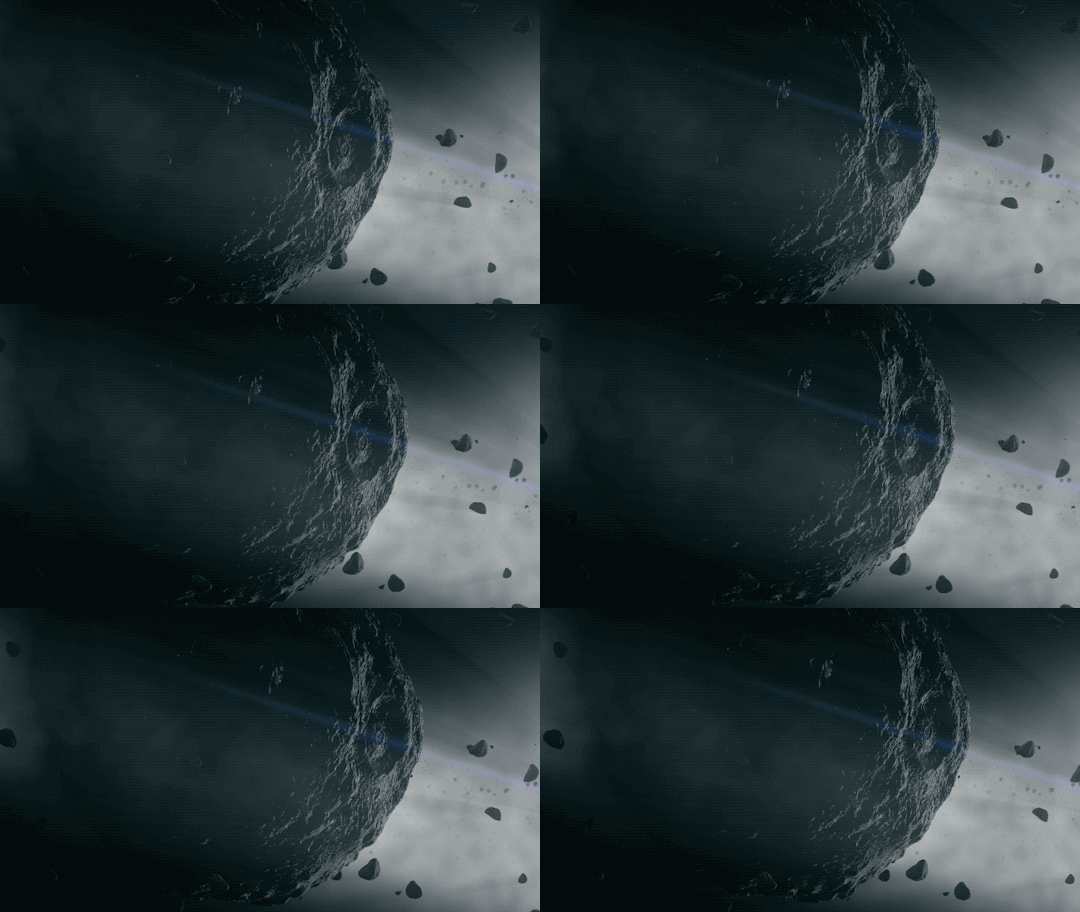
Bennu, on the other hand, is a time capsule from the early solar system, having been preserved in the vacuum of space. Although scientists think it broke off a larger asteroid in the asteroid belt in a catastrophic collision between about 1 and 2 billion years ago, and hurtled through space until it got locked into an orbit near Earth’s, they don’t expect that these events significantly altered it.
5. It might contain clues to the origin of life
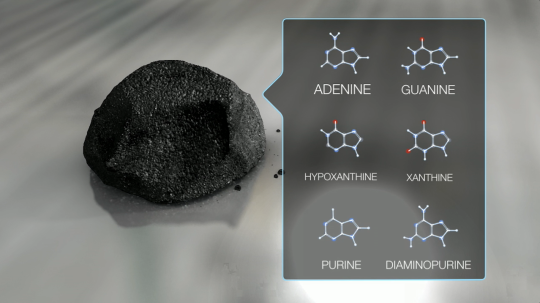
Analyzing a sample from Bennu will help planetary scientists better understand the role asteroids may have played in delivering life-forming compounds to Earth. We know from having studied Bennu through Earth- and space-based telescopes that it is a carbonaceous, or carbon-rich, asteroid. Carbon is the hinge upon which organic molecules hang. Bennu is likely rich in organic molecules, which are made of chains of carbon bonded with atoms of oxygen, hydrogen, and other elements in a chemical recipe that makes all known living things. Besides carbon, Bennu also might have another component important to life: water, which is trapped in the minerals that make up the asteroid.
6. It contains valuable materials
Besides teaching us about our cosmic past, exploring Bennu close-up will help humans plan for the future. Asteroids are rich in natural resources, such as iron and aluminum, and precious metals, such as platinum. For this reason, some companies, and even countries, are building technologies that will one day allow us to extract those materials. More importantly, asteroids like Bennu are key to future, deep-space travel. If humans can learn how to extract the abundant hydrogen and oxygen from the water locked up in an asteroid’s minerals, they could make rocket fuel. Thus, asteroids could one day serve as fuel stations for robotic or human missions to Mars and beyond. Learning how to maneuver around an object like Bennu, and about its chemical and physical properties, will help future prospectors.
7. It will help us better understand other asteroids
Astronomers have studied Bennu from Earth since it was discovered in 1999. As a result, they think they know a lot about the asteroid’s physical and chemical properties. Their knowledge is based not only on looking at the asteroid, but also studying meteorites found on Earth, and filling in gaps in observable knowledge with predictions derived from theoretical models. Thanks to the detailed information that will be gleaned from OSIRIS-REx, scientists now will be able to check whether their predictions about Bennu are correct. This work will help verify or refine telescopic observations and models that attempt to reveal the nature of other asteroids in our solar system.
8. It will help us better understand a quirky solar force …
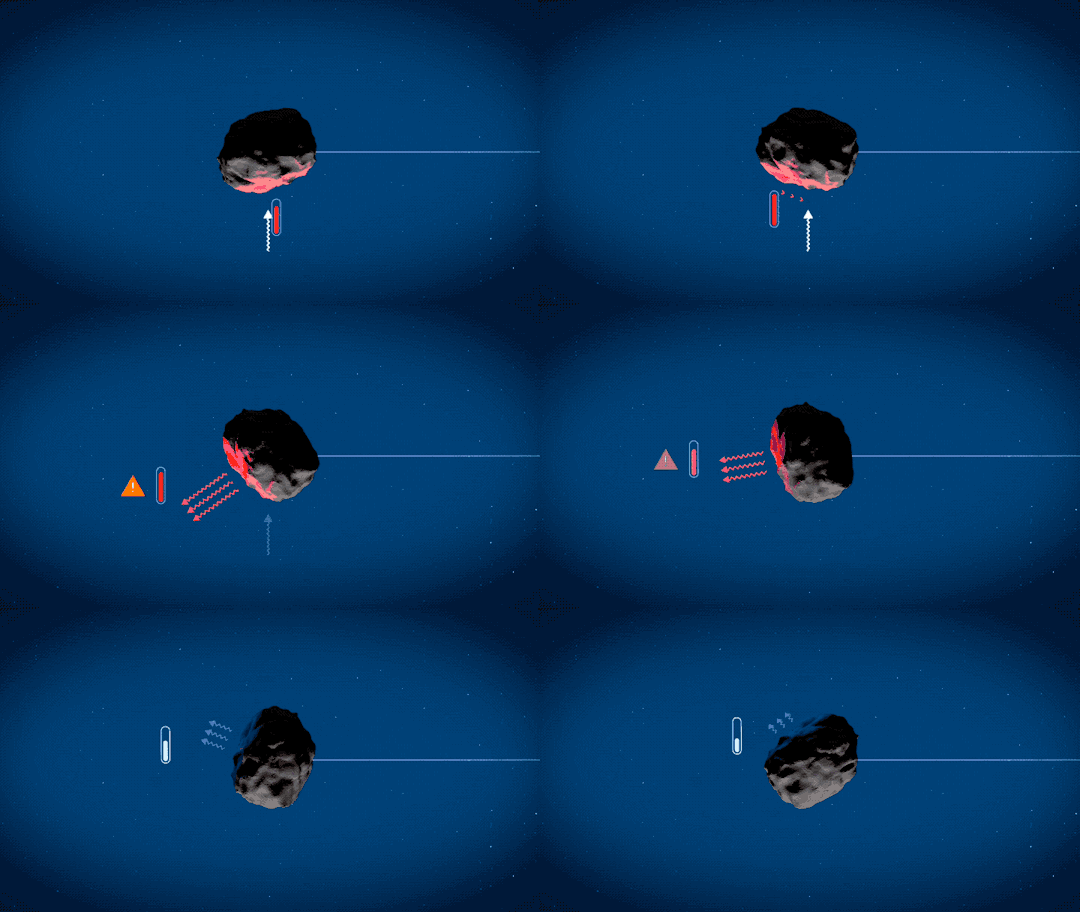
Astronomers have calculated that Bennu’s orbit has drifted about 280 meters (0.18 miles) per year toward the Sun since it was discovered. This could be because of a phenomenon called the Yarkovsky effect, a process whereby sunlight warms one side of a small, dark asteroid and then radiates as heat off the asteroid as it rotates. The heat energy thrusts an asteroid either away from the Sun, if it has a prograde spin like Earth, which means it spins in the same direction as its orbit, or toward the Sun in the case of Bennu, which spins in the opposite direction of its orbit. OSIRIS-REx will measure the Yarkovsky effect from close-up to help scientists predict the movement of Bennu and other asteroids. Already, measurements of how this force impacted Bennu over time have revealed that it likely pushed it to our corner of the solar system from the asteroid belt.
9. … and to keep asteroids at bay
One reason scientists are eager to predict the directions asteroids are drifting is to know when they’re coming too-close-for-comfort to Earth. By taking the Yarkovsky effect into account, they’ve estimated that Bennu could pass closer to Earth than the Moon is in 2135, and possibly even closer between 2175 and 2195. Although Bennu is unlikely to hit Earth at that time, our descendants can use the data from OSIRIS-REx to determine how best to deflect any threatening asteroids that are found, perhaps even by using the Yarkovsky effect to their advantage.
10. It’s a gift that will keep on giving
Samples of Bennu will return to Earth on September 24, 2023. OSIRIS-REx scientists will study a quarter of the regolith. The rest will be made available to scientists around the globe, and also saved for those not yet born, using techniques not yet invented, to answer questions not yet asked.
Read the web version of this week’s “Solar System: 10 Things to Know” article HERE.
Make sure to follow us on Tumblr for your regular dose of space: http://nasa.tumblr.com.
Tags:
#space #the power of science #proud citizen of The Future #Bennu #long post
To celebrate the occasion, we’re sharing photos from our photographers that chronicle what’s making news across the agency – from launches and landings to important science announcements to images taken from the vantage point of space.
Take a look!
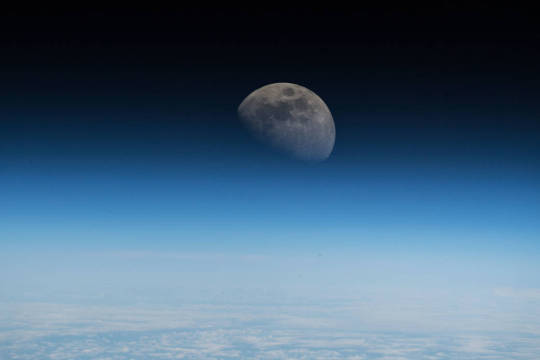
A Closer View of the Moon
Posted to Twitter by European Space Agency astronaut Alexander Gerst, this image shows our planet’s Moon as seen from the International Space Station. As he said in the tweet, “By orbiting the Earth almost 16 times per day, the #ISS crew travel the distance to the Moon and back – every day. #Horizons”
The International Space Station is the world’s only orbital laboratory. An international partnership of space agencies provides and operates the elements of the station. The principals are the space agencies of the United States, Russia, Europe, Japan and Canada.
Photo Credit: NASA
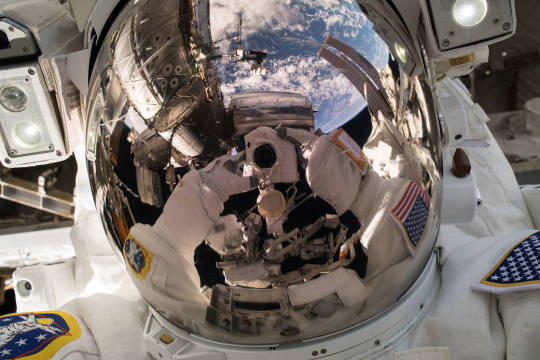
Spacewalk Selfie
NASA astronaut Ricky Arnold took this selfie during the May 16, 2018, spacewalk to perform upgrades on the International Space Station, saying in a tweet “An amazing view of our one and only planet.”
Arnold and fellow spacewalker Drew Feustel donned spacesuits and worked for more than six hours outside the station to finish upgrading cooling system hardware and install new and updated communications equipment for future dockings of commercial crew spacecraft.
Photo Credit: NASA
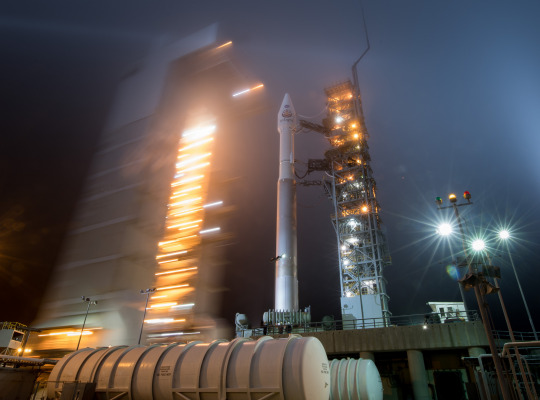
Preparing to Leave Earth
The mobile service tower at Space Launch Complex-3 is rolled back to reveal the United Launch Alliance Atlas-V rocket with NASA’s InSight spacecraft onboard, Friday, May 4, 2018, at Vandenberg Air Force Base in California. InSight, short for Interior Exploration using Seismic Investigations, Geodesy and Heat Transport, is a Mars lander designed to study the “inner space” of Mars: its crust, mantle, and core.
Photo Credit: NASA/Bill Ingalls
Launch Long Exposure
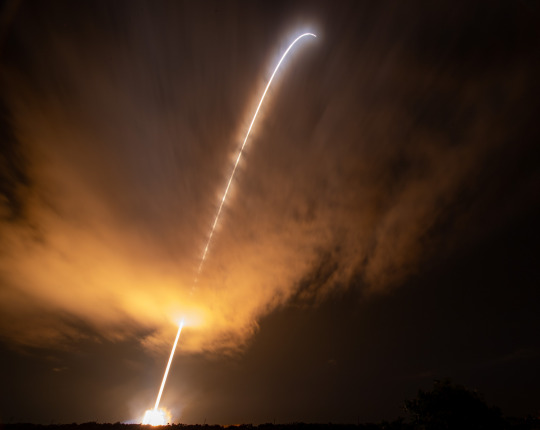
The United Launch Alliance Delta IV Heavy rocket is seen in this long exposure photograph as it launches NASA’s Parker Solar Probe to touch the Sun, Sunday, Aug. 12, 2018 from Launch Complex 37 at Cape Canaveral Air Force Station, Florida. Parker Solar Probe is humanity’s first-ever mission into a part of the Sun’s atmosphere called the corona. Here it will directly explore solar processes that are key to understanding and forecasting space weather events that can impact life on Earth.
Photo Credit: NASA/Bill Ingalls
Waving Farewell
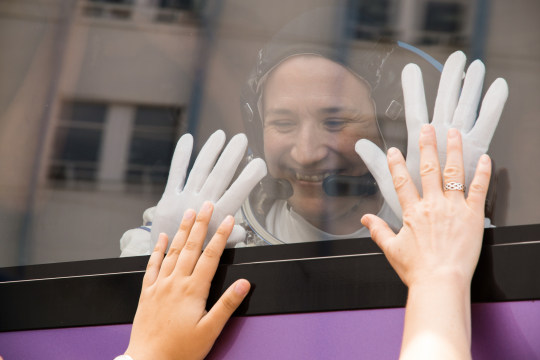
Expedition 56 flight engineer Serena Auñón-Chancellor of NASA waves farewell to family and friends as she and Soyuz Commander Sergey Prokopyev of Roscosmos and flight engineer Alexander Gerst of European Space Agency depart Building 254 for the launch pad a few hours before their launch, Wednesday, June 6, 2018 at the Baikonur Cosmodrome in Kazakhstan. Auñón-Chancellor, Prokopyev, and Gerst launched aboard the Soyuz MS-09 spacecraft at 7:12am EDT (5:12pm Baikonur time) on June 6 to begin their journey to the International Space Station.
Photo Credit: NASA/Victor Zelentsov
Launching Humans to Space
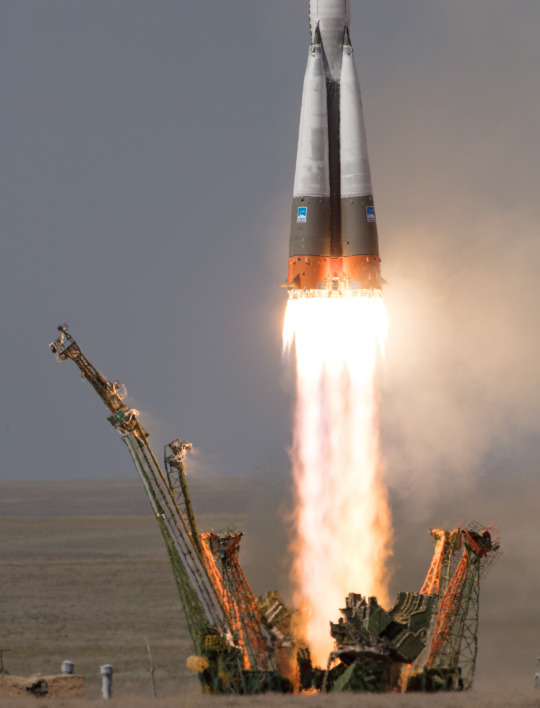
The Soyuz MS-09 rocket is launched with Expedition 56 Soyuz Commander Sergey Prokopyev of Roscosmos, flight engineer Serena Auñón-Chancellor of NASA, and flight engineer Alexander Gerst of ESA (European Space Agency), Wednesday, June 6, 2018 at the Baikonur Cosmodrome in Kazakhstan. Prokopyev, Auñón-Chancellor, and Gerst will spend the next six months living and working aboard the International Space Station.
Photo Credit: NASA/Joel Kowsky
Rethinking Aircraft Design
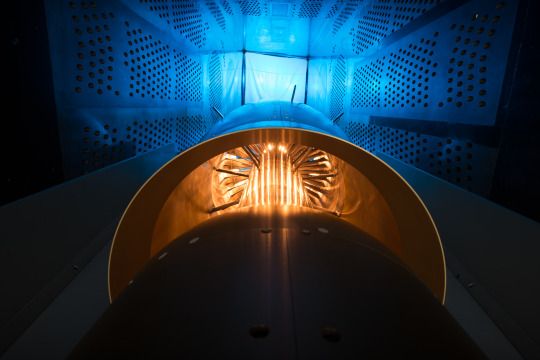
In an effort to improve fuel efficiency, NASA and the aircraft industry are rethinking aircraft design. Inside the 8’ x 6’ wind tunnel at NASA Glenn Research Center, engineers tested a fan and inlet design, commonly called a propulsor, which could use four to eight percent less fuel than today’s advanced aircraft.
Photo Credit: NASA/Rami Daud
Flying Observatory
SOFIA, the Stratospheric Observatory for Infrared Astronomy, is the largest airborne observatory in the world, capable of making observations that are impossible for even the largest and highest ground-based telescopes. During its lifetime, SOFIA also will inspire the development of new scientific instrumentation and foster the education of young scientists and engineers.
Photo Credit: NASA/SOFIA/Waynne Williams
Experimenting with Venus-like conditions
A close-up view of crystals that developed on materials exposed to conditions on Venus in NASA Glenn’s Extreme Environments Rig. This unique and world class ground-based test rig can accurately most simulate atmospheric conditions for any planet or moon in the solar system and beyond.
Photo Credit: NASA/Bridget Caswell
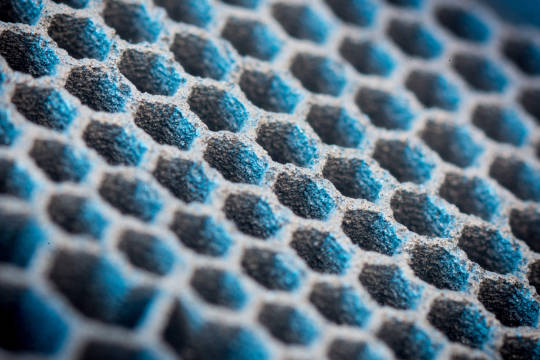
Honeycomb Close Up
A close-up view of 3-D printed honeycomb patterns made in NASA Glenn manufacturing lab using a method called binder jetting. The honeycomb structures can find use in several applications such as a strong core for lightweight sandwich panels, acoustic panels for noise attenuation and innovative cellular structures.
#long post #pretty things #space #the power of science #proud citizen of The Future #I especially like the third one #that’s not an angle I normally see