
d1eeb053f1cdf769fa9b4056082f9711bdc910ac

nasa:

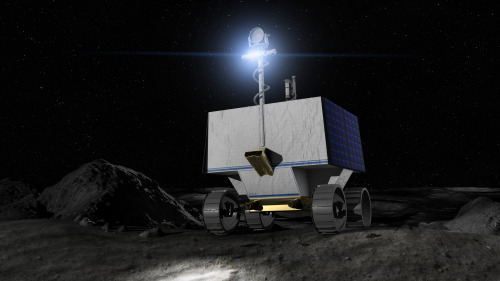
Our water-seeking robotic Moon rover just booked a ride to the Moon’s South Pole. Astrobotic of Pittsburgh, Pennsylvania, has been selected to deliver the Volatiles Investigating Polar Exploration Rover, or VIPER, to the Moon in 2023. During its 100-Earth-day mission, the approximately 1,000-pound rover will roam several miles and use its four science instruments to sample various soil environments in search of water ice. Its survey will help pave the way for a new era of human missions to the lunar surface and will bring us a step closer to developing a sustainable, long-term robotic and human presence on the Moon as part of the Artemis program.

Make sure to follow us on Tumblr for your regular dose of space: http://nasa.tumblr.com


Tags:

#Moon #VIPER #space #the power of science #proud citizen of The Future #the more you know
jadagul:

youzicha:

xenosagaepisodeone:

it’s interesting how many op-eds were written about how children born in the late 90s-onward were digital natives that would go on to become extremely versatile in tech when the reality is that tech becoming more consumer oriented nipped the incentive for a lot of kids to explore beyond the services offered to them. not knowing how to torrent things is only the tip of the iceberg and tech illiteracy is only going to continue to climb as the cultural shift from computers to phones becomes more pronounced in coming years. I used to joke that people in the late aughts saw laptops as like, $700 facebook machines but the modern comparison is that people see laptops as $1200 subscription service for media they don’t own machines.

Or a bit earlier, in the 1970s and early 80s there was a lot of talk about how how computers would empower individuals in school and society, because everyone would learn how to program, so they could learn by experiment and have completely understanding and control of their tools.

For example this video where Alan Kay talks about letting school children play with Smalltalk and write their own programs: “my aim here was not just to get people be able to access things by means of the windows but also to be able to do the equivalent of writing short essays and having them have great effect.” A few minutes later he talks about why being able to read and modify programs is important: “we don’t think a person is literate if all they are able to do is read, we think they should also be able to write”.

Also did not really come true.

I sometimes feel like I grew up at nearly the optimal time for this. I was born in 1986, which is late enough that having access to computers growing up wasn’t a special or unusual thing; they were starting to be everywhere.

But it’s early enough that I still had to understand how they worked in order to use them. My fist computer was a Dos computer; I have very clear memories of navigating directory hierarchies at the command line to find my favorite computer games. There weren’t a lot of ease-of-use features yet, so a lot of basic things exposed the bare metal of everything going on. And stuff broke all the time and you needed to understand things well enough to fix it.

My sisters are much less computer-savvy in a lot of ways. This is partly just a difference of interests, but I’m pretty sure it’s also just that they had to deal with a lot less exposed metal when they started using them.

(not exactly responding to anyone in particular)

When reading through the notes on this post, I noticed that most of the responses talking about the tech-illiterate folks in their lives are talking about…parents, younger siblings, clients. People whose company they *didn’t actively seek out*.

If it were true that people born in the 80’s have better tech-literacy, as a group, than people born in the 00’s, how we would *tell*? How would we distinguish this from “most people in *every* generation are tech-illiterate, people tend to run in social circles with similar levels of computer competence to themselves, and this filter works less well in intergenerational contexts”?

(To be fair there *is* one comment that the student body at their school as of a decade ago was more tech-literate than the current student body, though it’s only one and also some of that could be rose-tinting.)

I was born in the early 90’s, and my tech-literacy doesn’t *feel* generational: it feels *cultural*.

My father isn’t great at handling noobs gently, but he did his best to teach me right. He taught me the power in flexibility: he encouraged me to buy a laptop with my Christmas money rather than a Game Boy Advance, so that I could play games *and* do a lot of other stuff (I later got a GBA for the more console-specific games, but I got the laptop first and he was right to consider it a higher priority), and to buy a Sansa rather than buy an iPod and be trapped in Apple’s walled garden. (And yes–statute of limitations–he then taught me how to torrent music to fill it with. This was back in 2007, when YouTube had very little music and youtube-dl was correspondingly not very useful for this.) He taught me to dual-boot so I could use Linux as much as possible and Windows only when needed (and I have needed it less and less often). He even managed to teach me a lesson he has never been able to teach Mom: to google my own problems instead of always running to him. I rarely need his help anymore.

(He’s still much better than I am at coding and command-line usage, but there are areas in which I have surpassed him. He taught me to avoid DRM primarily as a matter of principle, whereas I actually *use* my hard-won right to make backups. I shrugged off an abrupt laptop failure when I was fifteen: everything I cared about was also stored on the Sansa (and vice versa), and I simply repopulated my next laptop with files from there. A few years later *Dad* had a sudden failure, and he ended up having to go buy an adapter so he could plug his old hard drive into his new computer’s USB port and pull the data over that way. I shudder to think what would have happened if the hard drive *itself* had failed.)

When I grew up I hung out in social spheres where I was often among the *least* techy people there, and they kept it going: they taught me about tracker-blockers and encryption and password managers, about web scrapers and spreadsheets.

But I think if I hadn’t had my father around growing up, I’d have a much more shallow understanding of computers and a much greater willingness to stay within the bounds of what the megacorps deign to allow me.

I continue [link] to be horrified by people paying a thousand-plus dollars for a computer unless they have very ambitious plans for it. A streaming-and-maybe-occasionally-typing-in-Word-documents computer costs, like, one to two hundred. My general-purpose computer cost three hundred *after* international shipping and tariffs: an American resident would have paid 250.

(And you say it’s going *up* over time, instead of holding steady or dropping in non-inflation-adjusted dollars? For a *netbook*?!)

Please, folks, buy used business laptops: there are plenty of refurbisher stores on eBay. Depending on how old the laptops are and how high-end they were when they were new, you can get specs to suit a wide variety of needs; they’ve usually been upgraded to Windows 10 if they’re too old to have come with it originally; because companies often overestimate how many laptops they need to outfit their workforce, quite a few business laptops are “used” in only the most technical of senses (Dad, querying a newly-purchased laptop: “what is the cumulative amount of time you’ve spent turned on, throughout your entire life?” laptop: “about six hours”).

If you are not tech-literate enough to pick out a laptop on eBay, use that intergenerational mixing to your advantage and find a relative or something who can fill the role of the Best Buy employee (but without the incentive to convince you to spend as much as possible). If you can’t find anyone, ask *me* and I will see what I can do. Even if you are a complete stranger: everyone deserves a reasonably priced computer.


Tags:

#reply via reblog #proud citizen of The Future #adventures in human capitalism #amnesia cw?

argumate:

whenever I’m faced with a seemingly insurmountable problem I’m always looking for the clever hack that can resolve it by a neat use of lateral thinking such that the solution is ingenious and yet much simpler than you would expect, and I don’t know where I picked up this habit because it has literally never worked, the solution always ends up being do a shit-ton of work and then do a shit-ton more work and then spend years polishing the mess until it doesn’t matter any more.


etiragram:

I don’t know where I picked up this habit 

I know where I have: from preparing for math tests and programming interviews!

Huh, I have the *opposite* problem. I keep doing things in obvious-but-tedious ways and then later finding out that there was a clever way that would have solved it in thirty seconds. I’ve started deliberately trying to keep in mind “there might be an easier way of doing this, look around for one first before resorting to the long way”.

Hmm. Maybe this is actually a slightly different thing: you guys are over-applying *lateral thinking*, while I am under-applying *automation*.


Tags:

#reply via reblog #embarrassment squick? #is the blue I see the same as the blue you see #proud citizen of The Future #101 Uses for Infrastructureless Computers #is where this usually tends to come up

whitepeopletwitter:

f1d5bbccd3e9561dda1730bda677525cbb62ef13


sigmaleph:

idk i think if people were dying for the second time that might imply some good news

If my dad dies of this, it will be his second death. He died the first time of a heart attack in 1994. Heart attacks are among the easier kinds of death to undo: even with our all-too-limited medical tech, we can sometimes manage it. In his case, they could.


Tags:

#reply via reblog #death tw #transhumanism #covid19 #medical cw #trump cw #(the following category tag was added retroactively:) #proud citizen of The Future

Anonymous asked: What medicine do you use to breastfeed someone else’s baby?! I tried to combo breastfeed and formula feed my own baby, and my milk supply dried up, and now he gets only formula. I’m wondering if there’s the same medical intervention would help me start breastfeeding him again.

theunitofcaring:

I took hormonal birth control (Zovia 1/35; I think the progesterone/estrogen balance is important but it doesn’t have to be this specific birth control) to imitate pregnancy progesterone levels, and domperidone (20mg, four times a day) for six months, then went off the hormonal birth control and started pumping every four hours for two weeks. By the end of those two weeks I was producing about 4oz a pumping session, and gradually grew that to about 7. 

I did this in consultation with a lactation consultant and I recommend that if you can afford it/access it, but hormonal birth control has well-understood relatively limited risks and domperidone is a safe medication you can order online at inhousepharmacy so I can imagine doing it yourself being the right choice for some people who don’t have meaningful access to a lactation consultant. 

Sam did this too and got some milk but lower milk supply than me, so results definitely vary, and of course the most important thing for thriving kids is parents who are not stressed and miserable, not whether they’re fed breastmilk or formula. I hope it works for you if you end up deciding to try it but I am sure your baby will be totally fine either way.


Tags:

#I have less than no desire to do this myself #but I’m very glad to hear it’s an option for people who want that #lactation #fertility cw #medical cw #proud citizen of The Future #the more you know

500 Million, But Not a Single One More

{{Title link: http://blog.jaibot.com/?p=413 }}

jaiwithani:

We will never know their names.

The first victim could not have been recorded, for there was no written language to record it. They were someone’s daughter, or son, and someone’s friend, and they were loved by those around them. And they were in pain, covered in rashes, confused, scared, not knowing why this was happening to them or what they could do about it – victim of a mad, inhuman god. There was nothing to be done – humanity was not strong enough, not aware enough, not knowledgeable enough, to fight back against a monster that could not be seen.

It was in Ancient Egypt, where it attacked slave and pharaoh alike. In Rome, it effortlessly decimated armies. It killed in Syria. It killed in Moscow.  In India, five million dead. It killed a thousand Europeans every day in the 18th century. It killed more than fifty million Native Americans. From the Peloponnesian War to the Civil War, it slew more soldiers and civilians than any weapon, any soldier, any army (Not that this stopped the most foolish and empty souls from attempting to harness the demon as a weapon against their enemies).

Cultures grew and faltered, and it remained. Empires rose and fell, and it thrived. Ideologies waxed and waned, but it did not care. Kill. Maim. Spread. An ancient, mad god, hidden from view, that could not be fought, could not be confronted, could not even be comprehended. Not the only one of its kind, but the most devastating.

For a long time, there was no hope – only the bitter, hollow endurance of survivors.

In China, in the 10th century, humanity began to fight back.

It was observed that survivors of the mad god’s curse would never be touched again: they had taken a portion of that power into themselves, and were so protected from it. Not only that, but this power could be shared by consuming a remnant of the wounds. There was a price, for you could not take the god’s power without first defeating it – but a smaller battle, on humanity’s terms. By the 16th century, the technique spread, to India, across Asia, the Ottoman Empire and, in the 18th century, Europe. In 1796, a more powerful technique was discovered by Edward Jenner.

An idea began to take hold: Perhaps the ancient god could be killed.

A whisper became a voice; a voice became a call; a call became a battle cry, sweeping across villages, cities, nations. Humanity began to cooperate, spreading the protective power across the globe, dispatching masters of the craft to protect whole populations. People who had once been sworn enemies joined in common cause for this one battle. Governments mandated that all citizens protect themselves, for giving the ancient enemy a single life would put millions in danger.

And, inch by inch, humanity drove its enemy back. Fewer friends wept; Fewer neighbors were crippled; Fewer parents had to bury their children.

At the dawn of the 20th century, for the first time, humanity banished the enemy from entire regions of the world. Humanity faltered many times in its efforts, but there individuals who never gave up, who fought for the dream of a world where no child or loved one would ever fear the demon ever again. Viktor Zhdanov, who called for humanity to unite in a final push against the demon; The great tactician Karel Raška, who conceived of a strategy to annihilate the enemy; Donald Henderson, who led the efforts of those final days.

The enemy grew weaker. Millions became thousands, thousands became dozens. And then, when the enemy did strike, scores of humans came forth to defy it, protecting all those whom it might endanger.

The enemy’s last attack in the wild was on Ali Maow Maalin, in 1977. For months afterwards, dedicated humans swept the surrounding area, seeking out any last, desperate hiding place where the enemy might yet remain.

They found none.

35 years ago, on December 9th, 1979, humanity declared victory.

This one evil, the horror from beyond memory, the monster that took 500 million people from this world – was destroyed.

You are a member of the species that did that. Never forget what we are capable of, when we band together and declare battle on what is broken in the world.

Happy Smallpox Eradication Day.


Tags:

#Tumblr traditions #illness tw #proud citizen of The Future #history #anniversaries

the-real-numbers:

For the amount of it that we use and because of how it just works ™ on the user experience side you would think GPS or wifi or cell communications must be fairly simple to setup and design and not be all that fickle in principle.

You’d be wrong though, I think. Theres like 50 layers of redundancies, the communication methods are sometimes very complicated, and even then antenna systems are fickle and have to be calibrated, etc


the-real-numbers:

Honestly the fact that GPS exists is a massive feat of human ingenuity, of course, but the fact that it’s a banal is what’s really impressive, you’d think that it’s so complicated that you’d be actively involved or aware of the process and like,,, nope. Just hundreds of thousands of people knowing their location in real time, at the same time, communicating over the same band of frequencies, all from a computer/computers in space, no fucking sweat, actually, it’s going to run in the background! Cool. Nobody even has to think about that.


the-real-numbers:

There are fucking Galois polynomials and spreading codes and encryption and linear time shift filters and whatever the fuck going into space, most of it looking like total noise until the satellite uses the correct code and pulls the real signals up about 30db in gain to make a clear signal and then it’s being processed and inferenced and disassembled and reassembled or whatever and shot back down right at you… and you, the user, all you had to do was press a fucking button that turns it on. That’s magic baybee!


Tags:

#proud citizen of The Future