ophthalmotropy:

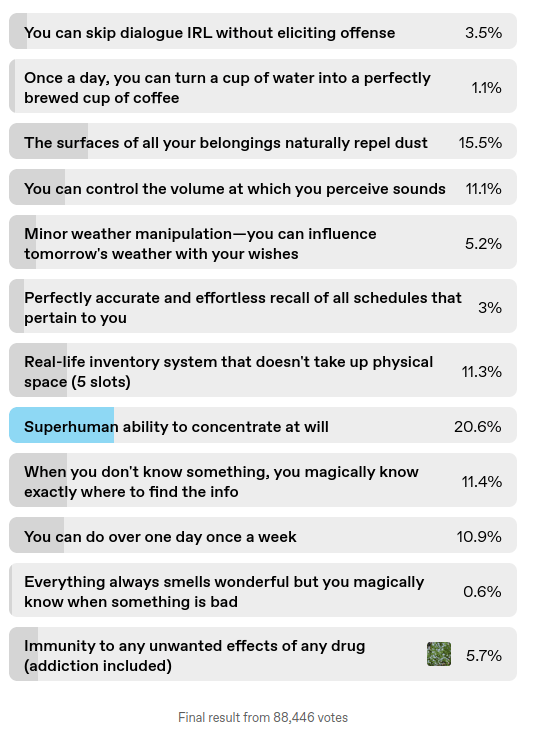
Pick a mundane superpower

pick-a-mundane-superpower-poll


Tags:

#hmm #skip dialogue: I feel like this is not a substantial problem in my life #coffee: there’s probably some perpetual-motion hack here given the thermodynamics violation‚ but it’s once a day‚ so it doesn’t scale well #dust-repelling: define ”my” belongings; most of the dusty things bothering me belong de jure to my parents #volume control: very good‚ but not *as* good as ones later on the list‚ so no #weather manipulation: probably some physics-violating stunts you can pull with this one‚ but God knows what they are #schedule-memory: probably some hacks here to let you use it for other stuff‚ but the central use is not a substantial problem in my life #inventory: oh wow that’s tempting #what counts as an item? is there a weight limit? #would I‚ say‚ get rotting vegetable juice on *other* items if I left a vegetable in there too long‚ or no? #concentration: I thought this was great at first‚ but then I realised it’s almost strictly inferior to the selective-drug-immunity option #because you can just do a lot of stimulants and nope the tolerance and anxiety and whatnot #the stims *are* free with this option‚ but then you can’t use it on other drugs #information search: can I look up where to find information on how best to exploit this? I feel like there’s a *lot* going on here #do-overs: would be very hard to decide which days to use it on‚ also I have serious ethical doubts about collapsing timelines #(though you could instead violate the spirit of this answer and simply isolate yourself during one day each week) #(spending two subjective days reading and studying and other such things-that-aren’t-about-having-an-impact-on-the-external-world) #(meanwhile the rest of the world experiences the two timelines as identical and isn’t losing anything by having the first one destroyed) #scent: do I magically know when something is bad even when it wouldn’t otherwise have smelled bad? #if so: viscerally tempting but probably not the single best option here #if not: meh‚ I can just break out the scent-blocking respirator filters‚ I don’t need magic for this #selective drug immunity: …there’s stiff competition‚ but I’m going with this one #you get so much option-space to experiment with drugs that have any chance whatsoever of fixing any of your problems #knowing there’s no downside apart from the cost of obtaining them #drugs that previously weren’t worth using because the side effects were too severe–I’m looking at you‚ zinc acetate–become useful #and as I age and acquire chronic ailments‚ I may well someday have a med constellation as complicated and delicate as my mom’s #at which point I would *very deeply* appreciate not having frequent nausea and dizziness #(I wonder if you can do‚ like‚ hyper-chemotherapy-type things with this) #(take poisons that would normally kill both you and whatever ~parasites you’re suffering from‚ and then survive while they still die) #(it might not be fine-grained enough for that‚ but even so)

homunculus-argument:

One absolutely hilarious part of human existence is the repeated incidents of spicy bananas. People who have lived their entire lives up to this point just assuming that a specific fruit or vegetable is supposed to taste bitter, tangy, or spicy, having no fucking idea that all this time, they’ve been allergic to this plant. Because how would they have known? You learn what things taste like by tasting them, nobody’s going to tell you that bananas are supposed to be one of the mildest flavours out there. And people already eat so many things that taste hot, bitter, tangy and tart! Because they like how that kind of thing tastes like!

You can just happily much on a plant, thinking “ah, this angry plant tastes sharp because it hates me. Much like all the other sharp angry plants that people eat because they like the sharp”, and it wouldn’t cross their mind to think that the plant just hates you, specifically.

msfcatlover:

This is sitting on the shelf of human experiences riiiight next to people who don’t realize they’re colorblind.

deadmomjokes:

My best friend’s husband didn’t realize he was colorblind until after they were married in their mid-twenties and she watched him run a stop sign that was in front of a big bush. He’d lived his entire life not knowing. So when they did some tests and realized “hey, you’re super colorblind,” he got to thinking, it’s X-linked, right? Which means it had to have come from Mom’s side of the family, so he started digging and asked his mom’s dad, and Grampa was like “Well that would explain a lot, I suppose. I kind of thought your grandma was just pulling my leg about the tomatoes.”

Because Grandma had apparently banned him early on from picking the tomatoes in the garden because he was constantly coming in with unripe ones, and he thought she was just being super nitpicky about it. This was a lifelong family joke, that Grandpa couldn’t tell a ripe tomato to save his life, and nobody ever stopped to wonder if maybe he and the grandson who routinely colored the grass red on his drawings might have something going on with their ability to see red and green as distinct colors.

yardsards:

i thought aloe vera gel was SUPPOSED TO burn your skin. like how rubbing alcohol burns when applied to a cut. figured that everyone else was just better at gritting their teeth and bearing the full body aloe sting than i was. i just didn’t feel like the stinging was worth the mild healing properties aloe had.

yeah… turns out it’s NOT supposed to burn and i was just allergic to aloe

life-on-the-spectrum:

STORY TIME!!!!!!!

My husband comes from a “weird” family. Like, the whole county knows. “He’s a total weirdo. AAAH THAT’S HIS LAST NAME THAT EXPLAINS IT OKAY NO PROBLEM GO FLY FREE DUDE WE LOVE YOU!!” The family’s just a bunch of freaks, like the Addams Family meets the Beverly Hillbillies. I ADORE them.

It was celebrated because they’re so valuable to the local community. This one sells meticulously grown veggies at the farmer’s market, then hisses at you for suggesting they wear soemthing that isn’t tie-dyed. That kid was in kindergarten before she said her first word, and that’s cool because her older sister translated for her NO THANK YOU TEACHER WE DO NOT NEED A DOCTOR THAT IS NORMAL FOR THIS FAMILY GO AWAY. She’s got two quiet kids of her own now and WE STILL DO NOT NEED A DOCTOR GO AWAY. That uncle knows everything there is to know about every car engine ever, and he never wears shoes with laces because he literally never worked out how to tie them (He’s 60). He’s also the top mechanic in his town and makes serious dough that put his super-smart daughter through college, and now she’s an ace veterinarian who pterodactyl screams at acrylic sweaters and keeps everyone’s pets alive. I shit you not, the family matriarch gets excited for tax season every year and begs everyone to bring her their taxes so she can MATH at them. It’s her freaking hobby.

Whatever. They’re in OUR family. It’s totally normal for us. The family’s just full of freaks, that’s all. We encourage our people to go with their strengths and use their skills to make our little corner of the world a nicer place to live in, then teach them how to manage the difficult parts of the world because we all had to learn to do it ourselves. “Because this family’s full of people just as freaky as you. You’re one of us.”

No, most of them don’t go to college. It’s rural Illinois, of course they don’t. Lots of them end up in specialized trades, like electricians or farmers, and they always kick ass at it. They tend towards jobs that require a lot of focus, and attention to detal, and very specific, in-depth knowledge that is almost useless outside of whatever field they’re in. We’re mostly spread between two or three small towns in Illinois, and I do not think these three towns would function without my husband’s family fixing and growing everything they do.

One of our cousins’ kids got diagnosed with autism spectrum disorder a few years ago. His now-ex-wife insisted that something was wrong and that our cousin was a jerk for not caring enough to notice. The family reacted with “He’s fine, it’s normal, we all did that when we were his age… wait… shit… what do you mean it’s genetic?”

It turns out that like 70% of my husband’s side of the family is autistic as fuck. We’re talking about grandmothers. Uncles. Cousins. People are in their 70s just now figuring out why they are how they are. 

They’re just so famously weird in our community that they attract the other weird people as partners, and then they have weird little kids, and no one really looks twice. A bunch of the people (including me) who married in were informally adopted first. “Oh, your parents punished you for this behavior? We all do that here. Come to the barbecue!” Two years later, I had their last name and was helping watch their adorable little handflappy babies.

We’ve got an entire gene pool over here of autistic people thriving so well that no one noticed we were all autistic.

Also, that cousin got RID of his wife when she started talking about how “tragic” their son’s autism is. Their son is a perfectly normal child in our family and will be raised as such. We joke now that when something needs fixed, “Oh, just call Uncle So-and-So, he’ll autism at it.”’

I fucking love this family so much.

bisexualbaker:

Beautiful, wonderful story, no notes (except maybe asking if there’s room for one more at the dinner table).

Anyway, back to the original post, I am in deep gratitude for it, because it’s the only reason I thought to wonder if chickpeas are supposed to be spicy.

(Hint: Apparently they’re not. The genetic lottery locked the good tasting falafel and hummas behind an allergy wall.)

lukiepoooo:

….what,,, what is aloe vera supposed to feel like?????

vaspider:

It’s supposed to feel cool and soothing.


Tags:

#that one post with the thing #is the blue I see the same as the blue you see #food #allergies #autism #PSA #embarrassment squick #poison cw? #this post was queued because my to-reblog list is too long and I didn’t want to dump it on you all at once
what-even-is-thiss:

airborneranger63:

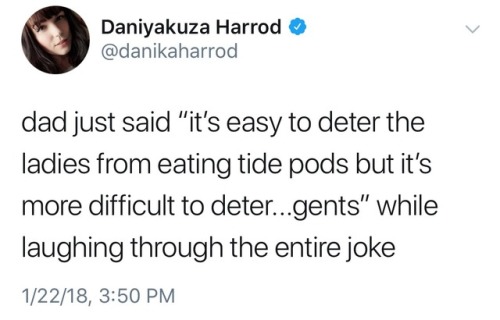
One time my rabbi told us, “imagine you had a box with a little bit of god in it. What would you do with the box?”

So we were like ?? “We’d protect it and keep it nice and clean and polished” and he was like “your body’s that box. Stop eating markers”

Every time I come across this post the last sentence smacks me in the face


Tags:

#anything that makes me laugh this much deserves a reblog #Judaism #this probably deserves some warning tag but I am not sure what #poison cw? #this post was queued because my to-reblog list is too long and I didn’t want to dump it on you all at once
random-thought-depository:

A TV channel in my area plays Star Trek TOS episodes on Saturday night, last week’s episode was the one about how the writers were scared of hippies lol.

Anyway, in the episode they go the anvilicious route of making all the plants on that planet incredibly poisonous (and the hippies I guess too technophobic to wave a tricorder over a bush before deciding they want to settle there), but before they found out about that there was a line about the planet having no animals and, wait, even if the biochemistries were compatible, wouldn’t a planet with no animals logically be pretty difficult for humans to survive on, especially if the humans are going to go full anprim and live as gatherers?

Obviously getting enough protein might be a problem. And I think there’s some vitamin you can only get from animals? You only need tiny amounts of it IIRC, small enough that preindustrial vegetarian Jains were able to get enough from insect contamination in their food, but on a planet with no animals at all that would be a huge problem!

But also, no animals would logically mean no fruit, right? Fruit exist to entice animals to move a plant’s seeds around for it. If there’s no animals, there’s no reason for plants to expend energy on growing them. Plants on a planet with no animals would probably mostly propagate by wind-blown seeds, and have seeds similar to dandelion fluff, small and very light to easily disperse in the wind.

That basically leaves tubers. Which probably would exist; they might be even more useful on a planet where there are no animals to plunder such rich stores of energy (though I guess there’d probably be parasitic fungi and stuff evolved to exploit them). On the other hand, on a planet with no browsers or grazers the main selection pressures driving the evolution of tubers would be winter, drought, and fire, so if “Eden” has a nice climate it might not have a lot of tubers either.

I don’t think it’d look nice and pretty and park-like like the planet in the episode either. For one thing, I think, just like it has no fruit, it’d have no flowers except things similar to dandelion puffs; there’d be nothing to pollinate them. With no animals with eyes, there’d be no reason for plants to evolve parts with dramatic color contrast. Its vegetation would be rather visually monotonous, mostly greens and browns. But also, and more importantly in terms of its potential (or lack of thereof) for human habitation, that kind of lush but open park-like landscape is what you get when vegetation is being regularly pruned back by people or animals or fire or some combination of those things. I think a planet with no animals would have very different vegetation growth patterns, more like…

In areas dry enough for burning seasons, I think you might get a fire-adapted ecology where fire does some of what grazers and browsers do on Earth. With no grazers and browsers and the main selection pressure being competition between plants, you’d get a dense tangled profusion of growth and lots of slowly decomposing dead plant material (cause there’s no animals to help break it down or prune the leaves before they get a chance to die and fall off, just bacteria and fungi). It’d probably be rather difficult for a human to walk through, a forest choked with a dense profusion of undergrowth and dead stuff; at least there are no thorns, and nothing like poison oak; with no animals there’s no selection pressure for thorns or poison. In dry parts of the year, this accumulation of living and dead plant material becomes a tinderbox for wildfires. If a planet like this looks idyllic from orbit, it’s cause you arrived in mid-spring/mid-autumn; come in summer/winter, when dry seasons are in full swing, and you would see huge wildfires and skies stained with smoke. The oldest and biggest trees are tough enough to usually survive the burning, but the undergrowth is cleared. After the burn, seeds sprout and saplings grow quickly, competing to take advantage of the cleared ground, quickly filling the forest back up with a tangled profusion of growth and an increasing accumulation of slowly rotting dead material, completing the cycle.

On the other hand, on the same planet, in the places with lots of rain and conditions favorable to evergreen plants, there might be forests of enormous trees with forest floors that are pretty open but rather dark, barren, and muddy, with most light being blocked by a dense cathedral-like canopy far above. They’d smell of mud and rot, as the forest floor has accumulated large amounts of slowly decomposing leaf litter fallen from the canopy far above and has a mostly decomposer-based ecology of fungi and bacteria that slowly feeds on that. This is an ecosystem of trees and rot, and the trees make no fruit, they reproduce by seeds like dandelion fluff, small and very light to float on the wind, and they don’t even produce much of that; they live a very long time and reproduce very slowly, partially because they’re Cronuses; their dense canopy starves their own offspring of light along with everything else. For all the green lushness of their canopies these forests are low-energy ecosystems, conservative ecosystems, defined by the almost total victory of ancient, mighty incumbents; these are the Cronus forests, the lands of the Cronus trees.

There’s very little energy available to humans in these Cronus woods. Some edible mushrooms, maybe; that’d be about it. Very possibly humans simply could not survive here, except perhaps in tiny numbers and by living in almost hermit-like isolation and dispersal. The Cronus forests might be almost as hostile as the Sahara or Antarctica, a place where the likely fate of some unfortunate stranded human explorer would be to die of hunger lying on the roots of some sequoia-size Cronus tree that was ancient when Julius Caesar marched into Gaul, staring up into cathedral-like dense green canopy through which only a dim twilight illumination filters even at mid-day, their nose filled with the reek of mud and rot.

Humans might try to terraform the Cronus forests by opening them, but I think that might be quite difficult for low-tech humans. The obvious efficient strategy for attacking the Cronus trees would be to set fire to them, but fire would be one of the primary natural threats to the Cronus trees, and a strong selection pressure on them, so I expect them to be well-adapted to resist it, with fire-retardant chemicals in their bark, wood, sap, and leaves so they resist ignition, and with their sheer size protecting them. The floors of the Cronus woods would receive almost no direct sunlight and therefore be cool and probably damp, and they would have very little undergrowth; fire would probably not spread easily through such an environment. It might be more effective to set torch to the canopies, but they would be dozens or maybe even hundreds of meters above the ground; quite a climb, on a tree that’s probably more-or-less a branchless trunk much of the way up, and you’ve got to climb back down after setting the tree on fire.

That leaves tediously timbering them one by one. With, say, Medieval technology, this might work! The Cronus trees look mighty and their rule assured, but they are actually quite vulnerable. They are slow. Their defenses are purely passive. They literally could not make a single motion to defend themselves as an enemy attacked them with steel saws and axes. And they reproduce very slowly; if they could be timbered efficiently, it would be easy to destroy them faster than they reproduce. An enemy that can think and move is an outside context problem for them, something that never existed in their environment and therefore something they are totally unprepared for. Humans with steel saws and axes might be very efficient killers of these ancient titans.

But steel axes are pretty high-tech if you think agriculture was a mistake. Without metal tools? Imagine trying to bring down a giant sequoia without metal tools, so the axe is something delicate like obsidian or bone, or it has to be very tediously ground to a blade, or you’re basically trying to bring the (big and structurally strong!) tree down by bashing it to a pulp, and big saws are probably impossible. Now imagine having to do that over and over again. Imagine trying to clear a forest that stretches from horizon to horizon that way.

If very low-tech humans can inhabit the Cronus forests at all, I think it might be as, like, highly dispersed small families who move around constantly and rarely meet each other, living on the occasional patch of edible mushrooms or other tid-bit, cause there just isn’t enough energy to support anything denser. And even then, they might have to stick to the edge, where other ecozones are accessible, cause, like, would mushrooms even have all the nutrients you need?

I mean, I guess there would be some kind of open woodland areas? I think a planet with no animals would have more forest than a more Earth-like planet with the same climate, cause you’ve removed a major inhibition on plant growth. Think of how places like highland Scotland used to be forested, but when humans with livestock were added to the mix it became more-or-less an open grassland landscape. I think you’d see a similar effect comparing Plantworld to a version of the same planet that had animals; places that would be marginally viable forest without browsers would be grassland or open woodland with them. But a planet with no animals is probably going to have areas wet enough for plants but too dry for forests, so it’ll probably have some grassland equivalents. But…

… Grass in natural prairies often gets pretty tall, doesn’t it? And that’s with grazers. A grass-equivalent that evolved on a world without grazers would be more selected by competition against other plants. I think no selection by grazing but more selection by competition against other plants might favor more investment in individual stalks. And instead of looking like our grass, these plants would have a cluster of little branches and leaves at the top, for better light interception – and to shade and thus inhibit the growth of any rivals growing near their base!

So, maybe… The experience of walking in a grassland in no animals world is very different from walking through a lawn or even the kind of knee-high or less wild grass I see around the Bay Area. The grass is tall. It’s taller than you. The stalks are thick too; finger-thick and hollow; it’s more like a forest of young bamboo. It feels more like walking in a cornfield. And it’s surprisingly dark. Each stalk has a little crown of small branches and leaves, and together they make a surprisingly dense canopy not far above your head. The effect is claustrophobic and eerie. It has a vibe a little like the Cronus woods. And that’s not an accident; these plants are essentially much smaller versions of the Cronus trees; tighter constraints, similar strategy. This place replicates the Cronus woods in miniature. This is the Cronus prairie, the land of the Cronus grass.

This probably doesn’t sound like a place you’d like. If it’s any consolation, if the Cronus grasses had minds they probably wouldn’t like you either. Unlike the Cronus trees, the Cronus grass is small and vulnerable enough to experience you, fast-moving muscles-having thing, as the outside context problem you are on its world. You move through the Cronus grass and break a stalk. What a calamity to that plant! All the energy and resources it poured into building that stalk, all that work, the work of its life, undone in an instant! Now it has no crown to drink the sun, and its luckier neighboring competitors will close over it, and it will die without ever having a chance to scatter its gossamer seeds on the wind. Or maybe it’s a different, longer-lived sort of Cronus grass (Cronus grass and Cronus tree aren’t species, they’re strategies and niches), and in the soil below the base of the stalk, where the long-lived part of the plant lives, there is a tuber, from which it can pull stored energy to regenerate the stalk, but this only prolongs the failure cycle; that energy was supposed to be used to regenerate the stalk after the Cronus prairie burns in the dry season and is reduced to a horizon-to-horizon smoldering plain of bare earth and ash; now its energy stores will be depleted when the fire comes, and afterward it will not be able to keep pace with the growth and regeneration of its neighbors and rivals, and they will close over it and it will die.

Those tubers make the Cronus prairie the best place on this planet for humans to live. Some of the Cronus grasses are annuals and live only one year, dying in the fires of the dry season and leaving only seeds to continue their lineage, but many are long-lived, with root systems that survive the fires, and these all have tubers that store energy to regenerate their stalk after the burn. In the competitive scramble after the burn the advantage offered by such a pre-existing storehouse of caloric wealth is huge, and these plants evolved in the absence of any animals that might raid them. Think of the Cronus prairie as a vast field of turnips and potatoes, with multiple edible plants in every square foot of soil, stretching from horizon to horizon. Here, at last, is something like the promise of Eden; food provided abundantly by nature with no need to work the soil, simply waiting to be dug up, available in such quantity that there would be little motivation for hard toil or war. That is, if you don’t mind a monotonous diet of bland and nutrient-poor tubers, every day, every year, almost every meal, from the day you are weaned to the day you die. Low-tech human inhabitants of the Cronus prairie would have plenty of calories, but getting enough protein and other nutrients to stay alive and healthy might be a very hard struggle for them, and they might often suffer from malnutrition.

The abundance of the Cronus prairie would also be fragile. The tuber-growing Cronus grasses are long-lived and reproduce slowly, and digging up the tuber would probably destroy one. All the defenses they use to protect their precious hordes of carbohydrates are against enemies as slow as themselves, bacteria and fungi and specialized “vampire plants” without chlorophyll; they are not evolved to deal with raiders with muscles and eyes who can simply physically dig up the tubers. It would be quite easy for humans to slip into harvesting them faster than they reproduce.

Imagine what life might be like for a low-tech inhabitant of the Cronus prairie, a few hundred or a few thousand years after establishment.

Your staple food is something like turnip soup (the stalks of the Cronus grass furnish the fuel for cooking). No animals in your world have yet developed the ability to breathe on land, but there are things a little like insects you can find in creeks and rivers; they are enough to supply your people with the nutrients you absolutely must get from animals. Your people wean your babies late, because mother’s milk is one of the precious few foods available to you that is not Cronus grass tubers and is much more nourishing. You’ve learned to feed your children small amounts of human feces to establish the gut microbiomes they need to process food. Finding enough food that isn’t Cronus grass tubers to get all the nutrients you need is a struggle, but you know if you eat only Cronus grass tubers you will get sick and die slowly. In fact, your people are chronically malnourished and chronically ill, but you live long and most of your children grow up anyway, because your world has few bacteria and viruses capable of infecting humans, so your immune systems don’t have to be very strong. In a desperate measure to increase protein consumption, your people have incorporated cannibalism of the deceased into your funeral rituals (your people view the practice as loving and reverential and normal, not desperate; it is done only to people who have already died of natural causes and allows their flesh to still be part of the tribe while their bones are shallowly buried to nourish the Cronus grass). Water bugs and human flesh are the only meats you’ve ever tasted. It is the beginning of the dry season, and the sky is stained with high-altitude smoke from the vast wildfires already burning hundreds of kilometers to the north. Soon your people must move northwest to the island of barren rock that rises from the Cronus prairie or southwest to the Cronus woods; there is little food in those places, but the fire stops at their boundaries, and to be caught out in the Cronus prairie when the fire walks across it is death.

You know, if you’re going with “hippies have an overly romanticized view of nature and therefore don’t deal with it well,” I think I’d kind of prefer this. Just making the plants on “Eden” super-poisonous is just kind of an arbitrary fuck you, but… “Planet with no animals and sufficient abundance that you can survive as a gatherer without much effort” is totally something I could see as a hippie fantasy; no need for hard toil or alienating technology, little temptation toward war, no dangerous animals that might hurt you, and no temptation toward carnivory. But it’s an ecologically incoherent fantasy! You are also an animal! A world with no place for animals has no place for you! It will probably not be an easy world for you to survive on! Of course, it’d be difficult to portray this in a one hour TV episode; would probably work a lot better with a novel.

Also, you could flip this around: if you think about it, it’s actually really weird that a planet with no animals has fruit (even super-poisonous fruit). Maybe it’s not a natural wilderness. Maybe it’s somebody’s food forest.

Suggestion: “Eden” is actually a heavily gardened world maintained by one of those state-repelling cultures James C. Scott talks about. Its inhabitants are not humanoid and have totally different biochemistry from us, so the local food’s perfectly edible, palatable, and nourishing to them. They mostly live as gatherers at a low level technology, doing the sort of proto-agricultural ecosystem engineering lots of hunter-gatherers do on Earth. They maintain just enough technology to tell them when a starship is dropping by. When that happens, they crawl into little hidey-holes and go into a deep hibernation, which makes starship sensors not register them as alive. They come out of hibernation a few days later or something, which is usually enough time for visitors with more galactic-normal biochemistry to realize the plants on the planet are poisonous to them, lose interest in it, and leave.

Something something people who reject the value system of settler colonial society but don’t reject the terra nullius myth.

Also, I might use these ideas for a planet in my own sci fi, cause it has a premise that easily lends itself to such a scenario happening somewhere in it.


Tags:

#Star Trek #story ideas I will never write #food #illness tw #death tw #apocalypse cw #poison cw? #this post was queued because my to-reblog list is too long and I didn’t want to dump it on you all at once
a51b4c078705ce344940d9cc030267ad2eea56ff

dailyunsolvedmysteries:

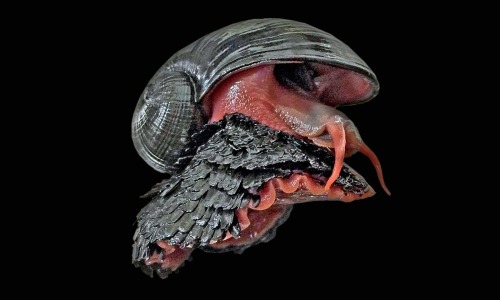
This is a metal snail (Volcano Snail) that lives on underwater volcano vents in the Indian Ocean. Its shell and scaly feet both are armoured with layers of iron, making it the only animal to incorporate iron sulfide into its skeleton.

todaysbird:

damn right. that snail is metal as hell

https://www.theguardian.com/environment/2022/aug/03/discovered-in-the-deep-the-snail-with-iron-armour:

In 2019, scientists worked out that the scales on the snails’ foot are not to protect against predatory attack but to avert a toxic threat that comes from within. The bacteria stashed in a scaly-foot snail’s throat release sulphur as a waste product, which is deadly to snails (it’s a common active ingredient in slug and snail-killing pellets).

The internal structure of their scales acts as tiny exhaust pipes, drawing the dangerous sulphur away from the snails’ soft tissues and depositing it as a harmless iron-based compound on the outside.


Tags:

#snails #biology #the more you know #poison cw? #body horror? #this post was queued because my to-reblog list is too long and I didn’t want to dump it on you all at once
foxes-in-love:

22a606562e3187ffaafb30a9cbe6836080bc6fbb

Tags:

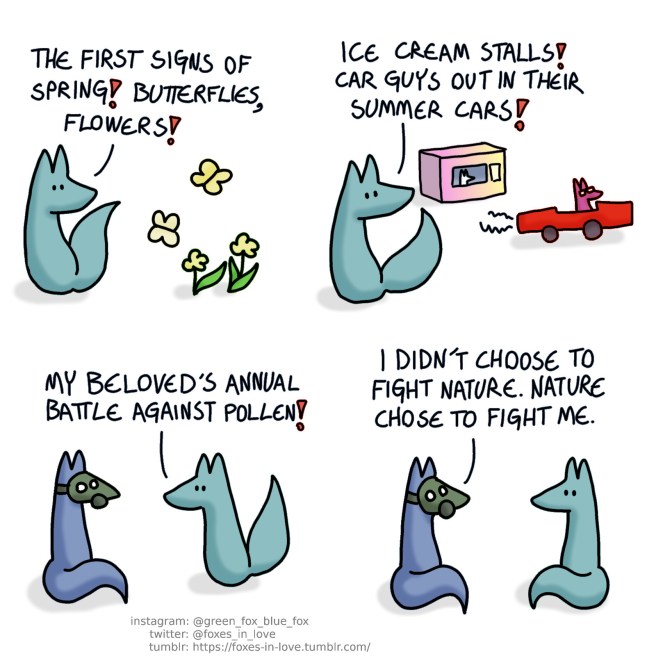
#you jest‚ but for the worst bits of spring and autumn N95s don’t cut it anymore #(at least not if you’ll be outside for longer than about an hour) #you really do gotta go full Alan Turing #(…well okay technically I don’t currently use *eye* protection) #(but anyway) #comics #art #allergies #101 Uses for Infrastructureless Computers #proud citizen of The Future #poison cw?

sigmaleph:

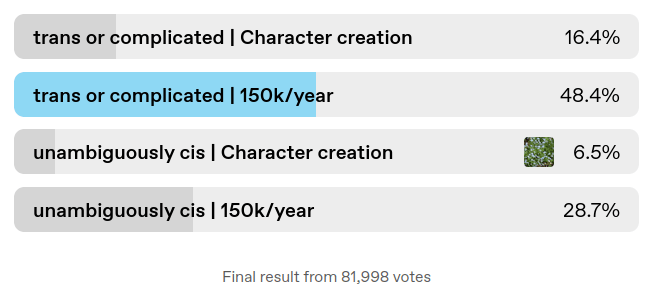
you are offered a choice:

  1. You get to open a video-game style character creation screen and customise your body at will, to anything within range of human variation (no cat ears, sorry). This includes letting you set a new biological age, get rid of any physical health issues, and so on. Your new appearance seems unremarkable to anyone who knows you, all government databases with your picture are adjusted, etc.
  2. You get 150 000 USD every year for the rest of your life without having to do anything for it. You don’t pay taxes on this money, it adjusts with inflation automatically, it appears entirely legitimate to any authorities, etc.

what do you choose, and also, are you trans or cis (if you’re tempted to answer ‘it’s complicated’, round off to trans)?

Choose:

character-creation-vs-150k-poll

My tag ramble was so long that Tumblr cut it off (apparently the current limit is 30 tags), so I’m dumping it into the main post body:

#I’ve been wavering on whether to reblog this for ages

#I felt kind of bad about piling on to Sofi’s notespam like that

#but it being context for the next post has pushed me over into “yes”

#I didn’t realise until after voting that the character creation is one-time-only rather than ongoing access

#which makes the correct answer less *obvious*

#but I stand by my vote of cis | character creation

#(as it happens I *am* considering doing a second puberty through this‚ but they’d both be estrogenic)

#(honestly I’d barely even need the magic ID updating)

#(29-year-old me in 12-year-old me’s body could pass for 29 about as well as I could in 29-year-old body)

#(the two mes look pretty much the same: it’s all a matter of how you act)

#((well‚ 12-year-old me was a little smaller‚ but within the adult range and her face was already more or less stable))

#(((ooh‚ I bet I could tweak it so that I *stay* five-foot-one this time around)))

#(((during my first puberty my body map never updated for my final growth spurt‚ and

#I’m not *dysphoric* about being two inches too tall‚ but it does get a bit disorienting sometimes)))

#anyway my point there is that…a lot of people in the notes are going “money can be exchanged for goods and services”

#but I think in this case that’s actually backwards

#while money and health do both feed into each other

#health can be exchanged for money to a much greater degree than money can be exchanged for health

#money can *maybe* buy you the *appearance* of 9 – 17

#–(depending on how much puberty I can get away with doing again without fucking up my brain)–

#more years of youth‚ but it won’t buy you the lifespan nor the functionality of it

#money can buy you the ability to *breathe* your homeworld’s atmosphere even during pollen season

#and enough of it can buy you the ability to *talk* while breathing it

#but it can’t really buy you the ability to eat and drink while breathing it‚ and that’s a significant handicap in itself

#(not to mention the street harassment you get wearing a prosthetic immune system (to keep your built-in immune system from freaking out))

#likewise‚ money can buy disease *prevention*‚ but not the ability to shrug it off once you’ve caught it

#the ability of money to buy more robust bones is extremely limited

#(have I ever broken a bone? no! but why settle for merely *adequate* bone strength when I can have *optimal* bone strength?)

#((…god‚ why is anyone who is not *actively dying* for want of resources taking the money over the health))

#((I was so very aware‚ that time last year that a ventilation floor grate broke beneath me‚ that if I’d been 80 I would have *died*))

#((but I was 28‚ and I got away without even a broken bone))

#((why would you give that up any more than you have to))

#the list goes on

#meanwhile‚ health can buy you a nice steady low-non-physical-barrier-to-entry job as a farmhand or dockworker

#(not *as* steady as magic income‚ yes‚ and I *do* care a great deal about that‚ but I care about health *more*)

#and I’m not altruistic enough to take more money than I need so that I can give the rest away‚ not given what else is on offer


Tags:

#reply via reblog #tag rambles #surveys #transhumanism #gender #is the blue I see the same as the blue you see #adventures in human capitalism #aging cw #death tw #poison cw? #injury cw #illness tw?


{{next post in sequence}}

gaugevectormoron:

galois-groupie:

gaugevectormoron:

yvfu:

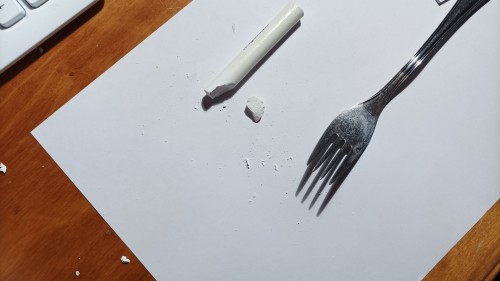
kinda weird how everyone is so certain about what chalk tastes like

6a9d5357e3ef11ebf58509cd09230d54dd27ae5c

think they’re wrong. it tastes initially multivitamin-tablet bland, sure, but then quickly starts to get bitter and slightly tangy, with a polymeric note before I spat it out

not as expected

What chalk did you try? I wonder if hagoromo tastes better than competitors.

it was Hagoromo. fortunately, my department provides free Crayola chalk for people with low standards and the category of things I’ll put in my mouth for the bit is large. the Crayola chalk is mainly just bland, like multivitamins but moreso, with a slight bitterness that develops after a while, but none of the tang or plasticky taste of Hagoromo. it’s a much less intense experience. further, Crayola doesn’t have that same melt-in-the-mouth texture that mathematicians the world over crave


Tags:

#food #language #the more you know #poison cw?

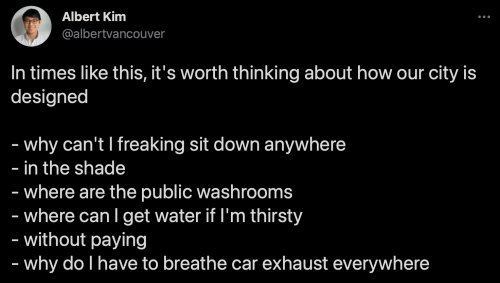
typhlonectes:

253430f1ccfbce9b8e568b66a243c27321c14e6d


Tags:

#1 – 2. I don’t know‚ why can’t you #3 – 5. fast-food restaurants (and also grocery stores) #no you don’t have to pay‚ and it weirds us out when you ask our permission to use the restroom #you *do* have to ask for water because we’re supposed to check that you’re filling your cup with water and not soda #although the probability of getting an employee who doesn’t give a shit about that is fairly high #(many people buy bottled water from us and I look down on them) #(there is a water fountain (with cups!) Right There) #really almost any non-tiny store and some of the tiny ones will have public bathrooms #6. masks are a solution to many of life’s problems #(let’s face it‚ it’s ragweed season‚ the air wasn’t going to be breathable anyway) #(also I do hear vehicle electrification is gaining a good foothold) #(including the buses) #7. I don’t live in cities because they exist in a state of constant sensory overload #good luck re-designing that #no‚ really‚ I wish you luck #(in the cities I’ve visited‚ though‚ the things I listed above were still true) #(is this‚ like‚ an America thing?) #(no that can’t be right‚ the American cities I’ve visited weren’t like this and also this guy’s username is albertvancouver) #(what the hell is going on out in Vancouver) #(maybe move to Kitchener‚ you poor thing) #(you already have right-of-abode there) #(life doesn’t have to be like this) #tag rambles #is the blue I see the same as the blue you see #our home and cherished land #autism #venting cw #this probably deserves some other warning tag but I am not sure what #scrupulosity cw? #illness tw?