“Quoth” the raven? The heartwarming tale of a defective verb

allthingslinguistic:

amaranthine-ephemerality:

It is one of the most well-known lines English poetry has to offer: “Quoth the raven, ‘Nevermore.’” It is an eerie verse found in Edgar Allan Poe’s “The Raven”, and we all know what the the first word in it means. It’s a weird, extremely uncommon verb in the past tense meaning ‘to say’. Now use the same verb to ask if the raven said “nevermore.” Did the raven… and now most of you – excluding you language and etymology enthusiasts out there – are struggling because you don’t know what the infinitive of quoth is. What has happened?

The English language is fairly old, so it isn’t surprising to find out that many words have died out, i.e. they aren’t in use anymore and can oftentimes not be understood by native speakers. Look, for instance, at the Old English noun costnunge and try to guess what it means. No idea? Maybe the context will help. It can be found in the sentence And ne gelæd ðū ūs on costnunge, found in an OE version of the Lord’s Prayer. It means ‘temptation’, or rather meant that, seeing as it hasn’t been used for a very long time. If you read Middle English versions of the prayer, you’ll see that the noun had already been replaced by a ME form of temptation.

What does this have to do with quoth? Quite a bit, actually, only that it is a far more interesting word. It belongs to a class of verbs we call defective verbs. These are verbs exhibiting an incomplete conjugation, which means the verb doesn’t have a (modern) form for every tense, aspect, mood, or person. Modal auxiliaries are prime examples; take can for example, which has a preterite form, could, but it doesn’t have a present or past participle. The verb must is an even more extreme case as there isn’t even a past form. An example of a lexical defective verb would be beware because bewares, bewared, or bewaring aren’t normally used in present-day English. With quoth, we have the 1st and 3rd person sing. past tense form still being known to speakers, which is rather interesting and unusual, and if it weren’t for “The Raven”, who knows if we would still know about this verb. We also don’t use it anymore unless we want to write a fancy poem with archaic language.

Quoth comes from the ME verb quethen, from OE cwethan. According to the Oxford English Dictionary, all forms of the verb save for the one in question were no longer in use by the end of the 16th century. But why did people stop using the verb? We cannot look into the heads of the people who spoke English a thousand years ago, but one reason is certainly the competition the verb had to face. The most common verbs in Modern English that have the same or a similar meaning are say, speak, and tell. And man, are they common. They were already around in Old English times, when we had secgan, sprecan, and tellan. Believe it or not, it gets even more interesting.

The exact same thing happened in German, another West Germanic language! In Old High German, the verb quedan, cognate with OE cwethan, was still used very frequently, but then it disappeared. Its competitors were the same as in English. In present-day German, we still find sagen (OHG sagēn), sprechen (OHG sprehhan), and (er)zählen (OHG zellen).

It’s the sad little story of a verb we know was once there because of a poem, but that left us a long time ago. Or did it? Turns out the verb actually managed to find a backdoor to stay alive! Maybe you’ve even had it in mind for some time now. The verb I mean is bequeath, a very formal word. All it took for it to survive throughout the centuries was the prefix be-, which also made it gain new meanings, among them the ones the word still has today. The etymology section in the Oxford English Dictionary includes the following sentences:

An ancient word, the retention of which is due to the traditional language of wills. Originally, like its radical cweðan, a strong verb; but having only weak inflection since 1500.

Bequeath is a regular lexical verb whose forms can all be used, and since it turned into a weak verb, the preterite form today is bequeathed, not *bequoth. Let’s see if it’ll manage to stay around in the future. Its odds are certainly much better than those of the word it was derived from, for it has found a comfy place in formal English and legalese, and its competitors aren’t nearly as fearful either. Congratulations. You can now show off in front of your friends when discussing “The Raven” ;)

I think I’d always assumed that quoth was related to quote, but Etymonline says they’re from totally different roots:

late 14c., coten, “to mark (a book) with chapter numbers or marginal references,” from Old French coter, from Medieval Latin quotare “distinguish by numbers, number chapters,“ from Latin quotus “which in order? what number (in sequence)?,” from quot “how many,“ from PIE *kwo-ti-, from pronomial root *kwo– (see who). 

Related: last week’s discussion of Indo-European question words, a hilariously anachronistic vlog adaptation of The Raven by shipwreckedcomedy.


Tags:

#huh #I’d always assumed it was an archaic variant of ”quote” #the more you know #history #language

Anonymous asked: high key can u give me a rundown of ur fav wacky wwii shenanigans

deducecanoe:

profmeowmers:

Okay friends today we are gonna learn about the GHOST ARMY, which, disappointingly, was not actually an army made of ghosts

Ghost Army 1

pictured: the unit patch for the Ghost Army, which is DOPE AS FUCK


see one of the things that made WWII so fucking nuts was the totally bizarre level of technology. Like wow we invented the first real computer and radar but also if you wanted to see how many troops were hanging out somewhere you had to send a dude to fly over and take pictures manually??? this left A LOT of room for shenanigans


so the normal method of dealing with aerial surveillance was to cover shit with camouflage netting. Say you’ve got an nice air base that you really don’t want any bombs dropped on- you literally just cover that with a ludicrous amount of netting and some fake trees and BAM now it looks like just an empty field from the air

Ghost Army 2

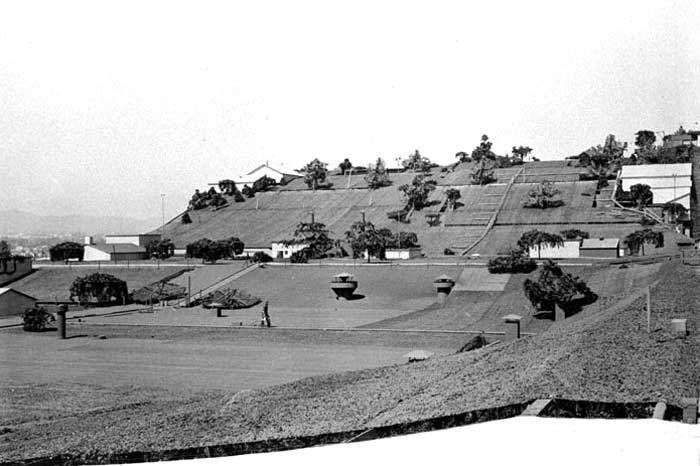
there’s a building under that weird lump


that’s cool! That’s really cool! But not cool enough


At some point somebody sat down and went “hey wait. What if…what if instead of disguising buildings and units as fields, we disguise fields as units”


holy fucking shit!!!


the British had used a bunch of fake tanks and like, boxes of provisions stacked up in tank shape and then covered with a tarp in 1942 during Operation Bertram and it worked really well, but they didn’t have a special unit devoted to just clowning on the Germans like that.


so the US military decides they do want a designated clowning unit and goes out and recruits a bunch of fucking nerds from all the art schools and makes them into the 23rd Headquarters Special Troops aka THE GHOST ARMY, WHY THE FUCK WOULD YOU USE ANY OTHER NAME LIKE SERIOUSLY


the ghost army’s job was basically to go in, sidle up to a real unit, and then basically set up a fake version of that unit while the actual unit sneaked away to go dunk on Nazis where the Nazis weren’t expecting them


okay time to get into the really cool part of this story, which is HOW the ghost army faked being a real unit:


step 1: INFLATABLE TANKS AND AIRCRAFT OH MY GOD

Ghost Army 3

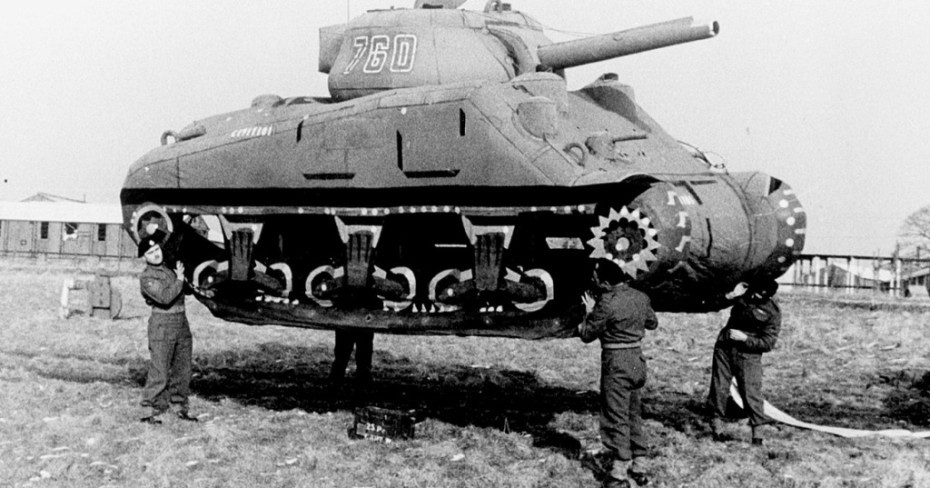
that’s a big ol balloon!!!


the ghost army had a stockpile of inflatable tanks, aircraft, artillery, cars, whatever, that they would set up and then poorly cover with camouflage netting so from the air it looked like someone had just done a real shit job of hiding actual materiel. They even had dummy soldiers that they would set up to make the scene look populated, since the ghost army itself was about 1,000 dudes regularly imitating units of 30,000 men


what’s really cool is that visual deception was more than just the inflatable stuff itself. If the ghost army plopped down a balloon tank, they then also had to go out with shovels and rakes and shit to make a fake track that a real tank would have left, because it turns out tanks are really hard on your landscaping


step 2: “spoof radio”


the last couple of days before the real unit moved out, the radio operators of the ghost army would move in. see, radio transmissions were done in Morse code, and it turns out every radio operator has a slightly different “fist” when typing Morse. A “fist” is basically typing style- some people would take longer to type out certain letters or would have pauses between groups or anything like. Anybody listening to the radio transmissions who was skilled enough could tell different radio operators apart from just their fist


anyway the ghost army operators would move in and basically listen to all the real unit’s radio transmissions until they had learned the real operators’ fists. Then they would take over radio traffic, imitating that fist so it seemed like the real operator had never left. I forgot to make this section funny because I was too caught up in how rad it is SORRY


step 3: making a lot of noise


the ghost army had special trucks fitted with huge fuck off speakers and a whole library of stock sound effects. Once the real unit left and the fake unit inflated, the sound trucks would come in, select a combination of sound effects that matched the unit they were impersonating, and then played everyone in the 15 mile radius of the speakers their fire mix tape


step 4: fuckin partying!!!


see the thing about impersonating your own units is that other allied units would know about it and might talk about it where enemy collaborators could hear. So the ghost army had to fool the Germans but they also had to fool their own army. Every time they impersonated a new unit, the ghost soldiers would paint that unit’s insignia on all the fake materiel, make fake signs with the unit’s name and colors, and sew the unit’s patches on their own uniforms


once they were dressed up as soldiers from the impersonated unit, the ghost army dudes would go into town and mingle with other soldiers from actual fighting units nearby and hang out in bars while loudly saying things like “YES HELLO I AM DEFINITELY A REAL SOLDIER FROM THE WHATEVER DIVISION, ABSOLUTELY FOR REAL STATIONED ON THAT HILL OVER THERE”


so anyway this bunch of weedy American art nerds staged 20+ battlefield deceptions between 1944 and the end of the war, sometimes fooling that Germans so successfully that they actually got shelled


I’mma leave you with this quote from the book “The Ghost Army of World War II” by Rick Beyer and Elizabeth Sayles, because it’s a quote from an actual member of the Ghost Army and that alone makes it funnier than anything I could ever write:

On another occasion, two Frenchmen on bicycles somehow got through the security perimeter. Shilstone managed to halt them, but not before they had seen more than they should. “What they thought they saw was four GIs picking up a forty-ton Sherman tank and turning it around. They looked at me, and they were looking for answers, and I finally said ‘The Americans are very strong.‘”

Ghost Army 4

The Ghost Army of WWII is a great book. There is also a documentary called The Ghost Army that may still be on Netflix. These guys were awesome. 


Tags:

#history #I didn’t actually laugh aloud but it still amused me enough to reblog

omg why do white ppl love cheese so mu-

kanirou-crosshack:

bemusedlybespectacled:

wyomingsmustache:

100-manslayer:

trained-chimpanzee:

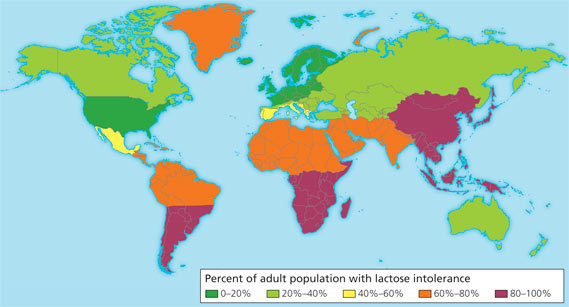
Lactose Intolerance Map

I actually didnt know that

The answer is apparently “because we’re actually able to eat it”

Fun fact: white people (specifically Northern European white people) have a genetic mutation that allows them to digest lactose even after weaning, which is abnormal for all mammals and also most humans. It’s theorized that because Northern Europe doesn’t get a lot of sun, an alternative source of vitamin D (like milk) would be a useful trait. It’s a very recent mutation that would only have happened after humans started domesticating animals like cows and goats.

oh no, my bizarre moment has come, cause lactose tolerance is actually A Thing I Know About because it’s played a fascinating role in human evolution for thousands of years. This chart displays some of the broad trends, but it’s giving near continental averages, which doesn’t showcase how this kind of thing really breaks down and some of the surprising exceptions. 

Lactose tolerance is the majority trait for only a very few population groups: North Europeans (and therefore populations that draw heavily from that stock, such as America,) nomadic central Eurasians, and sub-Saharan pastoralist Africans, but that latter group is often overlooked. The vast majority of Africans cannot process lactose, but certain people groups whose lifestyles have revolved around cattle for thousands of years will have 80% and even approaching 100% lactose tolerance rates. They’d be spots of dark green amidst a sea of orange and burgundy on the above chart. 

Our hunter-gatherer ancestors were almost entirely lactose intolerant, that is definitely the biological norm (and people groups who maintained that lifestyle, such as Native Americans, remained as such – along with groups who transitioned to sedentary agricultural lifestyles, but I’ll get into that). As such, lactose tolerance is an adaptive trait that only became prevalent in environments that exerted strong selective pressure for it. So, cows were domesticated some 10,000 odd years ago in the Middle East (and some have contended for an independent domestication event in Africa as well). In either case, cattle quickly spread across the continent and we know there was milking and cheese production at least 6,000 years ago in both the Nile and Mesopotamia. While cow meat would have been enjoyed by all, in agricultural societies milk and cheese would have been options, but hardly staples as there were plenty of other things to eat as well, and therefore there would have been no selective pressure for processing lactose. Also, sedentary societies had ways of processing milk and cheese that allowed lactose intolerant people to drink/eat dairy products. Fermenting milk or aging cheese breaks down lactose, making it a non issue once ingested. This is why fermented milk may seem utterly foul to many Westerners, but is extremely common in other parts of the world. But, fermentation and aging requires time, and the ability to store things in a single location for weeks or even months. Sedentary societies adapted the milk to fit their biology, but nomadic societies did the reverse.

There are still mobile pastoralist societies in Africa today, and there have been for thousands and thousands of years. For many of them, cows are not one of many dietary options, they are the single dietary staple around which their lifestyle revolves. Biologically, this means you gotta get with the program if you wanna survive. For most mobile tribes, fermentation and aging weren’t options, so there would have been strong selective pressure favoring those who could drink milk straight outta the cow, as they would have had an additional, highly nutritious food source available to them. Milk also allowed for a marked shortening of the weaning process, transitioning children from breastmilk to cow’s milk, which would again be advantageous for groups where both the men and women work and are always on the move. Over generations these populations specialized into essentially cow-based lifestyles, creating a survival niche highly advantageous to them, and fast forward thousands of years and there are groups in Africa with near ubiquitous lactose tolerance, while the rest of the continent (and the world really) is nearly entirely intolerant. 

Many of these same factors would have influenced the central Eurasian populations, which is why Mongolians and other descendants of nomadic steppe peoples are largely lactose tolerant, as mare’s milk would have been a dietary staple (though they also developed efficient ways to ferment it). 

North Europeans developed lactose tolerance in response to deficiencies in certain nutrients. The northern climate limited Vitamin D production, and the agricultural products available to them were often low on calcium and protein, and so dairy farming developed alongside agriculture to create a more rounded diet (and this was limited to Northern Europeans, as Mediterranean peoples such as the Romans wrote about their great confusion at the northern barbarians’ ability to drink fresh milk)

And I promise all of this is fascinating because the ability to process lactose evolved independently in several different population groups and in response to different factors: lifestyles revolving around cows, lifestyles revolving around horses, deficiencies in climate and agriculture. Besides providing insight into human history and biology, lactose tolerance is also a great example of convergent evolution, where different genetic populations in different environments produce similar results. 

And uh, that’s my rant about the role of milk and lactose tolerance in human evolution. 


Tags:

#the more you know #food #history #I’m lactose-tolerant and dairy accounts for a fairly large chunk of my caloric intake #sometimes before eating it I take a moment to appreciate my dairy-farming ancestors giving me this option #thank you dairy-farming ancestors #(I was worried this post was going to be more fucking foodshaming) #(but then it went well)

Shoulda Coulda Woulda

plain-dealing-villain:

@nextworldover: There’s probably some relation between should and shall and could and can, isn’t there?

me: Yeah, and would and will.

me: I bet there’s some word in Old English that basically meant ‘counterfactual’ and was spelled or pronounced like “ould”.

@zhalaad: *makes a terrible pun and everyone’s confused what he means. It involved Old English.*

me: Wait, no, it’s not from Old English.

me: It’s from a form of English that might have happened, but probably didn’t.

me: Ould English.


Tags:

#language #puns

Yahoo reports big loss, writes down Tumblr value

{{Title link: http://www.ctvnews.ca/business/yahoo-reports-big-loss-writes-down-tumblr-value-1.2992361 }}

justice-turtle:

odditycollector:

I FUCKING KNEW IT.

SO. IF YOU KNOW YOUR FANDOM HISTORY, YOU CAN SEE THE WRITING ON THE WALL RIGHT NOW.

AND IN CASE YOU DON’T, I will tell you a story.

I don’t know if Yahoo as a corporate entity hates fandom, or if it LOVES fandom in the way a flame longs to wrap its embrace around a forest. Or maybe it’s just that fandom is an enticingly big and active userbase; but just by the nature of our enterprise, we are extremely difficult to monetize.

It doesn’t matter.

Once upon a time – in the era before anyone had heard of google – if you wanted to post fandom (or really, ANY) content, you made your own webpage out of nested frames and midi files. And you hosted it on GeoCities.

GeoCities was free and… there. If the internet of today is facebook and tumblr and twitter, the internet of the late 90s WAS GeoCities.

And then Yahoo bought GeoCities for way too much money and immediately made some, let’s say, User Outreach Errors. And anyway, the internet was getting more varied all the time, fandom mostly moved on – it wasn’t painful. GeoCities was free hosting, not a community space – but the 90s/early 00s internet was still there, preserved as if in amber, at GeoCities.com.

Until 2009, when Yahoo killed it. 15 years of early-internet history – a monument to humanity’s masses first testing the potential of the internet, and realizing they could build anything they wanted… And what they wanted to build was shines to Angel from BtVS with 20 pages of pictures that were too big to wait for on a 56k modem, interspersed with MS Word clipart and paragraphs of REALLY BIG flashing fushia letters that scrolled L to R across the page. And also your cursor would become a different MS Word clipart, with sparkles.

(So basically nothing has changed, except you don’t have to personally hardcode every entry in your tumblr anymore. Progress!)

And it was all wiped out, just like that. Gone. (except on the wayback machine, an important project, but they didn’t get everything) The weight of that loss still hurts. The sheer magnitude…

Imagine a library stocked with hundreds of thousands of personal journals, letters, family photographs, eulogies, novels, etc. dated from a revolutionary period in history, and each one its only copy. And then one day, its librarians become tired of maintaining it, so they set the library and all its contents on fire.

And watch as the flames take everything.

Brush the ash from their hands.

Walk away.

Once upon a time – in the era after everyone had heard of google, but still mostly believed them about “Don’t be evil” – fandom had a pretty great collective memory. If someone posted a good fic, or meta, or art, or conversation relevant to your interests? Anywhere? (This was before the AO3, after all.) You could know p much as soon – or as many years late – as you wanted to.

Because there was a tagging site – del.icio.us – that fandom-as-a-whole used; it was simple, functional, free, and there. Yahoo bought it in 2005. Yahoo announced they were closing it in 2010.

They ended up selling it instead, but not all the data went with it – many users didn’t opt to the migration. And even then, the new version was busted. Basically unusable for fannish searching or tagging purposes. This is the lure and the danger of centralization, I guess.

It is like fandom suffered – collectively – a brain injury. Memories are irrevocably lost, or else they are not retrievable without struggle. New ones aren’t getting formed. There is no consensus replacement.

We have never yet recovered.

Once upon a time… Yahoo bought tumblr.

I don’t know how you celebrated the event, but I spent it backing up as much as I could, because Yahoo’s hobby is collecting the platforms that fandom relies on and destroying them.

I do not think Yahoo is “bad” – I am criticizing them on their own site, after all, and I don’t expect any retribution. I genuinely hope they sort out their difficulties.

But they are, historically, bad for US.

And right now is a good time to look at what you’ve accumulated during your career on this platform, and start deciding what you want to pack and what can be left behind to become ruins. And ash.

…On a cheerier note, wherever we settle next will probably be much better! This was never a good place to build a city.

Fucknuggets. I have so much goddamn shit to save. Writing notes, mostly.

(As an elder fan myself, I don’t think OP is overstating the case at all. :P)

I use this Tumblr backup-creation program. The archive it makes isn’t all that searchable, but at least you can pick through it at your leisure. Plus, it only uses the publicly available parts of a blog, so you can also use it on blogs you don’t own.

(One of the blogs I tested it on was yours, and when I set my computer up to automatically run a Tumblr backup update every night at 10 PM, I left your name on the list of blogs to keep. As such, I own a full local copy of your Tumblr. If you can’t get the backup program to run yourself but can find a feasible way for me to send you a ~2.5GB ZIP file, I can send you a copy.)

(I also pasted all of the stuff in my inbox into a Word document, and I keep my messaging archives separated into one Word document per person.)


Tags:

#reply via reblog #The Great Tumblr Apocalypse #amnesia cw #(I know that warning’s not technically right) #(but there’s enough thematic overlap that it feels appropriate) #(the following category tag was added retroactively:) #101 Uses for Infrastructureless Computers

responsible-reanimation:

Red-blooded Americans, as opposed to Horseshoe Crab Americans,

As a Horseshoe Crab American, I


Tags:

#no but seriously #I *am* blue-blooded in the semi-literal sense the term originates from #I am both naturally pale-skinned and lack a tan #which means my superficial veins are clearly visible as blue lines running beneath my skin #(in that part of spacetime peasant jobs were generally outdoors working the fields and such) #(so not having a tan showed you were rich enough not to have to work a peasant job) #the more you know #reply via reblog

misbehavingmaiar:

sebastian-bond:

but-the-library-of-alexandria:

the thing about writing fantasy stories is that language is so based on history that it can be hard to decide how far suspension of disbelief can carry you word-choice wise – what do you call a french braid in a world with no france? can a queen ann neckline be described if there was no queen ann? where do you draw the line? can you use the word platonic if plato never existed? can you name a character chris in a land without christianity? can you even say ‘bungalow’ in a world where there was no indian language for the word to originate from? is there a single word in any language that doesn’t have a story behind it? to be accurate a fantasy story would be written in a fantasy language but who has the time for that

Tolkien had the time apparently

LIsten. Linguistics Georg, who invented over 10,000 conlangs each day, is an outlier and should not have been counted. 


Tags:

#language #yes this #I have been thinking lately about how much of the development of English comes down to sheer serendipity