{{previous post in sequence}}


rustingbridges:

controversial personal finance opinion: if you have enough wealth you should own some physical gold

financialized gold has most of the downside of real gold and also none of its special upside, so not that

gold does not, as a rule, gain in value, and it’s vulnerable to theft, but it also does not, as a rule, lose in value, and also the rest of your assets are vulnerable to theft too. gold might have a higher risk but diversification is still valuable

in the event you lose access to your financials and have to leave – maybe not likely, but not impossible, apparently something like 1% of humans in 2021 are or have been refugees – gold jewelry particularly is both portable enough you can take it and universally recognized as valuable enough you can trade it. just don’t get it in your teeth


brin-bellway:

*Is* this controversial, even in the broad form stated here?

I kind of figured that there was broad agreement that there exists *some* level of wealth at which diversification into gold is worth pursuing (for the reasons you give), but that different people’s estimates of what that wealth level is vary by orders of magnitude, and some people would put enough forms of philanthropy above gold on the to-do list that in practice no one would ever reach the gold stage given our world’s current amount of philanthropic fruit to be picked.

(I’m not sure where I would place the threshold: I think it’s probably somewhere feasible to reach, but far enough beyond where I am now that it’s not urgent for me to figure out the specifics.)


rustingbridges:

a lot of people would argue that you should at some point diversify into financial instruments which abstractly reflect the value of gold, but I think many of those people would say you should not buy actual physical gold.

to pin myself down a bit while still leaving a lot of wiggle room, here’s some points on my Gold Advice Spectrum:

  • if you need your money to be liquid in a normal economy any time soon, don’t buy gold
  • if you have enough money to retire indefinitely on, I think it’s worth having something like a month’s money or so in precious metals
  • if you’re bill gates you should actually should have buried a chest of treasure somewhere


brin-bellway:

What…what reasons do *they* give for wanting to diversify into gold? You can’t hedge against the collapse of your financial system by buying things that *depend on said financial system*.

I mean, okay, I guess you can hedge against *certain, partial* collapses that way, but it’s far more limited.

I should mention here that I literally wrote a post once titled “Diversification is an important part of building an investment portfolio” [link], in which I frame prepping as being essentially a way of shorting your civilisation: since almost everyone is very long civilisation pretty much by necessity, being also somewhat short civilisation is a good hedge (though I think you should still be net long). I also wrote a comment on a different post in which I called [maintaining stockpiles of soap and canned food and air filters] “pandemic insurance” [link].

That Gold Advice Spectrum seems pretty reasonable.

@cthulhubert​ replied: @brin-bellway there’s a certain degree of over-correction against physical gold buying because Alex Jones and some other right wing conspiracy nuts flogged buying real gold for ‘when the degenerate modern economy collapses’.

I mean, that’s traditionally how it works, right? If you think something is going to collapse, you short it and then write a report laying out your evidence and reasoning to try to convince others to do the same. Yeah, I disagree that one should be net short civilisation and think people who do that are setting themselves up for failure and pain, but short sellers are very often wrong and their existence is nevertheless a useful corrective.

(…yes, I think I *did* just draw a connection between the hate that Crazy Prepper People™ get and the hate that short sellers get.)


alarajrogers:

I think if you were genuinely going to short-sell civilization, gold’s a ridiculous thing to have. Like money itself, the value of gold is a social construct.

What you should be investing in is booze and pharmaceuticals. Set up a greenhouse that does not run on any electricity, or that gets all of its energy from solar panels, and grow food there year-round; you’ll have something to eat, something to trade, and if you are legally able to, maintain, like, one marijuana plant, so if civilization collapses you can go whole hog into growing marijuana. Once the pharmaceutical industry collapses, alcohol and marijuana will be incredibly valuable as painkillers again. And because drugs expire much more slowly than they claim on the label, keep a huge supply of ibuprofen, acetominophen, allergy meds, and so on… they’ll still be good ten years from now. Birth control, if you live in a place where it can be obtained OTC.

Hard liquor and wine are probably your best investment – they are commonly considered to improve as they age, and in a post apocalyptic world, everyone will want to get drunk. (I mean, not literally everyone. I wouldn’t drink alcohol after the apocalypse because it tastes disgusting and has no benefits I want. But most people.)

Me, I’d also get, like, a million solar chargers for phones and Raspberry Pis, and a whole lot of USB stick drives with adapters. Then I’d download Wikipedia every several months, and any medical database that allows me to download the whole thing, and as much info as I can get about maintaining phones and Raspberry Pis. Probably ebooks and databases on carpentry, plumbing, electricity, electrical generation, making wine and beer, etc, etc… I’d have a few hundred of the Pis in boxes, in a climate controlled room, probably with the boxes sealed in a plastic bin with a lid, and I’d have USB sticks with image files to put on the Pis. I’d use phones and tablets as monitors, or tiny monitors with low power requirements, so that I’d have a place to read my stored downloads. Then when the internet crashes I’d have huge amounts of information I could share with my neighbors so we could restore the amenities of civilization as quickly as possible, as many of them as possible. There won’t be making any new computers for a very long time- clean room tech is very complex – but keeping existing machines that use very little power in good repair, unused and protected from the elements, will help a lot.

Physical books are also very good but are heavy, not very portable, and easily destroyed by any kind of extreme weather – weather applies to computers too, but you can store vastly more information on 1 small computer than you can on 20 books, and then you put 20 replacements for your small computer in there. Still, if you’ve got space for a library and you don’t live somewhere it is likely to flood or burn, stockpile books. Nonfiction that give you information about how to survive, of course, but also, languages, books on cultures, history, and include a lot of fiction. People will trade a lot for escapism, and DVDs have a much shorter shelf life than books do.

All of these are more valuable trading goods than gold. You can’t eat gold, you can’t use it for anything but making things pretty (and making high-tech things you can’t make if civilization collapses.) I might buy silver and copper for antimicrobial purposes (and then I’d have to figure out how to keep them from tarnishing), but gold is overpriced and is only of use to a civilization – I mean it can be one with much lower tech levels, but you still have to have, like, blacksmiths.

You know what else would be valuable? Blade sharpeners and the knowledge of how to use them. Also, blades. Guns will be very useful for a while but modern guns require far too much technology to remain supplied with ammo, and all you can use them for is hunting and killing. But blades can be used for hunting and killing, and preparing food, and gardening, and so on and so forth. Knives, axes, scythes, machetes, and yeah, swords. Mostly because people think swords are sexy. They’d make good trade goods.

The only circumstance where gold is useful is where your specific country’s financial system has collapsed, but everyone else is okay. If you’re American, that’s not gonna happen. We’re too intertwined with the world’s financial systems. If we go down, so does most of the world. (This is not a good thing.)


brin-bellway:

…yes? Both/and, and gold is certainly one of the lowest-priority items for the reasons you give.

However, it’s important to note that people think gold jewellery is sexy and trade-good-y too, and also I am not American (well, okay, I pay the Americans tribute in exchange for right of return, but that just makes it easier to become a refugee there: it doesn’t mean never becoming a refugee in the first place).

You either got the idea of solar-powered phones and downloading Wikipedia *from me*, or else it is *very* strange that people in your apocalypse stories aren’t doing this: I once commented on one of said stories remarking on its absence and doing a special-interest infodump about it.

>>keep a huge supply of ibuprofen, acetominophen, allergy meds, and so on… they’ll still be good ten years from now.

Naproxen doesn’t just suppress the pain of menstrual cramps: at higher doses, it actually *makes periods lighter*. I would go with naproxen over ibuprofen, though acetominophen still has its place.


alarajrogers:

Didn’t know that about naproxen… very interesting!

I actually have had the ideas about solar-powered phones, Wikipedia, and the like for a very long time, but I just haven’t done that many stories about apocalypses, and one of them, everyone who survived is a child, so they’re not really going to have thought of most of that. The only other one I can think of is the zombie apocalypse one, and there, I have been mentally working out details like that… among other things, in that world there’s still an Internet, because there’s enough people who managed to keep power plants and data centers running that Wikipedia is still up. (Netflix, sadly, is not.) The only people we’ve spent a lot of time around in that story are specialized for being medical professionals and scientists, but I’m pretty sure there are techy types around. (It might possibly have been that one you commented on? Not sure.)

I’m working on another one I call “Mad Max The Librarian”, which has pigeons carrying USB sticks, and a guy going on a road trip with weapons and fighting off all kinds of bandits and cultists to find surviving books and bring them back to a protected, well-defended library.


brin-bellway:

>>Didn’t know that about naproxen… very interesting!

Yeah, I found out when I went to my doctor for dysmenorrhea. She told me to get a bottle of OTC naproxen and take double the dose given on the label, starting two days before my period’s due (or when it starts if it catches me off-guard) and ending when I’m far enough along that the problems would have stopped by now anyway. It’s working great.

(Doubled-up OTC naproxen is a bit cheaper than buying prescription naproxen out of pocket, but if I ever get drug coverage she’ll write me an official prescription.)

((Don’t take prescription-strength naproxen without medical supervision if you can help it: you can fuck up your liver. Peri-menstrual naproxen is relatively safe because you’re only taking it a few days a month, but it’s still best to be sure.))

>>(It might possibly have been that one you commented on? Not sure.)

It was the zombie one, yeah. I originally messaged you with it privately (possibly you don’t get messages properly on the sideblog?), but I’ve been wavering for ages on whether to post a slightly edited version publicly, so here it is:

(Please treat what I am about to tell you as more of a “you have accidentally stumbled into a special interest” than as criticism per se.)

The tech level in “Norris and the Plague Doctors” feels off to me. It’s too low: there’s stuff missing that should still be working.

It first struck me when they’re talking about electricity, and they *never mention solar power*. Not once. The hospital compound doesn’t have it, the homesteaders don’t have it, the rich people’s houses are never explicitly ruled out as not having it but if even the homesteaders don’t…

(*By default* the kind of solar setup a rich household would get would immediately stop working when the grid goes down, but if you pay extra (batteries are getting cheaper over time, but for now: for the most popular brand (Tesla), it’s USD$4,500 fixed cost + USD$6,500/13.5kWH of storage) you can install power-outage-insurance batteries. Most household roofs can’t fit enough solar panels to go fully self-sufficient, but from what I’ve been able to tell so far in my research, if done right a roof setup can let you switch to merely rationed electricity during a long-term outage.)

[edit: I found out later that the keyword to search for regarding rich-people’s-houses-resorting-to-off-grid-electricity-in-a-crisis is “hybrid solar systems” (a hybrid of on-grid and off-grid).]

Once that got me thinking I started noticing other stuff.

Norris assumes that rich people’s cars all run on gasoline and gasoline alone, and while that could be an in-universe oversight on his part, I would expect a modern-day rich neighbourhood to have some electric and/or plug-in-hybrid vehicles. If such a vehicle is in either the same household as a solar+storage setup or they’re in two cooperating households, you’ve potentially got long-term car access. You’d have to use it very sparingly: we’re probably talking an entire day’s electricity ration for a 40mi round trip (a decent rule of thumb as things stand is 4 mi/kwH, though it depends on car and driving style). (Plug-in hybrids don’t currently have a 40mi full-electric range from what I’ve seen, so you’d need a full-electric car or restrict to even shorter trips: 30mi would be pushing it.)

One of the main reasons Norris is glad to have Internet access is because it means he can read Wikipedia, and while again that could well be an in-universe oversight by the characters, the fact is that anyone reliant on *continuous* Internet access *during an apocalypse* to read Wikipedia is doing it wrong. Somebody please get this child a Kiwix server.

And speaking of devices that can run Kiwix, there are no smartphones. The only computer is a rigged-together desktop that probably doesn’t even have an emergency uninterruptible-power-supply battery, let alone the ability to actually *function* for extended periods on intermittent power while on the run from zombies. You can get quite a bit done, info/comms-infrastructure-wise, with just a bunch of Android smartphones (iOS is much more dependent on access to Apple servers and therefore much less useful in a grid-down), ~USD$25 – $50 of portable solar chargers per person (characters who didn’t already have these may well be able to salvage them at a camping-supplies store), and at least one (1) group member who didn’t have mobile data and oriented their smartphone setup around not having reliable Internet access (who can then bootstrap the rest). Apps to turn smartphones into off-grid walkie-talkies (or more likely walkie-writies) are still in their early days overall–I wrote an entire post about this recently: https://brin-bellway.dreamwidth.org/67770.html–but file-sharing alone should have a fair number of uses, especially if at least one of you packed the right files (or can obtain access to the broader Internet long enough to fetch them).

I look forward to Mad Max the Librarian.


maryellencarter:

“gold is overpriced and is only of use to a civilization – I mean it can be one with much lower tech levels, but you still have to have, like, blacksmiths”

I’ve been pondering this thought ever since it drifted by on my dash last week, and maybe it’s just that I have a very particular background, but I try to imagine how my civilization (US) would collapse below the level of having blacksmiths and I draw a blank. There are just (in my experience) too many people around who do historical reenactment type skills for fun. I am not personally a blacksmith, and I don’t personally know any blacksmiths, but I am very sure that if the nearest big city (I think about 2 million people) had a catastrophic civilization meltdown to the point where Wikipedia on a solar Android phone would be needed, that there would be *somebody* in the local SCA or fiber arts guild or equivalent who knew how to blacksmith and what the necessary components of a forge are.

(I am personally a very skilled spinner and knitter. I don’t currently own a spinning wheel, but spindle whorls are easy to make even if drop spinning is a royal pain in the shoulders and takes forever. You find me some spinnable fibers, I can eventually produce clothes. Find me an abandoned Lowe’s for PVC pipe and a few fiddly metal bits, I can *build* a spinning wheel and produce a bunch of clothes, as long as you want them knitted. We’ll need somebody else for weaving, I don’t carry any looms in my head.)

Sorry, I’m rambling, but what I’m trying to say is, my default post-apocalyptic scenario involves still having access to a lot of the sort of Iron Age technology levels, because many of those live rent-free in my own head and I’m familiar with the existence of people who can recreate the rest.


Tags:

#(solar-powered portable Wikipedia is useful in a surprisingly broad variety of situations but I take your point) #conversational aglets #101 Uses for Infrastructureless Computers #apocalypse cw #discourse cw?


{{next post in sequence}}

necarion:

Dystopian Agricultural Breadbasket World [Worldbuilding]

In most science fiction, the Breadbasket worlds are sprawling farmlands with sparse population, the better to not eat the food. However, with fusion and automated building technology, you can build incredibly dense urban farms and arcologies, support a population of tens of billions, and still produce tons of food.

Thus I introduce to you Agricola, a polluted factory world, where the high tech factory is plant production:

  • The world has 15 billion people, many of whom are poorly fed. The primary and driving focus of the entire planet is toward agricultural, and specifically flora, production.
  • Industry involves growing plants, yes. But also maintaining the farming arcologies, and the machines that do the work, and some of the basic production of chemicals needed for the hydroponics. And the scientific R&D people. And then there are the people who exist to support those workers, all the way down the chain.
  • This world is an unpleasant hellhole to live on due to all of the pollution in the environment, and due to the nearly complete wipeout of non-foodstuff native ecology.
  • But this world, with 15 billion people, produces enough food to sustain 200 billion people across the Confederation, of 14 different sapient species, as well as nearly a trillion pets and livestock.
  • The vast majority of food production occurs inside the arcologies. However, there is a form of “luxury natural” foodstuffs that are grown outside in natural light. There is essentially no difference here (the hydroponics stuff is often of better quality), but is more “natural” to these consumers. Thus a great deal of area that could be used for more ecologies has instead been devoted to the more lucrative luxury markets, to the detriment of people who might like to spread out.
  • This pollution is not entirely what you’d expect. First and foremost, the atmosphere has far too much oxygen, meaning there are frequent fires on the vast planes of fields. Scrubbers take as much of this out of the atmosphere near the fields as possible, but they don’t really care about ash in the city.
    But the high O2 content also means that people (a) have more energy and focus to do their work, but (b) age faster due to oxidation of their tissues. They effectively are “burning” at the molecular level.
    The high oxygen also supercharges the pests, allowing the rapid evolution of mega-bugs, as existed on prehistoric Earth (recently, plagues of decimeter-long locusts have become a problem).
  • There is low CO2, meaning that there is too little greenhouse effect, naturally. So the engineers decided to start producing CFCs, which are highly efficient greenhouse gases. As a bonus, they’ve wiped out the entirety of the polar ozone layer, to the benefit of plants that photosynthesize on UV light.
    So this world is cold, with energy devoted to melting away encroaching glaciers, and people have just adapted to near constant sunburn

Keep reading


Tags:

#story ideas I will never write #food #apocalypse cw

{{previous post in sequence}}


rustingbridges:

controversial personal finance opinion: if you have enough wealth you should own some physical gold

financialized gold has most of the downside of real gold and also none of its special upside, so not that

gold does not, as a rule, gain in value, and it’s vulnerable to theft, but it also does not, as a rule, lose in value, and also the rest of your assets are vulnerable to theft too. gold might have a higher risk but diversification is still valuable

in the event you lose access to your financials and have to leave – maybe not likely, but not impossible, apparently something like 1% of humans in 2021 are or have been refugees – gold jewelry particularly is both portable enough you can take it and universally recognized as valuable enough you can trade it. just don’t get it in your teeth


brin-bellway:

*Is* this controversial, even in the broad form stated here?

I kind of figured that there was broad agreement that there exists *some* level of wealth at which diversification into gold is worth pursuing (for the reasons you give), but that different people’s estimates of what that wealth level is vary by orders of magnitude, and some people would put enough forms of philanthropy above gold on the to-do list that in practice no one would ever reach the gold stage given our world’s current amount of philanthropic fruit to be picked.

(I’m not sure where I would place the threshold: I think it’s probably somewhere feasible to reach, but far enough beyond where I am now that it’s not urgent for me to figure out the specifics.)


rustingbridges:

a lot of people would argue that you should at some point diversify into financial instruments which abstractly reflect the value of gold, but I think many of those people would say you should not buy actual physical gold.

to pin myself down a bit while still leaving a lot of wiggle room, here’s some points on my Gold Advice Spectrum:

  • if you need your money to be liquid in a normal economy any time soon, don’t buy gold
  • if you have enough money to retire indefinitely on, I think it’s worth having something like a month’s money or so in precious metals
  • if you’re bill gates you should actually should have buried a chest of treasure somewhere


brin-bellway:

What…what reasons do *they* give for wanting to diversify into gold? You can’t hedge against the collapse of your financial system by buying things that *depend on said financial system*.

I mean, okay, I guess you can hedge against *certain, partial* collapses that way, but it’s far more limited.

I should mention here that I literally wrote a post once titled “Diversification is an important part of building an investment portfolio” [link], in which I frame prepping as being essentially a way of shorting your civilisation: since almost everyone is very long civilisation pretty much by necessity, being also somewhat short civilisation is a good hedge (though I think you should still be net long). I also wrote a comment on a different post in which I called [maintaining stockpiles of soap and canned food and air filters] “pandemic insurance” [link].

That Gold Advice Spectrum seems pretty reasonable.

@cthulhubert​ replied: @brin-bellway there’s a certain degree of over-correction against physical gold buying because Alex Jones and some other right wing conspiracy nuts flogged buying real gold for ‘when the degenerate modern economy collapses’.

I mean, that’s traditionally how it works, right? If you think something is going to collapse, you short it and then write a report laying out your evidence and reasoning to try to convince others to do the same. Yeah, I disagree that one should be net short civilisation and think people who do that are setting themselves up for failure and pain, but short sellers are very often wrong and their existence is nevertheless a useful corrective.

(…yes, I think I *did* just draw a connection between the hate that Crazy Prepper People™ get and the hate that short sellers get.)


alarajrogers:

I think if you were genuinely going to short-sell civilization, gold’s a ridiculous thing to have. Like money itself, the value of gold is a social construct.

What you should be investing in is booze and pharmaceuticals. Set up a greenhouse that does not run on any electricity, or that gets all of its energy from solar panels, and grow food there year-round; you’ll have something to eat, something to trade, and if you are legally able to, maintain, like, one marijuana plant, so if civilization collapses you can go whole hog into growing marijuana. Once the pharmaceutical industry collapses, alcohol and marijuana will be incredibly valuable as painkillers again. And because drugs expire much more slowly than they claim on the label, keep a huge supply of ibuprofen, acetominophen, allergy meds, and so on… they’ll still be good ten years from now. Birth control, if you live in a place where it can be obtained OTC.

Hard liquor and wine are probably your best investment – they are commonly considered to improve as they age, and in a post apocalyptic world, everyone will want to get drunk. (I mean, not literally everyone. I wouldn’t drink alcohol after the apocalypse because it tastes disgusting and has no benefits I want. But most people.)

Me, I’d also get, like, a million solar chargers for phones and Raspberry Pis, and a whole lot of USB stick drives with adapters. Then I’d download Wikipedia every several months, and any medical database that allows me to download the whole thing, and as much info as I can get about maintaining phones and Raspberry Pis. Probably ebooks and databases on carpentry, plumbing, electricity, electrical generation, making wine and beer, etc, etc… I’d have a few hundred of the Pis in boxes, in a climate controlled room, probably with the boxes sealed in a plastic bin with a lid, and I’d have USB sticks with image files to put on the Pis. I’d use phones and tablets as monitors, or tiny monitors with low power requirements, so that I’d have a place to read my stored downloads. Then when the internet crashes I’d have huge amounts of information I could share with my neighbors so we could restore the amenities of civilization as quickly as possible, as many of them as possible. There won’t be making any new computers for a very long time- clean room tech is very complex – but keeping existing machines that use very little power in good repair, unused and protected from the elements, will help a lot.

Physical books are also very good but are heavy, not very portable, and easily destroyed by any kind of extreme weather – weather applies to computers too, but you can store vastly more information on 1 small computer than you can on 20 books, and then you put 20 replacements for your small computer in there. Still, if you’ve got space for a library and you don’t live somewhere it is likely to flood or burn, stockpile books. Nonfiction that give you information about how to survive, of course, but also, languages, books on cultures, history, and include a lot of fiction. People will trade a lot for escapism, and DVDs have a much shorter shelf life than books do.

All of these are more valuable trading goods than gold. You can’t eat gold, you can’t use it for anything but making things pretty (and making high-tech things you can’t make if civilization collapses.) I might buy silver and copper for antimicrobial purposes (and then I’d have to figure out how to keep them from tarnishing), but gold is overpriced and is only of use to a civilization – I mean it can be one with much lower tech levels, but you still have to have, like, blacksmiths.

You know what else would be valuable? Blade sharpeners and the knowledge of how to use them. Also, blades. Guns will be very useful for a while but modern guns require far too much technology to remain supplied with ammo, and all you can use them for is hunting and killing. But blades can be used for hunting and killing, and preparing food, and gardening, and so on and so forth. Knives, axes, scythes, machetes, and yeah, swords. Mostly because people think swords are sexy. They’d make good trade goods.

The only circumstance where gold is useful is where your specific country’s financial system has collapsed, but everyone else is okay. If you’re American, that’s not gonna happen. We’re too intertwined with the world’s financial systems. If we go down, so does most of the world. (This is not a good thing.)


brin-bellway:

…yes? Both/and, and gold is certainly one of the lowest-priority items for the reasons you give.

However, it’s important to note that people think gold jewellery is sexy and trade-good-y too, and also I am not American (well, okay, I pay the Americans tribute in exchange for right of return, but that just makes it easier to become a refugee there: it doesn’t mean never becoming a refugee in the first place).

You either got the idea of solar-powered phones and downloading Wikipedia *from me*, or else it is *very* strange that people in your apocalypse stories aren’t doing this: I once commented on one of said stories remarking on its absence and doing a special-interest infodump about it.

>>keep a huge supply of ibuprofen, acetominophen, allergy meds, and so on… they’ll still be good ten years from now.

Naproxen doesn’t just suppress the pain of menstrual cramps: at higher doses, it actually *makes periods lighter*. I would go with naproxen over ibuprofen, though acetominophen still has its place.


alarajrogers:

Didn’t know that about naproxen… very interesting!

I actually have had the ideas about solar-powered phones, Wikipedia, and the like for a very long time, but I just haven’t done that many stories about apocalypses, and one of them, everyone who survived is a child, so they’re not really going to have thought of most of that. The only other one I can think of is the zombie apocalypse one, and there, I have been mentally working out details like that… among other things, in that world there’s still an Internet, because there’s enough people who managed to keep power plants and data centers running that Wikipedia is still up. (Netflix, sadly, is not.) The only people we’ve spent a lot of time around in that story are specialized for being medical professionals and scientists, but I’m pretty sure there are techy types around. (It might possibly have been that one you commented on? Not sure.)

I’m working on another one I call “Mad Max The Librarian”, which has pigeons carrying USB sticks, and a guy going on a road trip with weapons and fighting off all kinds of bandits and cultists to find surviving books and bring them back to a protected, well-defended library.

>>Didn’t know that about naproxen… very interesting!

Yeah, I found out when I went to my doctor for dysmenorrhea. She told me to get a bottle of OTC naproxen and take double the dose given on the label, starting two days before my period’s due (or when it starts if it catches me off-guard) and ending when I’m far enough along that the problems would have stopped by now anyway. It’s working great.

(Doubled-up OTC naproxen is a bit cheaper than buying prescription naproxen out of pocket, but if I ever get drug coverage she’ll write me an official prescription.)

((Don’t take prescription-strength naproxen without medical supervision if you can help it: you can fuck up your liver. Peri-menstrual naproxen is relatively safe because you’re only taking it a few days a month, but it’s still best to be sure.))

>>(It might possibly have been that one you commented on? Not sure.)

It was the zombie one, yeah. I originally messaged you with it privately (possibly you don’t get messages properly on the sideblog?), but I’ve been wavering for ages on whether to post a slightly edited version publicly, so here it is:

(Please treat what I am about to tell you as more of a “you have accidentally stumbled into a special interest” than as criticism per se.)

The tech level in “Norris and the Plague Doctors” feels off to me. It’s too low: there’s stuff missing that should still be working.

It first struck me when they’re talking about electricity, and they *never mention solar power*. Not once. The hospital compound doesn’t have it, the homesteaders don’t have it, the rich people’s houses are never explicitly ruled out as not having it but if even the homesteaders don’t…

(*By default* the kind of solar setup a rich household would get would immediately stop working when the grid goes down, but if you pay extra (batteries are getting cheaper over time, but for now: for the most popular brand (Tesla), it’s USD$4,500 fixed cost + USD$6,500/13.5kWH of storage) you can install power-outage-insurance batteries. Most household roofs can’t fit enough solar panels to go fully self-sufficient, but from what I’ve been able to tell so far in my research, if done right a roof setup can let you switch to merely rationed electricity during a long-term outage.)

[edit: I found out later that the keyword to search for regarding rich-people’s-houses-resorting-to-off-grid-electricity-in-a-crisis is “hybrid solar systems” (a hybrid of on-grid and off-grid).]

Once that got me thinking I started noticing other stuff.

Norris assumes that rich people’s cars all run on gasoline and gasoline alone, and while that could be an in-universe oversight on his part, I would expect a modern-day rich neighbourhood to have some electric and/or plug-in-hybrid vehicles. If such a vehicle is in either the same household as a solar+storage setup or they’re in two cooperating households, you’ve potentially got long-term car access. You’d have to use it very sparingly: we’re probably talking an entire day’s electricity ration for a 40mi round trip (a decent rule of thumb as things stand is 4 mi/kwH, though it depends on car and driving style). (Plug-in hybrids don’t currently have a 40mi full-electric range from what I’ve seen, so you’d need a full-electric car or restrict to even shorter trips: 30mi would be pushing it.)

One of the main reasons Norris is glad to have Internet access is because it means he can read Wikipedia, and while again that could well be an in-universe oversight by the characters, the fact is that anyone reliant on *continuous* Internet access *during an apocalypse* to read Wikipedia is doing it wrong. Somebody please get this child a Kiwix server.

And speaking of devices that can run Kiwix, there are no smartphones. The only computer is a rigged-together desktop that probably doesn’t even have an emergency uninterruptible-power-supply battery, let alone the ability to actually *function* for extended periods on intermittent power while on the run from zombies. You can get quite a bit done, info/comms-infrastructure-wise, with just a bunch of Android smartphones (iOS is much more dependent on access to Apple servers and therefore much less useful in a grid-down), ~USD$25 – $50 of portable solar chargers per person (characters who didn’t already have these may well be able to salvage them at a camping-supplies store), and at least one (1) group member who didn’t have mobile data and oriented their smartphone setup around not having reliable Internet access (who can then bootstrap the rest). Apps to turn smartphones into off-grid walkie-talkies (or more likely walkie-writies) are still in their early days overall–I wrote an entire post about this recently: https://brin-bellway.dreamwidth.org/67770.html–but file-sharing alone should have a fair number of uses, especially if at least one of you packed the right files (or can obtain access to the broader Internet long enough to fetch them).

I look forward to Mad Max the Librarian.


Tags:

#reply via reblog #reactionblogging #apocalypse cw #discourse cw? #101 Uses for Infrastructureless Computers #drugs cw #zombies


{{next post in sequence}}

{{previous post in sequence}}


rustingbridges:

controversial personal finance opinion: if you have enough wealth you should own some physical gold

financialized gold has most of the downside of real gold and also none of its special upside, so not that

gold does not, as a rule, gain in value, and it’s vulnerable to theft, but it also does not, as a rule, lose in value, and also the rest of your assets are vulnerable to theft too. gold might have a higher risk but diversification is still valuable

in the event you lose access to your financials and have to leave – maybe not likely, but not impossible, apparently something like 1% of humans in 2021 are or have been refugees – gold jewelry particularly is both portable enough you can take it and universally recognized as valuable enough you can trade it. just don’t get it in your teeth


brin-bellway:

*Is* this controversial, even in the broad form stated here?

I kind of figured that there was broad agreement that there exists *some* level of wealth at which diversification into gold is worth pursuing (for the reasons you give), but that different people’s estimates of what that wealth level is vary by orders of magnitude, and some people would put enough forms of philanthropy above gold on the to-do list that in practice no one would ever reach the gold stage given our world’s current amount of philanthropic fruit to be picked.

(I’m not sure where I would place the threshold: I think it’s probably somewhere feasible to reach, but far enough beyond where I am now that it’s not urgent for me to figure out the specifics.)


rustingbridges:

a lot of people would argue that you should at some point diversify into financial instruments which abstractly reflect the value of gold, but I think many of those people would say you should not buy actual physical gold.

to pin myself down a bit while still leaving a lot of wiggle room, here’s some points on my Gold Advice Spectrum:

  • if you need your money to be liquid in a normal economy any time soon, don’t buy gold
  • if you have enough money to retire indefinitely on, I think it’s worth having something like a month’s money or so in precious metals
  • if you’re bill gates you should actually should have buried a chest of treasure somewhere


brin-bellway:

What…what reasons do *they* give for wanting to diversify into gold? You can’t hedge against the collapse of your financial system by buying things that *depend on said financial system*.

I mean, okay, I guess you can hedge against *certain, partial* collapses that way, but it’s far more limited.

I should mention here that I literally wrote a post once titled “Diversification is an important part of building an investment portfolio” [link], in which I frame prepping as being essentially a way of shorting your civilisation: since almost everyone is very long civilisation pretty much by necessity, being also somewhat short civilisation is a good hedge (though I think you should still be net long). I also wrote a comment on a different post in which I called [maintaining stockpiles of soap and canned food and air filters] “pandemic insurance” [link].

That Gold Advice Spectrum seems pretty reasonable.

@cthulhubert​ replied: @brin-bellway there’s a certain degree of over-correction against physical gold buying because Alex Jones and some other right wing conspiracy nuts flogged buying real gold for ‘when the degenerate modern economy collapses’.

I mean, that’s traditionally how it works, right? If you think something is going to collapse, you short it and then write a report laying out your evidence and reasoning to try to convince others to do the same. Yeah, I disagree that one should be net short civilisation and think people who do that are setting themselves up for failure and pain, but short sellers are very often wrong and their existence is nevertheless a useful corrective.

(…yes, I think I *did* just draw a connection between the hate that Crazy Prepper People™ get and the hate that short sellers get.)


alarajrogers:

I think if you were genuinely going to short-sell civilization, gold’s a ridiculous thing to have. Like money itself, the value of gold is a social construct.

What you should be investing in is booze and pharmaceuticals. Set up a greenhouse that does not run on any electricity, or that gets all of its energy from solar panels, and grow food there year-round; you’ll have something to eat, something to trade, and if you are legally able to, maintain, like, one marijuana plant, so if civilization collapses you can go whole hog into growing marijuana. Once the pharmaceutical industry collapses, alcohol and marijuana will be incredibly valuable as painkillers again. And because drugs expire much more slowly than they claim on the label, keep a huge supply of ibuprofen, acetominophen, allergy meds, and so on… they’ll still be good ten years from now. Birth control, if you live in a place where it can be obtained OTC.

Hard liquor and wine are probably your best investment – they are commonly considered to improve as they age, and in a post apocalyptic world, everyone will want to get drunk. (I mean, not literally everyone. I wouldn’t drink alcohol after the apocalypse because it tastes disgusting and has no benefits I want. But most people.)

Me, I’d also get, like, a million solar chargers for phones and Raspberry Pis, and a whole lot of USB stick drives with adapters. Then I’d download Wikipedia every several months, and any medical database that allows me to download the whole thing, and as much info as I can get about maintaining phones and Raspberry Pis. Probably ebooks and databases on carpentry, plumbing, electricity, electrical generation, making wine and beer, etc, etc… I’d have a few hundred of the Pis in boxes, in a climate controlled room, probably with the boxes sealed in a plastic bin with a lid, and I’d have USB sticks with image files to put on the Pis. I’d use phones and tablets as monitors, or tiny monitors with low power requirements, so that I’d have a place to read my stored downloads. Then when the internet crashes I’d have huge amounts of information I could share with my neighbors so we could restore the amenities of civilization as quickly as possible, as many of them as possible. There won’t be making any new computers for a very long time- clean room tech is very complex – but keeping existing machines that use very little power in good repair, unused and protected from the elements, will help a lot.

Physical books are also very good but are heavy, not very portable, and easily destroyed by any kind of extreme weather – weather applies to computers too, but you can store vastly more information on 1 small computer than you can on 20 books, and then you put 20 replacements for your small computer in there. Still, if you’ve got space for a library and you don’t live somewhere it is likely to flood or burn, stockpile books. Nonfiction that give you information about how to survive, of course, but also, languages, books on cultures, history, and include a lot of fiction. People will trade a lot for escapism, and DVDs have a much shorter shelf life than books do.

All of these are more valuable trading goods than gold. You can’t eat gold, you can’t use it for anything but making things pretty (and making high-tech things you can’t make if civilization collapses.) I might buy silver and copper for antimicrobial purposes (and then I’d have to figure out how to keep them from tarnishing), but gold is overpriced and is only of use to a civilization – I mean it can be one with much lower tech levels, but you still have to have, like, blacksmiths.

You know what else would be valuable? Blade sharpeners and the knowledge of how to use them. Also, blades. Guns will be very useful for a while but modern guns require far too much technology to remain supplied with ammo, and all you can use them for is hunting and killing. But blades can be used for hunting and killing, and preparing food, and gardening, and so on and so forth. Knives, axes, scythes, machetes, and yeah, swords. Mostly because people think swords are sexy. They’d make good trade goods.

The only circumstance where gold is useful is where your specific country’s financial system has collapsed, but everyone else is okay. If you’re American, that’s not gonna happen. We’re too intertwined with the world’s financial systems. If we go down, so does most of the world. (This is not a good thing.)

…yes? Both/and, and gold is certainly one of the lowest-priority items for the reasons you give.

However, it’s important to note that people think gold jewellery is sexy and trade-good-y too, and also I am not American (well, okay, I pay the Americans tribute in exchange for right of return, but that just makes it easier to become a refugee there: it doesn’t mean never becoming a refugee in the first place).

You either got the idea of solar-powered phones and downloading Wikipedia *from me*, or else it is *very* strange that people in your apocalypse stories aren’t doing this: I once commented on one of said stories remarking on its absence and doing a special-interest infodump about it.

>>keep a huge supply of ibuprofen, acetominophen, allergy meds, and so on… they’ll still be good ten years from now.

Naproxen doesn’t just suppress the pain of menstrual cramps: at higher doses, it actually *makes periods lighter*. I would go with naproxen over ibuprofen, though acetominophen still has its place.


Tags:

#reply via reblog #drugs cw #discourse cw #apocalypse cw #101 Uses for Infrastructureless Computers #(it’s literally right in the tag)


{{next post in sequence}}

How We Decided

togglesbloggle:

The day after tomorrow- that is, February 18, 2021- the Perseverance rover will attempt to land on the surface of Mars.  It will enter the planetary atmosphere at an acute angle, giving it as much time as possible to experience drag and slow down from orbital velocities.  Because Mars’ air is so thin, and the rover is so heavy, this will fail- in the best case, Perseverance would still be going almost a thousand miles an hour when it impacts the surface.  To help save itself, the craft will deploy a parachute of advanced design, seventy feet across and able to withstand supersonic velocities.  This, too, will fail.  Even with a parachute, there is simply not enough air between Perseverance and the Martian surface to slow it down all the way.  So this is where the rockets kick in.  Once air resistance slows the rover to a bit less than two hundred miles per hour, the heavy heat shield will be jettisoned, and a system of secondary rockets will fire against the direction of motion until it slows to near-hovering.  In a final flourish, the rover will descend from the rocket-boosted frame on coiled springs, until it touches down in the western part of Jezero crater in the northern hemisphere of Mars.

c802a800c604822be5c59dd461905b841cc14f9d

As it happens, Perseverance’s destination was one of the very last things we decided about it- not until the craft itself was fairly thoroughly engineered and designed.  Formally, the decision was made by the mission directorate.  In practice, they follow the consensus of the scientific community, which in turn hashes things out at a series of open-invitation workshops.  Things began with a call for white papers- an open suggestion box, basically.  In 2015, the first workshop narrowed things down from thirty serious proposals to eight candidates.  In 2017, the second workshop further winnowed the list down to three.  And in October of 2018, after three days of presentation, debate, and discussion, the final workshop selected Jezero Crater from these final three candidates using a simple vote of all attendees, and passed on the recommendation to the mission leads.

I haven’t been in the business for very long, so the final workshop was the only one of these where I actually participated.  It wasn’t a close vote as such, and I didn’t break any ties, and technically we were just making a strongly worded suggestion.  Nonetheless, my vote is one of the reasons why the Rover will be going to Jezero Crater instead of Syrtis Major or Gusev, and I think I’m entitled to feel ownership of this mission choice, just a little bit.

(This is, of course, terrifying.)

Having gone through the experience, there were a few surprises worth noting.  The first was how small some of the numbers are here.  The conference was not very large: only thirty proposals, debated by just a few hundred attendees.  I’ve seen book review contests with more entries, and that are read by a wider audience.  Which is to say, this is a situation that was, and is, extremely responsive to individual effort.  In that small a room, populated by people that are philosophically committed to changing their minds when they see good evidence or a good argument, one person can stand up and change the future in a very real way.

The second surprise was the attendance requirements.  Or rather, the lack thereof.  The project is public, paid for by American taxpayers, to whom I am profoundly grateful.  And one way the process reflected that public-spiritedness is that this is not a walled garden.  A small attendance fee (iirc, $40?), and you’re in.  You get a vote, if you want to use it.  A few non-scientists even took us up on this; there’s one retiree (a former schoolteacher, I think) that’s attended every major conference I’ve been to in the last few years, and sets up a small table in the back with his home mineral collection just for fun.  In practice this open-door policy is limited by the obscurity of the event itself; if you don’t move in research circles, you have to be something of a space exploration superfan to hear about it.  Still, as symbols go, you could do worse.

And now that we’re coming up on the day itself, the same kind of public-facing mindset is making me think about why I was persuaded to vote for Jezero Crater, what it means to explore there, and how I’d justify that choice to those of you that made the ongoing discovery of Mars possible in the first place.

Keep reading


Tags:

#space #Mars #Perseverance #the power of science #the more you know #apocalypse cw

poipoipoi-2016:

A reminder that if you’re not abandoning SF/NYC for Miami, you’re behind the curve and are about to be looted by blue state politicians.   

Also that if you’re afraid of hurricanes and those videos with third-story storm surge in a major American city, you’re just a coward.


poipoipoi-2016:

@rustingbridges: of all the cities in the world why would I move to *miami*

Because all the tech and finance jobs are leaving NYC/SF and moving to Miami.  

In large part because of the amazing money laundering laws re: real estate.


yarnold:

isnt miamis whole water table teetering on complete failure


poipoipoi-2016:

Yes!  

They’re only 16 feet above sea level, they already have issues with salt water incursion into the freshwater supply, and there’s a Superfund site 750 feet away from the water supply for all of Miami.  

And I wasn’t joking about the storm surge either.  Tampa is 80 feet above sea level, Miami averages 16.  

The only advantage of Miami is that the mayor of Miami has explicitly said “Fuck those Commies who ruined SF”.  

/There’s some personal reasons for this as well, but I really don’t want to have to move to Miami.


poipoipoi-2016:

@manyblinkinglights​:

I respect you and your weird outlooks and choices but “Let’s all the rich people go move somewhere teetering on the brink of absolute infrastructure catastrophe where the mayor PROMISES not to tax anybody” has possibly the highest entertainment value yet

I know right!  

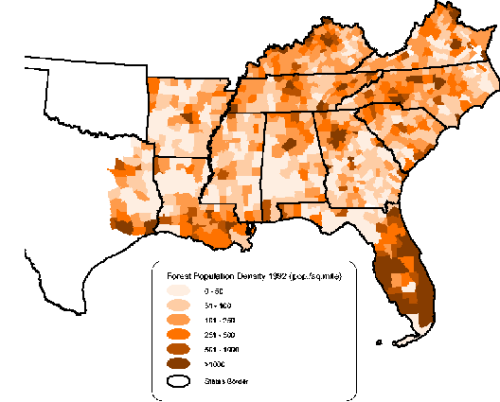
This was 1992, when FL’s population was 2/3rds what it is now.  

The South is a couple of strategic ports, a series of *inland* cities because hurricanes… and Florida, 20 Million people sitting out on a stick.  It’s already a 2-day drive to evacuate from Tampa to the state border when a hurricane hits.  Everyone who moves there is crazy, but all the people who want to employ me are *moving there*.  

b9e83ec3edcefac75e4bf49f46d255fbff93cba9


iteratedextras:

So what’s really being paid for is a supply of Anti-Communist Hispanic voters.


earnest-peer:

Aren’t a bunch of tech companies moving to Austin? I’ve certainly heard more mumbling about Austin than Miami on twitter, but maybe that’s just my bubble.


zexreborn:

Y’all need to move to the heartland!

St. Louis: provincial rents, world class amenities!


eightyonekilograms:

I know everybody thinks us tech workers are rootless, atomized yuppies who are only in San Francisco etc. because that’s where the jobs are, but I actually like Seattle, and I know plenty of people who feel the same way about the Bay Area (housing costs aside).

(That said, everyone else should take OP’s advice and move to Miami so I can get a cheaper condo here)


poipoipoi-2016:

I mean, I liked NYC before my knee blew out and I was no longer capable of standing on moving trains right as the local Armenians started having nightly gunfights and my entire industry evacced the dying, collapsing, suddenly crime-ridden city.  

/NYC used to have a crime rate less than the national average.  

In the year of our Lord 2021, a material-enough-to-have-to-upend-your-life-for percentage of tech/finance companies are *still* planning to make you live in the same state as them if you want to work for them? That’s fucked up.

(My dad worked tech in San Francisco for a while, but that didn’t mean he *lived* there, *god* no. He lived in *Canada* like a *sensible* person.)

((no offense to my friends in San Francisco, I assume you’re making the best of a bad situation))

I mean, I guess if you’re used to California even Miami might seem like an improvement danger-wise? Like, on a scale of 1 to California, Miami is what, a 9?

“Arranging for rich people to live in incredibly disaster-prone environments” doesn’t sound like an anti-communist position at all. That’s just using hurricanes/earthquakes/wildfires instead of guillotines.


Tags:

#getting an IFRS-based accounting designation is increasingly seeming #like a kind of precommitment against the San Francisco Gravitational Field and its descendants #”nope‚ my credentials don’t transfer to the States‚ you’ll just have to go on without me‚ so sorry‚ byeeee” #(renouncing my U.S. citizenship would be an even stronger oath to never move there but I’m still not sure if I’m willing to go *that* far) #((a few years back my dad refused a job offer from Google that was conditional on moving to SF)) #((better to work at Uber Eats here than to work at Google there)) #(((well at the time it was ”better to be unemployed” etc: Uber Eats came later))) #on a scale of 1 to California my area is maybe a 2 #there’s occasional ice storms you have to watch out for and that’s basically it #(*knocks on wood*) #home of the brave #our home and cherished land #adventures in human capitalism #101 Uses for Infrastructureless Computers #reply via reblog #apocalypse cw #death tw? #murder cw?

{{previous post in sequence}}


brin-bellway:

https://brin-bellway.dreamwidth.org/78928.html

@itsbenedict​​ replied: “i’m a resident of 2020 and thought that meant “sun” until you explained it”

Potential near-future mes dealing with the aftermath of coronal-mass-ejection EMPs are definitely grumbling about “don’t we have *enough* coronas fucking us over this year?”.

(I’m actually in the middle of reading a thing about this right now: https://www.governmentattic.org/27docs/UnpubFEMAgeomagRptsU_2010-12.pdf )


Tags:

#replies #itsbenedict #101 Uses for Infrastructureless Computers #apocalypse cw #illness tw #covid19

glumshoe:

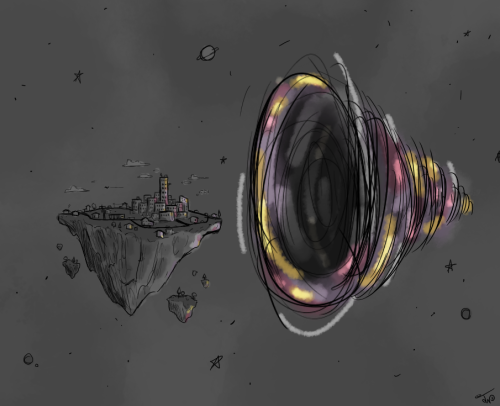
I had a dream that I lived in a town on the edge of reality. There was a map showing the location of the town in spacetime, and it was depicted as teetering on the edge of the event horizon of a funnel-shaped warp in reality. Like light a certain distance away from a black hole, we were unable to escape the influence of the warp, but not drawn in by it completely, either.

Our proximity to Unreality conferred many advantages, and we were able to do things in our town that weren’t actually possible. We could survive fatal accidents and walk away without a scratch. Things that were lost forever were found again, and sometimes, if you didn’t think about it too directly, failures transformed into successes just like that. It was as though thought itself was a physical substance that could bend the shape of the world in our favor. Life was good in the little town of Event Horizon, where things always seemed to work out and Lady Luck lived on our side.

But Event Horizon also experienced “reality-quakes”. Now and then the fabric of spacetime would ripple, and shockwaves would rock our little town violently. Sometimes things would shake loose and get drawn in to the Unreality, and even people could be lost this way. They quakes weren’t common, but they seemed to be occurring with more frequency, leading to fears that we were becoming unmoored in spacetime and might lose the equilibrium that allowed us to survive and take advantage of the flexibility of reality.

Thought could stabilize things, if we projected our minds as physical forces to hold things in place. You could cast your thoughts out as a net and pull against the draw of Unreality. But that only worked if we were prepared and braced ourselves against the quake ahead of time, and people needed to work and eat and sleep and go to school. There was no way that everyone could be on anchoring duty all the time.

That’s why we had a lottery. Every twenty years, one among us would be selected to by the community to be the Achor for the entire town—a full-time psychic resistance against entropy. The Anchor would enter a trance state and project their mind out to touch every structure, every tree, every pebble, every person in Event Horizon, and hold them there. Constantly. For twenty years.

People would come to tend to the Anchor, to feed and bathe them and keep them comfortable, but the Anchor rarely became lucid enough to recognize them. It was a vital, respected, honorable position, but there was no glory in it. If you found out you had been selected to be the next Anchor, your family would grieve for you as though you had died. If you had children, they would be taken care of in a princely fashion as wards of the state, and your family would be honored and want for nothing, because even though your assignment was only twenty years, former Anchors did not tend to live for very long. They’d be made comfortable and lavished with good things, but their life energy would be sapped, and they’d fade away quickly.

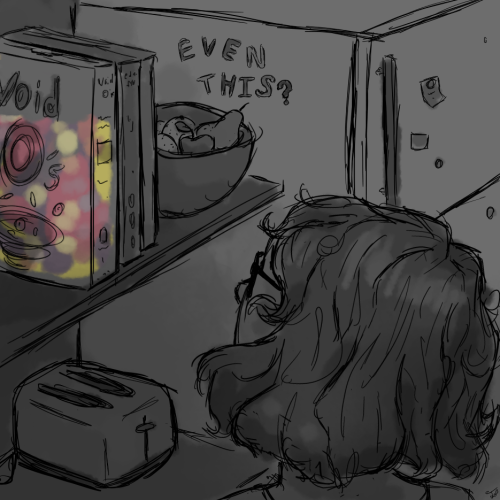
My dream was 90% exposition and very little in-the-moment action, but I had just discovered that I would be the new Anchor, and I was not happy about it. The most vivid action scene I remember was standing in my kitchen staring at breakfast cereal boxes on a shelf and touching them with my mind, feeling every grain of cereal within and thinking, “Even this? Even this?”

Anyway, thanks brain, that was cool.


sillywafflefries:

acd3d1a22e53ce86ec3031c772f5e7d94fc07b8a

c9360c8ef70c1a7bd014f08a57a09db5533a59f4


glumshoe:

Oh shit!!!


Tags:

#dreams #storytime #apocalypse cw #death tw #this probably deserves some other warning tag but I am not sure what

c11beb73eb8e6370460cb30ed0b31c96e43c7481

jadagul:

collapsedsquid:

Stockpiling intensifies

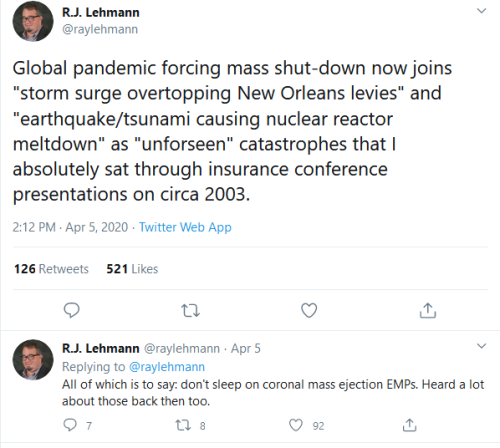
In fairness, the problem in Katrina wasn’t the storm surge overtopping the levees. Everyone knew to be terrified of that (at least those of us living in New Orleans). And the hurricane passed, and the city hadn’t flooded, and we all exhaled.

And then the levee collapsed.

I keep hearing rumbles about the threat of solar EMPs and how “we should prepare”, but what am I, Jane Q. Citizen, actually supposed to *do* about it? Or is this purely a “talk to your politicians and try to convince *them* to do something about it, because they’re the only ones who can” thing?

(Argumate seems to think this is funny, but I *do* in fact own a Wikipedia dump and I highly recommend it [link]. Not sure it would survive an EMP, though.)


Tags:

#apocalypse cw #covid19 #reply via reblog #101 Uses for Infrastructureless Computers #discourse cw? #illness mention


{{next post in sequence}}

englishproblems:

749b32007ec6e42d64718d8c1860b60ef20325f5

Tags:

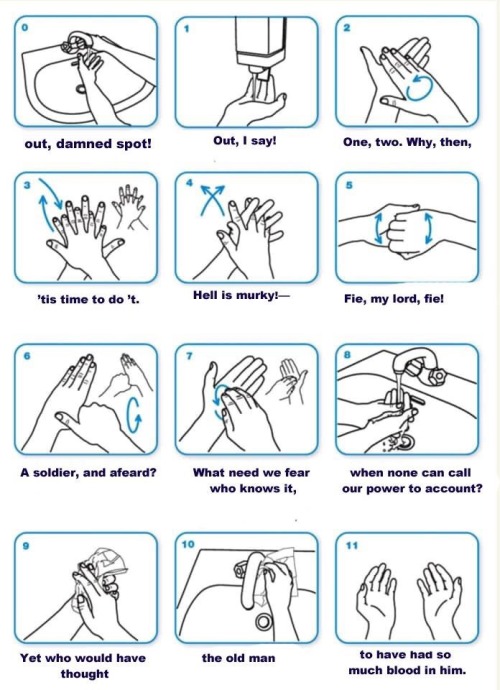
#so apparently handwashing memes are a thing now #which feels… #it feels like a piece of set dressing you’d see in a work of apocalyptic fiction #a little poignant note about coping mechanisms #did you ever see that post about memes people would make during the apocalypse? #there was a meme from a world where an asteroid was about to hit #took an artist’s conception of an asteroid hitting Earth #added a then-perish image on the asteroid and a guess-I’ll-die image on the Earth #this feels disturbingly like that #tag rambles #death tw #apocalypse cw #illness tw #covid19 #Shakespeare