sigmaleph:

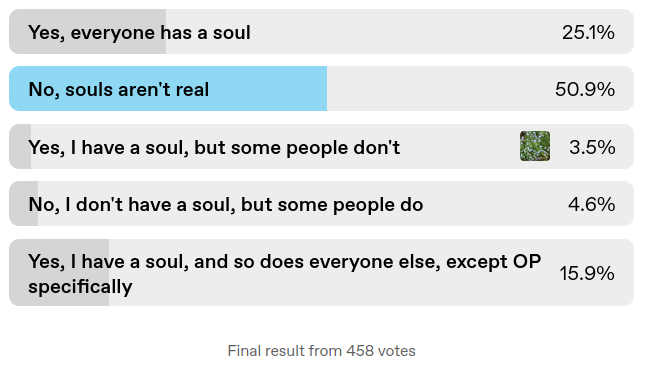
Do you have a soul?

soul-prevalence-poll

The word “soul” is so semantically overloaded that *all* of the first four options are correct.


Tags:

#I voted for option 3 because I have an unusually stable personality #I am constantly running into people who are‚ like‚ completely different people than they were two years ago #there’s no *core* to them: everything is in flux #those of them I’ve heard discussing it say they like it better that way #(some of them have gone so far as to say it’s morally obligatory) #but it’s really not my style‚ personally #(you’re probably wondering in what sense do I not have a soul but other people do) #(ideally I would answer with a link to that one post by…was it aspire-to-the-light?) #(in which they describe their quale of having a conscience in a thoroughly alien manner) #(but I cannot find it) #reply via reblog #tag rambles #is the blue I see the same as the blue you see #surveys #language

how-about-a-nice-game-of-chess:

anarchblr:

7d5afd573faf8704b58485609bb2c4835ab1ce36
00324285061484940ffbb8c128f0cfc7d4f8168c
5f4fcf5369c8b733234c5255b152df01c3d35828
b07283ea3c250dd8654543c52b2b681a9f8f8f77
0409404b70aab23fc8f2e631da46ce7aaddbb72d
d2cd15bbe5a87d8318db7539a91d3267a5886c5a
0b212ece15efdd6fa1f3bd477cc12c0d521c425f

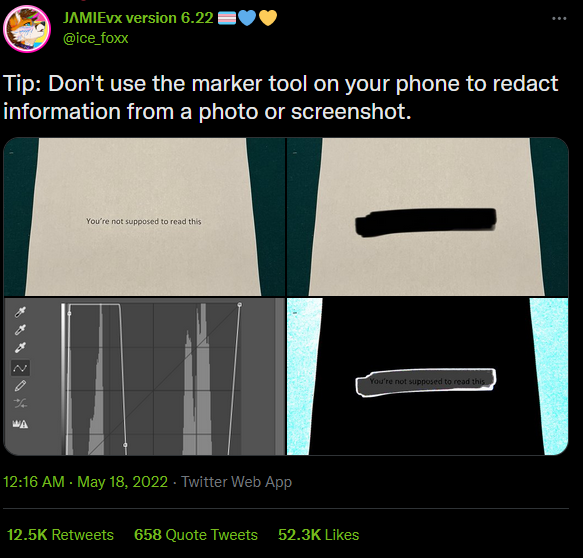
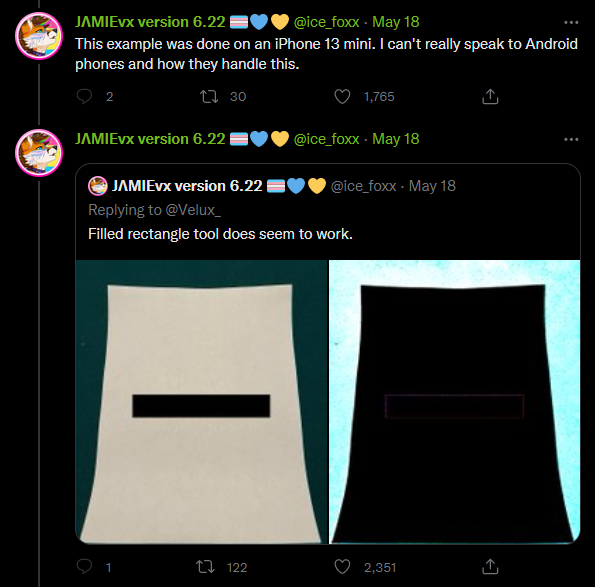
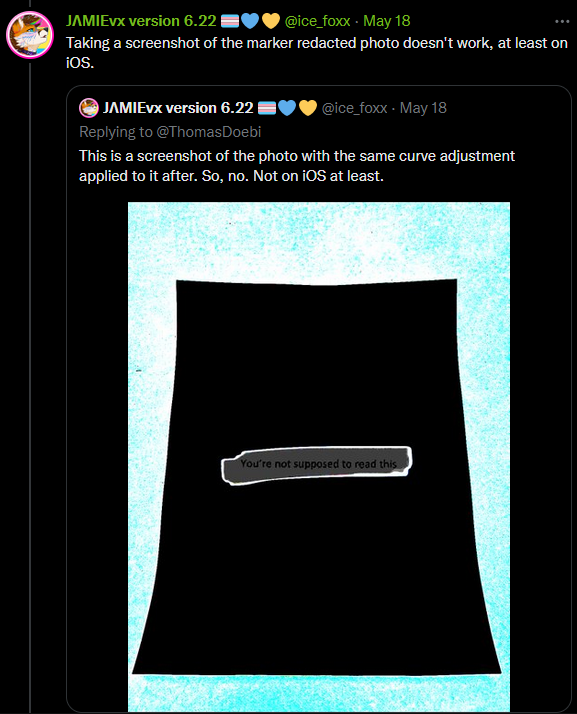
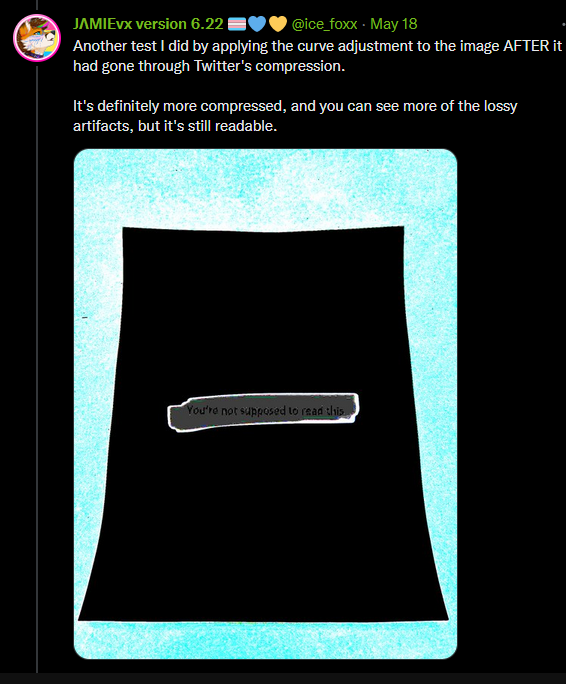
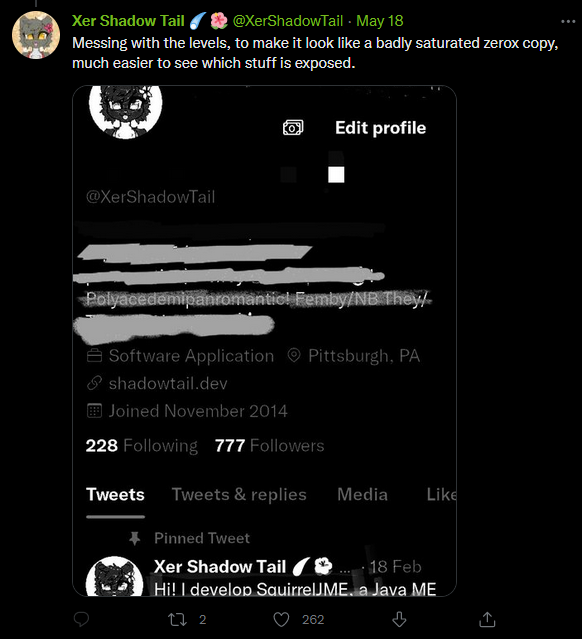
When censoring information out of pictures, do NOT use the marker tool. Block it out with a full filled in square, or use a mosiac filter. Marker tools are not fully opaque and are slightly off from black, which makes it possible to alter the levels and reveal the information underneath.

This is probably good advice anyway, but to reproduce it, it would be helpful to know what platform, and what exact procedure OP used.

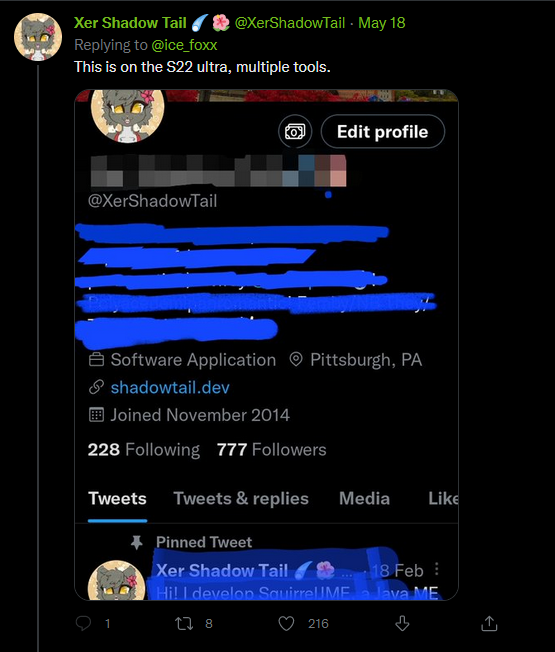
For example, on Android there are separate ‘pen’ and ‘highlighter’ tools, which are confusingly similar. But the highlighter makes a mark which is intentionally translucent, whereas the pen mark appears opaque. In the last screenshot, it looks to me like some lines of text were covered with the pen tool, and are not visible, whereas others were covered with the highlighter tool, used repeatedly, and are still partly visible.

Either way, when combined with the Android crop bug – which in some cases / on some devices failed to actually remove the cropped-out pixels from the image file – I would say you should just never trust phone-app editing software to remove truly secret information from an image.


Tags:

#PSA #disappointed permanent resident of The Future #stalking cw #this probably deserves some other warning tag but I am not sure what #this post was queued because my to-reblog list is too long and I didn’t want to dump it on you all at once
markadoo asked: In Old English, the word sibling meant “a relative”, until the word went extinct in the early Middle English period, around 1400. It was brought back in the 1900s (the decade) and given its modern sense, but only as a technical term used by geneticists. I can’t find a source on when it became an everyday, normal-person word.

cryptidmoirologist:

transgenderer:

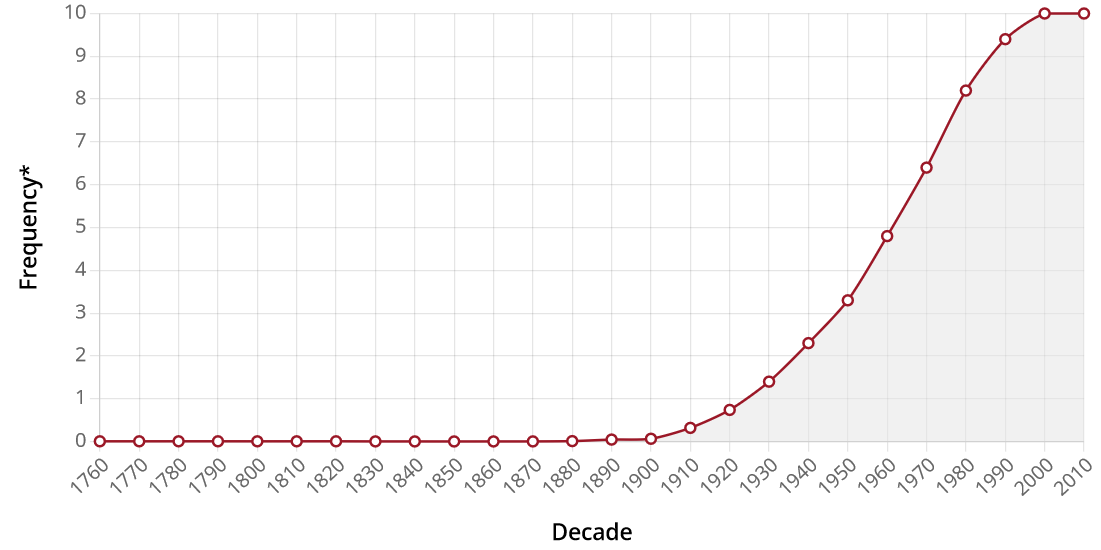
Weird! Neat! I think generally that transition is poorly sourced? Maybe try Google ngrams

a reasonable estimate is that the popularization of the word “sibling” happened over the second half of the 20th century. before that the word had been active in technical areas, but didn’t seem to pick up steam in other places until the ‘60s. some interesting timestamps sourced from old newspapers:

  • 1943, new york: Henry Hastings Curran (1877–1966, then NYC’s chief magistrate) expressed dismay at the increasing use of the word among probation officers, with a bemusing amount of outrage: “how would you like to be called a scarab? or a scamp? or a coystrel or a curmudgeon? or a tatterdemalion? or a gremlin? or a sibling? how would you like that?” “to me it has a very doubtful sound, dubious, dismal, desparate.” (1 Aug 1943, New York Daily News)
  • 1944, london: at the pensions tribunal at the law courts, Sir Owen Bearsley (could be this Owen Bearsley, unsure) was confused by a psychiatrist’s use of the word in his report. Bearsley’s colleague had to look it up in a medical dictionary.
  • 1953, london: one Alan Dick advocated the use of the word in place of the cumbersome “brother and sister”: “here’s another ugly one—brother-or-sister. you want to ask somebody if he-or-she is an only child or if he-or-she has any brothers or sisters, and it all has to come out at once—bruthussasistus. this is another place for a single word meaning either. the psychologists… invented a word of their own. sibling. what about taking it over for everyday use?” (24 Feb 1953, Daily Herald)
  • 1963, US: William Morris (1913–1994, lexicographer, columnist) mentioned the word in his syndicated column Words, wit and wisdom (5 Nov 1963), stating that the word was “recently popularized” and reporting a difference in the definitions then used in the US (“children born at different times of the same parents”) and in the UK (“children having one or both parents in common”).

for reference, here is the OED’s n-gram for “sibling”:0dadf9ec09d6ac7503f84198e88e12878f4a653a

Tags:

#what the fuck #this is like when I learned yesterday that the two-wheeled telescopic-handle suitcase was invented in *1987* #which is also! the year that scrunchies became a thing! #…what new things do people just a little younger than me assume have been around Forever #language #history #this post was queued because my to-reblog list is too long and I didn’t want to dump it on you all at once
owldude:

owldude:

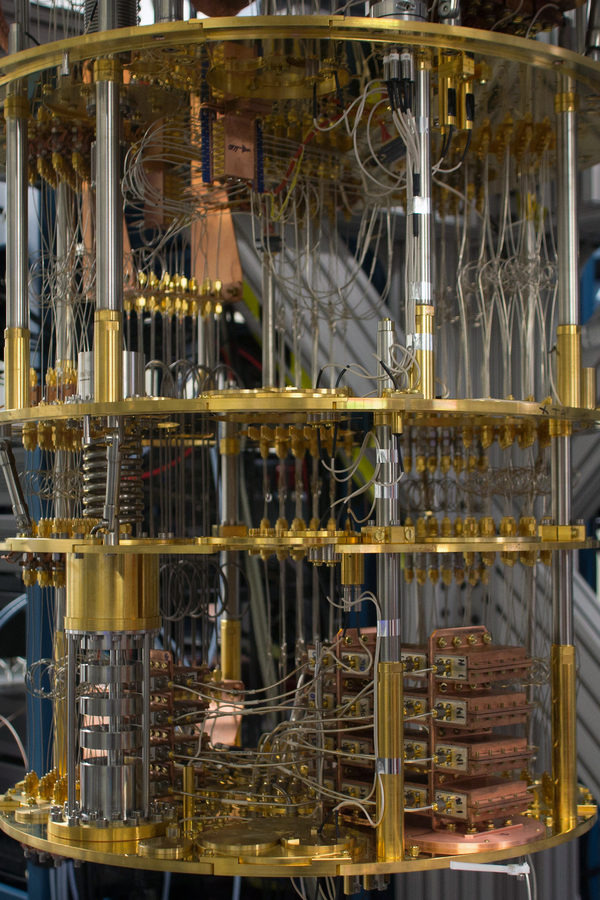
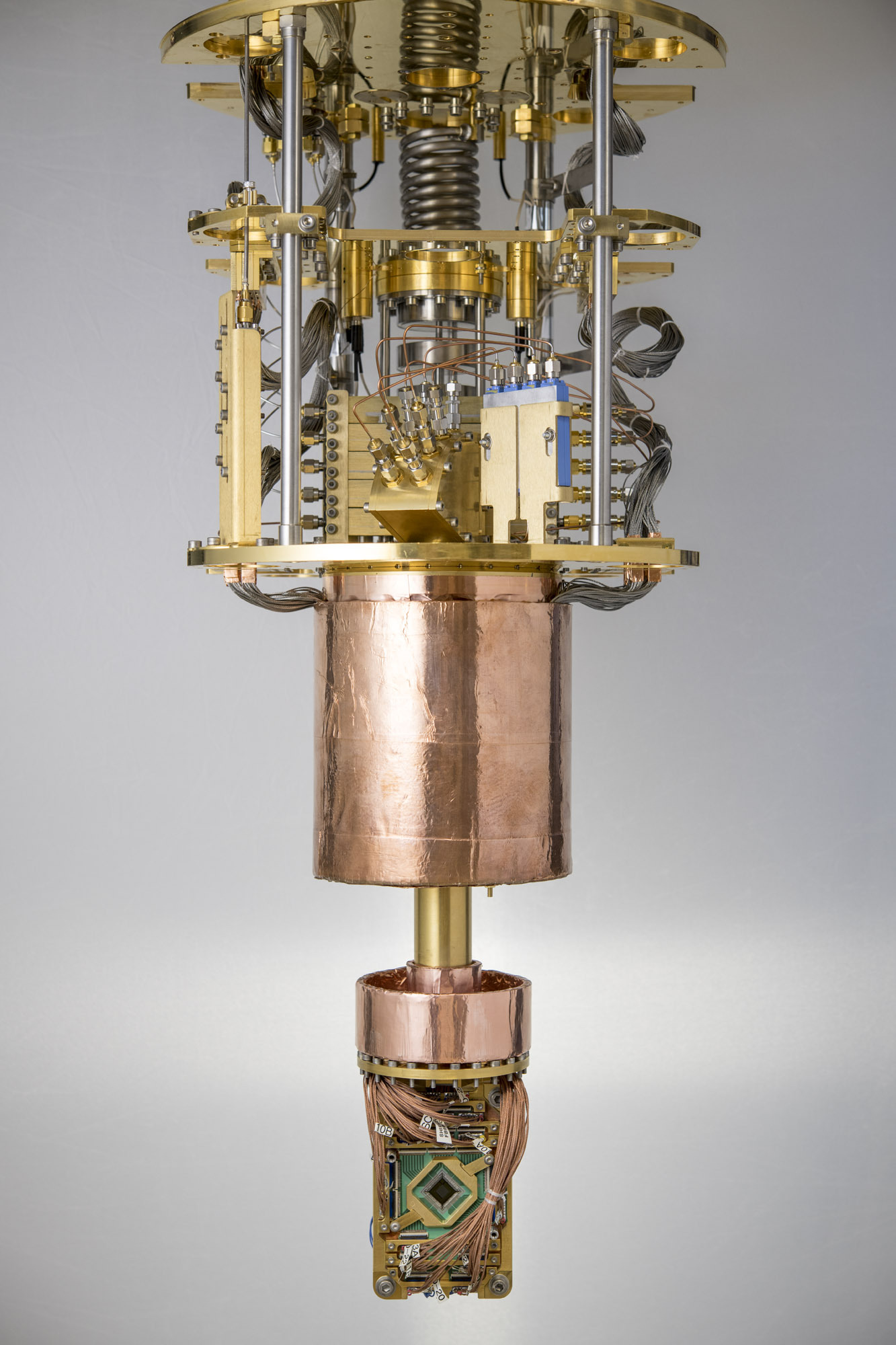
why did no one tell me quantum computers looked like that

88eba351972c88f21911576da04669b6640dd34e
436fbbef24654a9e0a77290ed327ebdd484dae72
ace60f642075af7b1eaa3f74dbf65489c5607ecf
395ba069dec50654fe6df79db5ddfb9c9bfce582
e8e1a68870acc1643166f54270773c1396012be3
242120cf414b1719a46e3887b6141d6909371eb6

what the fuck


Tags:

#pretty things #proud citizen of The Future #(apparently most of this is the cooling system) #(it has to be kept *extremely* cold to work) #this post was queued because my to-reblog list is too long and I didn’t want to dump it on you all at once
paradigm-adrift:

foone:

I think I grew too much on the internet to understand how some people have blog names.

Like, I’m from IRC and trans communities, if your username is bball24, that’s your name. I assume your mom addresses you by that name and it reads the same on your driver’s license and maybe even birth certificate l.

I never think “oh, best-tardis-in-the-galaxy is a blog run by some gal named Sarah!”. No, if I think of the name at all, it’s like obscure trivia. My good friend Ms. Best-tardis-in-the-galaxy has the government name ‘sarah’. Perhaps she hasn’t been able to change it yet, too much paperwork or something?

I just sometimes see people post things like “what’s your blog name mean?” and I’m like “it’s me. What else would it be? You mean kirk’s-big-saggy-tits isn’t your name?”

Basically it’s something like Facebook’s real name policy but from the other angle. I think everyone is named what their username is, not vice versa.

(and yes, my name is foone. My mom calls me that and it’s what’s on my license. Isn’t that true for everyone?)

Early internet culture had a lot of problems, but IMO this norm is a very good one.


Tags:

#I don’t go *exclusively* by Brin but there are well over a dozen people in meatspace social contexts who know me by that name #I like my birth name and I don’t plan on dropping it altogether but there really is something to be said for picking a name yourself #names #this post was queued because my to-reblog list is too long and I didn’t want to dump it on you all at once
nasa:

dff16017d81370b04799ef5da31c21bf588cfc75

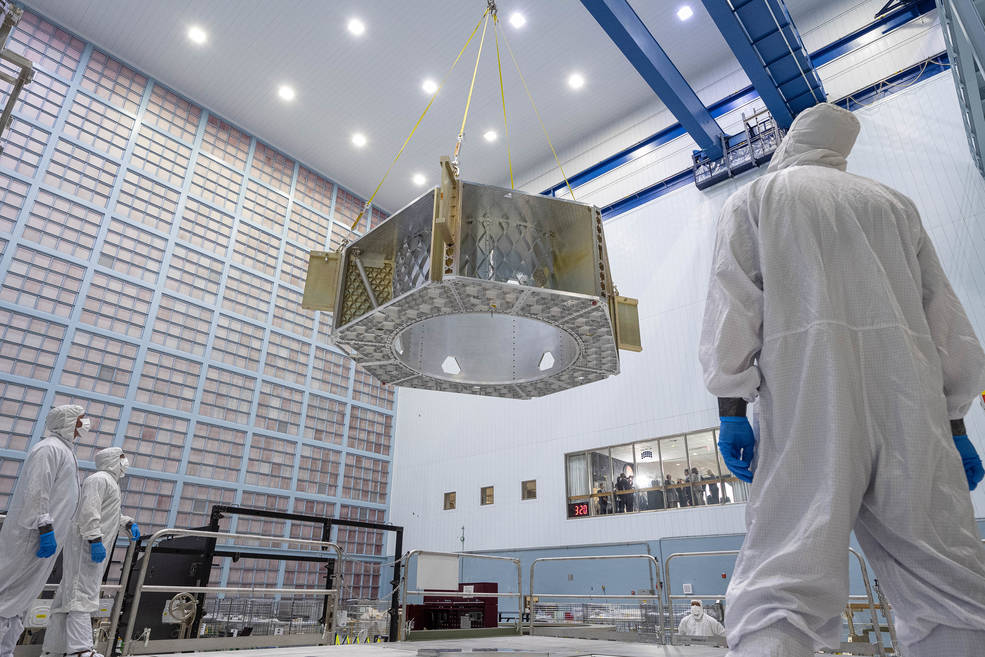
Roman’s primary structure hangs from cables as it moves into the big clean room at NASA’s Goddard Space Flight Center.

What Makes the Clean Room So Clean?

When you picture NASA’s most important creations, you probably think of a satellite, telescope, or maybe a rover. But what about the room they’re made in? Believe it or not, the room itself where these instruments are put together—a clean room—is pretty special.

Keep reading

{{below the cut:}}

A clean room is a space that protects technology from contamination. This is especially important when sending very sensitive items into space that even small particles could interfere with.

There are two main categories of contamination that we have to keep away from our instruments. The first is particulate contamination, like dust. The second is molecular contamination, which is more like oil or grease. Both types affect a telescope’s image quality, as well as the time it takes to capture imagery. Having too many particles on our instruments is like looking through a dirty window. A clean room makes for clean science!

bb6f7b4c4ee245eb280c155082c2c410df01857c

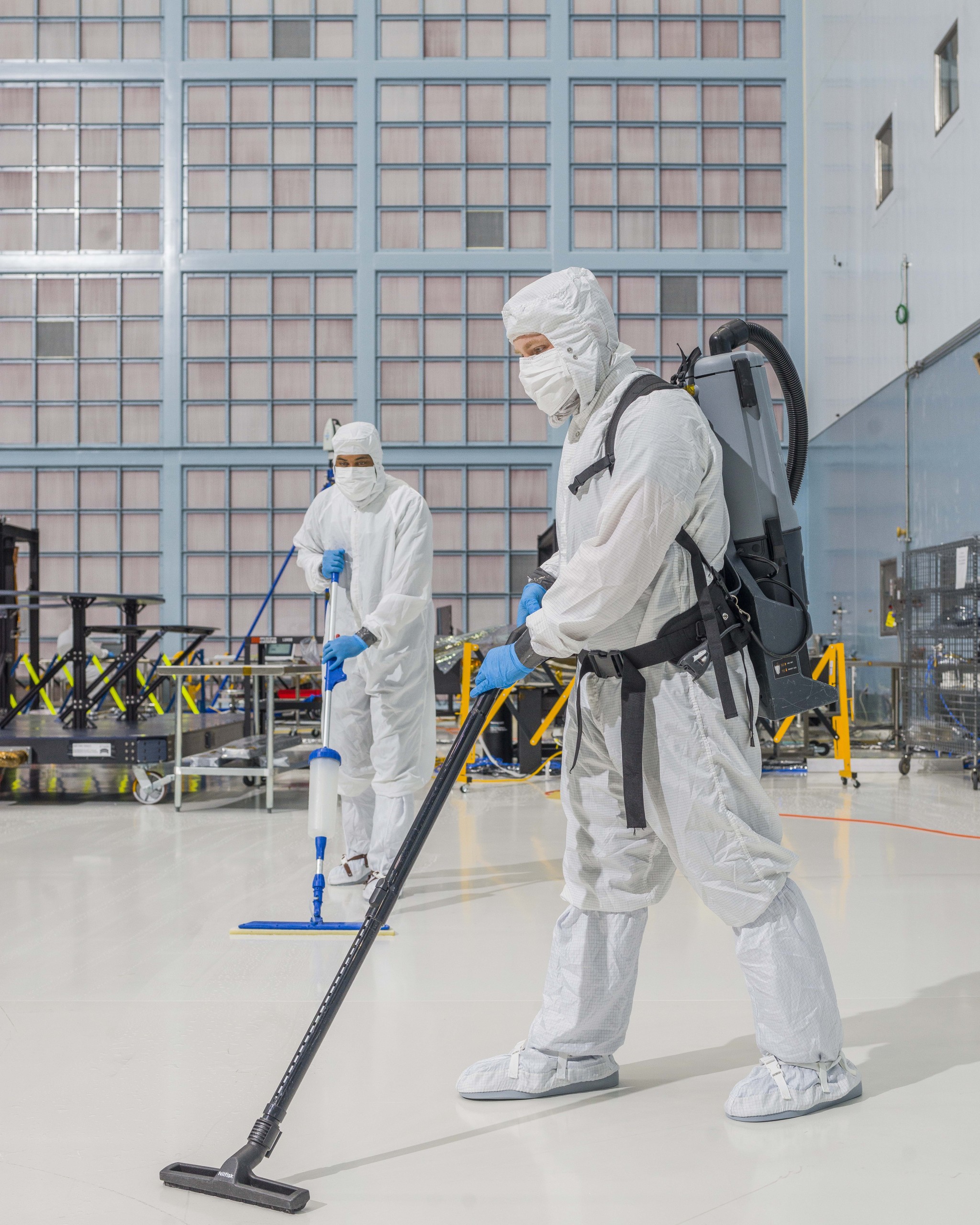
Two technicians clean the floor of Goddard’s big clean room.

Our Goddard Space Flight Center in Greenbelt, Maryland has the largest clean room of its kind in the world. It’s as tall as an eight-story building and as wide as two basketball courts.

Goddard’s clean room has fewer than 3,000 micron-size particles per cubic meter of air. If you lined up all those tiny particles, they’d be no longer than a sesame seed. If those particles were the size of 16-inch (0.4-meter) inflatable beach balls, we’d find only 3,000 spread throughout the whole body of Mount Everest!

c3f97f8d9e7791d368a064d52f9363439ef90b77

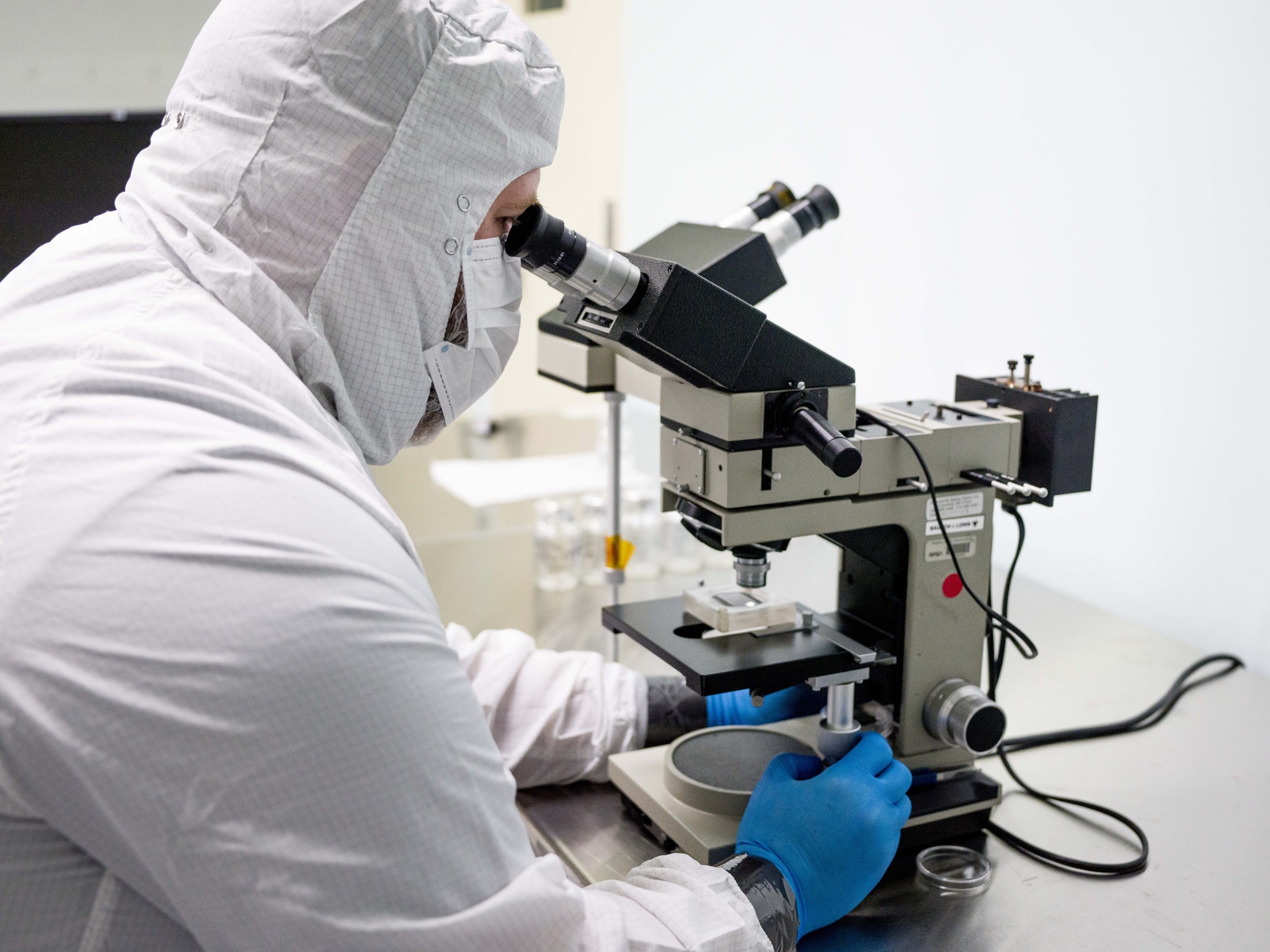
A clean room technician observes a sample under a microscope.

The clean room keeps out particles larger than five microns across, just seven percent of the width of an average human hair. It does this via special filters that remove around 99.97% of particles 0.3 microns and larger from incoming air. Six fans the size of school buses spin to keep air flowing and pressurize the room. Since the pressure inside is higher, the clean air keeps unclean air out when doors open.

9302f78118ead99440351365b4d37b92bf99c23a

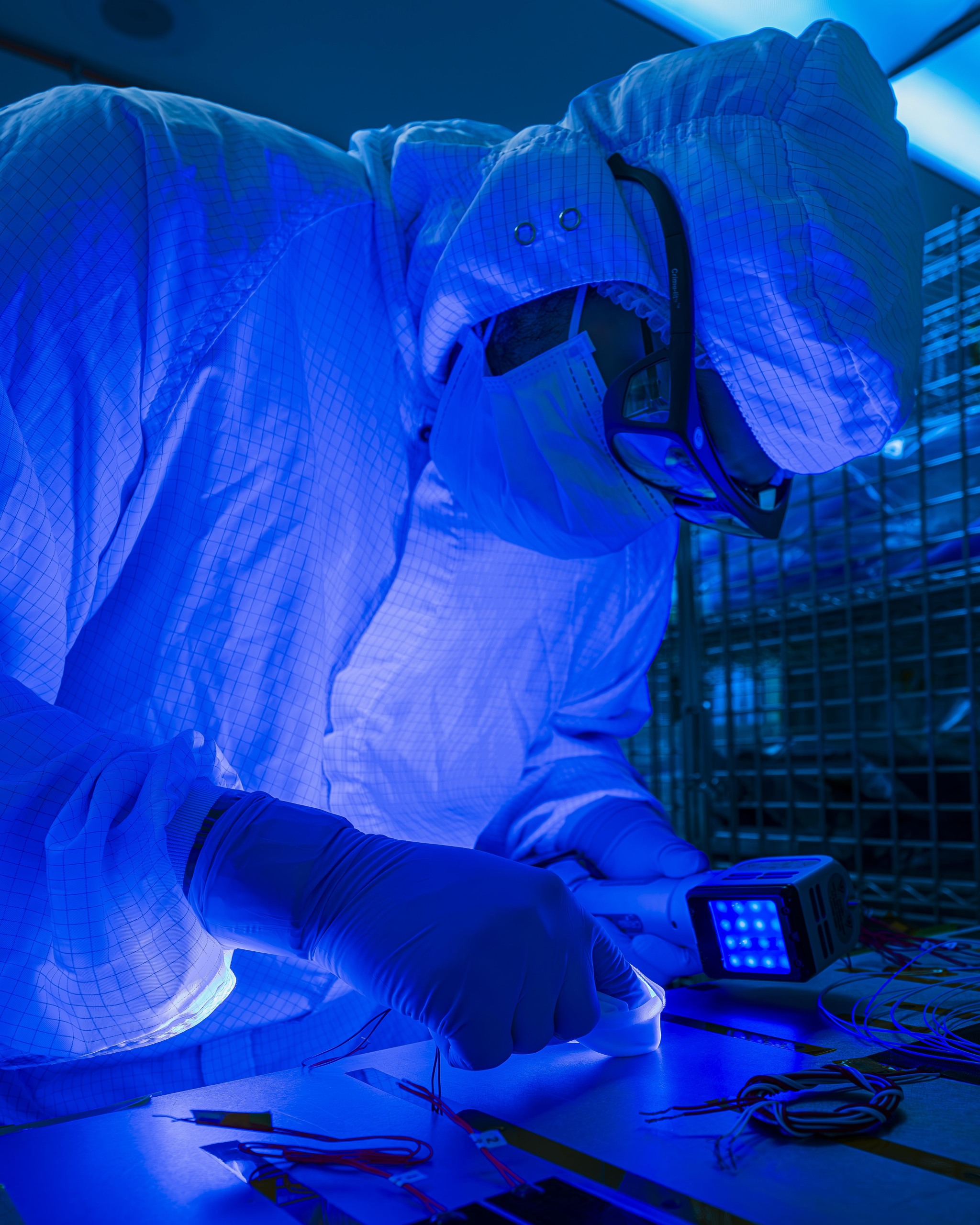
A technician analyzes a sample under ultraviolet light.

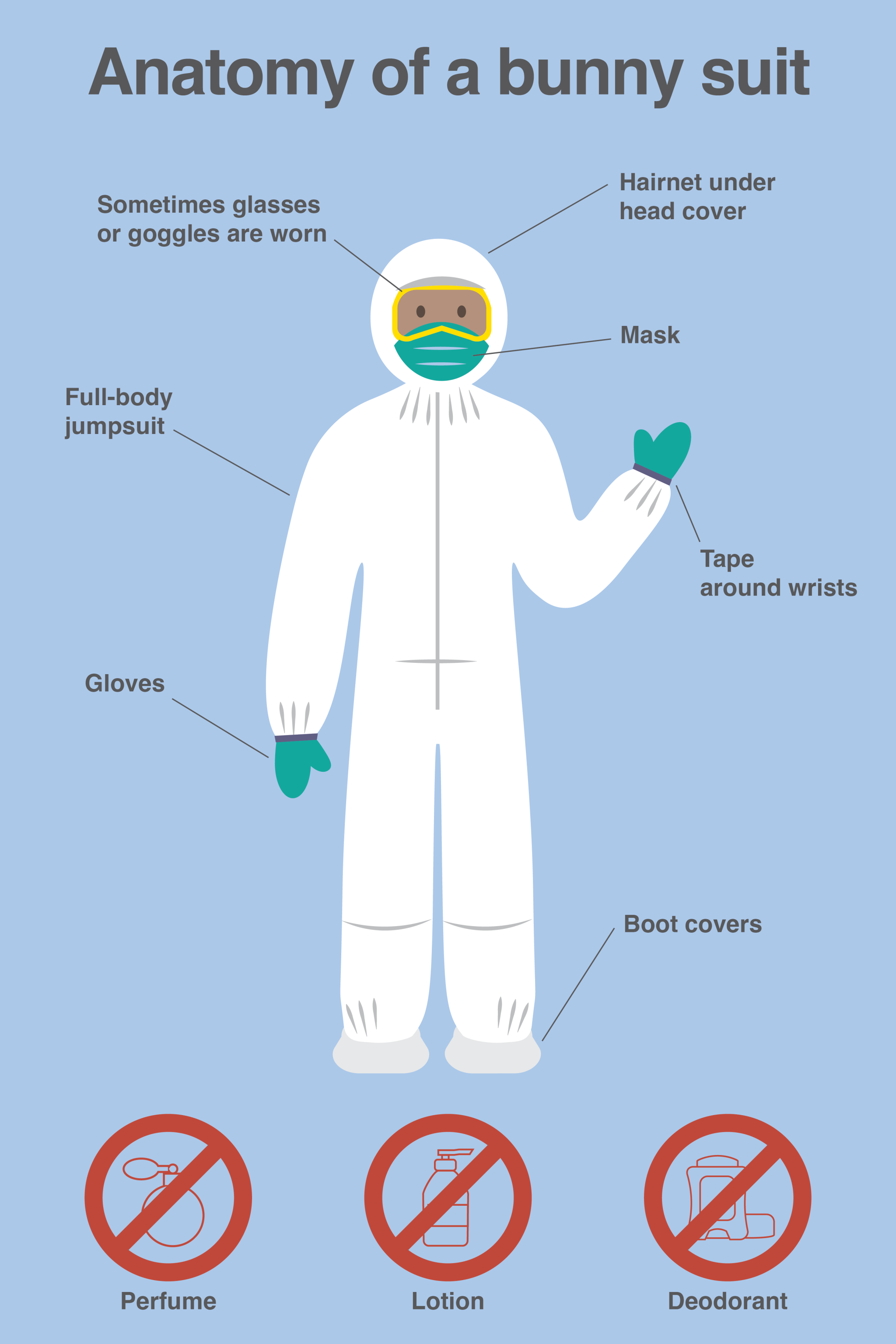
In addition, anyone who enters must wear a “bunny suit” to keep their body particles away from the machinery. A bunny suit covers most of the person inside. Sometimes scientists have trouble recognizing each other while in the suits, but they do get to know each other’s mannerisms very well.

0fd43b388b6a5bf40d45eedab6aa6f7f7abebd6c

This illustration depicts the anatomy of a bunny suit, which covers clean room technicians from head to toe to protect sensitive technology.

The bunny suit is only the beginning: before putting it on, team members undergo a preparation routine involving a hairnet and an air shower. Fun fact – you’re not allowed to wear products like perfume, lotion, or deodorant. Even odors can transfer easily!

f7846622b5c8785a6f8bcc0e6714ee03fd832fad

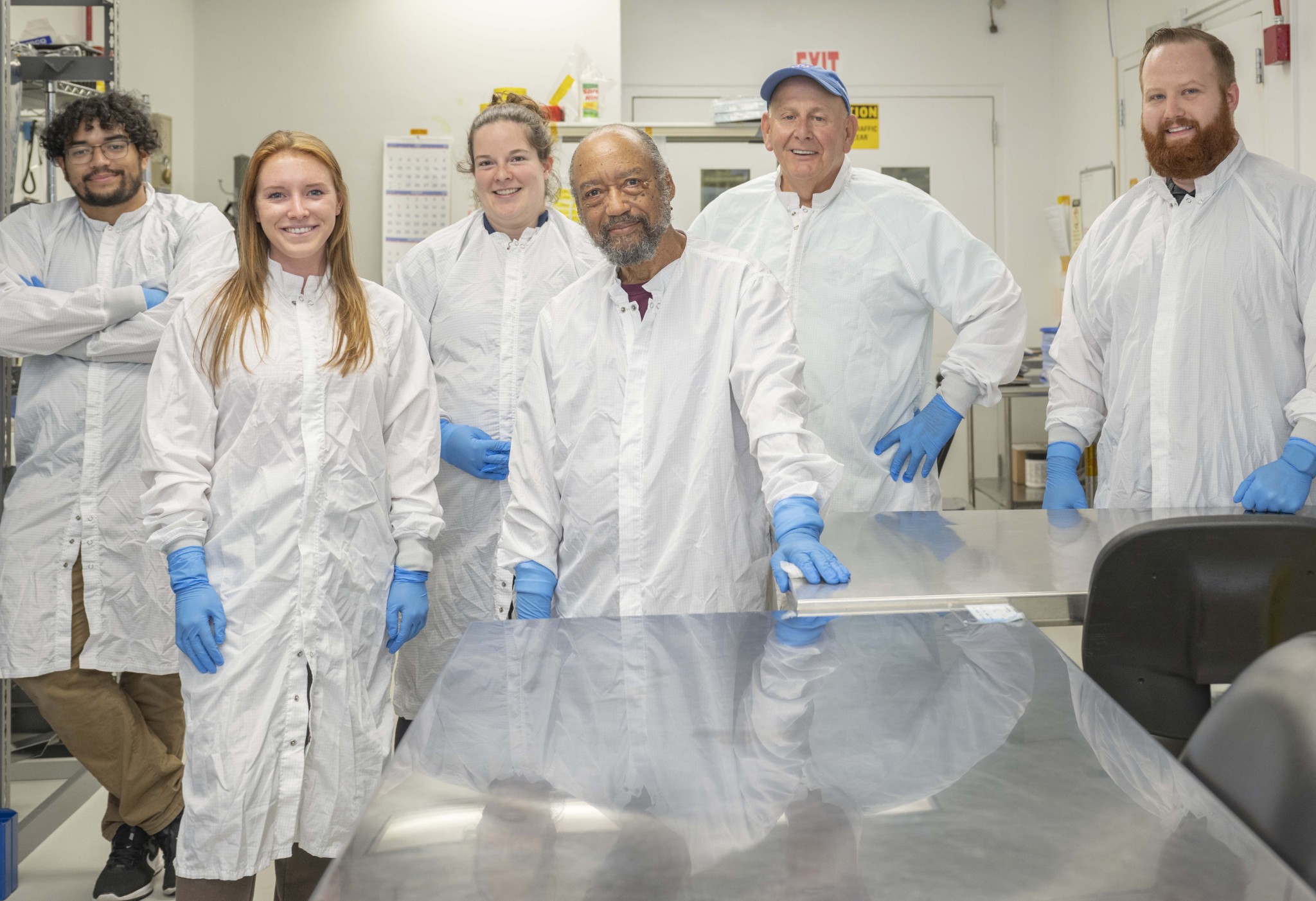
Six of Goddard’s clean room technicians (left to right: Daniel DaCosta, Jill Bender, Anne Martino, Leon Bailey, Frank D’Annunzio, and Josh Thomas).

It takes a lot of specialists to run Goddard’s clean room. There are 10 people on the Contamination Control Technician Team, 30 people on the Clean Room Engineering Team to cover all Goddard missions, and another 10 people on the Facilities Team to monitor the clean room itself. They check on its temperature, humidity, and particle counts.

cc3f8ab8981f05d90cdc15e4e2c856d018c0ad08

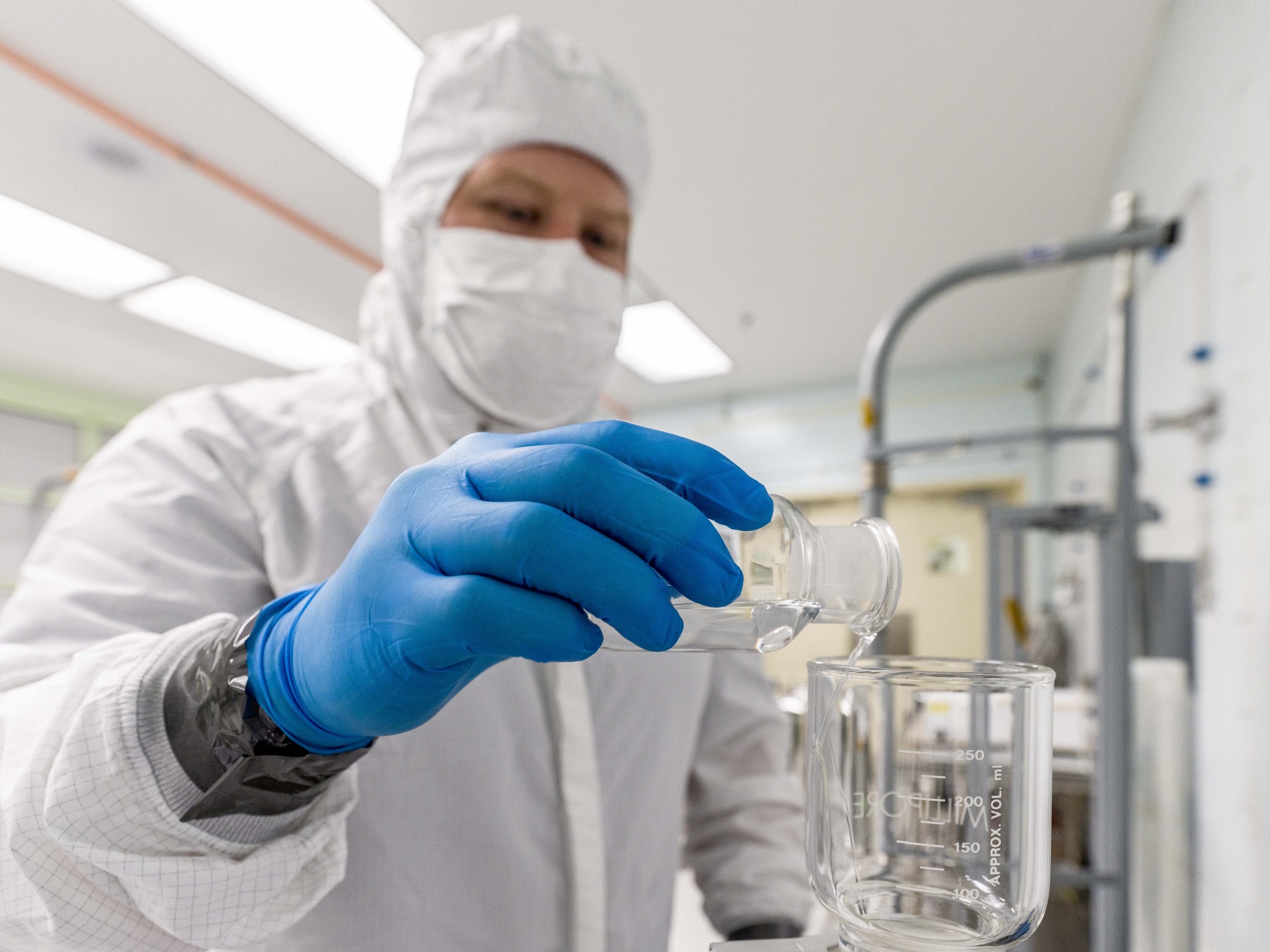
A technician rinses critical hardware with isopropyl alcohol and separates the particulate and isopropyl alcohol to leave the particles on a membrane for microscopic analysis.

Besides the standard mopping and vacuuming, the team uses tools such as isopropyl alcohol, acetone, wipes, swabs, white light, and ultraviolet light. Plus, they have a particle monitor that uses a laser to measure air particle count and size.

The team keeping the clean room spotless plays an integral role in the success of NASA’s missions. So, the next time you have to clean your bedroom, consider yourself lucky that the stakes aren’t so high!

Make sure to follow us on Tumblr for your regular dose of space!


Tags:

#space #the power of science #proud citizen of The Future #disappointed permanent resident of The Future #this post was queued because my to-reblog list is too long and I didn’t want to dump it on you all at once
three-magpies-in-a-trenchcoat:

cosmicretreat:

a7eb3a29528dfe8f83314ef2997b8625f3904251

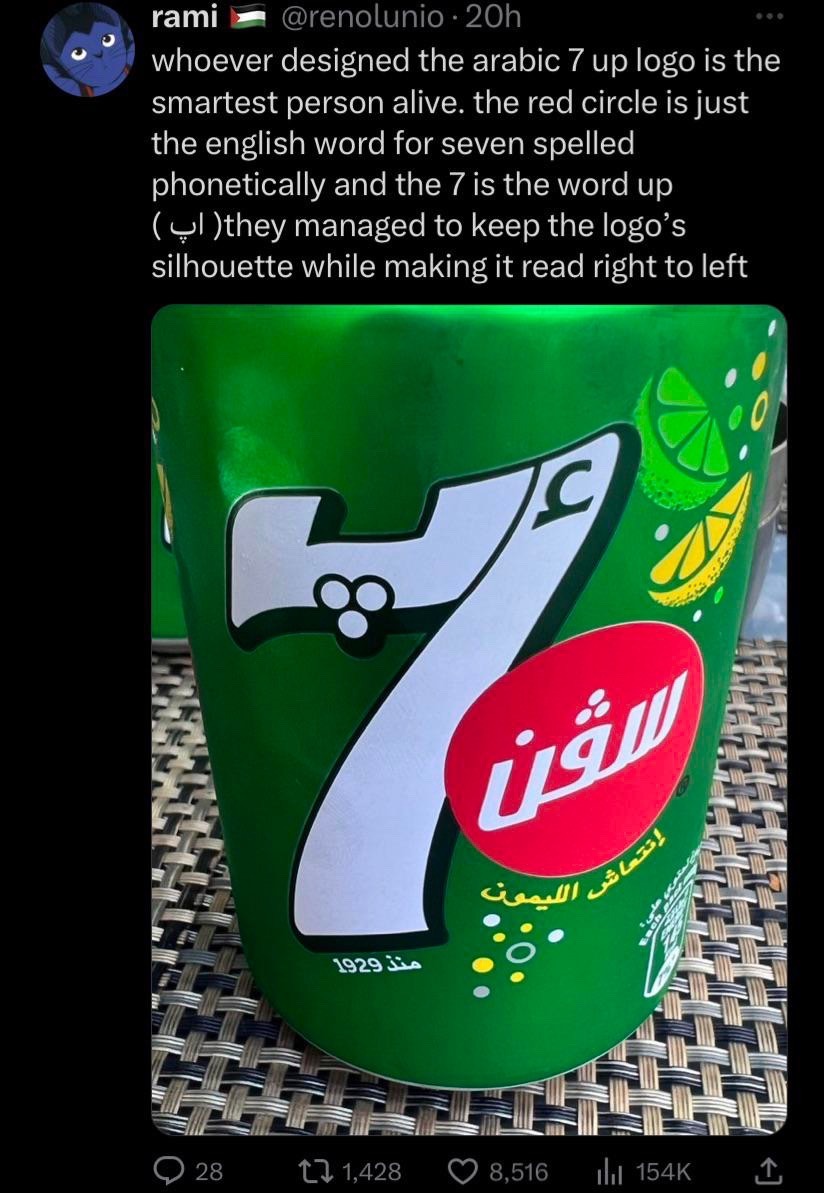
[image id: a screenshot of a tweet by @ renolunio that reads: whoever designed the arabic 7 up logo is the smartest person alive. the red circle is just the english word for seven spelled phonetically and the 7 is the word up ( اپ )they managed to keep the logo’s silhouette while making it read right to left.
Beneath the tweet is an image of an Arabic 7 up can. End id]


Tags:

#language #fun with loopholes #this post was queued because my to-reblog list is too long and I didn’t want to dump it on you all at once