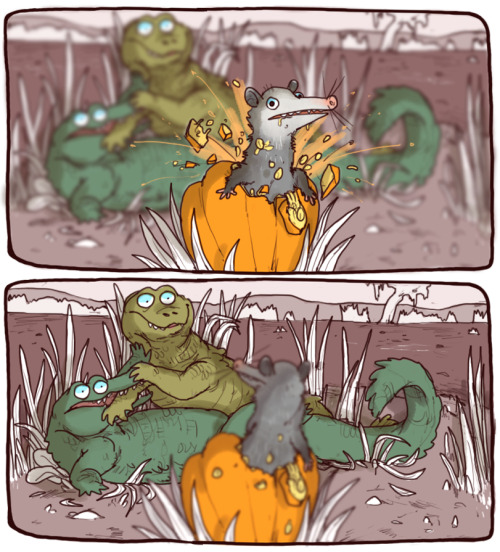
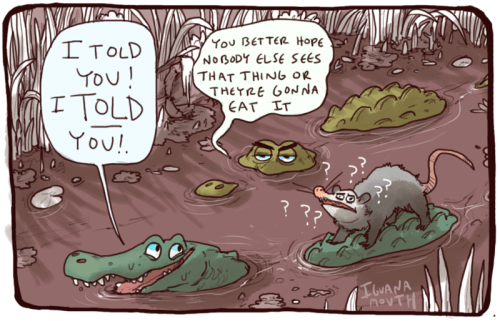
frosttrix:

entire-library-building:

entire-library-building:

Top 1.67% OF? Top 1.67% of what?

The bots are really funny to me because I only really started using Tumblr at the start of this year and y’all are so chill about it. It’s like a weather event, like I’m experiencing snow for the first time and everyone else is just “oh, it’s been a while since that happened”

af5a4365ab65b6dd79a41b065a8d472ad583551e

#welcome to my twenty new followers who all have numbers at the end of their urls like it’s 2007 and they’re trying to name a neopet   (itsbenedict)


Tags:

#Tumblr: a User’s Guide #anything that makes me laugh this much deserves a reblog #this probably deserves some warning tag but I am not sure what

penny-anna:

Legolas pretty quickly gets in the habit of venting about his travelling companions in Elvish, so long as Gandalf & Aragorn aren’t in earshot they’ll never know right?

Then about a week into their journey like

Legolas: *in Elvish, for approximately the 20th time* ugh fucking hobbits, so annoying

Frodo: *also in Elvish, deadpan* yeah we’re the worst

Legolas:

tumblr_inline_p7l78o5xby1qj4o21_500

penny-anna:

~*~earlier~*~

Legolas: ugh fucking hobbits

Merry: Frodo what’d he say

Frodo: I’m not sure he speaks a weird dialect but I think he’s insulting us. I should tell him I can understand Elvish

Merry: I mean you could do that but consider

Merry: you can only tell him ONCE

Frodo: Merry. You’re absolutely right. I’ll wait.

penny-anna:

#legolas’ hick accent vs #frodo’s ‘i learned it out of a book’ accent #FIGHT FIGHT FIGHT

Legolas: umm well your accent is horrible

Aragorn: *hollering from a distance* HIS ACCENT IS BETTER THAN YOURS LEGOLAS YOU SILVAN HICK

Frodo: :)

storywonker:

Frodo: Hello. My name is Frodo. I am a Hobbit. How are you?

Legolas: y’alld’ve’ff’ve

Frodo, crying: please I can’t understand what you’r saying

wizard-guff:

Ok, but Frodo didn’t just learn out of a book. He learned like… Chaucerian Elvish. So actually:

Frodo: Good morrow to thee, frend. I hope we twain shalle bee moste excellente companions.

Legolas: Wots that mate? ‘Ere, you avin’ a giggle? Fookin’ ‘obbits, I sware.

Aragorn: *laughing too hard to walk*

reformedkingsmanagent:

@ghostriderofthearagon

tiny-smol-beastie:

dYinGggGggg…

whetstonefires:

i mean, honestly it’s amazing the Elves had as many languages and dialects as they did, considering Galadriel (for example) is over seven thousand years old.

english would probably have changed less since Chaucer’s time, if a lot of our cultural leaders from the thirteenth century were still alive and running things.

they’ve had like. seven generations since the sun happened, max. frodo’s books are old to him, but outside any very old poetry copied down exactly, the dialect represented in them isn’t likely to be older than the Second Age, wherein Aragorn’s foster-father Elrond started out as a very young adult and grew into himself, and Legolas’ father was born.

so like, three to six thousand years old, maybe, which is probably a drop in the bucket of Elvish history judging by all the ethnic differentiation that had time to develop before Ungoliant came along, even if we can’t really tell because there weren’t years to count, before the Trees were destroyed.

plus a lot of Bilbo’s materials were probably directly from Elrond, whose library dates largely from the Third Age, probably, because he didn’t establish Imladris until after the Last Alliance. and Elrond isn’t the type to intentionally help Bilbo learn the wrong dialect and sound sillier than can be helped, even if everyone was humoring him more than a little.

so Frodo might sound hilariously formal for conversational use (though considering how most Elves use Westron he’s probably safe there) and kind of old-fashioned, but he’s not in any danger of being incomprehensible, because elves live on such a ridiculous timescale.

whetstonefires:

to over-analyse this awesome and hilarious post even more, legolas’ grandfather was from linguistically stubborn Doriath and their family is actually from a somewhat different, higher-status ethnic background than their subjects.

so depending on how much of a role Thranduil took in his upbringing (and Oropher in his), Legolas may have some weird stilted old-fashioned speaking tics in his Sindarin that reflect a more purely Doriathrin dialect rather than the Doriathrin-influenced Western Sindarin that became the most widely spoken Sindarin long before he was born, or he might have a School Voice from having been taught how to Speak Proper and then lapse into really obscure colloquial Avari dialect when he’s being casual. or both!

considering legolas’ moderately complicated political position, i expect he can code-switch.

…it’s also fairly likely considering the linguistic politics involved that Legolas is reasonably articulate in Sindarin, though with some level of accent, but knows approximately zero Quenya outside of loanwords into Sindarin, and even those he mostly didn’t learn as a kid.

which would be extra hilarious when he and gimli fetch up in Valinor in his little homemade skiff, if the first elves he meets have never been to Middle Earth and they’re just standing there on the beach reduced to miming about what is the short beard person, and who are you, and why.

this is elvish dialects and tolkien, okay. there’s a lot of canon material! he actually initially developed the history of middle-earth specifically to ground the linguistic development of the various Elvish languages!

audreycritter:

Legolas: Alas, verily would I have dispatched thine enemy posthaste, but y’all’d’ve pitched a feckin’ fit.

Aragorn: *eyelid twitching*

linguisticparadox:

Frodo: *frantically scribbling* Hang on which language are you even speaking right now

Pippin, confused: Is he not speaking Elvish?

Frodo, sarcastically: I dunno, are you speaking Hobbit?

Boromir, who has been lowkey pissed-off at the Hobbits’ weird dialect this whole time: That’s what it sounds like to me.

Merry, who actually knows some shit about Hobbit background: We are actually speaking multiple variants of the Shire dialect of Westron, you ignorant fuck.

Sam, a mere working-class country boy: Honestly y’all could be talkin Dwarvish half the time for all I know.


Tags:

#Middle Earth #language #anything that makes me laugh this much deserves a reblog #my past self has good taste #this probably deserves some warning tag but I am not sure what

eikotheblue:

tanadrin:

imagine the humiliation of having your brain prepared for upload so your digital shadow-self can be part of the immortal paradise-world an AI god has created, and being informed you have just an embarrassingly small compression size. like, “oh, yeah, you have a standard type 64-b personality, with minor tweaks. we can fit everything that makes you unique as a person into about six kilobytes.”

but you would also be finding out there’s so many people like you in the glorious paradise! imagine being only six kb of uniqueness away from a standard type of guy that God knows exists and can help you find! found family…


Tags:

#hmm #I can see both points #I think my *initial* reflex would be offense #and my reaction after a little more reflection would be ”where did you find people made from my mould and can I meet them” #is the blue I see the same as the blue you see #this probably deserves some warning tag but I am not sure what


1d47d4d571bfd829e80a553a242a336f11f78de4

theothin:

could be a bit late for this particular method, but. if you have anything you want to save, find some way of doing it


Tags:

#Twitter #101 Uses for Infrastructureless Computers #PSA #this probably deserves some warning tag but I am not sure what #amnesia cw?

headspace-hotel:

The overwhelming dominance of free verse poetry in English sucks actually. It’s not a bad form but it IS bad that it’s the main form of english language poetry being published

I know everyone is conditioned to think rhyme, rhythm and meter is for either maudlin, sing-songy and childish poetry or excessively formal, pretentious poetry, but these things are just what makes phrases and lines memorable and punchy.

English naturally has rhythm and all poetry uses this stuff a little bit, it’s legitimately just What Make Word Sound Good

more importantly, rhyme, rhythm and meter are very connected to memory. there’s a reason why little songs and chants are our most enduring and effective memory tools

headspace-hotel:

It occurs to me that most people don’t know how these things work so here:

How Poetic Rhythm, Meter, and Rhyme Actually Work!

People seem to only learn about rhyme in grade school, and they don’t appear to learn that rhymes other than perfect rhymes (rhymes where the ending ‘sound(s)’ perfectly match) exist.

When I first got into writing my own poetry, I repeatedly heard “don’t use rhymes like ‘true’ and ‘blue’,” but for some reason it’s hard to find an explanation of this.

So here it is. “True” and “blue” are perfect rhymes because the ending sounds are identical.

Most pairs considered ‘rhymes’ in poetry do not perfectly match like that. I’m sorry grade school and colloquial usage lied to you. Rhymes are sounds at the ends of lines (or even inside lines!) that echo each other. That’s it.

Here’s a set of rhymes that are at least close to perfect, from the song “You Shook Me All Night Long” by AC/DC:

She was a fast machine, she kept her motor clean/She was the best damn woman that I ever seen

However, imperfect rhymes are REALLY, REALLY COMMON and they often sound better. Here’s a couple rhyming lyrics from the song “Every Rose Has Its Thorn” by Poison:

Every rose has its thorn/Just like every night has its dawn

This still rhymes. It’s just not perfect.

Here’s the thing. Rhyme is supposed to make Poem Sound Good On Brain, and it is only about 20% of what makes poetry Sound Good On Brain.

To talk about meter, we have to talk about stress. Stress is, like rhyme, inexact, but it arguably messes stuff up a lot more if you don’t understand it.

To explain what stress is, imagine this scenario: You are seen walking hastily away from the zoo in a ski mask, carrying a large cage covered with a sheet that occasionally emits strange sounds. (I promise this will make sense in a second.)

Before you can leave the parking lot, though, you are stopped by an angry zookeeper. “Did you steal the capybara from its cage?” the zookeeper asks.

You make one of the following excuses (please read these aloud, it’ll help):

I didn’t steal the capybara from its cage.

I didn’t steal the capybara from its cage.

I didn’t steal the capybara from its cage.

What are you doing to the bolded word that makes the meaning of your excuse different? You’re putting emphasis, or stress, on it.

All English speech naturally has places that are stressed. Without stress, it sounds like a robot in a 1970′s cartoon is talking. Specifically, almost all multisyllabic English words have specific syllables that are always stressed. (There are some regional variations.) You can figure it out by simply reading the word aloud with the stress on different syllables until you find the one that sounds normal and not evil:

  • Walrus vs. Walrus
  • Giraffe vs. Giraffe
  • Tiger vs. Tiger 
  • Baboonvs. Baboon
  • Ostrich vs. Ostrich
  • Raccoon vs. Raccoon
  • Penguin vs. Penguin
  • Gazelle vs. Gazelle
  • Gecko vs. Gecko
  • Vulture vs. Vulture

Okay, let’s leave the zoo. Try it with these words:

  • Divine
  • Shower
  • Convince
  • Pebble
  • Sidewalk
  • Carpet
  • Smoothie
  • Attract
  • Relax
  • Darkness
  • Garden
  • Surpass
  • Object

Wait, what’s that last one? That’s right, some English words are indistinguishable except for which syllable is stressed. “I object!” you might say at a wedding you don’t approve of. “It’s an unidentified flying object,” you might say if you glimpse an alien spaceship in a blurry picture.

Now try it with some three syllable words:

  • Immortal
  • Magenta
  • Poetry
  • Carnivore
  • Tomorrow
  • Entity

I feel like “entity” is a noun and “entity” would have to be a verb, if you catch my drift.

(You will notice that two-syllable English words typically have stress on the first syllable, and that three-syllable English words usually have stress on the second syllable or maybe the first.)

Single-syllable words have fuzzier rules. A single word can be stressed or unstressed depending on context. In general, content-heavy words are stressed, whereas connecting words that don’t have much meaning can kinda do what they want depending on the words around them.

English likes to periodically pick up stress, like a curious hiker periodically picking up rocks. You can barely say more than three syllables in a row without naturally emphasizing something.

This is convenient, because when stresses occur in a rhythmic pattern, ambiguous words will be swept along with the pattern.

Here’s another thing to read aloud. See which of the following couplets “sounds” better to you:

Supreme divine giraffes surpass raccoons/and gecko gods ascend beyond giraffes.

Angel giraffes beyond mortal knowledge/cannot defeat divine gecko powers.

Both couplets have the same number of syllables (ten in each line), but only the first line is metered. You might recognize it–it’s iambic pentameter! This is a form of accentual-syllabic verse.

You will notice that “pent” means five, but there’s ten syllables. Fear not– “pentameter” refers to the number of feet in the line. In this case, it’s the number of iambs. 

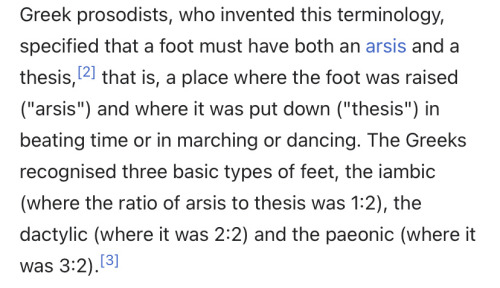
An iamb is an unstressed syllable followed by a stressed syllable. Giraffe is an iamb. Divine is an iamb. Any two syllables with that pattern can be.

There are three other main options for “feet” in English accentual-syllabic verse: trochees (stressed-unstressed), dactyls (stressed-unstressed-unstressed), and anapests (unstressed-unstressed-stressed). There is also the spondee (two stressed syllables) and pyrrhus (two unstressed syllables) but you can’t really write an entire poem with those (okay you TECHNICALLY can with the spondee, but there are only a few examples). Not all English meter is based on “feet,” but this is a good starting point.

When people think poetry, they think rhyme. Never meter. When people who haven’t studied poetry try to write poetry, they make it rhyme, but they don’t utilize meter.

This is not good, because in my opinion, rhyme, especially perfect rhyme, typically needs to be accompanied by some kind of rhythm to not sound like shit.

You know who can pull off perfect rhymes in poetry? Robert Frost. I’m going to put an entire poem here.

Whose woods these are I think I know.
His house is in the village though;
He will not see me stopping here
To watch his woods fill up with snow.

My little horse must think it queer
To stop without a farmhouse near
Between the woods and frozen lake
The darkest evening of the year.

He gives his harness bells a shake
To ask if there is some mistake.
The only other sound’s the sweep
Of easy wind and downy flake.

The woods are lovely, dark and deep.
But I have promises to keep,
And miles to go before I sleep,
And miles to go before I sleep.

This doesn’t have that cringy sing-songy effect that a lot of perfect rhyme creates, and I believe that this is BECAUSE the rhythm of the syllables is so formal and strict.

Imagine if it was like this:

These woods belong to someone I know.
He lives in the village though;
He will not see me stopping here
To watch his woods, all covered in snow.

This is so bad.

You can do really cool things with the combination of rhyme and meter. Here’s one of my favorite examples, with stresses bolded:

Now I’m falling asleep and she’s calling a cab
While he’s having a smoke and she’s taking a drag
Now they’re going to bed, and my stomach is sick
And it’s all in my head, but she’s touching his

What’s the pattern? Unstressed, unstressed, stressed. How many of these per line? Four. Anapestic tetrameter, my friends. Except, of course, for the last line, which we expectto rhyme with “sick.”

The pattern is so powerful that when you listen to the song, your brain fills in…a word rhyming with “sick,” and it really turns you upside down when the pattern isn’t finished as you expect.

“Mr. Brightside” isn’t the usual example of a song that is “poetic,” but there is a lot of very competent usage of poetic techniques in these lines. Pay attention to how rhyme is used here. “Cab” and “drag” are not perfect rhymes, but they echo. “Falling” and “calling” are perfect rhymes within one line. “Bed” and “head” are perfect rhymes in the middle of two consecutive lines. The words that end in “-ing” create echoes.

Rhyme is used, but it’s never used in the exact same pattern twice. The different rhyme patterns interweave with each other and create a lot of variety while still having continuity.

I don’t have a conclusion here. I just think it’s sad that this isn’t common knowledge, since we absolutely do have an intuitive understanding of when something scans and when it doesn’t—we know when something “sounds right.”

It disappears when we’re trying to write a poem on purpose, but it’s there when we’re parodying a song or slogan, or sharing variations of the “roses are red, violets are blue” meme.

amatalefay:

*bursts through the wall like the kool-aid man* POETIC METER MY BELOVED

I would argue that the best free verse does have meter—you can create rhythms without being so structured—but that’s because English is such a rhythmic language, and poetry relies on that.

I remember in one of my college poetry classes, I kept turning in free verse poems that the professor kept using as examples of meter. There was one specific poem about the rhythm of walking and how my disability interferes with that, and my prof was praising it to the high heavens because the lines describing other people’s walking were in iambic pentameter but the meter started breaking down as I described my own pace. None of that was something I thought about while writing, but it was absolutely something I emphasized in revision.

In my opinion, poetry is less about ‘poetic ideas’ and more about how language crafts meaning. Obviously, prose writers pay close attention to the rhythm and flow of their sentences too, but what we think of as ‘poetic’ prose doesn’t actually always make for good poetry. Good poems use the musicality of language itself to make their point.

headspace-hotel:

Hello Im vibrating at the speed of sound at the mere concept of that poem about the rhythm of walking because that’s where the concept of “feet” in poetic meter comes from

2bad23d4e6ddfee56950d5632ac1452a48a5a6ee

Art! Art! ART! Metamorphosis! TRANSFORMATION! RE-INTERPRETATION OF THE HUMAN EXPERIENCE! Beautiful! Enriched by diversity!

tairneanaich:

That first Iambic pentametre example BAFFLED me until I remembered that you probably say Raccoon with a different stress to how I do- those regional differences really matter!

foxofninetales:

THIS ALSO ABSOLUTELY APPLIES TO PROSE.

Like, you definitely don’t have to know about poetry to write prose, but if you love the kind of prose that sings on a sentence level and you want to know how to do that, READ POETRY.  Everything about poetry applies to prose – alliteration, rhyme, assonance, the visual structure and length of lines, and hoo boy howdy, does meter ever apply.

While you probably won’t use those poetry elements all the time, they will color your work, and when you need to have a showstopper sentence you can pull out those tools and make the words do exactly what you want.  And the bittersweet joy of this is that most readers won’t realize why they are being so affected; they’ll think it’s just plot and character and setting and theme and not know that they’re being influenced by the very beat and flow of the words themselves.

There’s music underneath the words and that is why they sing.

>>Here’s another thing to read aloud. See which of the following couplets “sounds” better to you:

Supreme divine giraffes surpass raccoons/and gecko gods ascend beyond giraffes.

Angel giraffes beyond mortal knowledge/cannot defeat divine gecko powers.

…the second one.

The first one is too repetitive, especially the first line where the iambs are all separate two-syllable words. It’s *slippery*: it goes in one ear and out the other, there’s nothing for the brain to grab onto.

The second one has more variation, a *rhythm* rather than a dull monotone beat. And its second line has exactly the same stress pattern as its first line, which gives it a nice echo.

>>And it’s all in my head, but she’s touching his

I expect this *would* work for me in audio, but in text my first thought for the missing word was “head”, that it was referencing the first half of the *same* line rather than the end of the previous line. It works out to the same meaning, but still.


Tags:

#apparently I am not getting a good grade in having an artistic instinct #reply via reblog #art #poetry #is the blue I see the same as the blue you see #this probably deserves some warning tag but I am not sure what

sigmaleph:

it’s an ‘I feel like i’m being gaslit by phonologists’ kind of night again

on some level i feel like i should appreciate the wide range of sounds humans can make with their mouths and that people have put a lot of effort into studying and cataloguing subtle variations within them. i should! intellectually i do.

emotionally i don’t though. i just read about yet another distinction between two sounds that i cannot hear l and i want to grab the entire field by the lapels and shake them vigorously while yelling that it’s the same fucking sound what are you talking about


Tags:

#this probably deserves some warning tag but I am not sure what #is the blue I see the same as the blue you see #language #relatable #fun wif forn fronting #last night I was‚ once again‚ listening to Of Monsters and Men and contemplating alien qualia
hedgehog-moss:

It’s always funny when anglo writers looking to express a specific idea casually pluck a cool ready-made monosyllabic phrase from their language’s unlimited supply and Romance language translators just curl up in the fœtal position and cry. I’m reading a text in which the American author talks about ‘Haves’ vs ‘Have-Nots’ vs ‘Have-Mosts’ —the poor French translator translated this as ‘ceux-qui-ont’ (the French language: don’t worry I’m just getting warmed up), ‘ceux-qui-n’ont-pas’ (nice we’ve doubled the syllable count but we mustn’t falter), and the beautiful ‘ceux-qui-ont-plus-que-tous-les-autres’ (300% expansion ratio let’s gooo! we did it great work everybody.) From 2 to 8 syllables—the minute I saw that bulky thing I knew it had to be Have-Mosts in the original and I was giggling. The anglo author happily proceeds to use the phrase ‘Have-Mosts’ 5 times per paragraph because why not! it’s so quick and wieldy :) we don’t actually need the word wieldy ‘cause it’s just the normal state of our language <3 meanwhile you can feel the French translator’s desperation grow as she is reduced to juggling with “those” and “the latter” to avoid summoning her creature. Eventually she reaches the acceptance stage and uses ceux-qui-ont-plus-que-tous-les-autres again like, it’s my monster. I shouldn’t reject it


Tags:

#language #anything that makes me laugh this much deserves a reblog #this probably deserves some warning tag but I am not sure what
tumblr_opmw1v4med1r1dqpyo1_500

chambergambit:

defilerwyrm:

unicornempire:

iguanamouth:

tumblr_inline_opmw7wenkr1qmoaae_500
tumblr_inline_opmw8jp2ze1qmoaae_500
tumblr_inline_opmw8647vc1qmoaae_500
tumblr_inline_opmw8tonnc1qmoaae_500
tumblr_inline_opmw90d0hl1qmoaae_500
tumblr_inline_opmw98ot0c1qmoaae_500
tumblr_inline_opmw9iewgx1qmoaae_500

I. Love this.

Love it.

Oh my god

yes.

This is it, I found it, the funniest post on this entire godsforsaken website

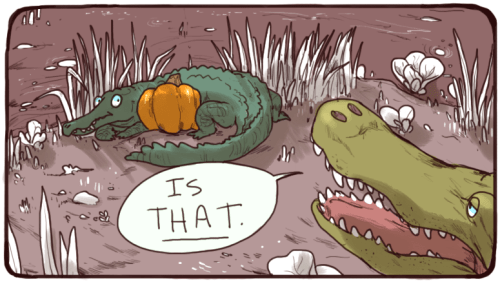
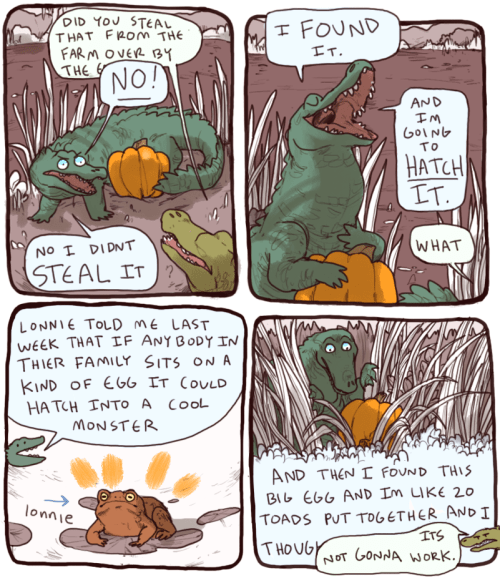
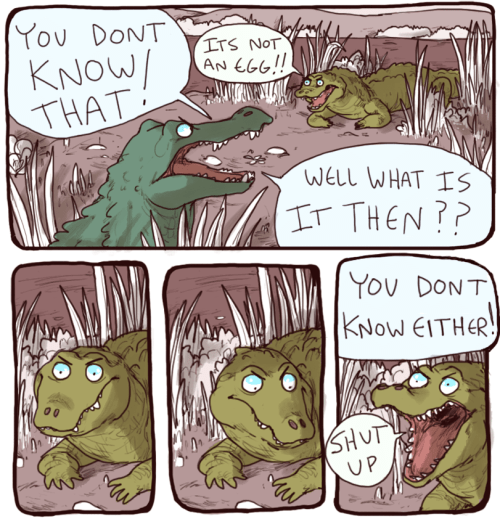
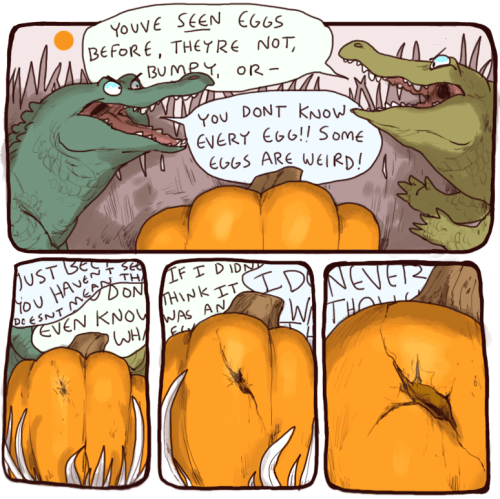
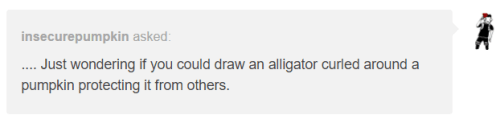
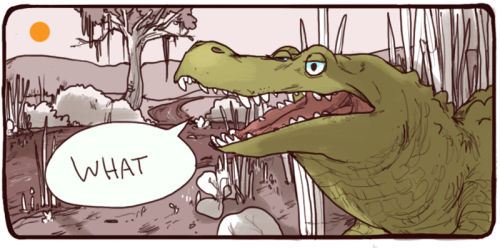
I will never get over how brilliant this comic is. The artist could have just drawn a single image in response, but instead we have this masterpiece. The world doesn’t deserve @iguanamouth.


Tags:

#I didn’t actually laugh aloud but it still amused me enough to reblog #art #comics #alligators #basilisks #this probably deserves some warning tag but I am not sure what #embarrassment squick?
theunlitpath:

nostalgebraist:

Things that were true in a hypnagogic dream world I experienced last night (for like five seconds, while drifting in and out of sleep):

  • “Ghosts we” was a popular slang phrase, meaning something like “I approve of ghosting” or “I ghost people,” used as sort of a macho/”alpha” boast (like, “lots of women are interested in me, I don’t owe anything to any of them”)
  • Grammatically speaking, I don’t know whether it was supposed to be interpreted as “we [are] ghosts” or what, but that’s what it meant
  • Violent J of Insane Clown Posse had recently changed his stage name to “Go Sui,” which was universally interpreted as a made-up “Asian” name that sounded like “ghosts we”

It’s been three years and I still think about “ghosts we”.


Tags:

#me three #that one post with the thing #dreams #(…that song sounds like nails on a chalkboard) #(but anyway) #this probably deserves some warning tag but I am not sure what