lifemadesimple:

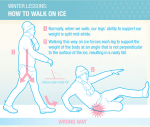
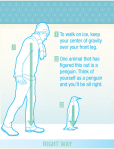
Travel: Walking on Ice

Avoid slipping by walking like a penguin.

Fact: About 60 people die each year in the US as a result of slipping on ice. This is about as many that will die from a tornado.


alwaysatrombonist:

Reblogging for people who are having cold weather they’re not used to! Please stay safe <3


dandelionofthanatos:

THIS DOES WORK.

Trust the Canadian who walks like this from December to March. It may look mildly goofy, but in winter everybody already does (bobble hats with hockey team logos on!), and it’s really nice to not have to worry so much about falling on your arse.


elijahfeathers:

As someone who was born in Minnesota and has wintered there a few times in my adult life: This is the walk you want.


mylittlespambox:

I can definitely attest to this.


findinghealthyhappiness:

Yes this! Although sometimes I forget. Literally fell tonight and hit my head on a tire. So be careful out there everyone.


Tags:

#the more you know #hmm #I never thought about it like this #I just take very small steps when faced with ice #which I suppose amounts to almost the same thing

theolduvaigorge:

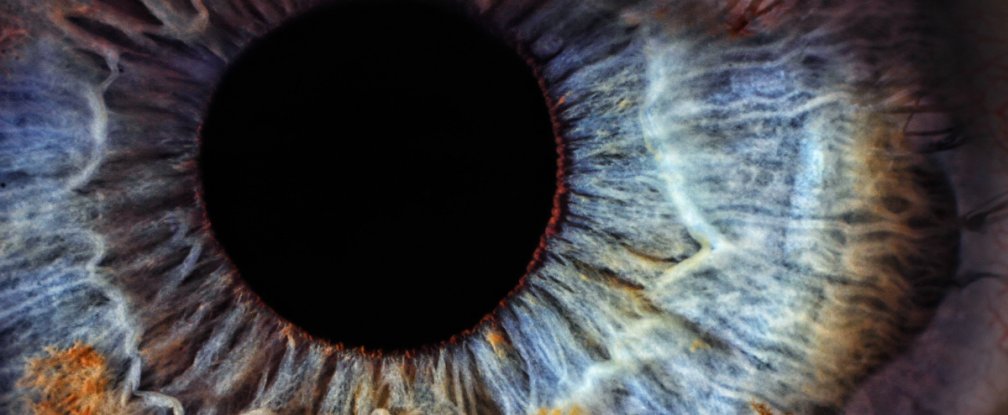
This is how blue eyes get their colour

Blue eyes don’t get their colour from pigment – it’s actually way more fascinating than that.

  • by Fiona MacDonald

Your eyes aren’t blue (or green) because they contain pigmented cells. As Paul Van Slembrouck writes for Medium, their colour is actually structural, and it involves some pretty interesting physics. As he explains, the coloured part of your eye is called the iris, and it’s made up of two layers – the epithelium at the back and the stroma at the front.

The epithelium is only two cells thick and contains black-brown pigments – the dark specks that some people have in their eye is, in fact, the epithelium peaking through. The stroma, in contrast, is made up of colourless collagen fibres. Sometimes the stroma contains a dark pigment called melanin, and sometimes it contains excess collagen deposits. And, fascinatingly, it’s these two factors that control your eye colour.

Brown eyes, for example, contain a high concentration of melanin in their stroma, which absorbs most of the light entering the eye regardless of collagen deposits, giving them their dark colour.

Green eyes don’t have much melanin in them, but they also have no collagen deposits. This means that while some of the light entering them is absorbed by the pigment, the particles in the stroma also scatter light as a result of something called the Tyndall effect, which creates a blue hue (it’s similar to Rayleigh scattering which makes the sky look blue). Combined with the brown melanin, this results in the eyes appearing green” (read more).

(Source: Science Alert)


Tags:

#eyes #biology #the power of science #neat

skunkbear:

skunkbear:

Back when I was a studying biology, I noticed that a lot of anatomical terms sound like they come straight from Middle Earth. So, to celebrate the release of the last Hobbit film, I’ve created this INCREDIBLY nerdy quiz.

Do these words and phrases refer to parts of the human body, or reference people and places from J. R. R. Tolkien’s work?

  1. Antrum of Highmore
  2. Crypt of Morgagni
  3. Caves of Androth
  4. Lobelia
  5. Loop of Henle
  6. Scapha
  7. Great Vein of Galen
  8. Halls of Mandos
  9. Groin
  10. Gap of Calenardhon
  11. Macewen’s Triangle
  12. Canal of Schlemm
  13. Gerontius
  14. Islets of Langerhans
  15. Meckel’s Cave
  16. Chamber of Mazarbul

You shall not pass.

ANSWERS:

Anatomy – 1,2,5,6,7,11,12,14,15

Tolkien – 3,4,8,10,13,16

Both – 9!

  1. Antrum of Highmore – a big sinus next to your nose
  2. Crypts of Morgagni – small recesses on the surface of the urethra’s mucus membrane
  3. Caves of Androth – sheltered the Sindarin elves
  4. Lobelia – Lobelia Sackville-Baggins was Bilbo’s relative who wanted to own Bag End
  5. Loop of Henle – a long duct in the nephron of a kidney
  6. Scapha – the furrow in the upper part of your ear
  7. Great Vein of Galen – the vein that drains the brain
  8. Halls of Mandos – dwellings on the northern shores of Valinor
  9. Groin – in addition to being the junction between our legs, Groin was the father of Gloin and the grandfather of Gimli
  10. Gap of Calenardhon – AKA the Gap of Rohan, the land between the Misty Mountains and the White Mountains
  11. Macewen’s Triangle – part of your skull
  12. Canal of Schlemm – a channel that collects aqueous humor (that jelly in front or your iris) and delivers it to the blood stream
  13. Gerontius – AKA Old Took
  14. Islets of Langerhans – they produce hormones like insulin in the pancreas
  15. Meckel’s Cave – a little pouch of spinal fluid inside the skull.
  16. Chamber of Mazarbul – the room in Moria where Balin is enshrined, and where the Fellowship first fought the Moria orcs

Tags:

#Lord of the Rings #biology #now with detailed answer sheet #the more you know

camwyn:

camwyn:

wnycradiolab:

liketinyhorses:

malformalady:

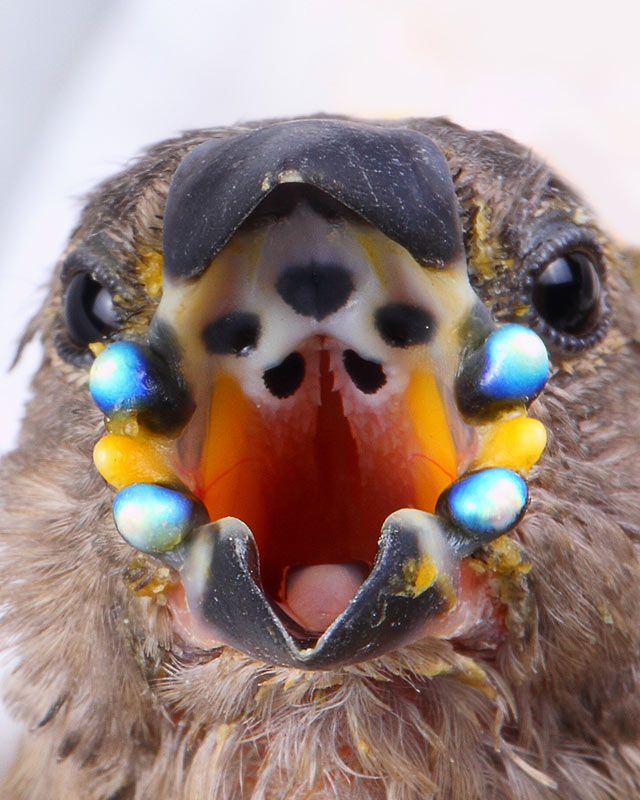
The Gouldian finch are small, brightly colored birds with green backs, yellow bellies, and purple breasts  with a light blue uppertail and a cream undertail. Sometimes called lady gouldians, their facial color can vary, but black is the most common. Gouldian finch chicks are equipped with blue phosphorescent beads along their mouths, making it easy for the parents to feed them in the darkness of the nest cavity.

Photo credit: Greg Grall/National Aquarium

WHAT.

WHAT indeed.

Jurassic Park, you got a lot of livin’ up to do.

perspicaciousembroiderist? Knew I’d seen those finches before.

I shouldn’t be as surprised as I am to learn that this is an Australian bird.


Tags:

#bird #the more you know

astronomy-to-zoology:

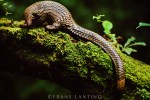
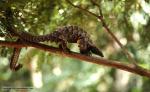
Long-tailed Pangolin (Manis tetradactyla)

Also known as the black-bellied pangolin or ipi, the long-tailed pangolin is a species of tree-pangolin native to the rain forests of Sub-Saharan Africa. Noted for its extremely long prehensile tail the long-tailed pangolin is primarily arboreal and spends most of its life in the trees, surprisingly it has been also been observed descending from the trees to rivers where they become quite competent swimmers. The long-tailed pangolin’s tail can grow up to twice the pangolin’s body at 30 in and has an astounding 46-7 vertebrae, it is also very strong and can hold the pangolins weight when it is dangling. Unlike other pangolins which are nocturnal the long-tailed pangolin is diurnal and hunts during the day for ant nests located in trees, using its long tongue to flick them into its mouth.

Phylogeny

Animalia-Chordata-Mammalia-Pholidata-Manidae-Manis-tetradactyla

Image Source(s)


Tags:

#pangolin #adorable #the more you know

rhamphotheca:

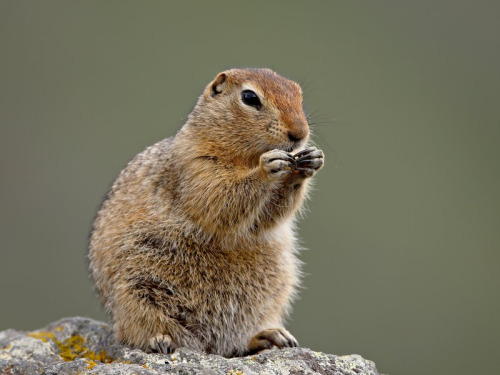
Arctic Squirrels Use Steroids to Bulk Up But Don’t Suffer the Consequences

Fat alone couldn’t get these squirrels through hibernation in burrows that get almost as chilly as -10 degrees Fahrenheit

by Marissa Fessenden

Steroid abuse can give men breasts and infertility, while it strikes women with excessive hair and a deepening voice. Anybody injecting too much testosterone and other muscle-building anabolic steroids risks heart enlargement, liver cancer, high blood pressure, heart attacks — and the mania and delusions called ‘roid rage

Squirrels, however, do fine.

Some squirrels running around with extremely high steroid hormone levels, which help them build muscle before hibernation. But how do they avoid all the negative effects that steroids have on other mammals, like, oh, us? That’s the question that a team of Canada-based scientists have addressed in a new paper, published in Biology Letters

Arctic ground squirrels, male and female, can ramp up the concentration of androgens in their blood to levels that are 10 to 200 times higher than normal. These androgens—testosterone and other hormones typically higher in males—allow the squirrels to pack on 30 percent more muscle mass before they start their eight-month winter hibernation, the team, led by Rudy Boonstra, reports. These squirrels are carrying an amazing amount of muscle mass—four times that of related Columbian ground squirrels…

(read more: Smithsonian Magazine)

photo: James Hager/Robert Harding World Imagery/Corbis


Tags:

#squirrel #biology #the more you know

astronomy-to-zoology:

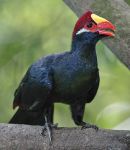
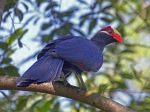
Violet Turaco (Musophaga violacea)

Sometimes known as the “violaceous plantain eater” the violet turaco is a species of turaco (Musophagidae), that occurs in west Africa, ranging from Senegal through Nigeria, with an isolated population in Chad and the Central African Republic. Violet turacos are social birds, travelling in large flocks in tropical savannas, wetlands, woodlands and forests. Like other turacos, violet turacos feed mainly on fruits, with an affinity for figs, they will also feed on invertebrates, leaves, buds, and flowers.

Classification

Animalia-Chordata-Aves-Cuculiformes-Musphagidae-Musophaga-M. violacea

Images: Doug Janson and DickDaniels


Tags:

#bird #adorable #the more you know