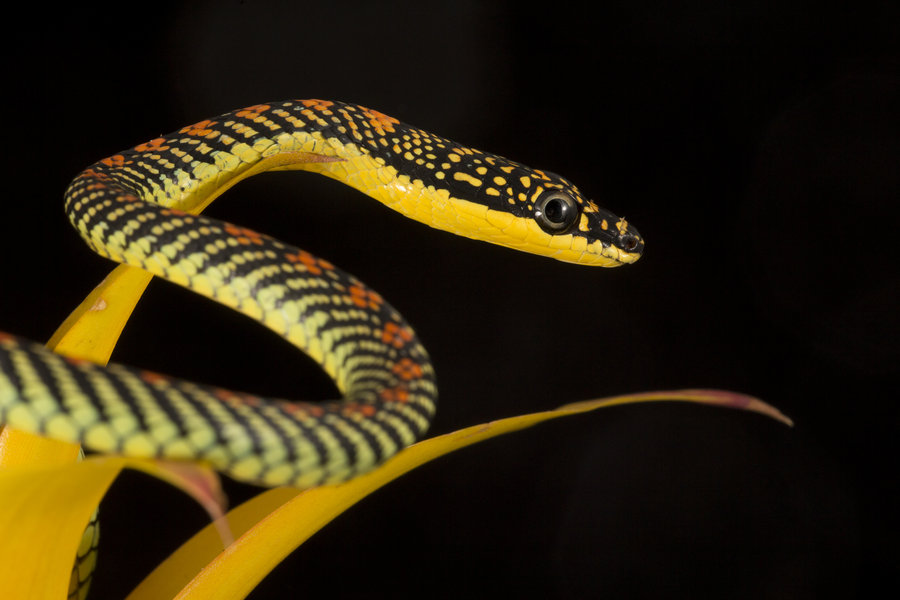
Flying Paradise Snake | animal blog | photo credit
Tags:
#snake #adorable
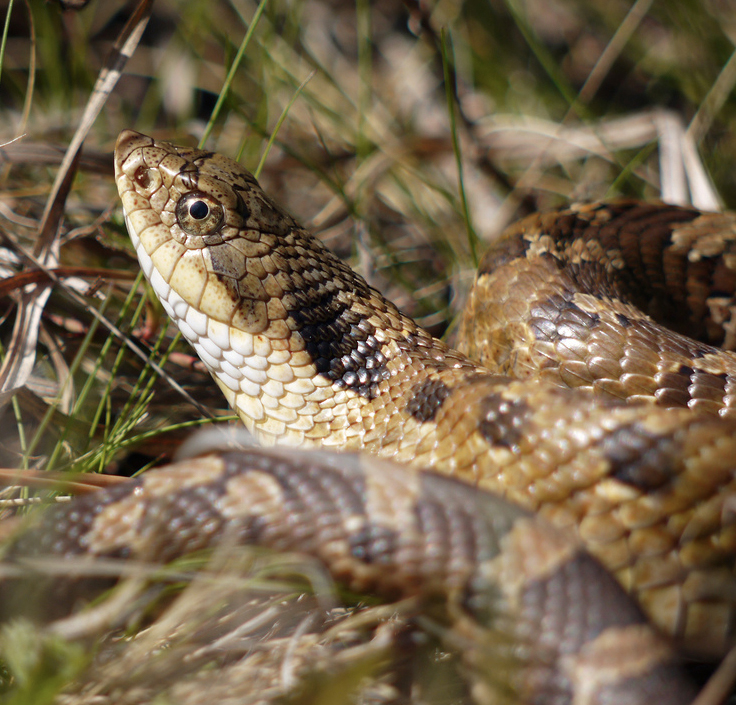
What do you do if you’re a harmless, gentle snake and someone scares the pants off you? If you’re an eastern hog-nose (Heterodon platirhinos), you bluff. And when you bluff, you bluff like crazy. You flare your neck like a cobra (spoiler alert: there are no cobras in the Northeast). If that fails, you roll over dramatically and play dead. If someone rights you, you make sure to roll back over so you look properly dead. You also release every bodily fluid you have on hand. Nearby humans may feel compelled to say “What a clever snake!” just because they can tell you’re really trying.
Tags:
#snake #anything that makes me laugh this much deserves a reblog #(‘you make sure to roll back over so you look *properly* dead’)
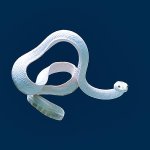
(Hydrophis elegans) elegant sea snake
The elegant sea snake (Hydrophis elegans) is a highly venomous Sea Snake in the Elapid Family. They are found off the coast of Western Australia, Northern Territory of Australia, and Queensland Australia.
Tags:
#snake #what a cutie #what a…toxic…dangerous…cutie #well I suppose Australia does have a reputation to uphold
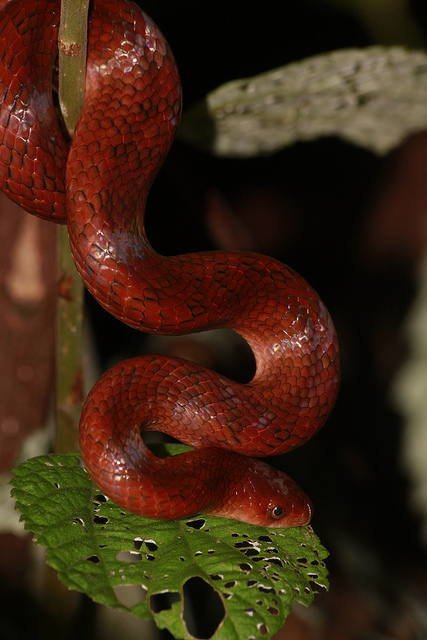
Golden Kukri Snake – Oligodon cinereus
With about 75 currently recognized species, the genus Oligodon (Colubridae) is one of the largest genera of Asiatic snakes. It is widespread throughout tropical south and southeast Asia.
The geographic distribution of Oligodon is complex, and also its taxonomy. Several species are widespread and many have overlapping ranges. Oligodon cinereus (in the photo) is in fact a complex species with a highly variable coloring pattern.
These non-venomous snakes are usually nocturnal and often brightly colored. They feed primarily on the eggs of birds and reptiles. The morphology of their teeth is very effective for cutting open eggs, so much that the common name of the kukuri snakes derives from a distinctively shaped Nepalese knife, the kukri, because the hind teeth of the snakes are broad and strongly recurved, much like the shape of the kukri.
Photo credit: ©Anne Devan-Song | Locality: Hong Kong (2012)
Tags:
#snake #pretty things #the more you know
Snake Poop and The Adaptive Ballast Hypothesis
by Andrew Durso
Most people probably spend as little time as possible thinking about poop, especially snake poop. Some animals produce enormous amounts of poop, like dairy cows. Others make lots of little poops – up to 50 a day in small birds.
In contrast, snakes don’t poop much at all. In fact, because they eat so infrequently, snakes probably poop the least often of almost any animal. Anyone who has kept a snake as a pet can tell you that a few days after they’re fed, most snakes tend to poop once (often in their water bowls, for some annoying reason), and they might poop again within a few more days.
Like bird poop, snake poop is made up of two parts – the brown stuff (the fecal fragment, aka the actual poop) and the white stuff (the uric acid fragment, aka the pee, in a solid form). Also like birds, most reptiles use uric acid rather than urea to excrete their excess nitrogen, which helps them conserve water.
You wouldn’t think there would be much that’s interesting about snake poop, but to a snake biologist everything about snakes is interesting. In 2002, Harvey Lillywhite, Pierre de Delva, and Brice Noonan published a chapter in the book Biology of the Vipers that detailed their studies on snake poop.
Their most amazing finding was that some snakes can go for a really, really long time without pooping. As in, over a year. It’s not because they’re constipated though – these long fecal retention periods have actually evolved for a purpose in snakes.
Here’s what happens: most snakes eat very large meals, and they eat them all in one piece. That means that when a snake eats a meal, its body mass can more than double all at once, and it can only digest that meal from the outside in, because it hasn’t chewed or cut it up into small pieces to increase its surface area. Even for the insane digestive tract of a snake, this is an incredible feat…
(read more: Life is Short, Snakes Are Long)
photos: A. Durso, Pedro Rodriguez, and Cater News Agency
Tags:
#snake #poop #the more you know #you know how pretty much every kid goes through an -ology phase? #mine was herpetology #so my inner nine-year-old is pretty happy right now #(though the later versions of me find it a bad sign that this guy thinks it’s okay to link to *Dr. Oz* as a reputable source) #(but you can’t have everything) #(and he did pick a very nice blog title)
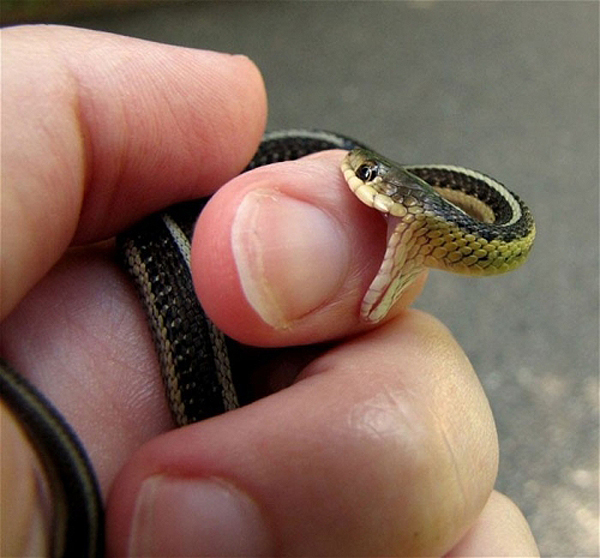
tiny snake
i
do not think this is going to work out as planned
i mean i admire your tenacity but
shh let that little baby dream ok
Tags:
#snake #snakey has the exact same facial expression as that tortoise with the strawberry
SNAKES ARE REALLY CUTE OKAY
LOOK AT THEM
FUCKING CUTIES OKAY
PRECIOUS LITTLE BABIES
THE END
Tags:
#snake #adorable