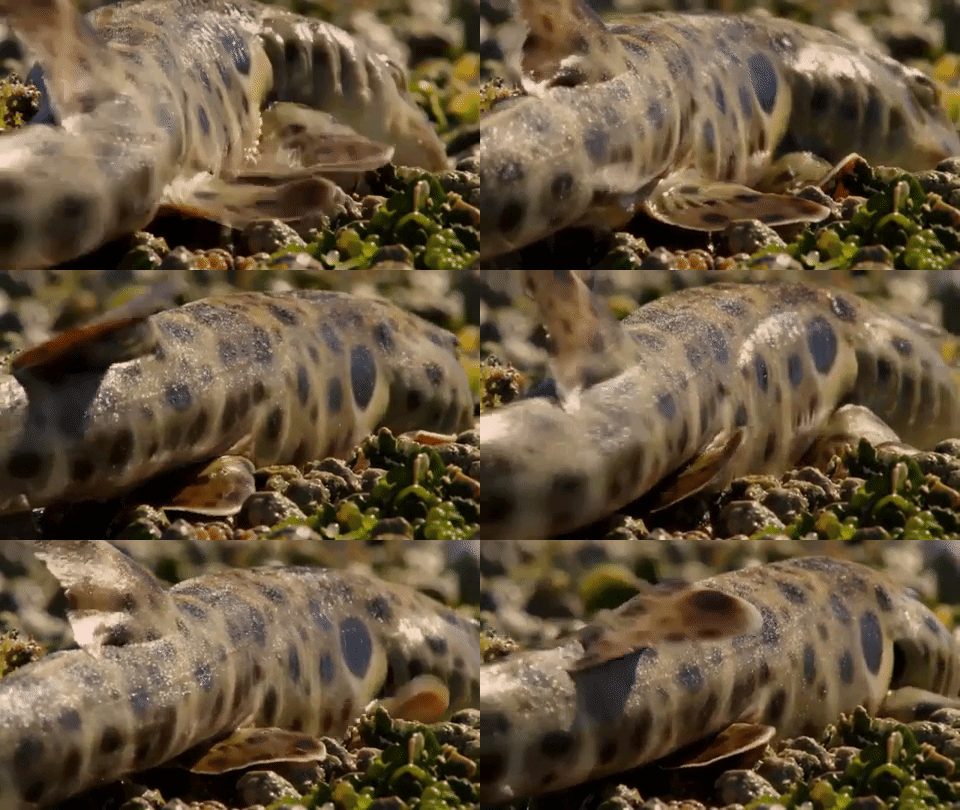
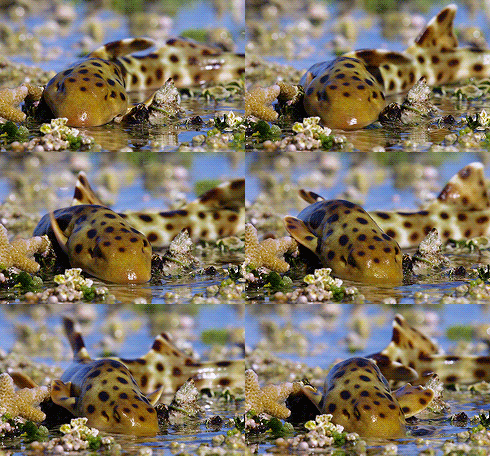
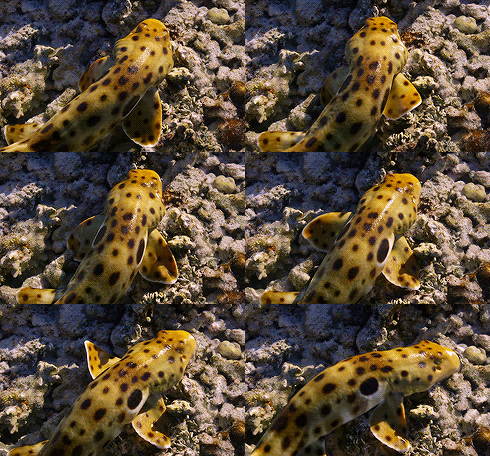
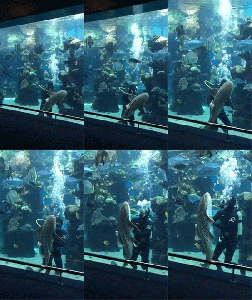
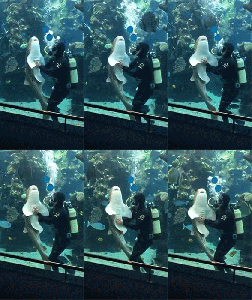
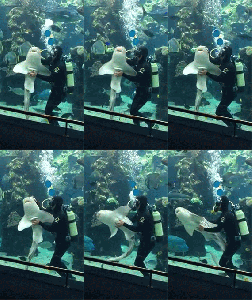
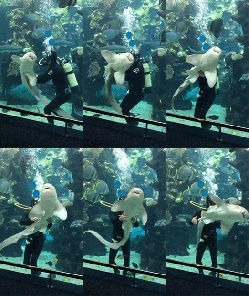
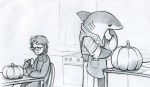
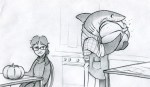
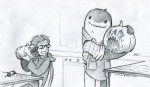
Did you guys know that the most recent version of sharks have fins that are kinda leg like and they like to walk up onto land?
no way i must have missed an update!
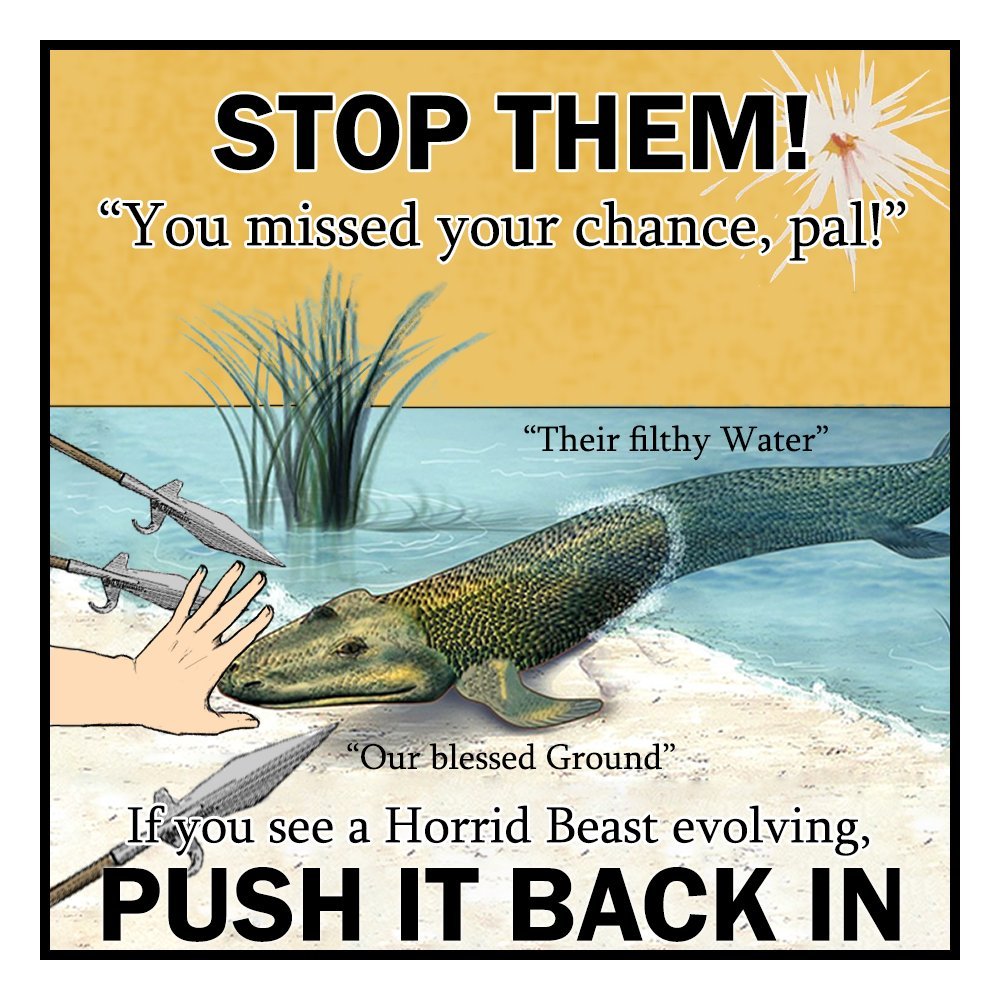
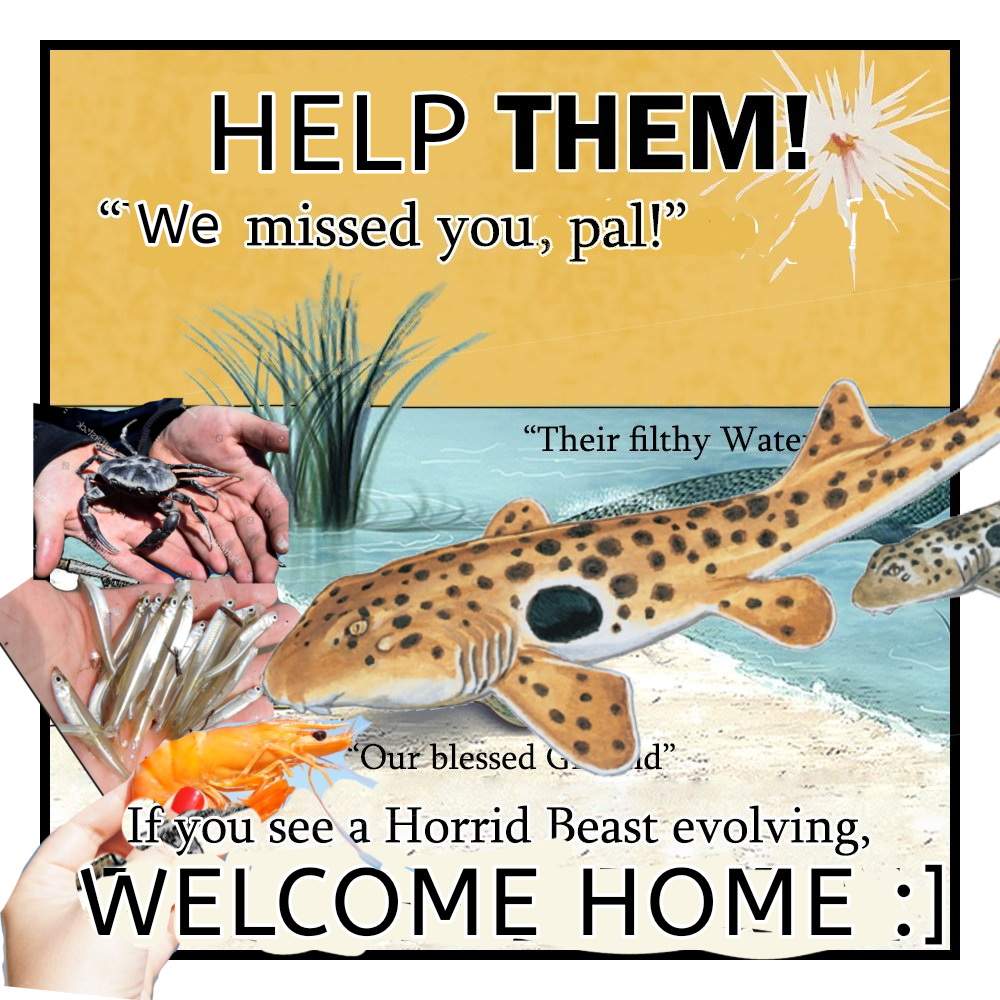
The Epaulette shark is only about 9 million years old as a species, making it the most recent branch in the shark family. And it is slowly but surely evolving into a land animal
You know what to do boys
Tags:
#sharks #adorable #the more you know #this post was queued because my to-reblog list is too long and I didn’t want to dump it on you all at once
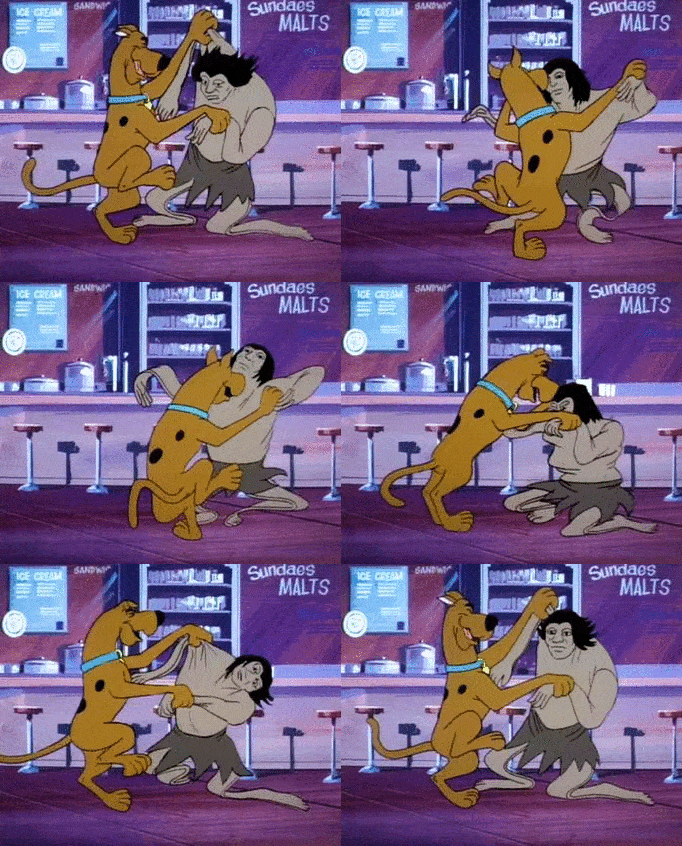
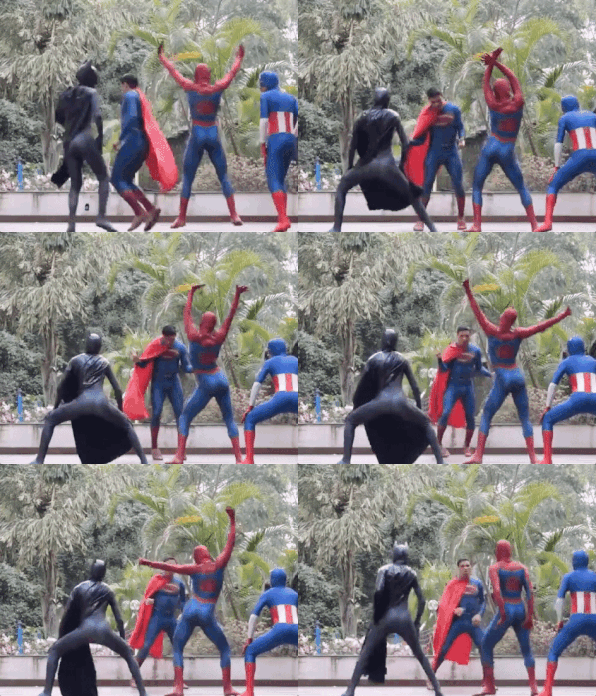
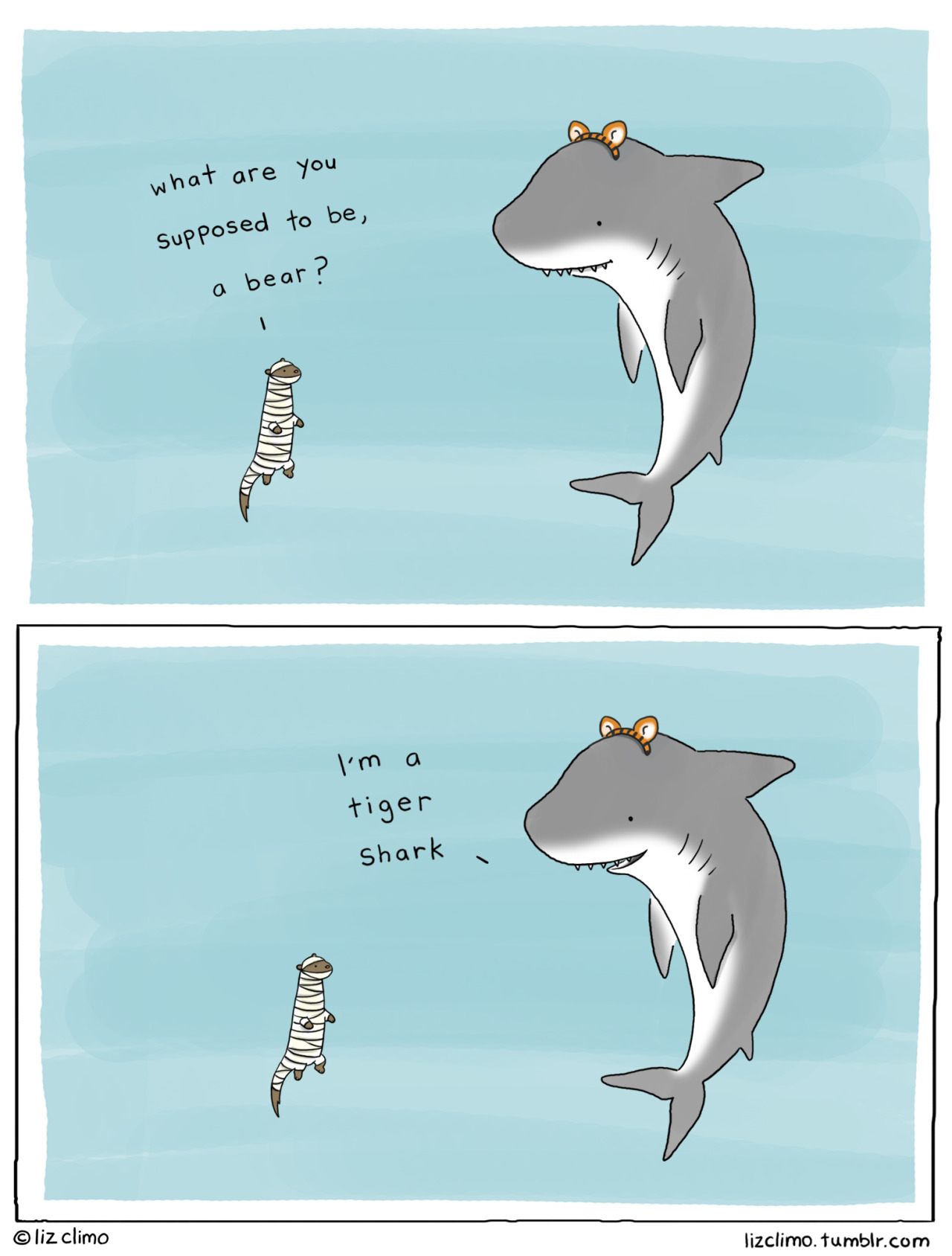
I never heard this version! The version I know, after “grandpa shark”, it was “person swimming”, “shark attack”, “happy shark”.
I have done this song exactly once, and I have never been able to find anyone else doing anything close to the version that other Girl Guide troop taught us on that joint camping trip.
There was a lead-in about a couple going to the beach and swimming out into the ocean; I’m not sure how that part went exactly. It leads into the shark list with the line “Then they saw sharks”, though.
(Note that each line was only done once, not 3.5 times as in this thread.)
After the chorus is:
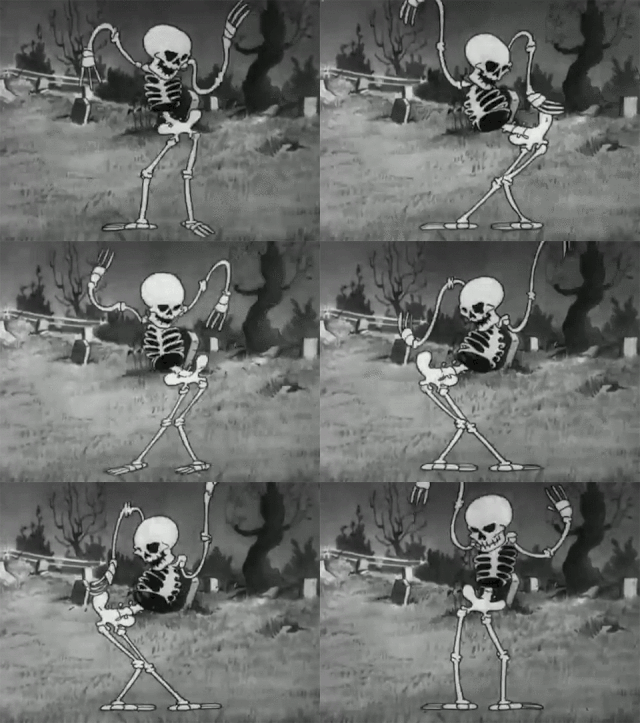
“So they swam back” [swimming motions with arms] “Faster back” [faster swimming motions] “Faster still” [even faster swimming motions] “Not fast enough” [continue swimming, shake head “no”] “They got a leg” [put one leg forward] “Other leg” [step forward with other leg] “And an arm” [hold out arm] “Other arm” [both arms forward] “And a head” [lean forward] “And I was dead” [not sure about motion for this one] [quietly] “And all were dead” [hold finger in front of mouth in “shh” gesture; “doo doo, doo doo doo doo doo” is subdued] [quietly] “And all were dead” [ditto] [big grin, normal volume] “Except the sharks!” [mama-shark clapping, because mama comes first in this version’s list]
(I think the shark order went “mama (horizontal clapping), papa or maybe daddy (vertical clapping), sister (diagonal clapping), baby (hand motions as if making a hand puppet talk; “doo doo”-ing is high-pitched), grandpa (place last knuckle of each finger against last knuckle of corresponding finger on other hand to evoke a mouth with no teeth left, make ‘talking’ motions; “doo doo”-ing is low-pitched and tries to sound old and toothless)”.)
And then you do the shark list again, and that’s how it ends.
It would be nice to refresh my memory on how that version went (though I’m kind of surprised by how much of it I *do* remember given that it was one time seven years ago), but I haven’t found anyone who knows what I’m talking about.
Tags:
#reply via reblog #is the blue I see the same as the blue you see #(close enough) #my childhood #music #death tw #shark #long post #oral culture #amnesia cw?
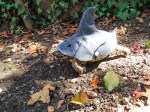
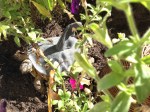
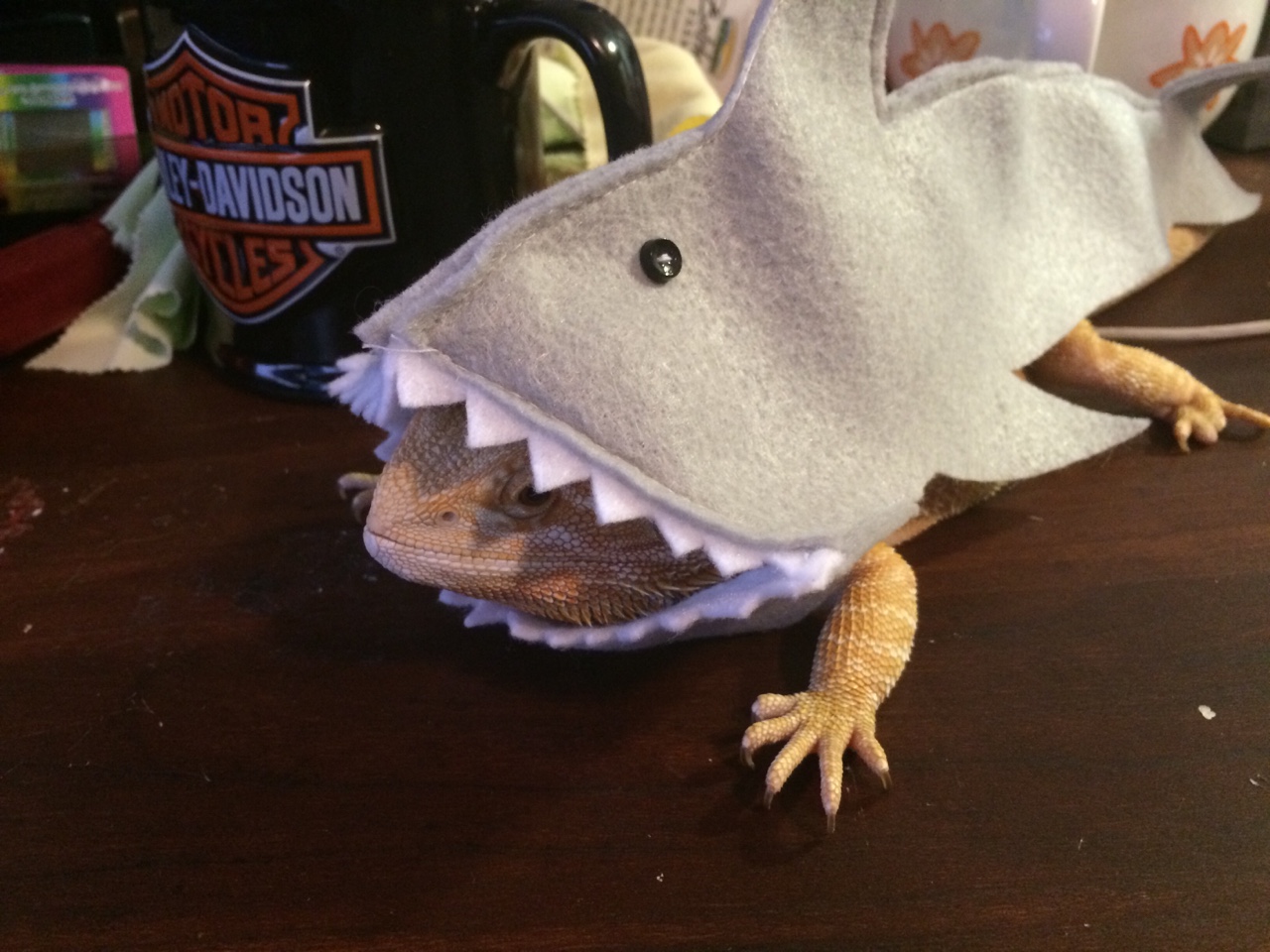
In honor of #SharkWeek and #TBT we bring you the RAREST SHARK IN THE WORLD… THE GARDEN SHARK!
often found where dandelions grow or in patches of clover, the garden shark is harmless as long as you are not in the path of said noms. If you find yourself in between a garden shark and a dandelion well best of luck to you and your toes.
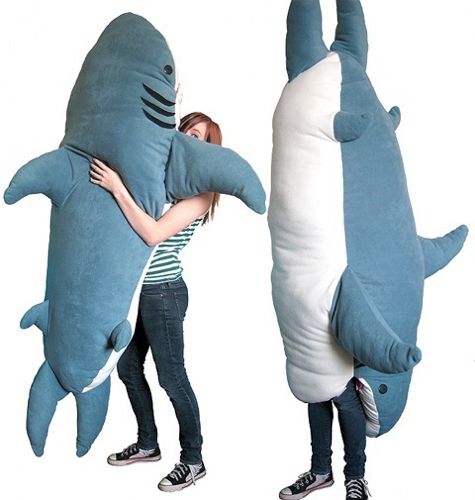
#shark #I only just found out today that it’s Shark Week #new Daily Planet episodes! #yes that is my primary reaction to Shark Week #anyway nice plushie/sleeping bag/thing
notactuallycute this concerns me for some reason, is this okay?
Hello, shorter-url. Your concern is very much understandable! Many people are taught that a shark cannot swim when still, which is partially true.
Sharks mainly breathe via two methods– buccal pumping, in which the shark actively draws water in through its mouth to pass over its gills, and ram ventilation, in which the shark must constantly move to force water over their gills. Buccal pumping is more prevalent in ancient sharks, and while some sharks adapted for bottom-feeding still use it, many modern sharks – like the great white shark – have lost that ability altogether and instead can only breathe via ram ventilation. These are called obligate ram ventilators and they have to keep moving in order to breathe.
This particular shark is an adult S. fasciatum, a Zebra or Leopard Shark, depending on the region. Fortunately, they aren’t obligate ram ventilators and, in fact, have very strong buccal muscles. You can even see them working in the first two gifs. When it starts moving to swim away, the diver lets it go, and there’s no harm for either party.
All the best, Fatanyeros
Also, in my work with nurse sharks (same branch as S. fasciatum) I found them to actually enjoy scritches and petting. They would actively seek them out on their own terms.
My life is infinitely better for knowing some sharks like scritches.