{{previous post in sequence}}


oligetcetera-deactivated2023072:

toddler youtube reviewed

sesame street: “yes,” I see you nodding along, “sesame street, good stuff, 12/10, or maybe less, did HBO make it bad?” I got bad news for you bub – no, not about HBO, about your whole televisual ontology. the reason you can remember sesame street fondly – the characters with distinct personalities, the engagement with the whole range of human experience, all the little jokes about James Joyce or whatever – is that’s good tv, but it isn’t toddler yt. that’s a compliment from any perspective other than “I need to hypnotize my kid while I clip his nails,” which is why this genre exists in the first place. it might get his attention because it’s on a screen but so would whatever 3 hour video game essay that you want to watch anyway. I look forward to watching sesamestraße and bluey and so on but you gotta crawl before you walk, in this case literally

miss rachel: my standby. first, the hypnotism works, and second, there’s nothing really subtly disturbing from an adult perspective. you’d think that would be less rare but here we are. it’s BORING for an adult but bearable because 1) not gonna lie, I know this is the sort of thing that gets old men turned into fascists by fox, but miss rachel is very good looking, or at least she’s “my type” leaving aside the professional high-pitched voice and 2) okay to objectify slightly less it is impressive how good she is at it. I’ve copied her at some things and am better at holding the kid’s attention while I explain things. the most human things can get while still being toddler yt

cocomelon: sesame street is an adult show labelled for kids, miss rachel is how a human adult would go about entertaining a child. cocomelon is a sort of formalist experiment, a sort exploration of just how high-dosage you can get while remaining *comprehensible* to adults. aside from of course the talking animals and songs that appear in all of these, cocomelon is rigorously “realistic” but appears to take place in an emotionally flatter reality than our own, which is why it’s right along the thalweg line of the uncanny valley. if AGI is subtly misaligned and produces a world of “human flourishing” without any human subjective experience, I believe that cocomelon is video footage from such a world.

hey bear: don’t worry, keep hiking, you’ll get out of the valley eventually. as you ascend the slope out there is a bear, and the bear is the result of an optimization process of toddler hypnotism that has a wider search space than you, and has abandoned the pretense of representational art entirely. when atoms die in fission plants and god sends them to purgatory, this is what they see


Tags:

#see also #I salute people who are doing their best to parent ethically while on the hockey-stick part of the technological-development slope #the situation‚ as they say‚ is evolving rapidly #may God have mercy on us all #reactionblogging #the more you know #infohazards? #this probably deserves some other warning tag but I am not sure what


itsbenedict:

b902acd919b5b9c63c3c476394b58b47355e0f1c
8e2854bbc7108b0d61b44f8c6ac83642bd8f44cc
fa8edd51c4117eb9153d32ffc2cf095507723b42
f4a91ea861129036d7f0ef56138d65e8d17abe36
e1fcb253cb1e842c0d3a2bfd3e16dafd86da64db

Tags:

#Almost Nowhere #reactionblogging #out of context quotes #anything that makes me laugh this much deserves a reblog #murder cw? #(I have now returned to Tumblr after leaving for eight days to avoid Almost Nowhere spoilers) #(I do expect to catch up; I’ve already made it up to the afternoon of July 8th)

itsbenedict:

f4de6b8dff31d3e2356f5fc888b37c07b1b0cad6
c80cd5ff384249059cfa0bc5d58683235a15f16d

per @etirabys’s request, here’s a paste of a whole lot of highly spoilery words about my favorite Horizon: Forbidden West NPC, who makes so many bad decisions

Keep reading

{{below the cut:}}

alright, so- the game in question is Horizon Forbidden West, a big AAA action game about hunting robot dinosaurs. the interesting stuff is almost entirely unrelated to the robot dinosaurs.

the backstory of this game is- a while back, evil military company made a big military AI that went out of control and took over a bunch of military robots and started wiping out humanity. standard stuff. principal characters are a couple of scientists who were part of the last-ditch effort to try to prevent this from happening before the machines wiped out humanity.

one of them, Elisabet, is spearheading this thing called Project Zero Dawn, whose plan for saving humanity is “build an AI terraforming engine equipped with a bunch of human embryos, hide, and wait for the apocalypse to finish and then re-terraform the dead world”. the other one, Tilda, works for a company called Far Zenith whose plan is “let’s just build a spaceship and GTFO”.

Elisabet is a big deal- genius scientist, multidisciplinary, very famous. Tilda is less of a big deal- she’s like a PR person for the space company, but is head over heels in hero worship for Elisabet.

this relationship is fairly loosely sketched out, since it’s only conveyed via backstory and a few audio logs. Tilda asks her out, and Elisabet is- she’s the kind of person who’s totally consumed by duty and doesn’t know what having fun is, and while she’s interested on a physical level, she proves incapable of sustaining a relationship. they break up after a few months- and then their companies start competing for the dwindling resources left as the apocalypse progresses. things turn sour.

Tilda believes- correctly- that Elisabet’s going to die if she stays behind to do her project, and she’s still in love, so she tries to invite her to abandon her world-saving project and join her in space. this doesn’t work, and in their final conversation Elisabet blames Tilda for being complicit in the shortsighted military-industrial fuckery that’s going to imminently destroy the world. this is the last they ever see of each other.

but that’s not where this ends.

Tilda goes off into space with the rest of her company, and they develop advanced biotechnology and she becomes immortal. meanwhile on Earth, that Zero Dawn thing Elisabet was working on… it has problems. doesn’t work quite right. the details are like, the whole plot of the game (two games, actually, forbidden west is a sequel) and involves a whole lot of fighting robot dinosaurs.

but the main thing is- the AI terraforming thing, in an effort to fix itself, decants a clone of its creator, Elisabet Sobeck, to try and create someone with the gene-print authority necessary to fix itself. this clone is the protagonist of the game.

this is, like, a thousand years after the initial apocalypse. a whole bunch of Video Game occurs in which this Elisabet clone, Aloy, saves the world and stuff. and then… Tilda shows up on Earth.

Far Zenith apparently had a problem with their space colony and it got destroyed, and now her and the last few survivors- insanely technologically advanced- have fled back to earth in hopes that Zero Dawn succeeded and the terraforming project would be there intact. they want to take control of the terraforming project and re-terraform the planet to their specifications, wiping out the native life, blah blah blah they’re the villains of this game.

Tilda has an important role in this plan. They’re aware that the terraforming project requires a clone of Elisabet Sobeck to operate, so they made their own. And Tilda, for totally non-ulterior motives, volunteered to raise this clone.

The clone, Beta- her role is just to open doors for the badguys, and her education is spartan and abusive and all-around horrible, designed to turn her into a tool. Tilda does not like this. She feels bad for the clone, and creates a secret VR replica of her house which she covertly invites the clone to, to teach her about art and music and poetry in between the horrible drills. And attempts to woo the teenaged clone of the ex who rejected her and then died.

Beta’s life is this woman running this bizarre abusive hurt/comfort homeschooling experience, and she regards Tilda as both the source of her suffering and the source of her relief and has a bunch of complicated feelings. Beta, like Elisabet, is also terminally duty-poisoned and submits to all this semi-willingly because she’s told it’ll save humanity.

this whole scenario would be enough for me to want to tell you about on its own- but it gets even more fraught.

the other bosses start to catch wind of what she’s doing, and she eventually shuts down the VR house and cuts off contact with Beta to protect her from reprisal, which Beta interprets as abandonment and adds a whole other layer to this nightmare smoothie.

this- and also witnessing the various evil villain stuff they start doing on earth- causes Beta to defect and be rescued by Aloy, her badass videogame protagonist dinosaur-hunting clone. she dumps all this Tilda-related trauma on Aloy and starts plotting to bring her down. Tilda, meanwhile, is despondent, because Elisabet Sobeck broke up with her again and she blames herself for it again.

but then she discovers- oh. hey. hold on. there’s another Elisabet. this one is a sexy twenty-something dinosaur-exploding badass who’s sticking it to her awful coworkers and saving the world.
she has another chance!

so she bides her time, and- during a climactic cutscene where the other baddies all show up to re-kidnap Beta- allows them to kill Aloy’s friends so that she’ll be defenseless and alone, and then picks that moment to jump in, betray her bosses, and rescue Aloy at the last minute.

Aloy wakes up in the basement of Tilda’s actual house, which contains a vault full of classical paintings and various art, and Tilda tries to do the same high-culture seduction act as Aloy’s selfless savior.

this Elisabet Sobeck is also duty-poisoned, and has a hundred questions, and her attempt at playing the wise benevolent savior falls flat. she has like. a fancy dinner prepared on a balcony at sunset, to make it as romantic as possible- but oh, fuck, this Elisabet Sobeck is also duty-poisoned and can’t think about anything but world-saving, she’s about to fuck it up again.

so she frantically tries to rewrite the script and concedes a bunch of stuff and Aloy very forcefully tells her her plan to betray the others is stupid and won’t work and here’s her much better plan, which is of course a dance she’s danced before. but she refuses to give up on making it work with this woman who’s into her but has rejected her three times.

ultimately Tilda is the final boss of the game, after her various attempts to get in good with Aloy by helping her betray the main villains don’t work as intended. she tries to get Aloy and Beta to run away into space with her (there’s another twist final act threat to the earth, not really relevant), and when they reject her again she summons a big robot to try and kidnap them. the final boss is not difficult as a fight as much as it is difficult to listen to this woman completely lose her mind throwing everything she can think of at the wall to try to get Elisabet Sobeck to give her another chance.

it’s way more fucked-up and poignant than i was expecting from the big AAA robot dinosaur fights game. this woman tries every awful move in the book to make her ex love her again and just keeps taking it too far and self-sabotaging.

anyway that’s it. the main thought i had walking away from that was “oh man, i know exactly who would eat this up, and also there’s zero chance she plays like 200 hours of videogame to find out about it”


Tags:

#anything that makes me laugh this much deserves a reblog #(the incredible secondhand fuckor in those DMs) #Horizon: Forbidden West #reactionblogging #abuse cw #apocalypse cw #this post was queued because my to-reblog list is too long and I didn’t want to dump it on you all at once

cryptotheism:

A Review of The Way Of The Shadow Wolves: The Deep State And The Hijacking Of America by Steven Segal

Alleged rapist and human trafficker, cop groupie, washed-up action movie star, and personal friend to Vladimir Putin, the paradox of Steven Segal is how he manages to stick around despite being –by damn near every account– a universally unpleasant vacuum of charisma. I could go on, but I feel that no introduction of Steven would be complete without the tale of the headlock. Legends tell of Steven’s conflict with legendary martial artist and hollywood stunt coordinator “Judo” Gene Lebell. Allegedly, the two fell into an argument on the set of the film Out For Justice. The crux being Steven’s claim that he was “immune” to being choked unconscious. Allegedly, LeBell called his bluff, and put the actor in a headlock. A headlock that resulted in Steven losing consciousness, and control of his bowels. Steven denies the story. He also wrote a book.

Keep reading

{{below the cut:}}

The book is garbage, but garbage in a way that can be easily overstated. I wanted to take a page from other reviewers of this book, and call the text what it is; a fever dream of exhausting mediocrity, swaddled in delusions of grandeur. I wanted to whale on it. I wanted to denounce it like some ridiculous fire-and-brimstone preacher of internet literary criticism. But this does not capture the core, the essence of Way of the Shadow Wolves. There is a paradox at the heart of this text, a contradiction that even now I struggle to describe. Because despite everything, despite the balls-to-the-walls premise, the disastrous prose, and the buckwild plot, this book is deeply and powerfully boring. To call it a fever dream is to imply that it might be exciting.

Some books are bad in a way that must be experienced firsthand. This is not one of those books. In a way, I feel that you’ve already read this book. You know Steven Segal. You met him in elementary school, when he told you he has “every black belt.” You met him in college when you tricked him into smoking a bag of oregano. You met him at your most recent family gathering, where you were trapped in an awkward one-sided conversation about “those people.” The bad-ness of Steven’s work is deeply familiar.

We have our boots. We have our waders. We have our shovels. But, before we wade into the shit, there is one more thing we need to get out of the way: The Shadow Wolves are real. In 1972 the United States government agreed to the Tohono O’odham Nation’s demand that border enforcement agents patrolling their land have at least one quarter native ancestry. The result being the specialized unit of Immigration and Customs Enforcement officers known as The Shadow Wolves. In the 2020 Sonic the Hedgehog film, Dr. Eggman states that they are who trained him in the art of tracking.

WAY OF THE SHADOW WOLVES

Let us cook Way of the Shadow Wolves from scratch. Think of every dogshit C-list action movie you’ve ever seen. Ideally, you want the trash cuts of post-9/11 hysteria marbled with ex-cia heroes and vaguely arab villains. Drop it all into a stockpot. Next, roughly dice some comic books and kung-fu movies, the more racist the better. Now add some datura, it doesn’t matter if it’s edible or not, because you saw a native American in a movie make something like that once and you’re totally 1/64th Cherokee. Add a whole can of Qanon and a whole can of racism. Boil until you have pacing thicker than mud.

Way of the Shadow Wolves is a police procedural meets a spy thriller, a fast-paced action drama about elite agents on the fringes of the law who have the huge sweaty meaty balls to do what needs to be done for our country. It is Steven’s attempt at the action schlock he embodies as an actor. Our hero is John Gode: Shadow Wolf. Reservation-born native American tracker, ICE agent, and Kung-Fu master. I believe he might have been described at one point. If he was, I do not care. Steven does not care. It does not matter. John Gode is Steven, and he’s the most badass dude to ever not be gay. He is: Special Agent Shaman Cop. He’s gonna beat up the deep state. That’s all you need to really need to know. In fact, it is shocking just how little you need to know about this book.

We begin in a movie theater, where our protagonist is alone, watching the end credits of a movie about the atrocious treatment of native Americans on behalf of the united states government. When the film finally ends, John says to himself “It’s about time.” He gets up to leave. The chapter immediately ends. My compliments to the chef. A delightfully bland apéritif of a character introduction. Steven uses the essential point of first contact with our protagonist to tell us vital information like “He doesn’t like it when movies are long.” or maybe “He didn’t like this movie about the trail of tears.” It is unclear. To quote English-Albanian philosopher Dua Lipa, “Go girl, give us nothing.”

I have been dancing around the quality of the writing. It seems impossible to approach without the footing of a new paragraph, an opponent that requires full-focus, an all-out assault. It is nigh-incomprehensible. I hate comparing bad writing to drugs. It feels too easy. But there is a specific air to Way of the Shadow Wolves. There is a distinct cadence, simultaneously manic and lethargic, that comes from attempting to write while day drunk on over-prescribed amphetamines. And make no mistake, if Steven was not entranced by the muse of Too Many Uppers And Downers At The Same Time, if he wrote this thing stone sober, that is worse. Small quotes will not do the writing style justice, you must see for yourself how sentences flow into each other:

“The desperado’s mind went back in time to a small town in Mexico twelve years before, where he first met his two cohorts when they were thrown together by a tragic set of circumstances. Their parents had been gunned down by a cartel who was at war with a competing cartel for control of the area, which was a pathway to the American border near Nogales, Arizona. All three had been shepherded to a local mission where they were being cared for by the Franciscans, who were becoming overwhelmed by the growing number of children left homeless due to the rampant killings by the warring cartels …”

Labyrinthine. A paragraph structure that would feel more at home with Calvino, or Garcia Marquez at his most experimental, though stripped of its deft control and musicality.
Segal will regularly change temporal perspective in the middle of sentences. A single run-on sentence will begin in the past, have a middle clause in the present, and then return to the past by the end. There is a downright massive cast of characters for a 200 page book. Damn near every chapter introduces three or four more names, and we are lucky if Steven describes them before discarding them entirely. This book is a slog. I find myself losing patience with Steven.

Some time has passed since I began writing this review. Originally, my approach was surgical disassembly. I was going to go over the plot, summarize its anatomy, pick apart its flaws with surgical precision. But the more I cut, the more I felt as if I was the butt of a joke. I was performing an autopsy on a clown, pulling sheets of colorful rope from its gut, and the cadaver was laughing at me.

There is a moment, about halfway through. A woman approaches John at a bar. An assassin, who later attacks John in the parking lot with karate. A furious series of crescent kicks, effortlessly blocked by John Gode, who punches her in the ribs and knocks her to the ground. Realizing that her martial arts are defeated, she draws her gun, but John Gode is too fast. He fires his own weapon before she can get the shot off, killing her instantly. “Her round went upward toward the sky as she fell backward with eyes wide open, seeing nothing.”

This scene stuck with me. It illustrates one of the critical flaws at the heart of Way of the Shadow Wolves. Nothing hurts John. Nothing even gets close. He does not struggle. He does not sweat. He does not bleed. Steven clearly intends this scene to be badass, a moment where his self-insert hero defeats a dangerous enemy without trying. This book is an action movie, but John’s untouchability makes every action scene read as a moment of profound and boring cruelty. This was not a contest of master martial artists. This was an adult kicking a child in the throat.

I find myself losing patience with Steven. I am running out of humorous ways to describe this vapid tripe. This is, in my mind, the greatest condemnation of bad writing. There is no hell lower than being boring to mock. I see myself as a sort of sommelier of the awkward and disastrous. I will be the first to tell you “Wait! Don’t throw that out! There are things to be learned!” But Steven repeatedly proves himself to be a sort of Alchemist of Shit, capable of transmuting theoretically interesting bullshit into just fucking nothing. If this book deserves credit for anything, it is its miraculous ability to squander its own premise.

Why write this? Any of this? Steven clearly does not read. Or, if he does, he seems to subsist entirely on a diet of comic books about monkeys that do kung-fu. Why write this? At some level it all comes down to “because Steven wanted to” right?

Right?

But I cannot shake the feeling. To call this book masturbatory is to imply that Steven might have enjoyed it. There is a desperation to the power fantasy here. To be feared by men, desired by women, revered by all, yaddah yaddah yaddah, all the same trite excretions of blunt masculinity. But there is something else. Steven wants the same thing that every conspiracy theorist wants; a simple world. A world he can understand. Steven is exhausted, overwhelmed with a world he feels he can neither effect nor understand. I am exhausted.

I fear my earlier allusions to expressionist novels may have been more spot on than I imagined. Way of the Shadow Wolves has a plot in the sense that Sunny-D contains fruit juice. Its presence is a formality, a ceremonial hat worn for tax purposes. The plot is there, but it is unimportant. This is not a text that can be debated with. Because within the world of the text, politics is not complex. It is not actually a web of interconnected groups, each with their own interests, rivalries, alliances, and historical contexts. Behind all of it is two things: Good guys, and bad guys. The good guys are all working together, and the bad guys are all working together.

I find myself losing patience with Steven. I fear my earlier allusions to expressionist novels may have been more spot on than I imagined. Way of the Shadow Wolves has a plot.

John Gode finds a human tooth in the desert. It belongs to a body, a body of a woman described in lurid detail. Nearby, he meets a young native American man, a man who calls himself Sweet Tooth. The body is missing teeth, missing hands, missing feet. A trademark cartel killing. A young native American man. “I’m gonna be like, your assistant right?” A buddy cop dynamic. Meeting the task force. Tailing an ICE van full of cartel soldiers. A hostage situation. A shootout in the desert. Far away, faceless men in suits with masonic ranks plan a mass killing. Some sounded like they had Arabic accents. Freemasonry. Interrogation with a snake. The corpse was a woman. The woman was a reporter. She had the evidence on a flash drive, evidence that proved the existence of the deep state. What if its all connected? A sex scene, or almost a sex scene. A sex scene interrupted. A shootout in the desert. Kung Fu assassins at a bar. A cartel defector. A shootout in the desert. What if its all connected. They’re working with the Jihadists. The USA is already “half latino.” The government is paying the cartels to ship Jihadists north across the border. They’re well-trained and well armed. You can’t trust anyone. A terrorist defector who hears the voice of the prophet. The ghost of John’s grandfather. The sun sets over the Sonora. A shootout in the desert. They kidnapped John’s mother. Bring them the flash drive. They’re planning to bomb the casino. A shootout in the desert. The police chief was a traitor. The Catholics are in on it. Its all connected. A shootout in the desert. Assault by night. Rescuing the hostage. A knife dipped in pigs blood. A pit of vipers in the sonora.

Steven ends a chapter with the line. “They had functioned like a well-oiled machine that had just saved two innocent lives. All lives matter. Do they not?”

I am tired. I find myself at a neighborhood block party, trapped in a conversation I’ve had a thousand times. This time the man on the other end is a sweaty divorcee in range glasses who looks like a sunburned thumb. Last week, it was a woman with a necklace of crystals and blonde hair bleached blonder. “Haha yeah” I say, looking down at my phone. “Burgers look good this year huh?”

Thank you to my Patreon supporters who made this review possible.


Tags:

#reactionblogging #racism cw #politics cw #rape tw? #murder cw? #unsanitary cw? #anything that makes me laugh this much deserves a reblog #(my favourite line is ”Way of the Shadow Wolves has a plot in the sense that Sunny-D contains fruit juice.”)

{{previous post in sequence}}


rustingbridges:

controversial personal finance opinion: if you have enough wealth you should own some physical gold

financialized gold has most of the downside of real gold and also none of its special upside, so not that

gold does not, as a rule, gain in value, and it’s vulnerable to theft, but it also does not, as a rule, lose in value, and also the rest of your assets are vulnerable to theft too. gold might have a higher risk but diversification is still valuable

in the event you lose access to your financials and have to leave – maybe not likely, but not impossible, apparently something like 1% of humans in 2021 are or have been refugees – gold jewelry particularly is both portable enough you can take it and universally recognized as valuable enough you can trade it. just don’t get it in your teeth


brin-bellway:

*Is* this controversial, even in the broad form stated here?

I kind of figured that there was broad agreement that there exists *some* level of wealth at which diversification into gold is worth pursuing (for the reasons you give), but that different people’s estimates of what that wealth level is vary by orders of magnitude, and some people would put enough forms of philanthropy above gold on the to-do list that in practice no one would ever reach the gold stage given our world’s current amount of philanthropic fruit to be picked.

(I’m not sure where I would place the threshold: I think it’s probably somewhere feasible to reach, but far enough beyond where I am now that it’s not urgent for me to figure out the specifics.)


rustingbridges:

a lot of people would argue that you should at some point diversify into financial instruments which abstractly reflect the value of gold, but I think many of those people would say you should not buy actual physical gold.

to pin myself down a bit while still leaving a lot of wiggle room, here’s some points on my Gold Advice Spectrum:

  • if you need your money to be liquid in a normal economy any time soon, don’t buy gold
  • if you have enough money to retire indefinitely on, I think it’s worth having something like a month’s money or so in precious metals
  • if you’re bill gates you should actually should have buried a chest of treasure somewhere


brin-bellway:

What…what reasons do *they* give for wanting to diversify into gold? You can’t hedge against the collapse of your financial system by buying things that *depend on said financial system*.

I mean, okay, I guess you can hedge against *certain, partial* collapses that way, but it’s far more limited.

I should mention here that I literally wrote a post once titled “Diversification is an important part of building an investment portfolio” [link], in which I frame prepping as being essentially a way of shorting your civilisation: since almost everyone is very long civilisation pretty much by necessity, being also somewhat short civilisation is a good hedge (though I think you should still be net long). I also wrote a comment on a different post in which I called [maintaining stockpiles of soap and canned food and air filters] “pandemic insurance” [link].

That Gold Advice Spectrum seems pretty reasonable.

@cthulhubert​ replied: @brin-bellway there’s a certain degree of over-correction against physical gold buying because Alex Jones and some other right wing conspiracy nuts flogged buying real gold for ‘when the degenerate modern economy collapses’.

I mean, that’s traditionally how it works, right? If you think something is going to collapse, you short it and then write a report laying out your evidence and reasoning to try to convince others to do the same. Yeah, I disagree that one should be net short civilisation and think people who do that are setting themselves up for failure and pain, but short sellers are very often wrong and their existence is nevertheless a useful corrective.

(…yes, I think I *did* just draw a connection between the hate that Crazy Prepper People™ get and the hate that short sellers get.)


alarajrogers:

I think if you were genuinely going to short-sell civilization, gold’s a ridiculous thing to have. Like money itself, the value of gold is a social construct.

What you should be investing in is booze and pharmaceuticals. Set up a greenhouse that does not run on any electricity, or that gets all of its energy from solar panels, and grow food there year-round; you’ll have something to eat, something to trade, and if you are legally able to, maintain, like, one marijuana plant, so if civilization collapses you can go whole hog into growing marijuana. Once the pharmaceutical industry collapses, alcohol and marijuana will be incredibly valuable as painkillers again. And because drugs expire much more slowly than they claim on the label, keep a huge supply of ibuprofen, acetominophen, allergy meds, and so on… they’ll still be good ten years from now. Birth control, if you live in a place where it can be obtained OTC.

Hard liquor and wine are probably your best investment – they are commonly considered to improve as they age, and in a post apocalyptic world, everyone will want to get drunk. (I mean, not literally everyone. I wouldn’t drink alcohol after the apocalypse because it tastes disgusting and has no benefits I want. But most people.)

Me, I’d also get, like, a million solar chargers for phones and Raspberry Pis, and a whole lot of USB stick drives with adapters. Then I’d download Wikipedia every several months, and any medical database that allows me to download the whole thing, and as much info as I can get about maintaining phones and Raspberry Pis. Probably ebooks and databases on carpentry, plumbing, electricity, electrical generation, making wine and beer, etc, etc… I’d have a few hundred of the Pis in boxes, in a climate controlled room, probably with the boxes sealed in a plastic bin with a lid, and I’d have USB sticks with image files to put on the Pis. I’d use phones and tablets as monitors, or tiny monitors with low power requirements, so that I’d have a place to read my stored downloads. Then when the internet crashes I’d have huge amounts of information I could share with my neighbors so we could restore the amenities of civilization as quickly as possible, as many of them as possible. There won’t be making any new computers for a very long time- clean room tech is very complex – but keeping existing machines that use very little power in good repair, unused and protected from the elements, will help a lot.

Physical books are also very good but are heavy, not very portable, and easily destroyed by any kind of extreme weather – weather applies to computers too, but you can store vastly more information on 1 small computer than you can on 20 books, and then you put 20 replacements for your small computer in there. Still, if you’ve got space for a library and you don’t live somewhere it is likely to flood or burn, stockpile books. Nonfiction that give you information about how to survive, of course, but also, languages, books on cultures, history, and include a lot of fiction. People will trade a lot for escapism, and DVDs have a much shorter shelf life than books do.

All of these are more valuable trading goods than gold. You can’t eat gold, you can’t use it for anything but making things pretty (and making high-tech things you can’t make if civilization collapses.) I might buy silver and copper for antimicrobial purposes (and then I’d have to figure out how to keep them from tarnishing), but gold is overpriced and is only of use to a civilization – I mean it can be one with much lower tech levels, but you still have to have, like, blacksmiths.

You know what else would be valuable? Blade sharpeners and the knowledge of how to use them. Also, blades. Guns will be very useful for a while but modern guns require far too much technology to remain supplied with ammo, and all you can use them for is hunting and killing. But blades can be used for hunting and killing, and preparing food, and gardening, and so on and so forth. Knives, axes, scythes, machetes, and yeah, swords. Mostly because people think swords are sexy. They’d make good trade goods.

The only circumstance where gold is useful is where your specific country’s financial system has collapsed, but everyone else is okay. If you’re American, that’s not gonna happen. We’re too intertwined with the world’s financial systems. If we go down, so does most of the world. (This is not a good thing.)


brin-bellway:

…yes? Both/and, and gold is certainly one of the lowest-priority items for the reasons you give.

However, it’s important to note that people think gold jewellery is sexy and trade-good-y too, and also I am not American (well, okay, I pay the Americans tribute in exchange for right of return, but that just makes it easier to become a refugee there: it doesn’t mean never becoming a refugee in the first place).

You either got the idea of solar-powered phones and downloading Wikipedia *from me*, or else it is *very* strange that people in your apocalypse stories aren’t doing this: I once commented on one of said stories remarking on its absence and doing a special-interest infodump about it.

>>keep a huge supply of ibuprofen, acetominophen, allergy meds, and so on… they’ll still be good ten years from now.

Naproxen doesn’t just suppress the pain of menstrual cramps: at higher doses, it actually *makes periods lighter*. I would go with naproxen over ibuprofen, though acetominophen still has its place.


alarajrogers:

Didn’t know that about naproxen… very interesting!

I actually have had the ideas about solar-powered phones, Wikipedia, and the like for a very long time, but I just haven’t done that many stories about apocalypses, and one of them, everyone who survived is a child, so they’re not really going to have thought of most of that. The only other one I can think of is the zombie apocalypse one, and there, I have been mentally working out details like that… among other things, in that world there’s still an Internet, because there’s enough people who managed to keep power plants and data centers running that Wikipedia is still up. (Netflix, sadly, is not.) The only people we’ve spent a lot of time around in that story are specialized for being medical professionals and scientists, but I’m pretty sure there are techy types around. (It might possibly have been that one you commented on? Not sure.)

I’m working on another one I call “Mad Max The Librarian”, which has pigeons carrying USB sticks, and a guy going on a road trip with weapons and fighting off all kinds of bandits and cultists to find surviving books and bring them back to a protected, well-defended library.


brin-bellway:

>>Didn’t know that about naproxen… very interesting!

Yeah, I found out when I went to my doctor for dysmenorrhea. She told me to get a bottle of OTC naproxen and take double the dose given on the label, starting two days before my period’s due (or when it starts if it catches me off-guard) and ending when I’m far enough along that the problems would have stopped by now anyway. It’s working great.

(Doubled-up OTC naproxen is a bit cheaper than buying prescription naproxen out of pocket, but if I ever get drug coverage she’ll write me an official prescription.)

((Don’t take prescription-strength naproxen without medical supervision if you can help it: you can fuck up your liver. Peri-menstrual naproxen is relatively safe because you’re only taking it a few days a month, but it’s still best to be sure.))

>>(It might possibly have been that one you commented on? Not sure.)

It was the zombie one, yeah. I originally messaged you with it privately (possibly you don’t get messages properly on the sideblog?), but I’ve been wavering for ages on whether to post a slightly edited version publicly, so here it is:

(Please treat what I am about to tell you as more of a “you have accidentally stumbled into a special interest” than as criticism per se.)

The tech level in “Norris and the Plague Doctors” feels off to me. It’s too low: there’s stuff missing that should still be working.

It first struck me when they’re talking about electricity, and they *never mention solar power*. Not once. The hospital compound doesn’t have it, the homesteaders don’t have it, the rich people’s houses are never explicitly ruled out as not having it but if even the homesteaders don’t…

(*By default* the kind of solar setup a rich household would get would immediately stop working when the grid goes down, but if you pay extra (batteries are getting cheaper over time, but for now: for the most popular brand (Tesla), it’s USD$4,500 fixed cost + USD$6,500/13.5kWH of storage) you can install power-outage-insurance batteries. Most household roofs can’t fit enough solar panels to go fully self-sufficient, but from what I’ve been able to tell so far in my research, if done right a roof setup can let you switch to merely rationed electricity during a long-term outage.)

[edit: I found out later that the keyword to search for regarding rich-people’s-houses-resorting-to-off-grid-electricity-in-a-crisis is “hybrid solar systems” (a hybrid of on-grid and off-grid).]

Once that got me thinking I started noticing other stuff.

Norris assumes that rich people’s cars all run on gasoline and gasoline alone, and while that could be an in-universe oversight on his part, I would expect a modern-day rich neighbourhood to have some electric and/or plug-in-hybrid vehicles. If such a vehicle is in either the same household as a solar+storage setup or they’re in two cooperating households, you’ve potentially got long-term car access. You’d have to use it very sparingly: we’re probably talking an entire day’s electricity ration for a 40mi round trip (a decent rule of thumb as things stand is 4 mi/kwH, though it depends on car and driving style). (Plug-in hybrids don’t currently have a 40mi full-electric range from what I’ve seen, so you’d need a full-electric car or restrict to even shorter trips: 30mi would be pushing it.)

One of the main reasons Norris is glad to have Internet access is because it means he can read Wikipedia, and while again that could well be an in-universe oversight by the characters, the fact is that anyone reliant on *continuous* Internet access *during an apocalypse* to read Wikipedia is doing it wrong. Somebody please get this child a Kiwix server.

And speaking of devices that can run Kiwix, there are no smartphones. The only computer is a rigged-together desktop that probably doesn’t even have an emergency uninterruptible-power-supply battery, let alone the ability to actually *function* for extended periods on intermittent power while on the run from zombies. You can get quite a bit done, info/comms-infrastructure-wise, with just a bunch of Android smartphones (iOS is much more dependent on access to Apple servers and therefore much less useful in a grid-down), ~USD$25 – $50 of portable solar chargers per person (characters who didn’t already have these may well be able to salvage them at a camping-supplies store), and at least one (1) group member who didn’t have mobile data and oriented their smartphone setup around not having reliable Internet access (who can then bootstrap the rest). Apps to turn smartphones into off-grid walkie-talkies (or more likely walkie-writies) are still in their early days overall–I wrote an entire post about this recently: https://brin-bellway.dreamwidth.org/67770.html–but file-sharing alone should have a fair number of uses, especially if at least one of you packed the right files (or can obtain access to the broader Internet long enough to fetch them).

I look forward to Mad Max the Librarian.


maryellencarter:

“gold is overpriced and is only of use to a civilization – I mean it can be one with much lower tech levels, but you still have to have, like, blacksmiths”

I’ve been pondering this thought ever since it drifted by on my dash last week, and maybe it’s just that I have a very particular background, but I try to imagine how my civilization (US) would collapse below the level of having blacksmiths and I draw a blank. There are just (in my experience) too many people around who do historical reenactment type skills for fun. I am not personally a blacksmith, and I don’t personally know any blacksmiths, but I am very sure that if the nearest big city (I think about 2 million people) had a catastrophic civilization meltdown to the point where Wikipedia on a solar Android phone would be needed, that there would be *somebody* in the local SCA or fiber arts guild or equivalent who knew how to blacksmith and what the necessary components of a forge are.

(I am personally a very skilled spinner and knitter. I don’t currently own a spinning wheel, but spindle whorls are easy to make even if drop spinning is a royal pain in the shoulders and takes forever. You find me some spinnable fibers, I can eventually produce clothes. Find me an abandoned Lowe’s for PVC pipe and a few fiddly metal bits, I can *build* a spinning wheel and produce a bunch of clothes, as long as you want them knitted. We’ll need somebody else for weaving, I don’t carry any looms in my head.)

Sorry, I’m rambling, but what I’m trying to say is, my default post-apocalyptic scenario involves still having access to a lot of the sort of Iron Age technology levels, because many of those live rent-free in my own head and I’m familiar with the existence of people who can recreate the rest.


alarajrogers:

I feel like, if you’ve got blacksmiths, bronze and copper and tin are gonna be a lot more useful than gold, though? Historically gold just makes pretty things. People like pretty things but will they really value them over stuff that helps them survive?

As for Norris, I’d like to point out a few things:

– Norris is a child who was living on the streets until he was taken in by the plague doctors. He is not an expert on his world.

– The plague doctors are doctors, not computer engineers. They may have a few computer engineers among them – in fact they must, because they have pilotable drones – but it’s likely that smartphones, being in limited supply because no more are being manufactured and shipped to the US, are reserved for the actual doctors to do things like pilot drones. They’re not left for a kid to get on Wikipedia with.

– I’d imagine that a major use of electric cars by people who were well-off enough to own them is to get the fuck out of the city, where there is a higher concentration of zombies. People who could flee the city did. (No one voluntarily goes into the city on the ground but the plague doctors; the government drops shipments of food from helicopters.)

What I was imagining was that a lot of stuff is going on in the countryside and the suburbs, where zombies are rarer. Farmers continue to grow crops, but nowadays it’s all food for local consumption, or grain for biodiesel. People make limited, local trips all the time, but they don’t go through the city when they do. The electric cars are probably doing that, along with the ones that run on biodiesel and the ones where someone who owned a gas station stockpiled the gasoline for their own use. They’ve probably also got some horses pulling carts going on. Data centers are well protected and way out in the middle of nowhere, as are power stations; the power stations are defended by what’s left of the military and National Guard, and probably the data centers too. So a good bit of the Internet is still up; it was designed to work around national disasters. But the bandwidth’s been drastically reduced because the workforce that can keep the lines up is now hiding from zombies or is dead.

The plague doctors probably do have a server with Wikipedia on it, that they can access locally, and they probably have a lot else as well. Maybe media servers for their families to locally connect to across the campus WAN and watch movies. Probably as many scientific articles as they were able to download before a given server went down. Large portions of Google Books, since Google opened up their Books collection so you could get the whole thing, because copyright was no longer a thing that made sense. But they didn’t offer those things to a kid who most of them saw as a burden (even Sarah is thinking of Norris as someone she cares about but can’t really take care of). Maybe at some point Jessie the armorer will show Norris something, or maybe now that the doctors respect him a bit more they may help him more directly to access their resources, but right now, he’s limited to what he knows about. (He’s also not asking them things like “how do I get access to the local servers” because, as a child of the Internet age, it hasn’t occurred to him that that’s a thing. He’s 10.)

I have plans to expand it into a book someday, so I should have the opportunity to show some of what’s not immediately obvious to Norris from his perspective as a kid who’s getting the resources he knows about, not the ones people could teach him about if anyone was actually focused on teaching him.

But you’re right in general. Part of the point of the story was that I get frustrated with zombie apocalypses where the only modern technology anyone uses or has access to is guns. (Or any apocalypse, really. Unless it was nuclear, then the EMP could have toasted anything that wasn’t in a Faraday cage.)

I think it’s like in those A Collection of Unmitigated Pedantry clothing posts that have been going around lately. People care a surprising amount about pretty things, and even if you *don’t* directly value them, decking yourself out is a way of demonstrating that you are so powerful and so wealthy that you can afford to spend resources on mere decoration (so other people had better not fuck with you). [link]

Sure, no more smartphones are entering national supply, but the *initial* supply was several hundred million widely distributed throughout the population.

(I know I’m a nerd with very nerdy social circles, I know a whole lot of people wouldn’t end up having a nerd in the group of people they’d banded together with especially if it was only two or three family members, but my perspective here is definitely shaped by knowing plenty of people who keep copies of Wikipedia lying around just because they can.)

>>Norris is a child who was living on the streets until he was taken in by the plague doctors. He is not an expert on his world.

Oh, absolutely. I figured there was a lot of that going on.


Tags:

#reply via reblog #101 Uses for Infrastructureless Computers #apocalypse cw #discourse cw? #zombies #reactionblogging

{{previous post in sequence}}


rustingbridges:

controversial personal finance opinion: if you have enough wealth you should own some physical gold

financialized gold has most of the downside of real gold and also none of its special upside, so not that

gold does not, as a rule, gain in value, and it’s vulnerable to theft, but it also does not, as a rule, lose in value, and also the rest of your assets are vulnerable to theft too. gold might have a higher risk but diversification is still valuable

in the event you lose access to your financials and have to leave – maybe not likely, but not impossible, apparently something like 1% of humans in 2021 are or have been refugees – gold jewelry particularly is both portable enough you can take it and universally recognized as valuable enough you can trade it. just don’t get it in your teeth


brin-bellway:

*Is* this controversial, even in the broad form stated here?

I kind of figured that there was broad agreement that there exists *some* level of wealth at which diversification into gold is worth pursuing (for the reasons you give), but that different people’s estimates of what that wealth level is vary by orders of magnitude, and some people would put enough forms of philanthropy above gold on the to-do list that in practice no one would ever reach the gold stage given our world’s current amount of philanthropic fruit to be picked.

(I’m not sure where I would place the threshold: I think it’s probably somewhere feasible to reach, but far enough beyond where I am now that it’s not urgent for me to figure out the specifics.)


rustingbridges:

a lot of people would argue that you should at some point diversify into financial instruments which abstractly reflect the value of gold, but I think many of those people would say you should not buy actual physical gold.

to pin myself down a bit while still leaving a lot of wiggle room, here’s some points on my Gold Advice Spectrum:

  • if you need your money to be liquid in a normal economy any time soon, don’t buy gold
  • if you have enough money to retire indefinitely on, I think it’s worth having something like a month’s money or so in precious metals
  • if you’re bill gates you should actually should have buried a chest of treasure somewhere


brin-bellway:

What…what reasons do *they* give for wanting to diversify into gold? You can’t hedge against the collapse of your financial system by buying things that *depend on said financial system*.

I mean, okay, I guess you can hedge against *certain, partial* collapses that way, but it’s far more limited.

I should mention here that I literally wrote a post once titled “Diversification is an important part of building an investment portfolio” [link], in which I frame prepping as being essentially a way of shorting your civilisation: since almost everyone is very long civilisation pretty much by necessity, being also somewhat short civilisation is a good hedge (though I think you should still be net long). I also wrote a comment on a different post in which I called [maintaining stockpiles of soap and canned food and air filters] “pandemic insurance” [link].

That Gold Advice Spectrum seems pretty reasonable.

@cthulhubert​ replied: @brin-bellway there’s a certain degree of over-correction against physical gold buying because Alex Jones and some other right wing conspiracy nuts flogged buying real gold for ‘when the degenerate modern economy collapses’.

I mean, that’s traditionally how it works, right? If you think something is going to collapse, you short it and then write a report laying out your evidence and reasoning to try to convince others to do the same. Yeah, I disagree that one should be net short civilisation and think people who do that are setting themselves up for failure and pain, but short sellers are very often wrong and their existence is nevertheless a useful corrective.

(…yes, I think I *did* just draw a connection between the hate that Crazy Prepper People™ get and the hate that short sellers get.)


alarajrogers:

I think if you were genuinely going to short-sell civilization, gold’s a ridiculous thing to have. Like money itself, the value of gold is a social construct.

What you should be investing in is booze and pharmaceuticals. Set up a greenhouse that does not run on any electricity, or that gets all of its energy from solar panels, and grow food there year-round; you’ll have something to eat, something to trade, and if you are legally able to, maintain, like, one marijuana plant, so if civilization collapses you can go whole hog into growing marijuana. Once the pharmaceutical industry collapses, alcohol and marijuana will be incredibly valuable as painkillers again. And because drugs expire much more slowly than they claim on the label, keep a huge supply of ibuprofen, acetominophen, allergy meds, and so on… they’ll still be good ten years from now. Birth control, if you live in a place where it can be obtained OTC.

Hard liquor and wine are probably your best investment – they are commonly considered to improve as they age, and in a post apocalyptic world, everyone will want to get drunk. (I mean, not literally everyone. I wouldn’t drink alcohol after the apocalypse because it tastes disgusting and has no benefits I want. But most people.)

Me, I’d also get, like, a million solar chargers for phones and Raspberry Pis, and a whole lot of USB stick drives with adapters. Then I’d download Wikipedia every several months, and any medical database that allows me to download the whole thing, and as much info as I can get about maintaining phones and Raspberry Pis. Probably ebooks and databases on carpentry, plumbing, electricity, electrical generation, making wine and beer, etc, etc… I’d have a few hundred of the Pis in boxes, in a climate controlled room, probably with the boxes sealed in a plastic bin with a lid, and I’d have USB sticks with image files to put on the Pis. I’d use phones and tablets as monitors, or tiny monitors with low power requirements, so that I’d have a place to read my stored downloads. Then when the internet crashes I’d have huge amounts of information I could share with my neighbors so we could restore the amenities of civilization as quickly as possible, as many of them as possible. There won’t be making any new computers for a very long time- clean room tech is very complex – but keeping existing machines that use very little power in good repair, unused and protected from the elements, will help a lot.

Physical books are also very good but are heavy, not very portable, and easily destroyed by any kind of extreme weather – weather applies to computers too, but you can store vastly more information on 1 small computer than you can on 20 books, and then you put 20 replacements for your small computer in there. Still, if you’ve got space for a library and you don’t live somewhere it is likely to flood or burn, stockpile books. Nonfiction that give you information about how to survive, of course, but also, languages, books on cultures, history, and include a lot of fiction. People will trade a lot for escapism, and DVDs have a much shorter shelf life than books do.

All of these are more valuable trading goods than gold. You can’t eat gold, you can’t use it for anything but making things pretty (and making high-tech things you can’t make if civilization collapses.) I might buy silver and copper for antimicrobial purposes (and then I’d have to figure out how to keep them from tarnishing), but gold is overpriced and is only of use to a civilization – I mean it can be one with much lower tech levels, but you still have to have, like, blacksmiths.

You know what else would be valuable? Blade sharpeners and the knowledge of how to use them. Also, blades. Guns will be very useful for a while but modern guns require far too much technology to remain supplied with ammo, and all you can use them for is hunting and killing. But blades can be used for hunting and killing, and preparing food, and gardening, and so on and so forth. Knives, axes, scythes, machetes, and yeah, swords. Mostly because people think swords are sexy. They’d make good trade goods.

The only circumstance where gold is useful is where your specific country’s financial system has collapsed, but everyone else is okay. If you’re American, that’s not gonna happen. We’re too intertwined with the world’s financial systems. If we go down, so does most of the world. (This is not a good thing.)


brin-bellway:

…yes? Both/and, and gold is certainly one of the lowest-priority items for the reasons you give.

However, it’s important to note that people think gold jewellery is sexy and trade-good-y too, and also I am not American (well, okay, I pay the Americans tribute in exchange for right of return, but that just makes it easier to become a refugee there: it doesn’t mean never becoming a refugee in the first place).

You either got the idea of solar-powered phones and downloading Wikipedia *from me*, or else it is *very* strange that people in your apocalypse stories aren’t doing this: I once commented on one of said stories remarking on its absence and doing a special-interest infodump about it.

>>keep a huge supply of ibuprofen, acetominophen, allergy meds, and so on… they’ll still be good ten years from now.

Naproxen doesn’t just suppress the pain of menstrual cramps: at higher doses, it actually *makes periods lighter*. I would go with naproxen over ibuprofen, though acetominophen still has its place.


alarajrogers:

Didn’t know that about naproxen… very interesting!

I actually have had the ideas about solar-powered phones, Wikipedia, and the like for a very long time, but I just haven’t done that many stories about apocalypses, and one of them, everyone who survived is a child, so they’re not really going to have thought of most of that. The only other one I can think of is the zombie apocalypse one, and there, I have been mentally working out details like that… among other things, in that world there’s still an Internet, because there’s enough people who managed to keep power plants and data centers running that Wikipedia is still up. (Netflix, sadly, is not.) The only people we’ve spent a lot of time around in that story are specialized for being medical professionals and scientists, but I’m pretty sure there are techy types around. (It might possibly have been that one you commented on? Not sure.)

I’m working on another one I call “Mad Max The Librarian”, which has pigeons carrying USB sticks, and a guy going on a road trip with weapons and fighting off all kinds of bandits and cultists to find surviving books and bring them back to a protected, well-defended library.

>>Didn’t know that about naproxen… very interesting!

Yeah, I found out when I went to my doctor for dysmenorrhea. She told me to get a bottle of OTC naproxen and take double the dose given on the label, starting two days before my period’s due (or when it starts if it catches me off-guard) and ending when I’m far enough along that the problems would have stopped by now anyway. It’s working great.

(Doubled-up OTC naproxen is a bit cheaper than buying prescription naproxen out of pocket, but if I ever get drug coverage she’ll write me an official prescription.)

((Don’t take prescription-strength naproxen without medical supervision if you can help it: you can fuck up your liver. Peri-menstrual naproxen is relatively safe because you’re only taking it a few days a month, but it’s still best to be sure.))

>>(It might possibly have been that one you commented on? Not sure.)

It was the zombie one, yeah. I originally messaged you with it privately (possibly you don’t get messages properly on the sideblog?), but I’ve been wavering for ages on whether to post a slightly edited version publicly, so here it is:

(Please treat what I am about to tell you as more of a “you have accidentally stumbled into a special interest” than as criticism per se.)

The tech level in “Norris and the Plague Doctors” feels off to me. It’s too low: there’s stuff missing that should still be working.

It first struck me when they’re talking about electricity, and they *never mention solar power*. Not once. The hospital compound doesn’t have it, the homesteaders don’t have it, the rich people’s houses are never explicitly ruled out as not having it but if even the homesteaders don’t…

(*By default* the kind of solar setup a rich household would get would immediately stop working when the grid goes down, but if you pay extra (batteries are getting cheaper over time, but for now: for the most popular brand (Tesla), it’s USD$4,500 fixed cost + USD$6,500/13.5kWH of storage) you can install power-outage-insurance batteries. Most household roofs can’t fit enough solar panels to go fully self-sufficient, but from what I’ve been able to tell so far in my research, if done right a roof setup can let you switch to merely rationed electricity during a long-term outage.)

[edit: I found out later that the keyword to search for regarding rich-people’s-houses-resorting-to-off-grid-electricity-in-a-crisis is “hybrid solar systems” (a hybrid of on-grid and off-grid).]

Once that got me thinking I started noticing other stuff.

Norris assumes that rich people’s cars all run on gasoline and gasoline alone, and while that could be an in-universe oversight on his part, I would expect a modern-day rich neighbourhood to have some electric and/or plug-in-hybrid vehicles. If such a vehicle is in either the same household as a solar+storage setup or they’re in two cooperating households, you’ve potentially got long-term car access. You’d have to use it very sparingly: we’re probably talking an entire day’s electricity ration for a 40mi round trip (a decent rule of thumb as things stand is 4 mi/kwH, though it depends on car and driving style). (Plug-in hybrids don’t currently have a 40mi full-electric range from what I’ve seen, so you’d need a full-electric car or restrict to even shorter trips: 30mi would be pushing it.)

One of the main reasons Norris is glad to have Internet access is because it means he can read Wikipedia, and while again that could well be an in-universe oversight by the characters, the fact is that anyone reliant on *continuous* Internet access *during an apocalypse* to read Wikipedia is doing it wrong. Somebody please get this child a Kiwix server.

And speaking of devices that can run Kiwix, there are no smartphones. The only computer is a rigged-together desktop that probably doesn’t even have an emergency uninterruptible-power-supply battery, let alone the ability to actually *function* for extended periods on intermittent power while on the run from zombies. You can get quite a bit done, info/comms-infrastructure-wise, with just a bunch of Android smartphones (iOS is much more dependent on access to Apple servers and therefore much less useful in a grid-down), ~USD$25 – $50 of portable solar chargers per person (characters who didn’t already have these may well be able to salvage them at a camping-supplies store), and at least one (1) group member who didn’t have mobile data and oriented their smartphone setup around not having reliable Internet access (who can then bootstrap the rest). Apps to turn smartphones into off-grid walkie-talkies (or more likely walkie-writies) are still in their early days overall–I wrote an entire post about this recently: https://brin-bellway.dreamwidth.org/67770.html–but file-sharing alone should have a fair number of uses, especially if at least one of you packed the right files (or can obtain access to the broader Internet long enough to fetch them).

I look forward to Mad Max the Librarian.


Tags:

#reply via reblog #reactionblogging #apocalypse cw #discourse cw? #101 Uses for Infrastructureless Computers #drugs cw #zombies


{{next post in sequence}}

maryellencarter:

thoughts on Justice League Animated, part two of god knows what:

* The Brave and the Bold: Story by Paul Dini, script by Dwayne McDuffie, who are both fucking great, but this one doesn’t really stand up for me. It’s the one where Gorilla Grodd, a telepathic talking gorilla mad scientist supervillain, attempts to nuke Gorilla City, the hidden African city of hyperintelligent talking gorillas. I think part of my distaste for this episode – it’s not strong enough to be dislike, it’s just not one of the ones I bother with – is just the fact that, you know, over in Marvel the hidden hyper-advanced society in Africa is Wakanda, home of never-conquered black people, and here it’s fucking *gorillas* and that has a very racist smell to me.

* Fury: In which an adopted Amazon tries to kill all the men on Earth with a biowarfare deal. Somehow this works on Superman and J’onn also, despite alien physiology stuff. Also literally no one including Batman wears any PPE despite a worldwide pandemic raging, which hits different these days for sure. Script is again by Dwayne McDuffie, who was one of the greats, and it tries to point out that excluding men completely is not so very far from getting rid of the men, but it also tries to pull the #notallmen thing where one man’s good action in the past is supposed to redeem the whole category, and it’s just… many kinds of not great. One redeeming feature is that at least it does make Hawkgirl the one to set foot on Themiscyra, while in the previous Themiscyra episode Hawkgirl was *completely absent* so the heroes Wonder Woman brought to help were *all* male (for which she got banished).

Now I apparently have a therapy appointment, so more later.

>>Also literally no one including Batman wears any PPE despite a worldwide pandemic raging, which hits different these days for sure.

I watch CinemaSins videos while I’m jogging, because they’re reasonably entertaining and they have subtitles (I can’t hear the video very clearly over the sound of the treadmill). A few weeks ago I saw the one they did on The Happening.

I don’t think he even sinned it (the video was done in the 2010s), but it struck *me*, watching these clips, that I didn’t see *anybody* attempting any kind of air filtration in the face of this incredibly-deadly probably-airborne poison.

Nobody had a surgical mask. The Crazy Prepper People™ getting out their guns didn’t have respirators. Nobody so much as tied a fucking bandana around their face on the grounds that they had nothing to lose by trying.

It’s all-too-realistic, it seems, that *most* people wouldn’t. But there would be exceptions! And the thing is, you could write some really good, really horrifying horror about the exceptions!

Consider this alternate backbone plot for The Happening:

There’s a family. They live far enough from the epicentre to hear about the Happening before it reaches them, but near enough to be in acute danger.

They have one child. Let’s say she’s twelve. Old enough to comprehend the situation about as well as the adults do, old enough to wear PPE sized for adults, young enough to ping people’s Bad Things That Happen to Children Are Extra Bad wiring.

The dad’s a construction worker. He owns a respirator for work. As they’re preparing to evacuate, he gives it to his daughter. He figures, they say whatever this thing is seems to be airborne, maybe the respirator will protect her.

It *does* protect her. But the family only had one.

She watches her parents die by their own hands. She has to find a way to evacuate on her own, without being overwhelmed by the incredibly traumatic experience she just went through, while knowing that if she takes her respirator (Dad’s respirator) off for any reason–eating, drinking, blowing her nose after crying–she’ll die just like they did.

She takes a breath, acutely aware that two inches ago the air she’s breathing in was deadly. The filtered air is like a desert. The clock on dying of thirst is ticking.


Tags:

#I don’t like horror but I also don’t like missed opportunities #The Happening #reply via reblog #reactionblogging #fanfic #story ideas I will never write #illness tw #poison cw #death tw #suicide cw #covid19 #101 Uses for Infrastructureless Computers #sexism cw #racism cw? #Justice League

{{previous post in sequence}}


brin-bellway:

So for the past two years or so I’ve been slowly working my way through the Red Panda Adventures. Recently I reached episode 100. Towards the end, our heroes are surrounded by a group of hostile sapient zombies (long story). There are too many to take them all out in combat, so the Red Panda uses his mind-control powers to put them to sleep. This being a Christmas special, he begins this process by calming them through evoking the joy and contentment of Christmas.

“You idiot!” I yelled. “You’re begging for an abreaction!”

(I managed not to actually yell this out loud. I was out for a walk, as is my custom when listening to the Red Panda Adventures, and I didn’t want the neighbours to get weirded out.)

For those of you who don’t speak hypnosis jargon, basically an “abreaction” is when a hypnotised person responds to a suggestion in an unexpected manner, generally because they interpreted it in a way the hypnotist didn’t intend, or something about the phrasing reminded them of something and sent their mind off on a different track, stuff like that. It doesn’t necessarily go badly 100% of the time, but–like all forms of miscommunication–it’s usually best avoided when possible, and this one definitely would go badly if it happened.

The trouble is, not everyone associates Christmas with joy and contentment. All it takes is one bitter Jewish kid (*ahem*) or something, one person whose associations with Christmas are negative, and the thing’s going to blow up in his face.

Now, hypnosis as practised in the Red-Panda-verse is very different from the real thing, so in the abstract it’s not inherently a bad thing to have this in-universe expert hypnotist doing things that even I, a person with no training who simply travels in the right circles to overhear hypnotists talking shop with each other, recognise as mistakes. But in this case, the differences between our universe and his make this worse. In the real world, if your induction backfires because it turns out your subject hates Christmas, you just feel kind of awkward and embarrassed and have hopefully learned a valuable lesson about not assuming everyone likes Christmas. But because he’s weaponising his psychic powers, his suggestions have to work, first try, without a hitch, without discussing it with the subject in advance, or he might die. It is, literally, vitally important for him to keep his inductions as generic and universal as possible, and not pull risky, your-mileage-may-vary shit like the spirit of fucking Christmas.

(For the record, he got lucky and it didn’t backfire on anyone. Still a stupid risk.)

To be fair, it’s easier for me to spot this because, as a bitter Jewish kid myself, I didn’t have to put myself in anyone else’s place to see why this was risky. I can tell you right now, anyone tries an induction on me based on the feeling of Christmas (foreignness and resentment and the particular type of loneliness one feels when surrounded by a crowd of happy people whose joy one will never share*), it ain’t gonna go well.

*You know what, Christmas could actually make a decent metaphor for being undead, or vice versa.

amango-tea said: Christmas for me was anxiety attacks and spending extra time with my abusive father because he was off work and you’re SUPPOSED to spend time with your family. If someone tried that trick on me, I hope they would be willing to deal with me being triggered as fuck! :Db

(There was also another reply, but I posted it at the time [link].)


Tags:

#(October 2016) #conversational aglets #replies #abuse cw #Red Panda Adventures #reactionblogging #sexuality and lack thereof #rants

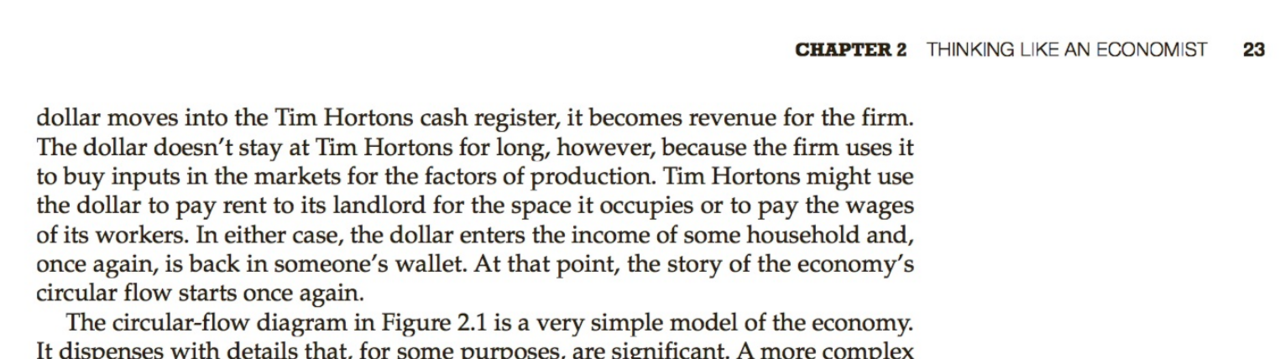
they were not kidding when they said this economics textbook had been adapted for Canadian audiences, huh


Tags:

#this image file on my computer is named ”Have We Mentioned Lately We’re Canadian.png” #(I wonder what this example is in the original American) #oh look an original post #our home and cherished land #adventures in University Land #reactionblogging #bluespace #(not *exactly* but it does seem to have a similar blurring between the picture and the other elements of the page)