homunculus-argument:

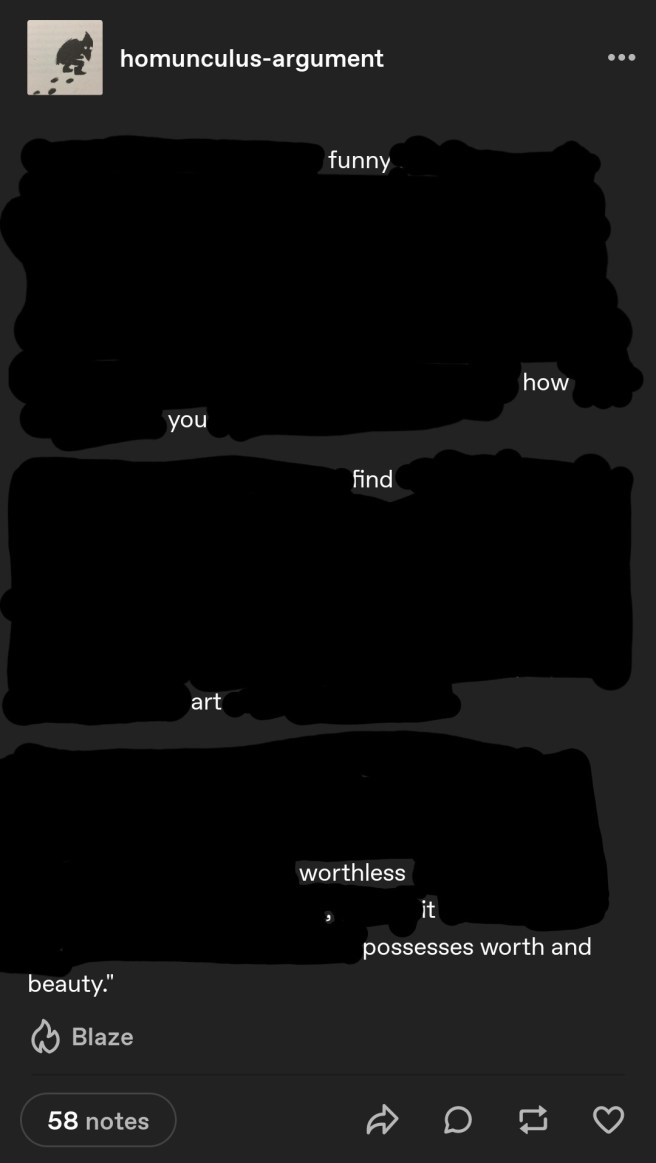
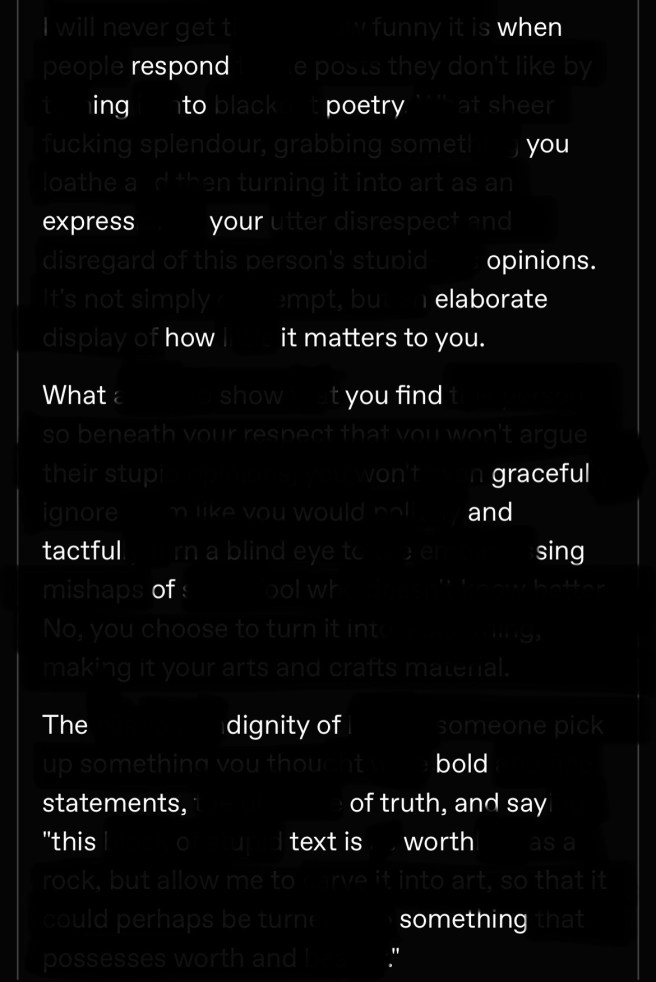
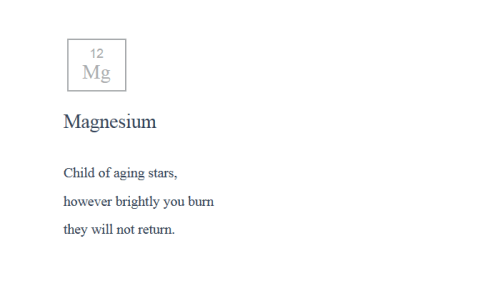
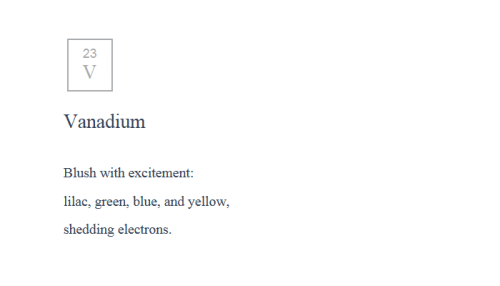
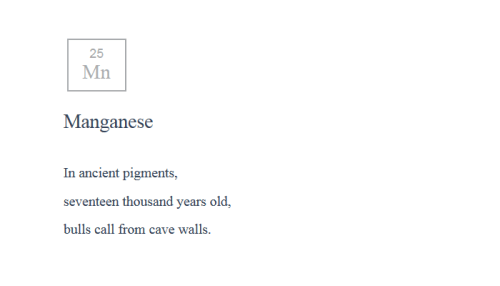
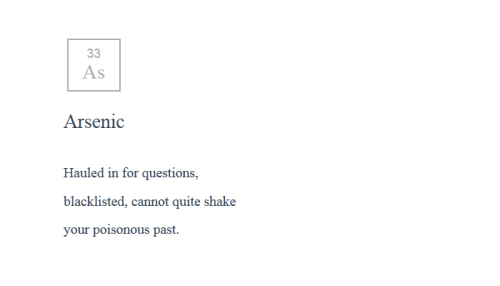
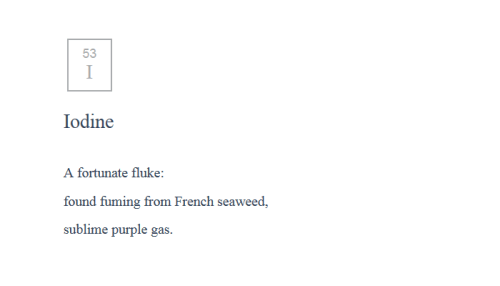
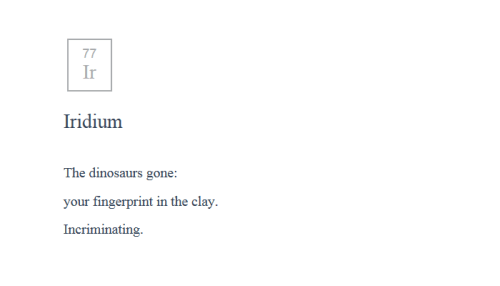
I will never get tired of how funny it is when people respond to the posts they don’t like by turning it into blackout poetry. What sheer fucking splendour, grabbing something you loathe and then turning it into art as an expression of your utter disrespect and disregard of this person’s stupid-ass opinions. It’s not simply contempt, but an elaborate display of how little it matters to you.

What a way to show that you find this person so beneath your respect that you won’t argue their stupid opinions, you won’t even gracefully ignore them like you would politely and tactfully turn a blind eye to the embarrassing mishaps of some fool who doesn’t know better. No, you choose to turn it into a plaything, making it your arts and crafts material.

The hilarious indignity of having someone pick up something you thought were bold and fine statements, the pinnacle of truth, and saying “this block of stupid text is as worthless as a rock, but allow me to carve it into art, so that it could perhaps be turned into something that possesses worth and beauty.”

xrinnihil:

e20066e3713e423e61b830f8502be848921d4c79

I’m sorry op, but how could I pass on this one

homunculus-argument:

Me casting out a big block of solid text about blackout poetry, in order to catch blackout poetry in the wild:

2917f87d8a77f11e92917edb9e77d6cbddb178a6

samzshits:

6e1425fc2d9805a7dfa482f8e4d0b13ed27dbf47

sense8-sonder:

fc6c17829663a32f2c8005c9573f83abdccfa230

firapolemos05:

42ec2d78d1d94a51567e451d24ce568dc022a88f

Tags:

#anything that makes me laugh this much deserves a reblog #poetry #Tumblr: a User’s Guide #rickrolling #discourse cw? #this post was queued because my to-reblog list is too long and I didn’t want to dump it on you all at once

mikkeneko:

eldritchtribble:

I am the very model of a shrewd Ferengi businessman
I’ve been on Deep Space Nine since it was run by the Cardassians
My bar provides each alien that passes through its double doors
With gambling and alcohol, and holographic paramours

But that is not to say that I’m impervious to harder times
I’ve often been accused of larceny and graft and other crimes
My righteous indignation is becoming quite demonstrable
Especially with my old friend, the law-enforcing Constable.

I’m singing this while sitting in a holding cell familiar
So Odo comes and lets me out before he goes peculiar
That good-cop, bad-cop subroutine he just took to employing
Could use some work (or one more cop) – it’s really quite annoying.

434c555b0c6923e46645a226073e5f7d19889a32

Of course he can, his brother’s friend’s a famous weapons wholesaler!
He simply chose the path of peaceful station spirits retailer
But a little extra traffic under counters still is not a sin –
He is the very model of a shrewd Ferengi businessman.


Tags:

#Star Trek #DS9 #poetry #this post was queued because my to-reblog list is too long and I didn’t want to dump it on you all at once

randomisedmongoose:

66e66152167f9f3aa1887c86c73cb7551241e5f4

My nayme is bird
And wen it’s Yule
And Swedish snow
Lies cold and cruel
I look for seeds
With many friends
But food is scarce
Where flock descends

But then we hear
Of ancient rite
We leave the trees
We all take flight
If fire not
Its end promote?
We do the deed.
We eat the goat.


Tags:

#Gävlebocken #poetry #i lik the bred meme #Christmas #this post was queued because my to-reblog list is too long and I didn’t want to dump it on you all at once

roach-works:

dharmagun:

Higgledy-piggledy
unparliamentary
green parrots quarrel
outside in the trees

Squawking out epithets
uncomplimentary
Squads of unmannerly
Oversized peas.

i loved this poem so much that i memorized it and to this day i sometimes mutter it under my breath to keep my welding tempo even


Tags:

#this isn’t quite a that-one-post-with-the-thing but it *is* a surprised-I-haven’t-already-reblogged-this #poetry #birds #my past self has good taste #this post was queued because my to-reblog list is too long and I didn’t want to dump it on you all at once

comparativelysuperlative:

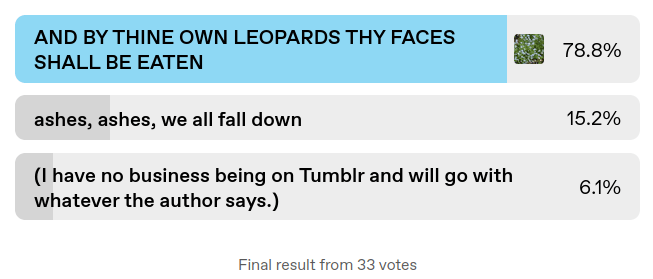
I always thought @strictlyquadrilateral’s “the light that cleanses also burns” reads like a dramatic prophecy of doom, because I like dramatic prophecies of doom. But on second thought it might land better as an incongruously upbeat children’s rhyme. So, how do you read it?

This poem should sound like:

and-by-thine-own-leopards-thy-faces-shall-be-eaten-poll


Tags:

#poetry #that poem is incredible and I *would* reblog it except that that would involve putting OP on my blog #discourse cw? #this post was queued because my to-reblog list is too long and I didn’t want to dump it on you all at once


{{“the light that cleanses also burns”, by strictlyquadrilateral, in response to people calling for the censorship of AO3:

the light that cleanses also burns!
the torch to wildfire turns
and eats the hand that holds the wood!
it is what’s pure! it is what’s good!
it is what burns away the dark!
the shadows dim and shadows stark
can shelter none from endless light!
it is what’s good! it is what’s right!
it is what takes your tongue and throat
for each and every sunny note!
you are on the pyre you made!
look up, you fool! and be afraid!}}

cloakofshadow:

Keep turning right, and let your fingers scrape
Along the stone. Move swiftly through the dark.
Carry no torch – the monstrous granite shape
Of fate lies best unseeing. Strike no spark.

Hold fast the thread, and let no ripping shard
Part silk and faith, and make your oaths to fray
Where better heroes held their hopes too hard–
And where the tree-roots trip you, turn away.

Heed, quiet soul, in sunlight and in mirth;
Guard well your steps, though free airs ply your skin–
The deeper caverns turning through the earth
Have laid no markers where their paths begin.

(Oh help me keep the right, the straight, the true;
You never said I walked a maze in you.)


Tags:

#poetry #that one post with the thing #101 Uses for Infrastructureless Computers

shimyereh:

The days grow short; we’ve set back all the clocks.
Snow smooths the landscape into blank simplicity.
Indoors, we face the “thousand natural shocks
That flesh is heir to” — static electricity,
I mean. And though I know my flannel socks
Aren’t helping, there’s a special infelicity
In choosing whether colder feet, perhaps,
Are worth it for the sake of fewer zaps.


Tags:

#poetry #(static electricity has not been a big problem for me but this has a nice ring to it)

headspace-hotel:

The overwhelming dominance of free verse poetry in English sucks actually. It’s not a bad form but it IS bad that it’s the main form of english language poetry being published

I know everyone is conditioned to think rhyme, rhythm and meter is for either maudlin, sing-songy and childish poetry or excessively formal, pretentious poetry, but these things are just what makes phrases and lines memorable and punchy.

English naturally has rhythm and all poetry uses this stuff a little bit, it’s legitimately just What Make Word Sound Good

more importantly, rhyme, rhythm and meter are very connected to memory. there’s a reason why little songs and chants are our most enduring and effective memory tools

headspace-hotel:

It occurs to me that most people don’t know how these things work so here:

How Poetic Rhythm, Meter, and Rhyme Actually Work!

People seem to only learn about rhyme in grade school, and they don’t appear to learn that rhymes other than perfect rhymes (rhymes where the ending ‘sound(s)’ perfectly match) exist.

When I first got into writing my own poetry, I repeatedly heard “don’t use rhymes like ‘true’ and ‘blue’,” but for some reason it’s hard to find an explanation of this.

So here it is. “True” and “blue” are perfect rhymes because the ending sounds are identical.

Most pairs considered ‘rhymes’ in poetry do not perfectly match like that. I’m sorry grade school and colloquial usage lied to you. Rhymes are sounds at the ends of lines (or even inside lines!) that echo each other. That’s it.

Here’s a set of rhymes that are at least close to perfect, from the song “You Shook Me All Night Long” by AC/DC:

She was a fast machine, she kept her motor clean/She was the best damn woman that I ever seen

However, imperfect rhymes are REALLY, REALLY COMMON and they often sound better. Here’s a couple rhyming lyrics from the song “Every Rose Has Its Thorn” by Poison:

Every rose has its thorn/Just like every night has its dawn

This still rhymes. It’s just not perfect.

Here’s the thing. Rhyme is supposed to make Poem Sound Good On Brain, and it is only about 20% of what makes poetry Sound Good On Brain.

To talk about meter, we have to talk about stress. Stress is, like rhyme, inexact, but it arguably messes stuff up a lot more if you don’t understand it.

To explain what stress is, imagine this scenario: You are seen walking hastily away from the zoo in a ski mask, carrying a large cage covered with a sheet that occasionally emits strange sounds. (I promise this will make sense in a second.)

Before you can leave the parking lot, though, you are stopped by an angry zookeeper. “Did you steal the capybara from its cage?” the zookeeper asks.

You make one of the following excuses (please read these aloud, it’ll help):

I didn’t steal the capybara from its cage.

I didn’t steal the capybara from its cage.

I didn’t steal the capybara from its cage.

What are you doing to the bolded word that makes the meaning of your excuse different? You’re putting emphasis, or stress, on it.

All English speech naturally has places that are stressed. Without stress, it sounds like a robot in a 1970′s cartoon is talking. Specifically, almost all multisyllabic English words have specific syllables that are always stressed. (There are some regional variations.) You can figure it out by simply reading the word aloud with the stress on different syllables until you find the one that sounds normal and not evil:

  • Walrus vs. Walrus
  • Giraffe vs. Giraffe
  • Tiger vs. Tiger 
  • Baboonvs. Baboon
  • Ostrich vs. Ostrich
  • Raccoon vs. Raccoon
  • Penguin vs. Penguin
  • Gazelle vs. Gazelle
  • Gecko vs. Gecko
  • Vulture vs. Vulture

Okay, let’s leave the zoo. Try it with these words:

  • Divine
  • Shower
  • Convince
  • Pebble
  • Sidewalk
  • Carpet
  • Smoothie
  • Attract
  • Relax
  • Darkness
  • Garden
  • Surpass
  • Object

Wait, what’s that last one? That’s right, some English words are indistinguishable except for which syllable is stressed. “I object!” you might say at a wedding you don’t approve of. “It’s an unidentified flying object,” you might say if you glimpse an alien spaceship in a blurry picture.

Now try it with some three syllable words:

  • Immortal
  • Magenta
  • Poetry
  • Carnivore
  • Tomorrow
  • Entity

I feel like “entity” is a noun and “entity” would have to be a verb, if you catch my drift.

(You will notice that two-syllable English words typically have stress on the first syllable, and that three-syllable English words usually have stress on the second syllable or maybe the first.)

Single-syllable words have fuzzier rules. A single word can be stressed or unstressed depending on context. In general, content-heavy words are stressed, whereas connecting words that don’t have much meaning can kinda do what they want depending on the words around them.

English likes to periodically pick up stress, like a curious hiker periodically picking up rocks. You can barely say more than three syllables in a row without naturally emphasizing something.

This is convenient, because when stresses occur in a rhythmic pattern, ambiguous words will be swept along with the pattern.

Here’s another thing to read aloud. See which of the following couplets “sounds” better to you:

Supreme divine giraffes surpass raccoons/and gecko gods ascend beyond giraffes.

Angel giraffes beyond mortal knowledge/cannot defeat divine gecko powers.

Both couplets have the same number of syllables (ten in each line), but only the first line is metered. You might recognize it–it’s iambic pentameter! This is a form of accentual-syllabic verse.

You will notice that “pent” means five, but there’s ten syllables. Fear not– “pentameter” refers to the number of feet in the line. In this case, it’s the number of iambs. 

An iamb is an unstressed syllable followed by a stressed syllable. Giraffe is an iamb. Divine is an iamb. Any two syllables with that pattern can be.

There are three other main options for “feet” in English accentual-syllabic verse: trochees (stressed-unstressed), dactyls (stressed-unstressed-unstressed), and anapests (unstressed-unstressed-stressed). There is also the spondee (two stressed syllables) and pyrrhus (two unstressed syllables) but you can’t really write an entire poem with those (okay you TECHNICALLY can with the spondee, but there are only a few examples). Not all English meter is based on “feet,” but this is a good starting point.

When people think poetry, they think rhyme. Never meter. When people who haven’t studied poetry try to write poetry, they make it rhyme, but they don’t utilize meter.

This is not good, because in my opinion, rhyme, especially perfect rhyme, typically needs to be accompanied by some kind of rhythm to not sound like shit.

You know who can pull off perfect rhymes in poetry? Robert Frost. I’m going to put an entire poem here.

Whose woods these are I think I know.
His house is in the village though;
He will not see me stopping here
To watch his woods fill up with snow.

My little horse must think it queer
To stop without a farmhouse near
Between the woods and frozen lake
The darkest evening of the year.

He gives his harness bells a shake
To ask if there is some mistake.
The only other sound’s the sweep
Of easy wind and downy flake.

The woods are lovely, dark and deep.
But I have promises to keep,
And miles to go before I sleep,
And miles to go before I sleep.

This doesn’t have that cringy sing-songy effect that a lot of perfect rhyme creates, and I believe that this is BECAUSE the rhythm of the syllables is so formal and strict.

Imagine if it was like this:

These woods belong to someone I know.
He lives in the village though;
He will not see me stopping here
To watch his woods, all covered in snow.

This is so bad.

You can do really cool things with the combination of rhyme and meter. Here’s one of my favorite examples, with stresses bolded:

Now I’m falling asleep and she’s calling a cab
While he’s having a smoke and she’s taking a drag
Now they’re going to bed, and my stomach is sick
And it’s all in my head, but she’s touching his

What’s the pattern? Unstressed, unstressed, stressed. How many of these per line? Four. Anapestic tetrameter, my friends. Except, of course, for the last line, which we expectto rhyme with “sick.”

The pattern is so powerful that when you listen to the song, your brain fills in…a word rhyming with “sick,” and it really turns you upside down when the pattern isn’t finished as you expect.

“Mr. Brightside” isn’t the usual example of a song that is “poetic,” but there is a lot of very competent usage of poetic techniques in these lines. Pay attention to how rhyme is used here. “Cab” and “drag” are not perfect rhymes, but they echo. “Falling” and “calling” are perfect rhymes within one line. “Bed” and “head” are perfect rhymes in the middle of two consecutive lines. The words that end in “-ing” create echoes.

Rhyme is used, but it’s never used in the exact same pattern twice. The different rhyme patterns interweave with each other and create a lot of variety while still having continuity.

I don’t have a conclusion here. I just think it’s sad that this isn’t common knowledge, since we absolutely do have an intuitive understanding of when something scans and when it doesn’t—we know when something “sounds right.”

It disappears when we’re trying to write a poem on purpose, but it’s there when we’re parodying a song or slogan, or sharing variations of the “roses are red, violets are blue” meme.

amatalefay:

*bursts through the wall like the kool-aid man* POETIC METER MY BELOVED

I would argue that the best free verse does have meter—you can create rhythms without being so structured—but that’s because English is such a rhythmic language, and poetry relies on that.

I remember in one of my college poetry classes, I kept turning in free verse poems that the professor kept using as examples of meter. There was one specific poem about the rhythm of walking and how my disability interferes with that, and my prof was praising it to the high heavens because the lines describing other people’s walking were in iambic pentameter but the meter started breaking down as I described my own pace. None of that was something I thought about while writing, but it was absolutely something I emphasized in revision.

In my opinion, poetry is less about ‘poetic ideas’ and more about how language crafts meaning. Obviously, prose writers pay close attention to the rhythm and flow of their sentences too, but what we think of as ‘poetic’ prose doesn’t actually always make for good poetry. Good poems use the musicality of language itself to make their point.

headspace-hotel:

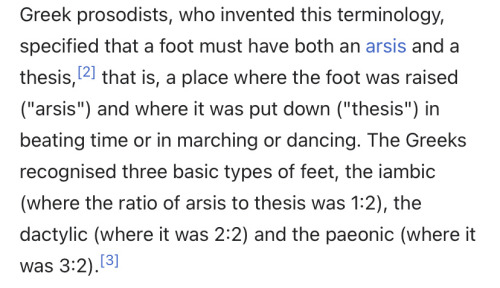
Hello Im vibrating at the speed of sound at the mere concept of that poem about the rhythm of walking because that’s where the concept of “feet” in poetic meter comes from

2bad23d4e6ddfee56950d5632ac1452a48a5a6ee

Art! Art! ART! Metamorphosis! TRANSFORMATION! RE-INTERPRETATION OF THE HUMAN EXPERIENCE! Beautiful! Enriched by diversity!

tairneanaich:

That first Iambic pentametre example BAFFLED me until I remembered that you probably say Raccoon with a different stress to how I do- those regional differences really matter!

foxofninetales:

THIS ALSO ABSOLUTELY APPLIES TO PROSE.

Like, you definitely don’t have to know about poetry to write prose, but if you love the kind of prose that sings on a sentence level and you want to know how to do that, READ POETRY.  Everything about poetry applies to prose – alliteration, rhyme, assonance, the visual structure and length of lines, and hoo boy howdy, does meter ever apply.

While you probably won’t use those poetry elements all the time, they will color your work, and when you need to have a showstopper sentence you can pull out those tools and make the words do exactly what you want.  And the bittersweet joy of this is that most readers won’t realize why they are being so affected; they’ll think it’s just plot and character and setting and theme and not know that they’re being influenced by the very beat and flow of the words themselves.

There’s music underneath the words and that is why they sing.

>>Here’s another thing to read aloud. See which of the following couplets “sounds” better to you:

Supreme divine giraffes surpass raccoons/and gecko gods ascend beyond giraffes.

Angel giraffes beyond mortal knowledge/cannot defeat divine gecko powers.

…the second one.

The first one is too repetitive, especially the first line where the iambs are all separate two-syllable words. It’s *slippery*: it goes in one ear and out the other, there’s nothing for the brain to grab onto.

The second one has more variation, a *rhythm* rather than a dull monotone beat. And its second line has exactly the same stress pattern as its first line, which gives it a nice echo.

>>And it’s all in my head, but she’s touching his

I expect this *would* work for me in audio, but in text my first thought for the missing word was “head”, that it was referencing the first half of the *same* line rather than the end of the previous line. It works out to the same meaning, but still.


Tags:

#apparently I am not getting a good grade in having an artistic instinct #reply via reblog #art #poetry #is the blue I see the same as the blue you see #this probably deserves some warning tag but I am not sure what