In July 2015, we saw Pluto up close for the first time and—after three years of intense study—the surprises keep coming. “It’s clear,” says Jeffery Moore, New Horizons’ geology team lead, “Pluto is one of the most amazing and complex objects in our solar system.”
1. An Improving View
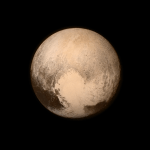
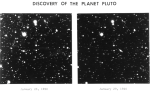
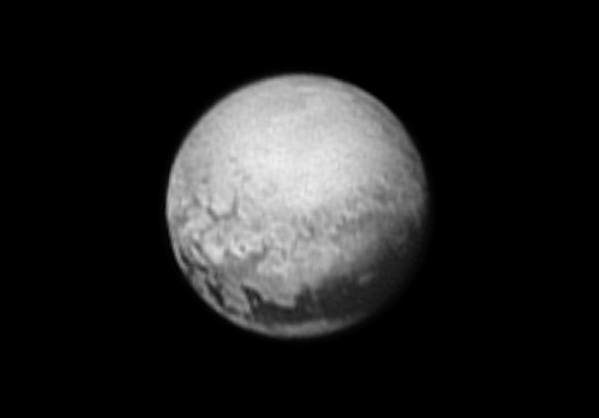
These are combined observations of Pluto over the course of several decades. The first frame is a digital zoom-in on Pluto as it appeared upon its discovery by Clyde Tombaugh in 1930. More frames show of Pluto as seen by the Hubble Space Telescope. The final sequence zooms in to a close-up frame of Pluto taken by our New Horizons spacecraft on July 14, 2015.
2. The Heart
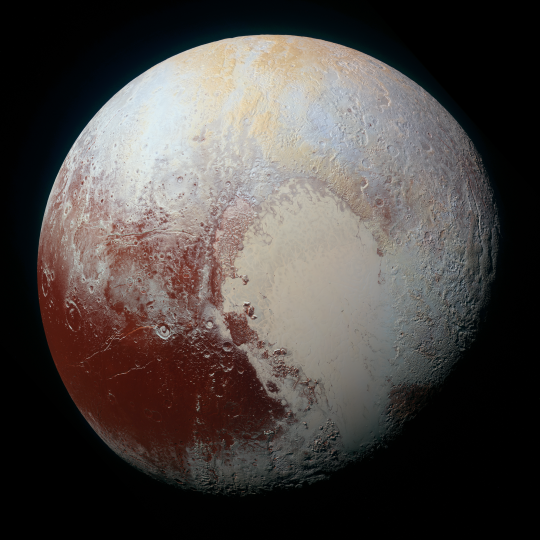
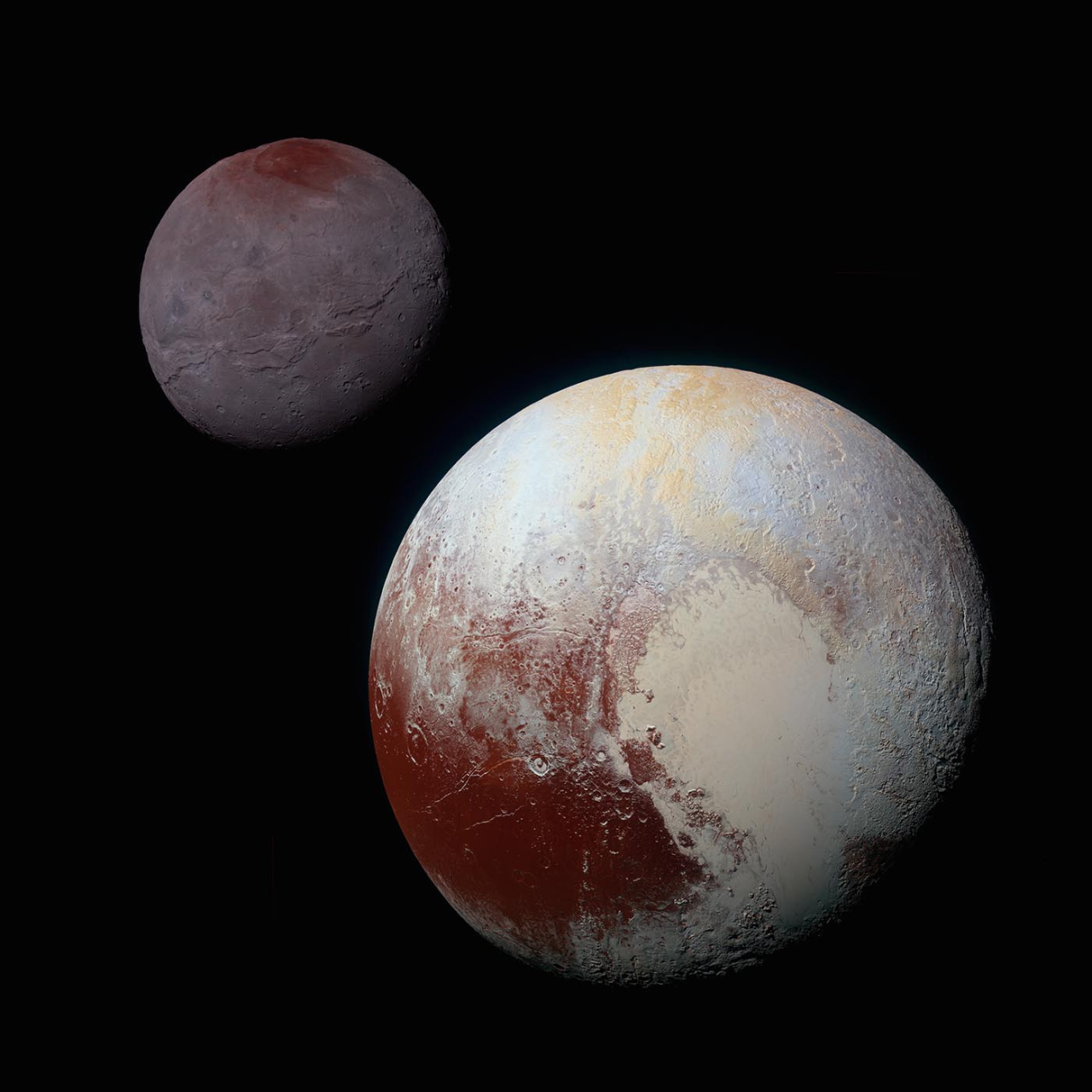
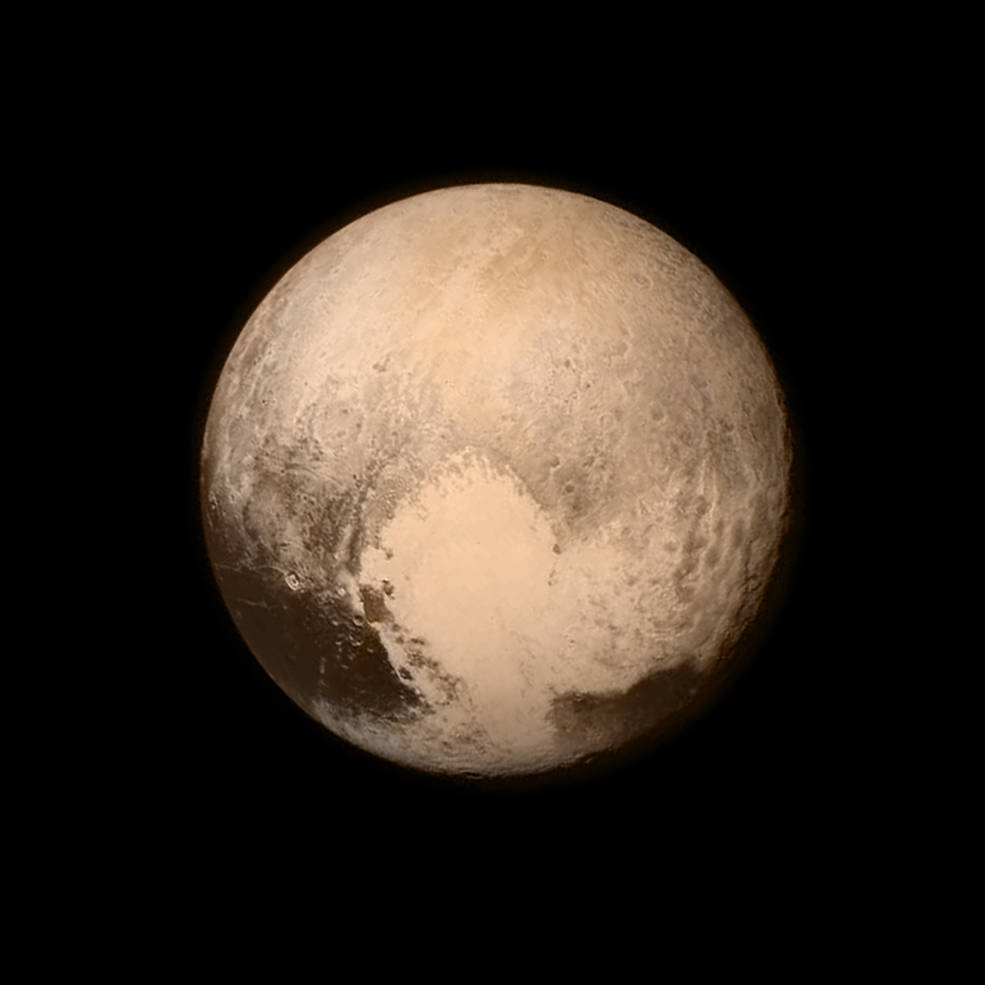
Pluto’s surface sports a remarkable range of subtle colors are enhanced in this view to a rainbow of pale blues, yellows, oranges, and deep reds. Many landforms have their own distinct colors, telling a complex geological and climatological story that scientists have only just begun to decode. The image resolves details and colors on scales as small as 0.8 miles (1.3 kilometers). Zoom in on the full resolution image on a larger screen to fully appreciate the complexity of Pluto’s surface features.
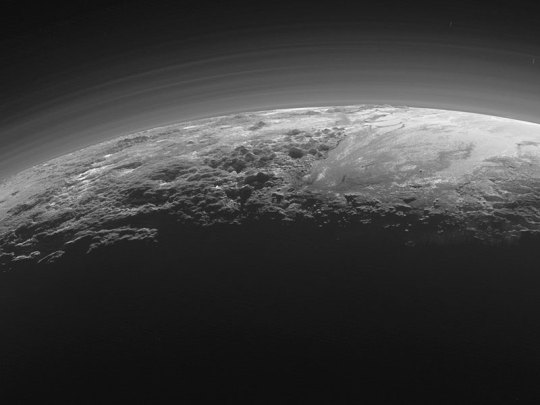
Just 15 minutes after its closest approach to Pluto, the New Horizons spacecraft captured this near-sunset view of the rugged, icy mountains and flat ice plains extending to Pluto’s horizon. The backlighting highlights more than a dozen layers of haze in Pluto’s tenuous atmosphere. The image was taken from a distance of 11,000 miles (18,000 kilometers) to Pluto; the scene is 780 miles (1,250 kilometers) wide.
5. Icy Dunes
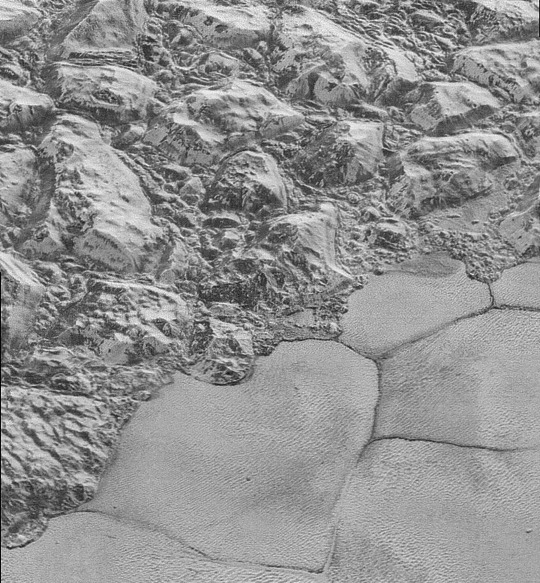
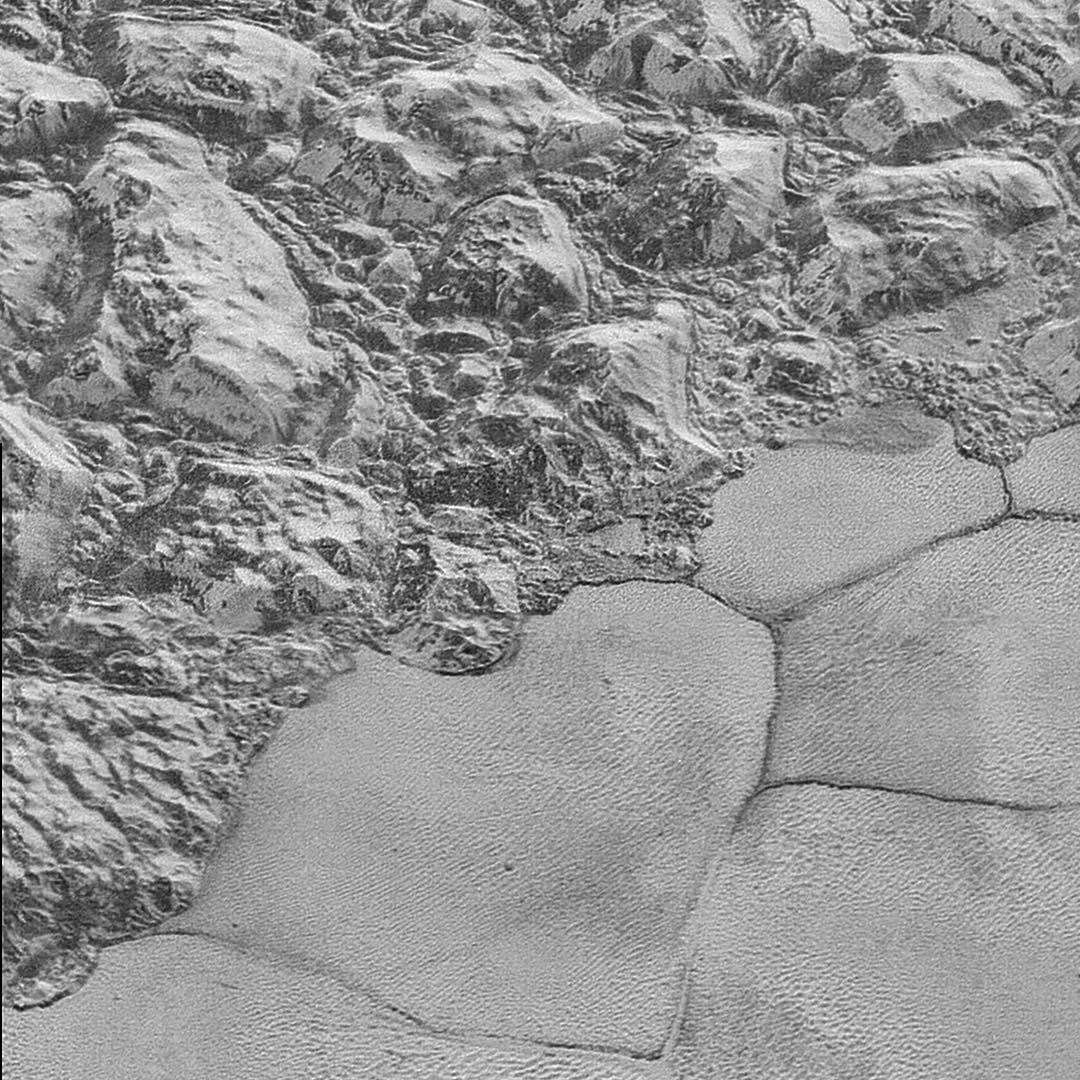
Found near the mountains that encircle Pluto’s Sputnik Planitia plain, newly discovered ridges appear to have formed out of particles of methane ice as small as grains of sand, arranged into dunes by wind from the nearby mountains.
6. Glacial Plains
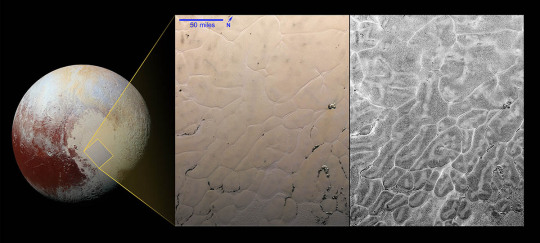
The vast nitrogen ice plains of Pluto’s Sputnik Planitia – the western half of Pluto’s “heart”—continue to give up secrets. Scientists processed images of Sputnik Planitia to bring out intricate, never-before-seen patterns in the surface textures of these glacial plains.
7. Colorful and Violent Charon
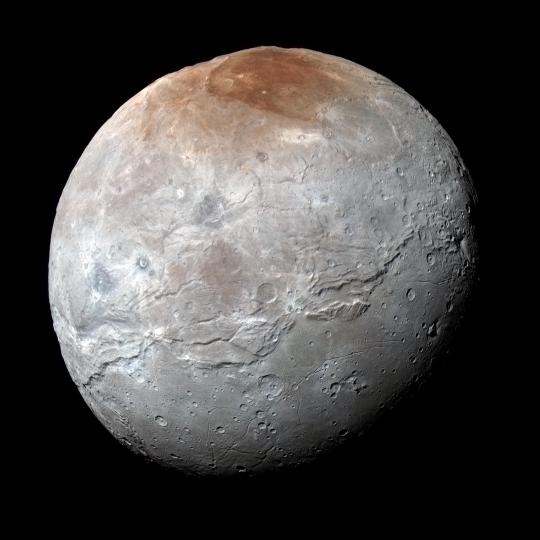
High resolution images of Pluto’s largest moon, Charon, show a surprisingly complex and violent history. Scientists expected Charon to be a monotonous, crater-battered world; instead, they found a landscape covered with mountains, canyons, landslides, surface-color variations and more.
8. Ice Volcanoes
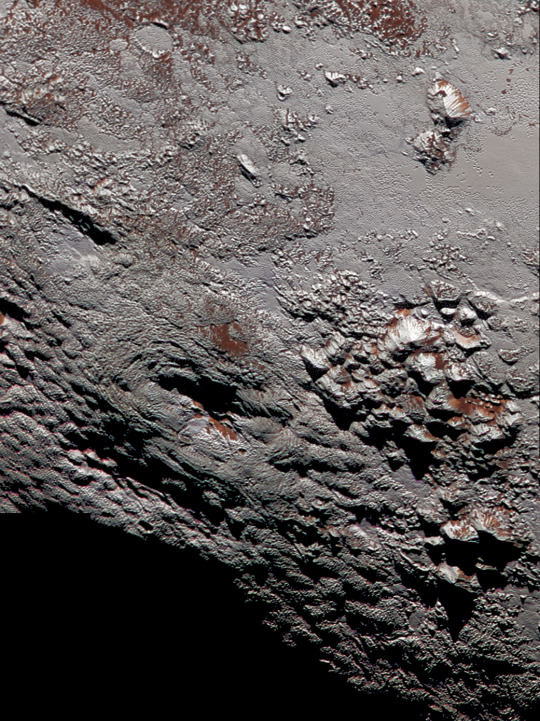
One of two potential cryovolcanoes spotted on the surface of Pluto by the New Horizons spacecraft. This feature, known as Wright Mons, was informally named by the New Horizons team in honor of the Wright brothers. At about 90 miles (150 kilometers) across and 2.5 miles (4 kilometers) high, this feature is enormous. If it is in fact an ice volcano, as suspected, it would be the largest such feature discovered in the outer solar system.
9. Blue Rays
Pluto’s receding crescent as seen by New Horizons at a distance of 120,000 miles (200,000 kilometers). Scientists believe the spectacular blue haze is a photochemical smog resulting from the action of sunlight on methane and other molecules in Pluto’s atmosphere. These hydrocarbons accumulate into small haze particles, which scatter blue sunlight—the same process that can make haze appear bluish on Earth.
10. Encore
On Jan. 1, 2019, New Horizons will fly past a small Kuiper Belt Object named MU69 (nicknamed Ultima Thule)—a billion miles (1.5 billion kilometers) beyond Pluto and more than four billion miles (6.5 billion kilometers) from Earth. It will be the most distant encounter of an object in history—so far—and the second time New Horizons has revealed never-before-seen landscapes.
Make sure to follow us on Tumblr for your regular dose of space: http://nasa.tumblr.com.
Tags:
#ooh #I didn’t know about the Kuiper Belt Extended Mission #Pluto #space #the power of science #the more you know #long post
Today ten years ago an IAU resolution stated an official definition for the term “planet” who ultimately excluded Pluto as a planet of our Solar System, and reclassified it as “dwarf planet”.
Image via NASA: What Is Pluto? Caption: The New Horizons spacecraft helped us see Pluto and its largest moon Charon more clearly than we could see them with telescopes.
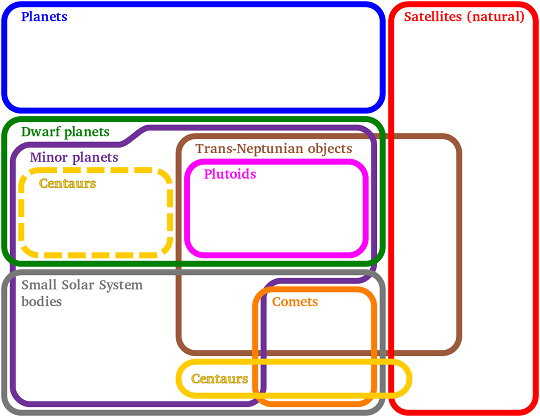
A Euler diagram showing the relationship between objects in the Solar System (excluding stars) – Wikimedia Commons
huh, so what we were taught in school were actually Euler diagrams, but *called* Venn diagrams for some reason
Yeah, technically a Venn diagram shows all possible intersections. The ones that are empty are sometimes shaded black, but they’re there regardless. Silly wikipedia image showing Venns morphing into Eulers:
#anniversaries #(apparently this was on the 24th) #Pluto #today I was reading about the outer solar system in my astronomy textbook #2014 edition #there was a remnant Pluto section in the ”outer planets” section basically explaining #why Pluto was no longer considered a planet and would be described in more detail in the ”other solar system bodies” chapter #it referred to the New Horizons fly-by in the future tense #there were no pictures #because nobody had ever seen what Pluto looked like #(the educational video next on my to-do list tomorrow was made in 2006) #(I think I already caught them re-dubbing a previous section involving Pluto) #(the picture showed nine planets orbiting the sun) #(while the voiceover) #(which–while the same narrator as the rest of the series–didn’t sound like it was quite of a piece with the rest of the narration) #(talked about eight planets and oh yeah there’s a dwarf planet in here too) #((I’m *probably* overstating that last bit but anyway)) #adventures in University Land
#found one! #the ultimate in Valentine space pareidolia #proud citizen of The Future #and no Valentine’s Day in The Future is complete without a picture of Pluto #Happy Valentine’s Day from an aromantic asexual #Pluto #space #pareidolia
Just one day after its successful Pluto Flyby, NASA’s New Horizons spacecraft sent back the first close-up photos of the dwarf planet and its largest moon, Charon.
Not only does Pluto have a mountain range with peaks 3500 meters high which formed no more than 100 million years ago – quite young for a celestial object in a 4.56-billion-year-old solar system -, but Charon looks completely different with cliffs and canyons (one being 7 to 9 km deep!).
The spacecraft also sent new information about Pluto’s outermost known moons, Hydra. We now know that it is about 43 by 33 kilometers with an almost entirely icy surface.
These discoveries are quite impressive, but are also just the beginning. It will take up to 16 months to receive and collect all the data that New Horizons is sending. The spacecraft is now continuing its mission into the Kuiper Belt – a region of space beyond the planets consisting mainly of icy objects.
NASA’s New Horizons probe completed its fly-by of the dwarf planet Pluto this morning at 7:49 AM ET, completing a 9+ year, 3 billion mile journey to our favorite Kuiper belt object and is now continuing off into the outer reaches of the solar system.
On its way by Pluto, New Horizons snapped the clearest and most hi-resolution images ever taken of the dwarf planet, but since the probe can’t upload data back to Earth while it’s scienceing, we won’t see the best ones until tomorrow (also keep in mind that it takes 4.5 hours for signals to travel between Earth and Pluto, even at the speed of light!). New Horizons’ multiple instruments are collecting so much data that it will take nearly 16 months to get it all sent back to Earth! So keep following the NASA mission page and official Twitter account for plenty of Pluto updates over the next year.
Above is a collection of Pluto as we’ve seen it through the years, from its 1930 discovery at Lowell observatory (bottom), to Hubble’s 100-pixel Atari version taken in 1996 (middle), to New Horizons’ most recent color image taken July 13, 2015.
Here’s to the New Horizons team, congratulations from everyone on Earth!
(scale image of Pluto and its moon Charon compared to Earth)
Interesting side note: The dwarf planet Pluto’s name was suggested in a letter by an 11-year-old schoolgirl named Venetia Burney. But what about this Pluto?
While there’s no documentation to back up the claim, Disney’s Pluto character debuted just nine months after the dwarf planet’s discovery in 1930, and it’s widely assumed that Walt Disney’s animators were capitalizing on Pluto fever. I’d say we’ve got it again, wouldn’t you?
Tags:
#history #space #the power of science #Pluto #oh look an update



 }}
}}