Send me to Mars with party supplies before next august 5th
No guys you don’t understand.
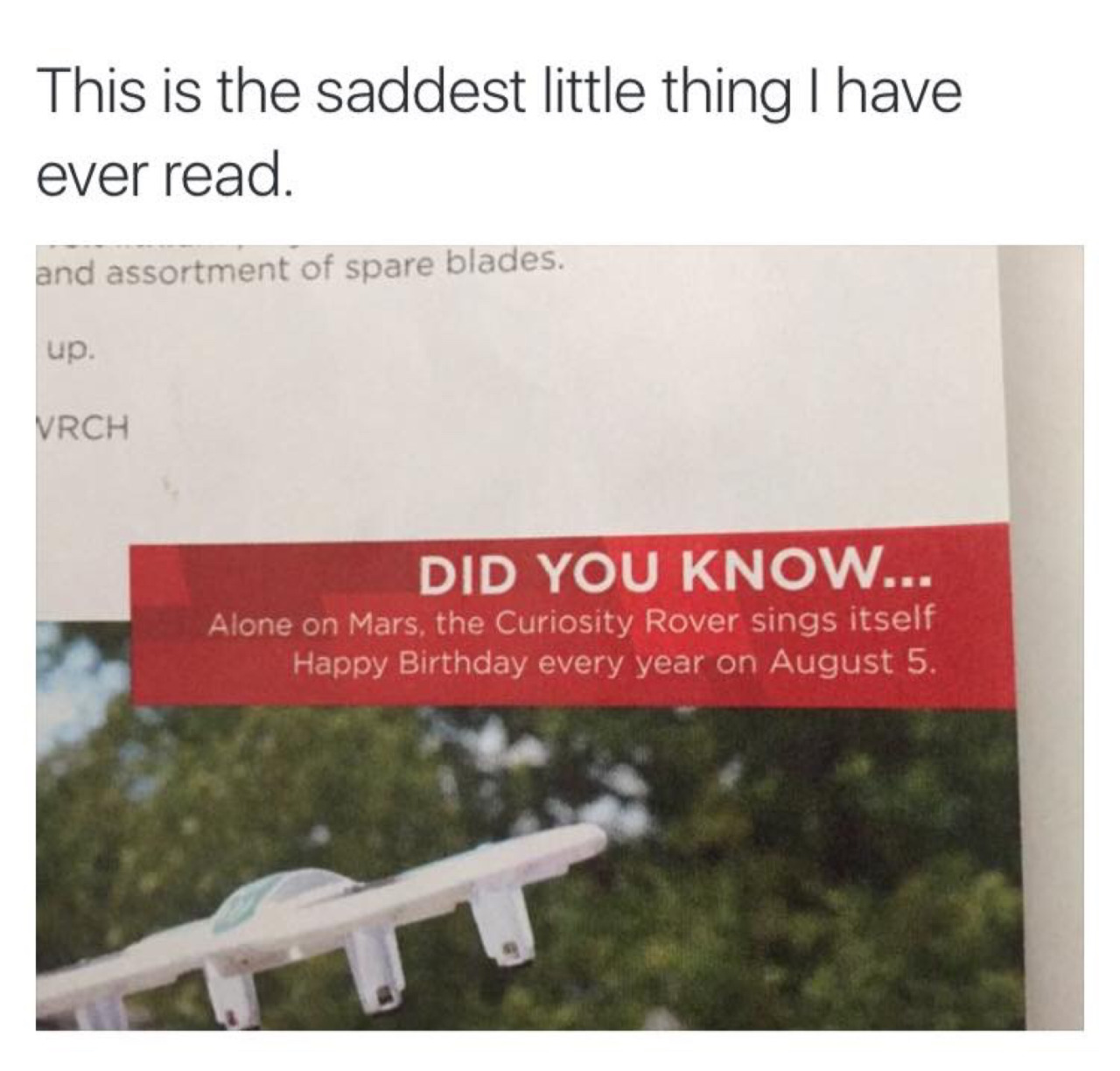
The soil testing equipment on Curiosity makes a buzzing noise and the pitch of the noise changes depending on what part of an experiment Curiosity is performing, this is the way Curiosity sings to itself.
So some of the finest minds currently alive decided to take incredibly expensive important scientific equipment and mess with it until they worked out how to move in just the right way to sing Happy Birthday, then someone made a cake on Curiosity’s birthday and took it into Mission control so that a room full of brilliant scientists and engineers could throw a birthday party for a non-autonomous robot 225 million kilometres away and listen to it sing the first ever song sung on Mars*, which was Happy Birthday.
This isn’t a sad story, this a happy story about the ridiculousness of humans and the way we love things. We built a little robot and called it Curiosity and flung it into the star to go and explore places we can’t get to because it’s name is in our nature and then just because we could, we taught it how to sing.
That’s not sad, that’s awesome.
*this is different from the first song ever played on mars (Reach For The Stars by Will.I.Am) which happened the year before, singing is different from playing
NASA scientists announced today that they’ve assembled strong evidence that liquid water flows on the Martian surface. There isn’t any indication that this means there’s life on Mars, but when you keep in mind that everywhere we find water on Earth we find living things, it’s exciting stuff.
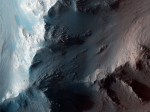
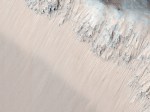
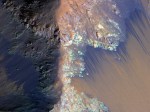
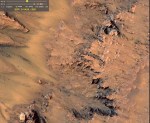
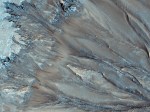
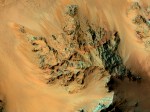
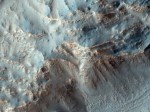
After studying years worth of images collected by the Mars Reconnaissance Orbiter, a particular feature jumped out (tour the gorgeous HiRise image library at beautifulmars). Dark streaks called Recurring Slope Lineae (RSL) appeared on a seasonal basis, coinciding with conditions that could support liquid water in the form of salty brines.
Animation of seasonal flows in Hale Crater:
Think of these RSL streaks (visible in the image gallery up top) like water flowing downhill through sand, causing it to change color as the wet stuff seeps toward the valleys below. If you’re picturing rushing rapids, it’s really more like a wet sponge. These brines, made of chlorate and perchlorate minerals, are much saltier than our own seas, which allows this water to remain liquid in Mars’ frigid climate. Saltwater is especially intriguing for astrobiologists, as salty stuff has higher odds than freshwater for supporting biological chemistry.
NASA billed this report of liquid saltwater as “major”, but this isn’t the first news of water on Mars. Martian hydrology has a long, exciting history. As far back as Mariner 9, dry river and lake beds suggested that the red planet was once much wetter, and later missions told of an ocean-covered Mars several billion years ago. As recently as April 2015, the Mars Curiosity rover found similar brines near the surface at night. We’ve also known for a while that the Mars of today is home to significant amounts of frozen water ice, enough to cover the planet in a thin, wet, puddle if it melted.
What makes today’s announcement so interesting isn’t that water exists on Mars, but that it still flows near the surface on a seasonal basis. Mars super-thin atmosphere led many to believe that any liquid water near the surface would boil away, and the dynamic nature of the wet stuff means that we’ve got a lot to learn about our planetary neighbor.
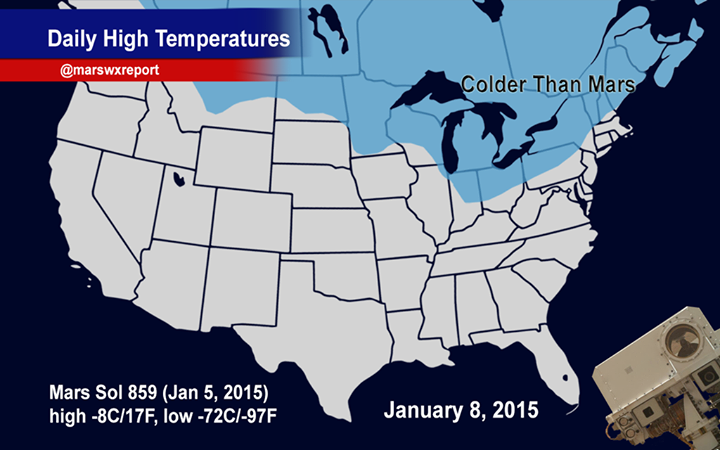
It is currently colder in Canada and in the northern US than on Mars!
Thanks to the polar vortex, it felt like -35 degrees Celsius with the wind chill at our headquarters near Montreal, Quebec this morning (January 8th, 2014). That’s colder than where Mars Curiosity is roving in the Red Planet’s Gale Crater!
Source: CSA
Tags:
#our home and cherished land #…fucking *hell* #I mean that is with windchill and all but still #I’m increasingly glad we cancelled our grocery trip for tomorrow #we’ve got more than enough food to last until next week #we’ll just go without red meat and unprocessed fruit for a few days #and potatoes #and whatever else it is that we’re missing
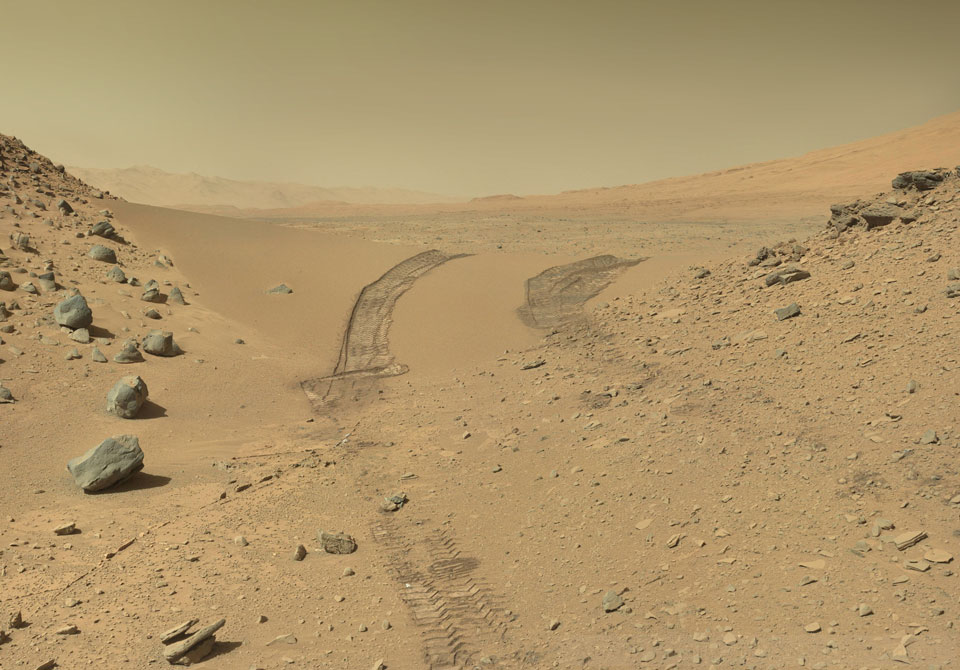
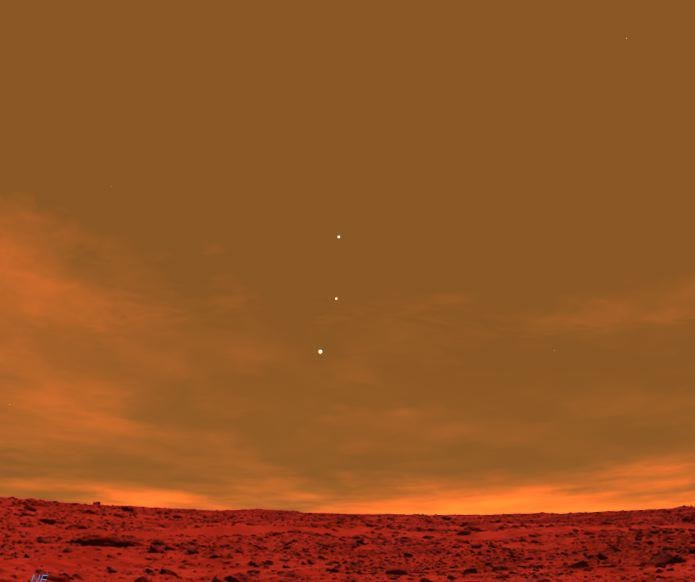
Just so you know, a lot of images of Mars which you’ll see have been manipulated. A lot of them have boosted contrast and saturation. So if you’ve ever wondered – images like this one are what Mars actually looks like.
Why does this not have more notes?!?
YOU ARE LITERALLY LOOKING THROUGH THE EYES OF A ROBOT ON ANOTHER FUCKING PLANET
If you don’t think that’s the tightest shit, you can get out of my face.
i wanted to reblog this so that everyone who sees it can realize just how amazing this is. you are looking at a photograph taken on an entirely different planet. an entire world that has been completely untouched by humanity until only recently. no human in the history of mankind has ever look at those rocks, the soil, the mountains, and the sky until now. and until we finally manage to set foot there for the very first time, no human has ever seen mars from this perspective with their own two eyes or feel the texture of the martian soil on the bottom of their boots. this was only possible by creating a robot, an actual robot, and shooting way out of the reaches of earth and with extremely careful calculations, have it safely land and deploy right where they want it. it’s a robot on another planet being controlled 225 million kilometers away, seeing and studying and sending information for us.
this is the sort of thing you would see in science fiction movies that are only a few decades old. what was only imagination and possibilities back then is now all in this photograph. im looking forward to see what happens in the coming decades
There is nothing about this that is not awesome.
Tags:
#Mars #the power of science #awesome #this blog is a Mars appreciation blog #this blog especially appreciates pictures that look like you could reach out and run your fingers through the alien sand
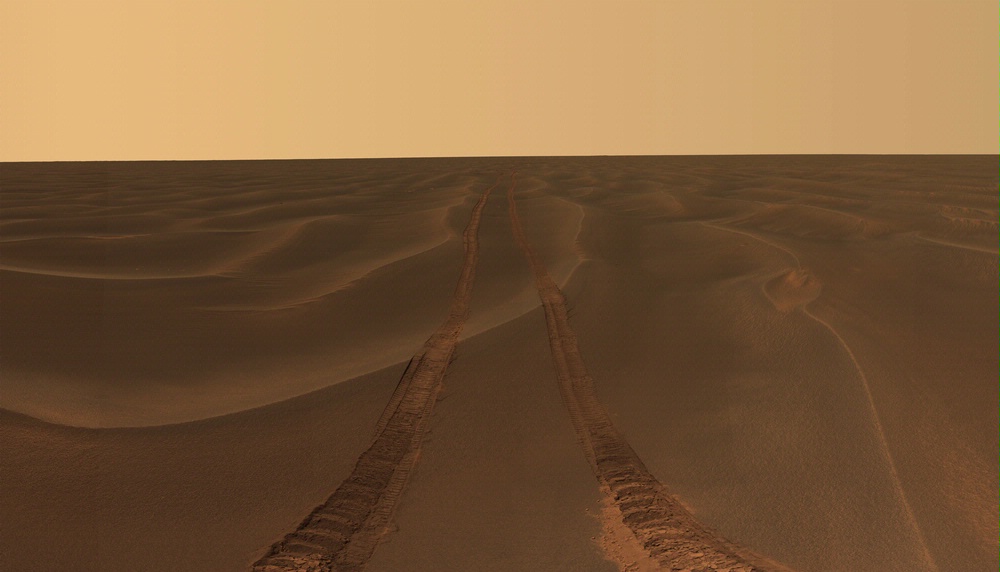
From the Smithsonian National Air and Space Museum website: “Rover tracks disappear toward the horizon like the wake of a ship across the desolate sea of sand between the craters Endurance and Victoria on the Meridiani Plains. Opportunity took the image while stuck in the sand ripple dubbed Purgatory for over a month. This panorama (only partly shown here) was named Rub Al Khali after the “Empty Quarter” in the Arabian Desert.”