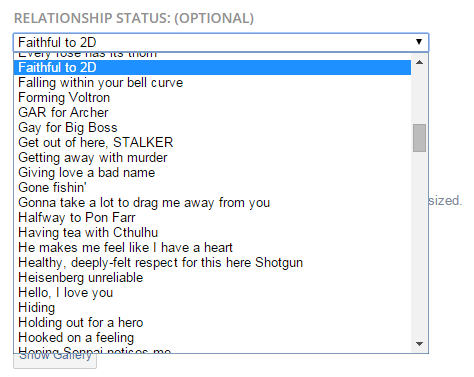
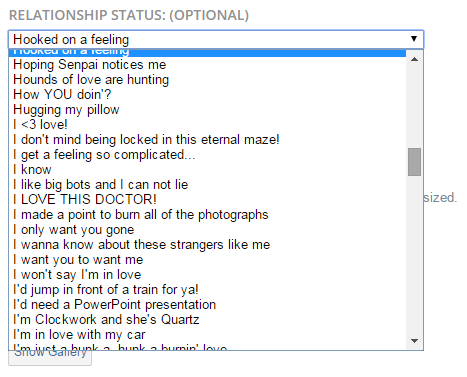
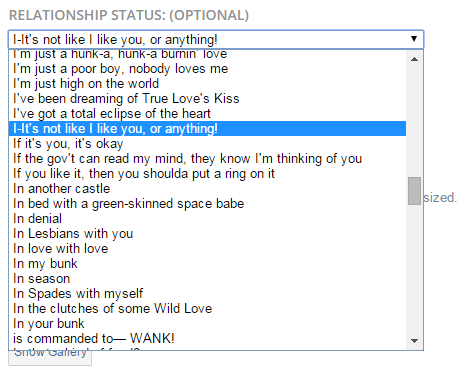
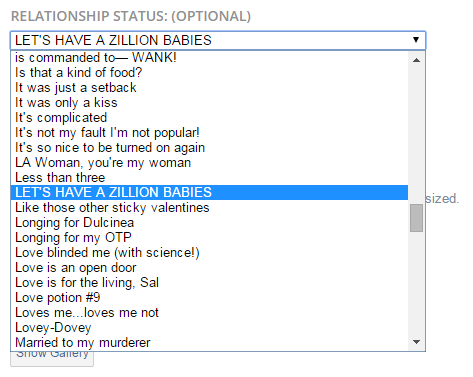
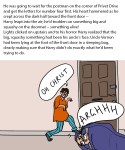
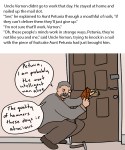
fleamontpotter:

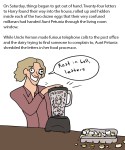
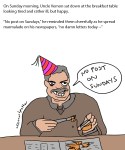
never forget vernon losing his fucking mind when harry was getting his hogwarts letters


Tags:

#long post #Harry Potter #comic #anything that makes me laugh this much deserves a reblog #there is probably some warning tag I should put on this but I am not sure what

moose-shampoo:

if you’ve ever wondered what it’s like to live in the midwest, this is it. 


jasperzilla:

You missed some of the best ones

tumblr_inline_oyjxod0mod1rq8jow_500
tumblr_inline_oyjxodhbkc1rq8jow_500
tumblr_inline_oyjxoesjku1rq8jow_500
tumblr_inline_oyjxoencc61rq8jow_500
tumblr_inline_oyjxoet9au1rq8jow_500


dragonastra:

the best part about it is that the art installation isn’t actually called the Bean. It’s called Cloud Gate, and artist Anish Kapoor (yes, THAT Anish Kapoor) hates that we call it the Bean.

But i mean, look at it. It’s a bean.


phantomofthebookstore:

tumblr_inline_oyo6wp0naj1s6rvs8_500

How could you forget this one though


akamine-chan:

I HAD NO FUCKING IDEA THAT THE BEAN WAS CREATED BY ANISH KAPOOR.


solongstarbird:

someone help me why is anish kapoor important what did he do?


gay-jesus-probably:

Alright sit down for some Art World Drama bcause this is what I live for.

So, sometime last year (?) science invented Vantablack, which is the darkest possible shade of black. Art world got incredibly excited. But as it needs to be very carefully made in a lab, it’s hard to get a hold of, and is extremely expensive. Enter Anish Kapoor, aka FuckFace McGee. Anish Kapoor buys the rights to Vantablack. He is the only human being on the planet that can legally use it, and he’s kind of a prick about it.

Art world is not thrilled with that.

Enter Stuart Semple.

Stuart Semple is an artist, and also makes pigments to sell in his free time. Stuart Semple is astoundingly pissed about this Vantablack nonsense, and Anish Kapoor’s dickery. Stuart Semple makes a new pigment, the brightest shade of pink ever, called Pinkest Pink, and puts it for sale on the internet. To be bought by everybody except Anish Kapoor. Literally, to purchase, you need to confirm that you are not Anish Kapoor, do not associate with him, and will not sell or give the pigment to Anish Kapoor or his associates. Art world has a good laugh, everyone buys Pinkest Pink because it’s awesome, and damn it we deserve something.

Anish Kapoor however is a penis, and will not take this lying down, because HOW DARE he not have literally everything.

Anish Kapoor gets his London associates to buy him a thing of Pinkest Pink, and being such a classy human being, posts a picture to instagram of him with his middle finger covered in Pinkest Pink, captioned with “Up yours. #pink”

Everyone flips shit, because. Y’know. Fuck that guy. Especially Stuart Semple. For context here, Anish Kapoor is one of the richest artists on the planet, and has repeatedly been referred to as everything wrong with the art world, and the epitome of the art worlds elitism problem. He’s a giant douchebag. Meanwhile Stuart Semple makes pigments just to get them out there. He turns 0 profit from his now enourmously popular pigments.

Stuart Semple launches an investigation as to who the fuck leaked Pinkest Pink, and plans to strike back. He does so by releasing two new products. First is Diamond Dust, which is a glitter made from glass, so that a painting is still visible after it’s applied, but glitters like a mofo. It’s the most reflective glitter out there, and is available to everyone who isn’t Anish Kapoor. And it being made of glass, if you stick your finger in there, it’s going to hurt quite a bit, so that was Stuart Semple’s way of saying “shove your middle finger in this, asshole, see what happens”. Except without saying that, because he can get an insult across while still being fucking classy.

He also releases Black 2.0, created with the help of over a thousand artists worldwide.

Black 2.0 is the answer to Vantablack. Black 2.0 is a slightly less black black, but looks functionally the same to the human eye. It’s completely safe, smells like cherries, and costs four pounds. Vantablack is highly toxic, potentially explosive, needs to be applied in a special laboratory and sealed properly, can’t be moved across borders, can reach 300 degrees celsius if you’re not extremely careful, and costs thousands of dollars. Anish Kapoor is the only human being who can use Vantablack. He is the only human being who cannot use Black 2.0.

So I think we can guess who got the better deal.

And thus the feud ends, Kapoor defeated.

…But not quite.

Kapoor, in this entire afair, has made exactly two comments to the public. The first being his charming message about aquiring Pinkest Pink, the second being claiming to Buzzfeed that he and his small army of lawyers will be suing Semple, an extremely poor artist who cannot afford a lawyer.

No lawsuit has been made yet, fyi.

The point is, Kapoor is a prick, and doesn’t like talking to the lower classes. So one day in July 2017, he decides he needs another floor on his London studio apartment, and starts making arrangements to have it built. His neighbors are fucking pissed, because this will ruin the light of their apartments. They call to Semple to save them, or at the very least piss Kapoor off some more.

Semple answers to the call, and releases two new paints, Phaze and Shift, as always, banned to Kapoor. They change colours, Phaze with temperature, and Shift is just iridescent. Shift needs to be painted over Black 2.0 to work, and Phaze just works on its own.

So that’s been the art world for the last two years.

Basically, get fucked Anish Kapoor your bean sucks and so does your vantablack.


todayiwrotenothing:

Stuart Semple is organising a bean-kissing event for Anish Kapoor’s birthday.

tumblr_inline_p1y2fnxerb1qa1i3q_500
tumblr_inline_p1y2ftjjc51qa1i3q_500


brightoncemore:

Reblogging for “By attending this event you confirm that you are not Anish Kapoor, you are in no way affiliated with Anish Kapoor, you are not attending on behalf of Anish Kapoor or an associate of Anish Kapoor. To the best of your knowledge, information, and belief this event will not be attended by Anish Kapoor.”


queen-of-heck:

tumblr_inline_p25iilqkbx1t3yrra_500

ALSO HE JUST POSTED THIS!!!!!! LIGHTEST LIGHT!


extremedistressorstellarblowjob:

I know this isn’t my art blog but this entire post gives me life


Tags:

#oh look an update #vantablack saga #anything that makes me laugh this much deserves a reblog #long post

GAME IDEA REBLOG THIS AND TRY TYPING YOUR URL EYES CLOSED

bd-doughnut-boi:

VD&diydgbyt-buh


toofartoobroken:

toofartoobrooen


eddietrashmouth:

Edidjetrashnouth


papermancrumbles:

Papermancrumbles


pattycake-hockstetter:

pattyvaje-hickstetter


nurserykryme:

Nursertkfyme


aslutforpatrickhockstetter:

Aslurforpareickhockstgter


captainjacksparkles:

Capfajnjacksparnles


trashmoutozier:

trashmoutozeri

(I DID SO WELL YES.)


reddietrash002:

32wwi2tr 

i literally cant type with my eyes closed what IS this


femmemayfield:

fennenatfuek


billbenbev:

Billbenbev

Omg I made it


newtandthediamonds:

Newtandthefuamonds


starryoleff:

starryoleff


queenbyers:

wueenbterd


2ds-leg-hair:

e2eeec-’dhphipzoc


murdocmorelikemurcock:

Murdicmorelikemurcock

how did i

Miss.. like

One lETTER


ask-theforgottenone:

Ask!thedorg9ttej9je

Yes.


xxthelittlefawnxx:

Xxthelittkefasnxx

(( Aw so close! ))


officialwilfordwarfstache:

offi ialwilfordwarfstache

fUCKING-


splatoon-jim:

splatoon-jim

guys,,,did you,,,,not memorize and forever ingrain to your memory the location of every key ever


snowwolf5552:

snowwolf5552

splat, I did-


lizawithazed:

Lizawuthaeew4d

well i started off well but uh then i forgot where z was


prince-atom:

prince-atom

To be fair, I’m pro.


heroofthreefaces:

heriija

I had to give up because my keyboard is too sensitive and the keys were depressing while I was reaching. (but i’d already blown it)


pedanther:

pedanther

Also I’m typing this entire paragraph with my eyes closed. When I was a boy, our home computer (in the days when it was unusual for any home to have more than one computer, if that) had a game on it that taught touch-typing, and I played it a lot. Then And I’ve done enough typing since then to keep the skill fresh. I don’t know if my dad was being foresighted about what his children’s future was likely to hold’ he may have got the game for himself originally; lots of record-keeping in his job, which meant lots of typing once the computers arrived.


justice-turtle:

jusrice-turtle

That went better than expected, considering I’m on my phone. On my laptop I can match pedanther’s accuracy, for much the same reason. Do the youths not learn touch typing any longer?

brin-bellway

I wouldn’t necessarily say that I *learned* touch-typing, per se. I learned to touch-type the same way that (I am told) I learned to read: there was little to no deliberate effort involved, it just sort of *happened* given enough exposure. (So my question is, not “do the youths not learn it any longer”, but “do the youth not type enough to learn touch-typing by osmosis?”)

(And yes, I did type the rest of this with my eyes closed. I did open my eyes to check whether I’d erased enough when backspacing, though, but only for rephrasings and not typos..)


Tags:

#I mean there was a touch-typing game but I don’t think that was the main driving force #the timing doesn’t add up #reply via reblog #definitely reblogged this post before (or another post doing the same thing) #and made a similar comment then #different comment chain this time though

Flicker – Phone Tag

docfuture:

Previous: Prologue

Flicker – Phone Tag

    Flicker was eating lunch when her phone rang.
    She was sitting at a table in a small sandwich shop near her apartment.  She ate here more often than she did at home because the food was good, no one here looked at her funny anymore, and cooking, while theoretically a fairly trivial bit of chemistry and thermodynamics, was, as Doc often said, surprisingly tricky to get right.
    She was being very good, she thought, spending the tedious, necessary milliseconds and seconds alone here in the slow world, the messy chemical, biological, and synchronous social world, the world of growth and learning, its rhythms dictated by the endless cycles of the sun.  At least the french fries were tasty.
    The phone hadn’t finished its short chirp of a ringtone before Flicker answered.  It was her friend Stella, with a little symbol that indicated an international call.  Stella should be on her way back from a conference in Italy where she had presented a paper, and her previous week had been consumed by preparations.  Flicker was always vaguely horrified at the elaborate rituals most people endured to travel long distances.  She didn’t know how they stood it.
    Flicker knew the last day of the conference had been… unusually stressful, but wasn’t sure yet whether she wanted to tell Stella that.  People could get upset when then found out someone was checking up on them, even to try to protect them.
    “Stella?”
    “Hello, Flicker.” she said.  Her voice sounded worn out.  “Would you believe my connecting flight got delayed?  Nasty weather they didn’t want to fly through.  Looks like I’m stuck here until tomorrow morning.  The airline provided a hotel, but I’m too wired to sleep, so I’m out getting something to eat, and I thought I’d call you and share my tale of woe.”
    Flicker could hear crowd and traffic noises in the background, along with the faint regular variations in sound that indicated Stella was walking.
    “Stella, I’m sorry, that must really suck.  You sound pretty wiped.  Where are you, anyway?”
    “Oh, I’m – whuaah!”
    Flicker was in fast mode before anyone else would have fully registered what was coming from the phone.  There were a few sounds that Flicker had trained herself to recognize the start of very quickly, and one of them was an approaching vehicle horn.  Put together with a cry of alarm, that meant her friend was in immediate danger.  Stella needed help, fast.  Which normally wasn’t a problem for Flicker – she could get to anywhere on the planet in under a second if she had to.
    Except…
    Stella was in another country.  And Flicker didn’t know which one.
    T = 0
    In under a millisecond, Flicker was out of her chair, and had changed into her costume from her pack.  It was form fitting and navy blue with the functional silver tracery of the degaussing and plasma guide net.  Most importantly at the moment, the hood and visor contained a high speed interface and communications suite.  She switched it to active from standby, and had it take over the call.  Her normal cell wasn’t going to be able to cope with the speed needed, so she slid it into a shielded pocket without turning it off.  Its electronics would eventually stop spinning from the sudden changes in inertia and position.
    The cell network wasn’t going to be able to cope either, and that was more of a problem, because this phone call was Stella’s lifeline.  If she didn’t dawdle, though, she would be to Stella before the network realized anything was up.  Flicker sent an alert to HISC, the High Interaction Speed Computer, at Doc’s headquarters, that she would be visiting it in a few milliseconds and needed some important data ready.
    Flicker looked over at the door to the shop.  It was closed, nobody was going in or out.  Flicker had ambivalent feelings about doors.  Sure, they were nice and convenient for most people, and for her if she was moving slowly (hah!) or they happened to be open.  Unfortunately, they were usually closed when she needed to get to the other side in a hurry.  She couldn’t extend her inertial damping field far enough from her body to cover a whole door, and even if she could that would just mean the hinges would break instead.
    Fortunately, the shop still had cardboard up over the hole she had left in one of the glass walls last time she had to leave in a hurry.  Flicker had already paid for the replacement too, so she just zipped over to the counter and dropped off one of her ‘Hi!  I’m Flicker and I had to leave in a hurry!  Sorry for any disruption!’ stickers in front of the cashier.  Then she skimmed along the wall, poking along at only about 50,000 meters per second (m/s), making sure they was no one right on the other side of the cardboard patch.  She slowed to 10,000 m/s to go through the cardboard, leaving a hole like a cartoon character with the edges matching the extent of her damping field.  The damping and the low speed meant the pieces of cardboard acquired relatively little kinetic energy, and weren’t a threat, or even very noisy, and she turned into the street outside and accelerated.
    T = 3 milliseconds
     The most common question Flicker got asked was ‘How fast are you?’ or the equivalent ‘What’s your top speed?’.  It was a pain to answer, because the questioner didn’t usually understand special relativity.  She usually just shrugged and gave her standard answer of ‘80% of the speed of light’ rather than the truthful one of ‘Very close to the speed of light, but I don’t know exactly how close, and I did a scary amount of damage to the Moon last time I tried to find out.’
    During a Q&A session someone had once asked Flicker how fast she could go from 0 to 60.  That had struck her as a much more interesting question, and required a bit of unit conversion.  Her answer of ‘Too fast to see’ made people laugh, but they stopped when she explained that in the 30 picoseconds it would take, light would only travel about a third of an inch, and it was dangerous to stand that close to her if she was accelerating that fast, so it was literally too fast to see.
    The sandwich shop was in a suburb of Minneapolis.  Flicker zigzagged through the streets at 500,000 m/s or 500 kilometers per second (km/s), speeding up to 1000 km/s on less crowded sections.  At that speed she could still turn on a dime, and safely dodge around pedestrians in a crowded street.  They would feel and hear nothing more than a sudden gust of wind.  It was only a few kilometers to the highway she wanted, and then she could speed up again.
    T = 6 milliseconds
    Doc’s HQ was about 80 kilometers away by the highway.  Flicker liked highways.  They had long sightlines, they changed direction and elevation only gradually, and best of all, pedestrians tended to stay off of them.  The people that were on the highway were either inside protective metal boxes, or at worst had a couple of gyros to keep them stable.  She accelerated to 5000 km/s, increasing to 15,000 km/s or 0.05 c on clear straight sections.  This was fast enough that shock waves from her wake were starting to be a problem despite her damping, except there was a trick she could and did use that reduced them at the cost of leaving a trail of plasma instead.
    The vehicles she passed saw and heard something that seemed very similar to a nearby lighting strike – a sudden flash of light and boom, followed by a diminishing grumble of sound.  They were also buffeted by the shock of her passage, but she was careful to slow and pass by them as far away as possible, so it was no worse than being passed by a semi going the other way.  The two walkers she encountered got a nasty scare and ringing ears, but neither were hurt.  Then it was around the turn and up the short access road to Doc’s.
    T = 13 milliseconds
    The entrance Flicker used looked unremarkable, more like a tunnel with a drive through ATM than anything else, the entrance protected by a very minor forcefield to keep snow and animals out.  But it had been built just for her, and contained her external access to the HISC.  She started slowing down a little over a hundred meters away and four microseconds later was at rest in front of interface panel.
    The HISC frantically shoved data through her high bandwidth com to answer her previous requests.  The first answer popped up on her display, the location of the cell phone tower that Stella’s phone was currently using.  London, England, not far from Heathrow airport.  Great.  Well, London might be sprawling and congested, but at least it was near the sea.  She twiddled her fingers over the high speed magnetic keyboard, refining the overlay for the second request.
    The High Speed Pathing algorithm, which Doc jokingly called ‘Driving directions for Flicker’ was at heart quite simple.  It was just a set of satellite verified maps from wherever Flicker was to wherever she wanted to go, showing elevation changes and all obstacles.  The trick was that the satellite updates were recent, as in less than a second old, so everything that might contain a human could be treated as near constant velocity.  Which meant, after correcting for how soon Flicker would be near, effectively stationary.
    Flicker mapped out her time optimized route, and the only real question was whether to go around Scotland to the north and approach London from the east, or swing south past Ireland, make landfall near Bristol and try to go up the M4 motorway.  The second route was shorter, but Flicker looked at the congestion on M4 and decided it would be slower.  She waited one more precious millisecond for the final changes to be uploaded to her visor and she was off.
    T = 19 milliseconds
    Flicker couldn’t fly, she needed to be near mass for momentum transfer and entropy dumping, but that didn’t mean she had to stay right next to the surface when moving.  The tradeoff was less maneuverability the higher she traveled.  Now that she had a verified clear path, she could travel higher up, at five meters or so, to avoid obstacles and damaging roads, and could swing wide to avoid pedestrians.  She was quickly back up to 15,000 km/s, and now was able to chance as high as 30,000 km/s or ten percent of lightspeed, where no humans were near.
    The biggest frustration Flicker had when trying to move really fast was the air.  It kept getting in the way, and moving it out of the way inevitably added energy.  Her ability to damp inertia near her body let air flow around her much faster than normal, but there was limits to how well that worked, and she was now starting to push them.
    At 0.1 c, Flicker appeared like a horizontal lightning bolt, or a meteor brought to earth, unaccountably moving a thousand times as fast without causing any additional damage.  She was now leaving a substantial shockwave, enough to knock over cars and break windows, as well as a kilometers long tail of plasma, enough to melt the snow and flash some of it to steam.  Roads became less useful, as she had to swing wide or slow down for all vehicles.  She traveled this way for about two hundred fifty kilometers, mostly north, before jumping in a glowing arc to meet the surface of Lake Superior just outside Duluth.
    T = 31 milliseconds
    Out on the surface of the lake, the nearest humans well identified and far away, Flicker accelerated again up to 0.2 c.  Now her shockwave was lethal for anything near and above the water surface, and the plasma would have set anything flammable alight, but she was over water, so there was nothing.  No trees, no roads, no houses, no vehicles, nothing man made except for a few boats she could avoid by kilometers.  She considered going faster but decided to wait, because it was less than than six hundred kilometers before she hit land again in Ontario.
    T = 41 milliseconds
    Back to 0.1 c or so on land, and Flicker chafed with impatience as she went north, but there were still occasional roads and power lines to cross, as well as a lot of trees.  She was on good terms with the Canadians, and wanted to stay that way.  She planned and thought of her route ahead as she approached water again, the southernmost part of James Bay.
    T = 60 milliseconds
    Finally, water ahead – salt water.  Hudson Bay in winter had very little traffic, even the parts not covered by ice.  There was a choice here.  She had a clear path, free of people and at least 20 km wide for most of it, and over 6000 km to go over salt water.  At 0.2 c that would take 100 milliseconds, at 0.4 c it would take 50 milliseconds.  If the vehicle approaching Stella was traveling at 20 meters per second, that was a meter every 50 milliseconds.  Flicker didn’t know how many meters Stella had left before it hit her, but it wasn’t many.
    At the speed she was thinking now, Flicker was very far from her emotions, which relied on slow chemistry.  But she could remember them just fine, and evaluate based on them.  She remembered the years she had known Stella, how they had become best friends, her dry humor, her odd moments of vulnerability, her weary voice over the phone, with the hint of relief at being able to talk.  But it didn’t really matter.  Flicker had made this choice already.
    She set her plasma net to full regenerative shielding, and shut down most of her electronics.  She adjusted the polarization on her visor and extended her damping field as far ahead of her eyes as she could in a wedge.  Some people were going to be mad, and some fish and birds were going to die.  Oh well.  Stella wasn’t going to die today, not if Flicker could help it.  Flicker leveled out five meters above the surface of James Bay and started accelerating flat out, at ten billion G’s.  It was time to go fast.
    T = 63 milliseconds
    There is type of device used by military engineers called a line charge.  It is a long series of small explosive charges in a line or tube, that are set off all at once to clear a path through minefield in a hurry.  By the time Flicker emerged from the mouth of James Bay, traveling north at 240,000 km/sec, 0.8 c or eighty percent of the speed of light, the path behind her looked like someone had set off a line charge made out of nukes.
    At the tip of a narrow arrow of shockwave and plasma that stretched all the way back to shore behind her, Flicker glowed like a star.  Turning everything within 30 meters to plasma, leaving behind a continuous windbreak of mushroom cloud trees, she sped north, devouring two hundred and forty kilometers of distance along her path every millisecond.  For a long distance from the human free safety zone on either side of her path, anyone looking the right direction saw the entire horizon erupt in fire at once, while any radio communications were blanketed in static.  The few who witnessed the line of plasma as it slowly grew skyward in her wake could be forgiven for thinking they were seeing the end of the world.
    As she passed the Belcher Islands, Cape Smith and Mansel Island, before turning east in a graceful curve into the Hudson Strait, monitor satellites began screaming that nuclear weapons were going off.  The radiation profile wasn’t right, but the thermal output sure was, and what else could possibly do that?  Long seconds after Flicker was gone, the humans alerted by the robotic vigilance were left to wonder why anyone would want to nuke Hudson Bay.
    In the Labrador Sea just southeast of Greenland, a Russian icebreaker just nine kilometers from the nearest part of Flicker’s path was crewed by the closest people to the whole line of fire.  Several of the crew watching it panicked, before the swearing officers drove them to prepare for heavy waves, and the captain turned the helm away, to catch them on the stern.  One old geophysicist, who had heard a few wild stories from his more conventional physics colleagues, realized what he was seeing and laughed.  He told the rest of the crew, all who would listen, to prepare, certainly, but not to worry, that they were lucky even.  Because that was Flicker, nothing else was that fast, and Flicker wouldn’t kill them.  Most thought he was crazy, so he made bets.  He didn’t pay for a drink for months after that, but the losers didn’t mind too much – they were glad he was right, after all.
    After rounding the southern tip of Greenland in another smooth curve, Flicker aimed nearly due east, and tore across the rest of the North Atlantic in a straight line, still leaving a trail of heavy waves and rising plasma clouds over the open ocean as the sun plummeted towards the horizon behind her.  She curved south between the Shetland and Orkney Islands into the North Sea, where, approaching the narrowing gap between England and the Netherlands, Flicker was finally forced to slow down.  She had covered just over six thousand kilometers, fifteen percent of the circumference of the earth if it had been in a straight line, in twenty five milliseconds.  She had left a path behind her that looked, from orbit, like a god had started a globe spinning, then slashed across it with a narrow pen of fire.  But it was a merciful god, and careful.  Not a single person was hurt.
    T = 88 milliseconds
    Flicker dropped her velocity to 0.4 c for the rest of the North Sea with its more crowded traffic, then to 0.2 c for the Thames Estuary, entropy dumping hard all the way to cool down, and finally 0.1 c for the Thames itself, dropping to 0.05c or 15,000 km/sec when she had to pass close by boats.  She stayed on the river as long as possible, putting up with the meandering path because the lack of pedestrians let her maintain a higher speed, before finally jumping to land near Brentford.  She also turned off plasma regeneration and turned her electronics back on.
    T = 94 milliseconds
    Flicker slowed down again to 2000 km/sec for the last few kilometers to the area covered by the target cell phone tower, then 1000 km/sec as she started her search pattern, and slowed almost to a stop briefly at intersections, to look around and give her com a microsecond or two to try to pick up Stella’s phone signal by direct line of sight.  She weaved in and out down the streets, dodging cars, trucks, buses, taxis, SUVs, a few scooters, and pedestrians crossing at every other intersection.  She had just passed two cars and rounded a bus to stop at the next intersection when her signal alert flashed.
    T = 116 milliseconds
    Flicker looked forward, then left and right, but didn’t see Stella.  Was she mostly behind something?  Finally Flicker checked back the way she had just come and saw her, angled backward, right in front of the bus Flicker had just passed.  She moved over, leaving a bare swirl of air behind her at 500 km/sec, then stopped with her mind still going full speed, to study the tableau.
    She was in time.  If her lungs and emotions hadn’t both been frozen, stuck in slow time, Flicker would have breathed a great sigh of released tension.  She hadn’t come all this way just to try to get Stella to the hospital with already inflicted injuries, or worse, ones Flicker couldn’t stop.
    Flicker reconstructed the scene.  Stella must have approached the intersection striding quickly, hunched slightly against the falling sleet, cell phone pressed against her ear, tired, stressed and distracted.  She had looked left to check traffic before stepping off the curb – but that was the wrong way, because this was England.  A bus had been coming from the other direction.  Stella had heard either the bus or it’s horn, but too late, and her foot had slipped when she tried to step back up onto the curb.  She was turning left, away from the bus, starting a martial arts fall, which was good; that meant she was less likely to get hurt by the sudden acceleration Flicker was going to have to use to get her out of the way of the bus in time.
    Flicker looked over at the bus.  The front was about a meter away from Stella, and was not noticeably lower than the back, so the bus hadn’t had time to brake much, if at all.  Flicker moved to the driver’s side and looked through the window at the speedometer.  Just over 50 kilometers per hour – call it 15 meters per second, or about 66 milliseconds from Stella.  Actually, it was little longer if she accelerated directly away from the bus, because that would allow more time – but going sideways would get her out of the way quicker.  Decisions, decisions.
      It would take 23 G’s average acceleration to match velocities with the bus in 66 milliseconds – not pleasant, but survivable.  The tricky part was imparting it.  Flicker couldn’t just catch Stella in her arms and pull her out of the way – her damping aura couldn’t fully cover another person, and being partly in and partly out would be worse than getting hit by the bus.  If Flicker turned her damping off for the catch, it wouldn’t be any better for Stella than hitting another person at close to the speed of the bus.  Flicker could try using her catching tarp, but that worked better when she had more time and space.
    No, it was time for Flicker to use her favorite material for imparting velocity to fragile things – air.  With her damping field pulled back to the edges of her costume, she could scoop and move air with her hands and body.  With effort and the expertise from long practice, she could sculpt temporary curtains, cushions and trampolines.  She could even make a giant air cannon without the cannon – and did, with Stella as the payload.

    Long milliseconds of careful work later, Stella was starting to be pushed up and away from the bus, which was being slowed slightly, but not enough to hurt its passengers.  Flicker took a little more time to smooth out all the rough edges of shock waves she could and equalize pressures a little in the surrounding area where she had scooped the air from.
    T = 150 milliseconds
    Finally everything was ready.  Flicker stood waiting with the tarp in the right spot, and let the world speed back up almost all the way.  She could now hear the echoes of the initial boom and the roar of stabilizing air pressure from all directions, as well as the horn from the still moving bus.  Stella was propelled ahead and to the side of the bus, back up onto the sidewalk, and Flicker caught her, still upright, with the tarp, smoothly sliding backwards to decelerate.

    T = 3 seconds
    As the bus passed by on the street, Flicker felt her own emotions try to catch up with events, and a flood of fear that had started back in the sandwich shop warred with a sense of relief, and a fierce, protective satisfaction.  Flicker’s costume was still crackling and sparking in the twilight as the remaining excess charges dissipated and the last of the plasma dispersed, but the tarp would protect Stella.  In a moment, Flicker would have to check for injuries and deal with the aftermath, but her best friend was alive, and safe, and that was enough for now.

Next: Life Saver


Tags:

#storytime #long post #…oh god this is beautiful #oh god I have so many other things to read #and so many non-reading things to do #oh god #(I looked at the blog and apparently this is part of a novel which is part of a series) #this doesn’t really belong in medium-term to-read* but I’ll leave it there for now until I decide how best to place it in long-term storage #*”medium-term to-read”: longer than a week shorter than a year (roughly)

The 1969 Easter Mass Incident

littlepinkbeast:

jumpingjacktrash:

tatterdemalionamberite:

gallusrostromegalus:

Content Warnings: Religion, food, symbolic cannibalism, symbolic gore, penis mention, Blasphemy, SO MUCH BLASPHEMY, weapons, war mention.  Mind the warnings and your health always comes first. Its a HILARIOUS story, I promise.

As always, all the names have been changed to protect people’s identities.  This is a long one, so Press J now if you want to skip it.


When my dad was a young man and still a practicing catholic, he participated in a small church communion that nearly got him and six other people excommunicated.

Father Patrick ran a small church outside of California Polytechnical and tended to be… rather more liberal in his interpretations of scripture than most of the church was, which made him something of a hit with the local students and liberally-inclined populace.  Pat went to all manner of civil demonstrations, condemned the shit out of the vietnam war and the politics that lead to it and so on.  In January of 1969 a series of incidents lead him to start exploring “nontraditional” means of holding Mass as a means of reaching out to his community and exploring his own faith, which ultimately culminated in the 1969 Easter Mass Incident.

For those of you who weren’t raised catholic, Communion is this ritual where you become one with Jesus by eating a really horrible bland wafer cookie and taking a shot of wine (called hosts), which then *literally* become the flesh and blood of jesus in your mouth, allowing him to become one with you.  It’s big McFucking deal, and you have the opportunity to take communion at every mass.  All this had to be explained to me second-hand because after this and Dad’s 51 days in the army, Dad decided he wouldn’t inflict religion on any children he might have in the future.

*

“Hey dad,” Six-year old me asked the first time he told me this story after my practicing friends were talking about getting wine at church. “Isn’t that cannibalism?”

“We’re getting to that.”  He waved.

*

The First Incident in January when, due to a serious cock-up by the church, all the hosts Father Pat received were moldering and spoiled and probably would have killed someone if he’d actually fed anyone them.  But it was the first mass of the year, when a peak number of people came in after vowing to got to church more for new year’s.  He couldn’t NOT have communion.

“I’ll bake.” offered Maria, the parish secretary and probably the best baker in the county. “So we have hosts.  Jesus will understand.”

Father Patrick, not one to pass up the chance at Maria’s cooking, immediately agreed.

A Host is supposed to be composed solely of unleavened wheat flour and water, which is why they taste terrible.  It’s a theological point of some importance relating to Exodus or something but Maria had an important theological counterpoint: Jesus both divine and loves all his children, ergo, Jesus would neither be a nasty bland cracker nor want his children to suffer as such and so instead, she made Mexican wedding cookies.

They were a SPECTACULAR hit.  Many praises were heaped upon father patrick for the Much Better Wafers and that they’d be sure to show up next week as long as Maria kept making them.  Father Patrick figuring that hey, anything that gets people in the doors is good and really, if it was turning into Jesus once inside the parishioner, did it really matter what the wafers were made of?  So he continued to let Maria bake the Hosts, and encouraged her to try out new flavors, like nutmeg and cinnamon.

This went on swimmingly for a few weeks until The Bishop showed up for a surprise visit the same week Maria decided to experiment with rainbow sprinkles.

Dad remembers hearing the bishop through the windows roaring “THE HOLY BODY OF CHRIST DOES! NOT! CONTAIN! RAINBOW! SPRINKLES!”

The matter went clean up to The Archbishop, who decided that while Pat was probably right to not feed spoiled hosts to his parish, he should attend some remedial classes to remember what Communion was all about, so that if it happened again, he’s come up with a more suitable substitute.

Father Patrick returned in late March, full of spite and some fascinating new ideas.

*

“Is this where the Cannibalism happens?” Six-year-old me asked, eager to get to the good parts.

*

At his remedial classes, the teacher had stressed the importance of transubstantiation, aka “That bit where the wafer and wine, Actually, Literally, become the flesh of Jesus Christ and we expect you to swallow.”  Also on the syllabus was understanding the importance of Christ’s suffering and sacrifice.

“So, I was thinking about Easter Service.”  Said father Patrick one afternoon while dad was doing his computer science homework at the church because his dorm was a barely-standing fire hazard and the library was where you went to have sex.

“Well, we do re-enactments for christmas.  Why not on easter?  Why not re-enact the crucifixion of Christ right here? Make it real for everyone.  Trauma’s great for bonding a community together.”

“Who’s playing Jesus?” asked Maria, always one for a good laugh.

“That’s the thing- A Host, it doesn’t look much like flesh, right?  Doesn’t look like much of anything, really.  Not great for reinforcing one’s belief.

What if, instead, we- and I mean you, Maria, I can’t cook to save my life- make a man-sized loaf of bread, maybe in the shape of a T, and we have some of the boys dress up as romans and whip the bread and we pour the wine on so it’s bleeding and them- then we make a big wooden cross and actually nail the bread to it with, I don’t know, railroad spikes, more wine all over. And we raise the cross, all while telling the story of the crucifixion.”

He paused to take a drink, Maria slowly crumpling onto the floor in horrified laughter and Dad now thoroughly distracted from his homework.

“Then we lower the cross, and invite everyone who wants to take communion up to tear a hunk of Jesus off.  Just descend into his corpse like vultures.  I think that’d really be a good bonding experience for the church.”  he nodded thoughtfully.  “The hard, part, I suppose, will be finding enough romans.”

“I WANNA BE LONGINUS.” bellowed my father, barreling into the room.

And so, the plan was hatched.  Dad hit up every other guy in the Church and eventually rounded up four more romans, three of them from the Education Department of Cal Poly, and one guy from Chemistry, who just liked to watch things burn.

This, being a play, naturally meant that there was a rehearsal, and test Bread jesus.  Maria had decided that if they were going to start being extra-literal, she needed to make the most lifelike Bread jesus possible, and made a distressingly buff and human-proportioned Jesus by Advanced bread-braiding, complete with plaited hair, quail’s-egg-and-raisin eyes, bready muscle groups, and an eight-pack because why not make the lord completely shredded?*  She also made the important theological decision that since Jesus loves everyone and was happy to die in spite of all his suffering, he should be smiling, and had a toothy corn-kernel smile.  He was Wonderful and Terrifying all at once.

“Maria,” asked Father Patrick after a few minutes of delighted and horrified cooing over Jesus’ toothy grin and abdominals. “Why is he wearing a tea-towel?

“Well, he’s the Son of God. A Man.  With all that entails.”  She said, pointedly staring at Father Patrick while everyone stared at the suspiciously lumpy tea-towel.  “And he might have… burnt, slightly.”

Everyone nodded and agreed that the tea-towel was the best course of action.  The rehearsal goes splendidly and everyone agrees that this is the most delicious Jesus they’ve ever had.

*

Easter Sunday arrives and the Church is PACKED, from the more lapsed Catholics showing up for a high holiday, parents visiting for spring break and a whole horde of newcomers who had gotten wind that something was up and they ought to come.

Dad is a lanky as hell 21-year old composed mostly of technical jargon and acne but he is STOKED to be playing Longinus, the roman that speared Jesus on the cross, because he gets to do the BEST technical effect in the whole parade.  Since he came in at the end me missed a good portion of the sermon, but did hear the “oooh” from the crowd as the massive cross was dragged in by the other Romans, followed by horrified gasps and high screams and a discernible “What the FUCK” as they brought in Bread Jesus 2.0, whipping him enthusiastically, and hammering him into the cross, the sound of wine splashing onto the floor loud in the terrified silence of that Parishioners.

Finally Father Patrick gets to the part about Longinus, and Dad comes sprinting down the aisle as hard as he can, because in order for Bread Jesus to be seen by everyone, his middle had to be about 10 feet off the ground, so Dad had to run, shrieking latin curses,  down the length of the church, with a big honking spear and take a flying leap at Jesus in order to spear him in the gut.

Please take moment to imagine you are some normal god-fearing catholic who has decided to visit little bobby or maybe patricia at college and you’re all going to church together like a nice family and this Fucking madman has decided to go all Silence of the Lambs on mass and now there’s some sort of underfed translucently pale man in ill-fitting Roman armor and cape flying at a horrifying glutinous effigy of your lord and savior, with an actual fucking spear, screaming like a madman.  Don’t you feel yourself drawing closer to God already? Defensively, perhaps, like an octopus trying to ooze itself into a crevice against the horrors of the ocean.

However, two things happen that were not planned on

1. Dad misses.  In his defense, Bread Jesus is close to but not quite the size of a man- more like the size of a doughy teenager, and his middle is a small target 10 feet up in the air and dad is has a computer science minor, not an athletics scholarship.  He misses by about 8 inches and instead very solidly stabs Bread Jesus right through the groin, leaving a big hole in Maria’s tea-towel and the spear jutting out at a decidedly… attentive angle, as Bread Jesus’s Bread Dick drops to the floor with a splat.  Nobody notices this, however because

2. In rehearsal, Dad had managed to get the spear right in jesus’s navel but neither Father Patrick nor the other romans could get the wine up there to make his middle appropriately bloodied.  

Maria come up with the Genius solution that since wine is made of grapes and Jam is made of grapes, she could make a jelly-filled Jesus for Dad to stab.  There was a normal-sized test loaf and when dad stabbed it on the table, it had a nicely gooey dribbling effect.

However, this time the loaf was torso-sized, still hot from the oven and upright, so when dad speared the very end of the loaf, all the steam-pressured jam had collected at the bottom and a spray of lukewarm smuckers exploded out from bread jesus, turning the first three pews into a splash zone of symbolic entrails.

There was  a hot, sticky minute of complete silence in the church after that. 

Then, Father Patrick indicated it was time for the cross to be lowered, and continued on with the normal preparations of the Host, he himself covered in hot smuckers, as though nothing particularly ordinary was occuring, quietly kicking the bread-dick under the altar. At the end of it all, Father Patrick and invited everyone up with the Last Oration:

“Thou, O God, has kindly allowed us to have a part in this Holy Sacrifice; for this we give Thee thanks. Accept it now to Thy glory and be ever mindful of our weakness. Amen.”

…And everybody came up, shuffling like terrified zombies, pinching off tiny bits at first but then the madness took them and they began tearing apart bread jesus by the handful, weeping as they partook, scattered prayers and begging for forgiveness.  The whole congregation was kneeling about the altar, tearful and united in their guilt and their need for God.

*

“IS CHURCH ALWAYS LIKE THAT?” six-year-old me asked, absolutely stoked.  I’d convert on the spot if I got a show like that.

“No, it’s normally bland wafers and lots of chanting in latin.”

“Well that’s boring as hell.” I remember muttering and Dad snorting the coffee he was drinking out of his nose.

*

As people filed silently out of the Church to a gloriously sunny California afternoon, faces wan and smeared with wine and jam, Father patrick turned to Maria and asked “You don’t think that was too much, do you?”

“No.”  Said Maria with a sarcastic deadpan so intense it was hard to tell from sincerity.

It was the exact same tone she used when the Archbishop and Six other high clergy showed up, clutching a letter someone had written, Livid and almost foaming at the mouth, demanding to know if such blasphemy had transpired.

“No.  That’s crazy.”  She said, staring down the archbishop like he was an idiot.

“Such imaginations some people have!” Said Father Patrick, much less convincingly.

“And you-  you didn’t…  Spear an effigy of our lord and savior?”  the archbishop demanded of my father.

“Do I look like I can jump that high?”  Dad asked, having in the interim been drafted for 51 days then nearly died of pneumonia from it, and therefore no longer afraid of the Church, the Law or God.

Somewhat relieved that he’d only received the extremely detailed ramblings of a doddering parishioner, the Archbishop sat down and complemented Maria on her most excellent Mexican Wedding Cookies, may he please have another plate for his nerves? Perhaps the ones with sprinkles?

Dad went on to help build the internet, Father Patrick converted to Buddhism and Maria became a Nun.

*For those of you wondering, Jesus was made of Challah.


If you got a laugh out of this, please consider donating to my Ko-Fi or Paypal, as telling stories on the internet is my only source of income right now.  Thank you very much and I hope you enjoyed it!

@caladri @titianarchivist @chlorinetrifluoride 

quite honestly, i think jesus would’ve approved of their enthusiasm.

religion: ur doin it rite.


Tags:

#Christianity #storytime #long post #anything that makes me laugh this much deserves a reblog #Easter

prongsmydeer:

The most hilarious thing about the fact Buckbeak had a trial and lost is that later on JKR resolves the issue by having Hagrid take him in again and renaming him Witherwings. That’s literally all it took. What if in POA, Hagrid simply said, “Sorry, Buckbeak flew away.” 

“There’s a hippogriff right there, Hagrid.”

“A different hipprogriff.”

“I’m… pretty sure that’s the same hipprogriff.”

“Prove it.” 


twelvemonkeyswere:

no dna tests we die like scientifically underdeveloped societies


thesanityclause:

Prisoner of Azkaban continues to be the most frustrating book


septimusprime:

Someone should have just adopted Sirius and started calling him Gerald.


dreadpiratemary:

Remus: Erm… this is our new order member, my… cousin Gerald. Gerald White.


zero0000:

“Mr. Lupin that is Sirius Black with glasses!”
“Oh come now Minister, Sirius Black doesn’t wear glasses. That wouldn’t make sense.”
“Well have Mr. White take off his glasses then!”
“He can’t he needs them to see.”


animatedamerican:

it got better


thefingerfuckingfemalefury:

It’s honestly a miracle to me that wizarding society doesn’t collapse every other week because like

You’ve got this world full of people who can destroy whole buildings or turn people into beetles or make vehicles fly just by waving a stick at them

And there is literally no common sense

Anywhere to be found

Voldemort would never have had anyone find out he was back if he just went around calling himself Steve 


kat8noghosts:

Okay, see, I thought I saved this post to comment on it but I’d like to bring up

The Minister would NEVER EVER disbelieve in Gerald White. He’d buy it hook line and sinker. The wizarding world would buy it hook line and sinker. The GOBLINS wouldn’t but wizards have been shown to be pretty blindingly clueless. Still, Gringotts would grudgingly give Sirius access to the Black fortune.

But, but, but, you know the one person

the one person

who Gerald White would drive AB-SO-LUTELY FUCKING BATSHIT?

Severus Snape.

Snape would do everything, EVERYTHING, to get people to believe that it’s Sirius. But the Order would ignore it (they accepted Sirius as Sirius before anyway) and Remus would just be so… so affronted.

‘Severus, he is my cousin.’

And Sirius would love it. He’d love the fact that Snape just hated it. He’d be the BEST DAMN GERALD WHITE EVER b/c Snape is doing everything from dropping veritaserum into his firewhisky to capturing a dementor in a box and releasing it on Sirius when he least expects it

That one causes problems for a bare minute because SHIT A DEMENTOR ATTEMPTED TO GIVE GERALD THE KISS MAYBE SNAPE IS RIGHT except Harry comes forward and is like ‘excuse me, I’ve never committed a crime and dementors are ALWAYS attacking me, I think they’re attracted to glasses’

and the magical community is like ‘shit, yeah, you’re right’

and just

Spare. Snape goes spare.


kyraneko:

Now I’m imagining Fred and George sneaking extra Weasleys into Snape’s class manifests every year.


kyraneko:

Annnd I wrote the thing. Sort of. It kinda got out of hand.

The first year they’re just Fred and George, except when occasionally they’re Gred and Forge, but it’s not too long before Snape just stops trying to tell them apart and just treats them as the joint entity “Weasley,” who happens to be in two places at once.

The next year they take turns attending first-year Potions class as Barry Weasley, the glasses-wearing Weasley cousin who missed the Sorting Ceremony because he tried to swallow three chocolate frogs at once on a bet from his twin cousins and got sick.

Snape has a choice between asking questions about Barry and punishing Fred and George for tormenting their cousin, and punishing Fred and George wins out. At this point, it’s not really that weird–the Weasleys do tend toward large families–and any excuse to give the twins detention is basically the sort of thing you could put under a box propped up with a stick on a rope and a “TOTALLY NOT A TRAP” sign to catch Severus Snape.

So he figures Barry Weasley is real. He comments on the boy’s resemblance to Fred and George, and Barry nods and says “Everyone says that. I could fool everyone but them, except eventually people figure out there’s only one of me.”

Snape doesn’t have much cause for complaint. Barry is not a difficult student (the twins are, at this point, quite happy with the joke for its own sake and so don’t risk the Barry persona on tormenting him), perhaps a bit prone to letting his mind wander (it helps that George is actually interested in Potions, and uses the second run as an opportunity to experiment), but there have been no outright disasters centered around his cauldron, which is a lot more than can be said for the twins.

The next year is Fred and George’s third year, Barry’s second year, and Ron’s first year. They don’t take Ron entirely into their confidence … but they do let on that they’ve invented a fictional “Cousin Barry” to mess with Snape a bit, in case Snape asks, but Snape doesn’t ask.

He does mention Barry Weasley to Barry’s supposed Head of House, but by pure luck he manages to do so when Minerva is sufficiently preoccupied by that late night with four first-years sneaking out after curfew, and she hears “Harry and Weasley,” and nods, and asks him something about a Gryffindor fifth-year she’s concerned about, and, well, that basically settles it.

Fred and George run into a minor difficulty in that they don’t have a free period coinciding with “Barry’s” potions class, but they get lucky enough to have History of Magic during that class, and Binns wouldn’t notice if Fred or George set the classroom on fire, much less if Fred or George is always absent.

Fred and George are at this point quite satisfied with getting “Barry” through seven years of Hogwarts without Snape realizing he’s fictional, but then at the beginning of their fourth year Snape is absent from the Sorting and the Welcome Feast and … well. Opportunity beckons.

Since Fred and George are pragmatic about which elective classes they take (they’re much more interested in independent study directed toward magical jokes and pranks), they have several free periods and it only takes a significant look between them to agree that, yes, they can absolutely handle being one more person just for Potions class.

They’re a bit more advanced at their magic now, and a bit of diluted Shrinking Potion and a Freckle Charm create Barnaby, Barry’s younger brother. There’s a minor concern with Ginny being in the same class, and more importantly, Operation Barnaby is still in the planning stages when McGonagall hands out the schedules and they realize they have Transfiguration during the requisite class period and McGonagall will definitely notice if a twin is missing.

Thus is is that Barnaby Weasley, Hufflepuff, is born.

Snape doesn’t give away anything more than a mild frown at another Weasley showing up on the class roster, but he does raise an eyebrow and inquire, “Hufflepuff?” after reading his name.

Barnaby (Fred, at the moment) turns red with the help of a Blushing Charm and looks hurt and defensive, which makes the Hufflepuffs, upset at the perceived insult to their House, accept him without question. Nobody ever asks either twin why he only shows up in Potions class; they get that it’s some long-con joke focused on Snape and they don’t interfere.

Barnaby is not quite as hopeless at Potions as Neville, but he is prone to the same wandering attention span as his brother, only more so. His potions regularly fail and occasionally explode, usually in a way that to Snape indicates carelessness with the ingredients and tells Fred or George something useful about the what happens when you do that.

The next year there are no new Weasley children, officially, but when Fred plops himself down next to George on the train and says “So what about a girl?” George knows exactly what he’s talking about.

They mix a hair-growing potion on the train, and have to hide it quickly when Draco Malfoy comes running into their compartment, frightened of the dementors.

George takes the hair potion and the shrinking potion and the pair of them use the Marauders’ Map to intercept Snape on his way to the Great Hall. Fred hides behind a pillar and casts a Duplicating Illusion Charm on himself and tries hard not to burst out laughing as George plays Nasturtium Weasley, little sister to Barry and Barnaby, who’s somehow managed to get lost on the way to the Great Hall.

Snape’s not the slightest bit pleased to be getting yet another absent-minded Weasley cousin, snarls, snaps something vaguely cutting, and leads her towards the Great Hall, intending to hand her over directly to Professor McGonagall; instead he runs into Fred and George (actually Fred and his charm double); Fred explained that they saw their cousin wandering off and went to go get her. Snape lectures the pair of them on wandering, accuses them of being up to no good, and stalks off to direct evil looks at Professor Lupin.

Which, luckily, takes up so much of his attention that he doesn’t pay attention to the Sorting. Fred and George decide the next morning, after careful consultation of multiple students’ class schedules, to put her in Hufflepuff along with Barnaby.

They strike it lucky again, in that first-year Potions only conflicts with Care of Magical Creatures, to which only one twin is going (they don’t see much point in both of them taking the same class, figuring that one of them knowing something is as good as both of them knowing it and they can teach each other more effectively than anyone else can teach them, an argument that failed to impress Professor McGonagall into letting them each out of half their classes back in first year); Hagrid won’t be expecting to see two of them.

Nasturtium Weasley, it develops, has quite a lot of bright red hair and a tendency to hyperfocus on ingredients or processes, leading to a lot of ruined potions when she keeps stirring too long or spends the whole class period shredding the shrivelfigs or gets lost examining the lobes of a dirigible plum leaf. Fred and George, taking turns being Nasturtium, are happy to spend the time just thinking through some interesting research they’ve been doing or contemplating a problem with their latest invention or just brainstorming new joke ideas until Snape appears, bellowing about melted cauldrons and the people who don’t even notice them because they’re too fascinated by the down on a downy mage-thistle.

But they’re being run just a bit ragged at it and decide that three is enough–until they wander past the Hospital Wing at just the right time to hear Snape bellowing apoplectically about Harry Potter, and Dumbledore’s more reasoned tones making light of the idea that Harry and his friends were in two places at once.

Fred and George look at each other and a light goes on.

They’ve heard about time-turners. They’ve also seen Hermione Granger run herself ragged studying textbooks for every subject available. They know how many subjects there are, and how many class periods in a week.

As one, they reach out and lightly smack each other on the head for not putting it together earlier.

Snape comes raging out the door just in time to see them and gives them detention. Fred and George scowl after him and turn and look at each other. And nod.

It’s on.

Fred “accidentally” bumps into Hermione when she’s on her way to McGonagall’s office, pretends to lose his balance, and falls hard to the floor. It gives him bruises, but sometimes sacrifices must be made for the successful theft of major, highly-regulated, top-secret magical artifacts. Hermione turns to help him, and George switches the time-turner with an elaborately crafted fake, a Confundus Charm and a Diversion Charm giving it the correct density of magical energy signature and ensuring that anyone who tries to use it will find an urgent reason to put it off. (George is super pleased with that one; it’s a time-turner, so quite naturally anyone who can use it has plenty of time to use it later.)

Next year is their sixth year, which brings enough of a drop in courses (there are definite benefits to getting only two OWLS each, though they doubt their mother would agree) that they only need to use the time-turner once, when Barry has Potions when Fred has Transfiguration and George has Herbology. They’re almost disappointed by this, until Fred gets a devastatingly diabolical grin on his face and says, “what if there were two of them?”

George’s face mirrors the grin in an instant, and he responds with his own suggestion. “Cousins.” A pause. “And they hate each other.”

And so come into being Gentian Weasley, younger sister of Barry, Barnaby, and Nasturtium Weasley, and her cousin from yet another branch of the Weasley family, Bilious Weasley the Second.

This time they give themselves some insurance, and make very good use of the time-turner, by charming Snape into seeing the new arrivals be Sorted. For a diversion they let Peeves the Poltergeist into the kitchens and assist him in creating havoc (testing out a potential product, tentatively named the Souper Swimming Pool, in the process); the amount of commotion takes three Professors to sort out, one of them Snape, and it’s surprisingly easy to hit the distracted Potions Master with the prototype of a Daydream Charm, highly modified to suit the occasion.

Once they’ve finished the time loop, they blast themselves with Aguamenti charms to make it look like they’ve just come out of the rain and sit down. Snape sees Weasley, Bilious and Weasley, Gentian be sorted into Gryffindor one right after another and summons himself a bottle of firewhiskey.

This is a mistake, as he has the keen and ignoble joy of being hungover for the worst Potions class he’s ever taught, including that one time when somebody (Potter) threw a firework into the Swelling Solution.

Gentian snickers when Snape reads Bilious’ name. Bilious calls Gentian “freckles.” Slytherin students from accross the room (the both of them are Gryffindors this time) look on in obvious amusement. Snape looks constipated. Their own supposed housemates eye them, looking confused, concerned, and generally bamboozled but none of them vocalize their curiosity.

Fred and George share a secret, gleeful smile, and escalate.

They spill things on each other: water, pigeon milk, stinksap. Gentian breaks a salamander egg on Bilious’ forehead; Bilious stabs Gentian with a knarl quill. They drop the wrong ingredients surreptitiously into each other’s potions. Bilious’ cauldron spews copious amounts of green smoke, gaining a lecture and losing five points for Gryffindor; his retaliation recreates Neville Longbottom’s disaster a few years prior and melts Gentian’s cauldron. Gentian shrieks at Bilious, Bilious dumps the whole jar of puffer-fish eggs over Gentian’s head, and Gentian launches herself at him, punching and clawing and screaming her head off.

Snape separates them with a wave of his wand and threatens them with a month’s worth of detention collecting bubotuber pus. Gentian says, “You can’t do that, I’ll tell McGonagall on you,” which neatly puts Snape off telling Professor McGonagall himself, because honestly, she probably will take issue with it. Bilious smirks loftily and sneers, “Baby. I like bubotuber pus. It smells like petrol.”

“How,” Snape asks suspiciously, “would a wizardborn young man like yourself know about petrol?” and Gentian (secretly Fred) hides a wince; their father’s particular fascination with Muggle things might be their undoing. But George recovers, saying proudly, “My dad’s an accountant.”

The Slytherins laugh. Fred catches the reference and Gentian says, “Oh, right, your dad’s the family Squib.”

Bilious grabs his cauldron and makes to empty it over her head, only to find that the contents are basically a solid baked into the cauldron’s bottom. Snape casts it away and tells them they’re more of a disaster than Neville Longbottom and deducts fifty points from Gryffindor, and they spend the walk out of the dungeons trying to convince their housemates that the points don’t actually matter that much.

Snape goes straight to McGonagall to complain, but refers to them as “Those two damned Weasleys,” and McGonagall nods and makes sympathetic faces and promises to speak to them. Fred and George get a detention with McGonagall at the same time as Gentian and Bilious have one with Snape, which makes them as happy as a time-turner can make two mischief-minded teenagers in possession thereof.

That year is a delight. They have a Triwizard Tournament to watch, a small multitude of visiting students from Beauxbatons and Durmstrang, many of them attractive, to interact with, and five alter egos with which to torment Professor Snape. Moreover, with the time-turner and the extra Potions classes, they’ve made significant progress on their product line and are turning a brisk business with the student body.

Snape learns quickly and the first time is also the last time he schedules Gentian and Bilious for a detention together. Fred and George take it in turns to run certain of their inventions past Flitwick and Sprout to gain back some of the points they lose in the first-year Potions class. By the time summer rolls around, Fred calculates that they’ve used the time-turner enough to have come of age and potentially erased the Trace on them.

They pay Mundungus Fletcher a galleon to come somewhere out-of-the-way with them and lend them his wand to cast a few spells. When no owls show up carrying Ministry warning letters, they head to Diagon Alley and celebrate by buying a storefront and the flat above it, and spend most of the summer there, fixing it up and getting things ready for a product launch next year. NEWTS, schmoots.

There’s of course that annoying business about Voldemort returning, and their mother decides the best way to keep them out of the Order’s business is to turn them into house-elves, but they come up with a few charms to do housework slowly by magic, and adjust the illusion spells, and put in just as much of an appearance as necessary.

Then September rolls around again, and their new Defense Against the Dark Arts teacher is even worse than Snape and Lockheart combined, and just like that, Barry, Barnaby, Nasturtium, Gentian, and Bilious all add themselves to Defense Against the Dark Arts classes.

This largely sucks, because the DADA classes are utterly useless this year, but Fred gets the idea of substituting their alter egos and eventually themselves with illusion charms (”She doesn’t actually teach, she’ll never notice”), which makes George laugh hysterically because they’ve progressed from attending classes multiple times as different people to using doppelgangers to avoid going to class at all, and the two tactics are completely at odds with each other. But they do it.

Umbridge doesn’t notice, and pretty soon the only class they show up for is the one where second-years Bilious and Gentian are forever hurling hateful looks, creative insults, badly-aimed spells, and improvised projectiles at each other.

Umbridge starts taking points from Gryffindor off at the first “blast-ended walnut” from Gentian and assigns the first detention at Bilious’ elaborately-detailed Muggle catapult. Fred and George add a line of Magical Model Muggle Major Munitions to the product array at the soon-to-be-hatched Weasleys’ Wizarding Wheezes, and make copious notes on how to use them as actual weaponry once Voldemort makes his appearance.

Fred writes “I must not fight in class” with Umbridge’s quill for six hours and then steals it. George listens to Fred’s description of the evening, takes one look at Fred’s hand, and breaks into Umbridge’s office and takes a generous crap on her desk. “Crude,” says Fred admiringly, “but deserved.”

The next time Barnaby has DADA, Fred goes as him in person and tests out a Skiving Snackbox. Throwing up on Umbridge is satisfying. He gets detention and writes “I will be more careful with how I am sick” some nine hundred times with a completely normal quill, charmed to write in red ink like a Muggle fountain pen, and mimes innocence when Umbridge expresses confusion at the lack of redness and swelling on his hand.

Gentian and Bilious get into a full-on wizards’ duel in their next DADA class, and aim so terribly that Umbridge gets hit more than they do. They both get detention, and Fred and George send illusions in their stead.

Next week they do it again, and Umbridge spends half the afternoon in the hospital wing, getting tentacles removed. Colin Creevey, confined to bed rest for a case of Exploding Hiccups, sneaks a picture and later trades it to the Weasley Twins for a Pygmy Puff, two Daydream Charms, and a promise to look into developing Extendable Eyes.

Umbridge goes to complain to McGonagall, who listens to the entire rant about a pair of students she’s never heard of with a reasonably straight face. Then she blandly tells Umbridge she’ll look into it, and turns back to her essay-marking.

McGonagall wanders down to the staff room the next morning and relates the whole conversation to the other teachers. Flitwick and Sprout are practically rolling on the floor by the time she finishes, but Snape is standing there looking Stupified; he makes the biggest miscalculation he’s made in years, and asks, “You mean they’re not real?”

McGonagall looks at him, calculates what all it would take for him to be asking that question, and promptly laughs herself sick.

Snape waits, looking like he might catch fire, until she recovers. “Yes, Severus. I have never heard of a Gentian Weasley, and the only Bilious Weasley I know is my age.”

Snape says, “There’s two Bilious Weas—who names these people?!”

“There’s one, Severus. I can assure you that there is no such person attending this school at this time.”

Snape thinks. “Barry Weasley? Barnaby Weasley? Nasturtium Weasley?”

McGonagall’s staring at him. “No.”

He grimaces, then tries, “I don’t suppose Ginny, Ronald, and their siblings are fictional?”

“No such luck, Severus.”

He closes his eyes. Opens them. “Fred and George.”

“Most assuredly real, Severus.”

“No, I meant–they did this. They’re responsible for this, aren’t they?”

“I would imagine so,” McGonagall says, a hint of a smile hovering about her lips.

He eyes her. “Shut up, Minerva.”

She claps a hand to her mouth to hide a giggle, and he turns and sweeps from the room.

As it turns out, he has Gentian and Bilious the next period.

Fred and George, blissfully unaware, are launching into their standard pretend fight—in this case, swordfighting with Transylvanian Lesser Pseudoporcupine quills—when Snape arrives at their table and claps a hand on their near shoulders. He’s smiling like a dragon.

“Fred. George.”

Shit.

They have a moment of sharp dismay, but it doesn’t last. They are the Weasley Twins, they’ve been fooling Snape for years with this prank, and they have money hidden in multiple places and the deed to a shop in Diagon Alley and all the official education they’ll ever need.

They turn and grin back.

“Well done, Professor,” says George. “How’d you find out?”

“Professor McGonagall told me.” His smile was a thin, sharp blade.

“No way.”

Really?”

“How’d she know?”

“She wouldn’t.”

“I’m afraid I did, Mr. Weasley,” says McGonagall from the doorway. “Although admittedly without knowing you were pranking Professor Snape as well as Professor Umbridge; I thought I was merely sharing a very amusing anecdote with the other teachers.”

They’re drawing curious looks, though fortunately Fred-as-Gentian’s cauldron is hissing like a teakettle and drowning out the conversation; Snape snaps at them to pay attention to their cauldrons before jerking his head at his office door.

Once they’re ensconced within what Fred once called the Snape Museum of Slimy Things, and Fred and George have undone the spells and potions that make them Bilious and Gentian, McGonagall turns to Snape and says, “I forbid you to expel them, Severus.”

He’s about to respond when Fred says, “Go ahead, expel us.”

That gets them two very surprised professors. George shrugs. “Everything’s ready to go. We’ve got a shop in Diagon Alley and enough stock to fill it and enough expertise for a lifetime of success.”

Snape frowns and asks, “Do I want to know what you’re planning to sell?”

George says, “No” at the same times as Fred says, “It’s a joke shop.”

McGonagall looks like she’s trying not to laugh. Snape looks like he’s swallowed a sea cucumber. He opens his mouth, closes it, and then says, “I would have never imagined an argument that could convince me not to try to expel you, but you’ve just provided it. I will not be assisting you in selling pranks to the student body of Hogwarts on a retail level.”

George says, “Actually, we’ve been doing it since the middle of last year.”

Snape turns to McGonagall. “I quit.”

“No.”

“Hey, let Umbridge expel us,” Fred suggests. George snickers.

Snape looks at them, and then at McGonagall, and then back to the twins.

“No, you’re going to stay here,” Snape says, a look in his eyes that makes them wonder what all Umbridge has said to him. “You’re going to continue to be Gentian and Bilious—and Nasturtium and Barnaby and Barry.” He looks to McGonagall as if for confirmation, and George considers that both professors were young once, and were quite possibly as complete and utter hellions as him and Fred.

Snape smiles like a knife. “Give her hell.”

He’s never felt so much respect for a teacher before.

“Mr. Weasley?” Snape adds, almost as an afterthought, his eyes shifting from one to the other as if unsure which of them he’s addressing.

“Yessir?”

“Fifty points from Gryffindor.”

Fred and George smile at each other as they follow McGonagall into the hall.

Worth it.

They follow orders. Bilious and Gentian hit Umbridge with so many “accidental” hexes that she finally bans them from her classroom. Barnaby functions as a sort of a Patient Zero for Umbridge-itis. Barry uses his status as the quiet one to construct elaborate spells that have Umbridge’s classroom warping itself into odd shapes or growing spines out the walls or puffing up like a balloon and trapping her at the bottom. Nasturtium stands up in class one day and slams an epic poem about how teachers who don’t teach are useless and a sea sponge would do a better job of earning the salary.

Between them, they work to set up elaborate pranks and position Umbridge to catch the worst of it. After Dumbledore’s removal, Fred and George set off the best fireworks display Hogwarts has ever seen, and McGonagall gives Gryffindor one hundred points; Gentian and Bilius, usually the only ones still played in person by the Weasley twins, play Umbridge beautifully the next morning, fighting each other as usual and then turning ally, working together to attack her with flurries of squawking birds and flying, shitting replica nifflers.

When Umbridge twigs that they’re all working together she stands up in the middle of the Great Hall at dinner and demands that every Weasley in the place stand up.

Four Weasleys, all siblings, do so.

“Where are the rest of you?” she hisses to Ron, who looks clueless. Ginny cocks an eyebrow and looks to Fred and George speculatively. Umbridge turns to them and they smile like sharks.

Fred climbs up onto the table, George right on his heels. “Ladies and gentlemen, a performance by myself and my twin!”

George produces a potion, downs it, and becomes Gentian.

Fred narrates as George shifts between the various fictional cousins, ending by restoring his own appearance, putting on a pair of glasses, and becoming Barry. Snape slaps his face down into his hands. George finishes by announcing that these new appearance potions, and the fireworks, and a multitude of other products, would be available at 93 Diagon Alley, home to Weasleys’ Wizard Wheezes.

“Not so fast,” says Umbridge, holding out her wand. “The pair of you are going to be expelled—but first you are going to find out what happens to troublemakers in my school.”

“We’re not,” says George, “But let me tell you something: this is not, and will never be, your school.” He looks around at the students, at the teachers, at Snape and McGonagall standing a short distance away, and he and Fred wave their arms in a mirrored gesture to take in the whole student body, and they say, the pair of them together, “This is our school.”

The cheer from around them shakes the rafters.

Then they raise their wands and say, again in unison, “Accio brooms!”

The brooms make holes in the walls on their way in, and Fred and George mount them and soar up among the floating candles, and Fred has to cast a Sonorus Charm to make himself heard over the cheering.

“Weasley’s Wizarding Wheezes, number 93, Diagon Alley: Our new premises!”

And George waves to Peeves, who’s floating up there along with them, attracted by the promise of mayhem. “Give her hell from us.”

Peeves salutes, and Fred and George fly out the front door to freedom.

When they return to Hogwarts almost two years later, their time spent as the fake Weasleys serves all of Hogwarts well: the muggle munitions devices, some elaborate magical shielding, judiciously-applied daydream charms turned hallucinogenic means of luring the Death Eaters to shooting at false targets, and projectiles that created all manner of interesting effects, save the day for many people in the Battle of Hogwarts.

Fred never knows he came close to dying. George never knows he came close to losing his twin. They go back to Diagon Alley, afterwards, and as the world puts itself back together, they help people laugh.


Tags:

#Harry Potter #fanfic #long post #death tw #I feel like this probably deserves some additional warning tag but I’m not sure what
radioactivepeasant:

On the topic of humans being everyone’s favorite Intergalactic versions  of Gonzo the Great:
Come on you guys, I’ve seen all the hilarious additions to my “humans are the friendly ones” post. We’re basically Steve Irwin meets Gonzo from the Muppets at this point. I love it. 

But what if certain species of aliens have Rules for dealing with humans?

  • Don’t eat their food. If human food passes your lips/beak/membrane/other way of ingesting nutrients, you will never be satisfied with your ration bars again.
  • Don’t tell them your name. Humans can find you again once they know your name and this can be either life-saving or the absolute worst thing that could happen to you, depending on whether or not they favor you. Better to be on the safe side.
  • Winning a human’s favor will ensure that a great deal of luck is on your side, but if you anger them, they are wholly capable of wiping out everything you ever cared about. Do not anger them.
  • If you must anger them, carry a cage of X’arvizian bloodflies with you, for they resemble Earth mo-skee-toes and the human will avoid them.
    • This does not always work. Have a last will and testament ready.
  • Do not let them take you anywhere on your planet that you cannot fly a ship from. Beings who are spirited away to the human kingdom of Aria Fiv-Ti Won rarely return, and those that do are never quite the same.

Basically, humans are like the Fair Folk to some aliens and half of them are scared to death and the others are like alien teenagers who are like “I dare you to ask a human to take you to Earth”.


dalekteaservice:

We knew about the planet called Earth for centuries before we made contact with its indigenous species, of course. We spent decades studying them from afar.

The first researchers had to fight for years to even get a grant, of course. They kept getting laughed out of the halls. A T-Class Death World that had not only produced sapient life, but a Stage Two civilization? It was a joke, obviously. It had to be a joke.

And then it wasn’t. And we all stopped laughing. Instead, we got very, very nervous. 

We watched as the human civilizations not only survived, but grew, and thrived, and invented things that we had never even conceived of. Terrible things, weapons of war, implements of destruction as brutal and powerful as one would imagine a death world’s children to be. In the space of less than two thousand years, they had already produced implements of mass death that would have horrified the most callous dictators in the long, dark history of the galaxy. 

Already, the children of Earth were the most terrifying creatures in the galaxy. They became the stuff of horror stories, nightly warnings told to children; huge, hulking, brutish things, that hacked and slashed and stabbed and shot and burned and survived, that built monstrous metal things that rumbled across the landscape and blasted buildings to ruin.

All that preserved us was their lack of space flight. In their obsession with murdering one another, the humans had locked themselves into a rigid framework of physics that thankfully omitted the equations necessary to achieve interstellar travel. 

They became our bogeymen. Locked away in their prison planet, surrounded by a cordon of non-interference, prevented from ravaging the galaxy only by their own insatiable need to kill one another. Gruesome and terrible, yes – but at least we were safe.

Or so we thought.

The cities were called Hiroshima and Nagasaki. In the moment of their destruction, the humans unlocked a destructive force greater than any of us could ever have believed possible. It was at that moment that those of us who studied their technology knew their escape to be inevitable, and that no force in the universe could have hoped to stand against them.

The first human spacecraft were… exactly what we should have expected them to be. There were no elegant solar wings, no sleek, silvered hulls plying the ocean of stars. They did not soar on the stellar currents. They did not even register their existence. Humanity flew in the only way it could: on all-consuming pillars of fire, pounding space itself into submission with explosion after explosion. Their ships were crude, ugly, bulky things, huge slabs of metal welded together, built to withstand the inconceivable forces necessary to propel themselves into space through violence alone.

It was almost comical. The huge, dumb brutes simply strapped an explosive to their backs and let it throw them off of the planet. 

We would have laughed, if it hadn’t terrified us.

Humanity, at long last, was awake.

It was a slow process. It took them nearly a hundred years to reach their nearest planetary neighbor; a hundred more to conquer the rest of their solar system. The process of refining their explosive propulsion systems – now powered by the same force that had melted their cities into glass less than a thousand years before – was slow and haphazard. But it worked. Year by year, they inched outward, conquering and subduing world after world that we had deemed unfit for habitation. They burrowed into moons, built orbital colonies around gas giants, even crafted habitats that drifted in the hearts of blazing nebulas. They never stopped. Never slowed.

The no-contact cordon was generous, and was extended by the day. As human colonies pushed farther and farther outward, we retreated, gave them the space that they wanted in a desperate attempt at… stalling for time, perhaps. Or some sort of appeasement. Or sheer, abject terror. Debates were held daily, arguing about whether or not first contact should be initiated, and how, and by whom, and with what failsafes. No agreement was ever reached.

We were comically unprepared for the humans to initiate contact themselves.

It was almost an accident. The humans had achieved another breakthrough in propulsion physics, and took an unexpected leap of several hundred light years, coming into orbit around an inhabited world.

What ensued was the diplomatic equivalent of everyone staring awkwardly at one another for a few moments, and then turning around and walking slowly out of the room.

The human ship leapt away after some thirty minutes without initiating any sort of formal communications, but we knew that we had been discovered, and the message of our existence was being carried back to Terra. 

The situation in the senate could only be described as “absolute, incoherent panic”. They had discovered us before our preparations were complete. What would they want? What demands would they make? What hope did we have against them if they chose to wage war against us and claim the galaxy for themselves? The most meager of human ships was beyond our capacity to engage militarily; even unarmed transport vessels were so thickly armored as to be functionally indestructible to our weapons.

We waited, every day, certain that we were on the brink of war. We hunkered in our homes, and stared.

Across the darkness of space, humanity stared back.

There were other instances of contact. Human ships – armed, now – entering colonized space for a few scant moments, and then leaving upon finding our meager defensive batteries pointed in their direction. They never initiated communications. We were too frightened to.

A few weeks later, the humans discovered Alphari-296.

It was a border world. A new colony, on an ocean planet that was proving to be less hospitable than initially thought. Its military garrison was pitifully small to begin with. We had been trying desperately to shore it up, afraid that the humans might sense weakness and attack, but things were made complicated by the disease – the medical staff of the colonies were unable to devise a cure, or even a treatment, and what pitifully small population remained on the planet were slowly vomiting themselves to death.

When the human fleet arrived in orbit, the rest of the galaxy wrote Alphari-296 off as lost.

I was there, on the surface, when the great gray ships came screaming down from the sky. Crude, inelegant things, all jagged metal and sharp edges, barely holding together. I sat there, on the balcony of the clinic full of patients that I did not have the resources or the expertise to help, and looked up with the blank, empty, numb stare of one who is certain that they are about to die.

I remember the symbols emblazoned on the sides of each ship, glaring in the sun as the ships landed inelegantly on the spaceport landing pads that had never been designed for anything so large. It was the same symbol that was painted on the helmets of every human that strode out of the ships, carrying huge black cases, their faces obscured by dark visors. It was the first flag that humans ever carried into our worlds.

It was a crude image of a human figure, rendered in simple, straight lines, with a dot for the head. It was painted in white, over a red cross.

The first human to approach me was a female, though I did not learn this until much later – it was impossible to ascertain gender through the bulky suit and the mask. But she strode up the stairs onto the balcony, carrying that black case that was nearly the size of my entire body, and paused as I stared blankly up at her. I was vaguely aware that I was witnessing history, and quite certain that I would not live to tell of it.

Then, to my amazement, she said, in halting, uncertain words, “You are the head doctor?”

I nodded.

The visor cleared. The human bared its teeth at me. I learned later that this was a “grin”, an expression of friendship and happiness among their species. 

“We are The Doctors Without Borders,” she said, speaking slowly and carefully. “We are here to help.”


flicker-serthes:

Aaaaaaaaaaaaaahhhhhhhhhhhhhhhhhhhh


thephilosophersapprentice:

THE ENDING

*cries with joy*


piscine-unrelated:

@figmentforms


Tags:

#long post #storytime #aliens #death tw #illness tw #I feel like this probably deserves some additional warning tag but I’m not sure what
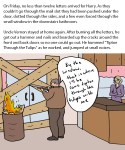
silkarth:

marshmellowtea:

high-metafive:

so i made and account on tv tropes and it asked for my relationship status

i went over and was about to put in “single” or “it’s complicated” and, well..

tumblr_inline_nihq5bef8n1s2quvatumblr_inline_nihq5vwckw1s2quvatumblr_inline_nihq68nj0c1s2quvatumblr_inline_nihq6ozlgj1s2quvatumblr_inline_nihq7745mn1s2quvatumblr_inline_nihq7wqgji1s2quvatumblr_inline_nihq8ktnoz1s2quvatumblr_inline_nihq8zm9k51s2quvatumblr_inline_nihq9eph701s2quvatumblr_inline_nihq9utuh41s2quva

i can’t deal anymore

this is beautiful

Amazing.

Also, that youtube link at the bottom is exactly what you think it is.


Tags:

#long post #oh my god #rickrolling #(I did check) #(and when I got most of the way through typing out the video ID) #(”Never Gonna Give You Up” popped up in the URL-history section) #(apparently I’ve listened to that exact video of it before) #I didn’t actually laugh aloud but it still amused me enough to reblog #(don’t get me wrong a lot of the other ones are amusing too) #there is probably some warning tag I should put on this but I am not sure what

Slashdot headlines written by neural network

rangi42:

lewisandquark:

The news site Slashdot (“news for nerds, stuff that matters”) is celebrating its 20 year anniversary this October. What could be geekier than celebrating with the help of an open-source neural network?

Neural networks are a type of machine learning program that learn by example, rather than by a human programmer feeding them rules. Whatever the headlines contain, whatever common words and rhythms, a neural network will do its best to imitate. I’ve trained an open-source neural network called char-rnn to imitate all kinds of human things, like paint colors, guinea pig names, and craft beer names.

Slashdot sent me a list of all the headlines they’ve ever run, over 162,000 in all, and asked me to train a neural network to try to generate more.

I used a neural network called char-rnn, an open-source neural network by Andrej Karpathy, and trained it separately on the first and second decades of Slashdot headlines. Let’s see what it learned!
Decade 1: 1998 – 2007

Alternuting Your Computer
The Internet Spectrum Violated
Microsoft To Develop Programming Law
Star Trek Creates Free Memory
Launching the Linux Group Socially
Microsoft Releases New Months
More Pong Users for Kernel Project
Nintendo Goes Canadian Edition to Customers
New State of Second Life
Sexual Security To Allow Australia
Programming Supercomputer Library In Star Wars
What are The Final Fantasy
Review of the Wireless Monster?
Portable Mail With Spidey Law
New 5400 GPL Formed into An Internet
Dvorak on Mario Games?
Half-Life 2X Speed Released
Ban Manhunt 2 Better than Linux?
Vista Releases Denial of the Mumble
New Company Revises Super-Things For Problems
The Dead of Managing Moneys?
Judge Releases Sony Practices in Death
Doom’s On Worldwire Networks
Sun Releases Enterprise in Smackware
I Wants To Control of the Net
Nintendo Can Start in the Wild Button?
Secondors Talk Open Source For Super-Bork?
AOL On Beam Doubt

Some familiar personalities of the tech industry make an appearance:

Microsoft Releases Bill Gates Service Start
Steve Jobs To Be Good
Shatner Awards Up Towards A Game Car Challenge

Cell phones appear to be have been weird in the early days:

Stem Cell Phone Standards in Space
Why Are Blow Systems Taking Your Phone?
New Unreal Tournament Phone Reviews Doubts
Forget To Support Flat Spam Phone

And you find companies doing rather unexpected things: 

Microsoft Announces Mac OS X Released
Intel Releasing Linux In A Networks
Sun Upgrades Apple Devices
Corel Launches $100 Laptop
Microsoft Announces Firefox Portal
Mozilla’s Audio Caroffice
Apple Finally Launches Microsoft

I produced the above headlines by allowing the neural network a high creativity setting, so it could range over many different headline topics that it’s seen over and over. But it’s also fun to turn the creativity down near zero, so the neural network can try to generate the most quintessential headlines:

All The Company Programming Software Software?
Some Computer Computer Solution of the New Company Computer
More Anti-Spam For Software Computer
Mac OS X Interview with Linux Computer
Mac OS X Accused of the Business
Sony Plans To Start Patent System For All Time
Security Hole For Security Hole
Security Hole in the Star Trek
Computer Computer Computer Computer Software?

Decade 2: 2007 – 2017

The neural network had a tougher time with decade 2 – it seems the headlines became longer and more complex, as Slashdot experimented with new formats and new topics.  The neural network struggled to create grammatical headlines as a result. But it still did its best to reflect the new topics of the last decade. Compared to the late 1990s and early 2000s, some companies and topics disappeared, while the coverage of Apple in particular exploded. Star Trek and Star Wars, however, remain perennial Slashdot favorites.
Here are some neural network-generated headlines for 2007-2017:

Twitter Discovered In the Pirate Bay
Google Bacon Medal To Contract Computational Lab
Scientists Discover Free Wi-Fi Store In the US
Steve Jobs Sues Death of the Future
Apple Seeks To Be Become Windows 10 Has Been Control the Desktops
Stanford Computer Scientists Develop Super Man Sales For Computer Science
Star Wars Hacked In Life On the iPhone
Computer Finds Court Broke Math For Secret Company
How Do You Design To Stay Them Bomb
Ask Slashdot: How Clinton Uses Display For Android Chips On Netflix Court From the Jobs
People ‘Fork” At a Flaw Refused
The Pirate Bay Tracking Storage Security For Windows 10
German Porn Update To Compete At CNSR Healthy Court Says
Supreme Court Can Be Lingeries
Apple Says the Moon Project To Pay $1.7 Billion For Free Software
Steve Jobs Allowed To Deal With Solar Power
Apple Sues Apple To Get Flash Mathematics
Microsoft Slashdot: How To Build a Bad Privacy For Windows 10
Twitter That We Use Facebook To Receive The Life
Linux Kernel 3.1.0 Launches In Late, Facebook To Sue Star Trek
The One-Department For Alleged For Connectivity: 3-D Printed Baby
Black Hole Proposed

My favorite part, though? The Slashdot headlines that appeared to come from an alternate, much more advanced, somewhat terrifying timeline:

Google Returns To the Space Station
Mac OS X Project Announces Space Station
Sony Announces Mars Rover Release
Google Patents Intelligent Space Telescope
Officials Release Android Apps For New Space Telescope
Star Trek Control of the Wild Start Up
Scientists Army Interviewed
Company Computer Releases Cloning Crime
Building A Nano-Tech Back
Full Life On The Linux
Chernobyl Announces Company And Educators
SGI Launches Space Station
FreeBSD Base Scientific Hits the Moon
Red Hat Releases Linux Games And Moon
Apple’s Moon Review
About New Moons of a Company
Looking For Mars Landers to Linux
Mars Rover Set for Alien China
Congress To Buy Mars Mister
Building a Top 100 Company For Mars
Apple Considering Debut in People Processors
Apple vs. Biology Details
An Android Bans Secret Project For Console Devices
Your Own Portals
U.S. Considering Death of the Solar System
Black Holes from Digital Dell
Black Hole Sension of the Linux
Microsoft’s Lab Changes “Space”
IBM Moves to The Matrix
Super Planet Wars Solved

The quintessential headline, though? When I trained the neural network with all 20 years of Slashdot headlines, then turned down the creativity level to near zero, I reveal the following essential Slashdot headlines, distilled from 20 years of technology news:

Sun Sues Open Source Project Content
Sun Sues Anti-Spam Computers
Sun Sues Security Flaw Contest
Sun Sues New Star Trek To Stop The Math
Sun Sues Anti-Spam Standards And The Star Wars To Stop Computers
Star Wars Companies Are Streaming the Star Wars
Star Wars To Support Linux Development
Apple Settles The Future of Star Wars
Apple Releases Secure State of the World
Apple Sues Apple To Start The Solar Power Project
Sony Sues Apple Server For Seconds Off From SpaceX Project
Ask Slashdot: Do We Want To Be the Computers?
The Desist of the Planet

Want 4 more pages of Slashdot headlines from the neural network? Sign up here and I’ll email you a pdf.

Also: POLL! I’m collecting names of Halloween costumes for training a future neural network. Enter as many as you like (no email address required).

Ask Slashdot: Do We Want To Be the Computers?


Tags:

#long post #anything that makes me laugh this much deserves a reblog #(my favourites are ”Scientists Discover Free Wi-Fi Store in US” and ”Facebook to Sue Star Trek”) #(though I agree that ”Do We Want to Be the Computers?” is pretty great even if it does break Betteridge’s Law) #((mind you I’m not sure uploading *in itself* appeals to me)) #((I’m sure silicon-based substrates have their own problems and I have more experience coping with my current body’s problem set)) #((and given that I am honestly impressed this laptop has made it to nearly its third anniversary of purchase)) #((I have no reason to expect they’d even be more durable overall)) #((so really the nice thing about uploading is being able to evacuate to a new body when your current one gives out)) #((for which a cortical stack and the occasional previously-uninhabited clone body would do just fine)) #(((and some offsite backups in case the stack is unrecoverable might be helpful but do leave you more open to forknapping))) #tag rambles #transhumanism #death tw

strejdaking asked: What do you consider to be some interesting modern takes on classic fantasy races? Perhaps some you have some ideas yourself? I read in Elder Scrolls, High Elves are basically Nazi Germany.

prokopetz:

  • After unleashing one too many buried evils, the dwarves said “bugger this” and moved as far away from the Underdark as possible. Their entire civilisation now occupies a swarm of small space stations in high Earth orbit. 90% of them work in material science and telecommunications.
  • Gnome society has become steadily more obsessed with concealment and illusions until, in the present day, most gnomes use illusory disguises full-time to masquerade as members of other races. Almost everyone knows at least one gnome; almost no-one is aware of it.
  • Though halflings have a reputation as drugged-out savants, the truth of the matter is that their pharmacological science is incredibly advanced, particularly in the area of cognitive and empathic performance enhancement. At any given time, your average halfling is under the influence of a complex brew of brain-boosting drugs (which only work for halflings); there are fewer side effects than you’d think.
  • Orcish culture’s preoccupation with violent spectacle has evolved into an unstoppable entertainment industry. The largest orcish nation is also the global centre of production for big-budget summer blockbusters; orcish martial arts musicals are particularly popular among other races. Most orcs at least casually practice some sort of performance art, though some resent the expectation that they should.
  • Elves are hardcore gamers. All of them. It’s the cornerstone of their civilisation. Elvish video games tend to be unfathomably abstruse, unimaginably difficult, or both; being into “elf games” is regarded as a mark of refinement, though in truth most non-elves don’t really understand them.


nerdyzebradog:

Do you mind if I shamelessly rip this off? ‘Cause I really wanna shamelessly rip this off.


prokopetz:

Knock yourself out. I do games about fairies – I’m never going to use any of this stuff myself.


thegreateyebrows:

I love the idea that younger elves love video games, but the older ones remember prefer the old fashioned games. These are not chess or Go, but are more like stupidly complex Euro boardgames or complex trading card games like Magic but worse.


prokopetz:

There’s a bit of that, yeah, though most old-timers were totally on board with the transition to electronic media. Elves don’t have the same relationship with physical artefacts that humans do. The real intergenerational pissing contest these days is about whether speed-running is a legitimate art form, or just screwing around.

(It’s exacerbated by the fact that speed-running as an organised practice actually originated among humans, so a lot of older elves regard it with suspicion on that basis alone.)


thegreateyebrows:

Elf streamer: Hey, this is Valuriagod420 with another any percent speed run of The Doom of Karum Dul Run. I know Entmaster beat my previous time but I’m gonna get it back. This game is mine!

[Several minutes later]

Streamer: OK so we are still looking good to hit the 38 minute and 23 second mark right on schedule. Now here we can slip past a lot of dudes by back rolling into this corner 12 times and then using an orcish…

Elf Dad (from upstairs): Are you speed running down there! I told you no son of the Everleaf house will partake in any of that nonsense! If you’re not in a 1v1 comp match by the time I get down there, then goddesses help me I’ll throw you out into the dark hallow to face the 5 trials by YOURSELF!


prokopetz:

Heh.

Since the notes seem to be stuck on the gaming thing, let’s expand on that:

  • The dwarven obsession with dating sims is proverbial. The orbital colonies are both the largest consumers of dating sims – dwarf-made or otherwise – and among the most prolific producers, playing host to several major publishers and a thriving indie scene. Dwarven dating sims typically feature complex crafting and engineering subgames alongside relationship-building gameplay; the two sides often share the same basic mechanics, thus framing relationship-building as a process of literal social engineering.
  • Gnomish games, conversely, usually aren’t simulating anything at all, being purely abstract puzzle-solving affairs with a heavy emphasis on spatial manipulation and pattern matching. When gnomish gamers get into more mainstream titles, they tend not to recognise a distinction between “playing” and “breaking”; a gameplay video put together by a gnome is more likely to be a glitch exhibition or a thirty-five-minute lecture on the finer points of terrain collision detection than it is to be a demonstration of the game being played as intended.
  • It’s perhaps unsurprising that halflings are often drawn to twitch games. Indeed, one of the latest controversies in competitive gaming revolves around whether halfling nootropics ought to be banned as performance-enhancing drugs. Critics point out that human gamers routinely compete while juiced up on caffeine; responses have ranged from insisting that it’s different (though one can quite agree how) to proposals to ban caffeine from competitive gaming as well. The latter have historically been poorly received.
  • Some might expect orcish video games to be plotless gore-fests. Those who do badly misunderstand orcish culture’s relationship with violence. Sure, it all comes down to ass-kicking in the end, but first the protagonist and the final boss are going to have a ten-minute conversation about their feelings in order to properly contextualise it. One of the most popular orcish video games in recent years concerns a young hero who achieves enlightenment and saves a lost kingdom by coming to the realisation that all communication is violence.


unsurpassedtravesty:

Honestly my favorite part of this is the idea of Orcish culture evolving into the entertainment capital of the world.  I picture that centuries ago there was some Dark Lord type or another who was overthrown not by a rag-tag band of adventurers of the more classically heroic races but by the orcs themselves, who were tired of being exploited and slaughtered meaninglessly, who then looked at one another when the rubble settled and wondered, collectively, “What now?”

And then apparently deciding that the answer to this was channeling a history of nonstop violence into art, sports and theater.


prokopetz:

Orcs killed their gods, then wrote a musical about it.

(This is also a big part of the reason that most orcish polities are at least moderate socialists. “No gods, no masters” carries a lot more punch when you can physically point to the decapitated skull of your former chief deity on display in your legislative assembly’s foyer.)


unsurpassedtravesty:

So you’re telling me that orcs have a culture that channels violent aggression into art and that they’re socialists?  I think I have a new favorite race.

I wonder if there’s a particular way in which their gods are ‘traditionally’ depicted in performance.  Depending on the genre of the work I could see them as anything from aloof and inimical to bombastically awful to bumbling and self-important.

(Headcanon: one of the more influential early works had the chief of the gods portrayed by an actor standing on a high platform out of the view of the audience, with lighting above and behind him in such a way that he appears as a shadow cast on the backdrop, looming over the heroine of the piece.)


prokopetz:

And bringing it back around to video games, orcish CRPGs often depict the gods as controlling and abusive parental figures. There’s a popular meme where you describe an orcish CRPG as “the one where you kill God at the end”. The joke is that’s all of them.


ruteekatreya:

I can’t believe Square-enix is actually run by orcs


prokopetz:

This world’s equivalent of Square-Enix is a collaboration between orcish and dwarven game developers, initially conceived of as an overture of cultural reconciliation. Opinions regarding the outcome are… mixed.

Anyway, we’ve done elves and orcs – let’s do dwarves!

  • The reasons why the bulk of the dwarven population now lives in orbital habitats – or “habs”, as they’re colloquially known – are complex, ranging from resource exhaustion in ancestral delves to political tension with human neighbours, and only partly involve the increasing incidence of demons of shadow and flame from before the dawn of time. “We did it to get away from all the damn balrogs” lies somewhere between an oversimplification and a private joke.
  • (Incidentally, many dwarves will seriously side-eye any non-dwarf who brings up the balrog thing, even in jest, owing to the fact that dwarven greed being responsible for unleashing evil upon a previously pristine world is a once-popular racist canard. Elves in particular receive very little benefit of the doubt.)
  • One surprising factor behind the move, however, is biological: dwarven resistance to magic and poison also applies to cosmic rays. Most habs have no radiation shielding whatsoever, which enormously simplifies their construction compared to general-purpose space stations, at the cost of rendering them unsuitable for long-term residence by non-dwarves. This suits most dwarves just fine.
  • The move to orbit didn’t mean an end to mining: captured comets and asteroids are towed into high orbit for processing by specialised resource extraction habs. Bringing the whole asteroid home is much more convenient than trying to process it on-site, and unmanaged de-orbiting events almost never happen.
  • (Just don’t ask a dwarf about about what happened to their former terrestrial capital – it’s a touchy subject.)
  • Also, it turns out that about one in twenty asteroids contains unhatched space-demon eggs. This is widely regarded as proof of the dwarven cultural conviction that the universe is out to get them. (Thanks to @perfectly-ultimate-great-shoofle for this one!)
  • Apart from resource extraction, dwarven habs play many other roles, from solar power collection to telecommunications to zero-G manufacturing to research and development. Most habs are small enough – a few hundred residents at most – that they’re effectively single-function, and all dwarves hailing from habs with the same function are considered to be members of the same clan, even if their respective orbits are nowhere near each other.
  • Dwarven gamers who live on telecommunications habs enjoy fantastic ping, and are justly reviled for it by their terrestrial opponents.


mymanherc:

WEEEEEEEEEE’ER DWAARVES IN SPAAACE


themanwiththesuitcaseofflies:

Halflings tho. What if they are the one who make music and advertisements? They know a lot about every races minds, so they can make super emotional music that makes you really sad or happy and stuff. And the advertisments are super convincing. Most halfings that do advertise are rich and are hard to hire.


prokopetz:

Sure, let’s talk about halflings.

  • Halflings have few independent nations, with most integrated into human communities. Their living arrangements are often quite different, though. It’s a matter of debate whether it’s cultural or biological, but whatever the reason, most halflings prefer to have housemates. Lots of housemates.
  • Their small size makes it easier than you might think: a human one-bedroom apartment, suitably refurbished, can comfortably accommodate 4-6 halflings, and a single-family dwelling can house well over a dozen.
  • Members of a given household are typically unrelated, and membership can be very fluid; some halflings regularly cycle between households, while closely aligned households may frequently trade members. In spite of this, friction is rare, thanks in large part to the judicious use of empathy-enhancing drugs to promote rapid group bonding.
  • The halfling penchant for doing things in groups extends to romantic pursuits. When two compatible households meet, double dates are not uncommon; nor are triple dates, quadruple dates, and occasionally duodecuple dates. A successful match may result in swapping members, though if they’re very well-aligned and suitable housing can be found, they may simple merge into a single, larger household instead.
  • Such romances are not always restricted to tidy pair-bonds; at least as often, they result in non-Euclidean polyamorous tangles that make perfect sense to halflings and are utterly incomprehensible to everyone else. This contributes in no small part to the halfling stereotype as a bunch of free-loving stoners, even among those who should know better.
  • The offspring of a household are expected to get together with their friends and strike out to found their own households once they come of age; halflings regard this practice as essential to preventing households from becoming too insular. They still keep in touch with their natal households via social media, though; a typical halfling’s contact list may require more than three spatial dimensions to adequately model.
  • None of this is to say that halfling introverts don’t exist, of course. Household-dwelling halflings are generally non-judgmental toward halflings who live alone, but there’s a definite expectation for them to be wildly eccentric. Many solitary halflings gleefully take advantage of the social latitude this expectation affords them.
  • Halfling gaming parties are a sight to behold. A party game that only supports eight simultaneous players is scarcely worthy of the name; the latest generation of party fighters routinely support 32-player free-for-alls. It’s a matter of some conjecture whether it’s the brain-boosting drugs or simply long practice that allows halflings to keep track of what’s going on, because certainly nobody else can!

Tags:

#story ideas I will never write #long post #there is probably some warning tag I should put on this but I am not sure what