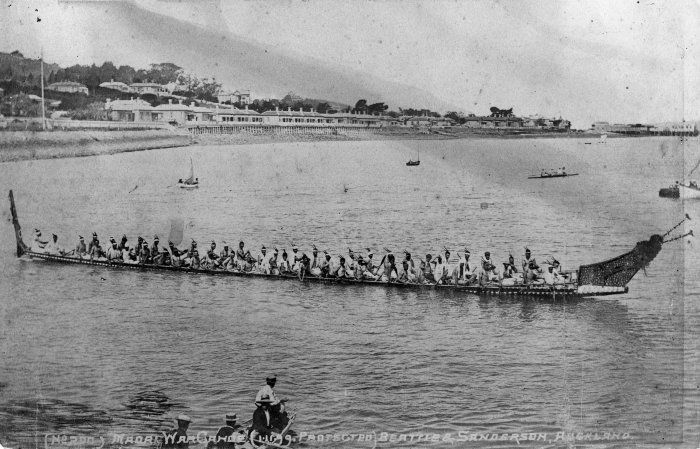
(via juliassundial)
Tags:
#Richard III #joke #*snort*
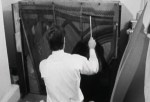
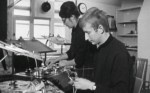
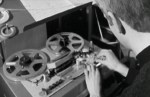
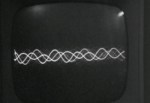
“Think of the phrase ‘The ripping of the fabric of time and space’. I wanted to get that ‘tearing’ sound. So I went to a piano that had all its front taken off and it was just a frame with the strings. I took a key, my front door key and scraped it down one of the strings. That gave the ‘rippy’ sort of sound. We then took that and changed the speed of it so we could get different pitches. We cut those together, literally cutting the tape with a razor blade and sticking it together. We played it through feedback machines and you play the sound back upon itself as it’s recording so you get this ripple effect of the echo. And if you do that when the sound is being played backwards, the echo appears to come towards you. If you then turn it around so that the sound is going forwards, it appears to be going away from you. I wanted to get that ‘coming and going’ sound, the rising and falling.”
-Brian Hodgson, describing how he created the materialisation/de-materialisation sound of the TARDIS. A sound that is of course still used today. (Taken from the DW origins Documentary)
Tags:
#Doctor Who #TARDIS #vworp #awesome
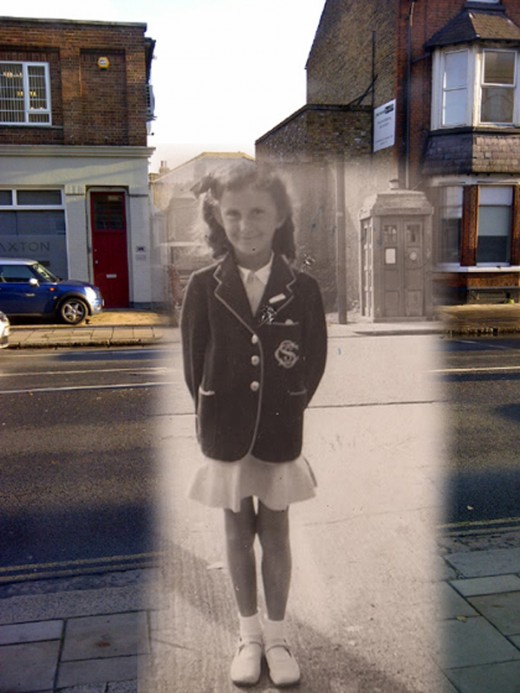
Genuinely one of the coolest projects we have ever seen
Places in time where the TARDIS has landed
Ghosts of the Tardis
Retronaut has an amazing series of photo compositions by Mark Dando depicting vintage TARDIS photographs (Police Boxes, actually) over the Google Street View locations of where they once stood.
(via Retronaut with a hat tip to Kasterborous)
Tags:
#Doctor Who
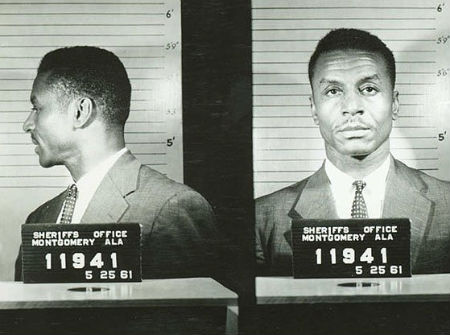
Five Things You Should Know About Fred Shuttlesworth
When legendary civil rights activist Reverend Fred L. Shuttlesworth died today, many Americans had no idea who he was or what he’d accomplished in his 89 years on earth. It’s an unfortunate reality that people often think Martin Luther King, Jr. and Malcolm X were the beginning and end of black activism in the Civil Rights era. In fact, nothing could be more wrong. From the 1950s onward, Shuttlesworth was a major factor in ending Jim Crow laws in the South, and many other oppressive forces throughout the United States. Here are the top five things you should know about him.
1. From the start of his career, Shuttlesworth, who was raised poor in Alabama, was fiery and obstinate. After Alabama officially banned the NAACP from operating within the state in 1956, Shuttlesworth, then a pastor, founded the Alabama Christian Movement for Human Rights. The ACMHR’s first major order of business was a Birmingham bus sit-in, during which Shuttlesworth and others boarded city buses and sat in the “whites only” sections. The ACMHR would eventually become charter member organization in the Southern Christian Leadership Conference.
2. He lived nearly nine decades, but many people tried to kill Shuttlesworth much earlier for his outspokenness. He was the target of two bomb attacks, one on his home and one on his church. And when Shuttlesworth tried to enroll his daughters in an all-white Birmingham school in 1957, an armed mob attacked him, beating him unconscious and stabbing his wife. The couple survived, and when a doctor remarked that Shuttlesworth was lucky to have avoided a concussion,Shuttlesworth said, “Doctor, the Lord knew I lived in a hard town, so he gave me a hard head.”
3. Though he worked closely with King, Shuttlesworth’s style was decidedly different. “Among the youthful ‘elders’ of the movement,” historian Diane McWhorter told The New York Times, “he was Martin Luther King’s most effective and insistent foil: blunt where King was soothing, driven where King was leisurely, and most important, confrontational where King was conciliatory—meaning, critically, that he was more upsetting than King in the eyes of the white public.” Despite their differences, King once called Shuttlesworth ”the most courageous civil rights fighter in the South.”
4. Shuttlesworth’s fiercest enemy in Birmingham was infamous public safety commissioner Bull Connor. Connor’s violent responses—attack dogs, fire hoses, billy clubs—to Shuttlesworth’s peaceful demonstrations were integral in changing America’s attitude about Jim Crow. “The televised images of Connor directing handlers of police dogs to attack unarmed demonstrators and firefighters’ using hoses to knock down children had a profound effect on American citizens’ view of the civil rights struggle,” says the Shuttlesworth Foundation’s website.
5. After his actions helped spawn the passage of the federal Civil Rights Act in 1964, Shuttlesworth continued fighting for justice in realms both racial and economic. In 1988 he founded the Shuttlesworth Housing Foundation to help low-income families own their own homes, and in 2004 he became president of the SCLC. A firebrand to the end, he resigned from the SCLC within months, saying “deceit, mistrust and a lack of spiritual discipline and truth have eaten at the core of this once-hallowed organization.” Three years ago, the city of Birmingham named its airport after Shuttlesworth. There are still no monuments named after Bull Connor.
Tags:
#Fred Shuttlesworth #Civil Rights #History #Racism