
1971:
When the villagers heard from their city-based family about the massacres of 25 March 1971, they knew that the fate of Bidesh was at risk.
East Pakistan was disregarded as being “too Bengali”, uncouth and uncultured. This too extended to jadu: The jadukara of Maghribi (West Pakistan) decried the Bideshi ways for their reliance on what they saw as impure, unreliable methods based on silly superstitions. Their language was too clumsy for elegant magic, not like the beauty of Urdu or Punjabi. Their stories were messy and rambling. Their jadu weak and flimsy.
Those poor dears, they just didn’t know better. Assimilation would help everyone, can’t they see? Can’t they see the light? We only want to help them. We’re doing them a favour.
The villagers of Bidesh did not fall for any of that. Being Bengali, being steeped in the stories and language and lore, that was how they survived. The source of their jadu. Their livelihood.
The first deaths were of a number of teachers in Dhaka University. It would only be a matter of time before their Jadukara Cadet College would be a target. Some of its elite students and teachers took the hint and fled to safer pastures. Typical, thought many of the common folk; they claim to protect us, yet when our survival is really at risk, they only think of themselves. Just as selfish as the Maghribi.
Some, however, stayed behind: the few commoner students who had earned scholarships to the Jadukara Cadet College in the hopes of earning better lives for their families, the teachers that were aware of the true source of their knowledge, the outliers of the Shafiqs who were never quite comfortable with their privileged distant lives and knew that the real threat to their lineage were not the people the dainee had entrusted them to protect.
The dainee. They must know. They need to know. They’ll know what to do.
The elders of the villages came together for a communal jadu ritual: a rarity, as they tended to stick to their own clusters of families, but times of war call for unity. They tapped into the dangerous and difficult arts of shopnojyoti, dream magic – a complicated process involving draughts of rare spices and herbs accompanied with hours of precise tantramantra and rings of nazar battus for protection. As they closed their eyes, surrounded by all-night duas on tasbih and namaj for ishtikara and protection, they dreamt of a story:
A well-educated man hires a boatman to take him across the river.
Along the ride the well-educated man asks: Oh simple boatman, do you know of vedic astronomy?
No, sir, says the boatman. I only know of seeing the stars as I sail through the river at night, my only light in the darkness.
Ah, you are a simpleton, scoffs the well-educated man. I know how to read the future in the sky. Your worth is only half of mine!
The boatman says nothing, but travels along. Further along the well-educated man asks: Oh simple boatman, do you know of ayurveda?
No, sir, says the boatman. I only know of the bark that my mother told me to chew on when I was sick, and which I still chew when I ail and tire.
Such a simpleton, replies the well-educated man. I know how to brew potions that will keep weariness and illness at bay. Your worth is only a third of mine!
Again the boatman says nothing, but travels along. Further still the well-educated man asks: Oh simply, simple boatman, do you know of tantramantra?
No, sir, says the boatman. I only know of the prayers I make before each journey, asking for direction and clear passageways.
Oh you really are a simpleton, exclaims the well-educated man. I know how to manifest anything I desire with just a few words! Your worth is only a quarter of mine!
As he made his proclamation he jumps up and down the boat, kicking a hole on the side. The boat begins to capsize as it fills with water.
Tell me, sir, says the boatman. Do you know how to swim?
Not at all, says the well-educated man in a panic.
I know the worth of my life, replies the boatman, and so I know how to rescue myself through cyclones and other treacheries of the water. The boatman pulls the well-educated man to the edge of the other side of the river.
The well-educated man is humbled and attempts to pay the boatman more than his original charge. The boatman refuses.
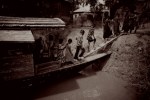
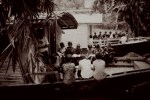
You do not know your worth, says the boatman, but I know your worth is the same as mine.The very next day, everyone collected all the boats they could find, and built more with the strongest wood they can find. They cast their tantramantra, set up the nazar battus, and chanted duas. These boats will be their new homes, able to withstand the treacheries of war and water. These will be their schools, passing on the lore about jadu to the generations they hope will survive the genocide. This will be their shelters, not just for those with jadu, but for anyone who needs it – times of war call for unity, and the protection of a shared culture meant protection for everyone, regardless of borders or statutes of secrecy.
Borders and statutes were the invention of colonizers who saw separation and division as modes of power. Liberation from colonizers meant breaking those divisions.
On 4 December 1971, hundreds of Bengali’s brightest minds were rounded up and executed by the Pakistan army. Some of them were expert jadukara captured by the Maghribi before ransacking Begum Indrajala’s school. Those on the boats managed to sail away to safety, some of their passengers safeholding what’s left of her legacy.
The very next day, the people of Bidesh joined their jadunai familyon the battlefield, chanting and casting together:
Joy Bangla!
[[picture source: Shidulai floating schools, a non-profit serving about 70,000 children in Bangladesh
The story is an adaptation of Sholo Anai Micche, a comic poem by Shukumar Roy
dua, tasbih, namaj: prayers, rosary, Islamic prayer ritual. Like most Bangladeshis, the Bideshi are largely Muslim, with an approach to Islam that is comparatively less orthodox than in many other regions of the world. Their Bengali cultural heritage, including jadu, is still an integral part of their being.
ishtikara: consulting, finding guidance for a situation
Maghribi: the Pakistani equivalent of Bidesh, their magical enclave. West Pakistan used to be known as “Maghribi Pakistan”.
shopnojyoti: dream fortune-telling – the idea is directly from livesandliesofwizards, but obtaining wisdom through dream is pretty common in multiple indigenous and marginalised cultures]]
Tags:
#stories #probably technically set in the Harry Potter universe but having no involvement with canon whatsoever #Bangladesh #floating schools