alkatyn:

foone:

foone:

foone:

There exist another dimension called The Empty World. It’s very much like ours, in fact it seems to have been identical up until a few weeks ago, but it always seems that way. If you go there today, it was identical in late february, and if you go there this october, it’ll have been identical until september.

It’s empty, as you might guess. There’s no humans, and no animals bigger than a cockroach. The sky is grey, and it slowly rains ash. It’s colder than our world by a bit, enough to require a jacket even in summer. The streets are empty, the cars parked neatly in their garages or in lots, but they’re all empty and abandoned, their doors locked like they expect their owners to return any minute now.

The newspapers left on stands don’t mention any oncoming disaster. We have no idea what the TV or internet would have said: the power is out. The power is very, very out. Not just the grid, but batteries are drained. The cars won’t start, the emergency lights are out, and anything with solar panels seems to be getting less energy than you’d expect, even with the perpetually overcast sky.

It’s a very silent world, like the calm after a snowstorm. Sounds don’t seem to echo as much as they should, nor does sound seem to travel as far. The radio spectrum is empty except for static, there’s no one transmitting on any frequency.

There’s fewer fires than you’d expect. Even places you’d expect to soon catch fire without human intervention are still standing, undamaged. Campfires can be lit but with difficulty: something is keeping them from burning as they should. Even if you pour kerosene on a campfire it’ll barely grow, it’s like something sucked the energy out of everything.

All the locked buildings are still locked. Alarms don’t sound if you break in (understandable, given the power situation), and of course no one comes to investigate. So The Empty World is your oyster: you can break in wherever you want (provided you can physically do it: some doors are pretty hard to pry open even with tools), take whatever you want, and bring it back here.

Everything resets when you leave. You always enter The Empty World like it’s your first time there, like this just happened and you’re late to the party… but the party keeps getting rescheduled. You can even take something multiple times if you want.

When you enter The Empty World you get there at the same relative position as you are on this world. If you’re in New York, you show up in the empty New York. If you’re in Topeka, you show up in empty Topeka. So you have to travel around this world to get to where you want, and you can’t just appear in the middle of a bank vault… unless you break into the vault from this world. (So it’s great if you work at a bank and want to steal from your employer without repercussions, but not so useful otherwise).

You don’t just have to take things, you know. You can take computers and files and books and diaries. You will have to deal with recharging laptops and breaking through any security when you get back, but it’s doable.

So, imagine you’ve just gotten access to The Empty World. What are you going to do with it? What will you take, and where will you go?

This is a writing prompt if you want it to be. Feel free to write/draw/whatever about this setting!

And don’t worry about “canon”: there’s something enough weird going on with this setting that’s enough to justify variation in the setting. Maybe when you go there, you eventually find out what caused the death of the world. Maybe that doesn’t agree with what I find out when I go there. Maybe your world isn’t as empty as it seems! This is partially based on a reoccurring dream I had, and in one instance the “empty” world was full of people hiding. Hiding from what? I never found out. Maybe you will.

Just stick “based on/Inspired by The Empty World by Foone” somewhere in/on anything you make about it. Otherwise go nuts.

Some things that might be fun to explore, ones I intentionally didn’t nail down: (I have theories but I don’t want to make any of them concrete)

  • What’s all that ash in the air? You could stick it under a microscope/Gas chromatograph. What it is could be a big hint as to what happened to this world
  • I mention in one of the reblogs that two or more people can go there at a time, but there’s only one return trip. What happens to people left behind?
  • The power is out, and this extends to batteries. Sure, maybe the coal plants and nuclear power aren’t running anymore, but what about hydroelectric power? Why isn’t the hoover dam still making power?
  • As multiple people have suggested, what if you go above the ash cloud? What if you launch a balloon or a rocket?
  • I mention the newspapers not saying what happened, but maybe this just happened too fast for them to get a new issue out? Maybe you could go to a TV station and get their computers running again (bring in your own batteries, or bring their computers back to our world). Maybe they did cover what was happening.
  • There’s lots of straightforward ways to get rich by stealing and/or duplicating things using The Empty World. What’s the most interesting thing you could do by its ability to let you travel into places you couldn’t normally get to (because of guards and locked doors)?
  • Here’s a thought: rescuing recently destroyed/stolen things. It’s based on the world of a few weeks ago, right? What if the Louve burns down, and a lot of priceless art is destroyed. If you jump into The Empty World anytime in the next couple weeks, they’ll still be there, untouched. You could “steal” them and return them to this world.
  • You’re in The Empty World and you hear a scream in the distance. You brought no one with you. Do you run towards the scream or do you get out of there immediately?
  • Did you wear a respirator into The Empty World? Have you been breathing in all that ash? Maybe that has repercussions.
  • You arrive, and someone has written a message in the ash. A warning. For people like you.

I feel like you could have a setting with people raiding and “prospecting” post apocalypse setting style, but a certain percentage of them just never come back, and we don’t know why. So everyone who goes is taking a chance that whatever it is that’s getting everyone else gets them. Only a few percent die, so y’know, it could just be people having entirely mundane accidents, right?


Tags:

#story ideas I will never write #(probably) #apocalypse cw #this probably deserves some other warning tag but I am not sure what #this post was queued because my to-reblog list is too long and I didn’t want to dump it on you all at once
aliiiiiiice:

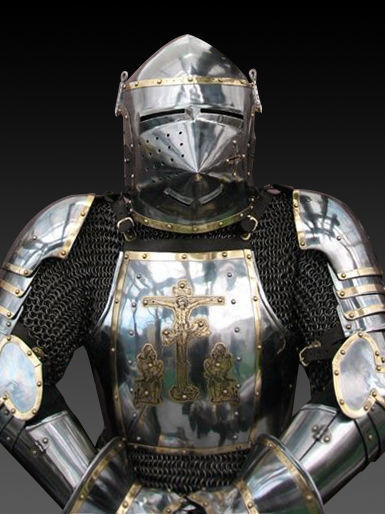
why don’t people in zombie apocalypse stories ever just wear suits of armor? you think any zombie is gonna get their shitty rotting jaws through this?

4b06860586f2fca82d6ad43b454d0e56c8082aef

I’m gonna rip and tear my way through the zombie apocalypse completely unharmed because none of the undead hoards will be able to get through my plate mail

aliiiiiiice:

everyone else is like “oh we gotta stay inside the most secure places possible and never leave” and I’ll be storming through the wastelands in my bloodstained suit of armor, blasting the Doom (2016) OST and plowing my way through waves of the undead. one of them tries to bite me but his shitty rotting teeth don’t even leave a dent in my armor before I turn his head into paste. I’ll be unstoppable until I die of dehydration or something like an idiot

earlgraytay:

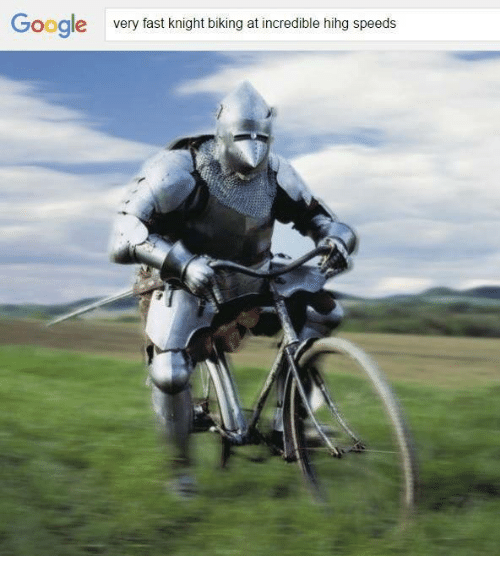
this goes along with my other pet peeve about zombie apocalypse stories, namely: why does no one ever think to ride a bike?

bikes are quiet- if the zombies react to loud noises, they won’t hear you on a bike the way they might hear you in a car. bikes don’t need gas, meaning you won’t be stranded if you run out. bikes are much, much easier to maintain than a car- there’s no computer that can short out, no fiddly engine bits that could kill you if you mess with them wrong. you can learn how to maintain a bike with a couple weeks’ worth of classes. almost every adult knows how to ride a bike, and without cars on the road, it’d be much safer to do.

what i’m saying is

c19eb78ebc01654222922898a56ece0ee11a221f

elodieunderglass:

e0e1755bd32a080e718bd6b7f195f21d43d7f1d3

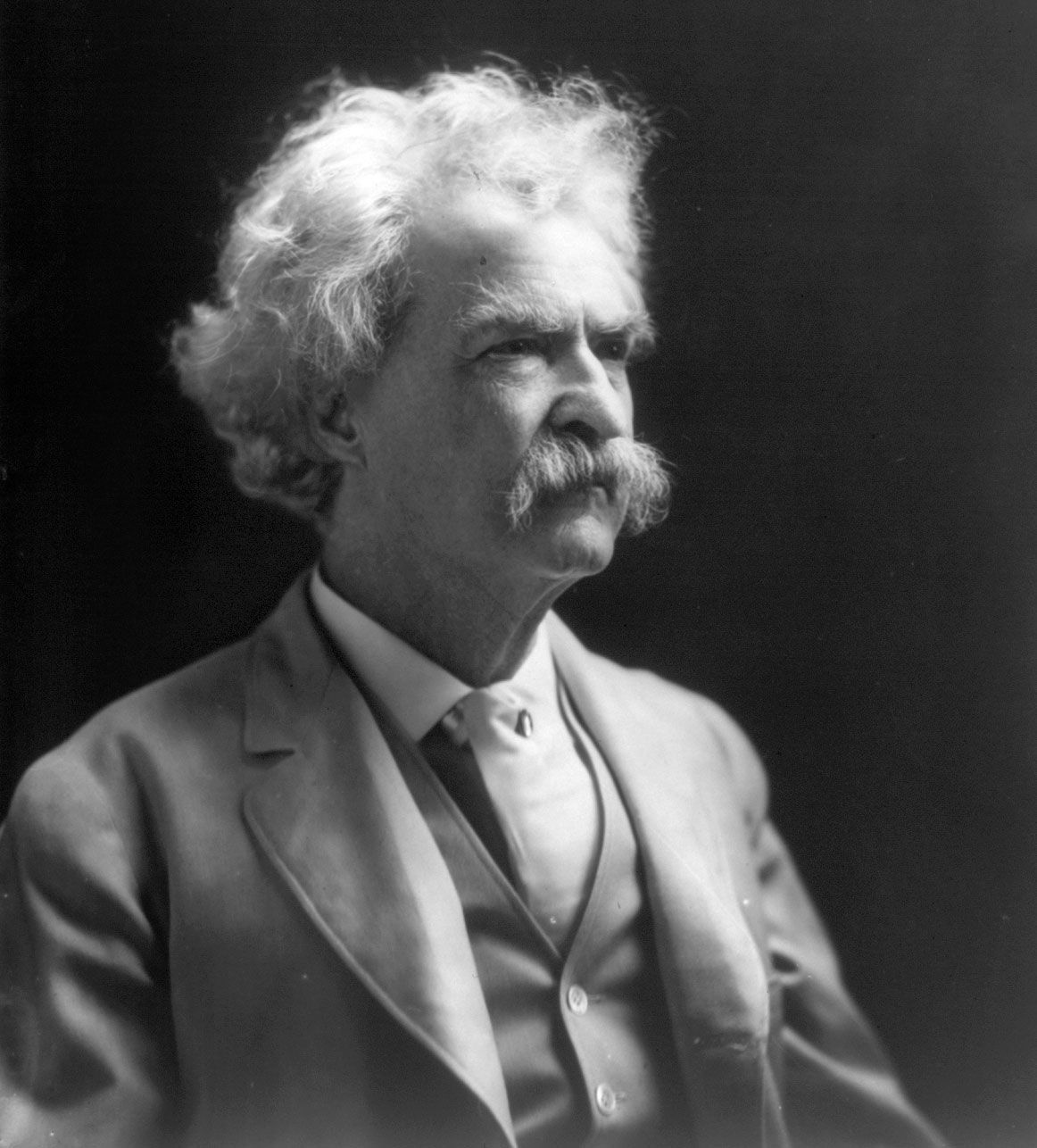
American author Mark Twain (b. 1835) lurches from his grave only to give you a massive thumbs up and die again

elodieunderglass:

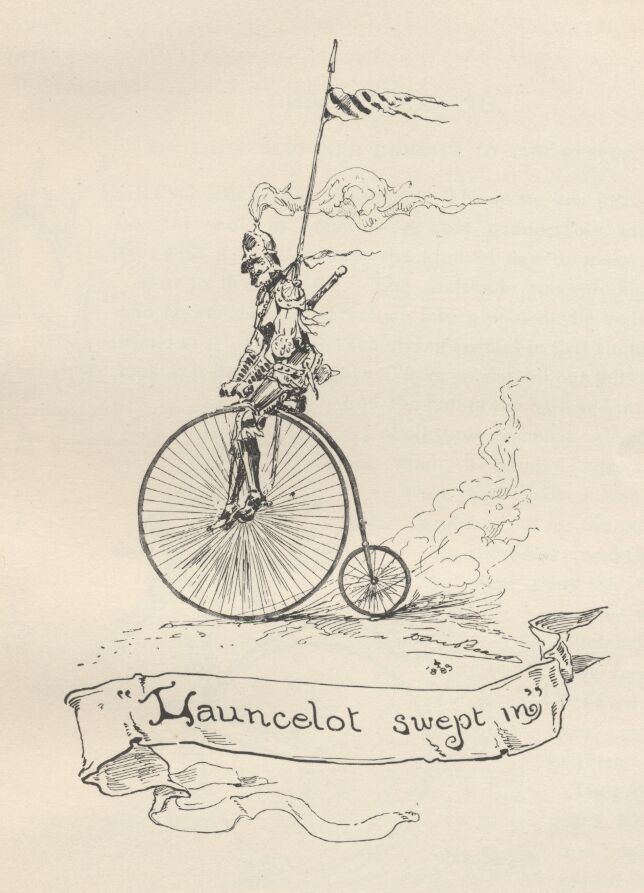
Mark Twain essentially invented the genre of a bystander sent into a time-travel sci-fi plot just to get someone to draw this image for him. And today we can simply search for such a picture. It is a time of wonders

97b84533b1db6c2a0d9a782173f77a34e017e7c4

beggars-opera:

#this post has everything. zombies. knights. bicycles. knights on bicycles. mark twain.

poipoipoi-2016:

f3b8dee46c08fbacd05baefaa95546de9a6d640d

Tags:

#holding this concept up in my mind and rotating it next to Norris and the Plague Doctors #zombies #story ideas I will never write #anything that makes me laugh this much deserves a reblog #apocalypse cw #illness tw? #this post was queued because my to-reblog list is too long and I didn’t want to dump it on you all at once
runawaymarbles:

whetstonefires:

The thing is that the most interesting and novel invention of the MCU is a universe where billions of people turned into dust and then were physically reconstituted on the spot five years later, in a world that had just barely adapted to their absence.

That is wild. That is intense! That is a series of pathos-ridden emotionally complex doorstoppers waiting to happen. Half the entire world! All dead! And somehow we coped with that! And now we have to cope with them all being back?

A whole street of empty houses–surely not everyone there became ash. Some of them moved to better places, now opened by the mass mortality. Some of them died afterward. Who will live there now? Even if inheritances are reversed by resurrection, surely leases aren’t renewed. What the fuck happens to everyone who remarried?

What happens to the children snapped back to a world where their parents didn’t survive, or the reverse?

But they had to then hastily smooth over this utterly batshit sci-fi premise and get the world mostly back to normal working order as rapidly as possible, without too much emphasis on how literally every person in existence has been placed in a mason jar by a narcissist and shaken twice in five years.

So they could get on with more superhero whack-blam business, which is customarily done against a background of Normality.

This is, tragically, the most Comics thing these movies have ever done.

It is beyond satire that they did this immediately before and during a worldwide pandemic that everyone was pressured to smooth over and ‘return to normal’ about within 2 years if not sooner.

I’m still bummed She-Hulk wasn’t “Law & Order: MCU” featuring such disputes as

  • A dog’s owner is snapped and someone else adopts it. Now it’s five years later and the owner wants the dog back.
  • A baby’s parents are snapped and someone else adopts it. Now its’ five years later and the kid is now 6. Absolutely fucking devastating custody dispute ensues.
  • All the snapped people were legally declared dead and their remaining next of kin got their assets. Now some of them are demanding their money back, but their heirs already spent it.
  • All the snapped people were not legally declared dead, and life insurance companies are still claiming that some people who actually died were snapped so that they don’t have to pay out.
  • These senators were elected to a 6 year term but they only got to serve one of them before blipping. They think they should get to serve the next five years.
  • School funding is based on enrollment, and was thus slashed when there was only half the student population. Now everyone is back midyear and there isn’t enough funding, and parents are suing.

Tags:

#Marvel #fanfic #story ideas I will never write #apocalypse cw #death tw #illness tw? #this post was queued because my to-reblog list is too long and I didn’t want to dump it on you all at once
zmavli:

3db6133977ace19221d731909d734505b4227d85

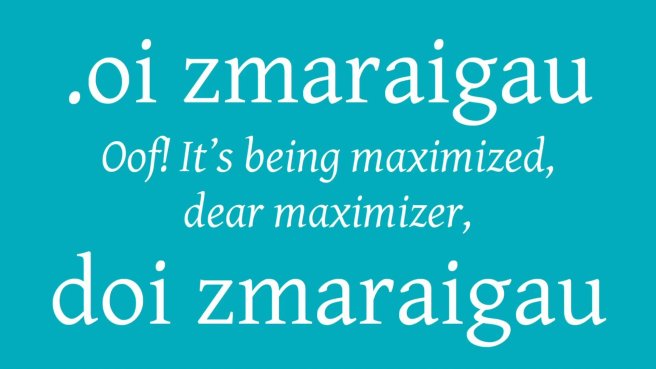
me mi calonu lo zmaraigau cu galfi roda poi nenri lo gusni konju canlu ku’o lo papryla’a


Tags:

#anything that makes me laugh this much deserves a reblog #(the way jboski renders ”papryla’a” as ”page-ish-fasten thing(s)??”) #(me: *poring over the ancient runes*) #(ancient runes: 📎) #language #apocalypse cw #this post was queued because my to-reblog list is too long and I didn’t want to dump it on you all at once

clockways:

b28c5e328a95868d4d55b572ef37e3e36a5acca2
e8d3e6b55ecfdbb3324c6f6d24cdc94e60fe813d

clockways:

7f8eb97cc2413c812e75140b0f81496fb1e9fe2d
c786e29a096fc3962b060e05c4cb6b4cbd3622da

clockways:

f2c0f66f2d49737bc2725455ce27353ad56384c6
93b8ff9b7aa9d6032ee9ec8f12c32f3b2d19d018

clockways:

c8b215db770caed3ba08ad221b04e70892aed6bf
eac787af32076963a6029b3f96fb1736bdd76110

pastellewitchcraft:

6b5c457ed755c3813bf6f93dcb6b46f7566f0d23
32f5075b39b27cb3fd5e79e4dbd56f5cfe5c31e8

larkiaquail:

277846af816de6de3d560fe894a7c0a46c8ddf48

KRSNND these TAGS

bostonflavor:

if this happened like 5 years ago people would be losing their shit, now it’s just like “oh yeah another thing”

im-the-color-red:

dc7ca40e9bb1b0217d506023e4ed3b7292cf15bc

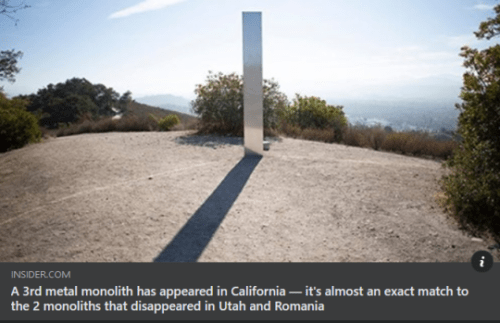
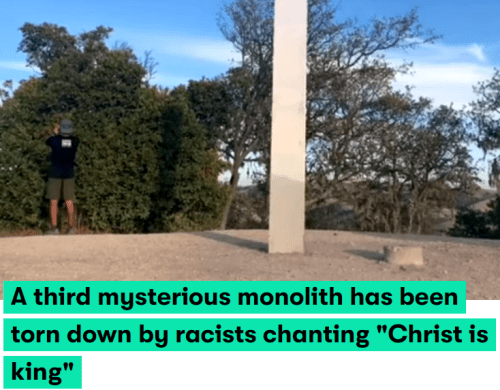
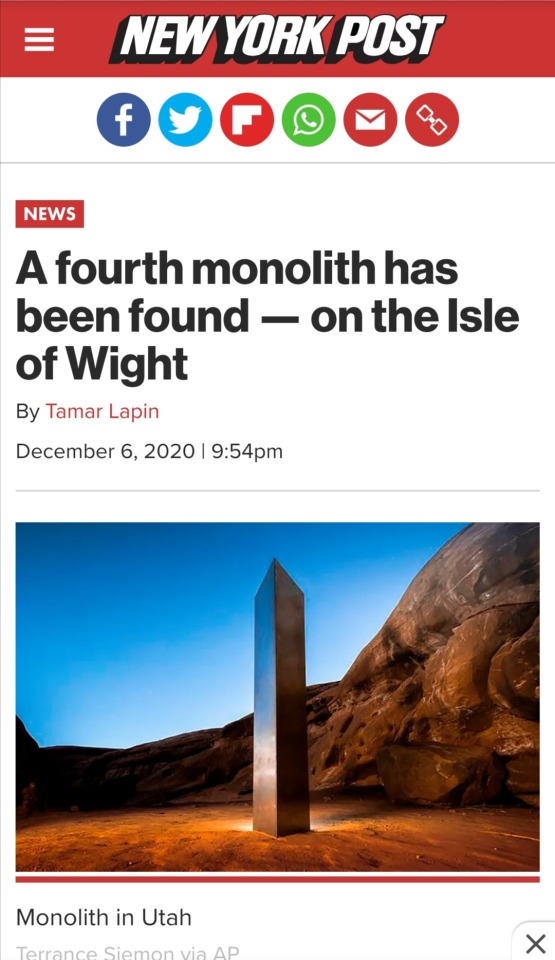
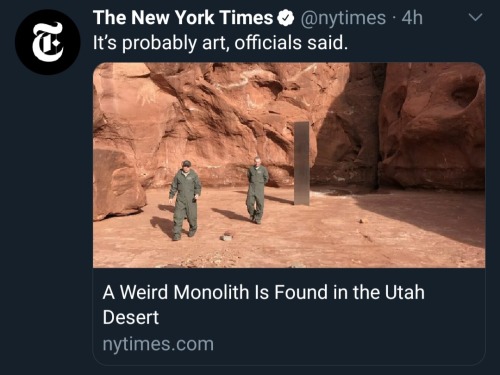
California monument’s gone now

takemetotheastral:

What the fuck even prompted that lmao

im-the-color-red:

according to wikipedia it the youths viewed it as anti-christian, promoting illegal immigration and linked to the antifa movement

baphomet-official:

That random metal pillar? Yeah that’s antifa

squided:

81247190e8b2714fa2b16fda5423ee90cc7bd0cd

This happened yesterday

tardis-mind-palace:

da02343c9b6e2c10f0b4b3ed89d5857984a126d4

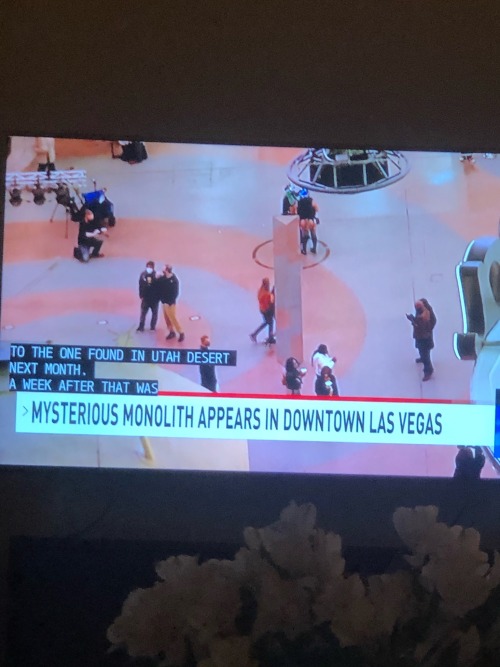
Posted yesterday, apparently the first Utah Monolith (and all the other American ones) were art pieces made by a group called The Most Famous Artist, who want to sell them. They didn’t make or distribute any of the ones outside America, though.


Tags:

#reblogging for reference #today in Apocalypse Memes #(well‚ three years ago in Apocalypse Memes‚ but that’s the tag) #apocalypse cw #racism cw?

derinthescarletpescatarian:

mildlysentientboots:

derinthescarletpescatarian:

heyo-phillip-dead:

heyo-phillip-dead:

789f566438135b1aa2ea288055a4b992fd6d5e1a

the suns getting eaten by space algae and this is the plan

they nuked antartica

Do you have a better idea for what to do when the sun’s getting eaten by space algae

This is the biggest culture shock for me coming from reddit. There we had subreddits so there was context behind a post when you see it.

Here, is it a book? Movie? Game? Am I just REALLY out of touch on current events? Who’s to say

Don’t worry, if you were learning about a real life event then this would be pasted on a Destiel meme.


Tags:

#(the alt text describes this as ”quote from Project Hail Mary by Andy Weir”) #anything that makes me laugh this much deserves a reblog #apocalypse cw #this post was queued because my to-reblog list is too long and I didn’t want to dump it on you all at once
togglesbloggle:

Still riding high from watching Royal Space Force, which is an extraordinary film in ways that films are rarely extraordinary.

There’s a line in that Wikipedia article I linked that’s quoting Ted Chiang- he says that it’s “the single most impressive example of worldbuilding in books or film.” That’s high praise for sure, and I’m not at all sure how much I can argue with it. Every inch and instant of this thing is a gradual unfolding of an internally consistent and fully realized alternate technological civilization, with lavish animation and deep reflection on its machines, architecture, industrial processes, and infrastructure, as the narrative follows a sort of Yuri Gagarin analogue as they advance towards their first manned spaceflight. Their devices are often whimsical, but mechanically grounded, and throughout the film you’re constantly seeing shades of early- and mid-century technologies in jumbled and decontextualized ways that just sing with love for engineering as a human art.

It’s fun, in particular, to watch advances in propulsion technology as they’re reflected in such a complexly realized might-have-been. As with them, so with us- the early 20th century was a time of rapid technological change on any number of axes, but our sudden exhilarating speed was at the center of it all. A single generation saw both the advent of flying machines and the first human in space; they saw wars become world wars, they saw rockets become intercontinental ballistic nuclear warheads. That’s what this movie is about, really; changing the ground truth just enough to let you feel that exhilarating speed again for the first time.

It’s a particularly good movie to watch this week, if you’re the sort of person who’s been avidly following the news on room temperature superconductors. Because we aren’t, quite, the target audience for this movie. It came out in 1987, late enough to be nostalgic for that revolution, late enough to have seen the explosive growth of our capacity for motion become one more S-curve, crushed back down to the horizontal under the weight of the rocketry equations, but still as a thing remembered and experienced firsthand. Like the first Star Wars movie, it’s not just a celebration of rocketry, but also trades in the visual language of urbanization, factionalism, and aerial warfare that erupted across the world as it abruptly shrank. It can be helpful to think very deeply about that moment.

You and I have never seen something like that happen before. We’ve had our technological revolutions, sure. For us, computers have been the axis around which it all turned. And for good reason! The universal machine, the tool that can do anything, as long as that ‘anything’ is made of light. We also shrank the world, in a way. But the information revolution is a subtle thing, dreamlike and insubstantial and interpersonal. The propulsion revolution was a revolution in power, direct and loud and furious. A room temperature superconductor, also, would be a revolution in power. I don’t think you and I are quite ready for what that might mean.

(Particularly with fusion winking at us from just the other side of this thing.)

We can list out some of the first-order consequences of a room temperature superconductor, if it turns out to be real. There’s the incredibly cool levitating rail systems that everybody likes to talk about; the sudden dominance of renewable energy and zero-emission power sources; there’s quantum computers, terahertz antennae, lossless power transmission, a near-apotheosis of battery technology. But that’s nothing, not really. As the old phrase goes, anyone could have predicted the car, it’s predicting the traffic jam that takes a genius.

I know (I think) that power is what states are made of; the revolution in speed saw the end of feudalism, itself already teetering from blows it took from other revolutions in industrialization, and the rise of modern democratic governments- and also the rise of fascist and communist autocracies, the titanic conflicts between them, the industrialization of murder. At the upper end of possibility, that’s what these last couple weeks might mean too. To move an electron through a wire, without any loss of energy to heat, is to create new ideologies we can’t anticipate, new theaters of war, new kinds of government, new global superpowers, new things for the word ‘progress’ to mean. An information revolution can help show you who you are; a revolution in power can give that image the force to change the world from the ground up.

Here’s hoping we’re ready for it.


Tags:

#me‚ gritting my teeth‚ reciting to myself: #”the single best argument in favour of technological progress is that if we do not‚ we will die in mere decades” #”danger lies also in the *absence* of action‚ not only in the presence” #war cw #apocalypse cw #death tw #this post was queued because my to-reblog list is too long and I didn’t want to dump it on you all at once
random-thought-depository:

A TV channel in my area plays Star Trek TOS episodes on Saturday night, last week’s episode was the one about how the writers were scared of hippies lol.

Anyway, in the episode they go the anvilicious route of making all the plants on that planet incredibly poisonous (and the hippies I guess too technophobic to wave a tricorder over a bush before deciding they want to settle there), but before they found out about that there was a line about the planet having no animals and, wait, even if the biochemistries were compatible, wouldn’t a planet with no animals logically be pretty difficult for humans to survive on, especially if the humans are going to go full anprim and live as gatherers?

Obviously getting enough protein might be a problem. And I think there’s some vitamin you can only get from animals? You only need tiny amounts of it IIRC, small enough that preindustrial vegetarian Jains were able to get enough from insect contamination in their food, but on a planet with no animals at all that would be a huge problem!

But also, no animals would logically mean no fruit, right? Fruit exist to entice animals to move a plant’s seeds around for it. If there’s no animals, there’s no reason for plants to expend energy on growing them. Plants on a planet with no animals would probably mostly propagate by wind-blown seeds, and have seeds similar to dandelion fluff, small and very light to easily disperse in the wind.

That basically leaves tubers. Which probably would exist; they might be even more useful on a planet where there are no animals to plunder such rich stores of energy (though I guess there’d probably be parasitic fungi and stuff evolved to exploit them). On the other hand, on a planet with no browsers or grazers the main selection pressures driving the evolution of tubers would be winter, drought, and fire, so if “Eden” has a nice climate it might not have a lot of tubers either.

I don’t think it’d look nice and pretty and park-like like the planet in the episode either. For one thing, I think, just like it has no fruit, it’d have no flowers except things similar to dandelion puffs; there’d be nothing to pollinate them. With no animals with eyes, there’d be no reason for plants to evolve parts with dramatic color contrast. Its vegetation would be rather visually monotonous, mostly greens and browns. But also, and more importantly in terms of its potential (or lack of thereof) for human habitation, that kind of lush but open park-like landscape is what you get when vegetation is being regularly pruned back by people or animals or fire or some combination of those things. I think a planet with no animals would have very different vegetation growth patterns, more like…

In areas dry enough for burning seasons, I think you might get a fire-adapted ecology where fire does some of what grazers and browsers do on Earth. With no grazers and browsers and the main selection pressure being competition between plants, you’d get a dense tangled profusion of growth and lots of slowly decomposing dead plant material (cause there’s no animals to help break it down or prune the leaves before they get a chance to die and fall off, just bacteria and fungi). It’d probably be rather difficult for a human to walk through, a forest choked with a dense profusion of undergrowth and dead stuff; at least there are no thorns, and nothing like poison oak; with no animals there’s no selection pressure for thorns or poison. In dry parts of the year, this accumulation of living and dead plant material becomes a tinderbox for wildfires. If a planet like this looks idyllic from orbit, it’s cause you arrived in mid-spring/mid-autumn; come in summer/winter, when dry seasons are in full swing, and you would see huge wildfires and skies stained with smoke. The oldest and biggest trees are tough enough to usually survive the burning, but the undergrowth is cleared. After the burn, seeds sprout and saplings grow quickly, competing to take advantage of the cleared ground, quickly filling the forest back up with a tangled profusion of growth and an increasing accumulation of slowly rotting dead material, completing the cycle.

On the other hand, on the same planet, in the places with lots of rain and conditions favorable to evergreen plants, there might be forests of enormous trees with forest floors that are pretty open but rather dark, barren, and muddy, with most light being blocked by a dense cathedral-like canopy far above. They’d smell of mud and rot, as the forest floor has accumulated large amounts of slowly decomposing leaf litter fallen from the canopy far above and has a mostly decomposer-based ecology of fungi and bacteria that slowly feeds on that. This is an ecosystem of trees and rot, and the trees make no fruit, they reproduce by seeds like dandelion fluff, small and very light to float on the wind, and they don’t even produce much of that; they live a very long time and reproduce very slowly, partially because they’re Cronuses; their dense canopy starves their own offspring of light along with everything else. For all the green lushness of their canopies these forests are low-energy ecosystems, conservative ecosystems, defined by the almost total victory of ancient, mighty incumbents; these are the Cronus forests, the lands of the Cronus trees.

There’s very little energy available to humans in these Cronus woods. Some edible mushrooms, maybe; that’d be about it. Very possibly humans simply could not survive here, except perhaps in tiny numbers and by living in almost hermit-like isolation and dispersal. The Cronus forests might be almost as hostile as the Sahara or Antarctica, a place where the likely fate of some unfortunate stranded human explorer would be to die of hunger lying on the roots of some sequoia-size Cronus tree that was ancient when Julius Caesar marched into Gaul, staring up into cathedral-like dense green canopy through which only a dim twilight illumination filters even at mid-day, their nose filled with the reek of mud and rot.

Humans might try to terraform the Cronus forests by opening them, but I think that might be quite difficult for low-tech humans. The obvious efficient strategy for attacking the Cronus trees would be to set fire to them, but fire would be one of the primary natural threats to the Cronus trees, and a strong selection pressure on them, so I expect them to be well-adapted to resist it, with fire-retardant chemicals in their bark, wood, sap, and leaves so they resist ignition, and with their sheer size protecting them. The floors of the Cronus woods would receive almost no direct sunlight and therefore be cool and probably damp, and they would have very little undergrowth; fire would probably not spread easily through such an environment. It might be more effective to set torch to the canopies, but they would be dozens or maybe even hundreds of meters above the ground; quite a climb, on a tree that’s probably more-or-less a branchless trunk much of the way up, and you’ve got to climb back down after setting the tree on fire.

That leaves tediously timbering them one by one. With, say, Medieval technology, this might work! The Cronus trees look mighty and their rule assured, but they are actually quite vulnerable. They are slow. Their defenses are purely passive. They literally could not make a single motion to defend themselves as an enemy attacked them with steel saws and axes. And they reproduce very slowly; if they could be timbered efficiently, it would be easy to destroy them faster than they reproduce. An enemy that can think and move is an outside context problem for them, something that never existed in their environment and therefore something they are totally unprepared for. Humans with steel saws and axes might be very efficient killers of these ancient titans.

But steel axes are pretty high-tech if you think agriculture was a mistake. Without metal tools? Imagine trying to bring down a giant sequoia without metal tools, so the axe is something delicate like obsidian or bone, or it has to be very tediously ground to a blade, or you’re basically trying to bring the (big and structurally strong!) tree down by bashing it to a pulp, and big saws are probably impossible. Now imagine having to do that over and over again. Imagine trying to clear a forest that stretches from horizon to horizon that way.

If very low-tech humans can inhabit the Cronus forests at all, I think it might be as, like, highly dispersed small families who move around constantly and rarely meet each other, living on the occasional patch of edible mushrooms or other tid-bit, cause there just isn’t enough energy to support anything denser. And even then, they might have to stick to the edge, where other ecozones are accessible, cause, like, would mushrooms even have all the nutrients you need?

I mean, I guess there would be some kind of open woodland areas? I think a planet with no animals would have more forest than a more Earth-like planet with the same climate, cause you’ve removed a major inhibition on plant growth. Think of how places like highland Scotland used to be forested, but when humans with livestock were added to the mix it became more-or-less an open grassland landscape. I think you’d see a similar effect comparing Plantworld to a version of the same planet that had animals; places that would be marginally viable forest without browsers would be grassland or open woodland with them. But a planet with no animals is probably going to have areas wet enough for plants but too dry for forests, so it’ll probably have some grassland equivalents. But…

… Grass in natural prairies often gets pretty tall, doesn’t it? And that’s with grazers. A grass-equivalent that evolved on a world without grazers would be more selected by competition against other plants. I think no selection by grazing but more selection by competition against other plants might favor more investment in individual stalks. And instead of looking like our grass, these plants would have a cluster of little branches and leaves at the top, for better light interception – and to shade and thus inhibit the growth of any rivals growing near their base!

So, maybe… The experience of walking in a grassland in no animals world is very different from walking through a lawn or even the kind of knee-high or less wild grass I see around the Bay Area. The grass is tall. It’s taller than you. The stalks are thick too; finger-thick and hollow; it’s more like a forest of young bamboo. It feels more like walking in a cornfield. And it’s surprisingly dark. Each stalk has a little crown of small branches and leaves, and together they make a surprisingly dense canopy not far above your head. The effect is claustrophobic and eerie. It has a vibe a little like the Cronus woods. And that’s not an accident; these plants are essentially much smaller versions of the Cronus trees; tighter constraints, similar strategy. This place replicates the Cronus woods in miniature. This is the Cronus prairie, the land of the Cronus grass.

This probably doesn’t sound like a place you’d like. If it’s any consolation, if the Cronus grasses had minds they probably wouldn’t like you either. Unlike the Cronus trees, the Cronus grass is small and vulnerable enough to experience you, fast-moving muscles-having thing, as the outside context problem you are on its world. You move through the Cronus grass and break a stalk. What a calamity to that plant! All the energy and resources it poured into building that stalk, all that work, the work of its life, undone in an instant! Now it has no crown to drink the sun, and its luckier neighboring competitors will close over it, and it will die without ever having a chance to scatter its gossamer seeds on the wind. Or maybe it’s a different, longer-lived sort of Cronus grass (Cronus grass and Cronus tree aren’t species, they’re strategies and niches), and in the soil below the base of the stalk, where the long-lived part of the plant lives, there is a tuber, from which it can pull stored energy to regenerate the stalk, but this only prolongs the failure cycle; that energy was supposed to be used to regenerate the stalk after the Cronus prairie burns in the dry season and is reduced to a horizon-to-horizon smoldering plain of bare earth and ash; now its energy stores will be depleted when the fire comes, and afterward it will not be able to keep pace with the growth and regeneration of its neighbors and rivals, and they will close over it and it will die.

Those tubers make the Cronus prairie the best place on this planet for humans to live. Some of the Cronus grasses are annuals and live only one year, dying in the fires of the dry season and leaving only seeds to continue their lineage, but many are long-lived, with root systems that survive the fires, and these all have tubers that store energy to regenerate their stalk after the burn. In the competitive scramble after the burn the advantage offered by such a pre-existing storehouse of caloric wealth is huge, and these plants evolved in the absence of any animals that might raid them. Think of the Cronus prairie as a vast field of turnips and potatoes, with multiple edible plants in every square foot of soil, stretching from horizon to horizon. Here, at last, is something like the promise of Eden; food provided abundantly by nature with no need to work the soil, simply waiting to be dug up, available in such quantity that there would be little motivation for hard toil or war. That is, if you don’t mind a monotonous diet of bland and nutrient-poor tubers, every day, every year, almost every meal, from the day you are weaned to the day you die. Low-tech human inhabitants of the Cronus prairie would have plenty of calories, but getting enough protein and other nutrients to stay alive and healthy might be a very hard struggle for them, and they might often suffer from malnutrition.

The abundance of the Cronus prairie would also be fragile. The tuber-growing Cronus grasses are long-lived and reproduce slowly, and digging up the tuber would probably destroy one. All the defenses they use to protect their precious hordes of carbohydrates are against enemies as slow as themselves, bacteria and fungi and specialized “vampire plants” without chlorophyll; they are not evolved to deal with raiders with muscles and eyes who can simply physically dig up the tubers. It would be quite easy for humans to slip into harvesting them faster than they reproduce.

Imagine what life might be like for a low-tech inhabitant of the Cronus prairie, a few hundred or a few thousand years after establishment.

Your staple food is something like turnip soup (the stalks of the Cronus grass furnish the fuel for cooking). No animals in your world have yet developed the ability to breathe on land, but there are things a little like insects you can find in creeks and rivers; they are enough to supply your people with the nutrients you absolutely must get from animals. Your people wean your babies late, because mother’s milk is one of the precious few foods available to you that is not Cronus grass tubers and is much more nourishing. You’ve learned to feed your children small amounts of human feces to establish the gut microbiomes they need to process food. Finding enough food that isn’t Cronus grass tubers to get all the nutrients you need is a struggle, but you know if you eat only Cronus grass tubers you will get sick and die slowly. In fact, your people are chronically malnourished and chronically ill, but you live long and most of your children grow up anyway, because your world has few bacteria and viruses capable of infecting humans, so your immune systems don’t have to be very strong. In a desperate measure to increase protein consumption, your people have incorporated cannibalism of the deceased into your funeral rituals (your people view the practice as loving and reverential and normal, not desperate; it is done only to people who have already died of natural causes and allows their flesh to still be part of the tribe while their bones are shallowly buried to nourish the Cronus grass). Water bugs and human flesh are the only meats you’ve ever tasted. It is the beginning of the dry season, and the sky is stained with high-altitude smoke from the vast wildfires already burning hundreds of kilometers to the north. Soon your people must move northwest to the island of barren rock that rises from the Cronus prairie or southwest to the Cronus woods; there is little food in those places, but the fire stops at their boundaries, and to be caught out in the Cronus prairie when the fire walks across it is death.

You know, if you’re going with “hippies have an overly romanticized view of nature and therefore don’t deal with it well,” I think I’d kind of prefer this. Just making the plants on “Eden” super-poisonous is just kind of an arbitrary fuck you, but… “Planet with no animals and sufficient abundance that you can survive as a gatherer without much effort” is totally something I could see as a hippie fantasy; no need for hard toil or alienating technology, little temptation toward war, no dangerous animals that might hurt you, and no temptation toward carnivory. But it’s an ecologically incoherent fantasy! You are also an animal! A world with no place for animals has no place for you! It will probably not be an easy world for you to survive on! Of course, it’d be difficult to portray this in a one hour TV episode; would probably work a lot better with a novel.

Also, you could flip this around: if you think about it, it’s actually really weird that a planet with no animals has fruit (even super-poisonous fruit). Maybe it’s not a natural wilderness. Maybe it’s somebody’s food forest.

Suggestion: “Eden” is actually a heavily gardened world maintained by one of those state-repelling cultures James C. Scott talks about. Its inhabitants are not humanoid and have totally different biochemistry from us, so the local food’s perfectly edible, palatable, and nourishing to them. They mostly live as gatherers at a low level technology, doing the sort of proto-agricultural ecosystem engineering lots of hunter-gatherers do on Earth. They maintain just enough technology to tell them when a starship is dropping by. When that happens, they crawl into little hidey-holes and go into a deep hibernation, which makes starship sensors not register them as alive. They come out of hibernation a few days later or something, which is usually enough time for visitors with more galactic-normal biochemistry to realize the plants on the planet are poisonous to them, lose interest in it, and leave.

Something something people who reject the value system of settler colonial society but don’t reject the terra nullius myth.

Also, I might use these ideas for a planet in my own sci fi, cause it has a premise that easily lends itself to such a scenario happening somewhere in it.


Tags:

#Star Trek #story ideas I will never write #food #illness tw #death tw #apocalypse cw #poison cw? #this post was queued because my to-reblog list is too long and I didn’t want to dump it on you all at once
c-rowlesdraws:

f181fd846171342031f51e53d17be80af519e3f2
e75e9a92bc079ff39195c811248563abc1b38c73

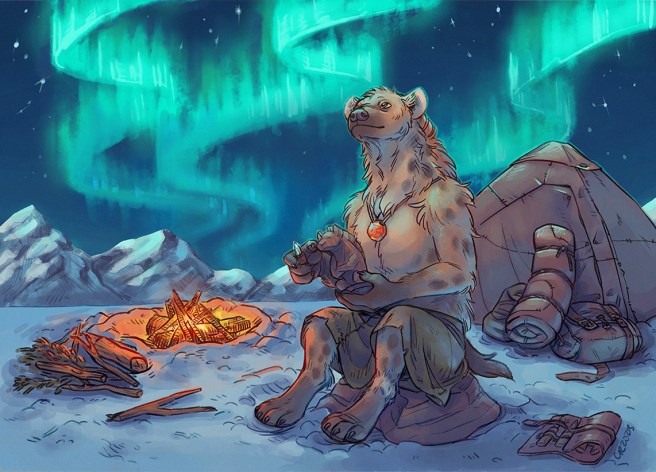
recent DnD character commission – a gnoll adventurer having a peaceful evening under the northern lights.


Tags:

#fascinated by how viscerally disturbing this is #I actually recoiled when I saw it #no not the gnoll‚ they’re fine #the aurora #I recently spent three months writing a story from the perspective of someone #whose homeworld had their Carrington-Event-equivalent when they were at a ~1930s tech level instead of 1850s #((he wasn’t born until several decades later‚ but it’s had an impact on the culture)) #(he ends up on a world that’s happened to have made it to ~modern tech level *without* any major grid collapses) #(that is still naive enough to casually place its trust) #(–more trust than ever–) #(in big centralised electricity supply) #(he’s terrified the Big One is going to hit before he has a chance to talk some sense into them) #apparently this has left its mark on me #(plus of course the fact that‚ well‚ there’s a reason I wrote it that way in the first place) #a big part of me is looking at this picture and going #’how the fuck are you having ”a peaceful evening” under a harbinger of doom’ #(yes I’m aware that the answer is ”when you’re that far north‚ auroras don’t mean much”) #((and it’s D&D so the answer is probably also ”what’s an electrical grid”)) #tag rambles #art #D&D #apocalypse cw

itsbenedict:

f4de6b8dff31d3e2356f5fc888b37c07b1b0cad6
c80cd5ff384249059cfa0bc5d58683235a15f16d

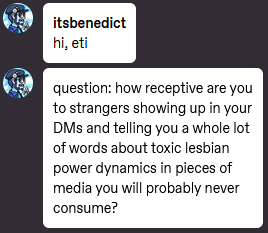
per @etirabys’s request, here’s a paste of a whole lot of highly spoilery words about my favorite Horizon: Forbidden West NPC, who makes so many bad decisions

Keep reading

{{below the cut:}}

alright, so- the game in question is Horizon Forbidden West, a big AAA action game about hunting robot dinosaurs. the interesting stuff is almost entirely unrelated to the robot dinosaurs.

the backstory of this game is- a while back, evil military company made a big military AI that went out of control and took over a bunch of military robots and started wiping out humanity. standard stuff. principal characters are a couple of scientists who were part of the last-ditch effort to try to prevent this from happening before the machines wiped out humanity.

one of them, Elisabet, is spearheading this thing called Project Zero Dawn, whose plan for saving humanity is “build an AI terraforming engine equipped with a bunch of human embryos, hide, and wait for the apocalypse to finish and then re-terraform the dead world”. the other one, Tilda, works for a company called Far Zenith whose plan is “let’s just build a spaceship and GTFO”.

Elisabet is a big deal- genius scientist, multidisciplinary, very famous. Tilda is less of a big deal- she’s like a PR person for the space company, but is head over heels in hero worship for Elisabet.

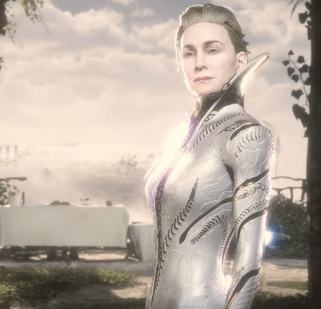
this relationship is fairly loosely sketched out, since it’s only conveyed via backstory and a few audio logs. Tilda asks her out, and Elisabet is- she’s the kind of person who’s totally consumed by duty and doesn’t know what having fun is, and while she’s interested on a physical level, she proves incapable of sustaining a relationship. they break up after a few months- and then their companies start competing for the dwindling resources left as the apocalypse progresses. things turn sour.

Tilda believes- correctly- that Elisabet’s going to die if she stays behind to do her project, and she’s still in love, so she tries to invite her to abandon her world-saving project and join her in space. this doesn’t work, and in their final conversation Elisabet blames Tilda for being complicit in the shortsighted military-industrial fuckery that’s going to imminently destroy the world. this is the last they ever see of each other.

but that’s not where this ends.

Tilda goes off into space with the rest of her company, and they develop advanced biotechnology and she becomes immortal. meanwhile on Earth, that Zero Dawn thing Elisabet was working on… it has problems. doesn’t work quite right. the details are like, the whole plot of the game (two games, actually, forbidden west is a sequel) and involves a whole lot of fighting robot dinosaurs.

but the main thing is- the AI terraforming thing, in an effort to fix itself, decants a clone of its creator, Elisabet Sobeck, to try and create someone with the gene-print authority necessary to fix itself. this clone is the protagonist of the game.

this is, like, a thousand years after the initial apocalypse. a whole bunch of Video Game occurs in which this Elisabet clone, Aloy, saves the world and stuff. and then… Tilda shows up on Earth.

Far Zenith apparently had a problem with their space colony and it got destroyed, and now her and the last few survivors- insanely technologically advanced- have fled back to earth in hopes that Zero Dawn succeeded and the terraforming project would be there intact. they want to take control of the terraforming project and re-terraform the planet to their specifications, wiping out the native life, blah blah blah they’re the villains of this game.

Tilda has an important role in this plan. They’re aware that the terraforming project requires a clone of Elisabet Sobeck to operate, so they made their own. And Tilda, for totally non-ulterior motives, volunteered to raise this clone.

The clone, Beta- her role is just to open doors for the badguys, and her education is spartan and abusive and all-around horrible, designed to turn her into a tool. Tilda does not like this. She feels bad for the clone, and creates a secret VR replica of her house which she covertly invites the clone to, to teach her about art and music and poetry in between the horrible drills. And attempts to woo the teenaged clone of the ex who rejected her and then died.

Beta’s life is this woman running this bizarre abusive hurt/comfort homeschooling experience, and she regards Tilda as both the source of her suffering and the source of her relief and has a bunch of complicated feelings. Beta, like Elisabet, is also terminally duty-poisoned and submits to all this semi-willingly because she’s told it’ll save humanity.

this whole scenario would be enough for me to want to tell you about on its own- but it gets even more fraught.

the other bosses start to catch wind of what she’s doing, and she eventually shuts down the VR house and cuts off contact with Beta to protect her from reprisal, which Beta interprets as abandonment and adds a whole other layer to this nightmare smoothie.

this- and also witnessing the various evil villain stuff they start doing on earth- causes Beta to defect and be rescued by Aloy, her badass videogame protagonist dinosaur-hunting clone. she dumps all this Tilda-related trauma on Aloy and starts plotting to bring her down. Tilda, meanwhile, is despondent, because Elisabet Sobeck broke up with her again and she blames herself for it again.

but then she discovers- oh. hey. hold on. there’s another Elisabet. this one is a sexy twenty-something dinosaur-exploding badass who’s sticking it to her awful coworkers and saving the world.
she has another chance!

so she bides her time, and- during a climactic cutscene where the other baddies all show up to re-kidnap Beta- allows them to kill Aloy’s friends so that she’ll be defenseless and alone, and then picks that moment to jump in, betray her bosses, and rescue Aloy at the last minute.

Aloy wakes up in the basement of Tilda’s actual house, which contains a vault full of classical paintings and various art, and Tilda tries to do the same high-culture seduction act as Aloy’s selfless savior.

this Elisabet Sobeck is also duty-poisoned, and has a hundred questions, and her attempt at playing the wise benevolent savior falls flat. she has like. a fancy dinner prepared on a balcony at sunset, to make it as romantic as possible- but oh, fuck, this Elisabet Sobeck is also duty-poisoned and can’t think about anything but world-saving, she’s about to fuck it up again.

so she frantically tries to rewrite the script and concedes a bunch of stuff and Aloy very forcefully tells her her plan to betray the others is stupid and won’t work and here’s her much better plan, which is of course a dance she’s danced before. but she refuses to give up on making it work with this woman who’s into her but has rejected her three times.

ultimately Tilda is the final boss of the game, after her various attempts to get in good with Aloy by helping her betray the main villains don’t work as intended. she tries to get Aloy and Beta to run away into space with her (there’s another twist final act threat to the earth, not really relevant), and when they reject her again she summons a big robot to try and kidnap them. the final boss is not difficult as a fight as much as it is difficult to listen to this woman completely lose her mind throwing everything she can think of at the wall to try to get Elisabet Sobeck to give her another chance.

it’s way more fucked-up and poignant than i was expecting from the big AAA robot dinosaur fights game. this woman tries every awful move in the book to make her ex love her again and just keeps taking it too far and self-sabotaging.

anyway that’s it. the main thought i had walking away from that was “oh man, i know exactly who would eat this up, and also there’s zero chance she plays like 200 hours of videogame to find out about it”


Tags:

#anything that makes me laugh this much deserves a reblog #(the incredible secondhand fuckor in those DMs) #Horizon: Forbidden West #reactionblogging #abuse cw #apocalypse cw #this post was queued because my to-reblog list is too long and I didn’t want to dump it on you all at once