{{previous post in sequence}}


rustingbridges:

The concept of companies paying for their employees’ food continues to boggle me, but then my entire family works in food service, so our idea of company-provided food is “the customer changed their mind about wanting the food after I made it, and the boss let me keep it”.

Covering some food during travel is pretty standard, I think, since it’s a business expense and employees rightly don’t want to pay for it. My old roommate worked at best buy (which was by no means a great employer) and even they gave him a per diem which covered (cheap) food.

B: Nah, there are starving children in Africa future selves to think of. We keep getting inheritances just as we’re about to run out of money, but that streak’s bound to end sooner or later, and it’s best to start preparing now.

So the question with this is kind of, where does it end? I think if I put my back into it, I could get by pretty much without ever paying for food, except when doing stuff with friends. I’ve definitely done two or three week stretches.

And even if you are counting labor costs, you can buy food at the supermarket for $1-2/day. It just gets really boring.

We keep getting inheritances just as we’re about to run out of money, but that streak’s bound to end sooner or later, and it’s best to start preparing now.

Also no offense but that sounds like a pretty bad situation and hopefully you can get out of it somehow?


brin-bellway:

>>and employees rightly don’t want to pay for it.<<

I get the justification for paying for the hotels and such because the employee wouldn’t otherwise have needed to buy them, but you have to eat either way. Sure, it’d be *nice* if they paid for it, but I wouldn’t be pissed if they didn’t.

(I speak from some experience here: my job *did* used to provide some free food each week (but only a small amount, and only from a limited selection of the cheaper menu items), but later switched to an employee-discount system. And every friend or family member who learned about it got angry on my behalf *even though I wasn’t angry about it myself*, and it was really annoying having to try to calm them down and defend against their attempts to instil negative emotions about it in me.)

>>It just gets really boring.<<

I would be perfectly content to eat peanut-butter-on-a-spoon for lunch every day for years on end. The *occasional* variety in food is nice, but as the exception, not the norm.

(Also I have a low metabolism and an appetite to match, which is helpful.)

I barely even have to try to knock my food budget down to about four USD a day, so in practice I haven’t done that much other than severely cut back on restaurants.

>>I could get by pretty much without ever paying for food, except when doing stuff with friends. I’ve definitely done two or three week stretches.<<

How?

>>Also no offense but that sounds like a pretty bad situation and hopefully you can get out of it somehow?<<

…I am worried by the fact that you started this sentence with “no offense”, because it suggests that there is something offensive about the rest of the sentence that I have overlooked.

(Is it something to do with, like, dignity or some shit?)

Our expenses are already extremely low by developed standards even without going full-on rice-and-beans [link]–a thousand USD per person per month would be enough, with room for a small emergency fund–but underemployment is a big problem.

(Though to be fair, I have a positive amount of money and have never been homeless, which makes me better off than most of my friends. (From multiple social circles, at that.))


rustingbridges:

I get the justification for paying for the hotels and such because the employee wouldn’t otherwise have needed to buy them, but you have to eat either way.

Sure, but I don’t need to eat out. Compare: eating in the comfort of my home, at supermarket prices, with they company of my lovely girlfriend vs eating at some random nearby restaurant, at corresponding prices, with the company of some random work people (who I happen to like, and may I always be so lucky).

If they want me to keeping doing these kinds of things, they ought to make it minimally bad. My job didn’t involve regular travel (I only did a few times) so I can’t comment on how that works, but while I’m sure the expectations change, I would expect it to change in the direction of more generous compensation for traveling, since traveling kind of sucks.

Sure, it’d be nice if they paid for it, but I wouldn’t be pissed if they didn’t.

I’m going to accuse you of being insufficiently entitled for your own good here. Sure, the expectations should probably with the job, but if I’m doing this for my employer he ought to cover it.

How?

In short, be places where they’re giving out food. Exact options may vary. In nyc you can get roughly a large pizza every night monday thru thursday just from tech meetups, if you’re willing to talk about The Cloud™ and Data Science™. There’s all sorts of things where there’s food and all you gotta do is be around to eat it.

Somewhat less respectably than that, a lot of businesses get rid of extra food. Depending on where you are, there may be organizations that are dedicated to not letting it go to waste. Depending on what you’re after you may in contention with various other indigents but not necessarily – there’s a lot of stuff that’s only good if you have a kitchen and the will to use it.

And at the bottom end of the spectrum, you wouldn’t believe some of the things people throw in the trash. Am I above eating some fancy looking, individually wrapped gifty desserts because the container was once adjacent to garbage? No I am not. (totally untouched nice looking garbage is disproportionately gifty looking, presumably because they are perfunctory, unwanted, and quickly disposed of gifts.)

…I am worried by the fact that you started this sentence with “no offense”, because it suggests that there is something offensive about the rest of the sentence that I have overlooked.

Uh I would say I probably said no offense because it’s a combination of: a) slightly prying b) casting some amount of unasked for advice / judgement on a situation which clearly I have spent less time thinking about than the person to whom I am speaking.


voxette-vk:

And at the bottom end of the spectrum, you wouldn’t believe some of the things people throw in the trash. Am I above eating some fancy looking, individually wrapped gifty desserts because the container was once adjacent to garbage? No I am not. (totally untouched nice looking garbage is disproportionately gifty looking, presumably because they are perfunctory, unwanted, and quickly disposed of gifts.)

I suppose I wouldn’t either… but how do you do this in practice without spending a lot of time sorting through nasty garbage?


rustingbridges:

Luck, mostly? I used to walk past on my way home from work a particular trash can which was usually completely full and often had that kind of thing just sitting out on top or next to it.

I’m not sure why that particular trash can was like that, but it was a popular / touristy area so it must have just been a, uh, blessed trash can in that respect.

I would not recommend actual garbage sorting as a hobby (fun fact: this is very specifically a legally prohibited activity in many public places).

I think people tend to put “nice” stuff off to the side rather than really shoving it in there, anyway.


brin-bellway:

[reblogging this version mostly for completeness; all of my responses are to the post immediately after my last one]

>>Sure, but I don’t need to eat out.<<

You don’t need to eat out at a hotel either. I always make sure I know where the local supermarkets are when I’m going to a hotel. Maybe there are hotels where you can reach a restaurant but not a supermarket, but I’ve never had to deal with that.

>>I’m going to accuse you of being insufficiently entitled for your own good here.<<

I’ve seen what happens to people who don’t accept their lot. I want no part of it.

(I don’t even mean what *other people* do to them, just the way that the resentment makes them miserable, and the way it skews their decision-making: some of them towards risky plans for the chance of a better life, others towards denial, in both cases ending up even worse off than they’d have been if they’d buckled down and dealt with it.)

>>If they want me to keeping doing these kinds of things, they ought to make it minimally bad.<<

Or else what? You’ll leave? Good luck paying the bills. Hell, you’re *American*: at least my dad was still able to get his broken ankle fixed.

(He was laid off from abovementioned cushy programming job almost thirteen years ago, and has never again made enough to make ends meet. He’s finally back in a position where he can at least make *some* money, just not enough.)

>>In nyc you can get roughly a large pizza every night monday thru thursday just from tech meetups, if you’re willing to talk about The Cloud™ and Data Science™. There’s all sorts of things where there’s food and all you gotta do is be around to eat it.<<

Who–among the set of people who care enough about how much their food costs to seek out free food, but are not living on the street–can afford to live *that* close to places where they’re giving out food? I’m pretty sure the transportation costs of getting to any place like that would be enough to buy an entire day’s worth of food, and instead you only get one meal out of it.

(Low appetite is a blessing when you’re eating supermarket food and can make the same size of stockpile last longer, but it does mean I suck at exploiting all-you-can-eat situations. I try very hard these days to avoid buffets, because compared to normal restaurants they’re more money for *less* food (in that you don’t get to take home your leftovers).)

>>Somewhat less respectably than that, a lot of businesses get rid of extra food. Depending on where you are, there may be organizations that are dedicated to not letting it go to waste.<<

We’ve had friends go to food banks, but I think my parents think those are for people more desperate than we are. Hell, they might even be right.

(Though when said friends offer us the bits of a food-bank variety pack they aren’t able to use themselves, we *do* at least accept them. Ate a cookie bar from a food-bank-sourced bake-it-yourself just yesterday.)

>>And at the bottom end of the spectrum, you wouldn’t believe some of the things people throw in the trash. Am I above eating some fancy looking, individually wrapped gifty desserts because the container was once adjacent to garbage? No I am not.<<

I’ve experimented with dumpster diving a few times. Mostly for stuff to sell, but I did once find and redeem a voucher for a free protein bar. (I turned down the spicy ramen cups, though: I dislike pain.)

>>I probably said no offense because it’s a combination of: a) slightly prying<<

It’s not like I don’t talk about it [link].

>>b) casting some amount of unasked for advice / judgement on a situation which clearly I have spent less time thinking about than the person to whom I am speaking.<<

I don’t mind people calling it a bad situation, though as you can probably tell from the rest of this reply I have had more than enough [people trying to coerce me into having negative emotions] for one lifetime. (Although usually it’s people trying to get me to perform grief about [death of a relative I was not close to] or anger about [insert latest SJ Discourse topic].)


humanfist:

You don’t need to eat out at a hotel either. I always make sure I know where the local supermarkets are when I’m going to a hotel. Maybe there are hotels where you can reach a restaurant but not a supermarket, but I’ve never had to deal with that.

Most hotels I’ve stayed at have minimal to no cooking facilities available to guests.  Also, this massively depends on what you are making but grocery buying often requires buying more of a single ingredient than you’ll use in the course of a single business trip.

@rustingbridges responded here, and @serinemolecule responded here.

I knew my mom (who is in charge of deciding where we stay while travelling) was specifically selecting for places with kitchens, but I hadn’t realised they were *that* rare if you weren’t specifically selecting for them.

Also I’m not sure why so many people seem to be so attached to having a Hot Meal for dinner, even when in situations that aren’t conducive to them.

rustingbridges: >>I’d say anyone who’s concerned about their ability to budget for decent food at all is probably in the demo for using a foodbank<<

I expect to remain concerned about whether I can afford decent food until and unless I become independently wealthy [link]. Hundreds of thousands of dollars of runway is, empirically, not enough.

rustingbridges: >>If it’s mine by right I’m just taking it. If someone else wants it they can come get it.<<

You need to try *much* harder to cover your ass, or it is going to get bit.

(Also, the main examples of resentful entitlement I was thinking of are some Uber Eats drivers I am “”friends”“ with who complain (to *me*, *knowing* I can’t do anything about it, just inflicting their negativity on me to no benefit) whenever anyone doesn’t tip them, even though it says right there on the website that customers should not feel obligated to tip, and that was what the drivers signed up for. And the people telling stories from the Good Old Days™, when single blue-collar salaries were large enough to raise five children on and still pay off your mortgage early, and savings accounts gave 5% interest.)

Serine, I tried to respond to your post, wrote out a whole draft with links and everything. But I can’t help but react to its condescension and hostility, and probably you’re just one of those people who’s naturally splainy [link] and aren’t actually aware that you keep coming across as picking fights with me.


Tags:

#discourse cw #reply via reblog #adventures in human capitalism #food #disordered eating? #long post #death mention
{{previous post in sequence}}


rustingbridges:

The concept of companies paying for their employees’ food continues to boggle me, but then my entire family works in food service, so our idea of company-provided food is “the customer changed their mind about wanting the food after I made it, and the boss let me keep it”.

Covering some food during travel is pretty standard, I think, since it’s a business expense and employees rightly don’t want to pay for it. My old roommate worked at best buy (which was by no means a great employer) and even they gave him a per diem which covered (cheap) food.

B: Nah, there are starving children in Africa future selves to think of. We keep getting inheritances just as we’re about to run out of money, but that streak’s bound to end sooner or later, and it’s best to start preparing now.

So the question with this is kind of, where does it end? I think if I put my back into it, I could get by pretty much without ever paying for food, except when doing stuff with friends. I’ve definitely done two or three week stretches.

And even if you are counting labor costs, you can buy food at the supermarket for $1-2/day. It just gets really boring.

We keep getting inheritances just as we’re about to run out of money, but that streak’s bound to end sooner or later, and it’s best to start preparing now.

Also no offense but that sounds like a pretty bad situation and hopefully you can get out of it somehow?


brin-bellway:

>>and employees rightly don’t want to pay for it.<<

I get the justification for paying for the hotels and such because the employee wouldn’t otherwise have needed to buy them, but you have to eat either way. Sure, it’d be *nice* if they paid for it, but I wouldn’t be pissed if they didn’t.

(I speak from some experience here: my job *did* used to provide some free food each week (but only a small amount, and only from a limited selection of the cheaper menu items), but later switched to an employee-discount system. And every friend or family member who learned about it got angry on my behalf *even though I wasn’t angry about it myself*, and it was really annoying having to try to calm them down and defend against their attempts to instil negative emotions about it in me.)

>>It just gets really boring.<<

I would be perfectly content to eat peanut-butter-on-a-spoon for lunch every day for years on end. The *occasional* variety in food is nice, but as the exception, not the norm.

(Also I have a low metabolism and an appetite to match, which is helpful.)

I barely even have to try to knock my food budget down to about four USD a day, so in practice I haven’t done that much other than severely cut back on restaurants.

>>I could get by pretty much without ever paying for food, except when doing stuff with friends. I’ve definitely done two or three week stretches.<<

How?

>>Also no offense but that sounds like a pretty bad situation and hopefully you can get out of it somehow?<<

…I am worried by the fact that you started this sentence with “no offense”, because it suggests that there is something offensive about the rest of the sentence that I have overlooked.

(Is it something to do with, like, dignity or some shit?)

Our expenses are already extremely low by developed standards even without going full-on rice-and-beans [link]–a thousand USD per person per month would be enough, with room for a small emergency fund–but underemployment is a big problem.

(Though to be fair, I have a positive amount of money and have never been homeless, which makes me better off than most of my friends. (From multiple social circles, at that.))


rustingbridges:

I get the justification for paying for the hotels and such because the employee wouldn’t otherwise have needed to buy them, but you have to eat either way.

Sure, but I don’t need to eat out. Compare: eating in the comfort of my home, at supermarket prices, with they company of my lovely girlfriend vs eating at some random nearby restaurant, at corresponding prices, with the company of some random work people (who I happen to like, and may I always be so lucky).

If they want me to keeping doing these kinds of things, they ought to make it minimally bad. My job didn’t involve regular travel (I only did a few times) so I can’t comment on how that works, but while I’m sure the expectations change, I would expect it to change in the direction of more generous compensation for traveling, since traveling kind of sucks.

Sure, it’d be nice if they paid for it, but I wouldn’t be pissed if they didn’t.

I’m going to accuse you of being insufficiently entitled for your own good here. Sure, the expectations should probably with the job, but if I’m doing this for my employer he ought to cover it.

How?

In short, be places where they’re giving out food. Exact options may vary. In nyc you can get roughly a large pizza every night monday thru thursday just from tech meetups, if you’re willing to talk about The Cloud™ and Data Science™. There’s all sorts of things where there’s food and all you gotta do is be around to eat it.

Somewhat less respectably than that, a lot of businesses get rid of extra food. Depending on where you are, there may be organizations that are dedicated to not letting it go to waste. Depending on what you’re after you may in contention with various other indigents but not necessarily – there’s a lot of stuff that’s only good if you have a kitchen and the will to use it.

And at the bottom end of the spectrum, you wouldn’t believe some of the things people throw in the trash. Am I above eating some fancy looking, individually wrapped gifty desserts because the container was once adjacent to garbage? No I am not. (totally untouched nice looking garbage is disproportionately gifty looking, presumably because they are perfunctory, unwanted, and quickly disposed of gifts.)

…I am worried by the fact that you started this sentence with “no offense”, because it suggests that there is something offensive about the rest of the sentence that I have overlooked.

Uh I would say I probably said no offense because it’s a combination of: a) slightly prying b) casting some amount of unasked for advice / judgement on a situation which clearly I have spent less time thinking about than the person to whom I am speaking.


voxette-vk:

And at the bottom end of the spectrum, you wouldn’t believe some of the things people throw in the trash. Am I above eating some fancy looking, individually wrapped gifty desserts because the container was once adjacent to garbage? No I am not. (totally untouched nice looking garbage is disproportionately gifty looking, presumably because they are perfunctory, unwanted, and quickly disposed of gifts.)

I suppose I wouldn’t either… but how do you do this in practice without spending a lot of time sorting through nasty garbage?


rustingbridges:

Luck, mostly? I used to walk past on my way home from work a particular trash can which was usually completely full and often had that kind of thing just sitting out on top or next to it.

I’m not sure why that particular trash can was like that, but it was a popular / touristy area so it must have just been a, uh, blessed trash can in that respect.

I would not recommend actual garbage sorting as a hobby (fun fact: this is very specifically a legally prohibited activity in many public places).

I think people tend to put “nice” stuff off to the side rather than really shoving it in there, anyway.

[reblogging this version mostly for completeness; all of my responses are to the post immediately after my last one]

>>Sure, but I don’t need to eat out.<<

You don’t need to eat out at a hotel either. I always make sure I know where the local supermarkets are when I’m going to a hotel. Maybe there are hotels where you can reach a restaurant but not a supermarket, but I’ve never had to deal with that.

>>I’m going to accuse you of being insufficiently entitled for your own good here.<<

I’ve seen what happens to people who don’t accept their lot. I want no part of it.

(I don’t even mean what *other people* do to them, just the way that the resentment makes them miserable, and the way it skews their decision-making: some of them towards risky plans for the chance of a better life, others towards denial, in both cases ending up even worse off than they’d have been if they’d buckled down and dealt with it.)

>>If they want me to keeping doing these kinds of things, they ought to make it minimally bad.<<

Or else what? You’ll leave? Good luck paying the bills. Hell, you’re *American*: at least my dad was still able to get his broken ankle fixed.

(He was laid off from abovementioned cushy programming job almost thirteen years ago, and has never again made enough to make ends meet. He’s finally back in a position where he can at least make *some* money, just not enough.)

>>In nyc you can get roughly a large pizza every night monday thru thursday just from tech meetups, if you’re willing to talk about The Cloud™ and Data Science™. There’s all sorts of things where there’s food and all you gotta do is be around to eat it.<<

Who–among the set of people who care enough about how much their food costs to seek out free food, but are not living on the street–can afford to live *that* close to places where they’re giving out food? I’m pretty sure the transportation costs of getting to any place like that would be enough to buy an entire day’s worth of food, and instead you only get one meal out of it.

(Low appetite is a blessing when you’re eating supermarket food and can make the same size of stockpile last longer, but it does mean I suck at exploiting all-you-can-eat situations. I try very hard these days to avoid buffets, because compared to normal restaurants they’re more money for *less* food (in that you don’t get to take home your leftovers).)

>>Somewhat less respectably than that, a lot of businesses get rid of extra food. Depending on where you are, there may be organizations that are dedicated to not letting it go to waste.<<

We’ve had friends go to food banks, but I think my parents think those are for people more desperate than we are. Hell, they might even be right.

(Though when said friends offer us the bits of a food-bank variety pack they aren’t able to use themselves, we *do* at least accept them. Ate a cookie bar from a food-bank-sourced bake-it-yourself just yesterday.)

>>And at the bottom end of the spectrum, you wouldn’t believe some of the things people throw in the trash. Am I above eating some fancy looking, individually wrapped gifty desserts because the container was once adjacent to garbage? No I am not.<<

I’ve experimented with dumpster diving a few times. Mostly for stuff to sell, but I did once find and redeem a voucher for a free protein bar. (I turned down the spicy ramen cups, though: I dislike pain.)

>>I probably said no offense because it’s a combination of: a) slightly prying<<

It’s not like I don’t talk about it [link].

>>b) casting some amount of unasked for advice / judgement on a situation which clearly I have spent less time thinking about than the person to whom I am speaking.<<

I don’t mind people calling it a bad situation, though as you can probably tell from the rest of this reply I have had more than enough [people trying to coerce me into having negative emotions] for one lifetime. (Although usually it’s people trying to get me to perform grief about [death of a relative I was not close to] or anger about [insert latest SJ Discourse topic].)


Tags:

#adventures in human capitalism #food #disordered eating? #reply via reblog #discourse cw? #long post #death mention


{{next post in sequence}}

{{previous post in sequence}}


rustingbridges:

The concept of companies paying for their employees’ food continues to boggle me, but then my entire family works in food service, so our idea of company-provided food is “the customer changed their mind about wanting the food after I made it, and the boss let me keep it”.

Covering some food during travel is pretty standard, I think, since it’s a business expense and employees rightly don’t want to pay for it. My old roommate worked at best buy (which was by no means a great employer) and even they gave him a per diem which covered (cheap) food.

B: Nah, there are starving children in Africa future selves to think of. We keep getting inheritances just as we’re about to run out of money, but that streak’s bound to end sooner or later, and it’s best to start preparing now.

So the question with this is kind of, where does it end? I think if I put my back into it, I could get by pretty much without ever paying for food, except when doing stuff with friends. I’ve definitely done two or three week stretches.

And even if you are counting labor costs, you can buy food at the supermarket for $1-2/day. It just gets really boring.

We keep getting inheritances just as we’re about to run out of money, but that streak’s bound to end sooner or later, and it’s best to start preparing now.

Also no offense but that sounds like a pretty bad situation and hopefully you can get out of it somehow?

>>and employees rightly don’t want to pay for it.<<

I get the justification for paying for the hotels and such because the employee wouldn’t otherwise have needed to buy them, but you have to eat either way. Sure, it’d be *nice* if they paid for it, but I wouldn’t be pissed if they didn’t.

(I speak from some experience here: my job *did* used to provide some free food each week (but only a small amount, and only from a limited selection of the cheaper menu items), but later switched to an employee-discount system. And every friend or family member who learned about it got angry on my behalf *even though I wasn’t angry about it myself*, and it was really annoying having to try to calm them down and defend against their attempts to instil negative emotions about it in me.)

>>It just gets really boring.<<

I would be perfectly content to eat peanut-butter-on-a-spoon for lunch every day for years on end. The *occasional* variety in food is nice, but as the exception, not the norm.

(Also I have a low metabolism and an appetite to match, which is helpful.)

I barely even have to try to knock my food budget down to about four USD a day, so in practice I haven’t done that much other than severely cut back on restaurants.

>>I could get by pretty much without ever paying for food, except when doing stuff with friends. I’ve definitely done two or three week stretches.<<

How?

>>Also no offense but that sounds like a pretty bad situation and hopefully you can get out of it somehow?<<

…I am worried by the fact that you started this sentence with “no offense”, because it suggests that there is something offensive about the rest of the sentence that I have overlooked.

(Is it something to do with, like, dignity or some shit?)

Our expenses are already extremely low by developed standards even without going full-on rice-and-beans [link]–a thousand USD per person per month would be enough, with room for a small emergency fund–but underemployment is a big problem.

(Though to be fair, I have a positive amount of money and have never been homeless, which makes me better off than most of my friends. (From multiple social circles, at that.))


Tags:

#food #disordered eating? #adventures in human capitalism #reply via reblog


{{next post in sequence}}

{{previous post in sequence}}


shieldfoss:

It’s probably gonna get old if it keeps happening but business travel is still incredibly interesting to me.

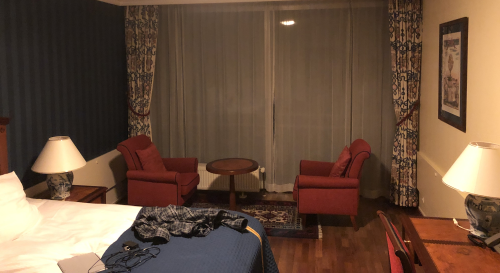
This has been one of the cooler hotel rooms. (Not featured because it films poorly in the dark: The ocean past these east-facing windows)

tumblr_inline_po66hmmufz1tl8dj9_500


shieldfoss:

how is the hotel internet?

Internet is your standard Big City Scandinavia internet (75 MBps so less than at home but fast enough for my purposes – fast enough that I didn’t even think to check it before you asked)

and how is business travel interesting to you?

I’m just not super used to travelling, nor staying outside my own home. I don’t have to worry about breakfast, lunch or dinner and while I hear that hotel food becomes bland once you get used to it, I sure haven’t yet. Also if I was at “regular” work tomorrow I’d be writing some astonishingly dull product design specs for a new component in our software but tomorrow and Tuesday I’m ⬛⬛⬛⬛⬛⬛⬛⬛⬛⬛⬛⬛⬛⬛⬛⬛⬛⬛⬛⬛⬛⬛ ⬛⬛⬛⬛⬛⬛⬛⬛⬛⬛ ⬛⬛⬛⬛⬛⬛⬛ ⬛⬛⬛⬛⬛⬛⬛⬛⬛⬛⬛ ⬛ ⬛⬛⬛⬛⬛⬛⬛⬛⬛ instead and that’s kind of cool.


shacklesburst:

Fair. Also that makes me want to finally visit Scandinavia and try out your hotel internet.

I hear that hotel food becomes bland once you get used to it

I’m not even business traveling that much and this rings extremely true to me and I’ve reached that point way faster than I’d ever have anticipated. I mean it’s probably different if you’re a high-class executive staying at really upscale hotels, but the usual buffet fare at 3-4 stars gets old pretty fast. Same with airport lounge food – I still eat there though, not least because it the hot buffet sure beats shelling out like €20 for a small sandwich.


rustingbridges:

So are y’all like, actually eating at the hotel? I can see the occasional convenience but isn’t there the option of just going down the street or whatever for something more interesting.


brin-bellway:

I don’t know about them, but why would I pay money to eat food from down the street when hotel food is free?

(Valid answers include “the meal the hotel was serving today was a food I find actively repulsive” and “they only serve dinner Monday – Thursday and it is dinnertime on Saturday”, but do not include “the hotel food was bland”. It’s not like I’d be able to enjoy paid food anyway, haunted by the knowledge that it was a waste of money. Plus I kind of like blandness, tbh.)

Context: I have not business-travelled *per se*, but when we do travel we tend to stay at hotels catering primarily to businesspeople. I am thinking of hotels mostly in Massachusetts, with occasional other states plus a couple in Ontario.


rustingbridges:

Possible answers:

A) it’s a business trip, I’m expensing dinner. It’s free either way. Also how common is free dinner anyway, don’t most hotel restaurants charge.

B) I regularly pay money for the purpose of eating food I like more, and regularly turn down free food.

C) I value the cluster of food novelty related goods. The associated opportunity cost of staying in is especially high if you’re traveling anywhere decent (although this goes down if you go the same places a lot, but in that case, haven’t you found anywhere you like?)

A-1: The concept of companies paying for their employees’ food continues to boggle me, but then my entire family works in food service, so our idea of company-provided food is “the customer changed their mind about wanting the food *after* I made it, and the boss let me keep it”. (Although occasionally my brother will be rewarded with a free meal for training a newbie or agreeing to show up on a day he would normally have off.)

If the marginal increase in food quality is free, then absolutely maximise quality.

A-2: IME, free hot breakfast 7 days/week and free dinner Monday – Thursday is standard for business hotels. (Slightly lower-tier hotels offer cold breakfast and no dinner.) Many also keep cookies by the front desk, and some keep packets of hot-chocolate mix by the coffee machine.

I think I have been to one (1) hotel with a restaurant that even theoretically charged money, and that was at Disney World. (And in that case my mom had managed to wrangle some promotions into getting us a meal plan for free, so in practice even *that* hotel food didn’t actually cost anything.)

B: Nah, there are starving children in Africa future selves to think of. We keep getting inheritances just as we’re about to run out of money, but that streak’s bound to end sooner or later, and it’s best to start preparing now.

C: I *can* enjoy food, but I seem to have a lower cap on how much pleasure I can experience from a meal than other people do, even when the cap *isn’t* further lowered by the meal’s distance from the financially-optimal meal. (If a meal cost more than about $7, it’s pretty much guaranteed that I will get net-negative utility from it. Meals in the $3 – $7 range are increasingly iffy.)

(For anyone wondering “but if you’re that much of a miser, why do you even *know* what hotels above the bottom price tier are like?”: early on it was because Dad had a cushy programming job, in the middle it was because my parents were hiding the extent of the problem from their kids, and later it was because they–while not *oblivious* or anything–seem to be incapable of fully *grokking* the severity of the problem and occasionally drag me to sub-optimal places.)


Tags:

#adventures in human capitalism #food #disordered eating? #reply via reblog #I uh may be feeling guilty about acquiescing when my boss told me to go home after 8 hours on Saturday #when I’m pretty sure I could have talked him into 9.5 if I’d tried


{{next post in sequence}}

rustingbridges:

shacklesburst:

shieldfoss:

shieldfoss:

It’s probably gonna get old if it keeps happening but business travel is still incredibly interesting to me.

This has been one of the cooler hotel rooms. (Not featured because it films poorly in the dark: The ocean past these east-facing windows)

tumblr_inline_po66hmmufz1tl8dj9_500

how is the hotel internet?

Internet is your standard Big City Scandinavia internet (75 MBps so less than at home but fast enough for my purposes – fast enough that I didn’t even think to check it before you asked)

and how is business travel interesting to you?

I’m just not super used to travelling, nor staying outside my own home. I don’t have to worry about breakfast, lunch or dinner and while I hear that hotel food becomes bland once you get used to it, I sure haven’t yet. Also if I was at “regular” work tomorrow I’d be writing some astonishingly dull product design specs for a new component in our software but tomorrow and Tuesday I’m ⬛⬛⬛⬛⬛⬛⬛⬛⬛⬛⬛⬛⬛⬛⬛⬛⬛⬛⬛⬛⬛⬛ ⬛⬛⬛⬛⬛⬛⬛⬛⬛⬛ ⬛⬛⬛⬛⬛⬛⬛ ⬛⬛⬛⬛⬛⬛⬛⬛⬛⬛⬛ ⬛ ⬛⬛⬛⬛⬛⬛⬛⬛⬛ instead and that’s kind of cool.

Fair. Also that makes me want to finally visit Scandinavia and try out your hotel internet.

I hear that hotel food becomes bland once you get used to it

I’m not even business traveling that much and this rings extremely true to me and I’ve reached that point way faster than I’d ever have anticipated. I mean it’s probably different if you’re a high-class executive staying at really upscale hotels, but the usual buffet fare at 3-4 stars gets old pretty fast. Same with airport lounge food – I still eat there though, not least because it the hot buffet sure beats shelling out like €20 for a small sandwich.

So are y’all like, actually eating at the hotel? I can see the occasional convenience but isn’t there the option of just going down the street or whatever for something more interesting.

I don’t know about them, but why would I pay money to eat food from down the street when hotel food is free?

(Valid answers include “the meal the hotel was serving today was a food I find actively repulsive” and “they only serve dinner Monday – Thursday and it is dinnertime on Saturday”, but do not include “the hotel food was bland”. It’s not like I’d be able to enjoy paid food anyway, haunted by the knowledge that it was a waste of money. Plus I kind of like blandness, tbh.)

Context: I have not business-travelled *per se*, but when we do travel we tend to stay at hotels catering primarily to businesspeople. I am thinking of hotels mostly in Massachusetts, with occasional other states plus a couple in Ontario.


Tags:

#adventures in human capitalism #food #reply via reblog #this probably deserves some other warning tag but I am not sure what #disordered eating?


{{next post in sequence}}

Accounting terms as a metaphor for life

{{previous post in sequence}}


swimmer963:

brin-bellway:

swimmer963:

I just had a conversation about the difference between conceptualizing your own life as something like a balance sheet, versus something like a profit & loss statement, and I’m finding this a surprisingly fruitful analogy. 

Balance sheet: You are tracking assets and liabilities – a snapshot overview of your position in the world. Assets might be literal money and stuff, intangibles like skills, youth, attractiveness, family ties, or even more nebulous, like memories of good experiences. If you’re looking at your life from a balance sheet perspective, you are a collector, trying to gather and hold onto as much of the good as possible. Surveying your life and noting that you’re holding a good-sized pool of equity (of all types) will feel safe and successful. Giving up possessions, forgetting childhood memories, or drifting away from friends and family, might feel like losing a part of yourself. I associate this model with a diachronic sense of self. 

(There is probably some possible analogy here re depreciation on assets, that I’m too tired to unpack right now). 

Profit & loss: You are tracking revenue and expenditures – the rate of change over time, and whether your trajectory is positive on net. Recent good experiences, learning and personal growth and skills gained, and literal money-earning potential feel like success and safety, as does having more than enough energy and motivation to fuel your ongoing day-to-day life; putting in unsustainable amounts of effort, spending yourself to stay afloat, feels like the worst kind of failure. Your absolute position, and where you were five years ago, both matter less. Noticing that you’ve left something behind (friends, family, an old sense of self) in your race for forward momentum, probably doesn’t hurt as much. I associate this viewpoint with being more episodic. 

I tend toward the profit & loss (which makes sense, I’m more episodic than many people I know), and I think I’ve moved even further in that direction in recent years, an adaptation to the life I’ve chosen – it doesn’t feel like I have the luxury to sit around accumulating assets and stability and a comfortable position to survey my life. The categories of revenue I’m currently pulling in are totally different from what I was tracking five years ago, when I was a nurse in Canada, and that seems fine. I’m not the same person as I was then. 

I think this does make me more vulnerable towards vicious spirals in bad times, and over-updating on how things have gone recently. 

I was unfamiliar with the terms “diachronic” and “episodic” sense of self, so I looked them up and found this [link].

The post mentions diachronics often “pitying” episodics, but I find my main emotion is not *pity* but *defensiveness*. The web of associations I’m getting is mostly people (they usually call themselves Buddhists; I don’t know enough about Buddhism to know how central an example they are) who think that [lacking a sense of a cohesive, continuous self] is both the objectively more true and subjectively superior way to live, and that the highest goal in life is to obtain it. IME, the one being pitied is usually *me*. I wonder what kind of circles 2012!RONBC travelled in.

Interestingly, given your examples, for much of my life “how much money do I currently have saved up” has been a *much* larger factor in the strength of my financial position than “how much income am I likely to make in the near future”. I’ve spent a *lot* of time over the years living primarily off of savings, and these days I do sometimes tend to view income, not as directly going to expenses, but as a way of acquiring savings that one then *actually* uses.

And come to think of it, this isn’t even the first time that someone has connected that with me having a stronger continuity of self [link], though not in quite the same sense that you’re talking about.

I don’t really know where I’m going with this, but it’s interesting stuff.

Fascinating! I haven’t experienced much pity or judgment from either direction on the episodic-vs-diachronic spectrum, and I don’t think I’ve interacted with the Buddhist type much. I’m also not all that extreme on the episodic end, and both styles make a lot of sense to me. 

Reading your post, I’m reminded that 10 years ago, I was a *lot* further on the “income is a way to acquire savings that you then live off” end of the spectrum. At some point in the last 5 years or so, I passed a threshold from most of my resources being in literal savings, to most of my resources being in my ability to keep obtaining resources in future. (I guess, in this handwavy model, a nursing degree is sort of an intangible asset? On some level I would be *delighted* if I had to fall back on this; I miss nursing.) I think most of my personal resources are in the form of “reputation in my community as a skilled ops person”. That’s also a sort of intangible asset, if you squint at it sideways… (I am starting to stretch the accounting metaphors pretty far here). 

In any case, at one point I considered it mandatory to have 1-2 years of runway in savings (back in Canada, when a year’s living costs were like $30K). Then, later on, I spent down those savings in order to get married, move to Australia, later move to the Bay Area, and generally have my life go in completely unexpected directions. I spent a while being *terrified* by the instability and chaos of it, and I’ve become ok with it by reminding myself that my security and ability to survive the future rests, not on my current pile of resources, but on my accumulated skills, social capital, and resilience/ability to land on my feet. 

Some of my current sense of security comes from other fall-back assets, like having family who will let me live rent-free in their spare room for three months on a week’s notice. Knowing I have that luxury gives me a lot more willingness to take risks and optimize less for security. But I’m definitely not optimizing for financial security right now – it would be madness to live in the Bay Area on a nonprofit salary if I was. And there are unlikely-but-not-that-unlikely scenarios, like getting seriously ill and being unable to work for a while, that I’m not really protecting against.

Hmm. I can imagine someone looking at this exact situation more from a balance sheet perspective, and focusing on the overall status of “intangible assets” like job skills and social networks, rather than mostly looking at their impact on the profit & loss statement and the delta over recent time periods to judge how well things are going. This spectrum reminds me a bit of Spencer Greenberg’s post on Stability vs Acceleration as different life strategies: https://www.facebook.com/spencer.greenberg/posts/10104091893110202


Tags:

#(December 2018) #conversational aglets #adventures in human capitalism #adventures in University Land #is the blue I see the same as the blue you see #amnesia cw? #(I just now read that Stability vs Acceleration post and yes it does remind me a lot of diachronic vs episodic) #(in that I am so accustomed to being pressured towards an acceleration I don’t want that #merely *mentioning* the existence of a continuum immediately makes me feel defensive) #(since I know what people who bring it up tend to say next) #((in a PM a while back I described myself as #”tending to measure my life’s progress in terms of the number of potential disasters I’ve mitigated #and the extent to which I’ve mitigated them”)) #101 Uses for Infrastructureless Computers

{{previous post in sequence}}


serinemolecule:

brin-bellway:

serinemolecule:

(Omitting a huge reblog chain to reply to)

@brin-bellway:

What do you *use* a 5-hour laptop battery for, anyway? I mean, more battery life is always better all else equal, but when I need to computer for significant lengths of time off-grid that is what smartphones are for.

Computers are just better than phones for every single task. [1] Sure, you use phones for off-grid time now, but that’s just because your computer doesn’t last long enough for that. I have a MacBook Air with 13 hours of battery life and it’s nice being able to use it all.

It’s also nice when I’m at home, being able to use it in the kitchen, on the sofa, etc. I move around a lot and it’s nice not having to also lug around the charger and plug it in everywhere.

If I wanted to leave a computer plugged in all the time, I’d be using a desktop, not a laptop.


[1] With some exceptions: Phones are really only good for very specific things like “taking photos”, “using mobile apps of companies too lazy to provide a desktop/web version” (I’m calling you out, Google Assistant and Pleco).

I do agree that laptops are better than phones whenever possible, which means the entire point of smartphones is for the times that it’s *not* possible. Why are smartphones so ubiquitous, then? Why do high-end phones even exist at all, if that kind of money can get you a laptop with double-digit-hour battery life?

(I mean, there’s something to be said for the smaller size. But laptops can be made pretty small too if you need them to be, and as I understand it most people haven’t already stuffed their bag with as much gear as possible [link] and would have space for a small laptop.)

I use a laptop rather than a desktop for two reasons:

1. I can use a couch rather than needing, like, a dedicated desk and shit.

2. I can take it to hotel rooms. (This was more important when we were richer and spending a week or two a year in hotel rooms, but there’s still reason 1 to think of.)

I use my laptop battery under the following conditions:

1. When the living room is too noisy and I need to temporarily move to another room. (Even then, I can just bring the power cord with me and plug it in there, and I do if I expect to be there for more than an hour and a half or so.)

2. Power outages. The *only* time that I wish my laptop battery life was longer, since it *is* annoying having to rely on a smartphone in my own goddamn house.

Well, I mean, I kind of glossed over the biggest advantage of smartphones over laptops: General portability, in terms of stuff like “can put in a pocket or small purse” (joke’s on everyone else, I just go around with a purse big enough to fit a small laptop), and “does not add much weight for you to carry”, and “can be easily brought out and used and put away”.

(Even a small laptop would be awkward to just take out and use while walking or standing in line.)

Which I assume is the real reason people usually use phones, because I can’t imagine anyone would prefer typing on a touchscreen to typing on a keyboard. People talk about how phones are fine for passive content consumption, but I was led to believe the youth of today spend all their time texting!

But like for the specific case of “using a phone because you’re off-grid for significant amounts of time”, clearly a laptop would be better.

Also this is really making me wish I’d taken a picture of my setup in Seattle, in which I totally set up my desktop right in front of the living room couch.

Also, nice utility belt! People are usually impressed when my bag seems to always have everything they need, but I still don’t have that much stuff.

>>I can’t imagine anyone would *prefer* typing on a touchscreen to typing on a keyboard. People talk about how phones are fine for passive content consumption, but I was led to believe the youth of today spend all their time texting!<<

I don’t know about those people who text all the time, but if *I* needed to do significant amounts of off-grid typing, I’d probably get one of those foldable keyboards. (The hard kind that merely fold in half or thirds, not the flexible kind that roll up: we have one of the flexible ones, and it is annoying to use.) I don’t think I have *quite* enough space for one right now, and I certainly wouldn’t use it often enough to justify…I think they were $30? But if it became a thing I routinely needed I’m pretty sure I could arrange to have one with me.

>>But like for the specific case of “using a phone because you’re off-grid for significant amounts of time”, clearly a laptop would be better.<<

I suspect you’re interpreting “off-grid” more strictly than I’ve been using it. If you do not, at this moment, have access to an electrical outlet and a Wi-Fi hotspot, you’re off-grid in every respect relevant to a computer, even if you are in the middle of a city at the time. If I’m standing in line, I’m probably off-grid (unless it’s a fancy enough line to have Wi-Fi, in which case I am only partly off-grid).

(for anyone about to say “but mobile data”: do I strike you as somebody with a good enough combination of situation and sanity to allow herself a data plan? [link])

(The main reason I wanted one of those solar-powered camping-focused phone chargers is *not* because I actually go camping: it’s because if my computer battery is finite I’m more reluctant than I should be to use it, the same way that people playing RPGs are stereotypically overly reluctant to use consumable buffs if they can’t reliably source replacements. It gives me peace of mind to know I can keep recharging my phone *even if the power outage continues*, even if in practice a power pack of the same size with no self-recharge capability would easily last me through any power outage I’ve ever experienced.

(The longest power outage we’ve had was 16 hours, starting ~1 hour after I woke up and ending ~2 hours after I went to bed. At the time I had a smartphone with a not-particularly-sucky battery and no power pack: I used it in a mildly power-consumption-optimised way for the first couple hours or so (screen on, no video), then began optimising more strongly for low power consumption (screen off, audio only).))

>>Also, nice utility belt!<<

Thank you! :D


Tags:

#anything that makes me laugh this much deserves a reblog #(”in which I totally set up my desktop right in front of the living room couch”) #reply via reblog #101 Uses for Infrastructureless Computers #Brin owns *two* 2010’s computers now #adventures in human capitalism


{{next post in sequence}}

{{previous post in sequence}}


serinemolecule:

(Omitting a huge reblog chain to reply to)

@brin-bellway:

What do you *use* a 5-hour laptop battery for, anyway? I mean, more battery life is always better all else equal, but when I need to computer for significant lengths of time off-grid that is what smartphones are for.

Computers are just better than phones for every single task. [1] Sure, you use phones for off-grid time now, but that’s just because your computer doesn’t last long enough for that. I have a MacBook Air with 13 hours of battery life and it’s nice being able to use it all.

It’s also nice when I’m at home, being able to use it in the kitchen, on the sofa, etc. I move around a lot and it’s nice not having to also lug around the charger and plug it in everywhere.

If I wanted to leave a computer plugged in all the time, I’d be using a desktop, not a laptop.


[1] With some exceptions: Phones are really only good for very specific things like “taking photos”, “using mobile apps of companies too lazy to provide a desktop/web version” (I’m calling you out, Google Assistant and Pleco).

I do agree that laptops are better than phones whenever possible, which means the entire point of smartphones is for the times that it’s *not* possible. Why are smartphones so ubiquitous, then? Why do high-end phones even exist at all, if that kind of money can get you a laptop with double-digit-hour battery life?

(I mean, there’s something to be said for the smaller size. But laptops can be made pretty small too if you need them to be, and as I understand it most people haven’t already stuffed their bag with as much gear as possible [link] and would have space for a small laptop.)

I use a laptop rather than a desktop for two reasons:

1. I can use a couch rather than needing, like, a dedicated desk and shit.

2. I can take it to hotel rooms. (This was more important when we were richer and spending a week or two a year in hotel rooms, but there’s still reason 1 to think of.)

I use my laptop battery under the following conditions:

1. When the living room is too noisy and I need to temporarily move to another room. (Even then, I can just bring the power cord with me and plug it in there, and I do if I expect to be there for more than an hour and a half or so.)

2. Power outages. The *only* time that I wish my laptop battery life was longer, since it *is* annoying having to rely on a smartphone in my own goddamn house.


Tags:

#Brin owns *two* 2010’s computers now #101 Uses for Infrastructureless Computers #adventures in human capitalism #discourse cw? #reply via reblog


{{next post in sequence}}

{{previous post in sequence}}


sinesalvatorem:

brin-bellway:

@sinesalvatorem, I was going to reblog your post [link], but I figure giving poverty advice in a reblog when the OP is about how one shouldn’t give poverty advice is asking for trouble (especially when OP has relatively few notes), so I’m pinging you on a fresh post instead.

>>On that note, if anyone who reads this has any life hacks wrt saving money or earning extra income, or knows online resources that have compiled a bunch of them, please tell me! I already know of quite a few, but I’m always looking for more.<<

Hey, look, a special interest!

(or, well, part special interest, part coping mechanism)

(Disclaimers: I acknowledge that for any or all of these things, you [may already do them]/[may not find them worthwhile]/[may not be able to do them at all]. If anything in the rest of this post sounds like I don’t, that’s just because it’s sometimes easier to get the words out that way.

A more specific version that I feel is particularly worth pointing out: while I have had plenty of financial difficulties and qualify as “poor” by many definitions, I have never (quite) been *broke*. Some of these tips will be stuff like “how to spend $800 in one day in order to avoid spending $1,400 over four months”, and if you never have $800 on hand at any given time feel free to ignore that (though maybe file them away for if/when you reach a point in your life where you can afford to tie up some money for a while in order to spend less in the long run).)

This has been kind of a recurring theme on my blog lately, but: housemates are so important. Finances are best played as a team sport: going it alone is sadly necessary in some situations, but it’s definitely Hard Mode, and being poor is hard enough as it is without adding more difficulty modifiers on top of it.

(It *is* painful to have to watch people you share finances with spend money in ways you don’t approve of, but–I remind myself at such times–it’s still completely worth it for all the bulk discounts and such you can get. (Although I’m sure there are *some* people out there somewhere who are careless enough with money that this would not be true, and obviously you don’t want to share finances with such people.))

People hate on Uber-type things a lot, but honestly, they really can be a lifesaver. Delivery gigs are what tipped us over into being in the black for March†. (Up ~CAD$230 over the course of that month! God, it’d been *so* long since our money had been on any kind of upward trend for any significant length of time.) Some companies in some places will also hire bicyclist or even pedestrian delivery freelancers.

People also hate on advice to avoid bank-related fees because sometimes when you’re poor they’re unavoidable, but it’s still worth checking that each fee really *is* unavoidable before resorting to it.

(You know why I switched from annual statements to quarterly? Because I found out while preparing the 2017 statement that my parents had gone below their minimum chequing-account balance (which incurs a CAD$11 fee for each month it happens) *eleven months* out of the year, and had been quietly shouldering it *even though the household as a whole had enough money to cover everyone’s minimum balances*: it was just disproportionately in the kids’ accounts because at the time only the kids were employed. I immediately insisted on providing my parents with an informal, indefinite loan to help them cover their balance††, and started doing more frequent statements so we can catch shit like that sooner.

(Apparently Dad was embarrassed and Mom didn’t want to ~burden~ her children when she was ~supposed~ to be providing for them. And I was like “You can use the money you’re saving in bank fees towards buying me food.”))

You make a remark about the restaurants in San Francisco being expensive, and of course in this part of Tumblr I hear plenty about how high the rents are. To what extent does the Bay have generally high prices across the board (or for groceries in particular: grocery prices are about to be important), and how far away do you have to get from the Bay for things to stop having that markup?

The New York trick (travel to an area with a lower cost of living, stock up on cheap groceries to bring back) is harder in a place with no nearby-ish country borders or similar clear markers of “you are now entering the Cheap Zone”, but it might still be doable there.

(I think the trick used by people who *live* in Cheap Zones is to use coupons *intended* for places with higher costs of living (with discounts sized accordingly), but which are technically valid there. Occasionally these can even be stacked: Mom almost always brings some coupons (from American websites) to New York.)

Target does ad-matching: if you show them that another store’s flyer has a sale on a certain food, they will sell you that food at the other store’s sale price, letting you avoid the hassle and transportation costs of running all over town chasing deals. (note that Target does not match produce) The Flipp app [link] will give you the flyers for a (U.S. or Canada) postal code of your choice.

Walmart does not do ad-matching as such (in America; Canadian Walmarts still do it), but if you scan your Walmart receipt into their app, they will issue you an e-gift card for the amount you *would* have saved if they allowed it.

There might be other stores in your particular area that do matching, but these are the only ones I found when I was looking this up in an Arizonan context recently. It seems to be less common in America than it is in Canada.

Running ad videos and occasionally doing other stuff through Swagbucks is a nice way to get a bit of supplemental income. I recently helped Mom write a guide to using it [link], so I will direct you there. (please use the referral links, I’d very much appreciate it)

If you have anything that gives you a discount on Amazon purchases and/or generates income in the form of Amazon credit (like, say, Swagbucks), bear in mind that Amazon has an ever-expanding selection of other stores’ gift cards [link] (including, notably, Safeway [link]), almost all of which can be purchased using Amazon credit.

There’s this one program of incentives to encourage lower electricity use during peak periods [link] that I keep getting ads for from advertisers who don’t realise I’m not Torontonian, which is only available in Toronto and parts of California (weird list, I know). Is that applicable to you, or likely to become so?

I haven’t done any freelance audio transcription for Rev [link] in a while, but you might be better suited to it than I am. (Maybe your picking-out-what-people-are-saying-at-crowded-parties ability would help you here?)

>>At one point, I even had a list of which staple items are cheaper at which stores, but homelessness means I keep moving too much for that to ever stay relevant.<<

Some grocery stores let you look up their prices online, making it easier to collect data for such lists and less painful (relatively) to keep making new ones for new places.

I recently systematically went through the websites of every cell company available in this area and determined the single best phone plan for getting our house phone to do everything we currently need it to do while paying as little as possible, and I am very glad I did. If we hadn’t been careful, we could easily have ended up paying twice as much or more.

Unfortunately, there is essentially zero overlap between my available cell companies and yours, so I can’t just skip you to the end result of “Public Mobile is great; Freedom Mobile *might* be even better *if* you’re planning to only use your phone in cities”: you’d have to either do the comparisons yourself or find somebody more local who’s done it.

Some restaurants and the occasional grocery store will give you free food on your birthday. The selection is heavily location-dependant; there are various websites listing the available things for a given place (example: https://www.favoritecandle.com/free-birthday-meals/San-Francisco/CA), though their information is often out of date and you’ll need to check with each restaurant’s own website. Most require newsletter signups (I have a dedicated email address specifically for newsletters from people who might give me free stuff); many require you to buy something else in order to receive the freebie with it, but there are a few that are outright free (except transportation costs, of course: plan your route carefully, and ideally have them be on the way to somewhere you were going anyway). Last year I got a muffin (Starbucks) and a large fruit slushie (Booster Juice): this year Starbucks has unfortunately stopped offering freebies unless you buy at least one thing from them per year (any time during the year, though, not specifically your birthday! still suitable for lots of people!), but I’ve found a couple more newsletters and am set up to get a bag of chocolate-covered almonds (Giant Tiger) and a hamburger (Harvey’s), plus another slushie. (And who knows, maybe I’ll end up at Starbucks at some point between now and November and regain muffin eligibility for this year.)

(maryellencarter, if you’re reading this, note that I’m planning to give you a pre-sifted list of these for your birthday: you don’t need to go figuring this out yourself. I’ll probably compile and send it in October sometime, so that there’ll be less time for circumstances to change while still leaving room for the restaurants to consider you to have been on their newsletter for a sufficient length of time beforehand.)

My finances tag, “adventures in human capitalism”, might have some other stuff that I missed or covered in less detail here.

†I don’t have a good picture of our finances after March yet: I’ve switched to preparing quarterly financial statements (formerly annual), but I haven’t finished collecting and processing the data from Q2, so right now it’s scattered around various bank accounts and credit-card records of four different people and I can’t see what it’s like overall.

††Honestly, I don’t really care whether they pay it back or not. Money used for things beneficial to me is mine for all practical purposes, and I’m not too concerned with whose bank account it happens to be in. (Mom expressed her gratitude at my “selflessness” recently, but I’m *really* not selfless: I’m just very aware that working together is in my own best interest. I don’t make anywhere near enough to survive alone: hell, often I can’t even contribute an equal share towards the group’s expenses, and have to find non-income ways to contribute like accounting and pest control. (I’ve gotten pretty good at killing houseflies. As long as they’re up against a window they’re easy.))

Thank you! Some of this may help me out.

Also, look @bendini1 and @kit-peddler


Tags:

#(July 2018) #conversational aglets #adventures in human capitalism #long post #death mention #food #home of the brave #our home and cherished land

{{previous post in sequence}}


moral-autism:

Laptop is in the shop almost certainly overnight at least. I can’t find the power cable for my old 2010 one. I probably can’t set up my Raspberry Pi, I know I don’t have the right adapter for it because I broke it. I might be able to use someone’s old AlphaSmart?


moral-autism:

Laptop still in shop. I should get info tomorrow at least, emails say I’ll be called after 48 hours. I forgot to ask about the AlphaSmart.

Honestly I think the amount of stuff I’ve done and the fact that I have had chunks of happiness over the past several days and not injured myself at all is really suggestive of a lot of mental health improvement. Maybe it’s experiences, maybe it’s having more produce and sardines, but something’s working.

This is still really difficult for me, though.


moral-autism:

Update: Apple called this morning to say that I have a hard drive problem (that affects booting from USBs and persists when the drive is wiped, yet doesn’t present any issues when copying files off the drive? seems unlikely) or a motherboard problem. Apple wanted to charge $475 to fix it, which I declined.

I was able to install Xubuntu on it from USB, and it is “working”, in that it still can’t talk to the battery at all and that it seems to freeze sometimes. I’ll probably try to transfer files later today. I am still overall dissatisfied with this state of affairs, though.

I am happy that I have a computer right now, but this does create a bit of a dilemma. I’m not sure I can justify replacing this computer just because I want to play some video games without Linux support and be able to see how charged my battery is. I guess this might get worse in the future, which might also justify replacing it. I sure don’t know how to replace a motherboard myself, and it sounds like a huge pain.


moral-autism:

Laptop status update:

  • It gets completely nonresponsive and requires a forced shutdown sometimes more than once daily
  • Still doesn’t show the battery level (acpi won’t work)
  • Sleep/wake issues, does not travel well (overheats in bag)
  • Cannot shut down properly

I also still haven’t put my files on this thing. “Mount a 200GB disk image, on an HFS-formatted drive, of an Ext4 partition with logical volume management, and then figure out how to decrypt an encrypted user folder, with the password but without being able to log into it” is something which sounds like it should be technically feasible but also kind of sounds like a nightmare, and I have a feeling that my current computer setup is really not my long-term setup. I can get files from SpiderOak but that will take a while and they won’t be as recent.

What’s going on with the disk image was that booting up my computer in Target Disk Mode and getting the data off of it, using a connected Mac, was such that I couldn’t mount or even really properly interpret a partition with logical volume management, so I just frickin’ copied the whole thing. Yadda yadda I should make more frequent cloud backups or actually figure out how to do regular nice usable backups to a drive or both. At least I have the files. Probably.

I will apparently have some support in repairing or replacing this machine, which biases me towards doing so. Also, I’ll want to use it for taking lecture notes and other time-sensitive outside-the-home uses, so freezing and being a pain to store while asleep are problematic. If I repair it, I’m pretty sure it needs a logic board replacement which I would really rather not do myself. (I don’t have the right screwdrivers, a good workspace, etc.) If I replace it, I should probably replace it with a Windows machine, because the only times I’ve used OSX recently have been gaming and taking the easy route in dealing with printers/scanners.

I don’t know much about shopping for non-Macs or using whatever the latest version of Windows is. Every time I interact with recent proprietary operating systems I do get the vague feeling that they are tending in a direction my computer is not, such that my experience with Windows XP and 2016-and-previous versions of OSX won’t necessarily generalize.

If anyone has advice on any of the above, let me know.


brin-bellway:

For replacement laptops, eBay is great, especially for people located in the United States. The laptop I am typing this on, which I recently bought from one of the refurbished-laptop stores that sell through eBay, was USD$300 *after* international shipping and import taxes. For an American, it would have been around USD$250.

My usual strategy for laptop buying is “get the best PC USD$300 can buy”. I generally find laptops at that price point strike a good balance between “cheap” and “will keep pace with my needs for the approximately three years it takes for a used laptop to die of old age anyway” ; if you need more from a laptop than I do, you may need a higher budget.

You might not need me to tell you this, but make sure you know what kind of specs you need in a computer (RAM quantity, storage space, number of CPUs, dedicated vs basic graphics, etc), and add a little to leave room to grow. When searching, keep an eye out for laptops that have been discounted because they have problems in areas you don’t care about or are willing to live with: my previous laptop was unusually cheap because it was incapable of standby and took several minutes to come out of hibernation, which was pretty easy to adapt to for someone with my usage pattern.

Since I only just got a Windows 10 machine yesterday, I can’t say much about it. I *can* say that I’m pretty much just keeping that partition around for gaming, and intend to continue using Ubuntu for my primary OS.

Rather than a dedicated backup drive, I just keep a full copy of my files on my smartphone [link], where they are readily accessible and can in fact–in most cases–be accessed directly from the drive itself. I gather that a lot of people have too much data to pull that method off easily, but even if you can’t do it *yet*, maybe keep it in mind for if/when the progression of smartphones’ increasing storage space catches up to your needs.


theopjones:

Yah. Used laptops are a lot cheaper than new laptops for entry-level performance. 

The one huge downside is battery life. Batteries have improved quite a bit recently, and there are a lot more low-power CPUs on the market. So, even the low-end Chromebooks and such can trounce any used laptop in terms of battery life.


Tags:

#(July 2018) #conversational aglets #adventures in human capitalism #(since I’ve pretty much only ever had used laptops I’m whatever-the-opposite-of-spoiled-is on battery life) #(1.5 – 2 hours is simply how long a laptop battery lasts and so I don’t find it a cause for concern)


{{next post in sequence}}