I was originally going to reblog this without commentary, but then I was looking on Wiktionary and it points out that “biscuits” derives from the French for twice-baked bread. I think that makes bread the monoscuit.
(time to call rolls “monoscuits” and confuse everybody)
—
P.S. Nobody seems to know why Triscuits are called that, as far as I can tell.
Tags:
#food #overly literal interpretations #possibly just-literal-enough interpretations #reply via reblog
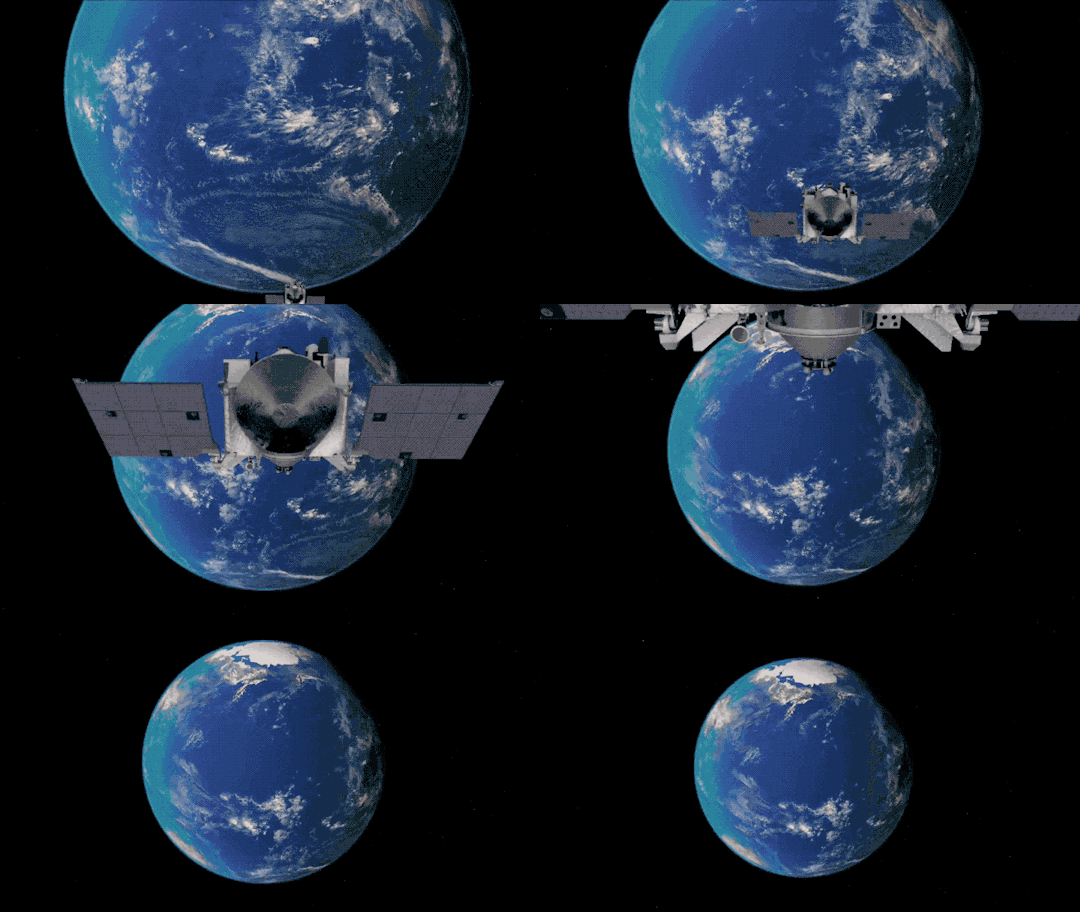
After traveling for two years and billions of kilometers from Earth, the OSIRIS-REx probe is only a few months away from its destination: the intriguing asteroid Bennu. When it arrives in December, OSIRIS-REx will embark on a nearly two-year investigation of this clump of rock, mapping its terrain and finding a safe and fruitful site from which to collect a sample.
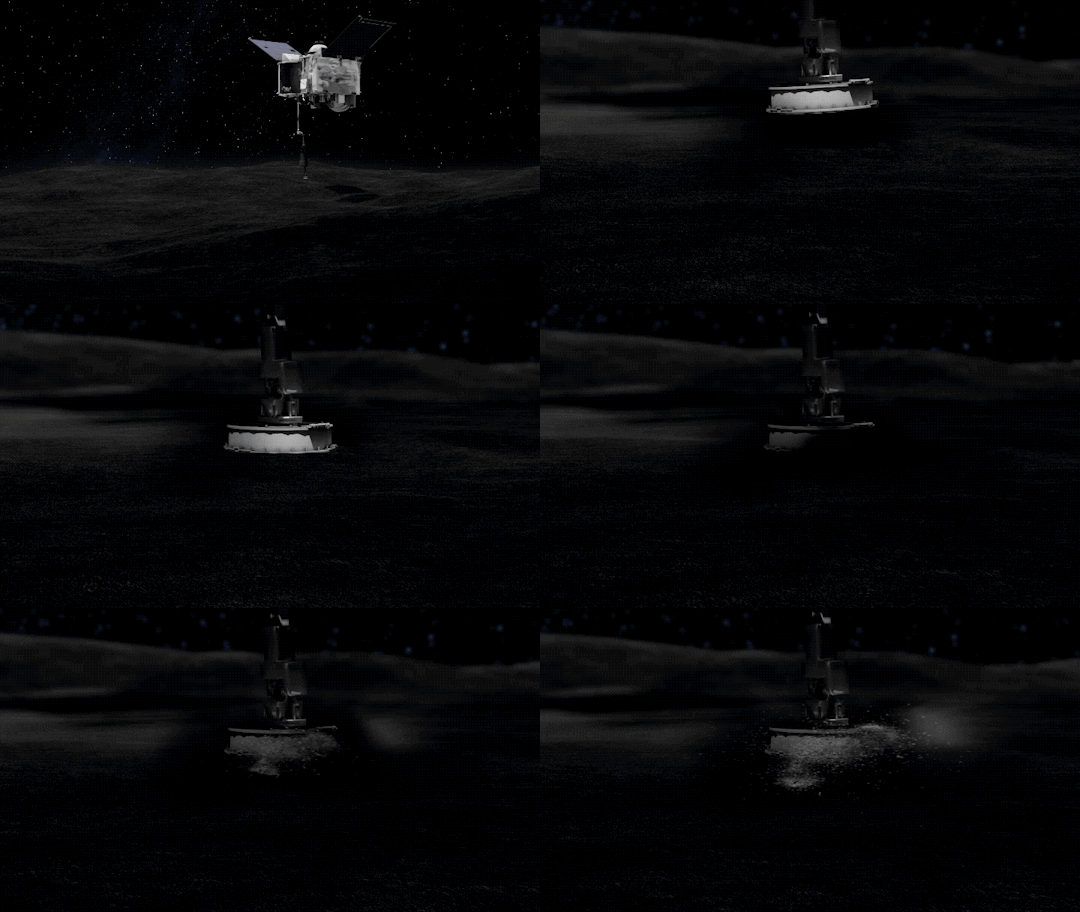
The spacecraft will briefly touch Bennu’s surface around July 2020 to collect at least 60 grams (equal to about 30 sugar packets) of dirt and rocks. It might collect as much as 2,000 grams, which would be the largest sample by far gathered from a space object since the Apollo Moon landings. The spacecraft will then pack the sample into a capsule and travel back to Earth, dropping the capsule into Utah’s west desert in 2023, where scientists will be waiting to collect it.
This years-long quest for knowledge thrusts Bennu into the center of one of the most ambitious space missions ever attempted. But the humble rock is but one of about 780,000 known asteroids in our solar system. So why did scientists pick Bennu for this momentous investigation? Here are 10 reasons:
1. It’s close to Earth
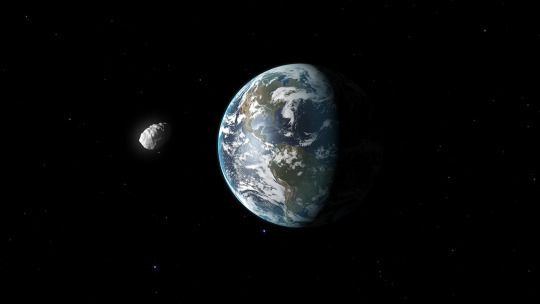
Unlike most other asteroids that circle the Sun in the asteroid belt between Mars and Jupiter, Bennu’s orbit is close in proximity to Earth’s, even crossing it. The asteroid makes its closest approach to Earth every 6 years. It also circles the Sun nearly in the same plane as Earth, which made it somewhat easier to achieve the high-energy task of launching the spacecraft out of Earth’s plane and into Bennu’s. Still, the launch required considerable power, so OSIRIS-REx used Earth’s gravity to boost itself into Bennu’s orbital plane when it passed our planet in September 2017.
2.It’s the right size
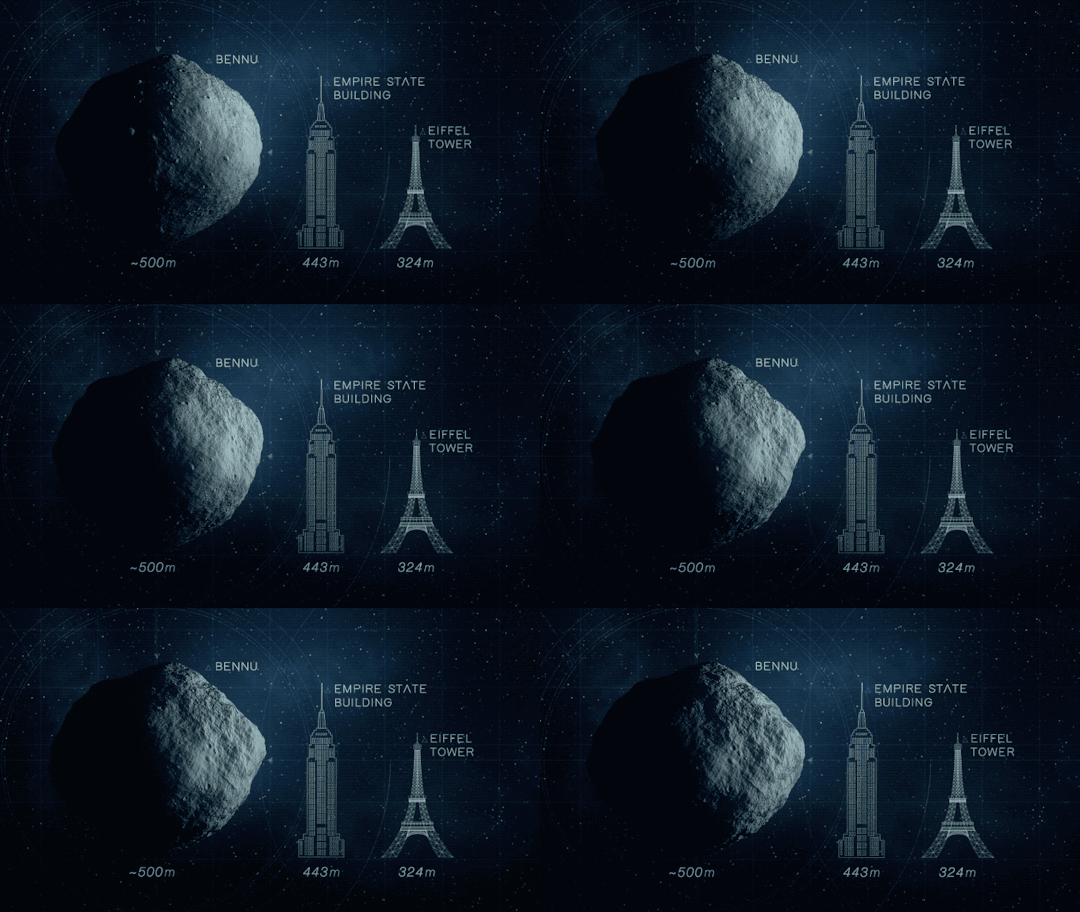
Asteroids spin on their axes just like Earth does. Small ones, with diameters of 200 meters or less, often spin very fast, up to a few revolutions per minute. This rapid spinning makes it difficult for a spacecraft to match an asteroid’s velocity in order to touch down and collect samples. Even worse, the quick spinning has flung loose rocks and soil, material known as “regolith” — the stuff OSIRIS-REx is looking to collect — off the surfaces of small asteroids. Bennu’s size, in contrast, makes it approachable and rich in regolith. It has a diameter of 492 meters, which is a bit larger than the height of the Empire State Building in New York City, and rotating once every 4.3 hours.
3. It’s really old
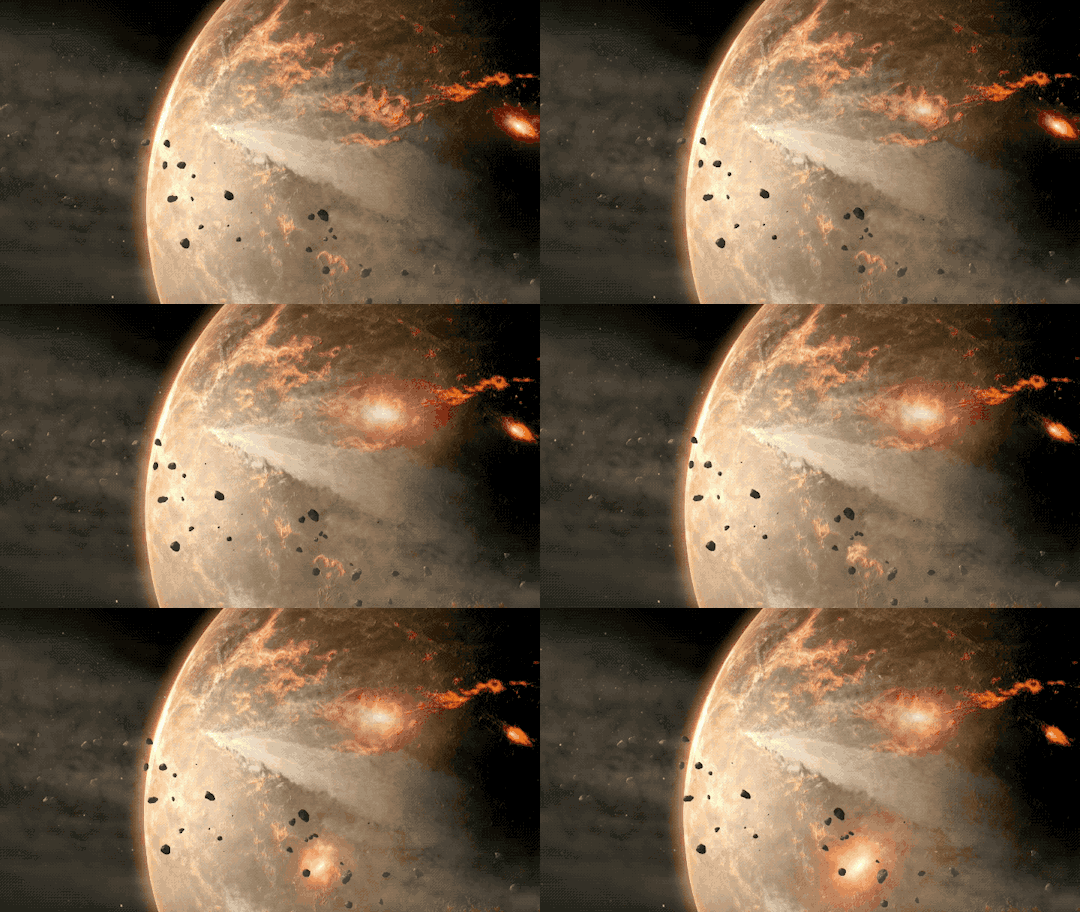
Bennu is a leftover fragment from the tumultuous formation of the solar system. Some of the mineral fragments inside Bennu could be older than the solar system. These microscopic grains of dust could be the same ones that spewed from dying stars and eventually coalesced to make the Sun and its planets nearly 4.6 billion years ago. But pieces of asteroids, called meteorites, have been falling to Earth’s surface since the planet formed. So why don’t scientists just study those old space rocks? Because astronomers can’t tell (with very few exceptions) what kind of objects these meteorites came from, which is important context. Furthermore, these stones, that survive the violent, fiery decent to our planet’s surface, get contaminated when they land in the dirt, sand, or snow. Some even get hammered by the elements, like rain and snow, for hundreds or thousands of years. Such events change the chemistry of meteorites, obscuring their ancient records.
4.It’s well preserved
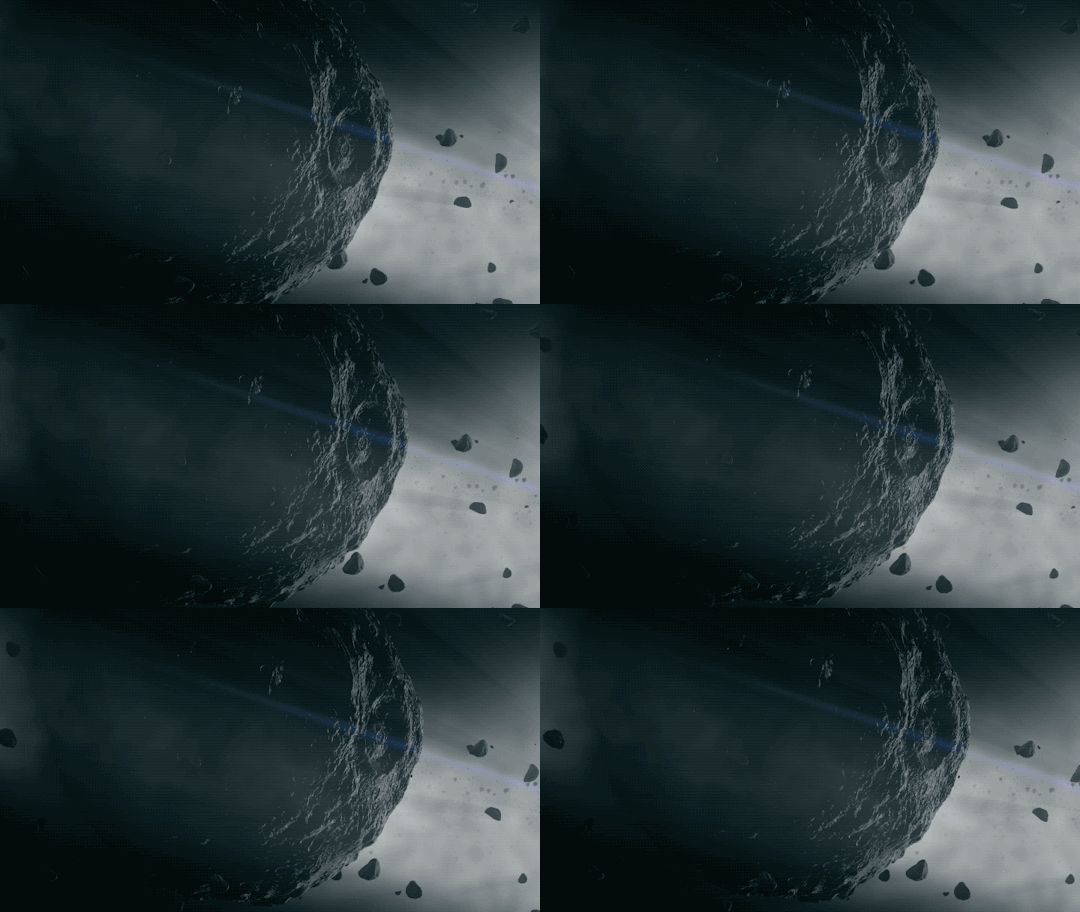
Bennu, on the other hand, is a time capsule from the early solar system, having been preserved in the vacuum of space. Although scientists think it broke off a larger asteroid in the asteroid belt in a catastrophic collision between about 1 and 2 billion years ago, and hurtled through space until it got locked into an orbit near Earth’s, they don’t expect that these events significantly altered it.
5. It might contain clues to the origin of life
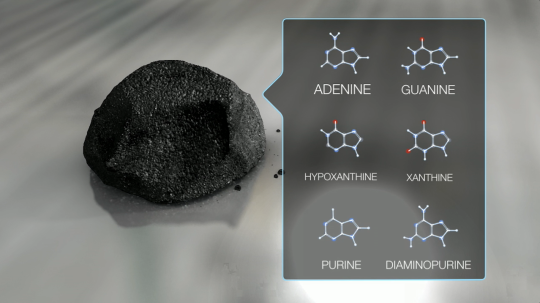
Analyzing a sample from Bennu will help planetary scientists better understand the role asteroids may have played in delivering life-forming compounds to Earth. We know from having studied Bennu through Earth- and space-based telescopes that it is a carbonaceous, or carbon-rich, asteroid. Carbon is the hinge upon which organic molecules hang. Bennu is likely rich in organic molecules, which are made of chains of carbon bonded with atoms of oxygen, hydrogen, and other elements in a chemical recipe that makes all known living things. Besides carbon, Bennu also might have another component important to life: water, which is trapped in the minerals that make up the asteroid.
6. It contains valuable materials
Besides teaching us about our cosmic past, exploring Bennu close-up will help humans plan for the future. Asteroids are rich in natural resources, such as iron and aluminum, and precious metals, such as platinum. For this reason, some companies, and even countries, are building technologies that will one day allow us to extract those materials. More importantly, asteroids like Bennu are key to future, deep-space travel. If humans can learn how to extract the abundant hydrogen and oxygen from the water locked up in an asteroid’s minerals, they could make rocket fuel. Thus, asteroids could one day serve as fuel stations for robotic or human missions to Mars and beyond. Learning how to maneuver around an object like Bennu, and about its chemical and physical properties, will help future prospectors.
7. It will help us better understand other asteroids
Astronomers have studied Bennu from Earth since it was discovered in 1999. As a result, they think they know a lot about the asteroid’s physical and chemical properties. Their knowledge is based not only on looking at the asteroid, but also studying meteorites found on Earth, and filling in gaps in observable knowledge with predictions derived from theoretical models. Thanks to the detailed information that will be gleaned from OSIRIS-REx, scientists now will be able to check whether their predictions about Bennu are correct. This work will help verify or refine telescopic observations and models that attempt to reveal the nature of other asteroids in our solar system.
8. It will help us better understand a quirky solar force …
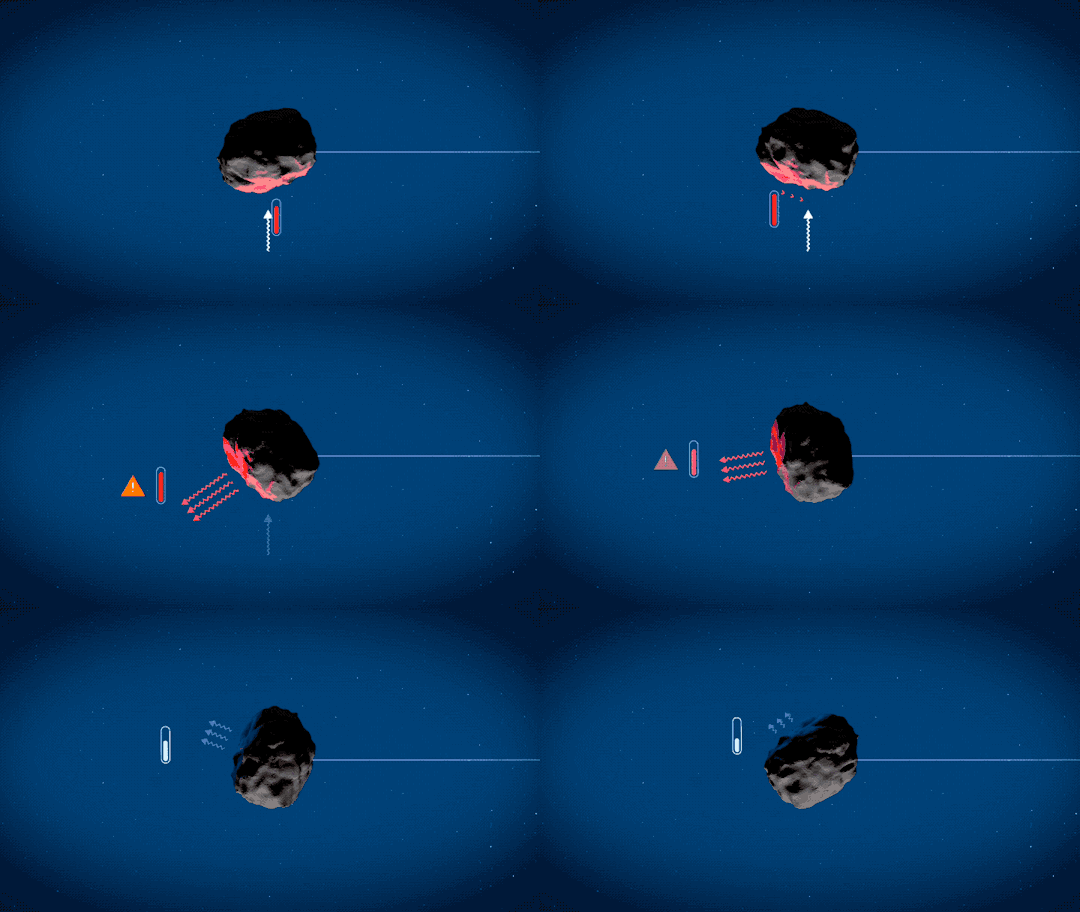
Astronomers have calculated that Bennu’s orbit has drifted about 280 meters (0.18 miles) per year toward the Sun since it was discovered. This could be because of a phenomenon called the Yarkovsky effect, a process whereby sunlight warms one side of a small, dark asteroid and then radiates as heat off the asteroid as it rotates. The heat energy thrusts an asteroid either away from the Sun, if it has a prograde spin like Earth, which means it spins in the same direction as its orbit, or toward the Sun in the case of Bennu, which spins in the opposite direction of its orbit. OSIRIS-REx will measure the Yarkovsky effect from close-up to help scientists predict the movement of Bennu and other asteroids. Already, measurements of how this force impacted Bennu over time have revealed that it likely pushed it to our corner of the solar system from the asteroid belt.
9. … and to keep asteroids at bay
One reason scientists are eager to predict the directions asteroids are drifting is to know when they’re coming too-close-for-comfort to Earth. By taking the Yarkovsky effect into account, they’ve estimated that Bennu could pass closer to Earth than the Moon is in 2135, and possibly even closer between 2175 and 2195. Although Bennu is unlikely to hit Earth at that time, our descendants can use the data from OSIRIS-REx to determine how best to deflect any threatening asteroids that are found, perhaps even by using the Yarkovsky effect to their advantage.
10. It’s a gift that will keep on giving
Samples of Bennu will return to Earth on September 24, 2023. OSIRIS-REx scientists will study a quarter of the regolith. The rest will be made available to scientists around the globe, and also saved for those not yet born, using techniques not yet invented, to answer questions not yet asked.
Read the web version of this week’s “Solar System: 10 Things to Know” article HERE.
Make sure to follow us on Tumblr for your regular dose of space: http://nasa.tumblr.com.
Tags:
#space #the power of science #proud citizen of The Future #Bennu #long post
I never heard this version! The version I know, after “grandpa shark”, it was “person swimming”, “shark attack”, “happy shark”.
I have done this song exactly once, and I have never been able to find anyone else doing anything close to the version that other Girl Guide troop taught us on that joint camping trip.
There was a lead-in about a couple going to the beach and swimming out into the ocean; I’m not sure how that part went exactly. It leads into the shark list with the line “Then they saw sharks”, though.
(Note that each line was only done once, not 3.5 times as in this thread.)
After the chorus is:
“So they swam back” [swimming motions with arms] “Faster back” [faster swimming motions] “Faster still” [even faster swimming motions] “Not fast enough” [continue swimming, shake head “no”] “They got a leg” [put one leg forward] “Other leg” [step forward with other leg] “And an arm” [hold out arm] “Other arm” [both arms forward] “And a head” [lean forward] “And I was dead” [not sure about motion for this one] [quietly] “And all were dead” [hold finger in front of mouth in “shh” gesture; “doo doo, doo doo doo doo doo” is subdued] [quietly] “And all were dead” [ditto] [big grin, normal volume] “Except the sharks!” [mama-shark clapping, because mama comes first in this version’s list]
(I think the shark order went “mama (horizontal clapping), papa or maybe daddy (vertical clapping), sister (diagonal clapping), baby (hand motions as if making a hand puppet talk; “doo doo”-ing is high-pitched), grandpa (place last knuckle of each finger against last knuckle of corresponding finger on other hand to evoke a mouth with no teeth left, make ‘talking’ motions; “doo doo”-ing is low-pitched and tries to sound old and toothless)”.)
And then you do the shark list again, and that’s how it ends.
It would be nice to refresh my memory on how that version went (though I’m kind of surprised by how much of it I *do* remember given that it was one time seven years ago), but I haven’t found anyone who knows what I’m talking about.
Tags:
#reply via reblog #is the blue I see the same as the blue you see #(close enough) #my childhood #music #death tw #shark #long post #oral culture #amnesia cw?
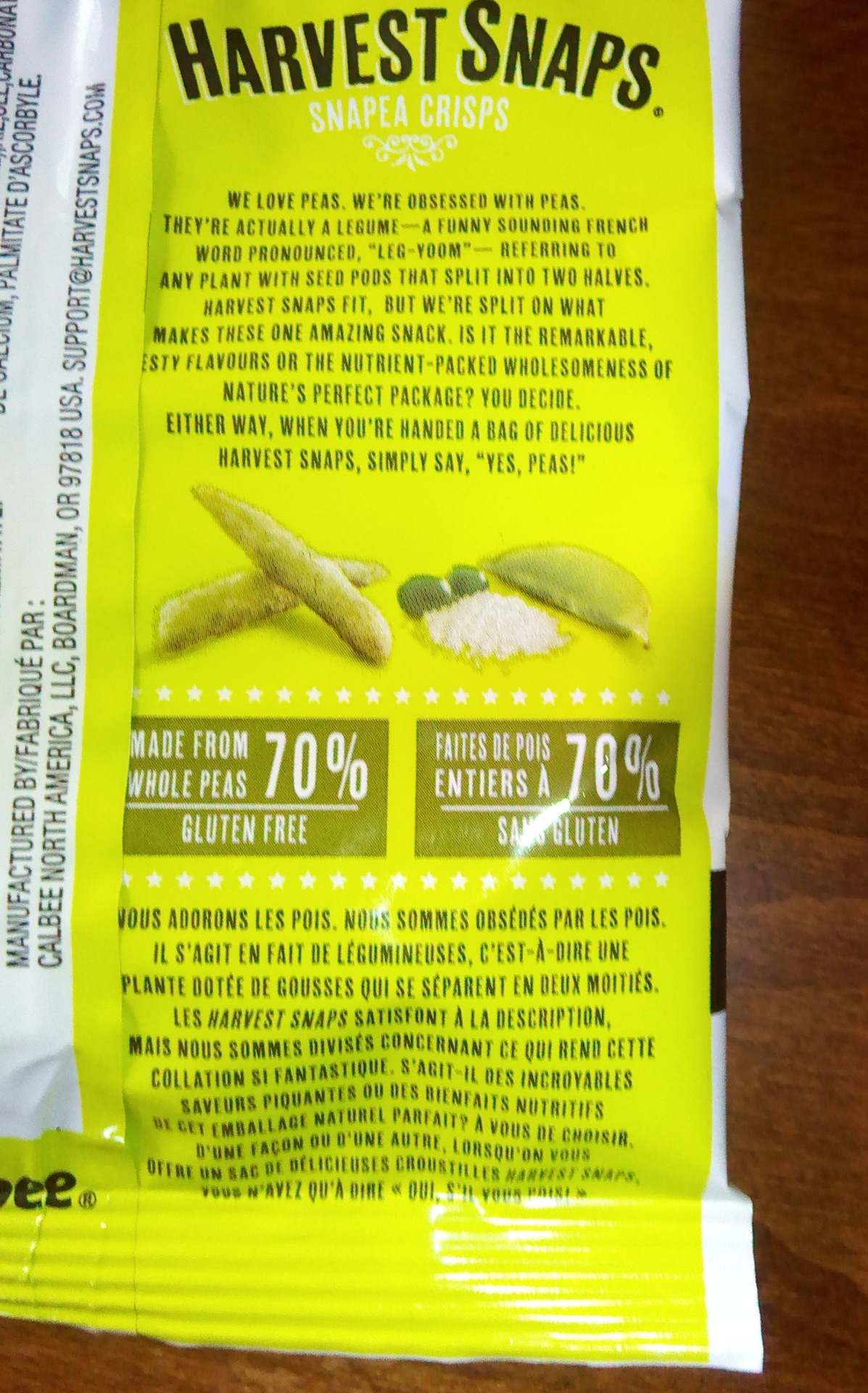
I’m not sure what’s funnier: the fact that the French translation of this blurb doesn’t include the bit about “legume” being “a funny sounding French word”, or the hypothetical version where they *did* include it.
—
(Note also the translation of the “Yes, peas!” pun as “Oui, s’il vous pois!”, which–I don’t speak French anywhere near well enough to know how well that really works, but from what I can tell they may have actually pulled that one off.)
Tags:
#I was expecting dried pea pods #but it turns out these are actually pea-pod-shaped rice puffs but with the rice flour mixed with a large proportion of pea flour #I can see why people would like them but I don’t think they’re for me #now I know #oh look an original post #our home and cherished land #language #food
my hobby: mass downloading the entire corpuses of long-running blogs on to my phone as an epub and searching keywords when i want to talk with someone
What mass-downloading method do you use?
I, too, am interested in downloading entire blog corpuses onto my phone, and I’m curious if you have any tips/techniques for archiving more effectively.
(I’m not sure to what extent your post is joking, but I thought I’d ask the above in case it’s sufficiently serious that you actually have a real mass-downloading method in mind.)
ive used http://www.bloxp.com/ (id like something better) which converts some blogs and has trouble with others
this is a thing i do! ah but i did prepend it with the meme format of “my hobby:” which is evidence that the thing following is not, in fact, your hobby
Ooh!
For what I can tell from the initial testing: not a full solution, but for the things it *can* handle, much faster and less effort than the pasting-things-into-LibreOffice-documents (sometimes printing-pages-to-PDF) I normally do.
(Automation is like salt: I often find things are better after adding it, but it rarely occurs to me to add it unprompted.)
P.S. It did at least occur to me a mere couple of weeks after changing my podcast-downloading habits to something that would be aided by a podcatcher that I should, in fact, get a podcatcher. Although that might have been prompted by noticing that Rhythmbox has a podcatcher built-in, so maybe it doesn’t count.
Tags:
#reply via reblog #Brin owns *two* 2010’s computers now #(the following category tag was added retroactively:) #101 Uses for Infrastructureless Computers
my hobby: mass downloading the entire corpuses of long-running blogs on to my phone as an epub and searching keywords when i want to talk with someone
What mass-downloading method do you use?
I, too, am interested in downloading entire blog corpuses onto my phone, and I’m curious if you have any tips/techniques for archiving more effectively.
(I’m not sure to what extent your post is joking, but I thought I’d ask the above in case it’s sufficiently serious that you actually have a real mass-downloading method in mind.)
Tags:
#reply via reblog #Brin owns *two* 2010’s computers now #(the following category tag was added retroactively:) #101 Uses for Infrastructureless Computers