Tags:
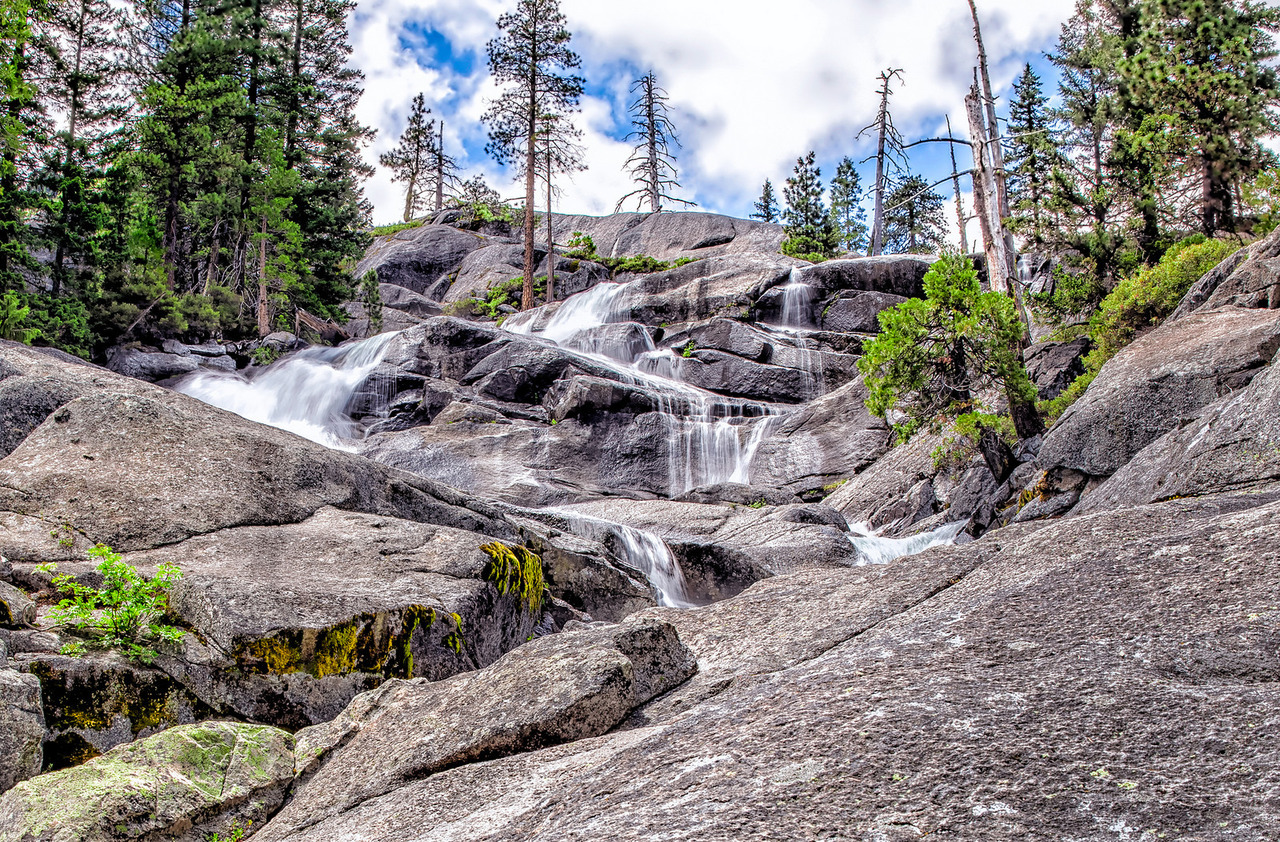
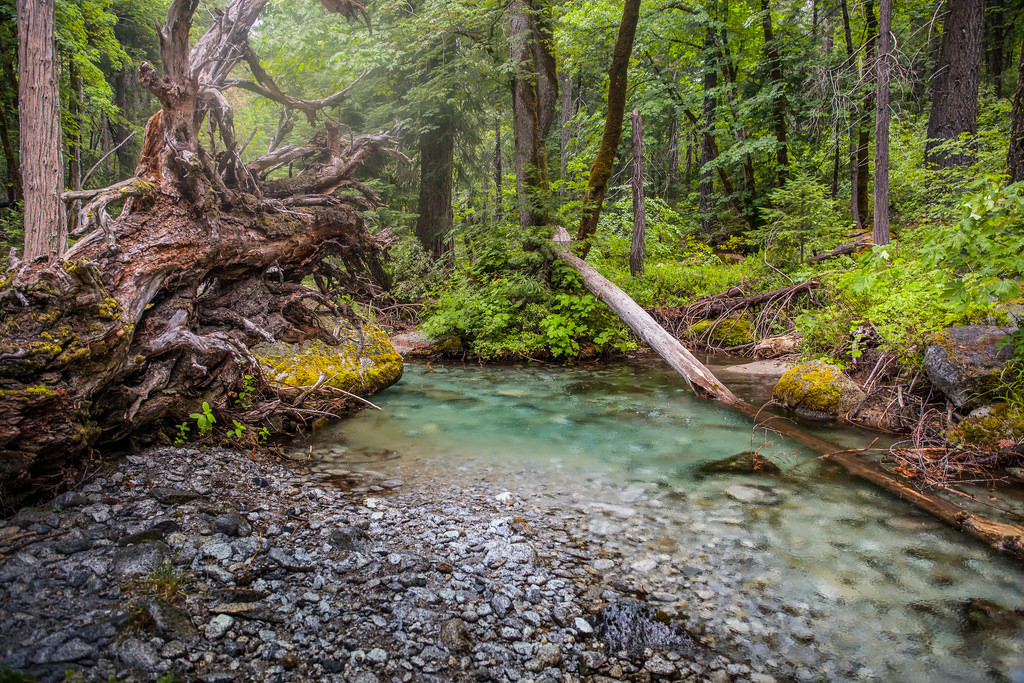
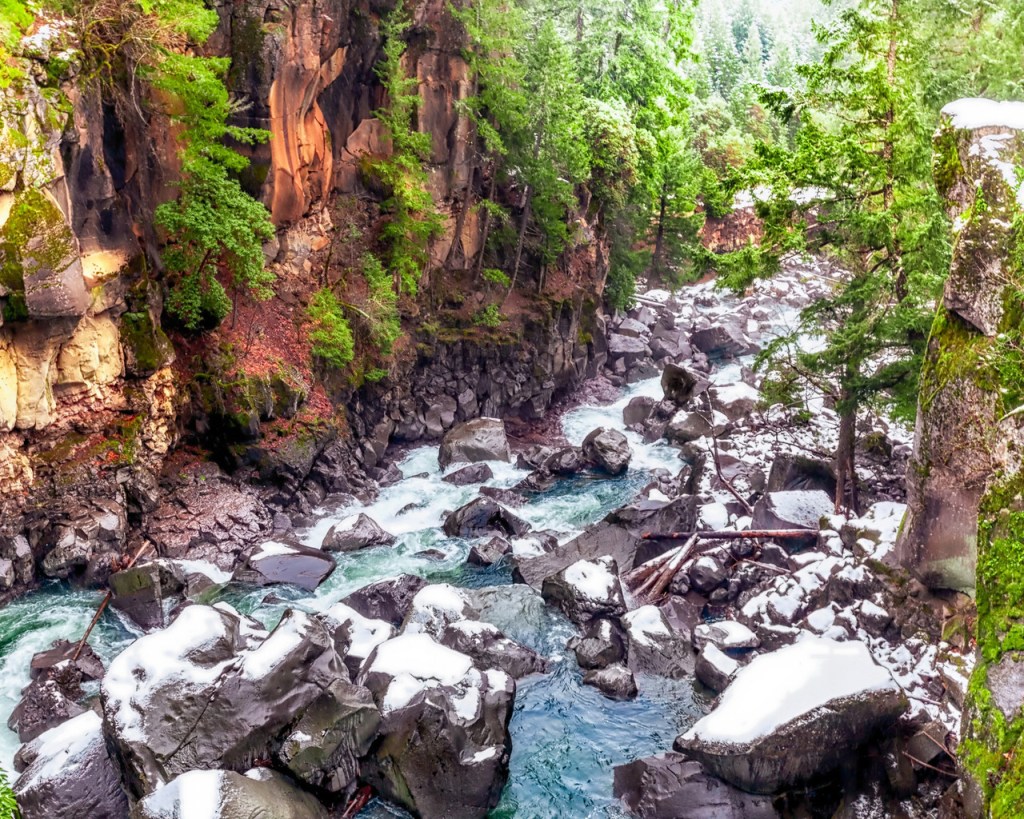
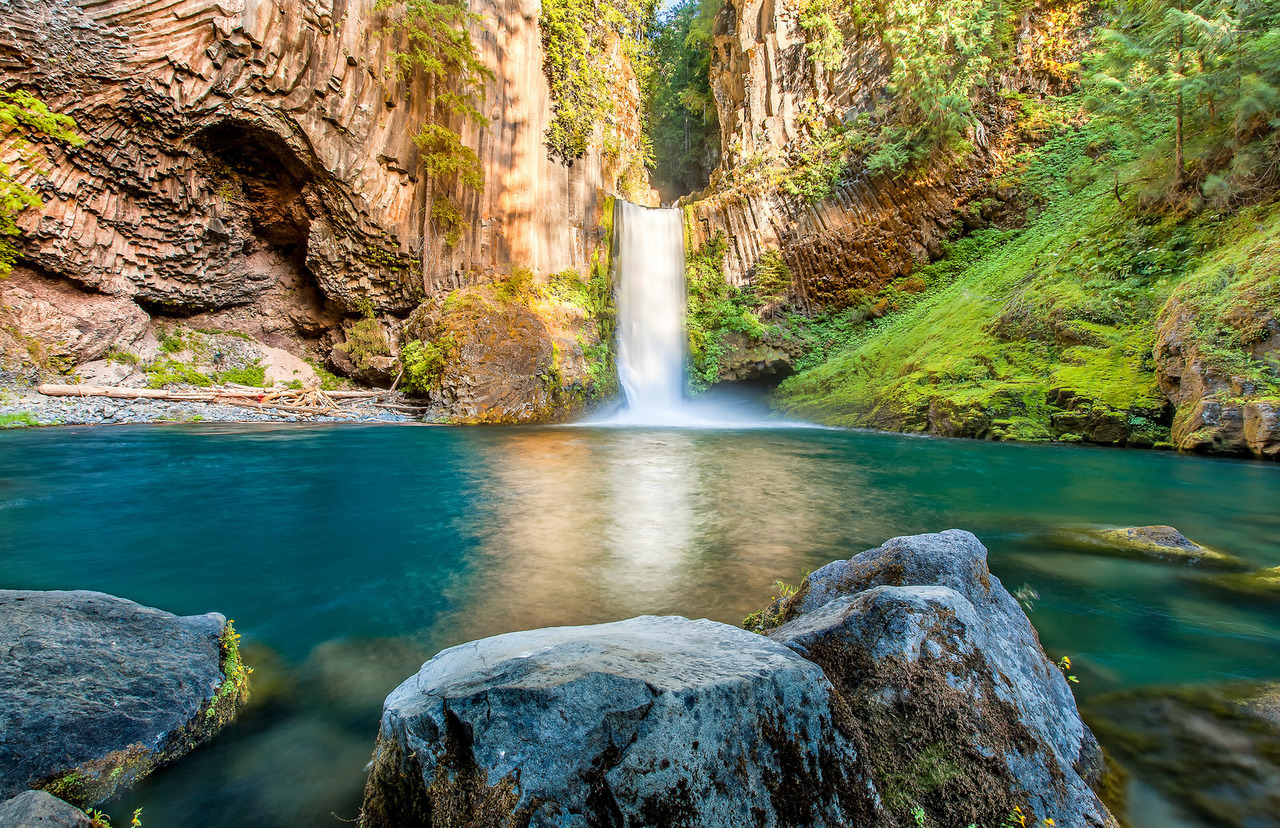
#pretty things #landscape #waterfalls
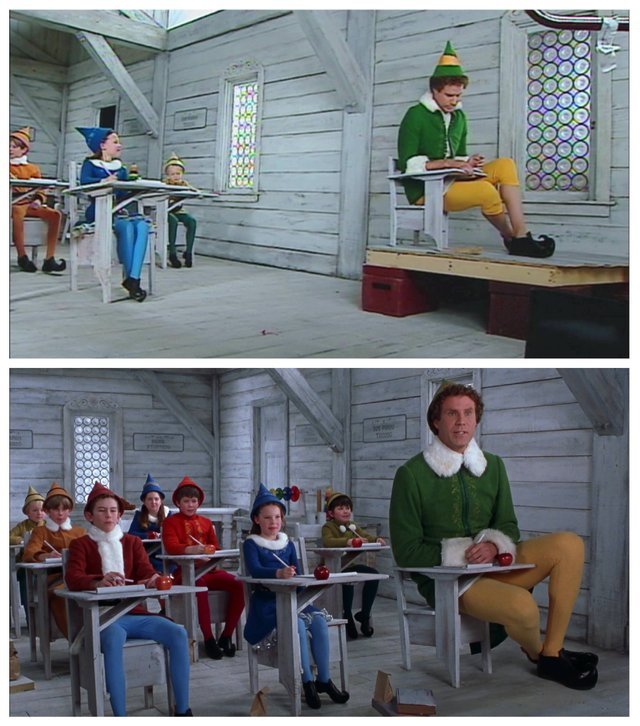
Images showing how forced perspective was used to film Will Ferrell in “Elf”. Follow @sixpenceee
ALL THIS TIME I THOUGHT THEY USED GREEN SCREEN!
Tags:
#Elf #neat
{{Title link: https://news.avclub.com/eddie-redmayne-concedes-that-he-gave-a-pretty-bad-perf-1830437709 }}
“My character had had his larynx ripped out by this wolf man, and so I made the slightly bold choice—which I thought was right—of talking like this,” Redmayne says, putting on the breathy, choked affectation he uses throughout the film. He adds that at the time he thought the voice suited the costume and elaborate sci-fi world of the film, but in retrospect can see that it may have been a bit much. “I won a prize for it for the worst performance of the year,” Redmayne adds, referring to his 2016 Razzie award for Worst Supporting Actor. “So, yeah, it was a pretty bad performance by all accounts.”
Eddie, sweetie – you’re breaking my heart. You’ve got to ignore the basics. You’ve got to know that you gave a tremendously OTT and dialled up performance in a tremendously OTT and dialled up film (which I continue to love from the depths of my being). You gave no fucks and threw yourself into it, and because of that people love your performance. I can confidently guarantee that you gave the best performance as a vocally impaired intergalactic overlord with monumental mother issues and stomping lizard servants ever committed to film. Own it!
okay but we’re ignoring the most important part of this interview
“My character had had his larynx ripped out by this wolf man, and so I made the slightly bold choice—which I thought was right—of talking like this,” Redmayne says, putting on the breathy, choked affectation he uses throughout the film.
THE ENTITLED WHOSE THROAT CAINE RIPPED OUT WAS BALEM THE WHOLE TIME
LONGTIME CONSPIRACY THEORY #CONFIRMED FUCK YEAH
D-Did they ever say in the movie that Redmayne’s character had had his throat ripped out in the backstory?
Cause I feel like that voice/performance immediately becomes less bizarre once you fill in that particular detail.
okay so you’ve unlocked one of my top five special interests just be aware
so jupiter ascending actually goes hard on the infodumping (which is why I get really annoyed by criticism that it’s hard to follow – if anything, the criticism should be that too much is explained and not enough is left to the audience), but there is one thing that’s never fully resolved (but it’s not plot relevant so it’s not the biggest deal)
anyway, this is what we know about caine:
- he was born genetically defective and was sold to the Skyjackers (like, Space Air Force? with rocket boots and angel wings?) by his creator for cheap
- he managed to rise to be a great Skyjacker anyway, despite his genetic deficiency
- ~something~ happened where he ripped the throat out of an Entitled. WHY he did it or WHO the Entitled was is never explained in canon.
- he himself has no idea why he randomly went berserk and tried to kill someone, but everyone blamed it on his genetic defects and he believes them
- his belief in his own inferiority and inherently violent nature is why he tries to avoid a relationship with jupiter. this is the context for the “I have more in common with a dog than I do with you”/ “I love dogs, I’ve always loved dogs” scene and THAT’S WHY IT ACTUALLY MAKES SENSE IN THE TEXT, FOLKS
- also there’s that whole romantic scene after jupiter becomes an entitled where she’s like “so I’m an entitled now, does that mean you want to bite me?” and caine’s like “uhhh no? ….actually maybe” and she’s like “go ahead ;) ;) ;)”
- for this he was stripped of his angel wings and exiled to a hostile prison colony planet until the events of the movie
so the fan theory for a long time was that balem was the entitled who caine attacked, and there’s an extension of that fan theory where one of his siblings – either kalique or titus, probably kalique because she’s way smarter – somehow mind-controlled or otherwise forced caine to attack balem as an assassination attempt, which is why he doesn’t remember why he did it
but ultimately it doesn’t actually matter to the plot? so it’s not a bad thing that it’s never resolved. but FAN THEORY #CONFIRMED.
I’m reblogging this since @bemusedlybespectacledprovides an A+ summary of the known facts surrounding Caine’s history and his attack on the no-longer-so-mysterious Entitled.
i love this movie so much
One of my comfort movies.
Cannot believe we are being gifted with new Jupiter Ascending canon in this godless year.
Tags:
#I have no strong feelings about Jupiter Ascending and was not actually paying all that much attention while Mom was watching it #but I think some of my followers will appreciate this #Jupiter Ascending #long post #this probably deserves some warning tag but I am not sure what
Honestly during the battle of Hogwarts I feel immensely cheated at not having more Peeves v. Voldemort time because Peeves can’t die and is a complete asshole and I just really want that interaction in my soul of how furious Voldemort would be with Peeves for just existing. Voldemort can’t banish or kill Peeves so he would be trying to direct his Death Eater troops with Peeves floating three feet to the left repeating everything Voldemort says in a mocking high-pitched voice.
IF IT ISN’T LITTLE TOM-TOM! Psycho Tommy! Conquered the world yet? I guess NOT
I like to believe that one of the things Tom learned on his excursions was a poltergeist exorcism ritual, just for the satisfaction of knowing how to crush old annoyances. He knew he probably wouldn’t get the opportunity to use it when he applied for the DADA position, with all the other things to do, but in the event of a confrontration the threat would taste oh so sweet on his tongue… A pity Dumbledore would never take a suggestion coming from him.
He mentioned the ritual to Quirrel. Quirrel reasoned it would draw unnecessary attention. Personally he doubted Quirrel was competent enough to achieve it.
Snape could have done the ritual. He even seemed keen on the idea, among other school reforms. New duties and rebellious students and death eaters kept the headmaster run ragged.
On winning the battle of Hogwarts, Tom wasn’t going to stoop to storming the castle to find one poltergeist. Peeves was a childhood nuisance; to treat him as a nemesis would be giving him a distasteful amount of legitimacy.
But Tom did bring the materials. And if Peeves decided to rain on his parade, well, a Dark Lord couldn’t possibly let such disrespect stand.
Tags:
#Harry Potter #headcanons
{{OP by buckykingofmemes}}
Tags:
#puns #(I know there’s a word for this specific type of wordplay but I’m not sure what it is) #(I think it might have begun with a z) #(I tried googling ”he fell from grace and also the window” but it did not help)
My fellow Americans! It’s less than 24 hours until Public Domain Day!!!
Gird your loins, clean your keyboards, and fire up your scanners, because the copyright term of 1923 is finally lapsing! Tomorrow, thousands of works will become part of the public domain!
For the first time in twenty-one years, an entire year’s worth of media will become free to use, share, and remix to our heart’s content!
So tonight, watch the ball drop, grab your drink, and settle in to watch the Wikimedia uploads roll in!
Tags:
#101 Uses for Infrastructureless Computers #the more you know
too lumpy and solid to combine and homogenise? or it combined and then separated due to different densities and varying levels of heat? I have no idea where planets came from, I only live on one.
!!!!!!!!!! is excite
So, first things first is deciding what ‘disordered’ means in this context. After all, there’s one very primordial sorting that any planetary body goes through- a density gradient by depth. You get your core, your mantle, your atmosphere, heavy iron and nickel falling and light volatiles rising. So we already have some order for free, although the various compounds within each layer are still a jumbled mess.
Now, naturally, your interior heats up, partly because of that pressure and partly because it tends to be super radioactive. And as we all know from grade school, thermal expansion is a thing- hot substances get larger, and less dense. But it was their high density that put them that far down in the first place! So in larger terrestrial bodies like Earth, this means that they float back up to the top again before cooling and falling, like a lava lamp (on smaller bodies like Mars heat conducts out too fast for any bulk overturn to happen). In the softer areas like the atmosphere and the mantle, the Earth is constantly being ‘stirred’, homogenizing those layers. Like the atmosphere, the mantle is mostly-but-not-entirely uniform because shit’s complicated, but that’s what your high-entropy baseline is as well as the lion’s share of Earth’s mass.
That ‘baseline’ is a muddle of mineral types we call peridotite. It has a lot of silicon and oxygen as you might expect, as well as a number of metals and other bits, particularly magnesium, iron, and calcium. It wouldn’t survive long at the surface; water etches it away quite quickly, but of course it’s protected from the nastier reactions through the expedient of being really far away from the surface where all the volatiles went. Still, it’s been changing a bit over time. A primordial and molten planet’s mantle wouldn’t be quite the same as the one we have now, because we’ve spent several billion years drawing elements out of it, cooling them at the surface, and then occasionally injecting new compounds back in.
And this process doesn’t quite happen randomly. There’s a particular class of elements we call ‘lithophiles’ (no relation to the bacteria), mostly because they react well with oxygen, and correspondingly they’re the first ones to jump ship during mantle cooling and float up to the surface, staying there more or less permanently. That’s your crust, and it’s why continents and oceans floors don’t look much like the mantle proper- there’s a self-selection going on among the elements. Once you run the high-entropy mulch through this selection process, what cools out is an old friend- the familiar igneous rocks. When they’re extruded in to the air or water by volcanoes, they look like basalt, when they just moosh up against the bottom of the existing crust without ever touching air, they look more like granite. So that’s a further source of differentiation and order, but those differences are fairly minor in the grand scheme of things- mostly having to do with how many metals are mixed in, and the corresponding differences in density.
And to the first order, that’s pretty much what the crust is. The question was why you see so much order in the Earth’s crust, but honestly it’s like 90% granite and basalt, which are pretty close to being a random homogeneous-if-you-squint mix of the lithophilic fraction of Earth’s bulk mantle composition. What’s tricking you is those volatiles again, because even though the Earth’s crust is almost entirely igneous, the visible land surface is almost entirely not. Sedimentary rocks are only IIRC 5% of the volume of the crust, but they’re a solid majority of what you see when you’re clambering around in the air.
The ocean floor is maybe a good way to start thinking about this. At the mid-ocean ridges, which are giant lines of volcanoes injecting new crust all the time, it’s basically just pure basalt. As you walk in a straight line along the ocean floor from those volcanoes towards a continent, you’ll notice little bits of debris start accumulating, mostly dead organisms and excrement and so on. The farther you walk, the more you see, because the basalt is acting like a conveyor belt moving between your two landmarks, and the farther you get from the volcano the older it is and the more time it’s had to pick up random bits of detritus. Eventually you’re wading through it, and by the time you get to the edge of the ocean it’s hundreds or thousands of meters thick, with nary a hint of exposed basalt. But it’s still under there, much thicker than the layer of goo on top of it. So there’s this patina of order laid across the igneous crust, with linearly increasing mud thickness. One of the more reliable geological gradients in the solar system, as it happens.
The continents are trickier because they don’t die of old age. That granite is much less dense than the basalt you get in oceans, so it floats for basically forever without getting injected back inside the planet. Sediments accumulate and get remixed over billions of years instead of millions, and a diversity of forms proliferates because you can have second-order, third-order, fourth-order weathering, weathering of metamorphic rocks, biological chemistry, on and on and on. Around the edges, you get the scraping weirdness of plate subduction, every now and then you even get weird things happening when some vast object bumps the continent from underneath. But because a plate itself is so large, most of the interesting and dynamic activity is all happening at the edges, leaving the bulk granite more or less inert for billions and billions of years. Everything that you’re calling ordered happens in a narrow film on the outer edge of a narrow film.
But that surface environment, narrow as it may be, is quite intense and destructive. So for any given patch of continent, at any given time, the surface is in flux- if it’s not actively being buried, it’s actively being eroded. So any sedimentary rocks that you see come from these areas where the surface was preserved through rapid accumulation, shattered fragments of the erosional areas finally being blasted to a place where they’re buried too quickly to be destroyed before finding protective sequestration away from the surface. We call them ‘basins’. Often but not always underwater- like river deltas at shorelines, that kind of thing. But there’s plenty of examples of preserved deserts and rivers as well, anywhere that wind and water could bring a lot of random bits of stuff in and leave them there.
The conditions in any given basin are going to depend on a lot of environmental factors- biological activity, atmospheric and environmental conditions, the power of the force that brings sediments in, how old the rocks are, an endless list really. Basins themselves can be quite large, many miles across, and the depositional conditions within any given moment will usually be pretty similar because entropy. So you’ll see similar ‘packets’ of debris fragments landing all over the basin at about the same period of time. But as we all know, the atmosphere is a fickle bitch. So as time passes, so do those conditions, and so these basins produce distinct layers that vary in fragment size, color, chemistry, and so on. And there are so many different options for basin conditions that you get a rich taxonomy of different sedimentary rock types. Then they’re all buried, later exhumed, and outcroups have taken on that ‘order’ that you noticed.
Another major source of order comes from the fact that the crust is so brittle. At the planetary scale, the crust has a tensile strength of basically zero, so every time something happens tectonically it shatters. Uplift, load deposition, torque, you name it and there’s probably a patch of Earth’s crust losing its shit about it. These cracks, which you know as fault lines, are therefore ubiquitous, most of them not really representing a whole lot of motion, most of them again near the surface because that’s where force imbalances have to happen.
And when water is flowing through the near-surface, it will tend preferentially to flow along these fault lines, because they’re the weak points and pre-drilled tunnels. And when that flow takes the water from one place to another, with a different temperature and pressure and lithological environment, the chemical equilibrium of impurities in that water changes. It leeches certain ions from the surrounding rock, and precipitates others out. And this is a great way to collect large masses of very specific elements in one place- gold, for instance. Most mining for precious metals is about finding such places. That’s why you tend to find precious ores in ‘veins’; they fill the original fault lines that the water was flowing through, long and thin and twisty. (Iron is an exception, it’s a whole other thing.)
Anyway I uh, seem to have written a fairly long essay. But yeah! Rocks.
Tags:
#geology #interesting #long post

