{{previous post in sequence}}


rustingbridges:

The concept of companies paying for their employees’ food continues to boggle me, but then my entire family works in food service, so our idea of company-provided food is “the customer changed their mind about wanting the food after I made it, and the boss let me keep it”.

Covering some food during travel is pretty standard, I think, since it’s a business expense and employees rightly don’t want to pay for it. My old roommate worked at best buy (which was by no means a great employer) and even they gave him a per diem which covered (cheap) food.

B: Nah, there are starving children in Africa future selves to think of. We keep getting inheritances just as we’re about to run out of money, but that streak’s bound to end sooner or later, and it’s best to start preparing now.

So the question with this is kind of, where does it end? I think if I put my back into it, I could get by pretty much without ever paying for food, except when doing stuff with friends. I’ve definitely done two or three week stretches.

And even if you are counting labor costs, you can buy food at the supermarket for $1-2/day. It just gets really boring.

We keep getting inheritances just as we’re about to run out of money, but that streak’s bound to end sooner or later, and it’s best to start preparing now.

Also no offense but that sounds like a pretty bad situation and hopefully you can get out of it somehow?

>>and employees rightly don’t want to pay for it.<<

I get the justification for paying for the hotels and such because the employee wouldn’t otherwise have needed to buy them, but you have to eat either way. Sure, it’d be *nice* if they paid for it, but I wouldn’t be pissed if they didn’t.

(I speak from some experience here: my job *did* used to provide some free food each week (but only a small amount, and only from a limited selection of the cheaper menu items), but later switched to an employee-discount system. And every friend or family member who learned about it got angry on my behalf *even though I wasn’t angry about it myself*, and it was really annoying having to try to calm them down and defend against their attempts to instil negative emotions about it in me.)

>>It just gets really boring.<<

I would be perfectly content to eat peanut-butter-on-a-spoon for lunch every day for years on end. The *occasional* variety in food is nice, but as the exception, not the norm.

(Also I have a low metabolism and an appetite to match, which is helpful.)

I barely even have to try to knock my food budget down to about four USD a day, so in practice I haven’t done that much other than severely cut back on restaurants.

>>I could get by pretty much without ever paying for food, except when doing stuff with friends. I’ve definitely done two or three week stretches.<<

How?

>>Also no offense but that sounds like a pretty bad situation and hopefully you can get out of it somehow?<<

…I am worried by the fact that you started this sentence with “no offense”, because it suggests that there is something offensive about the rest of the sentence that I have overlooked.

(Is it something to do with, like, dignity or some shit?)

Our expenses are already extremely low by developed standards even without going full-on rice-and-beans [link]–a thousand USD per person per month would be enough, with room for a small emergency fund–but underemployment is a big problem.

(Though to be fair, I have a positive amount of money and have never been homeless, which makes me better off than most of my friends. (From multiple social circles, at that.))


Tags:

#food #disordered eating? #adventures in human capitalism #reply via reblog

{{next post in sequence}}

{{previous post in sequence}}


shieldfoss:

It’s probably gonna get old if it keeps happening but business travel is still incredibly interesting to me.

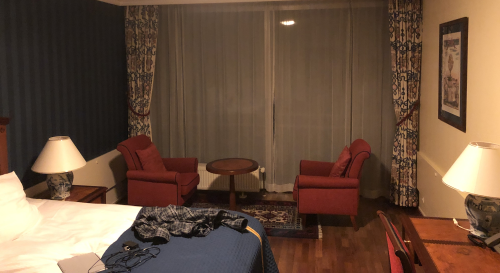
This has been one of the cooler hotel rooms. (Not featured because it films poorly in the dark: The ocean past these east-facing windows)

tumblr_inline_po66hmmufz1tl8dj9_500


shieldfoss:

how is the hotel internet?

Internet is your standard Big City Scandinavia internet (75 MBps so less than at home but fast enough for my purposes – fast enough that I didn’t even think to check it before you asked)

and how is business travel interesting to you?

I’m just not super used to travelling, nor staying outside my own home. I don’t have to worry about breakfast, lunch or dinner and while I hear that hotel food becomes bland once you get used to it, I sure haven’t yet. Also if I was at “regular” work tomorrow I’d be writing some astonishingly dull product design specs for a new component in our software but tomorrow and Tuesday I’m ⬛⬛⬛⬛⬛⬛⬛⬛⬛⬛⬛⬛⬛⬛⬛⬛⬛⬛⬛⬛⬛⬛ ⬛⬛⬛⬛⬛⬛⬛⬛⬛⬛ ⬛⬛⬛⬛⬛⬛⬛ ⬛⬛⬛⬛⬛⬛⬛⬛⬛⬛⬛ ⬛ ⬛⬛⬛⬛⬛⬛⬛⬛⬛ instead and that’s kind of cool.


shacklesburst:

Fair. Also that makes me want to finally visit Scandinavia and try out your hotel internet.

I hear that hotel food becomes bland once you get used to it

I’m not even business traveling that much and this rings extremely true to me and I’ve reached that point way faster than I’d ever have anticipated. I mean it’s probably different if you’re a high-class executive staying at really upscale hotels, but the usual buffet fare at 3-4 stars gets old pretty fast. Same with airport lounge food – I still eat there though, not least because it the hot buffet sure beats shelling out like €20 for a small sandwich.


rustingbridges:

So are y’all like, actually eating at the hotel? I can see the occasional convenience but isn’t there the option of just going down the street or whatever for something more interesting.


brin-bellway:

I don’t know about them, but why would I pay money to eat food from down the street when hotel food is free?

(Valid answers include “the meal the hotel was serving today was a food I find actively repulsive” and “they only serve dinner Monday – Thursday and it is dinnertime on Saturday”, but do not include “the hotel food was bland”. It’s not like I’d be able to enjoy paid food anyway, haunted by the knowledge that it was a waste of money. Plus I kind of like blandness, tbh.)

Context: I have not business-travelled *per se*, but when we do travel we tend to stay at hotels catering primarily to businesspeople. I am thinking of hotels mostly in Massachusetts, with occasional other states plus a couple in Ontario.


rustingbridges:

Possible answers:

A) it’s a business trip, I’m expensing dinner. It’s free either way. Also how common is free dinner anyway, don’t most hotel restaurants charge.

B) I regularly pay money for the purpose of eating food I like more, and regularly turn down free food.

C) I value the cluster of food novelty related goods. The associated opportunity cost of staying in is especially high if you’re traveling anywhere decent (although this goes down if you go the same places a lot, but in that case, haven’t you found anywhere you like?)

A-1: The concept of companies paying for their employees’ food continues to boggle me, but then my entire family works in food service, so our idea of company-provided food is “the customer changed their mind about wanting the food *after* I made it, and the boss let me keep it”. (Although occasionally my brother will be rewarded with a free meal for training a newbie or agreeing to show up on a day he would normally have off.)

If the marginal increase in food quality is free, then absolutely maximise quality.

A-2: IME, free hot breakfast 7 days/week and free dinner Monday – Thursday is standard for business hotels. (Slightly lower-tier hotels offer cold breakfast and no dinner.) Many also keep cookies by the front desk, and some keep packets of hot-chocolate mix by the coffee machine.

I think I have been to one (1) hotel with a restaurant that even theoretically charged money, and that was at Disney World. (And in that case my mom had managed to wrangle some promotions into getting us a meal plan for free, so in practice even *that* hotel food didn’t actually cost anything.)

B: Nah, there are starving children in Africa future selves to think of. We keep getting inheritances just as we’re about to run out of money, but that streak’s bound to end sooner or later, and it’s best to start preparing now.

C: I *can* enjoy food, but I seem to have a lower cap on how much pleasure I can experience from a meal than other people do, even when the cap *isn’t* further lowered by the meal’s distance from the financially-optimal meal. (If a meal cost more than about $7, it’s pretty much guaranteed that I will get net-negative utility from it. Meals in the $3 – $7 range are increasingly iffy.)

(For anyone wondering “but if you’re that much of a miser, why do you even *know* what hotels above the bottom price tier are like?”: early on it was because Dad had a cushy programming job, in the middle it was because my parents were hiding the extent of the problem from their kids, and later it was because they–while not *oblivious* or anything–seem to be incapable of fully *grokking* the severity of the problem and occasionally drag me to sub-optimal places.)


Tags:

#adventures in human capitalism #food #disordered eating? #reply via reblog #I uh may be feeling guilty about acquiescing when my boss told me to go home after 8 hours on Saturday #when I’m pretty sure I could have talked him into 9.5 if I’d tried


{{next post in sequence}}

rustingbridges:

shacklesburst:

shieldfoss:

shieldfoss:

It’s probably gonna get old if it keeps happening but business travel is still incredibly interesting to me.

This has been one of the cooler hotel rooms. (Not featured because it films poorly in the dark: The ocean past these east-facing windows)

tumblr_inline_po66hmmufz1tl8dj9_500

how is the hotel internet?

Internet is your standard Big City Scandinavia internet (75 MBps so less than at home but fast enough for my purposes – fast enough that I didn’t even think to check it before you asked)

and how is business travel interesting to you?

I’m just not super used to travelling, nor staying outside my own home. I don’t have to worry about breakfast, lunch or dinner and while I hear that hotel food becomes bland once you get used to it, I sure haven’t yet. Also if I was at “regular” work tomorrow I’d be writing some astonishingly dull product design specs for a new component in our software but tomorrow and Tuesday I’m ⬛⬛⬛⬛⬛⬛⬛⬛⬛⬛⬛⬛⬛⬛⬛⬛⬛⬛⬛⬛⬛⬛ ⬛⬛⬛⬛⬛⬛⬛⬛⬛⬛ ⬛⬛⬛⬛⬛⬛⬛ ⬛⬛⬛⬛⬛⬛⬛⬛⬛⬛⬛ ⬛ ⬛⬛⬛⬛⬛⬛⬛⬛⬛ instead and that’s kind of cool.

Fair. Also that makes me want to finally visit Scandinavia and try out your hotel internet.

I hear that hotel food becomes bland once you get used to it

I’m not even business traveling that much and this rings extremely true to me and I’ve reached that point way faster than I’d ever have anticipated. I mean it’s probably different if you’re a high-class executive staying at really upscale hotels, but the usual buffet fare at 3-4 stars gets old pretty fast. Same with airport lounge food – I still eat there though, not least because it the hot buffet sure beats shelling out like €20 for a small sandwich.

So are y’all like, actually eating at the hotel? I can see the occasional convenience but isn’t there the option of just going down the street or whatever for something more interesting.

I don’t know about them, but why would I pay money to eat food from down the street when hotel food is free?

(Valid answers include “the meal the hotel was serving today was a food I find actively repulsive” and “they only serve dinner Monday – Thursday and it is dinnertime on Saturday”, but do not include “the hotel food was bland”. It’s not like I’d be able to enjoy paid food anyway, haunted by the knowledge that it was a waste of money. Plus I kind of like blandness, tbh.)

Context: I have not business-travelled *per se*, but when we do travel we tend to stay at hotels catering primarily to businesspeople. I am thinking of hotels mostly in Massachusetts, with occasional other states plus a couple in Ontario.


Tags:

#adventures in human capitalism #food #reply via reblog #this probably deserves some other warning tag but I am not sure what #disordered eating?


{{next post in sequence}}

tumblr_po4y6ofak01uk1qico1_500

slatestarscratchpad:

birdblogwhichisforbirds:

apricops:

Imagine being told “you can escape the wrath of the inquisition if you can prove that the witnesses would have reason to slander you, but we’ll never tell you the names of those witnesses” and you respond with “no problem, here’s my list of one-hundred and fifty-two mortal enemies”

and it works

@etirabys

Dunbar’s number is a suggested cognitive limit to the number of people with whom one can maintain stable social relationships—relationships in which an individual knows who each person is and how each person relates to every other person.[1][2] This number was first proposed in the 1990s by British anthropologist Robin Dunbar, who found a correlation between primate brain size and average social group size.[3] By using the average human brain size and extrapolating from the results of primates, he proposed that humans can comfortably maintain only 150 stable relationships.


Tags:

#Christianity #history #this probably deserves some warning tag but I am not sure what #torture cw? #abuse cw?

the fine art of positive beta-ing

maryellencarter:

may-shepard:

(This post was inspired by the incredible writers at the 2018 Fic Writers’ Retreat, which has just wrapped, and especially by @shamelessmash and @nautilicious. I love you awesome nerds!)

I have a confession to make: for a long time, I thought I was a writer who could not receive feedback. In an effort to hone my craft, I attended workshops and took classes where critique circles were part of the deal, hoping that some insight that my crit partners offered would help me get better, and better. This, I thought, was what I needed: another flail, in addition to the ones I applied to my work myself.

You know this kind of workshop, and this kind of attitude. Maybe you are holding onto it yourself: good writers are forged in Hell Places where All Mistakes Must Be Pointed Out and Eliminated and If You Can’t Take the Heat Get Out of the Kitchen. I was told that my use of commas was annoying. I was told that my choice of subgenre was untimely. I was red penned into a stupor. 

Despite the fact that I was able to edit myself to the point where I got a few pieces accepted for publication, crit never, ever worked for me. I emerged from these experiences both pissed off and self-flagellating. I couldn’t see through the multiple and often contradictory corrections offered by my fellow critters, or the instructor, when I was taking a course. 

Any piece I exposed to someone else’s crit, I always trunked, totally convinced that the problems with it were intractable, and that there was no point in trying to fix it. Worse yet, I felt like somehow I’d failed as a writer: I couldn’t take the heat. Perhaps it was time for me to exit the kitchen.

After a few failed attempts to find a crit circumstance that worked for me, and a really long bout of writer’s block, I managed to recover myself enough that I could write, by convincing myself that maybe I was just not a crit sort of a writer. I limited myself to troubleshooting my plots with my partner, who is great at reworking plots. As for making my craft better, I decided to go it alone.

Then I met @shamelessmash​, and everything changed, because she changed the way I look at the act of beta reading, and the way I do it.  

Way back when (uh, at 2017’s Fic Writer’s Retreat?), Mash and I were both working on longish projects, and, in part because I had a hand in helping her develop the idea for her lovely Sherlock fic A Case of Identity–The Musical, we agreed to trade beta. 

(I can admit now that I hoped that she would accept beta from me and then like, forget that she’d offered to beta my fic in return.)

When she first asked me to read a chapter of ACOI, she specified that she wanted squee only: just positive feedback on what was working so far. I’d never had anyone ask that before, so I had no idea what was going to happen next. (Spoiler: really great things.) 

At first, I thought, no problem! The fic was in the early stages of development, and we all want a little bit of encouragement along the way. As I read, and I thought, oh, there’s a comma here, a verb that could verb in a verbier way over there, I was tempted to mention it, but then I remembered her request and I refrained. I try, when I can, not to be a shitty friend. I also try not to be a shitty beta, which, hey you guys, means respecting the writer’s right to ask for the kind of feedback they want, and trying your best to offer it. 

At the same time, the part of me that wants to be useful was squirming. How could 100% positive feedback possibly help someone hone their work into something better? 

Boy was I about to find out. You will too, under the cut.

Keep reading

THIS THIS THIS THIS THIS

i haven’t ever managed to write this post but even though i’m primarily a spag (spelling punctuation and grammar) beta by instinct, i feel so passionately that the primary duty of a beta is to help their writer *flourish*. i use parenting tips like “always sandwich a criticism between two pieces of encouragement / squee” to make sure i’m not discouraging my writers. the worst thing you can do as a beta, a fundamental betrayal of your own craft, is to make your writer want to stop writing. and yet it’s so common! :P

(your writer will not necessarily *tell* you “your feedback was too harsh / inconsiderate / brusque and made me want to stop writing”. so you have to keep an eye on yourself. even if you’re correcting the thousandth misused semicolon in a spag beta, you *cannot* get snippy or snarky unless you know for 100% sure that your writer will find that amusing and not hurtful.)

another thing i do, another rule i try to follow as a beta to make sure i’m supporting my author, is whenever i point out a problem, i try to offer a solution. sometimes i don’t have one! sometimes it’s “this word order feels clunky but i’m not sure what else to do with it, what do you think?” but i try to always offer a solution or open a dialogue or both. sometimes it’s “how about we move this phrase over here”, sometimes it’s like “does that make him feel like this, or that, or more like the other thing”, sometimes it’s “is he still sitting down or did he stand up?” sometimes just checking on what an author meant to do is enough to help them realize they didn’t do it.

and like op said, don’t be afraid to squee. even when i’m doing a straight-up spag beta, i’ll wind up throwing in a few “i love this turn of phrase”, “this moment is adorkable and amazing and perfect”, “PRECIOUS DINGBAT”, because if you like something, why not say so? and if you don’t like anything your author is doing, why the fuck are you betaing for them?


Tags:

#interesting

sunflowergfs:

Sometimes i feel i’ve got to

*Tchaikovsky physically manifests in my house and fires two canon balls, destroying my home*

run away


Tags:

#anything that makes me laugh this much deserves a reblog #music #(I suspect I’m missing some of the context for this but my level of understanding was enough to find it funny)