I suspected it might be Abraham Lincoln when I could only see around the edge, but the more they revealed, the less sure I got, until by the end I was convinced it wasn’t him. You tagged the post “Abraham Lincoln”, so I guess I should’ve gone with my first thought.
I note that when I took one of those online facial recognition quizzes, I had a similar experience with Barack Obama: my first thought was that it was him, but then I thought “no, that can’t be him, he isn’t that old” and failed the question (like I did every other question on that quiz). I’d forgotten how much politics ages you. (Though in Lincoln’s case, the “no, that can’t be him” was because this face looks too wide to be him.)
(Who says there has to be an evolutionary advantage? All a trait really has to do to stick around is not get you killed too often.)
Same- I only needed 4 tiles taken away before I knew who it was. Personally, I’m familiar with that picture, so I didn’t have any doubts as more was revealed.
And no, there doesn’t have to be an evolutionary advantage, though it could be argued since it’s a pretty large subpopulation. And if it prevents you from not being killed too often, couldn’t that be considered an evolutionary advantage? I’m hardly an evolutionary psychologist, but I love hearing the arguments for or against certain traits to exist due to evolution.
Tags:
#(August 2014) #(truncated thread for some reason (maybe that old reblog-as-link glitch); link to beginning already included) #conversational aglets #prosopagnosia
My first ProsopAnonymous video is up! Tell me what you think!
Note: these will get better over time. I have a friend of mine working on an intro song for the show, so I’ll be able to add one by episode 2 or 3
It’s promising, but I suggest you try talking a bit more slowly. Your speech struck me as kind of rushed in a lot of places. This isn’t a conversation: nobody’s going to butt in and cut you off if you give them the slightest pause. (I swear I read somewhere that people actually do expect recordings to speak more slowly than live people, but I have no idea where.)
Thanks! I think I generally talk fast, especially when it’s a topic I love. I will definitely work on that! I am presenting to a couple of high school classes in October, so this will be good practice!
I really appreciate your feedback and would love to hear more on future videos (or this one if there’s anything else you or anyone else would like to mention).
Tags:
#(August 2014) #(dhalim and prosopanonymous are–as you have probably guessed–the same user) #(this video was later taken down and I think replaced with a more polished version‚ that’s why the embed is broken) #conversational aglets #prosopagnosia
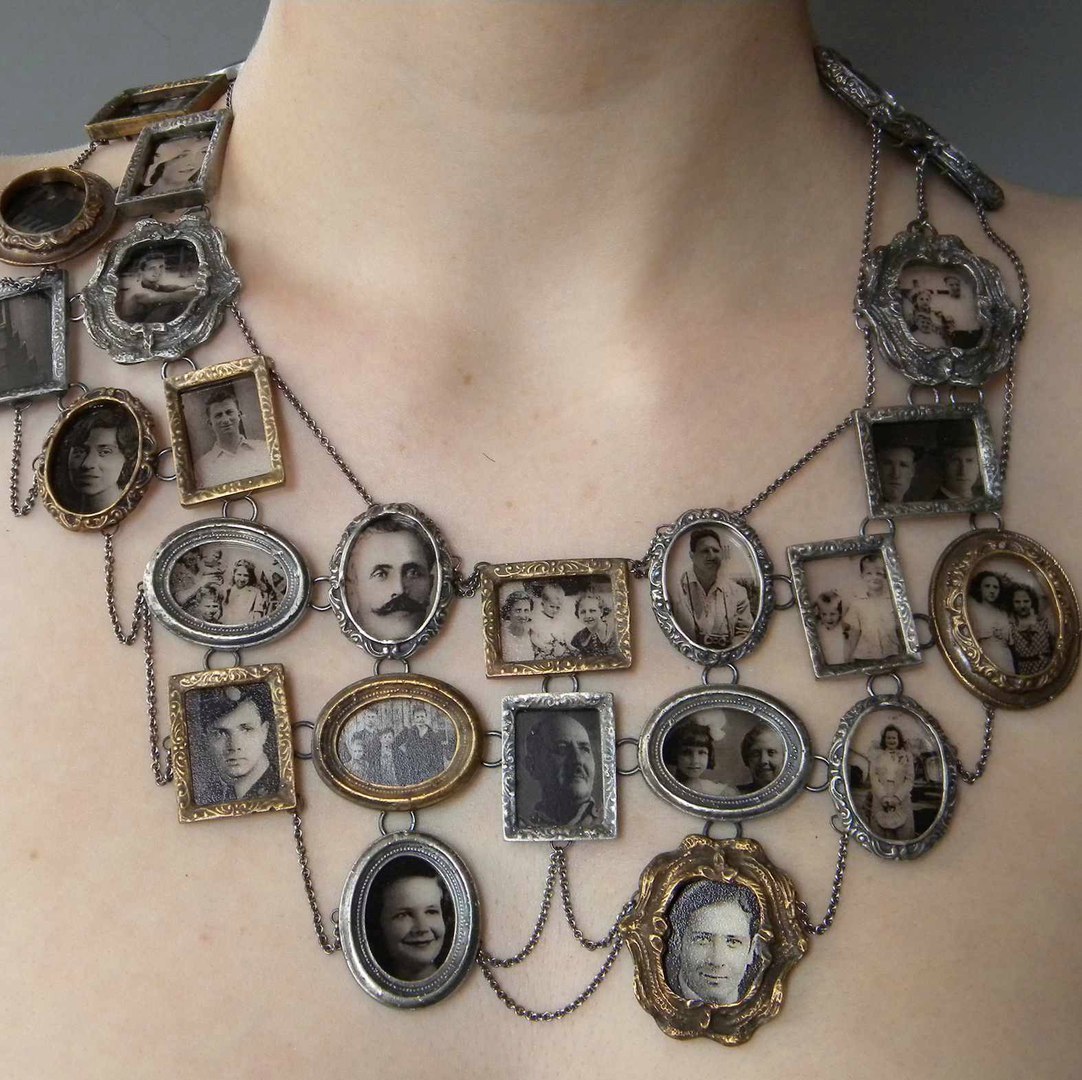
Item: Necklace of Faces; each frame is a screen that connects to the Land of the Dead, through which the spirits are able to see and hear what is going on in the mortal world. Most necklaces just have the one screen, usually a loved one or important person, but there’s no reason to limit. This person might be showing their life to their extended family, or maybe they were hired by the survivors of some awful killer or catastrophe to extract revenge on behalf of the victims.
Tags:
#story ideas I will never write #death tw #art #jewellery #scopophobia
Tumblr seems to be in potential death throes or at least, incredibly volatile and unreliable lately, but we’ve done some pretty good and informative work on canon analysis and reference guides so I was looking for ways to back it up without losing it…and the solution became obvious to me:
Archive of Our Own, aka AO3.
“What?” you might ask if you are less familiar with their TOS. “Isn’t that just a fanfic archive??”
No! It’s a fanWORK archive. It is an archive for fanworks in general! “Fanwork” is a broad term that encompasses a lot of things, but it doesn’t just include fanfic and fanart, vids etc; it also includes “fannish” essays and articles that fall under what’s often called “meta” (from the word for “beyond” or “above”, referencing that it goes beyond the original exact text)! The defining factor of whether Archive of Our Own is the appropriate place to post it is not whether or not it’s a fictional expansion of canon (fanfic), though that is definitely included – no, it’s literally just “is this a work by a ‘fan’ intended for other ‘fannish’ folks/of ‘fannish’ interest?”
The articles we’ve written as a handy reference to the period-appropriate Japanese clothing worn by Inuyasha characters? The analyses of characters? The delineations of concrete canon (the original work) vs common “fanon” (common misconceptions within the fandom)? Even the discussion of broader cultural, historical, and geographic context that applies to the series and many potential fanworks?
All of those are fannish nonfiction!
Which means they absolutely can (and will) have a home on AO3, and I encourage anybody who is wanting to back up similar works of “fannish interest” – ranging from research they’ve done for a fic, to character analyses and headcanons – to use AO3 for it, because it’s a stable, smooth-running platform that is ad-free and unlike tumblr, is run by a nonprofit (The OTW) that itself is run by and for the benefit of, fellow fans.
Of course, that begs the question of how to tag your work if you do cross-post it, eh? So on that note, here’s a quick run-down of tags we’re finding useful and applicable, which I’ve figured out through a combination of trial and error and actually asking a tag wrangler (shoutout to @wrangletangle for their invaluable help!):
First, the Very Broad:
– “ Nonfiction ”. This helps separate it from fanfic on the archive, so people who aren’t looking for anything but fanfic are less likely to have to skim past it, whereas people looking for exactly that content are more likely to find it.
– while “Meta” and “Essay” and even “Information” are all sometimes used for the kinds of nonfiction and analytical works we post, I’ve been told “ Meta Essay ” is the advisable specific tag for such works. This would apply to character analyses, reference guides to canon, and even reference guides to real-world things that are reflected in the canon (such as our articles on Japanese clothing as worn by the characters). The other three tags are usable, and I’ve been using them as well to cover my bases, but they’ll also tend to bring up content such as “essay format” fanfic or fanfic with titles with those words in them – something that does not happen with “Meta Essay”.
– I’ve also found by poking around in suggested tags, that “ Fanwork Research & Reference Guides ” is consistently used (even by casual users) for: nonfiction fannish works relating to analyses of canon materials; analyses of and meta on fandom-specific or fanwork-specific tropes; information on or guides to writing real-world stuff that applies to or is reflected in specific fandoms’ media (e.g. articles on period-appropriate culture-specific costuming and how to describe it); and expanded background materials for specific fans’ fanworks (such as how a given AU’s worldbuilding is supposed to be set up) that didn’t fit within the narrative proper and is separated out as a reference for interested readers.
Basically, if it’s an original fan-made reference for something specific to one or more fanworks, or a research aid for writing certain things applicable to fanworks or fannish interests in general, then it can fall under that latter tag.
– You should also mark it with any appropriate fandom(s) in the “Fandom” field. Just like you would for a fanfic, because of course, the work is specifically relevant to fans of X canon, right?
If it discusses sensitive topics, or particular characters, etc., you should probably tag for those. E.g. “death” or “mental illness”, “Kagome Higurashi”, etc.
Additionally, if you are backing it up from a Tumblr you may wish to add:
– “ Archived From Tumblr “ and/or “ Cross-Posted From Tumblr ” to reference the original place of publication, for works originally posted to tumblr. (I advise this if only because someday, there might not be “tumblr” as we know it, and someone might be specifically looking for content that was originally on it, you never know)
– “ Archived From [blog name] Blog ”; this marks it as an archived work from a specific blog. And yes, I recommend adding the word “blog” in there for clarity- Wrangletangle was actually delighted that I bothered to tag our first archived work with “Archived From Inu-Fiction Blog” because being EXTREMLY specific about things like that is super helpful to the tag wranglers on AO3, who have to decide how to categorize/”syn” (synonym) various new tags from alphabetized lists without context of the original posting right in front of them. In other words, including the name AND the word “blog” in it,helps them categorize the tag on the back end without having to spend extra time googling what the heck “[Insert Name Here]” was originally.
Overall, you should be as specific and clear as possible, but those tags/tag formats should prove useful in tagging it correctly should you choose to put fannish essays and articles up on AO3 :)
Oh, and protip sidebar for those posting, especially works that are more than plain text: you can make archiving things quicker and easier for yourself, but remember to plan ahead for tumblr’s potential demise/disabling/service interruptions.
The good news: You can literally copy and paste the ENTIRE text of a tumblr post from say, an “edit” window, on tumblr, straight into AO3′s Rich Text Format editor, and it will preserve pretty much all or almost all of the formatting – such as bold, italics, embedded links, etc!
But the bad news: keep in mind that while AO3 allows for embedded images and it WILL transfer those embedded images with a quick copy-paste like that, AO3 itself doesn’t host the images for embedding; those are still external images. This means that whether or not they continue to load/display for users, depends entirely on whether the file is still on the original external server! As I quickly discovered, in the case of posts copied from the Edit window of a tumblr post, the images will still point to the copies of the images ON tumblr’s servers.
What this means is that you should back up (save copies elsewhere of) any embedded images that you consider vital to such posts, in case you need to upload them elsewhere and fiddle with where the external image is being pulled from, later.
Personally, I’m doing that AND adding image descriptions underneath them, just to be on the safe side (and in fairness, this makes it more accessible to people who cannot view the images anyway, such as sight-impaired people who use screen readers or people who have images set to not automatically display on their browser, so it’s win-win)
Thanks for this helpful guide! I haven’t used some of these tags so far for the fandom stats work I’ve cross-posted to AO3, but that’s because I didn’t know about them. Great ideas! :)
I keep meaning to mass archive my Toastystats work to AO3, but I am always stymied by image hosting when trying to overcome inertia and do so. It takes time to repost all the images to external hosting (like imgur). So thus far I’ve only done it for a few major analyses, and even in some of those cases, the images are hosted on Tumblr. But I should finally get around to it. At least I’ve exported my Toastystats side blog recently, so most of my stuff should be preserved if anything should happen. But maybe this holiday break I’ll finally make more progress.
I second all of this!
I’ve also found that AO3 is the best way for me to distribute my vids. I do have to host them elsewhere, but AO3 gives me a consistent URL and a way to have useful headers with fandom/ship/etc. even if I switch hosting a hundred times.
Tags:
#101 Uses for Infrastructureless Computers #The Last Tumblr Apocalypse #the more you know #AO3 #PSA
when i watch old movies i’m constantly surprised by how much acting has improved. not that the acting in the classics is bad, it’s just often kind of artificial? it’s acting-y. it’s like stage acting.
it took some decades for the arts of acting and filmmaking to catch up to the potential that was in movies all along; stuff like microexpressions and silences and eyes, oh man people are SO much better at acting with their eyes than they were in the 40′s, or even the 70′s.
the performances we take for granted in adventure movies and comedies now would’ve blown the critics’ socks off in the days of ‘casablanca’.
there’s a weird period in film where you can see the transition happening. right around the fifties, I think. the example my prof used when i learned about it was marlon brando in “a streetcar named desire” – he was using stanislavski acting methods and this new hyper-realistic style and most or all of his costars were still using the old, highly-stylized way of acting. it makes it way more obvious how false it is.
i even noticed it in ‘the sting’, which was 1973. i actually think they used it on purpose to get the viewer fished in by the second layer of the con; the grifters at the bookie’s were acting like they were acting, and the grifters playing the feds were acting for reals. if you’re used to setting your suspension of disbelief at the first set’s level, then the second set are gonna blow right past you.
or possibly the guys playing the grifters playing the feds just happened to be using the realistic style for their own reason, and it coincidentally made the plot twist work better. but i like to think it was deliberate.
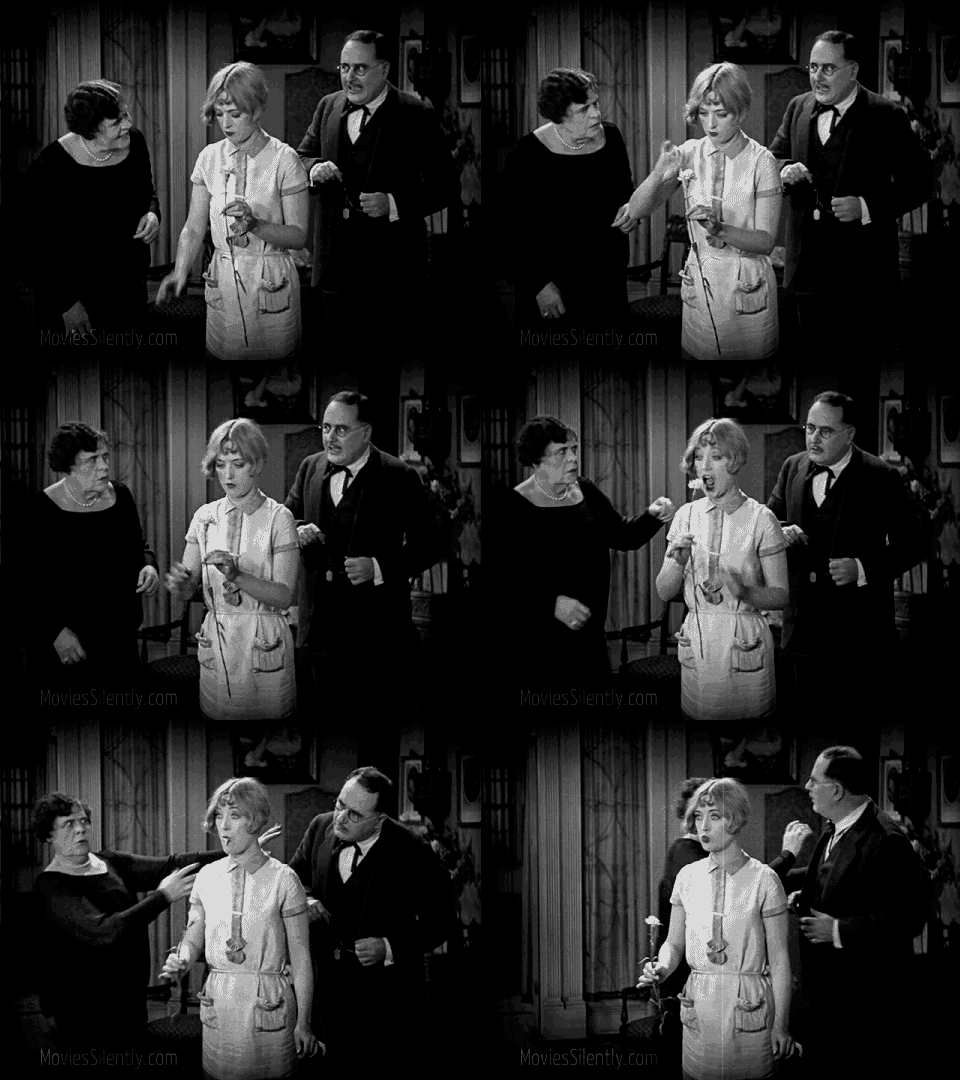
i was thinking about this again, and when you know what to look for, it’s really obvious: old movies are stageacting, not movie acting. it just didn’t really occur to anyone to make the camera bend to the actors, rather than the other way around. just image search old movie screenshots and clips and gifs, you’ll see it. the way people march up to their mark and stand there, the way they deliver their lines rather than inhabiting the character. the way they’re framed in an unmoving center-stage.
this is a charming little tableau, quirky and unexpected, but it’s a tableau. it lives in a box.
now, i usually watch action movies, and i didn’t think it was fair to compare an action movie with what appears to be an indoor sort of story, but i do watch some comedy tv. so i looked for a brooklyn 99 gif with a similar framing, intending to point out that the camera moves, and the characters aren’t stuck inside the box. but i couldn’t even find the framing. they literally never have all the characters in the same plane, facing the camera, interacting only within the staging area. even when they’re not traveling, they’re moving around, and they treat things outside the ‘stage’ as real and interact with them, even if it’s only to stare in delighted horror.
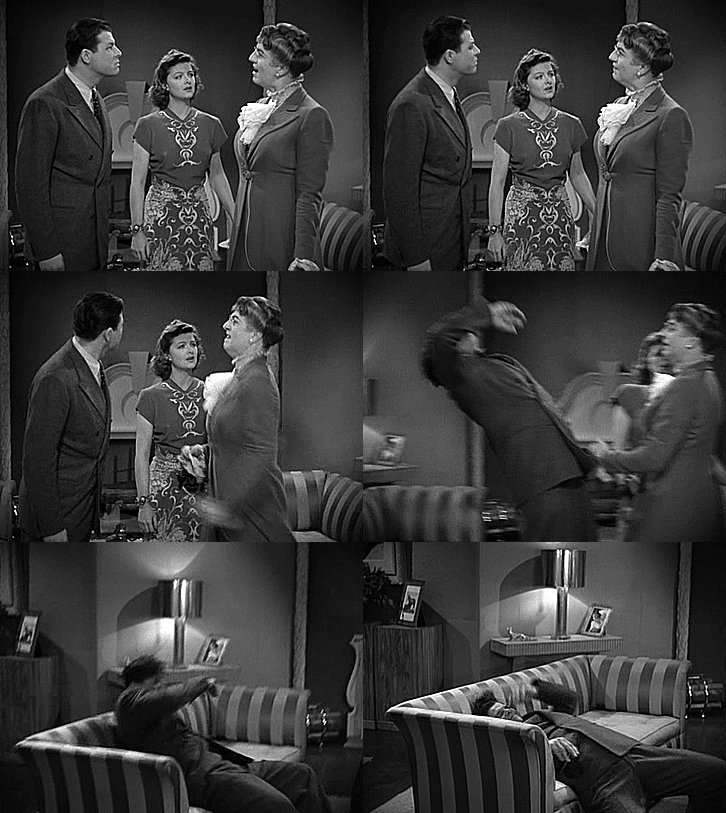
as for action, it took a while for the movies to figure out what, exactly they wanted to show us, and how to act it. here’s a comedy punch:
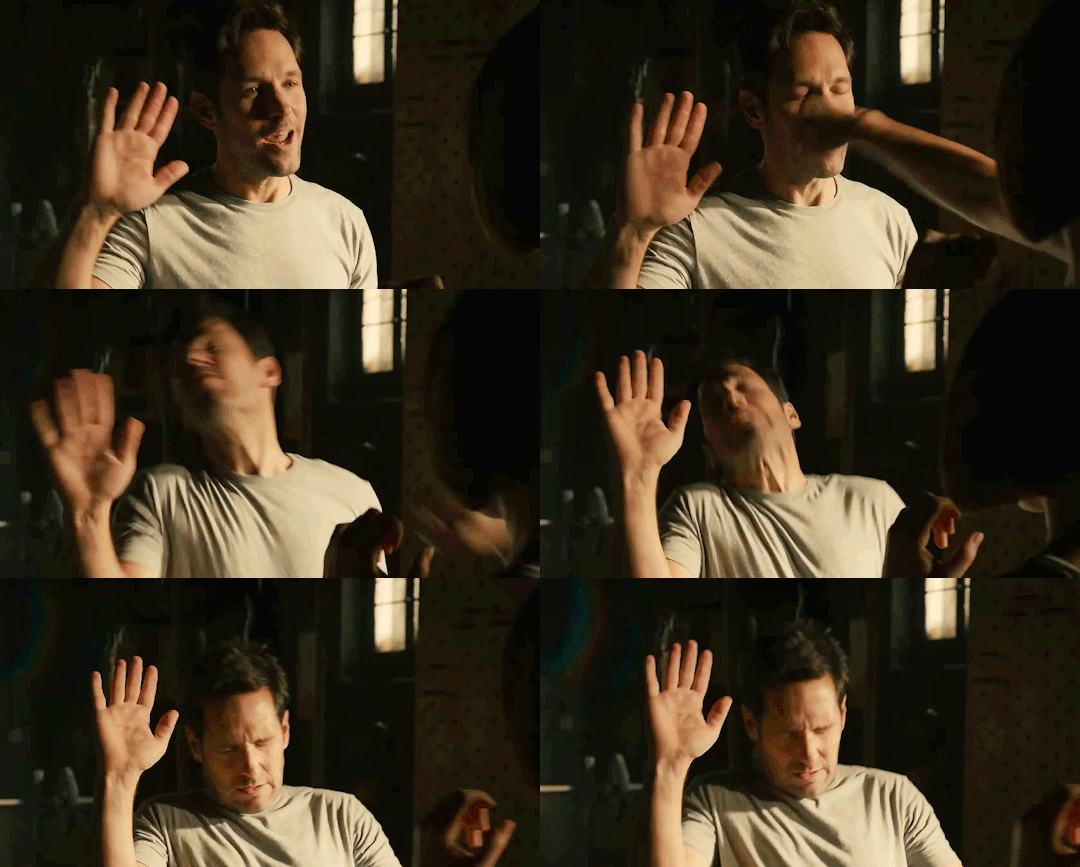
here, also, is a comedy punch:
the first one looks like a stage direction written on a script. the second one looks like your friends horsing around and being jerks to each other. the first one is just not believable. the physics doesn’t work. the reaction is fakey. everyone’s stiff. even the movement of the camera is kind of wooden. the second one looks real right down to the cringe of his shoulder, and the camera feels startled too.
i’m not saying this to dis old movies, i’m just fascinated and impressed by how much the art has advanced!
I’m going to bed, but I also want to say that I think, without actually bothering to explore it and make sure, that there’s been a similar shift in comics, probably related to the shift in acting/camera work. And I think you still see remnants of old “stage acting” comics in the three-panel style set ups (you might still see it in long form comics, but you’d probably call it bad composition)
Seriously, I used to work in a sound studio, and one series of projects required us to listen to LOTS of old audio recordings. Not of anything special – just people talking.
AND THEY TALKED LIKE THAT.
It was so fucking wild to hear just a couple of people being like,
“WELL HI THERE JEANINE, HOW ARE YOU TODAY?”
“OH, NOT TOO BAD, JOE, THOUGH MY HUSBAND’S BEEN AWAY ON BUSINESS FOR A FEW WEEKS AND I MISS HIM SOMETHING TERRIBLE.”
“WELL IT’S A HARD THING, JEANINE, BUT YOU’LL GET THROUGH IT.”
“WELL I SUPPOSE I’VE GOT TO, HAVEN’T I JOE?”
All in that piercing, strident, rapid-fire style we associate with the films of the era. If you’ve watched lots of old movies you can imagine the above in that speech pattern.
I don’t know if people talked like that because it was in movies but I suspect it’s the other way around.
Same goes for the UK – When they made the TV series The Hour, set in the 1950s, they had to tell the very well spoken, privately educated Dominic West to tone down his imitation of a 1950s newsreader because being accurate would have sounded to a 2011 TV audience as if he was doing a parody. When you watch Brief Encounter they’re not speaking like that because they can’t act, they’re speaking like that because it was the norm on screen. It now sounds unnatural because it’s not the norm any more.
Obviously there were people with regional accents and who didn’t speak in a heightened manner, but they didn’t get to be on TV or in movies unless they were villains. (And usually the villains were putting it on, like Richard Attenborough in Brighton Rock. Sure, he was Richard Attenborough, but he was brought up in the Midlands, and by the on-screen standards of the time, that was common.)
Even the Queen’s very posh accent has changed over the last 50 years and become “more common” – check out newsreel footage etc for proof – and recordings of her father are almost like someone from a foreign country (well, it is the past).
There is, for many film historians/critics, an actual turning point from mannered, theatrical, or “overplayed” acting on screen to naturalistic/American Method realism on screen. It happens in the 1954 movie On the Waterfront, during a traveling shot in which Marlon Brando’s character and Eva Marie Saint’s character are walking together. Eva Marie Saint accidentally drops her glove in the middle of the scene. Marlon Brando instinctively picks it up as his character, and continues the dialog, all the while playing with the glove–turning it about, trying it on, etc. Eva Marie Saint stuck with him, never broke, and the director didn’t call “cut.”
Before that scene in that movie, if an actor dropped a prop by accident, they would have re-shot the scene–because Brando mostly disappeared out of frame as he bent down to pick up the glove, and (as is explained above) movies were framed to keep the people in the scene in the frame. I
t’s a pretty famous scene in movies because Brando’s character doesn’t give the glove back, but instead uses it to amplify what the two characters are experiencing, naturally and without artifice. It is, for all intents and purposes, the exact moment that screen acting changed.
Okay, but here’s the thing about television specifically: given the size of TV screens when they first came out? Stage acting was the only thing that could be READ. Watch Star Trek: TOS on a modern screen and it looks absurdly overacted. Film of the same era is not, and yet the TV is.
And that’s not a fault of the actors; they were all very capable of naturalistic film acting (yes, even Shatner) – as the later movies would bear out. It’s because they were acting for the small screen, not the big one.
Stage acting and stage makeup is what it is because people are far enough away from the stage that you have to cake on the makeup garishly and exaggerate the hell out of your for it to be VISIBLE. And in early television? Yeah, those constraints actually very much applied. You could move the camera, sure, but the quantity of visual information you could send was just damned limited.
Watch some Classic Dr Who. You may or may not notice it without watching for it, but every shot of the TARDIS is taken from the same angle.
The TARDIS was, at that time, a stage set. The camera was behind the fourth (Sixth?) wall. It was fixed. And most TV sets were built like this. They had a specific fourth wall and everything was filmed from that angle.
Fast forward to the new series, and you’ll see that the TARDIS is being filmed from different angles all the time, including following the actor around.
Three things have changed:
1. Cameras have become much smaller.
2. Set building for TV has developed as an art. Those early sets were built by people who were trained to build stage sets.
3. Overall technological improvement resulting in things being cheaper.
The TARDIS set that was just retired? Each of its walls was designed to slide out. So you could put the camera anywhere you wanted. Presumably this is the case with the new one too. They couldn’t imagine doing that back in the day. Nor could they afford the complexities of a set like that.
It’s actually my opinion that TV has very much matured as an art form…this century. This decade. We are doing and seeing things that couldn’t be done ten years ago, twenty. Heck, even five.
Going back to speech patterns for a moment – I was a young child in the 80s, so my memories of the norms of the time period are limited (especially because I was incredibly sheltered), but the books I read at the time and the popular movies of the time all have this kind of – whimsical, sardonic speech pattern going on. Think John Waters dialogue.
I always thought it was kind of stylized. But then I ended up in a weird part of YouTube one night and found someone’s home video of just walking aroud a 7-11 convenience store at midnight talking to people in Orlando, Florida. Just trying out their new camcorder for shits and giggles, talking to other customers, talking to the cashier, etc. And you know what? They all talked like a goddamn John Waters movie. It was the weirdest thing, like I was watching outtakes from The Breakfast Club or Say Anything. I expected one of the Cusacks to walk into frame any second.
Anyway, so I think it’s super cool how human speech and interaction shifts over time, and if you’re living through the shift, you don’t really notice it as it happens.
The cameras they were using back in the 1940s-1970s were enormous and heavy. Moving them was a chore, and you had to have track built to move a camera that big. Getting the camera in close to the subject was very difficult.
It was the arrival of the Steadicam in the 1970s that started to change everything. You could hook the camera to an individual person using a harness. For the first time the camera was liberated. Think of the walk & talks on “The West Wing” – that would not have been technologically possible in earlier film and television.
Also filming through the 1950s was mostly done on sets. A few directors like John Ford would go shoot on location for parts of their movies, but most films were made on sets because it was cheaper and easier. When the studio system began to break down in the 1960s, and cameras started becoming lighter, you saw a shift to location shooting, which reduced the proscenium staging of older movies.
Tags:
#not sure how to fact-check this #history #interesting #long post
yeah, we don’t refrigerate them here. they keep like a month or two, even in summer, just crack it into a cup in case it’s accidentally taken you too long to use those eggs, give it a whiff, if it smells okay you’re good to go even if it’s really old. don’t use the float test — that turns up a lot of false positives and sometimes you end up throwing away perfectly good eggs, which is not cheap. just turn your eggs upside down every now and then to help keep them fresh and yeah.
also chicken eggs do not look anything like those things you see on american tv shows. they have brown shells and the yolks are orange.
we should organise a charity drive to mail european eggs to americans. we can send them uht milk too, i read on the internet that they only have the kind of milk that has to be refrigerated
Canadians refrigerate eggs too. And re: colour, every Canadian grocery store I have ever been in carried multiple brands of eggs, some of which were white and some which were brown. (We usually buy the brown: the last time I bought white it was because we realised at the last moment we were out of eggs and Mom sent me to the white-egg-only convenience store to get a dozen to tide us over.)
Who told you Americans don’t have UHT milk? I don’t know about big ones, but there are definitely single-serving ones that I think are intended for kids’ lunches. I used to go through multiple single-serving boxes* of Parmelat chocolate milk a day when I was a kid.
(Come to think of it, did they say “no room-temperature milk” or “no UHT milk”? Because while I’ve drunk well over a thousand cartons* of milk (all bought in America) that appear to fit with the definition of “UHT milk” I just looked up, I had never heard the term before.)
*The Canadian term for this is the genericised trademark “tetra pak”, but since I’m talking about my experiences as an American in America I figured I ought to use the terminology I would’ve used at the time, despite its relative lack of precision.
P.S. Maybe I should look into the possibility of larger tetras of milk, considering I just had refrigerated milk go lumpy nine days before its sell-by date (beating the previous record of six days). Bagged milksounds like a neat idea, but it’s terrible for preservation, and the manufacturers won’t even admit it.
i don’t remember where i saw it. but it was an article on the internet and someone was saying that for a limited time they had uht milk available in the cardboard box things but it didnt catch on with americans because it was too weird that it could be stored unrefrigerated or something and they didnt sell well so it was taken off the market and it was a shame because they were really useful for people like university students who didnt have a fridge.
actually, i remember reading that they do have uht milk in the us, but they don’t sell it in the cardboard boxes but they sell it in the transparent gallon containers, and part of what gives the milk the shelf life of like a year and the need to not be refrigerated is keeping it from exposure to light, and so even though the milk is treated with an ultra high temperature to pasteurise it, it doesn’t have the 9 months-1 year shelf life because of exposure to light, so they have to keep it refrigerated anyway.
it is possible that the author of the article lived in a specific region of the us and was overgeneralising to the availability in the rest of their country.
do any other americans want to weigh in? can you go to the supermarket and buy a cardboard box of milk that is not in the refrigerated section of the store and it does not need to be refrigerated until opened? maybe i am wrong?
No we cannot, at least not where I live. (near San Francisco, CA) I didn’t even know what uht milk was until I googled it. All the milk I have ever encountered needs to be refrigerated, and I am actually shocked this isn’t a rule. Our milk choices range from non fat, low fat, regular, half and half (ughhhh), and there’s the vegan milk stuff. My dad drinks almond milk, which is an abomination. And I thought bagged milk was weird…
Thank you for weighing in! UHT milk doesn’t have any preservatives in it. The shelf life is due to the combination of: sterile packaging, opaque packaging, and the high temperature at which it is pasteurised. once you open your box of milk, you have to drink it within a few days, and it does have to be refrigerated once opened because the packaging is no longer sealed and germs can get in, but the packages are 1 litre or a half litre, which isn’t all that much milk, so even without refrigeration, you can plan around using the entire thing before it goes bad.
a friend of mine without refrigeration would just reboil it every time she wanted to drink some, but in the summer months i just try to use it all up as soon as i open it, and in winter months it’s easier because i can just leave it outside and use it slowly over the course of a few days.
but the advantages are: not needing to refrigerate the trucks it is shipped in, not needing to refrigerate it at the store, and you can use it as an emergency food. you can stock up on it effectively without worrying about it going bad (within reason, 6-9 month shelf life) because it only starts going bad once opened.
No we cannot, at least not where I live. (near San Francisco, CA)
You can definitely get shelf-stable milk in the Bay Area! I looked it up, and it says there’s some in stock in stock for every Whole Foods I checked, and at least half of the Safeways and Walmarts, too. And Costco has store brand shelf-stable chocolate milk, at least.
They’ve probably just hidden it away on some obscure back shelf because it’s not a popular product.
Additionally, you can get shelf-stable cream at any Trader Joe’s! (Source: I have one on my shelf right now.)
Tags:
#long post #conversational aglets #food #home of the brave #our home and cherished land #the more you know
a romcom where the main character has prosopagnosia and has no idea they’ve been wooing the same person for months b/c the other character keeps changing their clothes and hairstyle
Have you heard of Faces in the Crowd? (Note: I haven’t actually seen it, just read about it.) I read some of the IMDB reviews a while back: many of the non-prosos thought it was neat how they portrayed it by having several similar-looking-but-different actors play each part, and the prosos were like “wait, they what now?”.
Similarly, I expect a movie like that would play out better to people with normal facial recognition, both because they are more likely to notice that anything strange is going on at all and because cringe comedy is worse if there’s a layer of “it could happen to you”. (Or would that actually make it better for someone already inclined to like cringe comedy? I wouldn’t know.)
I had not heard of that movie! I might give it a shot, if it’s on Netflix or somethin’, just because I wanna see how well it works. Curious to see it portrayed on screen. Hooray brain problems \o/ Actually, I remember someone talking about a book where the MC had prosopagnosia, too, and she was a … mountain climber? I can’t remember the title right now.
The more I think about it, the more I wonder whose POV a rom-com style thing about that would work from. The love interest, who’s like “why does this person keep doing/saying nice things one day then ignoring me like we’ve never met the next ?__?” or the proso person who is just kind of blithely and unassumingly kind and doesn’t realize that, like, their barista rides the same bus as they do or whatever?
also now i’m wondering how early you’d want to give away the fact that the main character’s got face blindness.
Tags:
#(February 2014) #conversational aglets #prosopagnosia #embarrassment squick #story ideas I will never write #(fittingly for a prosopagnosia conversation OP put on a new nametag and is now unrecognisable) #((but the Tumblr metadata reveals that they are one and the same))