agapi42 asked: Pass the happy! When you get this, reply with 5 things that make you happy and send this to the last 10 people in your notifications✨

{{previous post in sequence}}


brin-bellway:

*

1. Cuddling my mom.

2. Returning severely underpriced items (the kind where someone left out a digit when putting in the price, stuff like that) on the Flight Rising player marketplace to their sellers, and seeing the seller gush with gratitude.

3. Finding new ways for my household to save money or otherwise run better. (A couple days ago I went looking through some more of those free-birthday-food aggregator websites I was talking about earlier, and I found a frozen-yogurt chain to add to my list of nearby restaurants with outright-free birthday gifts. It was like finding buried treasure, but with more dessert.)

4. Giving little kids stickers at work.

5. Exploring towns (or parts of towns) that I had previously only passed through, looking around inside all the little shops and taking pictures of the waterfalls and mapping the public Wi-Fi.

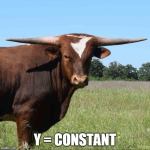
tumblr_inline_pc73t1fvlx1qmjdbw_540

Tags:

#also I forgot to mention in that earlier post that the Mary Brown’s fried-chicken chain offers a free chicken sandwich for your birthday #I found out too late to do it last year myself but early enough that Mom could do it #and she gave me hers because she’s diabetic and breading + hamburger bun would mess up her blood sugar #it was pretty good #food #adventures in human capitalism #and for that matter #adventures in dragon capitalism #meme #tales from the askbox #Flight Rising

intheheatherbright:

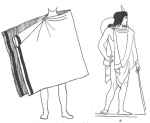
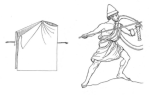
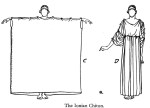
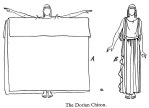
Costume. Chitons.


intheheatherbright:

Marjorie & C. H. B.Quennell, Everyday Things in Archaic Greece (London: B. T. Batsford, 1931).


killerchickadee:

Wait, wait…. Is that seriously it? How their clothes go?


fabledquill:

that genuinely is it


itwashotwestayedinthewater:

yeah hey whats up bout to put some fucking giant sheets on my body


childrentalking:

lets bring back sheetwares


hostagesandsnacks:

also chlamys:

tumblr_inline_o2cw19ga6s1sarj67_540

and exomis:

tumblr_inline_o2cw5liipx1sarj67_540


fightthemane:

trust the ancients to make a fashion statement out of straight cloth and nothing but pins


biggest-gaudiest-patronuses:

Wrap Yourself In Blankets, Call It a Day


angualupin:

Ok, yes, but guys, look

Prior to the Industrial Revolution, fabric was EXTREMELY time consuming to make, and as such, was extremely valuable. You have to grow your fiber, either in the ground or on an animal. You have to process the fiber. You have to spin the fiber. And spin, and spin, and spin. Spinning technology prior to the late Middle Ages consisted of a drop spindle. It takes forever and a day to spin enough thread to make fabric using a drop spindle – 10-30 times longer than to weave it, depending on how thick your yarn is and what weaving technology you are using. Then, once you are done with that endless task, you need to weave it. The examples in this post are all from Greece, where they used the warp-weighted loom, which is actually a rather efficient piece of weaving technology, but it’s still not as fast as the treadle loom (another late Middle Ages invention) and in no way comparable to a modern industrial loom (essentially the same machine as a treadle loom, but automated (except warping, which is still hell on earth even in 2018)). You know the saying “women’s work is never done”? That saying refers to the fact that unlike, say, field work, or mining, or smithing, spinning and weaving were started before dawn and carried on until after dusk, every day of the year, and there was always, always need for more.

After all of this, every piece of fabric that is made represents literally hundreds of hours of work. It is so valuable it was a standard form of currency before the invention of money. Egyptians piled linen high in their tombs as a show of wealth – and that linen was stolen by the grave robbers along with the gold and other precious artifacts. Textiles were one of the most valuable things you could steal when you pillaged a city. A primary reason for the warfare and raiding that was a consistent part of pre-modern Mediterranean/Near Eastern history was to acquire female slaves to produce textiles. Yes, cooking, cleaning, and sex were also reasons to acquire female slaves, but the economic reason was for textile manufacturing.

So if fabric is that valuable, you’re not going to waste it. You’re not going to make something tightly tailored, because as anyone who sews can tell you, cutting fabric to fit produces a lot of waste. In addition, the cloth of the ancient world was often much more loosely woven than cloth today, which is partly to do with weaving technology but most to do with the fact that the denser the cloth, the more threads there are in it, which means the more threads you have to spin for it, which means the time you have to spend making it has just gone up dramatically. Loosely woven cloth ravels like hell when you cut it, again as anyone who sews can tell you, and that makes it much more difficult to sew something nicely tailored. Needles and scissors are also items we take for granted, but are, in their modern form, relatively modern inventions and have, historically, been tricky items to make.

Thus, most of the clothing of the ancient Mediterranean/Near East was based on the rectangles of fabric that come directly off the loom. Much of China’s historical dress is similar, at least in the time frames we’re talking about. Throughout European/North African/Middle Eastern history, and in China until silk changed the game (at least for the rich), tailoring skill and technology has lagged behind cloth production skill and technology.

The famous painting from the early Renaissance where the woman is wearing a dress constructed using a truly obscene amount of fabric? That painting is often held up as an example of the sharp increase in the availability of material goods that is the hallmark of the European Renaissance (especially because it is of a merchant family and not nobles), and it is that. But it is also an example of a mode of dress that was difficult-to-impossible to achieve before the invention of the flyer wheel (for spinning) and treadle loom (for weaving), which made cloth take considerably less time to make and therefore considerably cheaper, and which also made cloth considerably more amenable to tailoring.

So yeah. You too would make fashion out of sheets if it took you most of a month of full-time work to produce one sheet.


angualupin:

I also want to point out that much of the historical dress of Sub-Saharan Africa and the Americas (in the places where cloth was used) is similar, it’s just based on narrow rectangles sewn together rather than large rectangles, because these are places where the backstrap loom and/or tubular loom remained the mainstay of weaving technology. Backstrap looms produce narrow lengths of cloth (15-18 inches is usually the limit), so with that weaving technology + some sewing, you get things like Central and South American ponchos and much of the traditional dress of Central and Western Africa.


funereal-disease:

After Ethan Allen’s death, Ira and Fanny Allen (his brother and widow respectively) fought over his estate for years. Ira wanted the house, which he had built on land he originally bought. Fanny wanted the linens. Let me repeat: Fanny Allen was perfectly fine with ceding her house to her brother-in-law *as long as she got all the linens*. Textiles were that economically important.


Tags:

#found this buried in my open tabs #history #interesting

marauders4evr:

Harry isn’t quite out of his teens when it fully hits him—the war, the blood and the guts spread across the corridors of Hogwarts, the screams and sobs, the nightmares, the shadows that never seem to leave him.

It’s too much.

He gets a flat in London—Muggle London. Hermione and the Weasleys give him space. Kingsley ensures the wizarding world gives him privacy. Not that some aren’t reluctant. Rita Skeeter releases articles every day, wondering when their Boy Who Lived will return.

But Harry doesn’t see those articles.

He tries to forget who he is for awhile.

His flat is cozy. He stuffs it with plants and paintings and books. He has a cat (or three). He wears sweaters and blazers with corduroy pants. He goes to the market every morning to buy fruits and vegetables. That’s where he meets the kindly old woman who lives down the street.

She lived through World War II and so many other wars, wars that Harry has never experienced but can only imagine.

She goes to his house and she goes to hers. There’s always tea and small cakes and dinners and cocoa—apparently she believes that a teenager needs cocoa—and baking and reading and knitting.

Harry uses magic to brew the cocoa one day, not realizing that she’s standing in the doorway. She calms him by telling him that she knows all about magic. 

Their conversations shift after that. They talk about their favorite creatures and how hard it was to watch them perish before their eyes. They talk about the wall that seemingly gave way to let them enter the magical world. They talk about lions and friends and family and love and betrayals and life and death.

“When did you leave?” Harry asks one day.

She pauses, a hand resting on his cat’s head. After a moment, she looks up with a heaviness in her eyes, a heaviness that Harry sees when he looks in the mirror everyday. 

“I was young,” she says. “Younger than you are now. But I had already grown up. I didn’t want to leave, not really, but it became too much.”

“Do you regret it?”

“Some days I do, some days I don’t.” 

“Yeah…”

It’s a few months later, when he’s helping her shovel the first snow from her walkway, that he asks, “Did you ever try going back?”

“Even if I wanted to, I couldn’t,” she says, shoving a cup of cocoa into his hands. “I was shut out as soon as I hesitated.”

He pauses, nearly dropping the cocoa, before whispering, “That’s horrible.”

“What about you?” She escorts him inside, her cane tapping against the floor that he’s magically heated to warm her feet. “Would you be welcomed back?”

“Oh, yeah,” Harry says. “Til they turn on me because they don’t like the color of my shirt or because I sneezed the wrong way or because—you name it.”

She laughs and he smiles.

“Imagine that,” she softly says. “Rulers of our worlds and we’re not even allowed in them.”

“Imagine that.”

He does go back to the wizarding world, of course, but he never forgets his London flat. He visits the street from time to time, knowing that Susan Pevensie will be there, ready to push a cup of cocoa into his hands.

Tags:

#Harry Potter #Narnia #fanfic #crossovers

another-normal-anomaly asked: 1: What is the best and worst purchases you’ve made? And 3: What is the craziest thing one of your teachers has done?

another-normal-anomaly:

evolution-is-just-a-theorem:

1: What is the best and worst purchases you’ve made?

Already answered, but I’ll add that deciding that whenever I think of something it would be useful to have I will just buy a bunch of it on Amazon has been an incredibly good decision that hasn’t cost me much money. Strongly recommend to anyone with an income, moderately recommend to anyone with good runway / expectation of an income.

Some example purchases: a ton of zip ties, a set of screwdrivers, a set of small plastic drawers to keep things organized, a bunch of power strips, various cleaning supplies that I needed at least once, a large pack of pencils and pens.

3: What is the craziest thing one of your teachers has done?

Asked me, and I fucking quote: “But what about the possibility of a collection consciousness”.

Fuck you and your shitty off-brand new age continentalism.

Maybe they just wanted to talk about the Borg :(

In the Voyager episode “Drone”, the Borg (or rather, disconnected Borg nanoprobes acting autonomously, but presumably with standing orders from the Collective) create a drone using a genetic sample and whatever tech they could scrounge up and convert into implants and a gestation vat. The being comes into existence already Borg-ified (still without a live connection to the Collective, but with a homing beacon).

I think this indicates that the Borg *can* have kids if pressed, though prefer to reproduce via assimilation.

(yeah, the kid was made with heavy technological assistance, but they’re *Borg*, they do *everything* with heavy technological assistance, so I don’t think that stops it from counting)


Tags:

#Star Trek #Voyager #reply via reblog #tangents


{{next post in sequence}}

momnar:

quantum-jump:

momnar:

momnar:

momnar:

Dear D&Diary,

Today I had the revelation that my half orc has 30ft speed, but because she’s a monk, her unarmored movement is +10ft at Level 3. Using the ki feature Breath of the Wind, she can dash as a bonus action meaning she can go 80ft in a turn.

If anyone cast Haste on my dear sweet Marfu, she would go 160 in six seconds. 

At her most perfect Level 20 self’s unarmored movement of +30, she could go a max 120ft in a turn, or 240ft hasted. With 20 ki points to spend that could mean a solid two minutes of going almost 30 miles per hour and I think that’s beautiful.

jade-empath replied to your post:

don’t forget that you can dash as your standard action as well as your bonus action!

OH GOD YOU’RE RIGHT

Right now at Level 3:
max 120 ft. per turn
240 ft. Hasted = 27 MPH

Level 20:
180 ft. per turn
360 ft. Hasted = …

EVERYBODY OUTTA THE GODDAMN WAY THIS ORC LADY COMIN AT YOU AT 40 MILES PER HOUR

vgtgvgs replied to your post:

Grab yourself the mobile feat for that extra 10ft base movement

We’re up to a max of 210/420 (lol) feet per six seconds which is 47 MPH. I feel like we’re crowdsourcing this monk at this point to make her as game-breakingly fast as possible.

BETTER MAKE THAT 94MPH

I quote the 5th Edition rulebook:

Boots of Speed

While you wear these boots, you can use a Bonus Action and click the boots’ heels together. If you do, the boots double your walking speed, and any creature that makes an opportunity attack against you has disadvantage on the Attack roll. If you click your heels together again, you end the effect.

When the boots’ property has been used for a total of ten minutes, the magic ceases to function until you finish a Long Rest.

Are you telling me Haste and Boots of Speed STACK?! Oh my god we’ve discovered the real Fast Travel function

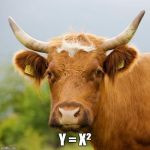
tumblr_inline_op2oj7y4up1runrlj_540

Oh shit mom’s home everyone hide the Speed


Tags:

#puns #anything that makes me laugh this much deserves a reblog #(the pun at the end) #D&D #fun with loopholes #my past self has good taste #may or may not have reblogged this before #(I think it might have been a different chain though) #drugs mention