data jewels [b-side]
Tags:
#pretty things #flashing gif
Using a credit card is like paying with cash, except you also get free money and other benefits.
“But Serine, there’s no such thing as a free lunch! [1] Where does the money come from?”
I’m glad you asked. When you buy something with cash, the seller gets 100% of what you pay. When you use a credit card, the seller gets around 97% of what you pay, and the companies involved in handling the payment get around 3%. [2] This includes the credit card company, which is very willing to give you money and other benefits if you choose them to get the rest of that 3%. [3]
Sellers are willing to give up 3% because handling credit cards is so much easier than cash. You don’t have to count change, and you have a computer record of who paid how much, so it’s easy to figure out who’s lying when the customer said they paid. Not to mention it eliminates the problem of cashiers stealing money by pocketing customers’ money [4]. Also not to mention the store wants the customer to be happy (happy customers spend more) (customers hate having to pay a fee to use a credit card).
Anyway, in the general case, credit cards are basically always a good thing, and you should basically always use them. [5]
When not to credit card
If you are irresponsible with money, and are afraid you will spend more money than you have, you should not use a credit card. Never carry a balance on a credit card (pay off less than the total amount you owe), it piles up and ruins your life. You should spend money on getting things you want, not on paying off interest.
What benefits you get from using credit cards
Most credit cards will give you 1%-2% cash back (for each dollar you spend, you get a certain percentage back in free money).
Basically all credit cards give you the ability to chargeback. This means that if some business steals your money (charges you more than you owe, etc) and you can prove it, you can call the credit card company and tell them to take your money back. Note that this is a last resort (only to be used after you contact the business and they don’t give you your money back), and will generally result in the business completely cutting off contact with you (for instance, if you chargeback Steam, you’ll lose access to all your Steam games etc).
Credit cards also act as a short-term loan. If you ever need a payday loan, a credit card will give you significantly less interest than an actual payday loan. You never want a credit card as a long-term loan (the rates are horrible), but they actually give you close to the best possible rate for a short-term loan. Just remember that debt is evil and never to fall into it.
Other benefits vary wildly and are specific to the card, but common benefits include various forms of insurance (car insurance on any rental car you rent with the credit card, warranty on anything you buy, etc).
Which card to get
It’s actually really easy to choose a credit card. If you’re in the US, here is Serine’s One-Step Guide:
Do you spend more than $2500 per year in travel (hotels, flights, Ubers, etc) and restaurants?
– No -> Get the Citi DoubleCash
– Yes -> Get the Chase Sapphire Reserve
In some extremely obscure situations, you might want other cards, but I’ll cover those after I cover these two cards.
The Citi DoubleCash
The Citi DoubleCash has no yearly fee, and gives you 2% cash back, effectively. This makes it better in every way than most other cards.
Some cards give 1% cash back and a rotating 5% category. They will give you a headache trying to optimize them and you will still get less money back compared to the Citi DoubleCash, in the end.
Some cards give you points that you can spend using a complicated procedure, which will be worth approximately 2% if you can spend them perfectly. Just use the Citi DoubleCash, and skip the complicated procedure.
The Chase Sapphire Reserve
The Chase Sapphire Reserve has a $450 yearly fee, and gives a huge number of benefits that are totally worth it if you spend a decent amount of money. Also it looks really cool because it’s metal and black. [6]
It comes with $300 of travel credit per year, which you can blow through in, like, a single flight, or like a few days of hotel, or like a normal amount of Ubering (anyone who’s even considering this card should have no problem spending that much). So the yearly fee is effectively $150.
It gives you 3 points per dollar on travel and restaurants, and 1 point per dollar on anything else. “Points” can and should be converted to frequent flyer miles, at which point they’re worth 2-4 cents each if you put them towards international flights, especially international first-class flights.
It also comes with a pile of side-benefits, like free Priority Pass membership (gives access to a bunch of airport lounges), and free TSA Global Entry (lets you basically skip airport security and customs).
Assuming you spend enough and you’re willing to spend the effort optimizing flyer miles, it basically pays for itself and the other benefits are free.
Honorable Mention: The AmEx Platinum
I know I didn’t mention the AmEx Platinum at all, but if you have lots of money and want the best benefits on a card (or you take a lot of flights), the AmEx Platinum is probably the card for you.
The AmEx Platinum costs $550 per year, and is a luxury card pretty similar to the Chase Sapphire Reserve. Its biggest advantage is that it has much better airport lounge coverage in the US.
Priority Pass (which comes with both the Chase and the AmEx) gives you lounge access for most international flights, but the AmEx Platinum also gives you lounge access for US domestic flights.
It gives 5 points/dollar for airfare and AmEx Travel hotel purchases, and 1 point/dollar for other purchases, and its points can also be turned into flyer miles.
Other advantages include Gold membership status at Hilton, Marriott, Starwood, and Ritz-Carlton hotels. Mostly this means guaranteed late-checkout at all of those except Hilton, and, like, free bottled water sometimes.
Instead of the $300 travel credit, though, the Platinum has a $200 airline fee credit (abusable to buy gift cards) and a $200 Uber credit (spread out across 12 months, so hard to maximize unless you use Uber all the time). It’s harder to max these out, but if you do, it’s also effectively $150/year.
Overall, the main reason you’d actually want the Platinum over the Sapphire Reserve is if you fly a lot in the US and really want the additional airport lounges.
Extremely obscure situations
So the most common one is: If you have a ton of free time and spend a decent amount of money, you might be interested in churning. I don’t really want anything to do with churning so you’re going to have to learn how to do it from someone else (google it, I guess).
If you travel internationally, be aware that the Citi DoubleCash has a foreign transaction fee. It’s still worth it (2%, which is still less than the fee you’ll be charged by most money exchangers – Wells Fargo takes like 5%), but it’s also not very hard to just get a credit card that doesn’t have that fee. The Amazon Prime card and the Costco credit card are good options (these two are pretty good cards to have in general, honestly; they have no yearly fee and a few specific uses, just don’t use them as your main card because they don’t have the 2% base rate the DoubleCash has).
That’s it
I haven’t actually taught you how to spend money wisely (maybe that’ll be a different post), but at least you can get more value out of the money you do spend now.
[1] In a way, there’s no such thing as a free lunch, but in a way, there totally is. Like, think about breathing (but not too hard – I don’t want you to start manually breathing – …I’m sorry). There are some minor trade-offs (you have to use energy) and situations where you shouldn’t (do not breathe while underwater unless you have special equipment) but overall, it’s basically always correct to choose “breathing” over “not breathing”.
[2] The 3%ish is split kind of complicatedly, in terms of who gets what. The credit card company definitely gets most of it, though.
[3] And also to get your late payment fees and interest and stuff, but honestly, credit card rewards come out of the processing fee.
[4] It’s easiest for cashiers to steal money if you’re selling something hard to track, like french fries. A cashier can give a customer some french fries, pocket the customer’s money, and the store owner would never know. This is why a lot of fast food places say “free food if we don’t give you a receipt”. The receipt makes sure the cashier gives the store owner the money.
[5] Some stores don’t accept credit cards. These are very very rare in the US, and mostly restricted to, like, certain vending machines, and tiny stores that hate the 3% transaction fee. Also, a lot of service workers prefer you to tip in cash, because that makes tax evasion easier (it’s up to you whether you consider this a good thing or a bad thing).
[6] You can tell people it’s “the black card” and they’ll totally believe you (it’s not) (also remember to tell them you were joking about it being “the black card”; you don’t want to be that asshole who lies about dumb stuff like this).
Interesting! On a politics note, I will say that at least some of the “free money” you get from credit cards comes from secretly skimming off of everyone else: Credit card companies generally prohibit stores from charging more to credit card users, which means the fees have to be spread out over everyone by increasing prices slightly on average.
Maybe I should get the Chase Sapphire Reserve… I travel a lot…
I didn’t go over that part, because opinions are kind of mixed on whether or not handling cash or handling credit cards is actually more expensive, after all the fees and costs and varying levels of theft.
Like, fraud costs, miscounting money, etc are a lot lower with credit cards, so who is really skimming off whom?
(Empirically, though, mom-and-pop small businesses seem to prefer cash, so feel free to use cash at those places, if it makes you feel better.)
Tags:
#interesting #home of the brave #adventures in human capitalism #all I have right now is a little 0.5% card from my bank because it was all I could get with no credit history #(fortunately I’ve been with that bank for 10+ years and never caused them any problems) #(so they trusted me enough to help me bootstrap into having a credit history) #but yeah I definitely do take cashback into account for financial analyses #(”hey Dad can we put my university course on your card? we’ll save an extra four dollars versus putting it on mine”) #anyway I found this post buried in my open tabs and realised I forgot to reblog it #so here it is
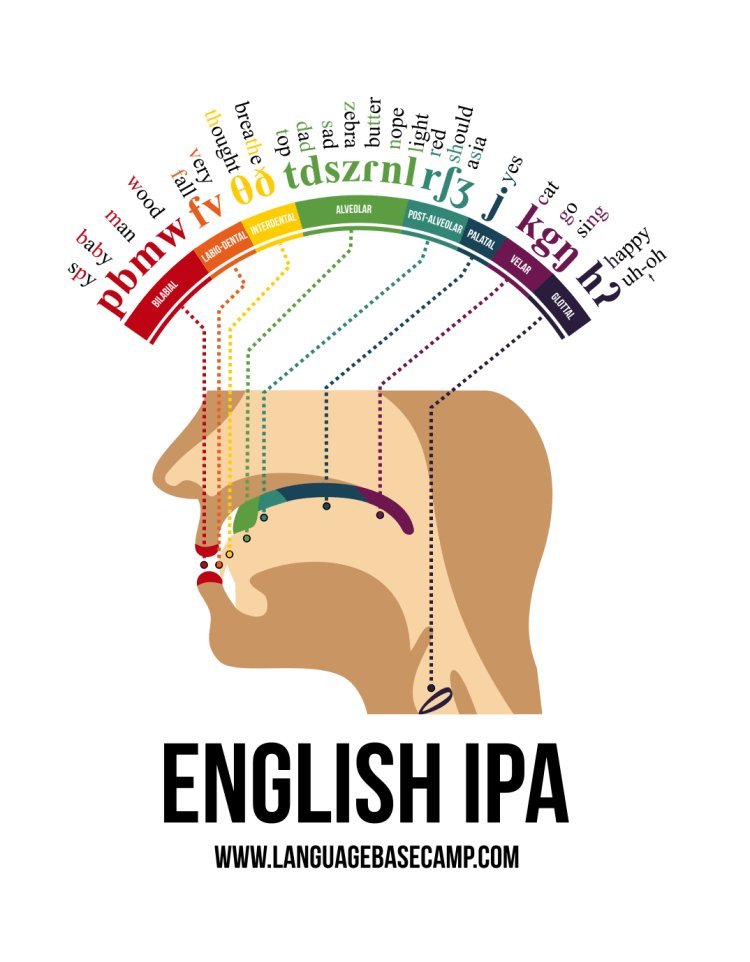
The International Phonetic Alphabet consonants found in English, with keywords and relevant parts of the mouth highlighted and colour-coded. (Source.)
Pronouncing each of these in sequence is a very strange and amusing physical sensation, and I highly recommend it.
Tags:
#language #huh #so it is
You’ve just finished your latest invention: A Universal Translator. While testing it, you accidentally input some human genome and, to your surprise, it begins to work. As it processes you can make out the first few words: “Quality assured by inspector #12.”
An excerpt from Towards a Theory of Universal Translation: Genolinguistics and the Meaning of Life
It was in fact a seemingly harmless incident precipitated by Dr. Odoki that threatened to undermine the entire Universal Translator Project, casting doubts on whether Universal Translation was even a meaningful goal. Odoki was training the Translator on pseudorandom sequences as part of its pattern recognition algorithms, when he inadvertently inputted a section of the human genome. The subsequent output of the Translator is by now infamous among both linguists and biologists alike:
Quality assured by inspector #12.1
Discussing the accuracy of this translation presents unique difficulties, given that the original text, expressed as a sequence of over sixty million base pairs, is far too long to reasonably fit within a paper, and too unwieldy for analysis as a whole.2Thus even a word-for-word or morpheme-for-morpheme translation of the sequence is a practical impossibility, leaving no mutual ground from which translators can build. Holisticists, such as Ishiguro and van der Hoek, have gone so far as to suggest that comprehending such a complex sequence can only be meaningfully done by machine intelligences, leaving us humans with no other option than to accept the translations we are given.
On the other end of the spectrum, doubters such as Kapinsky have used this incident as proof of the Universal Translation Project’s fundamental flaws. Kapinsky’s argument is that Universal Translation is overly focused on producing comprehensible results, at the expense of accurately translating information. In Kapinsky’s words:
The fallacy of Universal Translation is the assumption that everything in the universe, the utterances of an alien intelligence, will be comprehensible to us as humans, if simply translated in the right way. It’s this assumption that has led to over-generous parameters for pattern recognition: the human genome is nothing more than a sequence of information, correct? Then surely it must have meaning, and surely that meaning can be communicated by something as mundane as words. And so the Universal Translator stretches to communicate a point, and this meaningless nonsense is the result. The possibility that, just perhaps, not all information can be adequately communicated or expressed, completely fails to cross our minds.3
Between these two extremes, where human translation is considered impossible, many alternative translations have been proposed. The so-called “inspector #12″ is commonly understood to refer to a regulator gene, with the phrase as a whole indicating the proper functioning of the gene sequence. Wittier translates the sequence simply as
To be encoded by regulator gene #12.4
claiming that the entirety of human genome could be accurately translated as a similar sequence of instructions. Wittier views phrasing such as “quality assured” to be an overreach on the part of the Universal Translator, better expressed as an indicator that the regulator gene will be at work. Margoulies, on the other hand, adheres more closely to the Universal Translator’s output, insisting that an assurance of quality is different from mere instruction. Her translation of
Regulator gene #12 is well-functioning.5
maintains that the sequence expresses a positive claim about its own functioning, indicating a capacity for judgement. For Margoulies, the language of the human genome is not simply a list of instructions to be followed, but also a set of standards and goals and evaluations that are expressed in the formation of a human being.
Meanwhile, Kiang Kang-Hu, in a particularly controversial approach, identifies a so-called section of ‘junk DNA’ within the sequence as a deictic pronoun indicating the first person, and has proposed the radical translation of
I, regulator #12, assure quality.6
In Kiang’s view, language cannot exist separate from a speaker, and thus any so-called translations that reduce the sequence’s meaning to mere statements of biological fact are simply embarrassed attempts to explain away the initial anomalies of the Universal Translator Project. In Kiang’s own words:
A pattern is not language. A listed sequence of events, independent of purpose, is not language, not anymore than the tide leaving its marks on the shore is language. Call a geologist to interpret marks that erosion has etched in stone, not a linguist! What the Universal Translation Project has given us is not pattern recognition. It’s communication. It’s the voices of the universe calling out to us.
There’s a language in our bones, in our blood, in our DNA. You, and I, and everyone else, we are not just a set of facts to be written down and catalogued. We’re a hundred million stories, each and every one of us. All we need to do is listen.7
1Version 2.1 of Universal Translator [Computer software]. (2034).
2The complete sequence can be found at https://ut.qi/KLR83345
3Andreas Kapinsky, The Death of Meaning, trans. Nicholas Sherridan, (Oblivion Books, 2036), 24.
4Byrnner Wittier, An Introduction to Biological Linguistics, (Columbia University Press, 2041), 56.
5G. Margoulies, Anthologie Raisonné de la Traducion, trans. Wang Wei, (Payot, 2038), 1196Kiang Kang-Hu, Regulator #12, and the Rest of Humanity, (Puffin Press, 2044), 85.
7Ibid., 216-217
Tags:
#storytime #language
Last workweek, for the first time, I made enough money to live on! :D o/
(it’s still a very useful supplement even when I get fewer hours than that, and while I have been known to push for (and usually receive) more hours, I’ve never presented it to my boss as being of vital importance)
(“Enough money to live on” is here defined at a relatively high level of abstraction: “if each individual in my household made this much money every week for a year, the total amount earned would equal the amount we spent in the previous calendar year (minus some things we’ve since cut)”. For 2018 (which uses 2017 data), this is about 17 minimum-wage-hours.)
(Hmm…*calculates*…ooh. Looks like ever since my most recent request for more hours (which was granted), most weeks I make right around the threshold for “enough to live on if no unusual expenses occur” (about 11.5 hours). Mom tries very hard to at least keep herself above that threshold (and encourages Dad to do the same), because she feels better about asking Brother for additional money if it’s only for occasional expenses, and she suspects it might cause less resentment in Brother too.)
Tags:
#the idea of feeling resentful about having to maintain the household *feels* ridiculous to me but there’s a good chance she’s right #I’ve grown pretty collectivist over the years of gradually increasing hardship #which is supposedly part of the standard coping mechanism for this and yet nobody else here exhibits nearly as much of it as I do #(the pathogen-stress people might say my potential for collectivism was closer to the surface and so more easily activated) #intuitively I think of individualistic approaches to budgeting as something you grow out of around puberty #but then I also intuitively think of shooter games as something you grow out of around puberty #so I guess I’m a terrible judge of these things #anyway I have to go get ready for work soon #(I think I’m getting 15 hours this week so still not bad) #oh look an original post #adventures in human capitalism #tag rambles #in which Brin has a job
im the robot
classic who is incredible
Doctor Who: Planet of Fire (1984)
Tags:
#Doctor Who #robot #anything that makes me laugh this much deserves a reblog
Sort-of-tagged by @justice-turtle. Name ten songs you’re obsessed with:
(I’m going to mutate the “obsessed with” in a different direction than JT did, and do songs that have been important or special to me.)
(In rough chronological order of when they became important/special.)
(Disclaimer: I have not listened to the Youtube links to make sure they work properly.)
1. “Blue (Da Ba Dee)”, Eiffel 65. For something like seven years, I would occasionally get stuck in my head a snatch of tune I called the Ghost. I didn’t know if it was a song I’d heard once as a small child, or something my brain had come up with on its own. I had no idea where to even begin trying to look it up: the memory(?) did not come with any lyrics.
Then, at a bowling alley when I was fifteen, I heard it. At first, I feared it might slip away from me again, as there was too much background noise to make out the words. Fortunately, Mom recognised it, and gave me the name and artist. I was so happy to have finally identified it, I didn’t even care that I came in last in the game.
2. [redacted]. Since I heard this song, my life has never known peace. (Well, okay, it’s known a hell of a lot *less* peace than it would have otherwise.) I probably never would have handled this song very well, but it definitely made things worse that I first heard it while especially vulnerable. To this day, after all this time, it still triggers the fuck out of me. I heard *two seconds* of it in December (before noping the hell out of the store), and it took days for the pain to fade, for it to stop intruding into my thoughts.
I still get twitchy around radios sometimes, if I’m already in a bad way or if it’s a station that’s been known to play it. I still occasionally have nightmares about being forced to hear it. Sometimes even stations that exclusively play new songs worry me a little: having witnessed the depths of how awful a song can be, a proof of concept, there’s a little part of me that wonders how long until someone makes another just as bad.
(I take comfort in the possibility that this song was grandfathered in from a more psychologically fragile version of me, and that–knock on wood–it might not *be* possible to make another just as bad.)
((You know how radio stations these days have websites that tell you what their playlists for the past week have been? I want them to have pages where they tell you what they’re *going* to play. People who like being surprised can avoid looking at those pages, and people with song-related triggers can know when not to go grocery shopping (and can shop with confidence when they *do* go).))
3. “Follow You, Follow Me”, Genesis. There’d been previous Phil Collins songs I’d heard and liked, but this was the song that sparked my special interest in Phil Collins’ music. I heard it on the radio on my way to a Girl Scout event in the autumn of 2006; my Google-fu was terrible when I was 12/13, so it took me three months of wondering about it and over an hour of active searching for me to figure out which song it was.
Have you ever listened to a song you have a special interest in? It’s indescribable. It’s *such* a high.
I rationed it out carefully, knowing my general tendency to have weaker feelings about a song the more times I’ve heard it. (I didn’t account for the fact that my special interests generally only last a year or two, though, so I may have been a bit *too* careful.)
I don’t listen to this song much anymore, because it’s unnerving to hear how far it’s fallen now that the special interest has faded. Like, it’s *nice*, but it’s not *ecstatic* the way it was when I was 13.
4. “Come With Me”, Phil Collins. The only explicit lullaby* I’ve ever actually liked. I think because there was so little pressure in the circumstances around me listening to it: nobody ever forced me to listen to it, nobody hyped it up.
*personally I think “Hold on My Heart” is more soothing, but it’s not really *aiming* for that the way “Come With Me” is
5. “Rolling in the Deep”, Adele. I like 10’s pop a lot better than 00’s pop (I think because when I was a child, kids I disliked tended to be into 00’s pop, and even when I wasn’t in contact with them I viewed 00’s pop through a negative lens because of that), and to me this was the point of changeover between the two. It was refreshing to have a current Top 40 song that I actively *liked*.
6. “Never Let Me Go”, Florence and the Machine. While it’s never been ecstatic the way “Follow You, Follow Me” was, it’s been nice to finally have a favourite song again. And it was my introduction to Florence and the Machine, a very good band in general (though I have *still* not gotten around to finishing my first listen-through of their 2015 album and deciding which of the songs I like; I have not been good at adding new songs to my collection lately). Thank you, random viral Tumblr user who recced it.
7. “Bombay Sapphires”, Stevie Nicks/“Think About It”, Stevie Nicks/“Docklands”, Stevie Nicks. That might qualify as cheating, but all of these fall into the same category: songs whose lyrics didn’t used to make sense until suddenly clicking one day in my late teens/early twenties. You can pretty much trace my developing ability to parse poetic language by how many Stevie Nicks songs I understand. (Some of them I can still see how I would have gotten confused, but last week I was listening to “Bombay Sapphires” and wondering how I ever managed to not understand this song. (although on further reflection, I think the first-person/third-person switches might have been a big part of it))
8. “Sorry”, Assemblage 23. This song probably isn’t ~supposed~ to be about social justice, but it’s definitely about social justice.
Hearing this song for the first time was the tipping point that led to me cutting a lot of contact with old friends and old reading-material-sources. It dawned on me, listening to it, that it’s a *really* bad sign when you start identifying with songs about unhealthy relationships.
(Sample of the lyrics:
“I’m sorry I can’t always drown
In rivers of despair
A man forever broken by
A need for your repair
I’m sorry if the things I said
Were somehow misconstrued
I’m sorry, yes I’m sorry
So sorry
But not as sorry as you”)
9. “Sad Angel”, Fleetwood Mac. It was nice to turn the tables and have *me* introduce *Mom* to Fleetwood Mac. Giving a loved one [music from their favourite band] that they had no idea existed is priceless.
10. “Almost Home”, Sultan and Shepard. The newest addition to my music collection. Under normal circumstances it would have just been okay (maybe still good enough to keep around), but I first heard it all the way through during the first time I was in a different country from my parents*, so I was particularly prone to Feelings about reuniting loved ones. I remember listening to it on the radio at work the day they were due to come back, singing along and trying not to cry.
*Or rather, they were in a different country from me. I stayed put, they went away. (not by choice: there were family matters in America that needed taking care of in person)
Tags:
#oh look an original post #music #our roads may be golden or broken or lost #my childhood #long post #meme